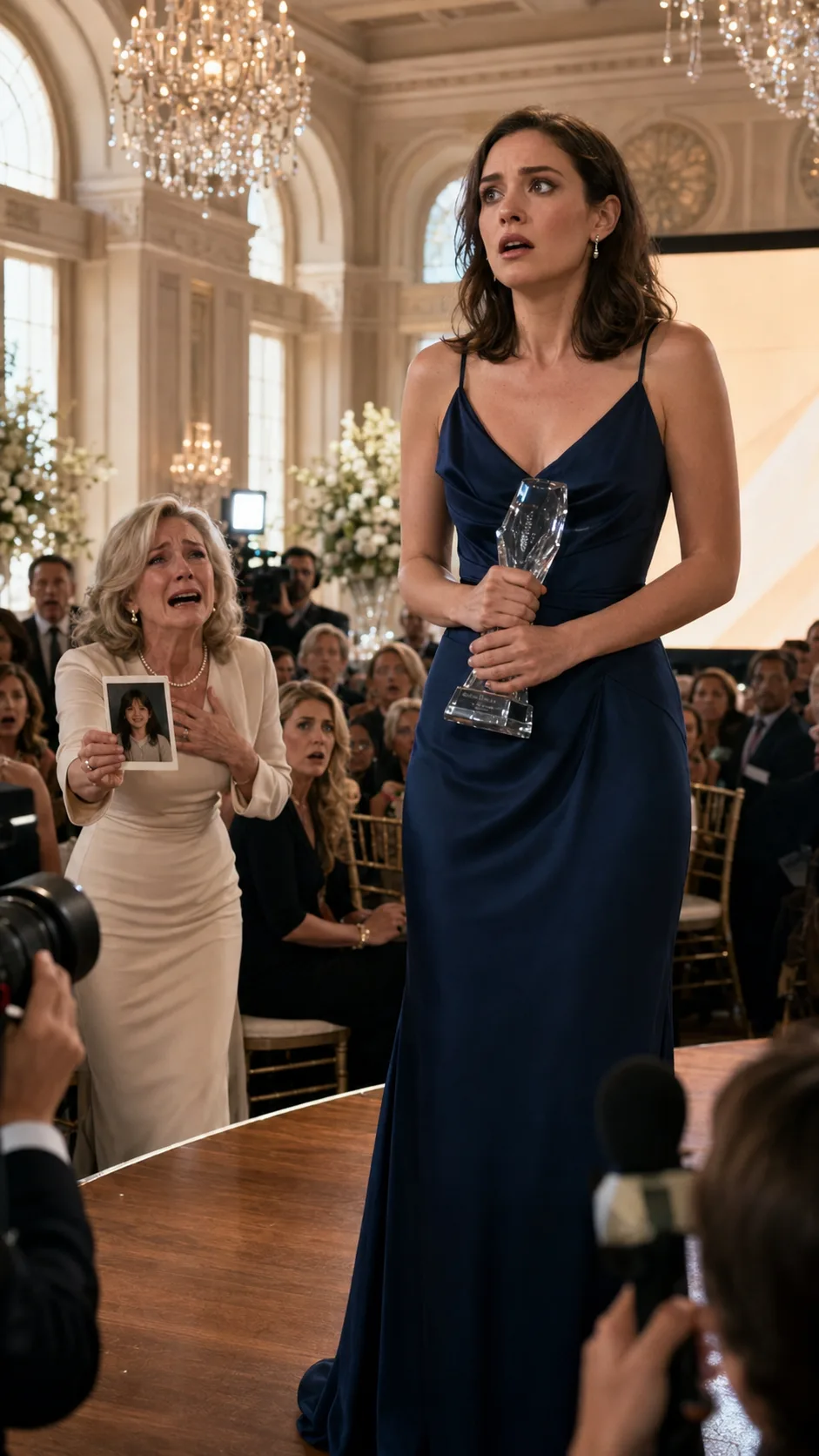
THE MOTHER WHO RETURNED ON LIVE TELEVISION AFTER TWENTY YEARS AND ASKED ME TO FORGIVE HER
PART 3
Marilyn left my condo without the flowers.
Chapter 2
THE MOTHER WHO RETURNED ON LIVE TELEVISION AFTER TWENTY YEARS AND ASKED ME TO FORGIVE HER
PART 3
Marilyn left my condo without the flowers.
They sat on my dining table for three days, wilting beside the letter where she had priced herself out of motherhood.
Ryan came over on the fourth morning.
He found me barefoot in the kitchen, eating toast I didn’t want, staring at nothing.
“You look like you haven’t slept,” he said.
“I haven’t.”
He noticed the wooden box on the counter.
“Is that it?”
I nodded.
“Can I?”
I slid the letter toward him.
Ryan read it standing up. By the second line, his jaw tightened. By the end, he looked genuinely ashamed.
“I pushed you to meet her,” he said.
“You were doing your job.”
“No. I was managing optics. There’s a difference.”
That was the first honest thing anyone in my professional life had said to me since Marilyn returned.
Ryan placed the letter carefully back on the counter.
“What do you want to do?”
I looked toward
the window.
Outside, Chicago moved like nothing had happened. Cars below. People with coffee. A city full of strangers who had already decided I was either heartless or heroic, depending on which clip they saw last.
“I want to stop being discussed like a headline,” I said.
“Then don’t do another interview.”
I turned to him.
“No. I want one interview.”
His eyebrows rose.
“Ava…”
“Eleanor Hayes. Live. No edits. No documentary crew. No production deal. Marilyn can come if she wants.”
Ryan stared at me for a long second.
Then he said, “You’re sure?”
“No,” I said. “But my father deserves to stop being called the man who stole me.”
Eleanor’s team agreed within six hours.
Of course they did.
The world loves a wound more when it might reopen on camera.
The interview was scheduled for Friday evening in a private studio with soft gray chairs, warm lights,
and a coffee table low enough to make every hand movement visible.
Marilyn arrived twenty minutes before we went live.
She wore white.
I almost smiled.
She had chosen innocence as an outfit.
When she saw me backstage, she froze. Then her face softened in that practiced way.
“Ava,” she said.
I stood beside Ryan with the wooden box tucked under my arm.
Her eyes dropped to it.
“You brought that.”
“I did.”
She swallowed.
“I thought we could talk before this starts.”
“We already talked.”
Her lips trembled. “You don’t have to destroy me.”
“I’m not here to destroy you.”
“Then what are you doing?”
I looked at her for a long moment.
“I’m putting the truth in the room and letting it stand on its own.”
A producer called our names.
Marilyn followed me onto the set.
Eleanor was already seated, legs crossed, cards in her lap. She
looked from Marilyn to me, then to the box.
For the first time, I saw doubt in her face.
Not about me.
About the story she had helped carry.
The red light came on.
Eleanor faced the camera.
“Good evening. Tonight, Ava Carter and Marilyn Carter join us after a reunion that has sparked a national conversation about memory, motherhood, and truth.”
Marilyn’s eyes were wet before the first question.
I almost admired the discipline.
Eleanor turned to her.
“Marilyn, you told our audience you were forced out of Ava’s life. Do you stand by that?”
Marilyn nodded.
“I was young. I was frightened. I made mistakes, but I never stopped loving my daughter.”
Then Eleanor turned to me.
“Ava, you have remained mostly silent. Why speak now?”
I placed the wooden box on the coffee table.
The sound it made was small.
But Marilyn flinched.
“Because silence protected the wrong person,” I said.
Eleanor looked down.
“What is in the box?”
“My childhood,” I said. “And my father’s truth.”
Marilyn’s breathing changed beside me.
I opened the lid.
The cameras moved closer.
I did not pull out the letter first.
I pulled out a crayon drawing.
It was wrinkled and faded, a child’s picture of a man and a little girl under a giant yellow sun. Across the top, in crooked letters, I had written: ME AND DAD.
“My father kept every drawing,” I said. “Even the ugly ones.”
A few people behind the cameras laughed softly.
Marilyn did not.
I pulled out a hospital bracelet from when I had pneumonia at eight.
“He kept this because I was scared of sleeping in the hospital, and he stayed awake in the chair all night making shadow puppets on the wall.”
I pulled out a grocery receipt from 2005 with one item circled.
Strawberry cupcakes.
“He kept this because I cried on my ninth birthday, and he only had seven dollars until payday, so he bought the cheapest cupcakes and put candles in them one at a time because we only had three.”
Eleanor’s eyes glistened.
I finally pulled out the letter.
Marilyn whispered, “Ava, please.”
I did not look at her.
“My mother told America she was forced away from me,” I said. “This is a letter she wrote to my father when I was six.”
Eleanor reached for it.
I handed it over.
She read silently at first.
Then her face changed.
Every camera caught it.
She looked at Marilyn.
“Is this your handwriting?”
Marilyn’s lips parted.
“Eleanor…”
“Is this your handwriting?”
The studio went so quiet I could hear the faint hum of the lights.
“Yes,” Marilyn said.
Eleanor looked down again, then read one line aloud.
“I accept the $75,000, and I agree that I will not contact Ava again.”
The sentence hit the room like glass breaking.
Marilyn closed her eyes.
I watched her carefully.
There was pain in her face. Real pain. But pain is not the same as repentance. Sometimes people only hurt because the thing they buried has finally found air.
Eleanor set the letter down.
“Marilyn,” she said slowly, “why did you tell viewers you were prevented from contacting your daughter?”
Marilyn looked at me.
Not at Eleanor.
At me.
“Because I was ashamed.”
The answer surprised me.
It was the first true sentence she had said in public.
“I was ashamed,” she repeated, voice cracking. “And then I saw her on television. I saw this beautiful, powerful woman everyone loved, and I thought… maybe if I told the story differently, I could become someone else in it.”
My throat tightened despite myself.
Eleanor leaned in.
“Someone else?”
“A mother who fought,” Marilyn said. “A mother who suffered. A mother who was wronged.” She let out a shaky breath. “Not the woman who took the money and left.”
I looked at her then.
Really looked.
For twenty years, I had imagined my mother as a villain because it was easier than imagining her as weak. Villains choose darkness with confidence. Weak people choose themselves and call it survival.
But the damage is the same when you are the child left behind.
Marilyn turned toward me fully.
“I told myself you were better off,” she said. “Thomas was steadier. Kinder. I was restless. I wanted a different life. And then the longer I stayed gone, the harder it was to come back. After ten years, I was a monster. After twenty, I needed a miracle. So I invented one.”
My hands were folded in my lap.
I did not move.
She wiped under her eye.
“I know that doesn’t fix anything.”
“No,” I said quietly. “It doesn’t.”
Her face folded.
For once, she did not check the camera.
“I am sorry,” she said. “Not for being caught. Not for the interview. I am sorry I made you feel like a child could be outgrown.”
My chest hurt.
Not because forgiveness arrived.
Because grief did.
A person can wait twenty years for the truth and still not be ready for how small it sounds when it finally comes.
Eleanor turned to me.
“Ava, what do you want from Marilyn now?”
The old answer would have been nothing.
The angry answer would have been for her to disappear again.
But my father had raised me too carefully to confuse revenge with peace.
“I want her to stop selling a version of my childhood she didn’t live,” I said. “I want every production company to hear this clearly: my pain is not a comeback tour. My father’s love is not a footnote. And abandonment does not become sacrifice because someone cries beautifully under studio lights.”
Eleanor nodded slowly.
“And personally?”
I looked at Marilyn.
Her hands were clenched in her lap. Her makeup had started to streak. She looked older than fifty-seven now. Smaller.
Personally.
That word carried the six-year-old girl in the doorway. The seven-year-old waiting for a birthday card. The teenager pretending she didn’t care. The grown woman building a foundation out of a wound nobody could see.
“I don’t know yet,” I said. “But I know this. Giving birth to me gave you a place in my history. It did not give you the right to rewrite it.”
Marilyn bowed her head.
The interview ended without music.
Without a hug.
Without the reunion America had demanded from me.
By the next morning, the headlines changed.
AVA CARTER REVEALS LETTER THAT CHANGES EVERYTHING.
MARILYN CARTER ADMITS SHE LIED ABOUT BEING FORCED AWAY.
THOMAS CARTER REMEMBERED AS DEVOTED FATHER AFTER LIVE INTERVIEW.
But the headline that made me cry was the smallest one, posted by a local paper in the town where I grew up.
THOMAS CARTER, THE FATHER WHO STAYED.
There was a photo attached.
My dad at a school fundraiser, standing behind a folding table, wearing a paper hat, selling hot dogs to raise money for our fifth-grade field trip. I remembered that day. He had worked fourteen hours before showing up, and still he smiled like being tired was a private joke between him and God.
I printed the article and placed it in the wooden box.
One week later, I stood in front of the Carter Promise Fund board and made one change.
The foundation would no longer carry only my name.
It would become The Thomas Carter Promise Fund.
A program for children who had been left behind, and for the people who stayed to raise them.
At the dedication ceremony, I did not invite Marilyn.
She came anyway.
She stood across the street in a gray coat, holding no flowers, speaking to no camera.
For a moment, I saw her through the glass doors.
Ryan noticed too.
“Do you want security to ask her to leave?”
I shook my head.
“No.”
After the ceremony, I walked outside alone.
Marilyn straightened when she saw me.
“I didn’t come for attention,” she said quickly.
“I know.”
She looked toward the building, where my father’s name had just been placed in gold letters above the entrance.
“He deserved that,” she said.
“Yes,” I replied. “He did.”
Her eyes filled.
“I watched the ceremony from out here.”
I said nothing.
“I’m starting counseling,” she added. “I know that doesn’t mean you owe me anything. I just wanted you to know.”
For the first time, she sounded like a woman speaking without an audience.
I believed that much.
But belief is not the same as trust.
“I hope you get better,” I said.
She nodded, crying silently.
Then she whispered, “I’m still your mother.”
The words stood between us, tired and begging.
Twenty years ago, they might have made me run into her arms.
Ten years ago, they might have made me scream.
Now, I only looked at her and finally understood what my father had given me.
Not bitterness.
Not hatred.
A spine.
“No,” I said gently. “You gave birth to me.”
Her chin trembled.
I glanced back at the building, at the name shining above the doors.
“He stayed.”
Marilyn covered her mouth with both hands.
I walked away before she could turn her tears into another story.
Inside, a little girl from the scholarship program ran past me, laughing, her foster father chasing after her with her forgotten backpack.
“Slow down, peanut,” he called.
She turned around, grinning, completely certain he would follow.
I stood there for a moment, watching them.
Then I smiled.
Because that was the promise.
Not perfect love.
Not blood.
Not the version that looked best under lights.
Just someone staying close enough that a child never had to wonder if they were worth coming back for.
*** THE END.***
Chapter complete
You have reached the end of this chapter.
Continue reading
A few more worlds to get lost in after this chapter.




