Derek called me seventeen times that afternoon.
Chapter 3
Derek called me seventeen times that afternoon.
I did not answer the first sixteen.
On the seventeenth, I picked up and said, “Hello, sweetheart.”
There was a pause.
Not because he was relieved to hear my voice.
Because he had expected me to sound guilty.
“Mom,” he said tightly, “what did you do?”
I sat at my kitchen table with Martin’s old coffee mug in front of me. The house was quiet. The maple tree outside the window had just started turning red around the edges.
“I protected the trust.”
“You embarrassed Amber at the bank.”
“No,” I said. “Amber embarrassed herself by trying to withdraw money she did not control.”
“She said you froze everything.”
“I did.”
“Why would you do that to us?”
That was the sentence that told me how far gone he was.
Not why did Amber try to take four million dollars?
Not what happened?
Not Mom, are you okay?
Why would
you do that to us?
I closed my eyes for one second.
“Derek, bring Amber to Thomas Brennan’s office tomorrow at ten. We’ll discuss it there.”
“I don’t need a meeting with your lawyer.”
“Yes,” I said. “You do.”
Then I hung up before my voice could break.
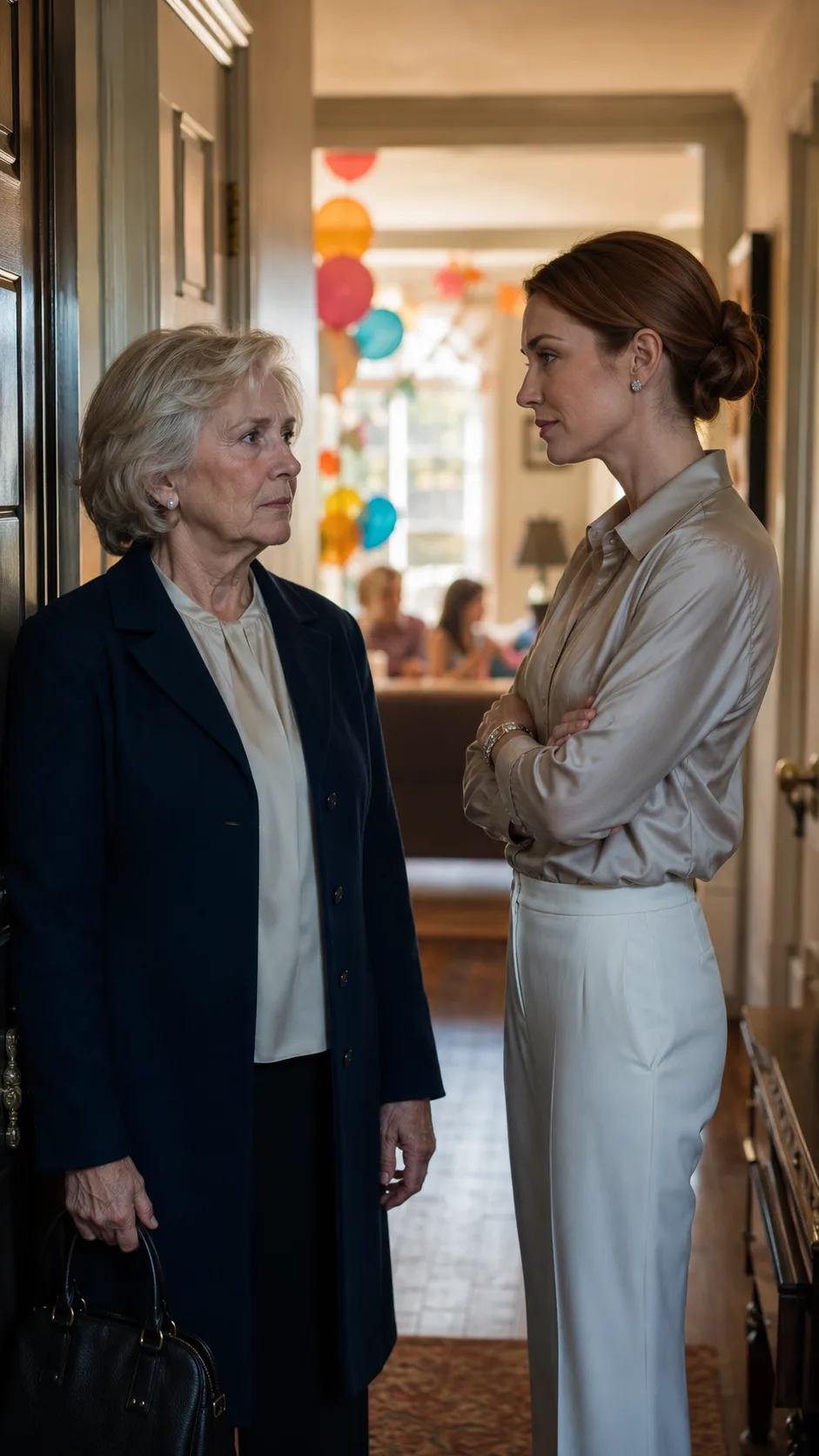
The next morning, I wore the navy coat Martin had bought me for our fortieth anniversary. It still smelled faintly of cedar from the closet. Rachel flew in from Boston on the first morning flight after I called her.
She walked into Thomas’s office wearing hospital scrubs under a wool coat, her hair pulled back, eyes sharp.
“I knew this day was coming,” she said.
“I didn’t want you to be right.”
She squeezed my hand. “I didn’t either.”
Derek and Amber arrived ten minutes late.
Amber looked furious in the controlled way wealthy women look furious when they do not want
to smudge their makeup. Derek looked tired, defensive, and ashamed, though not ashamed enough yet.
Thomas Brennan sat at the head of the conference table with a folder in front of him.
Amber didn’t wait to sit.
“You had no right to humiliate me,” she snapped.
I looked at her calmly. “Good morning, Amber.”
“Don’t patronize me.”
Rachel leaned back in her chair. “You tried to take four million dollars from a trust for children.”
Amber’s eyes flashed. “For a house. For our family. For the kids’ future.”
“A gated neighborhood is not a medical emergency,” Rachel said.
Derek slammed his hand lightly on the table. “Enough. Mom, this has gone too far. You made the trust for us.”
“No,” Thomas said.
The room went silent.
Thomas opened the folder.
“The Morrison Family Legacy Trust was established for the long-term benefit of the grandchildren and limited approved family support. Mrs.
Sylvia Morrison is the sole trustee. Neither Derek Morrison nor Amber Morrison has independent withdrawal authority.”
Amber’s mouth tightened. “Derek signed the paperwork.”
Thomas looked at her. “Derek signed a request. Not an authorization.”
Derek stared down at the table.
I turned to my son.
“You knew?”
He did not answer quickly enough.
That was answer enough.
“Derek,” I whispered.
He rubbed both hands over his face. “Amber said you’d never approve it. She said you were holding us back.”
“So you tried to go around me.”
“It was supposed to be temporary.”
Rachel let out a cold laugh. “Four million dollars is not temporary. It’s a robbery wearing a mortgage application.”
Amber pointed at her. “You have no idea what it’s like. You have your career, your apartment in Boston, your perfect life. Derek and I have three children. We need stability.”
I finally spoke.
“You had stability.”
Amber turned toward me.
“You had a house I helped you keep. Schools I paid for. Medical bills I never questioned. Vacations I pretended were necessities because I loved my grandchildren. You had a mother-in-law who kept saying yes because she thought generosity might keep peace.”
My voice did not rise.
That made Amber more uncomfortable than shouting would have.
“You mistook quiet for weakness,” I said. “That was your mistake.”
Derek’s face changed then. Just slightly. A crack in the defense.
Thomas slid several pages across the table.
“There is more,” he said.
Amber’s eyes narrowed. “What is that?”
“A preliminary review of previous trust disbursements.”
Derek looked up. “Previous?”
Thomas nodded. “Several requests were submitted as child-related expenses. The supporting invoices do not match the final use of funds.”
Rachel sat forward.
“What does that mean?”
Thomas adjusted his glasses.
“It means tuition reimbursements included personal wardrobe purchases. A medical travel request included a luxury resort stay. A home repair request included custom jewelry billed through a design consultant.”
Amber went white.
Derek turned to her slowly.
“Amber?”
She laughed once, sharp and ugly. “Oh, please. Don’t act shocked. You enjoyed the lifestyle too.”
His face drained.
That was the moment I lost the last illusion I had been holding.
My son had not been blind.
He had been comfortable.
There is a special grief in realizing someone you raised did not become cruel overnight. They became convenient first. They learned to look away. Then looking away became a habit. Then the habit became a character.
I reached into my purse and pulled out Martin’s letter.
It was the last thing he had written before his hands became too weak.
I had never shown it to Derek.
I unfolded it carefully.
“My father wrote something before he died,” I said.
Derek’s eyes lifted.
I read only one line.
“If our children ever confuse inheritance with entitlement, choose the grandchildren.”
The room went still.
Derek’s eyes filled.
Amber looked away.
I folded the letter and placed it back in my purse.
“Thomas has already prepared changes,” I said. “The trust will remain frozen until the audit is complete. From today forward, no discretionary funds go through Derek or Amber. Education, health care, and future housing assistance for the children will be paid directly to schools, doctors, or escrow accounts approved by the trustee.”
Amber stood.
“You can’t do this.”
I looked up at her.
“I already did.”
She turned to Derek. “Say something.”
For once, Derek did not obey her fast enough.
“Did you use Sophie’s therapy reimbursement for jewelry?” he asked.
Amber’s face twisted. “You’re really going to take her side?”
“No,” he said, voice cracking. “I’m trying to figure out when I stopped taking my children’s side.”
That broke something in the room.
Not enough to fix everything.
But enough to begin the collapse.
Amber grabbed her purse and stormed out. The glass door swung shut behind her with a clean, expensive click.
Derek remained seated.
For several minutes, no one spoke.
Then my son looked at me, and for the first time in years, he looked like the boy who used to crawl into my lap after nightmares.
“Mom,” he whispered, “I’m sorry.”
I wanted to forgive him instantly.
That is the terrible instinct of mothers. We want to run toward apology before we know whether it has roots.
But Martin had asked me to be stronger than my softness.
“I love you,” I said. “But I will not rescue you from consequences.”
He bowed his head.
Rachel reached under the table and took my hand.
Six months later, Derek and Amber separated.
Not because of me. Not because of the money. Because once the trust was frozen, there was nothing left for Amber to pretend about and nowhere left for Derek to hide.
The gated house fell through.
The children stayed in their school because I paid the tuition directly. Sophie’s therapy continued. Lucas got his science camp. Owen’s college account remained untouched, protected, growing quietly.
Derek started therapy.
Amber hired a lawyer, then stopped threatening lawsuits when Thomas sent over the trust documents and audit findings.
As for me, I went back to living in the house Martin and I built together.
Some evenings, I sit on the porch with tea and watch the maple tree move in the wind.
I still miss my husband every day.
But I kept my promise.
I did not let our life’s work become a reward for disrespect.
I did not let money buy loyalty.
And I did not let my grandchildren’s future become a down payment on their parents’ pride.
Amber once told me to stop interfering in their lives.
So I did.
I stopped interfering.
And started protecting.
THE END
Chapter complete
You have reached the end of this chapter.
Continue reading
A few more worlds to get lost in after this chapter.




