PART 2:
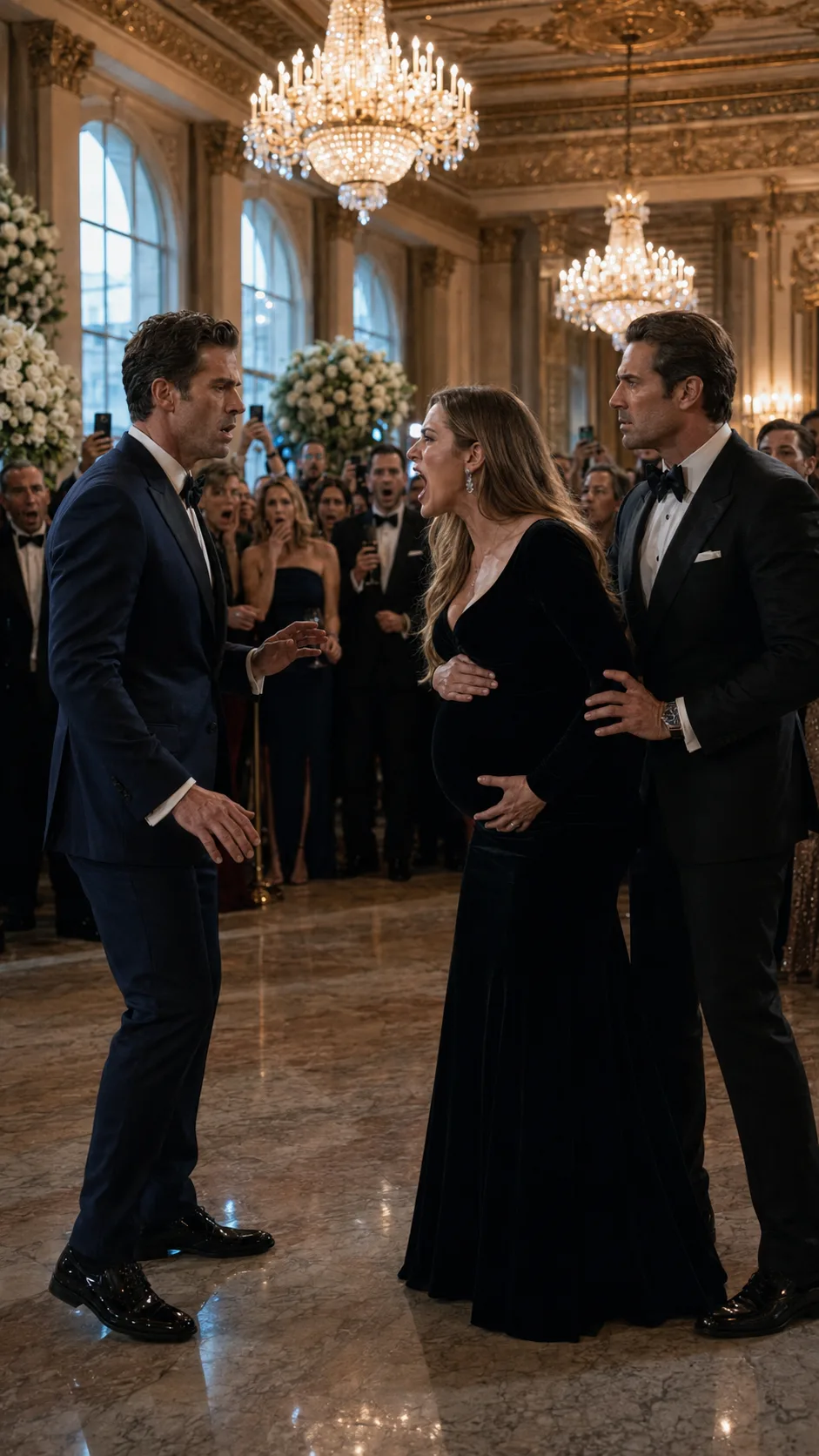
“There are many things you don’t realize,” I replied.
Chapter 2
PART 2:
“There are many things you don’t realize,” I replied.
A nearby senator’s wife turned her head to hide a smile.
Gabriel’s thumb brushed once against my back—a quiet signal that the room was listening.
Julian leaned closer, lowering his voice. “Can we speak privately?”
“No.”
The word landed cleanly.
His expression darkened. “Khloe.”
“Anything you need to say to me can be said here.”
Dalia laughed softly. “That seems unnecessary. Tonight is about charity, isn’t it?”
Gabriel looked at her then, polite and devastating.
“It is,” he said. “Which makes public dignity especially appropriate.”
Color rose in Dalia’s cheeks.
Then the gala chairwoman, Maribel Armand, swept toward us in emerald satin.
“Khloe, darling!” she cried, kissing the air beside both my cheeks. “At last. Everyone has been desperate to meet the woman behind tonight’s largest gift.”
Julian went still.
Dalia blinked. “Largest gift?”
Maribel beamed. “The Bennett-Marin Maternal Recovery Wing. Five-year commitment, expanded neonatal grief counseling, emergency care access,
rural pregnancy support.” She touched my arm. “An extraordinary donation.”
Julian’s face changed.
Not grief.
Calculation.
I knew that look. I had once mistaken it for intelligence.
“You donated?” he asked.
“Yes.”
“With what foundation?” His voice was careful now, quieter. “I wasn’t aware you had established one.”
“No,” Gabriel said, before I could answer. “You wouldn’t be.”
Something moved through the crowd: whispers, recognition, recalculation.
Khloe Duval, the discarded wife, was not hiding.
Khloe Bennett was funding hospital wings.
Dalia’s smile trembled. “That’s very generous.”
“Thank you,” I said.
Then Maribel turned to Dalia. “And of course, we’re thrilled to honor you tonight as Allesian’s reigning ambassador. Such a beautiful symbol.”
Dalia brightened.
Until Gabriel asked, “Has the scholarship audit been completed?”
Maribel’s face faltered.
Dalia’s eyes flashed toward him.
Julian noticed.
So did I.
Gabriel’s expression remained unreadable.
“Not yet,” Maribel said carefully. “There were some delays.”
“Unfortunate,”
Gabriel said. “Especially with funds tied to title eligibility.”
Dalia’s fingers tightened around Julian’s arm.
There it was.
A crack in the crown.
Julian leaned toward her. “What is he talking about?”
“Nothing,” Dalia whispered.
But Gabriel heard.
His eyes stayed on her, calm as winter.
“Nothing rarely requires that much silence.”
Before anyone could respond, the master of ceremonies called the room to dinner.
The spell broke.
People moved toward their tables, murmuring behind jeweled hands.
Julian remained rooted in place, staring at me.
Finally, he said the words he had been dying to say.
“Is it mine?”
The ballroom noise seemed to fade.
I looked at the man who had left me bleeding on a bathroom floor and then let the world call me broken.
“No,” I said.
The lie came easily.
Because truth, I had learned, was not always owed to those who had weaponized it.
Julian
flinched.
Dalia exhaled too sharply.
Gabriel did not move.
But his eyes shifted to me, and in them I saw understanding.
Not judgment.
Understanding.
I turned away first.
Behind me, Julian whispered my name like a man watching a door close from the wrong side.
Part 5 — The Crown Made of Glass
Dinner was served beneath a ceiling painted with angels who looked bored by human vanity.
I sat between Gabriel and a retired Supreme Court justice who complimented my donation, my earrings, and my ability to make Julian Duval look like a man who had swallowed a blade.
Across the room, Julian could not stop staring.
Dalia tried to reclaim him with laughter, touches, a hand on his sleeve. But every time she leaned in, his gaze slipped past her and found me.
It should have satisfied me.
It didn’t.
Revenge is often colder than people imagine.
It does not warm the hands.
It only proves you survived the fire.
When the first course ended, Gabriel leaned toward me.
“You’re pale.”
“I’m fine.”
“You hate that word.”
I glanced at him. “What word?”
“Fine.”
A reluctant smile touched my mouth.
Then a server placed a sealed envelope beside Gabriel’s plate.
He opened it, read one line, and the air around him changed.
“What is it?” I asked.
He folded the paper.
“Dalia’s audit.”
My pulse tightened.
Onstage, the master of ceremonies was announcing the evening’s honorees. Dalia stood from her table amid applause, radiant beneath the chandeliers.
“Gabriel,” I said softly.
He looked at me.
“If this destroys her publicly, are you sure it’s necessary tonight?”
For a moment, his expression softened.
“She used a charitable scholarship fund to buy votes for her title,” he said. “Three finalists lost grants because her campaign redirected donor money through shell vendors. One of those finalists was a nursing student from Queens whose mother is undergoing chemotherapy.”
My sympathy vanished.
Dalia walked onstage, smiling as a spotlight caught her diamonds.
Julian rose to applaud, though his hands moved slowly.
Dalia began her speech in a voice sweet as spun sugar.
“Allesian Hearts changed my life,” she said. “This crown taught me that beauty means service, humility, and truth.”
Gabriel pushed back his chair.
The scrape of it cut through the applause.
He walked to the stage.
A ripple passed through the room.
Dalia faltered mid-sentence.
Gabriel accepted a spare microphone from the host.
“My apologies for the interruption,” he said, his voice carrying effortlessly. “As principal sponsor of the ambassador program, Ascend Foundation has completed its internal review of this year’s competition.”
Julian stood halfway.
Dalia whispered, “Gabriel, don’t.”
The microphone caught it.
The room heard.
Gabriel looked at her.
“That is usually said by people who know what comes next.”
Screens behind the stage flickered.
Documents appeared.
Invoices.
Transfers.
Emails.
Dalia Fontaine’s name threaded through them in black and white.
A gasp spread through the ballroom.
Gabriel continued, controlled and merciless.
“Tonight’s ambassador title is revoked pending formal investigation. The scholarship funds will be restored. The crown will be reassigned to the first runner-up, who appears to have competed without committing fraud.”
Dalia’s face drained of color.
Julian stared at the screens, then at her, then at the reporters already lifting phones.
“You told me your sponsors loved you,” he hissed.
She turned on him with sudden venom. “You told me marrying you would make all of this untouchable.”
The microphone caught that too.
The ballroom erupted.
Julian’s face went white.
I sat very still.
Because now the room no longer watched me.
It watched him.
Dalia, cornered and humiliated, looked toward me with hatred sharp enough to glitter.
“This is because of her,” she cried. “You did this because she walked in pregnant and made everyone look at her!”
I rose slowly.
The room quieted again.
“No,” I said. “You did this because you stole from women who needed help.”
Dalia shook her head, tears bright with fury. “You think you’re so noble? You were nothing before Julian.”
The old wound opened.
But this time, I did not bleed.
I smiled gently.
“Dalia,” I said, “Julian was nothing before me.”
The silence after that was exquisite.
Then someone laughed.
Not cruelly.
Knowingly.
Julian turned toward me, and I saw panic in his eyes because for the first time, he understood that I still had receipts.
Years of rewritten pitches.
Investor memos.
Crisis strategies.
The architecture beneath his empire, all bearing fingerprints he had erased from public view.
Gabriel returned to my side.
“Khloe,” he said quietly, “we should go.”
But Julian moved first, crossing the room with desperate speed.
“Wait.”
I looked at him.
He stopped before me, surrounded by cameras, ruined beauty queens, whispering donors, and every lie he had ever told.
“I need to talk to you.”
“No,” Gabriel said.
Julian ignored him. His eyes locked on mine. “Khloe, please. I made mistakes.”
The word was too small.
Mistakes were spilled drinks.
Missed calls.
Wrong turns.
What Julian had done was abandonment dressed as ambition.
“You made choices,” I said.
His gaze dropped again to my stomach.
“That child,” he whispered. “You lied.”
My fingers curled protectively over my belly.
Julian stepped closer. “It is mine, isn’t it?”
Gabriel’s voice turned lethal. “Take one more step and you’ll regret it.”
Julian looked between us, something breaking loose behind his eyes.
Then he said the one thing I had not expected.
“I know because I had the clinic records sealed.”
My blood turned cold.
The room blurred.
“What?” I whispered.
Julian’s face shifted the instant he realized what he had confessed.
And Gabriel, for the first time all evening, looked genuinely shocked.
Part 6 — The Secret Buried in the Clinic File
The ballroom vanished around me.
All I could hear was my own heartbeat and the impossible echo of Julian’s words.
I had the clinic records sealed.
“What clinic?” Gabriel asked.
Julian’s mouth opened.
Closed.
Dalia, still onstage, let out a laugh that sounded half-mad. “Oh, this is rich.”
I turned on Julian. “What did you do?”
He swallowed.
For once, Julian Duval had no speech ready.
People moved closer without seeming to. The reporters were no longer pretending not to film. Maribel Armand stood frozen beside the stage, one hand pressed to her pearls.
Julian lowered his voice. “Khloe, this isn’t the place.”
“You made it the place when you said it in front of three hundred witnesses.”
His eyes darted around.
“After the third miscarriage,” he said, “I wanted answers.”
“I asked for answers,” I said. “You left for Davos.”
“I had specialists review everything.”
My body went numb.
“What specialists?”
Julian’s jaw tightened. “The clinic found a genetic clotting disorder. Treatable. It should have been flagged after the second loss.”
The floor seemed to tilt.
I grabbed the back of a chair.
Gabriel’s hand steadied me instantly.
I remembered white rooms. Needles. Doctors with gentle voices. Julian making calls in corridors. My own grief so deep I could barely understand what anyone told me.
“No,” I whispered. “No one told me that.”
Julian’s eyes shone now—not with remorse, not truly, but with terror of exposure.
“I was going to tell you.”
“When?”
He said nothing.
Dalia descended from the stage slowly, no longer crying. Her ruined crown hung crooked in her hair.
“Oh my God,” she said. “You didn’t tell her because you wanted out.”
Julian snapped, “Stay out of this.”
But Dalia was bleeding socially, and wounded vanity has teeth.
“You told me she was unstable,” she said loudly. “You said she was obsessed with having a baby. You said the doctors told you pregnancy might never happen.”
My breath stopped.
Julian lunged toward her. “Dalia.”
She smiled viciously. “You said if she knew it was treatable, she’d never sign the divorce papers.”
A sound moved through the room—shock, disgust, hunger.
Gabriel stepped between us.
His face had gone cold in a way I had never seen.
“You concealed medical information from your wife.”
Julian lifted his hands. “It wasn’t like that.”
I laughed.
One broken note.
“Then what was it like?”
He looked at me then, really looked, and for a second I saw the boy from Northwestern who had once brought me caramel tea.
Then the man he became swallowed him whole.
“I was tired, Khloe,” he said. “Tired of grief. Tired of trying. Tired of walking into rooms where people asked why we didn’t have children yet. You were disappearing into it.”
“So you let me believe my body killed our babies.”
His face crumpled.
The answer was written there.
Yes.
The word he did not say hit harder than any scream.
My knees weakened.
Gabriel caught me before I fell.
“Get her out,” Maribel ordered.
But I lifted my hand.
“No.”
I stood upright, though everything inside me trembled.
For two years I had carried an invisible verdict. Barren. Broken. Defective. I had swallowed headlines, pity, whispers, Julian’s silence, my own shame.
And all along, there had been a diagnosis.
A treatment.
A truth.
He had not just left me.
He had stolen my right to understand my own body.
I looked at Julian, and my voice came out calm.
“You will send every medical record to my attorney tonight.”
He nodded too quickly. “Yes. Anything.”
“And tomorrow,” I continued, “you will issue a public statement correcting every lie you allowed to spread about me.”
His expression changed. “Khloe—”
“Every lie.”
Reporters pushed closer.
Julian saw them. Saw the phones. Saw his empire balancing on the edge of my next sentence.
Gabriel spoke softly. “You heard her.”
Julian’s pride fought for one last breath.
Then he lowered his head.
“Yes.”
Dalia laughed again, hollow and ruined. “Congratulations, Julian. You finally found a way to make my scandal look small.”
Security escorted her out minutes later, crown removed, mascara streaking silver down her face.
Julian remained alone in the center of the ballroom, stripped not of money, but of mythology.
That was worse for him.
Gabriel guided me toward the private exit.
At the door, I looked back once.
Julian stood beneath the chandeliers, surrounded by people who now knew exactly what kind of man he was.
For years, he had feared being ordinary.
Tonight, he became something far more devastating.
Exposed.
Part 7 — The Name on the Birth Certificate
By morning, the city had devoured him.
The headlines were merciless.
TECH TITAN ACCUSED OF HIDING EX-WIFE’S MEDICAL DIAGNOSIS
BEAUTY QUEEN STRIPPED OF CROWN AFTER SCHOLARSHIP FRAUD
KHLOE BENNETT RETURNS: THE WOMAN BEHIND DUVAL’S FIRST EMPIRE
Julian’s lawyers called before breakfast.
Then his crisis team.
Then his mother, who cried into my voicemail as if she had been the one betrayed.
I listened to none of them.
My attorney handled the records. My doctor confirmed what Julian had concealed. The disorder was real. Treatable. Common enough that someone should have told me, serious enough that silence had been unforgivable.
I sat in my kitchen overlooking the Hudson, one hand on my stomach, Gabriel across from me reading the medical summary with a fury he kept folded beneath discipline.
“This is actionable,” he said.
“I know.”
“You can sue him.”
“I know.”
“You can destroy him.”
I looked out at the river.
“I already did.”
Gabriel’s eyes lifted.
I touched my belly.
“I don’t want the rest of my pregnancy lived in court filings and headlines. I want peace. I want the truth documented. I want my name restored. And I want this baby born into something cleaner than revenge.”
He studied me for a long moment.
Then he nodded.
“Then we build peace.”
He said it like peace was not a feeling, but a structure. Something with beams, walls, locks, and windows facing the light.
Weeks passed.
Julian issued the statement.
Not because he became noble, but because he had no other move left.
He admitted that “medical information had not been properly shared during a period of marital distress.” A coward’s sentence. But my attorney released enough supporting documentation that the world understood.
Then came the second wave.
Former employees spoke.
Investors remembered.
Old pitch decks surfaced with my annotations, my strategy memos, my forecasts.
People began saying my name correctly.
Not Julian’s ex-wife.
Not poor Khloe.
Khloe Bennett. Strategist. Investor. Founder. Survivor.
I should have felt triumphant.
Instead, I felt tired.
One afternoon, as rain slid down the windows, Gabriel found me in the nursery surrounded by unopened boxes.
“What’s wrong?” he asked.
I held a tiny yellow blanket against my chest.
“I keep waiting for everything to disappear.”
He crossed the room slowly.
“It won’t.”
“You don’t know that.”
“No,” he said. “I don’t.”
That honesty broke me more than comfort would have.
He sat on the floor beside me, billionaire in a tailored suit among scattered baby socks and assembly instructions.
“I can’t promise you nothing will hurt,” he said. “But I can promise you won’t stand in it alone unless you choose to.”
I looked at him through tears.
“Why are you still here?”
His face softened.
“Because I know the difference between being needed and being wanted. I am hoping, one day, to be wanted.”
The room went very quiet.
My daughter kicked.
Hard.
I laughed through my tears and pressed Gabriel’s hand to my stomach before I could overthink it.
His breath caught when he felt the movement.
For the first time since I had known him, Gabriel Lancaster looked undone.
“She approves,” I whispered.
He smiled, and something in me opened.
Not all at once.
But enough.
Three months later, my daughter was born at dawn during a snowstorm.
She arrived furious, red-faced, and screaming like she had serious objections to the state of the world.
I wept when they placed her on my chest.
Gabriel stood beside me, tears bright in his eyes, one hand over his mouth.
“She’s perfect,” he whispered.
I looked down at her tiny fists, her dark hair, her stubborn little mouth.
“Yes,” I said. “She is.”
The nurse asked for the birth certificate details.
Mother’s name: Khloe Anne Bennett.
Father’s name.
The pen hovered.
Julian’s biological claim sat somewhere in a sealed legal folder. He had requested a paternity test through attorneys, then withdrawn it when Gabriel’s lawyers made clear that any petition would reopen the medical concealment case publicly.
He wanted ownership without accountability.
I would not give him either.
I looked at Gabriel.
He shook his head gently. “Only if it is what you want.”
My daughter yawned against my skin.
I thought of blood. Names. Legacy. Men who believed fatherhood was a right instead of a devotion.
Then I answered.
“Leave it blank.”
The nurse nodded.
Gabriel’s eyes filled again—not with disappointment, but respect.
Later, when the hospital room was quiet and snow softened the city, I named her.
“Eleanor,” I whispered. “Eleanor Marin Bennett.”
Gabriel smiled. “Strong name.”
“She’ll need one.”
“No,” he said. “She already has one.”
I looked at him then.
And for the first time in years, I believed the future might not arrive carrying a knife.
Part 8 — The Ending No One Saw Coming
Six months after Eleanor was born, Julian Duval disappeared from public life.
Not dramatically.
No prison sentence. No midnight arrest. No tabloid chase through airports.
Something worse happened to a man like Julian.
People stopped inviting him.
Boards accepted his resignations with regretful statements. Investors grew quiet. Old allies became unreachable. The same magazines that once called him visionary began writing careful profiles about “the dangers of founder mythology.”
Dalia tried to reinvent herself as a victim of elite manipulation.
It lasted eleven days.
Then the nursing student from Queens, the one whose scholarship Dalia had stolen, gave an interview so graceful and devastating that Dalia’s last sponsor dropped her before noon.
As for me, I moved forward.
Not perfectly.
Some nights, Eleanor’s crying pulled old grief from hidden places. Some mornings, I still woke afraid happiness was a trick. But life became real in small, ordinary ways.
Milk warming in a glass bottle.
Lavender soap.
Tiny socks vanishing in impossible numbers.
Gabriel reading quarterly reports aloud in a ridiculous whisper because Eleanor slept better to financial terminology than lullabies.
One evening in spring, he arrived at my apartment carrying no flowers, no jewelry, no grand gesture.
Just a folder.
I raised an eyebrow. “That better not be another investment proposal.”
“It is.”
I groaned.
He sat across from me at the kitchen table, where Eleanor was banging a spoon against her high chair like a judge demanding order.
Gabriel opened the folder.
Inside was a trust structure, foundation charter, and property deed.
I read the first page.
Then the second.
My throat tightened.
“Gabriel.”
He leaned back, watching me carefully.
The proposal was not marriage.
Not adoption.
Not ownership disguised as romance.
It was a gift of infrastructure.
A fully endowed maternal recovery network across rural hospitals, beginning in Oklahoma. Counseling, emergency diagnosis access, legal advocacy for women whose medical information had been withheld, and neonatal loss support.
Named after no billionaire.
No corporation.
No man.
The Eleanor Bennett Initiative.
I pressed my hand over my mouth.
Gabriel said quietly, “You once told me survival had a sound.”
I looked up.
“I thought,” he continued, “perhaps it could also have a place.”
I cried then.
Not because he saved me.
He hadn’t.
I saved myself.
But he had believed the woman I saved was worth building beside.
That summer, the first center opened outside Tulsa.
My mother stood in the front row, crying openly. My father, in his wheelchair, held Eleanor on his lap and told every reporter within reach that his daughter had always been “the smartest damn person in any room.”
I laughed until I cried.
Gabriel stood beside me during the ribbon cutting, Eleanor asleep against his chest in a white sunhat.
Julian arrived just before the ceremony began.
No cameras followed him.
No assistant trailed behind him.
He looked thinner, older, dressed in a suit that no longer seemed like armor.
Security moved toward him, but I lifted my hand.
He stopped several feet away.
“Khloe,” he said.
Gabriel’s posture changed, but he remained silent.
Julian looked at Eleanor, and grief crossed his face like weather over ruins.
“She’s beautiful.”
“I know.”
He swallowed. “Does she… does she know about me?”
“She’ll know the truth when she’s old enough to understand it.”
He nodded as if the words had weight.
“I’m not here to fight.”
“Good.”
He looked toward the new center, the cameras, the women waiting with their children, the sign bearing my daughter’s name.
“I thought losing everything would kill me,” he said.
I said nothing.
“But it didn’t. It just made everything quiet enough for me to hear myself.”
For once, he did not sound polished.
He sounded human.
That almost hurt more.
“I’m sorry,” he said.
The apology arrived too late to repair anything, but not too late to exist.
I studied him for a long moment.
Then I said, “I hope you become someone who understands what that means.”
His eyes reddened.
He nodded once and stepped back.
Then Julian Duval turned and walked away, not as a villain defeated beneath chandeliers, but as a man finally forced to live without applause.
The ceremony began.
I stepped to the microphone with my daughter in Gabriel’s arms, my parents beside me, and a crowd of women before me whose stories had never made headlines.
I had planned a speech.
A perfect one.
Strategic. Elegant. Controlled.
But when I looked at the building behind me, at the name on the sign, at my mother wiping her eyes with a trembling hand, I let the speech go.
“I used to think survival meant becoming untouchable,” I said. “But I was wrong. Survival is letting life touch you again and realizing it doesn’t always come to harm you.”
The audience went still.
I looked at Eleanor.
“Sometimes it comes back as a daughter.”
Then at Gabriel.
“Sometimes as a hand that asks for nothing before it offers steadiness.”
Gabriel’s eyes softened.
“And sometimes,” I said, smiling through tears, “it comes as the version of yourself you were told no longer existed.”
The ribbon fell.
Applause rose.
Eleanor woke and immediately began crying, outraged by the noise.
Everyone laughed.
Gabriel handed her to me, and as I held her against my heart, he leaned close.
“I have one more question,” he said.
I looked at him suspiciously. “Is it another foundation?”
“No.”
He reached into his pocket.
My breath stopped.
But he did not pull out a diamond.
He pulled out a small brass key.
“To the farmhouse,” he said. “The one beside the center. Your parents helped me choose it. It has lavender fields behind it, terrible plumbing, and a kitchen your mother says is unacceptable.”
I stared at him.
He smiled nervously. “No proposal. No pressure. Just a home. For whenever you want somewhere that belongs only to peace.”
My heart cracked open completely.
That was the shocking ending no headline predicted.
Not a billionaire wedding.
Not a public revenge empire.
Not Julian crawling forever in disgrace.
Just a key.
A daughter.
A field of lavender waiting under Oklahoma sun.
One year later, I did marry Gabriel Lancaster there, barefoot beneath a white arch my father insisted on helping build. Eleanor threw fistfuls of petals at guests with alarming aggression. My mother cried through the entire ceremony. Gabriel forgot half his vows and improvised something so honest that even the officiant wiped her eyes.
Julian sent a letter.
Not to me.
To Eleanor.
It remained unopened in a memory box, waiting for a future she would choose for herself.
And on the night of my wedding, after the music faded and the stars rose bright over the fields, Gabriel found me standing alone among the lavender.
“Regrets?” he asked.
I looked at the farmhouse glowing behind us, my daughter asleep inside, my parents dancing badly on the porch, and the life no one had been able to predict for me.
I took his hand.
“Only one.”
His face tightened. “What?”
I smiled.
“That I ever believed being thrown away meant I was lost.”
Gabriel kissed my knuckles.
In the distance, Eleanor cried once, then settled.
The wind moved through the lavender like a whispered blessing.
And for the first time in my life, I did not brace for the next loss.
I stood beneath the stars, loved and unafraid, knowing the truth that had taken me years to learn:
Some women are not rescued from ruin.
They rise from it carrying life in their arms.
The End
Chapter complete
You have reached the end of this chapter.
Continue reading
A few more worlds to get lost in after this chapter.