Thirty-five minutes after I decided not to send the money, my phone rang.
Chapter 2
Thirty-five minutes after I decided not to send the money, my phone rang.
It was Clare.
I watched her name flash across the screen until the call stopped.
Then she called again.
And again.
On the fourth attempt, I answered.
“Hello?”
“Jean, your transfer hasn’t arrived.”
No greeting.
No apology.
No mention of my birthday.
Just the money.
“I know,” I said.
A pause followed.
“What do you mean, you know?”
“I didn’t send it.”
Her voice changed instantly.
“You forgot?”
“No.”
I heard movement in the background and Michael asking her what was happening.
Clare lowered her voice.
“You can’t just decide not to send it. We have bills.”
“I’m sure you do.”
“The mortgage is due. The children need things. Michael is still looking for steady work.”
“Then Michael should look harder.”
Silence.
I had never spoken to her that way before. For years, every demand had been met with reassurance. Every insult had been swallowed. Every inconvenience had been excused.
Clare recovered quickly.
“This is because of last night, isn’t it?”
“Yes.”
“Oh, for heaven’s sake. We missed one dinner.”
“It was my seventy-fifth birthday.”
“You’re acting like we committed a crime.”
“No,” I replied. “I’m acting like I finally understood the arrangement.”
“What arrangement?”
“You counted on my money. You never counted on me.”
Her breathing became sharper.
“That’s unfair.”
“So was leaving me alone at a table set for five.”
“We said we were busy.”
“You said my age meant nothing.”
“I was stressed.”
“You sounded amused.”
She said nothing.
For a brief moment, I hoped she might apologize. A real apology. One that acknowledged the cruelty rather than explaining it away.
Instead, she said, “You’re punishing the children.”
There it was.
The children.
Whenever Clare needed leverage, she reached for them.
“I’m not punishing anyone,” I said. “I’m no longer funding adults who treat me like an
automatic payment.”
“You promised to help us.”
“I promised to help while Michael got back on his feet. That was three years ago.”
“You know how difficult the job market is.”
“I also know about your bracelet.”
Another silence.
“What bracelet?”
“The diamond one you posted online last week. And the weekend at the resort. And the shopping bags.”
“That was different.”
“How?”
“I deserve to enjoy my life.”
The words came out before she could stop them.
I almost laughed.
“So do I.”
Her voice hardened.
“Fine. Keep your money. But don’t call us when you’re old and need help.”
I looked around the quiet kitchen.
I had needed them at Thanksgiving.
I had needed them at Christmas.
I had needed them the night before.
They had not come.
“I won’t,” I said.
Then I hung up.
By noon, Michael started calling.
His first voicemail sounded confused.
“Mom, Clare
says you stopped the payments. Call me so we can straighten this out.”
The second sounded irritated.
“This isn’t like you. We depend on that money.”
The third sounded angry.
“You can’t abandon your grandchildren because you’re upset about a birthday dinner.”
I deleted all three.
Over the next two days, the messages multiplied.
Michael accused me of being selfish.
Clare said I was unstable.
They contacted cousins, church acquaintances, and family friends I had not heard from in years.
One by one, those people called to tell me that family helped family.
Not one of them asked what Michael and Clare had done.
Not one asked why I had stopped.
Not one asked whether I was all right.
They had heard a story in which Michael was a struggling father, Clare was a frightened mother, and I was a bitter old woman hoarding money while children suffered.
After the fourth call, I opened the cabinet where I kept old financial records.
I carried every folder to the dining table.
Then I began counting.
Seven hundred dollars a week.
Extra payments for rent.
Car repairs.
Utilities.
Dental bills.
School expenses.
Vacations presented as emergencies.
Furniture they claimed was essential.
By the time I finished, the total exceeded one hundred thousand dollars.
I stared at the number until the ink blurred.
Robert had worked thirty-two years at the post office for that money.
We had skipped vacations.
We had bought used cars.
We had repaired appliances instead of replacing them.
We had saved so I could grow old without fear.
And I had handed our security to people who could not spare one evening for me.
I placed every transfer receipt, text message, and bill inside a manila folder.
The folder was not for Michael.
It was for me.
Proof that I had not imagined the exploitation.
Proof that my generosity had become their entitlement.
On Friday afternoon, my friend Betty called.
“Jean, have you looked at Facebook?”
“No.”
“You need to see what Clare posted.”
My stomach tightened as I opened the app.
Clare was sitting in her living room, crying into a tissue.
The title of the video read: WHEN FAMILY ABANDONS YOU.
“I don’t usually share personal matters,” she began, “but my husband’s mother suddenly cut us off without warning.”
She described herself as frightened and heartbroken.
She said they had always supported me.
She said I had turned my back on innocent children.
She claimed they were struggling to keep the lights on.
Comments appeared beneath the video.
What kind of grandmother does that?
Some elderly people become so bitter.
Praying for your family.
For several minutes, anger burned through me.
I wanted to respond with bank statements.
I wanted to tell everyone about the restaurant.
I wanted to describe the holidays they missed and the doctor’s appointments I canceled.
But Robert’s voice returned to me.
“The truth doesn’t have to shout.”
So I closed the app.
I made tea.
And I waited.
By evening, Betty called again, laughing.
“Check the comments now.”
Someone had posted a screenshot of Clare’s new diamond bracelet.
Another person shared photographs from the resort weekend.
A third found her recent designer shopping haul.
The sympathy began to change.
If you can afford jewelry, why can’t you pay your electric bill?
Maybe the grandmother had a reason.
Didn’t you miss her birthday to attend a party?
Then someone who knew us commented:
Jean supported them for years. They left her alone on her seventy-fifth birthday.
The video disappeared less than an hour later.
But screenshots remained.
The story Clare created had collapsed under the weight of her own photographs.
The following Monday, I went to the bank.
Years earlier, I had added Michael to an emergency savings account so he could help if I became ill.
The account still contained a significant portion of Robert’s pension savings.
“I want to close the joint account,” I told the banker.
She checked the records.
“You are the primary owner. We can transfer the balance into an account solely in your name.”
“Do it.”
Ten minutes later, Michael no longer had access.
My next stop was the office of Edward Bennett, an estate attorney from church.
“I need to change my will,” I told him.
He picked up his pen.
“What would you like to change?”
“Remove Michael and Clare.”
He studied my face but did not question me.
“And where should the estate go instead?”
I had spent the weekend thinking about women who had given decades to husbands, children, and homes only to discover that nobody had saved anything for them.
“I want to create a scholarship fund for women over fifty returning to school or starting new careers.”
Edward smiled.
“Your husband would be proud.”
Tears filled my eyes, but they were not tears of pain.
For the first time in years, Robert’s money felt safe again.
Before leaving, I signed instructions for the Robert and Jean Carter Second Chances Scholarship.
Every dollar Michael expected to inherit would now help women rebuild their lives.
I returned home feeling lighter.
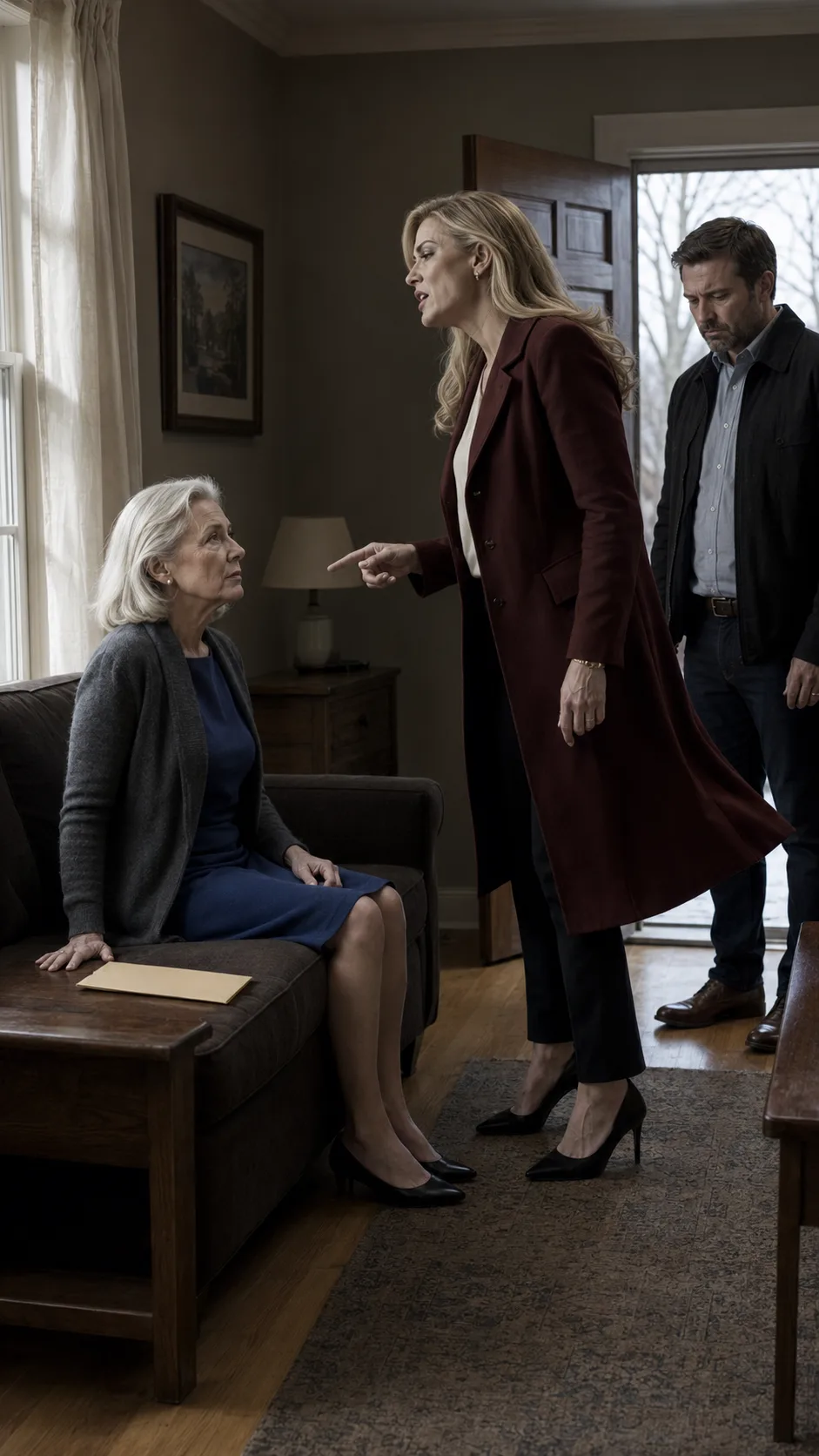
But one month later, Michael and Clare appeared at my door.
Michael carried a small gift bag.
Clare wore dark sunglasses despite the cloudy afternoon.
Their smiles looked rehearsed.
“Mom,” Michael said, “we need to talk.”
I let them inside.
Not because I wanted reconciliation.
Because I wanted them to hear the truth while looking directly into my eyes.
To be continued… Click “PART 3” to read the final part: 👉 PART 3 👈
Chapter complete
You have reached the end of this chapter.
Continue reading
A few more worlds to get lost in after this chapter.




