PART 2 — THE HOUSE THEY THOUGHT WAS THEIRS
It was the day before their Europe trip.
Chapter 2
It was the day before their Europe trip.
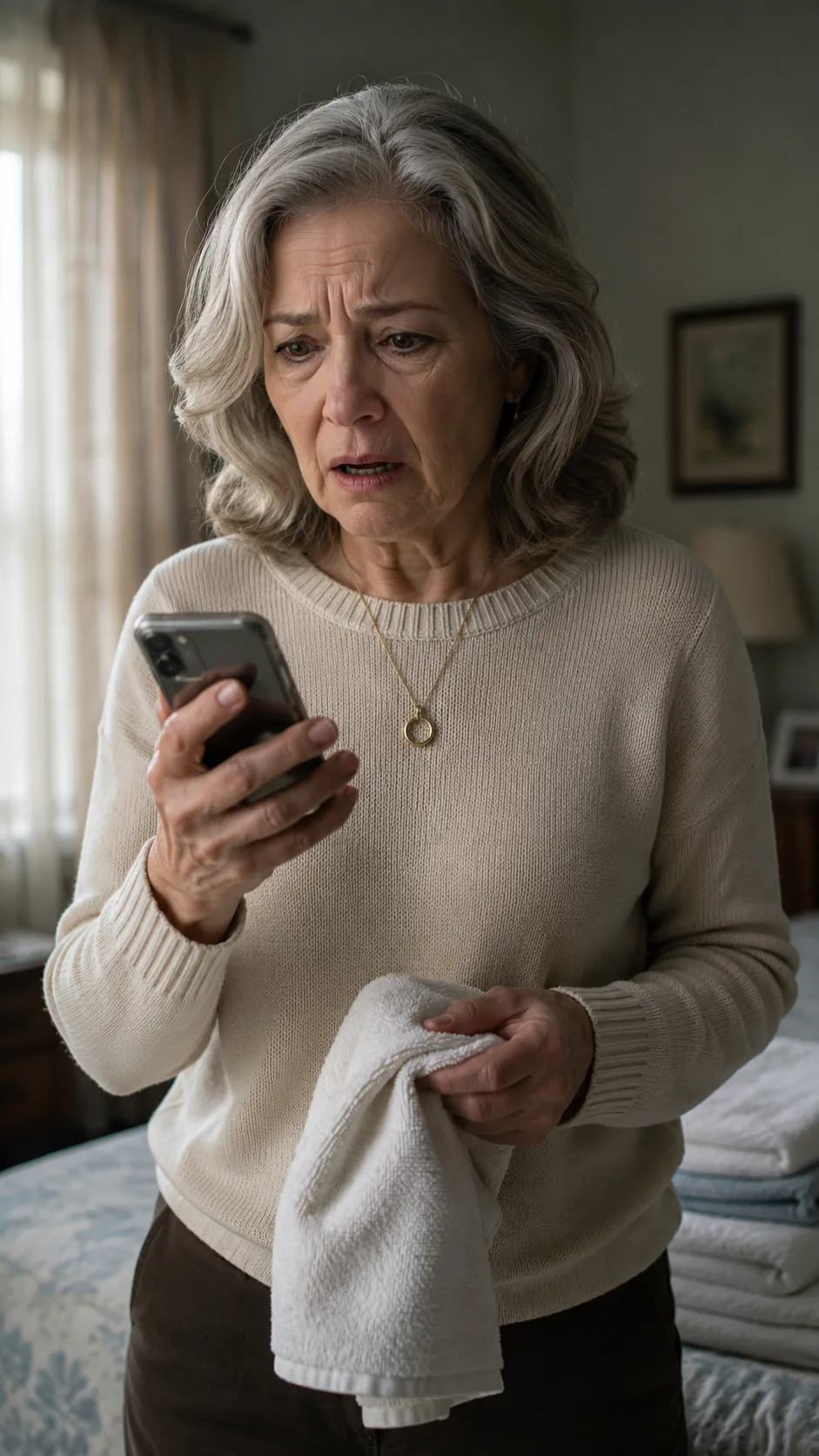
Daniel called while I was upstairs folding laundry. I missed it. A minute later, I saw he had left a message. I pressed play expecting something ordinary, a reminder about the mail or the alarm code or the neighbor who was supposed to check on the yard.
Instead, I heard a car door shut.
Then Melissa’s laugh. The real one. Not the soft one she used around me, but the sharp one, the one that came out when she was relaxed and unguarded and did not know anyone was listening.
Then my son’s voice.
“She’s a burden, Mel. She doesn’t see it, but she is. We’ve put our lives on hold long enough.”
I sat down so fast the towels fell out of my arms and landed in a pile on the bedroom floor. The phone was still pressed to my ear. The voicemail was still playing.
Then Melissa said,
“When the house is finally handled, everything gets easier.”
Handled.
I played it again. Then once more. Not because I had misheard. Because I needed to feel the full weight of it before I could decide what to do with it.
That night, I cried. Of course I did.
I walked through every room in the dark, touching the banister, the piano keys, Daniel’s old bedroom door with the dent near the handle where he had kicked it during a fight about curfew when he was sixteen.
I stood in the kitchen and put my hand on the counter where Frank used to stand drying dishes, his hip leaned against the edge, humming some song he never knew the words to. I kept hearing burden in my head until it stopped sounding like a word and started sounding like a verdict. Like something a jury says before they take everything
away.
By morning, the tears were gone.
What replaced them was not anger exactly. It was clarity. The kind that comes when you have been squinting at something for months and someone finally turns on the light and you realize the shape in the corner is not what you hoped it was.
I opened Frank’s file drawer.
Then I opened Daniel’s old study box, the one he had left in the spare room years ago and never come back for. And what I found there made everything colder.
Emails he had printed. Notes in Melissa’s handwriting. Questions about power of attorney. Language about confusion, decline, safety concerns, transition planning. Draft paragraphs that referred to me as resistant and emotionally unstable. A printed article about contesting the mental competency of elderly parents, with three sentences highlighted in yellow.
They had not just been waiting for me to get tired.
They had
been building a case.
I sat at the kitchen table for a long time after that.
The house was quiet. The morning light came through the windows the way it always did, warm and familiar, and the silence was the same silence I had lived inside for two years. But I was not the same woman.
Something had shifted behind my ribs, something structural, the way a foundation shifts before you can see the crack in the wall.
I made my own plans.
I called a real estate agent named Gloria Kessler, who had sold three houses on our street over the years and who knew how to move quietly. I told her what I wanted. She did not ask why. She simply said, “I can have a buyer by Friday.”
She did.
I called Frank’s lawyer, a man named Arthur Greer who had handled our affairs for twenty years and who listened to my instructions without interrupting, and then said, very softly, “Good for you, Eleanor.”
I called my bank.
I moved everything Daniel once assumed he would someday manage. I changed the beneficiaries on accounts he did not even know existed. I updated my medical directive. I named a new power of attorney, a woman named Sandra Chen who had been my friend since our children were in elementary school and who had never once looked at my house and seen a number.
The sale closed twelve days later.
Private. No sign in the yard. No open house. No family discussion. No warning.
While Daniel and Melissa were eating pasta under foreign lights and posting anniversary pictures with wine glasses in the air and tagging each other in photographs of sunsets over the Amalfi coast, movers wrapped my dishes in brown paper, boxed my photo albums, rolled Frank’s rugs, and carried my whole life out through the front door.
The piano went last.
I watched them wheel it down the ramp into the truck, and I put my hand on the side of it as it passed, the way you touch a coffin at a funeral, not because it helps, but because your hand needs somewhere to go.
The buyer was a young family. A couple in their thirties with two small children and a golden retriever. They closed fast, paid cash, and asked almost no questions.
The husband shook my hand and said, “We’ll take good care of it.”
I believed him. I had to. Letting go of a house is easier when you can tell yourself it will be loved again.
I rented a small furnished place by the lake. Two bedrooms. A bright kitchen with white tile and a window that faced east. No stairs. A balcony that caught the sunrise over the water.
I moved in with boxes stacked along the walls and Frank’s photo on the bookshelf and the blue vase from our anniversary on the windowsill, and for the first night I sat on the edge of the bed and listened to the unfamiliar sounds of a place that did not yet know me.
I left one thing behind at the house.
A note.
So when Daniel and Melissa came home bronzed and smiling and full of expensive little purchases wrapped in tissue paper and tucked into bags from shops with names I could not pronounce, they did not come back to my house.
They came back to an empty shell.
I watched Daniel finally shove the door open after the key failed. He must have used his shoulder. I watched Melissa step inside behind him. I watched both of them stop cold in the foyer when they saw the bare rooms, the stripped walls, the absence where thirty-two years of living used to be.
The hardwood floors were scuffed in places where furniture had sat so long the wood underneath was a different color. The kitchen was bare except for one thing.
A white envelope standing alone on the counter with his name written across the front in my handwriting.
The letter inside was not long.
I had spent enough years explaining myself to people who only heard what served them. I was finished defending my own existence inside my own home.
I kept it simple.
I told him the house no longer belonged to me and that it also did not belong to him. I told him his key had stopped working because the locks were changed after closing and the new owners would take possession in the morning.
I told him not to contact them, not to make a scene, not to embarrass himself further.
I told him I had heard the voicemail. Every word. And that I had found the rest. The power of attorney notes. The emails. The language about my decline. The way he and Melissa had been preparing to make me look confused enough to be managed, moved, and silenced.
I wrote, “You were not protecting me. You were planning around me. So I protected myself.”
And I signed it Mom.
I watched him read it once. Then again. His hand holding the paper dropped slowly to his side the way a flag drops when the wind stops.
Melissa snatched it from him before he could fold it away. Her sunglasses were pushed up into her hair now, and the tan she had been so proud of looked strange against the color draining from her face.
She read fast at first. Then slower. Then she looked around the empty kitchen as though the walls might correct the letter, as though the house itself might stand up and say no, this is a mistake, she is still here, everything is fine.
“No,” she said.
Just one word.
Small. Sharp. Disbelieving.
Daniel did not answer.
He moved past her into the living room, walking through the empty space where Frank’s chair had been. For one second, I saw the little boy he used to be, the one who ran barefoot across that rug with a toy fire truck in his hand, making siren sounds with his mouth while Frank pretended to be the burning building.
Then his face hardened again, and the boy was gone, replaced by a man whose inheritance had just walked out the door.
He pulled out his phone.
I knew he was calling me before mine lit up in my lap.
I let it ring.
From the truck, I could see him standing in the front window, phone pressed to his ear, looking out at the street with that posture men get when they are frightened but refuse to show it. He had no idea I was close enough to see the muscle jumping in his jaw.
He called again. Then again.
Melissa was pacing now. Her voice rose, muffled through the glass, but her hands told the story. One pointed at the envelope. One pointed upstairs. One sliced through the air like she was cutting up blame and handing him his share.
My phone buzzed with a message.
Mom. Call me now.
Then another.
This isn’t funny.
Then another.
Where are you?
I did not answer.
I sat very still in that moving truck with my hands folded over my purse, feeling something I had not felt in a long time.
Not revenge. Not even satisfaction.
Peace.
The kind that comes after a door closes and you realize you were the one holding it shut all along, pressing your weight against it, keeping everyone comfortable at the cost of your own back.
A few minutes later, a police car pulled up.
Daniel must have called them. That part did not surprise me. When people like my son lose control, they often reach for authority and hope it belongs to them.
Officer Bennett stepped out first.
I had known Paul Bennett since he was in high school. His mother used to bring lemon bars to church fundraisers, and I had taught him how to write a thank-you note the summer he worked for the neighborhood association.
He looked at the house, then at Daniel, then at Melissa, who was already talking before his shoes touched the porch.
“My mother-in-law is missing,” she said loudly. “She is elderly. She is confused. She sold this house without telling us. Something is clearly wrong.”
There it was.
The story.
The one they had been building in those printed emails and highlighted articles and careful conversations I was never supposed to hear.
Poor confused widow. Grieving. Vulnerable. Easily influenced. Needed family intervention.
I opened the truck door.
The sound was soft, but Daniel heard it. His head turned. For a moment, he looked almost relieved, the way a man looks when a crisis might be about to resolve itself and he can go back to the version of the story where he is the good son and his mother is simply having a bad day.
Then he saw my face.
Click the blue “PART 3” below to read the next part:
Chapter complete
You have reached the end of this chapter.
Continue reading
A few more worlds to get lost in after this chapter.




