Four months earlier, I had believed retirement would be peaceful.
Chapter 2
Four months earlier, I had believed retirement would be peaceful.
After thirty years teaching biology in Denver, I moved permanently into the cabin I had purchased with my own savings. It was modest—two bedrooms, a stone fireplace, a garden behind the shed—but it was mine. My mornings belonged to birdsong and tea. My evenings belonged to books, quilts, and the mountains turning gold outside my windows.
Then my only son called.
“Mom, I met someone.”
Daniel sounded happier than he had in years. Melissa worked in finance, loved hiking, and, according to him, understood people better than anyone he had ever known.
When he brought her to dinner, she was charming. Too charming.
She admired the view, praised my cooking, and studied every room as though calculating its value. Before dessert, she asked whether I had considered moving closer to the city.
“It must be difficult maintaining all this alone,” she said.
“I manage perfectly well.”
“Of course.” Her smile
never moved. “I’m only thinking about the future.”
Three weeks later, she and Daniel were married.
Almost immediately, his Sunday calls became less frequent. When he did call, his concerns sounded rehearsed.
“Melissa thinks you need a medical alert system.”
“Melissa thinks you should update your will.”
“Melissa says she can help organize your property documents.”
Each suggestion was wrapped in kindness, but the message underneath was clear: I was aging, declining, and no longer capable of making decisions.
Then Melissa began visiting without Daniel.
She brought pastries I had not requested, opened my cupboards as if she lived there, and asked questions about taxes, insurance, and the value of the land. One afternoon, she placed a leather folder on my kitchen table.
“This will let Daniel and me help manage everything,” she said. “Nothing really changes. You’ll simply have fewer responsibilities.”
I read enough to understand that signing would
give her broad control over my finances.
“I’ll have my lawyer review it.”
For the first time, her smile tightened.
A week later, my neighbor stopped waving. The cashier in town avoided my eyes. At the post office, I overheard two women discussing the “poor old woman in the cabin” who left her stove on and forgot to lock her doors.
Melissa had been building a story about me.
When I confronted Daniel, he sighed.
“She’s worried about you, Mom. Maybe you don’t realize when you forget things.”
That hurt more than Melissa’s lies.
For several days, I wrote down everything I did, terrified that perhaps I was losing my memory. Then I checked the evidence. My security system showed every door had been locked. My stove had an automatic shutoff. The documents Melissa claimed I had misplaced had never left their folder.
I was not forgetting.
She was manufacturing
incompetence.
The proof arrived in my mailbox: a letter addressed to Harland Family LLC, thanking the company for asking about estate consolidation. I had never created an LLC.
The next morning, I drove to Denver and placed the letter on the desk of my attorney, Ruth Bennett.
Ruth read it twice.
“This is a classic financial-exploitation pattern,” she said. “She isolates you, creates doubts about your competency, and then moves your assets through a legal entity she controls.”
“Can we stop her?”
Ruth leaned back, eyes sharp.
“We can do better. We can let her believe she succeeded.”
Her plan was simple but dangerous. We transferred the cabin into a revocable living trust with me as grantor and trustee. I retained total control, but the property no longer sat in my individual name. Ruth also began a quiet-title action, temporarily sealing the ownership records.
To Melissa, the public record would look uncertain.
To the law, the cabin was protected.
Next came the cameras.
I installed six discreet units throughout the living room, kitchen, hallway, porch, and driveway. Every visit would be recorded. Every paper would be photographed. Every conversation would become evidence.
When Melissa returned with another stack of forms, I pretended to be overwhelmed.
“You trust Daniel, don’t you?” she asked, placing her hand over mine.
“Of course.”
“Then sign. At your age, something could happen suddenly.”
I lowered my eyes and made my voice tremble.
“May I think about it for two days?”
She left the forms behind. Ruth later confirmed that the fine print transferred my property and financial authority to Melissa’s LLC.
Three days later, a property-management company mailed me a welcome packet. Attached was a deed carrying my name, a forged signature, and a fake notary seal.
Now we had fraud.
But Ruth wanted more.
“She needs to act on it,” she said. “Then there will be no way to call this a misunderstanding.”
So I called Daniel and casually told him I would be visiting an old friend for several days. Instead, I parked my car in town, walked home through the woods, darkened the cabin, and hid in the back bedroom with my tablet.
On the third afternoon, Melissa arrived alone.
She used a spare key she had stolen from beneath a false rock near my shed. Through the cameras, I watched her enter my home, turn down a photograph of Daniel and me, photograph every room, and open my private mail.
“This is going to sell for a fortune,” she murmured. “And she’ll never see a cent.”
I sent the recording to Ruth.
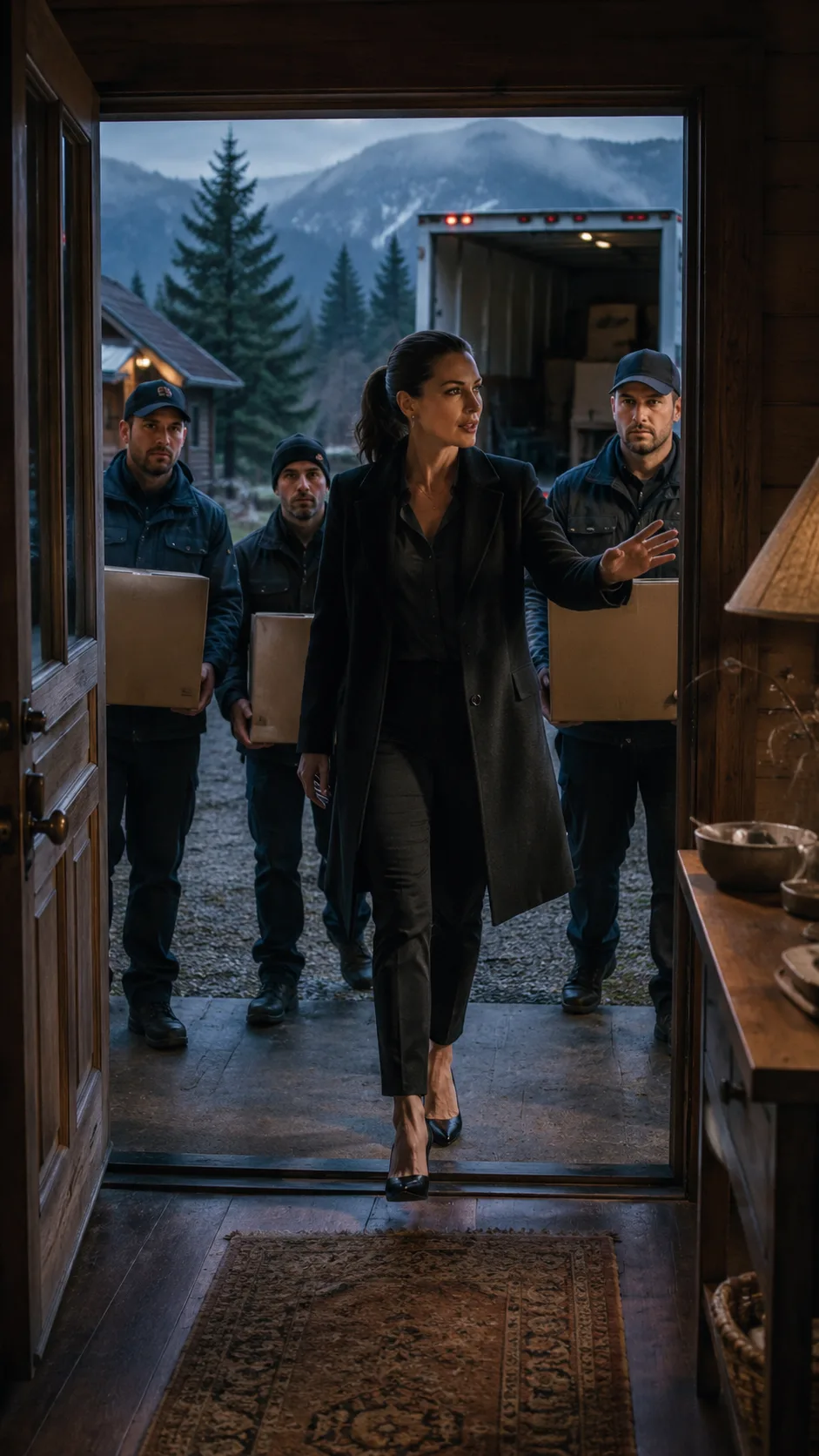
The following night, at four in the morning, headlights appeared on the driveway feed.
Melissa’s sedan.
Another car.
And behind them, a moving truck.
She had decided that forged ownership was not enough.
Before sunrise, she intended to empty my home and erase me from it.
To be continued… Click “PART 3” to read the final part: 👉 PART 3 👈
Chapter complete
You have reached the end of this chapter.
Continue reading
A few more worlds to get lost in after this chapter.




