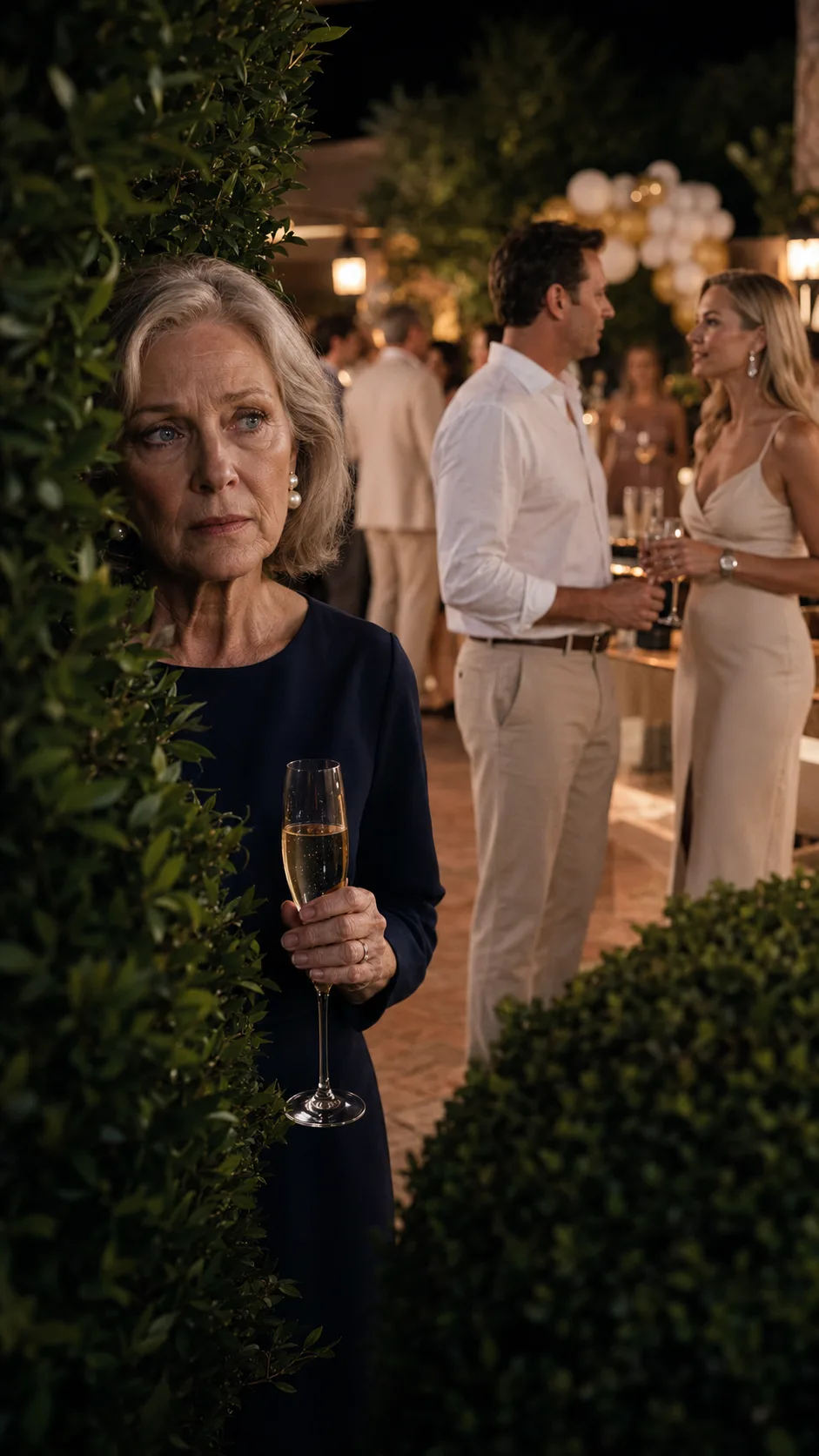
MY FAMILY CALLED ME A SOCIAL BURDEN AT MY SON’S BIRTHDAY, SO I MOVED $4.347 MILLION BEYOND THEIR REACH
PART 2 — THE TRUST THAT MADE THEM PANIC
Before that night, I had spent years explaining my sons to myself.
Chapter 2
MY FAMILY CALLED ME A SOCIAL BURDEN AT MY SON’S BIRTHDAY, SO I MOVED $4.347 MILLION BEYOND THEIR REACH
PART 2 — THE TRUST THAT MADE THEM PANIC
Before that night, I had spent years explaining my sons to myself.
John was busy.
David was overwhelmed.
Jessica was particular.
Zoe was young.
Everyone had their own lives, I said. Families changed. Calls got shorter. Holidays became complicated. A mother had to adjust.
I had adjusted so often I no longer remembered my original shape.
But standing in that backyard with the gold balloons swaying in the dry Arizona breeze, I saw the whole architecture of our family for what it had become. My sons did not dislike me enough to cut me off. That would have required courage. They preferred something tidier. Keep me close enough to access my generosity, far enough away to avoid the burden of loving me.
Out of obligation.
The words had weight because I knew exactly what obligation cost.
I met Frank Morrison when I was nineteen years old and working the lunch shift at a diner on the west side of Phoenix. He was
twenty-two, all long limbs and serious eyes, fresh out of college with a degree in engineering and a wallet so thin it might as well have been decorative. He came in three times in one week and ordered coffee he didn’t need just to sit at the counter where I was working.
On the fourth day, I said, “Are you going to ask me out, or are you planning to finance this courtship one cup at a time?”
He nearly choked.
Six months later, we were married.
His parents hated me.
They never said it in words as plain as Jessica’s, but they did not have to. My father poured concrete for a living. My mother cleaned houses in neighborhoods where women like Jessica later held book club. Frank’s mother called me “practical” the way other women might say “common.” His father told Frank he was making a sentimental mistake.
Frank made it anyway.
He wanted to build his own engineering firm. He had talent, discipline, and the kind of mind that could look at a half-finished commercial site and see load-bearing truth. What he did not have was money.
So I worked.
I worked mornings at the diner from six to two, came home to feed baby John, cleaned bottles, washed cloth diapers in a machine that sounded like it was dying, and then went back out for evening shifts at a family restaurant from five until midnight. Frank worked at our kitchen table under a yellow lamp, drafting proposals and calling men who said they would think about it and did not call back.
I missed John’s first steps because a trucker had spilled coffee across booth seven and my manager made me stay late.
I cried in the staff bathroom for three minutes, washed my face, and
carried on.
That is obligation.
I did it for three years.
By the time David was born, Frank had landed his first major contract. By the time John reached middle school, the firm had employees, a proper office, and a receptionist named Linda who knew more about everyone’s life than any payroll system. By the time our sons went to college, Frank Morrison Engineering had become one of those quiet Arizona success stories—never flashy, never famous, but strong enough that other men with bigger offices wanted to buy it.
Frank sold the company three years before he died.
He said he wanted time with me.
“We built the thing,” he told me on our back porch, holding my hand as the evening light turned the block wall pink. “Now let’s live in the house it bought us.”
We had three good years.
Then one Saturday morning, he went outside to trim the hedge and never came back in.
Heart attack. Sudden. Brutal. No warning dramatic enough to satisfy grief.
We buried him on a Tuesday.
By Friday, John arrived at my living room with a folder.
“Mom,” he said, sitting forward on the couch where Frank used to nap during Sunday football, “we need to start organizing the estate.”
The word organizing did a lot of work that day.
I was still sleeping in Frank’s T-shirt because his side of the bed had become a country I could not cross. There were casserole dishes in my refrigerator from women at church whose names I had forgotten. I had not yet canceled his dental appointment.
But John had a folder.
“Your father’s will is clear,” I said.
“I know. I’m not saying otherwise.” He softened his voice. “I just don’t want you overwhelmed.”
Overwhelmed.
People love that word for widows. It lets them take the steering wheel while pretending they are offering a blanket.
Frank had left everything to me. Everything. The Mesa house. A rental duplex in Phoenix. A four-unit apartment building in Tucson. A small commercial strip mall he had purchased in 2010 because, as he put it, “boring buildings pay reliable bills.” Investment accounts. Retirement accounts. Savings.
He had also written one sentence that turned out to be the clearest love letter he ever left me.
I trust my wife, Eleanor Patricia Morrison, to manage and distribute our estate as she sees fit.
As she sees fit.
John liked that sentence less every year.
“You don’t need all this, Mom,” he told me once after dinner at his house, when Jessica had disappeared into the kitchen with the plates but kept one ear on the conversation. “You’re one person in a three-bedroom house. You could downsize. We could help you invest the proceeds.”
Help you invest meant hand us the keys.
I did not.
I knew what we had. I knew where every deed was recorded, what every account held, which properties needed roof work, which tenants paid early, and which statements arrived quarterly. Frank had been brilliant, but I had been the one who kept receipts in labeled folders while everyone else thought money simply behaved because men understood it.
Still, I was generous.
That is the word I used then.
Later, I used the word trained.
When John and Jessica wanted to upgrade to the Scottsdale house, I gave them eighty thousand dollars toward the down payment.
When David’s wife needed surgery and their insurance left them with a bill that made him sound frightened over the phone, I paid forty-two thousand dollars directly to the hospital.
When Zoe went to college, I contributed fifty thousand dollars over four years. I mailed care packages with tea bags, fuzzy socks, and granola bars because she said the campus vending machines were overpriced.
When John wanted to expand his consulting business, I gave him a seventy-five-thousand-dollar loan, and we both performed the fiction that it would be repaid.
Birthdays. Christmas. Emergencies. Just because.
By the time I stood in that backyard beside the balloons, I had given my sons and their families a little over four hundred thousand dollars since Frank’s death.
Four hundred thousand dollars and I was still an obligation.
Four million dollars remained, and they had already spent it in their minds.
That was the number they did not know I had begun to hear differently.
I did not confront them at the party.
That would have given John the chance to lower his voice and say, “Mom, you misunderstood.” It would have given Jessica the chance to widen her eyes and perform wounded innocence. It would have turned my pain into an awkward scene they could discuss later with sympathy for themselves.
So I set the champagne glass down on the dessert table.
I walked through their beautiful patio, through their curated guests, past Zoe still standing with her phone, past the buffet that probably cost more than my Social Security check, and out the front door.
No one stopped me.
No one noticed.
At least not then.
The drive home was calm in a way that should have frightened me. I did not cry. I did not grip the wheel. I did not rehearse speeches. I simply drove south through the desert dark while the city lights thinned and the radio played some country song about a man regretting things too late.
At my house, I turned off the security alarm and stood in the entryway without switching on the lights.
Frank’s photograph sat on the console table, silver frame catching the porch light through the glass beside the door. He had been laughing when the picture was taken. Not posing. Laughing. Dorothy had said something rude at a barbecue and Frank had turned toward me just as the camera clicked.
“You trusted me,” I whispered.
The house answered with silence.
I went to my office and opened the safe.
There are people who think older women keep memories in hatboxes and recipes in drawers. I keep documents.
Deeds. Account statements. Tax records. Insurance policies. Property appraisals. Lease agreements. Investment summaries. Copies of Frank’s will. Copies of my own outdated estate plan leaving everything equally to John and David, with Zoe receiving certain personal items and a trust provision for any future grandchildren.
I laid it all across my desk.
Then I found the business card I had tucked into a folder two years earlier.
Patricia Chen, Estate Planning Attorney.
My friend Dorothy had used Patricia after her own husband died. “Sharp as a tack,” Dorothy told me over lunch. “And not sentimental unless sentiment appears in writing with a legal purpose.”
It was 9:37 on a Saturday night.
The card listed an office number, an email, and a cell.
I called the cell.
Patricia answered on the third ring.
“This is Patricia Chen.”
“My name is Eleanor Morrison,” I said. “I’m a friend of Dorothy Haberman’s. I need to restructure my entire estate, and I need it done immediately.”
A pause.
“Immediately is a word people use loosely, Mrs. Morrison.”
“I’m not using it loosely.”
“What happened?”
“My family reminded me of my place.”
Another pause. Shorter this time.
“Are you in danger?”
“No.”
“Has anyone threatened you?”
“Not yet.”
“Are you currently under anyone’s pressure to make financial decisions?”
I looked at the documents on my desk. “No. That is precisely the problem they’re going to have.”
Patricia exhaled once, not impatiently. Professionally.
“What are you trying to accomplish?”
“I want my assets protected from my children. I want them legally moved beyond their reach before they realize I’m doing it. Everything is in my name alone. I am widowed. No one has power of attorney. I am of sound mind. I am not confused. I am not being coerced. I am angry, but I am not reckless.”
“That is more clarity than I get from most callers during business hours.”
“Can you meet tomorrow?”
“At eight in the morning. My office in Tempe. Bring everything.”
“I will.”
“Mrs. Morrison?”
“Yes?”
“If you are doing this because of one argument, sleep on it.”
“It wasn’t one argument,” I said. “It was the receipt.”
I did not sleep that night.
Not because I was spiraling. Because I was counting.
I made coffee at midnight, then regretted it at one, then made more at three because regret is not the same as sleep. I spread documents across the office floor in careful piles. Real estate. Investments. Retirement. Bank accounts. Insurance. Gifts given. Promises made. Promises broken.
The house in Mesa: roughly four hundred twenty thousand dollars.
The Phoenix duplex: five hundred sixty thousand.
The Tucson four-unit building: seven hundred thirty thousand.
The commercial strip mall: one point two million.
Investment accounts: approximately nine hundred thousand.
Retirement accounts: four hundred fifty thousand.
Savings and checking: seventy-five thousand.
My paid-off car: twelve thousand on a generous day.
Total: about four million three hundred forty-seven thousand dollars.
$4.347 million.
I wrote that number on a yellow legal pad and stared at it until dawn began pressing pale light against the blinds.
Four million dollars had not made me matter to them.
It was about to make them listen.
Before sunrise, I did one more thing. I opened a fresh page and wrote down every moment I had excused away.
John telling me I was too old to understand modern business when I offered advice drawn from forty years beside Frank.
Jessica wrinkling her nose at my pot roast because they were “eating cleaner now.”
David forgetting my birthday and laughing weakly two weeks later when I mentioned it. “Mom, you know how crazy work gets.”
Zoe visiting during college only when laundry or tuition deadlines were involved.
Thanksgiving dinners where I brought pies no one cut.
Christmas mornings when my checks were opened with more enthusiasm than my hugs.
Phone calls that ended the moment I asked a second question.
Plans made without me, then explained afterward as if excluding me had been a scheduling oversight and not a decision.
By seven, I had six pages.
I did not write them to punish anyone.
I wrote them because memory lies when love is frightened.
At eight sharp, I was in Patricia Chen’s conference room.
She was younger than I expected, maybe fifty, with short gray hair, navy glasses, and the expression of a woman who had made a career out of watching families become honest when money entered the room.
She shook my hand firmly.
“Show me what we’re working with.”
I did.
For the next hour, Patricia asked questions so precise they felt like scalpels.
“Any joint ownership with either son?”
“No.”
“Any outstanding loans secured against these properties?”
“No.”
“Any written agreements promising future inheritance?”
“No.”
“Have you ever been diagnosed with cognitive impairment?”
“No.”
“Do you manage your own bills?”
“Yes.”
“Do you understand that disinheriting adult children often triggers conflict?”
“I was invited to conflict. I’m choosing the venue.”
Her pen paused.
Then she nodded.
“What do you want done?”
“I want to establish an irrevocable charitable remainder trust. I want the trust to own the real estate and investment assets. I want income rights during my lifetime. I want professional oversight if I become incapacitated. When I die, I want the assets liquidated and distributed to causes that would have helped women like me before we learned to help ourselves.”
Patricia’s eyes lifted.
“You’ve done reading.”
“I’ve done living.”
“What causes?”
“Women’s shelters. Legal aid for seniors facing financial exploitation. Scholarships for nontraditional students, especially women who had to work before they could study. Community housing funds in Arizona. Maybe a small annual grant in Frank’s name for engineering students who are the first in their family to attend college.”
“And your sons?”
“Nothing.”
“Personal property?”
“Photographs, letters, some jewelry. I’ll make separate instructions. If they want memories, they can ask for them like human beings. If they want money, they’ll need to learn disappointment.”
Patricia leaned back.
“Your sons may allege undue influence.”
“I called you. No one sent me.”
“They may allege lack of capacity.”
“I expected that.”
“They may say you acted out of temporary anger.”
“I did act from anger. Anger is not incapacity. It’s information.”
For the first time that morning, Patricia smiled.
“No. It is not incapacity.”
She called in her paralegal, Derek, a polite young man who looked too fresh-faced to understand the ugliness families could produce until I saw the calm way he organized my documents. He had seen plenty.
“We can work today,” Patricia said. “All day if necessary. Emergency service will be expensive.”
“How expensive?”
“Approximately fifteen thousand dollars, possibly more depending on filings and additional legal review.”
I thought about the eighty thousand for John’s house. The forty-two thousand for David’s medical bill. The seventy-five thousand loan that had vanished into John’s business like water into desert sand.
“Fifteen thousand is a bargain,” I said.
By ten-thirty, Patricia had arranged for another estate attorney to conduct an independent capacity assessment. By noon, Derek had scanned half my life into a secure system. By two, I was reading trust provisions aloud while Patricia stopped me after each section.
“What does that mean in your own words?” she asked.
“It means I retain income from the trust while I’m alive, but the assets are no longer personally owned by me once transferred.”
“And can you revoke it later because your sons apologize?”
“No.”
“And do you understand that?”
“Yes.”
“Say it plainly.”
“If I do this, they cannot inherit these assets. I cannot later change my mind because Thanksgiving gets sentimental.”
Derek looked down quickly, but not before I saw his mouth twitch.
At three, the independent attorney, a man named Robert Ellis, sat with me alone while Patricia waited outside.
“Mrs. Morrison,” he said, “why are you making this change now?”
“Because my children have mistaken access for love.”
He wrote something down.
“Have they harmed you physically?”
“No.”
“Threatened you?”
“Not yet.”
“Are you afraid of them?”
I considered that.
“I am afraid of who I become when I keep hoping they will value me. I am not afraid of their anger.”
He studied me over his reading glasses.
“You understand they may never forgive this.”
“They were already comfortable forgetting me.”
By six-thirty Sunday evening, I had signed more pages than I could count. Notaries stamped. Witnesses signed. Derek prepared filing packets for first thing Monday morning. Patricia walked me to the elevator with a folder of copies and the weary satisfaction of a surgeon after a clean operation.
“Once property transfers record with the counties and the trust funding is complete,” she said, “your sons will have no legal claim to those assets. They can spend money trying to challenge it, but we have built a strong record of capacity and intent.”
“Good.”
“Are you all right?”
It was the first personal question she had asked me all day.
I looked at the closed elevator doors, then at my reflection in the metal.
“I think I am,” I said. “For the first time in a long time.”
That night I slept under Frank’s old quilt and did not dream.
The next morning at 9:12, Patricia called.
“It’s done,” she said. “The trust is official. Filings are in progress and the property transfers are recorded or queued with the appropriate county offices. You are protected.”
I sat at my kitchen table with a cup of tea and watched sunlight move across the tile.
“How soon can someone see the public record?” I asked.
“If they know where to look, very soon.”
John knew where to look.
That was the first time $4.347 million stopped being an inheritance.
It became a mirror.
The first call came Tuesday morning at 8:04.
John.
I let it ring.
The second came at 8:07.
John again.
The third came at 8:11.
Jessica.
By 8:30, David was calling from California.
I made toast.
Text messages started arriving with the impatient rhythm of hail against a window.
Mom, call me immediately.
Eleanor, John is very upset. Whatever you’ve done, we need to discuss this like adults.
Mom, John called me freaking out. What’s going on? Please call me back.
Then John again.
Did you transfer the properties into some kind of trust? Why would you do that without talking to us?
Us.
There it was.
I had spent eight years being reminded that my life was mine only when it was lonely and ours the moment it held value.
I did not respond.
Instead, I took my tea to the back porch and watched two hummingbirds wage war over sugar water. They were tiny and ridiculous and magnificent, hovering in midair with more spine than half the people I knew.
At 2:17 that afternoon, John arrived at my house.
I heard his SUV before I saw it. Expensive engines have a certain entitled purr. He pulled into the driveway behind my Honda, blocking me in as if I were planning to flee my own home.
He rang the bell.
I stood in the hallway, six feet from the door.
He rang again.
“Mom?”
I did not move.
He knocked, harder.
“Mom, I know you’re home. Your car’s here.”
My hand rested on the edge of the small table where Frank’s photograph sat.
John knocked again.
“This is serious. We need to talk about what you’ve done.”
What I had done.
Not what he had said.
Not how we had arrived here.
Only what I had done.
The mother in me rose up like an old reflex. Open the door. Explain. Soothe him. Help him understand. Remind him he is loved. Protect him from consequences.
That mother had worked double shifts. That mother had paid tuition. That mother had pretended a late birthday text was enough because adult children were busy. That mother had made excuses until her excuses had become a second language.
She reached for the lock.
Then the woman I had become at the party put her hand over the mother’s and held it still.
John stayed on my porch for eleven minutes.
His voice changed in stages. Concern. Irritation. Anger. Performance.
“Mom, this isn’t funny.”
“Open the door.”
“You’re being unreasonable.”
“Dad would be devastated.”
That one landed close to bone.
Frank would not have been devastated.
Frank had trusted me.
When John finally left, he reversed out of my driveway too fast and clipped the edge of my trash bin with his bumper. The bin rocked but did not fall.
Neither did I.
By Wednesday, the messages sharpened.
You can’t just transfer everything away from the family.
That money represents Dad’s legacy.
We should have been consulted.
You’re making decisions you don’t understand.
Jessica sent her own contribution just after dinner.
This is elder abuse in reverse. You are punishing your children because you can’t handle that we have different lives. John has done nothing but try to include you.
I read the phrase elder abuse in reverse three times.
Then I laughed so hard I startled myself.
David’s approach was softer and therefore more dangerous.
His voicemail came at 9:40 Wednesday night.
“Mom, it’s me. Listen, I don’t know exactly what happened with John, but I love you, okay? I don’t want us fighting. I’m worried you’re making a decision from hurt. Maybe we can all get on a Zoom with a mediator or someone neutral. Nobody wants your money, Mom. We just don’t want you manipulated.”
Nobody wants your money.
The words floated in my kitchen like a soap bubble.
Then he ended the message with, “Call me. We can fix this before it gets out of hand.”
Out of hand meant out of theirs.
On Thursday morning, exactly five days after John’s party, I sent one text to both my sons.
Boys, I overheard what was said about me at John’s birthday party. I heard that I am included out of obligation and that I do not matter. I have decided to relieve you of that obligation. My assets have been legally placed in the Eleanor Morrison Charitable Trust. I retain income during my lifetime. Upon my death, the remaining assets will go to charitable causes. Please do not contact me again unless you are interested in a relationship based on love and respect, not inheritance expectations.
I read it twice.
Then I pressed send.
John called twenty-three times in the next hour.
I counted because numbers had started telling the truth.
David called seven times.
Jessica sent a text so long my phone displayed it as a gray wall of indignation. I deleted it unread.
Then I blocked Jessica.
I did not block my sons yet.
Hope dies hard, even when it deserves to.
By Friday, John had hired an attorney.
The letter arrived by email from a firm in Phoenix with a name long enough to imply oak paneling. It stated that my recent estate changes raised concerns regarding capacity, undue influence, possible financial exploitation, and irregular asset transfers. It requested a voluntary meeting to discuss resolution before litigation became necessary.
Resolution.
Another expensive word doing dirty work.
I forwarded it to Patricia.
She called twelve minutes later.
“Predictable,” she said.
“Can he win?”
“Not on what I’ve seen. He can spend money. He can annoy us. He can embarrass himself if he insists. But win? No. We documented capacity. You initiated contact. You understood the consequences. There is no undue influencer unless he wants to argue your own spine counts as a third party.”
“I wish you could put that in the response.”
“I’ll make it more boring and more frightening.”
She did.
Her letter was a masterpiece of professional ice. It recited dates, procedures, witnesses, capacity evaluation, independent review, trust structure, and my clear written intent. It invited John’s attorney to provide any factual basis for his claims and warned that frivolous litigation against an elderly widow managing her own assets would be addressed accordingly.
John’s attorney did not write again.
John did.
Dad built that estate for his family, not strangers.
I typed a reply, deleted it, typed another, deleted that too.
Finally, I sent one sentence.
Your father built a life with me, not a prize for people who forgot I was human.
Then I blocked him for the night.
To be continued… Click “PART 3” to read the final part: 👉 PART 3 👈
Chapter complete
You have reached the end of this chapter.
Continue reading
A few more worlds to get lost in after this chapter.




