PART 3: THE SECOND CHANCE
About a month after I closed the account and signed the new will, there was a knock on my door.
Chapter 3
PART 3: THE SECOND CHANCE
About a month after I closed the account and signed the new will, there was a knock on my door.
It was a Saturday afternoon. I had been in the garden pulling weeds and trimming back the roses. My hands were dirty. My knees ached from kneeling, but for once, it felt like ordinary pain, not the kind that came from being used.
The knock came just as I was washing my hands at the kitchen sink.
I dried them on a towel and walked to the door, expecting a delivery or maybe one of the neighbors.
But when I looked through the peephole, my stomach tightened.
Michael stood on the porch holding a small gift bag.
Behind him, half a step back, was Clare.
She wore sunglasses even though the sky was overcast. Her arms were crossed. Her mouth was tight.
I almost didn’t open the door.
I almost turned around and pretended I wasn’t home.
Then I thought, No.
I had spent too long avoiding difficult moments. Too
long shrinking myself to keep other people comfortable.
So I opened the door.
Michael’s face broke into a smile.
It looked practiced.
Rehearsed.
“Hey, Mom.”
“Michael.”
I did not step aside immediately.
He glanced at Clare, then back at me.
“Can we come in? We’d like to talk.”
I moved aside without a word.
They entered the living room like they had done a hundred times before, but everything felt different now. The air was heavier. The space between us wider.
Michael sat on the couch and placed the gift bag on the coffee table.
Clare stayed near the window, sunglasses still on, expression unreadable.
I sat in the chair across from them, hands folded in my lap.
And I waited.
Michael cleared his throat.
“So… it’s been a while.”
“Yes,” I said.
He shifted. “We wanted to come by and clear the air. Things got out of hand, and
we think maybe there were some misunderstandings.”
Misunderstandings.
That was the word he chose.
“Go on,” I said.
“Look, we know we made mistakes. Clare didn’t mean what she said about your birthday. She was stressed. We both were. Things have been tough, and sometimes people say things they don’t mean.”
I watched him.
His hands fidgeted. His eyes moved around the room, landing everywhere except on me.
Clare finally spoke.
“We’ve apologized multiple times, but you won’t even talk to us.”
“I’m talking to you now,” I said calmly.
“You know what I mean.” She removed her sunglasses. Her eyes were sharp with frustration. “You cut us off without explanation. You closed the account. You won’t return our calls. We’ve been trying to reach you for weeks.”
“I know.”
Michael leaned forward, softening his voice.
“Mom, we’re family. Family doesn’t just give up on each other. We need you.”
There it was.
The word that was supposed to make everything all right.
Family.
“Do you?” I asked.
He blinked. “What?”
“Do you need me, Michael? Or do you need my money?”
His face tightened.
“That’s not fair.”
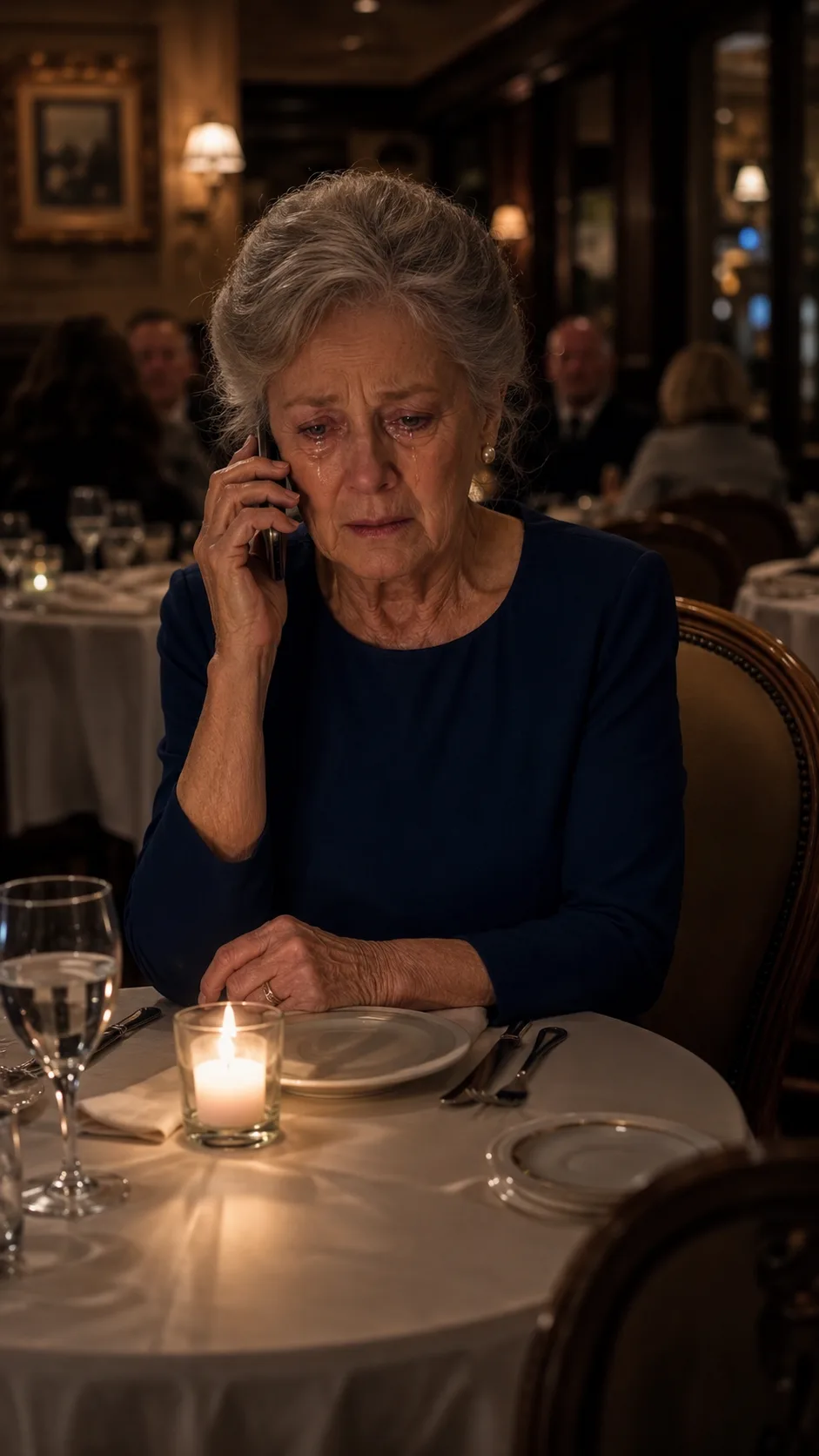
“Neither was sitting alone at a restaurant on my 75th birthday.”
The room went silent.
Michael looked down at his hands.
Clare’s jaw clenched.
I continued, my voice steady.
“For three years, I sent you $700 every single week. I paid for groceries, car repairs, bills, rent, emergencies, and vacations that were somehow also emergencies. I skipped my own doctor’s appointments so I could cover yours.”
“We didn’t ask you to do that,” Clare muttered.
“You’re right,” I said. “You didn’t ask. You expected.”
Michael looked up then.
“We were struggling, Mom. We needed help.”
“And I helped. Over and over. But help is not supposed to be one-sided. It is not supposed to come with forgotten holidays, unanswered calls, and disrespect.”
“We said we were sorry,” he said, his voice rising.
“You said a lot of things, Michael. You said you’d come for Thanksgiving. You said you’d visit at Christmas. You said you’d take me to dinner for my birthday. But the only promise you ever kept was spending my money.”
Clare stepped forward.
“This is ridiculous. You’re acting like we’re terrible people just because we needed financial support.”
“No,” I said, standing. “I’m acting like someone who finally realized her worth is not measured in weekly deposits.”
Michael stood too and reached for the gift bag.
“We brought you something. A peace offering. Can we just start over?”
I looked at the bag.
Then at his desperate expression.
Then at Clare’s irritation, barely hidden behind her polished face.
I thought about the woman I used to be.
The woman who would have accepted that gift, hugged them both, and pretended everything was fine just to keep peace.
But I was not her anymore.
“Michael,” I said gently, “do you remember what Clare said when I called that night?”
He hesitated.
“She was upset.”
“She said my age meant nothing to you.”
“She didn’t mean it like that.”
“Maybe not,” I said. “But I decided to believe her.”
He stared at me.
“So I made sure my money means nothing to you either.”
His face went pale.
“What does that mean?”
“It means I changed my will. It means every dollar I have is going somewhere it will actually be appreciated. It means you don’t have to worry about my age, my expectations, or my feelings anymore.”
“Mom…”
His voice cracked.
“You taught me something important,” I said. “You taught me that love without respect is not love at all. It is convenience.”
For the first time since they arrived, Michael had no response.
No argument.
No justification.
Clare grabbed her purse.
“Let’s go. This is pointless.”
Michael picked up the gift bag slowly, as if he were moving underwater. He looked at me one last time.
For a moment, I saw something flicker across his face.
Regret, maybe.
Or disappointment that his plan had failed.
“Goodbye, Mom.”
“Goodbye, Michael.”
They left without another word.
I watched through the window as they got into their car and drove away.
Then I sat back down in my chair.
My heart was beating steady and strong.
And what I felt was not emptiness.
It was relief.
Life has a way of settling into new rhythms when you allow it.
The weeks after Michael and Clare’s visit were quiet, but not in the lonely way I had known before.
This quiet felt intentional.
There is a difference between being forgotten and choosing solitude.
I began noticing things I had missed for years.
The way morning light came through my kitchen window at exactly 8:15, turning everything gold. The sound of birds arguing in the tree outside. The taste of coffee when I drank it slowly instead of rushing through another banking transaction.
Every Friday morning, I still opened my banking app at 9:00.
Old habits take time to break.
But instead of sending money to Michael, I transferred $700 into the scholarship fund Edward helped me establish.
Seven hundred dollars every week.
Just like before.
Except now it was going somewhere that mattered.
The fund was officially called the Robert and Jean Carter Second Chances Scholarship.
Edward had suggested including Robert’s name, and the moment he said it, I knew it was right.
Robert would have loved it.
He always believed in helping people who were trying to help themselves.
The first month, I heard nothing. I only watched the balance grow and imagined the women it might help someday.
The second month, Edward called.
“We have our first applicant,” he said. “Her name is Linda. She’s fifty-three, recently divorced, and wants to go back to school to become a nurse.”
“Tell me about her.”
He read parts of her application. Linda had spent thirty years raising children and supporting her husband’s career. After the divorce, she realized she had no degree, no recent experience, and no way to support herself long term.
Nursing had always been her dream.
Life had simply gotten in the way.
“She sounds perfect,” I said.
By the third month, we had five applicants.
By the sixth, we had awarded three scholarships.
And then, one Tuesday afternoon, a letter arrived.
It was handwritten on simple stationery, the kind you buy at a drugstore. The return address came from a town two hours away.
I made myself tea before opening it.
The letter began:
Dear Mrs. Carter,
You don’t know me, but you changed my life.
Her name was Patricia. She was fifty-six. She had applied for the scholarship to finish her degree in social work after spending twenty years as a stay-at-home mother. Her husband had passed away suddenly, and she found herself alone, “uneducated” in the eyes of employers, and terrified of the future.
“When I got the letter saying I had been chosen,” she wrote, “I cried for an hour. Not sad tears. Relief tears. Because for the first time in two years, I felt like someone saw me. Like someone believed I was worth investing in.”
She described her first semester.
The nervousness.
The late-night studying.
The first A she received on an exam.
The moment she realized she could actually do this.
The letter ended with one sentence I must have read twenty times.
Your kindness gave me hope when I had none.
I sat there with the letter in my hands, tears running down my face.
But these tears were different.
They were not the tears I cried at that restaurant.
They were not humiliation.
They were purpose.
Real purpose.
Not the hollow kind that comes from being needed only because you are useful. The genuine kind that comes from helping someone who actually wants to build a better life.
I folded Patricia’s letter carefully and placed it in a special box.
I began calling it my reminder box.
A box for good things.
Real things.
That evening, Betty came over for dinner. We had started eating together once a week, taking turns cooking. I made chicken and roasted vegetables.
She noticed the box on the side table.
“What’s that?”
“Letters from scholarship recipients,” I said.
“Reminders.”
“Reminders of what?”
“That there are still people in the world who say thank you and mean it.”
Betty smiled.
That knowing smile of someone who had watched me go through hell and come out the other side.
“You did a brave thing,” she said. “Walking away.”
“It didn’t feel brave at the time.”
“That’s what makes it brave.”
We ate dinner and talked about everything and nothing. We laughed at things that were not even that funny.
When she left, she hugged me at the door.
“I’m proud of you.”
I had heard those words before.
But from Betty, they meant something.
The following Sunday, I stood in church and looked around at the faces I had known for years.
People who had watched me shrink.
People who had tried to warn me.
People who had waited patiently for me to find my way back to myself.
After the service, Dorothy approached me.
“You look different,” she said.
“Different how?”
“Lighter.” She touched my arm gently. “Like you’re not carrying the world anymore.”
She was right.
I wasn’t.
I had spent three years carrying the weight of other people’s choices, other people’s needs, other people’s ingratitude.
The moment I set it down, I realized how much space it had been taking up.
Space I could now fill with joy.
I started volunteering at the library on Wednesdays. Just a few hours with the children’s reading program. Watching their faces light up when a story surprised them reminded me why I had loved working there in the first place.
I planted a vegetable garden in the backyard.
Tomatoes. Peppers. Herbs.
Every morning, I walked outside with coffee and checked on them, marveling at how something small could become something nourishing.
I even signed up for a painting class.
I was not good at it.
That was not the point.
The point was doing something simply because I wanted to.
My house is quiet now.
But it is not lonely.
It is peaceful.
There are still moments when I think about Michael.
I wonder if he is okay. I wonder if he ever thinks about me with anything other than resentment. I wonder if he remembers those wilted daisies from his first paycheck.
But those moments pass more quickly now.
Because I have learned something important.
You cannot make people love you the way you deserve to be loved.
You cannot force gratitude.
You cannot manufacture respect.
All you can do is decide what you are willing to accept.
And what you are not.
I decided I was not willing to be invisible anymore.
Now, every Friday morning, I sit at my kitchen table with coffee and my phone. I send $700 to women who need it. Women who will use it to build better lives. Women who understand the value of a second chance.
Last week, I received another letter.
This one came from a woman named Grace. She used her scholarship to become a teacher. She included a photo of herself in her classroom, surrounded by students, smiling like she had found exactly where she belonged.
I placed her letter in the box with the others.
And every now and then, I smile at how life came full circle.
They taught me what my worth was by forgetting it.
And I reminded them by walking away.
THE END.
Chapter complete
You have reached the end of this chapter.
Continue reading
A few more worlds to get lost in after this chapter.




