PART 2: WHEN THE MONEY STOPPED
Saturday morning, I woke up at 7:30, just like always.
Chapter 2
PART 2: WHEN THE MONEY STOPPED
Saturday morning, I woke up at 7:30, just like always.
The sun came softly through my curtains. I made coffee. I took my pills. I sat at the kitchen table with my phone beside me.
But this time, I did not open the banking app.
I simply sat there with both hands wrapped around my mug, watching steam rise and disappear.
For three years, Friday morning had meant one thing: $700 sent to Michael.
Never late.
Never questioned.
Never once delayed for my own needs.
But now it was Saturday. The birthday dinner had already happened. The empty chairs were no longer something I could explain away. Clare’s words were no longer something I could pretend I hadn’t heard.
“Your age means nothing to us anyway.”
The words circled in my mind until they stopped sounding like words and became something colder.
A verdict.
I picked up my phone—not to send money, just to feel its weight in my hand.
To remind myself that this small object had become a leash.
One tap, and I could keep pretending.
One tap, and they would be comfortable again.
One tap, and I could buy another week of fake peace.
But then I remembered something Robert used to say.
“If you have to beg someone to love you, they don’t.”
I set the phone down.
And I did nothing.
Sunday came and went.
I watered my plants. I read a book. I made soup.
I lived.
Monday afternoon, my phone rang.
Clare’s name appeared on the screen.
I stared at it for a moment before answering.
“Hello.”
“Hey,” she said lightly. “Your transfer didn’t go through. Did you forget?”
There it was.
No greeting.
No asking how I was.
No mention of my birthday.
Just the money.
“No,” I said.
A pause.
“What do you mean, no?”
“I mean it’s not coming.”
The
lightness vanished from her voice.
“You can’t just stop. We depend on that.”
Something about the way she said “that” instead of “you” made everything clear.
They did not depend on me.
They depended on what I provided.
There was a difference.
“I know,” I said quietly. “That’s the problem.”
“What’s that supposed to mean?”
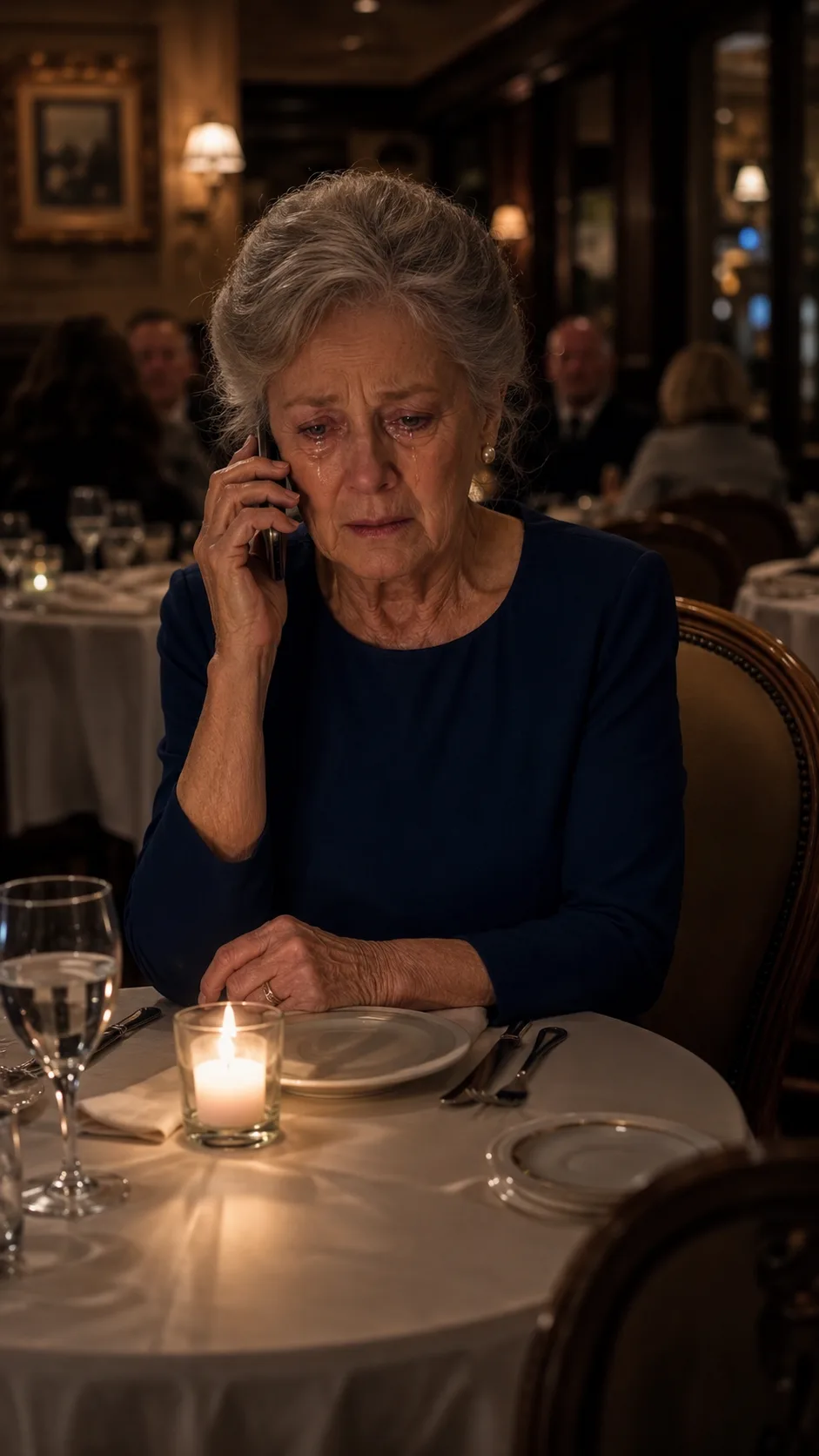
I could have explained. I could have listed the missed holidays, the ignored calls, the broken promises, the birthday dinner. I could have told her how it felt to sit in a restaurant wearing pearls from my dead husband while my family laughed at a party.
But I didn’t.
Because the truth was, she already knew.
They both did.
They just didn’t care.
“It means I’m done,” I said.
“Done?” She laughed, but it wasn’t real laughter. It was the sound of someone angry and trying to stay in control. “You can’t be serious. We
have bills. The kids need things. Michael’s still looking for steady work.”
“Then maybe he should look harder.”
Silence.
Cold and sharp.
“Are you really going to do this?” she asked. “After everything we’ve been through? After we counted on you?”
“You counted on my money,” I said. “Not on me.”
“That’s not fair.”
“Neither was my birthday.”
Another pause.
When she spoke again, her voice was different. Colder.
“Fine. Do what you want. But don’t expect us to come running when you need something.”
The threat hung in the air.
But it didn’t frighten me.
Because I had needed them for months. I had needed them to show up. To remember. To ask how I was. To care.
And they hadn’t.
So what exactly was I losing?
“Goodbye, Clare.”
I hung up.
My hand shook as I set the phone down. My heart beat fast, the anxious kind of fast that comes after doing something you cannot take back.
But beneath the fear, there was relief.
For three years, I had carried the weight of their lives on my shoulders. I had stretched myself thin. I had skipped appointments, ignored pain, emptied savings, and convinced myself sacrifice was love.
It wasn’t.
Love shows up.
Love remembers.
Love does not put a price tag on your worth.
The messages started the next morning.
I was eating toast with jam when my phone buzzed again and again.
Michael.
Three missed calls.
Two voicemails.
Four text messages.
I set the phone back down and finished breakfast.
When I finally listened to the voicemails, his voice was strained.
“Mom, call me back. We need to talk about this.”
The second was sharper.
“Mom, this isn’t funny. You can’t just cut us off without warning. Call me.”
I deleted both.
The texts were worse.
“Mom, please, let’s talk. I don’t understand why you’re doing this.”
“Clare’s upset.”
“The kids are asking about you.”
“This isn’t like you.”
That last one almost made me laugh.
Because the truth was, this was exactly like me.
The real me.
The woman I had buried beneath all that giving.
I did not respond.
By Wednesday, the messages changed. Desperation hardened into anger.
“You know what? Fine. Be selfish. See if we care.”
“You’re really going to abandon your grandkids like this?”
“I hope you’re happy sitting alone in that house.”
Each message was meant to cut. Meant to guilt me. Meant to drag me back into the role they preferred.
But I read them one by one and felt clarity.
Because every angry word proved what I already knew.
They didn’t miss me.
They missed my money.
Thursday morning, I received a call from a number I didn’t recognize.
“Hello?”
“Aunt Jean. It’s Daniel.”
My nephew. Michael’s cousin. We hadn’t spoken in over a year.
“Daniel. What a surprise.”
“Yeah, listen,” he said, uncomfortable. “Michael called me. He’s really upset. Says you two had some kind of falling out.”
I stayed quiet.
“He says you just stopped helping them out of nowhere. That you’re not answering his calls. He’s worried about you.”
Worried about me.
That was rich.
“I’m fine, Daniel. Thank you for checking.”
“So it’s true. You stopped sending money.”
There it was again.
Even Daniel had been told the story in terms of money.
“It’s more complicated than that,” I said gently.
“Look, I’m not trying to take sides, but they have kids. Maybe you could help just a little longer.”
For the kids.
Everyone always said that.
As if children could turn entitlement into morality.
“The kids will be fine,” I said. “Goodbye, Daniel.”
Over the next few days, two cousins and one family friend called with the same script. Michael and Clare had clearly reached out to everyone. They painted me as cruel, unstable, selfish.
Selfish.
That word kept appearing.
As if keeping my own money—money my husband earned through thirty-two years of work—was a moral failure.
So I started a folder.
A plain manila folder from my desk.
Into it, I placed printed bank transfers. Text messages. Receipts. Bills I had covered. Every extra request. Every “emergency.”
At first, I didn’t know why I was doing it.
Then I realized.
It was proof.
Not for them. They would never care about proof.
For me.
Because when people twist reality long enough, you start doubting your own memory. You wonder if maybe you are cruel. Maybe you are overreacting. Maybe you are remembering wrong.
But numbers don’t lie.
Over three years, I had given them more than $100,000.
One hundred thousand dollars.
And in return, I received forgotten holidays, unanswered calls, empty chairs, and a daughter-in-law who said my 75th birthday meant nothing.
I stared at those statements for a long time.
Then something inside me settled.
I was not abandoning them.
I was saving myself.
Friday afternoon, Betty called.
“Honey,” she said carefully, “have you been online today?”
“No. Why?”
“You might want to check Facebook. Clare posted something.”
My stomach tightened.
“What kind of something?”
“Just look. Then call me back if you need to talk.”
I opened the app.
At the top of my feed was Clare’s face.
She was crying.
The video was titled: When Family Turns Their Back on You.
She sat in her living room, tissues in hand, makeup smudged just enough to look authentic. The lighting was soft. Flattering. Planned.
“I don’t usually do this,” she began, voice trembling, “but I need to talk about something that’s been breaking my heart.”
I should have closed the app.
But I couldn’t.
“My husband’s mother has decided to cut us off completely,” she said. “No warning. No conversation. She just stopped helping us, and now we’re struggling to keep the lights on.”
She dabbed her eyes.
“We’ve always been there for her. Always. When she needed us, we showed up. But the moment we needed support, she turned her back on us and our children.”
Our children.
She said it like I had taken food from their mouths.
“I don’t understand how someone can claim to love her grandchildren but refuse to help them. How can you watch your family suffer and do nothing?”
The comments were already filling up.
“I’m so sorry.”
“Some people are selfish.”
“Praying for you.”
Each one felt like a knife.
Clare leaned closer to the camera.
“We’ve tried talking to her. We’ve apologized for anything we might have done wrong, but she won’t even answer our calls. It’s like we don’t exist anymore.”
I set the phone down with trembling hands.
This was what it had become.
A public trial.
I was the villain. She was the victim. Three years of generosity had vanished, and all that remained was my refusal to continue.
For a moment, anger rose inside me.
I wanted to comment.
I wanted to post the bank statements.
I wanted to tell everyone about the restaurant. The empty chairs. The birthday.
But Robert’s voice came back to me.
“The truth doesn’t need to be loud. It just needs to be true.”
So I did nothing.
I made tea.
I sat in my chair.
And I waited.
By evening, Betty called again.
“Have you seen the comments now?”
“No,” I said. “Should I?”
“Yes,” she said. “You really should.”
I opened the post again.
The comment section had changed.
Someone named Jennifer had written, “Wait, didn’t you just post about your new diamond bracelet last week?”
Another person replied, “And wasn’t there a vacation photo from two weeks ago? Spa day and everything?”
Then another: “If you can’t keep the lights on, how are you affording designer purses?”
I clicked Clare’s profile.
There they were.
A new bracelet captioned Treating myself.
A weekend getaway with champagne glasses and sunset views.
Shopping bags from expensive stores.
The comments kept coming.
“This doesn’t add up.”
“Maybe the grandmother had a good reason.”
“You can’t cry poverty and post luxury items in the same week.”
Someone had even screenshotted her posts and shared them beside the crying video.
The contrast was damning.
One commenter wrote, “If she helped you for years and you couldn’t even show up for her birthday, maybe she’s not the problem.”
I didn’t know how they knew about the birthday. Maybe Clare slipped in a comment. Maybe someone from church knew. Maybe the truth found its own way out.
Within an hour, Clare’s video disappeared.
Deleted.
But screenshots remained.
Questions had been asked.
The story had changed.
I sat back with my tea, feeling something I did not expect.
Not victory.
Release.
I had not defended myself.
The truth had done it for me.
Monday morning, I woke with a clarity I hadn’t felt in years.
I got dressed. Ate a proper breakfast. Then I wrote a list.
First stop: the bank.
The branch was quiet when I arrived. A young woman smiled at the desk.
“How can I help you today?”
“I need to close an account,” I said.
She pulled up my information.
“Which account?”
“The joint savings account. The one ending in 4-7-9-3.”
I had opened it years earlier when Robert was still alive. After he passed, I kept Michael’s name on it, thinking it would help if something happened to me.
But emergency had become convenience.
Help had become expectation.
“You’re listed as the primary holder,” the woman said. “You can close it without his signature. Would you like to transfer the remaining balance to your personal checking account?”
“Yes, please.”
Ten minutes later, the account was closed.
The money was mine again.
Second stop: Edward Bennett’s law office.
Edward was a semi-retired lawyer from church. Kind, patient, the sort of man who explained legal documents without making you feel foolish.
His office sat above a bookstore downtown.
“Jean,” he said warmly, “what can I do for you?”
I sat across from him and folded my hands.
“I need to change my will.”
He nodded. “All right. What kind of changes?”
I took a breath.
“I want to remove my son and his wife as beneficiaries.”
Edward’s pen paused for only a second before he continued writing.
“And who would you like to designate instead?”
“I want to establish a scholarship fund,” I said. “For women over fifty who are trying to go back to school or start new careers.”
His expression softened.
“That’s a beautiful idea.”
“I’ve been thinking about women who gave everything to their families and then found themselves alone,” I said. “Women who put their dreams on hold and deserve another chance.”
Women like me.
I didn’t say that part.
But Edward understood.
We spent the next hour discussing details. How the fund would be created. How recipients would be chosen. How much money would go into it.
When we finished, Edward leaned back.
“I have to ask, and you don’t have to answer. Is everything all right with your son?”
I smiled, though it did not reach my eyes.
“Everything is exactly as it should be.”
He nodded.
“For what it’s worth, Jean, I think this is admirable. A lot of people would act out of anger. This is purposeful.”
“It’s not about punishing him,” I said. “It’s about honoring what Robert and I built. We worked hard for that money. I want it to go somewhere it will be appreciated.”
“Then this is exactly the right choice.”
When I left his office, the afternoon air felt lighter.
For the first time in years, I felt peace.
Not the kind that comes from avoiding conflict.
The kind that comes from finally choosing yourself.
My kindness was not gone.
It had simply found a better home.
To be continued… Click “PART 3” to read the final part: 👉 PART 3 👈
Chapter complete
You have reached the end of this chapter.
Continue reading
A few more worlds to get lost in after this chapter.




