PART 2 — THE FORGED PAPERS AND THE WIDOW WHO STARTED COLLECTING PROOF
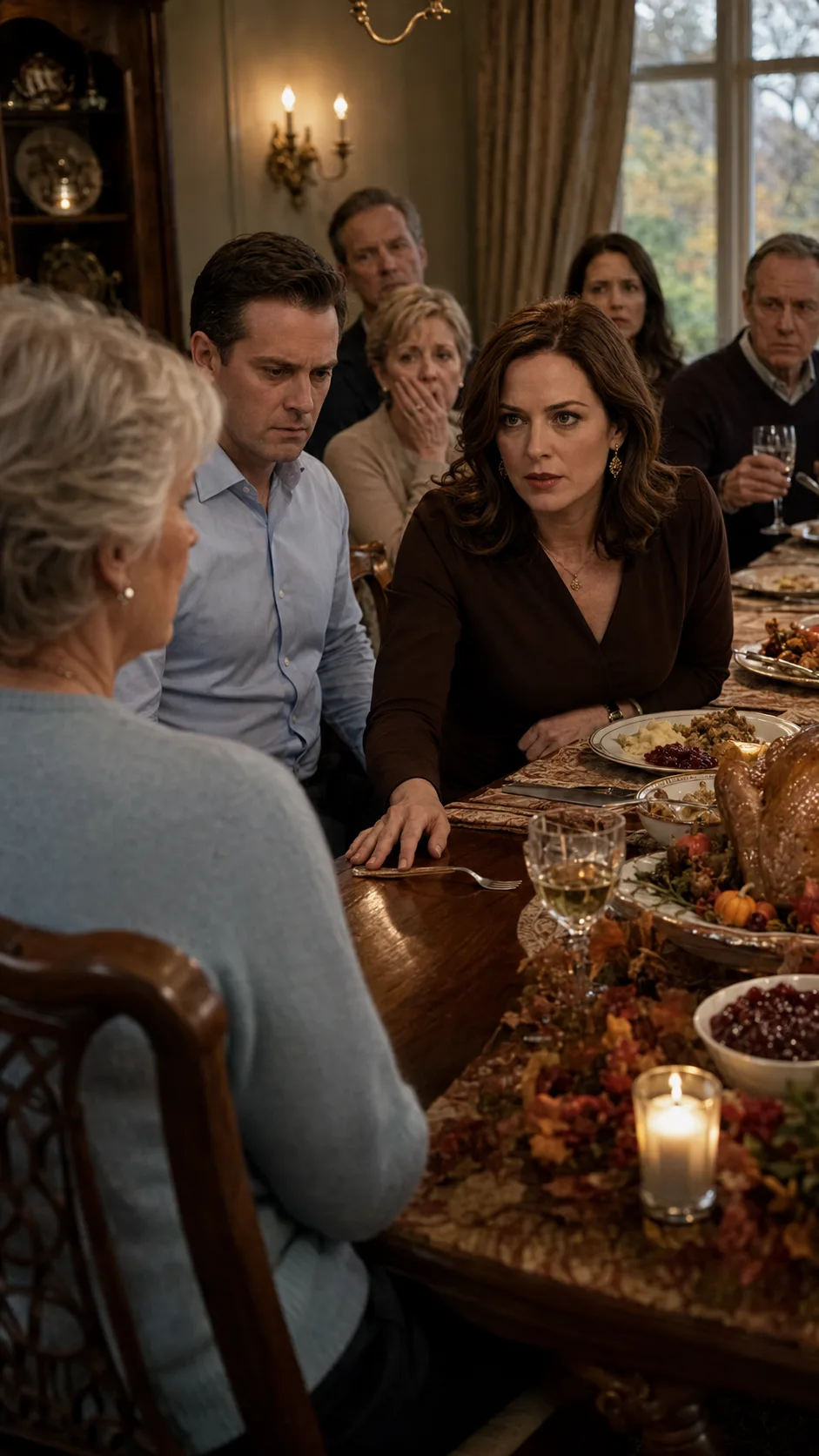
Eight months before that Thanksgiving table turned into a battlefield, I was just trying to breathe.
Chapter 2
PART 2 — THE FORGED PAPERS AND THE WIDOW WHO STARTED COLLECTING PROOF
Eight months before that Thanksgiving table turned into a battlefield, I was just trying to breathe.
Henry died on a Tuesday morning in March. The kind of morning where the light comes through the kitchen windows soft and gentle, the way he always loved. He went peacefully, they told me, at the hospital, in his sleep, no pain, just there one moment, gone the next.
I nodded when they said it, like I understood. But I did not understand. I still do not understand how someone can be your whole world for forty-seven years and then just vanish.
The funeral was a blur. People I had not seen in decades showed up with casseroles and sympathy cards. Neighbors brought flowers. The house filled with voices and condolences and the smell of lilies, which I have hated ever since. Everyone meant well. I know they did. But all I wanted was for them to leave so I could sit in the silence Henry left behind.
When they
finally did leave, when the last guest walked out the door and the house went quiet, that is when it hit me. It was everywhere. His reading glasses were still on the coffee table, folded on top of the newspaper he never got to finish. His coffee mug sat in the sink, the one with the chipped handle that he refused to throw away. His jacket hung by the front door. His slippers waited at the foot of the bed.
The house was not just a house. It was forty-seven years of mornings and evenings and little routines we built together without even realizing we were building anything. It was the place where we raised Eric, where we celebrated birthdays and anniversaries, where we sat on the porch every summer evening and talked about nothing and everything.
Henry built parts of this house with his own hands. The back porch
where we drank our morning coffee. The garden beds where I still grow tomatoes every year. The bookshelf in the living room that holds every novel we ever read together. This was not just my home. It was us.
And now it was just me.
The first week after the funeral, I barely left the bedroom. I could not look at his side of the bed without crying. Could not walk past his office without expecting to hear him humming while he took care of our paperwork. Could not cook dinner without setting two plates on the table out of habit.
Grief is strange that way. It does not arrive all at once. It comes in waves. Some days I felt fine, almost normal. Other days I could not get out of bed.
Eric called every day that first week. Sweet boy. He always was. Even as a grown man
with kids of his own, he still checked on his mother, asked if I needed anything, offered to come by and help with paperwork or bills or whatever needed doing.
I told him I was fine.
I was not fine. But what mother wants to burden her son with her sadness?
Then about ten days after the funeral, Eric showed up at the door with Caroline.
I was in my bathrobe, hair unwashed, eyes swollen from another sleepless night. I looked terrible and I knew it. But they were family. They had seen me at my worst before.
Caroline smiled when I opened the door, but it was not her usual smile. It was too wide, too bright. The kind of smile people wear when they are trying to appear helpful but really just want something.
“We came to check on you,” she said, stepping inside without waiting for an invitation, “and we brought some things to help you get organized.”
Organized. That word stuck with me.
Eric followed behind her, carrying a small box. He looked tired. Guilty, almost. He kissed my cheek and set the box on the kitchen counter without saying much.
Caroline walked through the living room like she was inspecting it. Her eyes moved from the furniture to the walls to the windows, taking everything in with a strange kind of focus, like she was measuring something.
“This house is so big for just one person,” she said, running her finger along the back of the sofa. “You must feel so lonely here.”
I did feel lonely. But hearing her say it out loud felt intrusive, like she was pointing out a wound I was trying to keep covered.
Eric sat down at the table, rubbing his face with both hands. He looked like he had not slept much either.
“Mom,” he said quietly, “we know this is hard. We just want to help.”
Caroline opened the box she had brought and started pulling out folders. Papers. Documents I had never seen before.
“We talked to the estate lawyer,” she said, spreading the papers across the table like she was setting up a presentation. “There are some things we need to go over. Papers Henry signed. Plans he made.”
Plans. Another word that felt wrong.
I sat down slowly, pulling my robe tighter around me. My head felt foggy. I had barely eaten in days. Barely slept. And now Caroline was talking about plans and papers and things I could not focus on.
She pointed to a document at the top of the pile.
“This is about the house,” she said. “Henry wanted to make sure Eric was taken care of. He signed some things to make the transition easier.”
“Transition?” That word hit me like cold water. “What transition?” I asked.
Eric would not look at me. He just stared at the table, jaw tight.
Caroline kept smiling.
“Just standard estate planning. Nothing to worry about right now. We just wanted you to be aware.”
But I was not aware. I was confused.
Henry and I made decisions together. Always. We had a will. We had plans. And none of them involved Eric taking the house while I was still living in it.
I wanted to ask more questions, but my brain felt like it was moving through mud. Everything was too heavy, too much.
Caroline gathered the papers back into the folder and stood up.
“We’ll come back in a few days and go over everything properly,” she said. “For now, just rest. Let us handle the hard stuff.”
She squeezed my shoulder as she walked past, and it felt more like a claim than comfort.
Eric hugged me on his way out, whispered, “I love you, Mom.” But he did not say anything else. Did not explain the papers. Did not tell me what Caroline was really talking about.
After they left, I sat at that table for an hour staring at the spot where the folder had been. Something felt wrong. I could not name it yet. Could not put my finger on what exactly did not sit right. But deep in my chest, in that place where instinct lives, I felt it.
At the time, I thought it was just grief making me paranoid, making me see problems that were not really there.
But I was wrong.
At the time, I did not realize Caroline had already begun lining up her steps, slowly, carefully, preparing to take everything while I was too heartbroken to notice.
Three days later, they came back.
I was in the kitchen when I heard the knock. Not a gentle knock either. The kind that says, “Someone is already planning to come inside whether you answer or not.”
Caroline did not wait for me to reach the door. I heard it open. Heard her heels clicking across the hardwood floor. Heard her voice calling out like this was her house and not mine.
“Maggie, we’re here. Hope you don’t mind. The door was unlocked.”
The door was not unlocked. I locked it every night before bed, but I did not have the energy to argue.
Eric appeared in the kitchen doorway first, looking apologetic in that quiet way of his. He was carrying the same box from before, only now it looked heavier. Fuller.
“Hey, Mom,” he said softly. “How are you feeling?”
I wanted to tell him I felt like my chest had a hole in it. That I woke up every morning forgetting Henry was gone and then remembered all over again. That the silence in this house was so loud it kept me awake at night.
But I just said, “I’m managing.”
Caroline swept in behind him, already pulling out a chair at the kitchen table like she owned the place. She set her purse down, smoothed her blouse, and gestured for Eric to bring the box over.
“We really need to go through these papers today,” she said, not looking at me. “The lawyer said time is important with estate transfers.”
There was that word again. Transfer.
Eric set the box on the table and started pulling out folders. Not just one this time. Several. Each one thick with documents, tabs sticking out the sides, sticky notes marking pages.
I sat down slowly, feeling that familiar fog creeping back into my head. I had not been sleeping, had barely been eating. The doctor said it was normal for widows. That grief does things to the body.
But sitting there looking at all those papers, I wished I felt sharper, more awake.
Caroline opened the first folder with a kind of confidence that made my stomach tighten. She slid a document across the table toward me, pointing at the top with one perfectly manicured finger.
“This is the transfer request,” she said. “Henry filed it about six months before he passed. It transfers ownership of the property to Eric.”
I stared at the paper. The words blurred together. Property. Ownership. Transfer. Legal jargon I did not understand.
“He never mentioned this to me,” I said quietly.
Caroline tilted her head, her expression softening in a way that felt rehearsed.
“I know, sweetie. He probably didn’t want to worry you. You know how men are. They think they’re protecting us by keeping things to themselves.”
But Henry was not like that. We talked about everything. Our finances. Our wills. Our plans for when one of us was gone. He would not have made a decision this big without telling me.
“Can I see the signature?” I asked.
Eric shifted in his chair, rubbing the back of his neck. He still had not looked me in the eye.
Caroline flipped to the last page and pointed.
There at the bottom was a signature. Henry’s name written in black ink.
Except something about it looked wrong.
I had seen Henry’s signature thousands of times on birthday cards, on checks, on our mortgage papers, on the Valentine he gave me the year before he died. I knew the way he looped his H, the way his Y always slanted to the right.
This signature was close. But it was not exact.
“When did he sign this?” I asked.
“Last September,” Caroline said without hesitation. “He came into the lawyer’s office while you were visiting your sister in Florida. Remember that trip?”
I did remember that trip. I had gone to help my sister after her surgery. I was gone for two weeks. But something about the timeline felt off. I could not place it yet, but it nagged at me.
Caroline kept talking, pulling out more papers.
“And this one is the updated deed. Once it’s processed, the house officially transfers to Eric. It’s cleaner this way. Less complicated for taxes and inheritance.”
Eric finally spoke, his voice strained.
“Mom, we’re not trying to rush you out or anything. You can stay here as long as you need. That’s not what this is about.”
But if that was true, why did it feel like they were already measuring the rooms for new furniture?
Caroline pulled out another document.
“This form just needs your signature acknowledging the transfer. It’s a formality, really, but the lawyer said we need it to move forward.”
She slid a pen across the table toward me.
Everything in my body screamed not to touch it.
“I need to read through all of this first,” I said.
Caroline’s smile tightened just barely.
“Of course. Take your time. But the lawyer did mention there’s a deadline. Something about estate taxes and probate. If we miss the window, it gets complicated. Expensive.”
She said it like she was doing me a favor. Like signing away my home was somehow helping me.
I pulled the folder closer and started reading, or trying to read. The words swam on the page. Legal terms I did not recognize. Dates that did not quite line up. References to meetings I had no memory of.
And then I saw it.
One of the forms was dated October 12th. Henry had been in the hospital that entire week. Pneumonia. I stayed by his bedside every single day. He could barely hold a pen to sign the hospital admission forms, let alone legal documents.
I set the paper down carefully, keeping my face neutral.
“I’d like to talk to the lawyer myself,” I said.
Caroline’s smile faltered.
“The lawyer’s out of town,” she said quickly. “He’ll be back next week. We can all meet with him then if you want.”
“What’s his name?” I asked.
Eric finally looked up.
“James Abbott. Same guy you and Dad always used.”
That part was true. James had handled our wills, our taxes, all our legal matters for over twenty years. If Henry really had signed these papers, James would have been involved. But James would have called me, would have made sure I understood, would have asked questions. Unless he did not know these papers existed.
Caroline stood up, gathering the folders back into the box.
“We’ll leave these with you so you can review them,” she said. “Just let us know when you’re ready to sign.”
She said it like it was inevitable. Like my signature was just a matter of time.
Eric hugged me before they left, and I held on to him a little longer than usual. My boy. My sweet boy who used to tell me everything, who used to come to me when something was bothering him. Now he could not even look me in the eye.
After they left, I sat at that table for a long time staring at the box.
Something was very, very wrong.
The dates did not match. The signature looked off. And the way Caroline talked about the house, the way she called it “the property,” like it was already hers, like I was just a tenant waiting to be pushed out.
For the first time since Henry died, I felt something other than grief. I felt anger. And underneath that anger, something sharper. Something that told me to pay attention, to stop letting the fog of sadness cloud my judgment.
Henry’s voice echoed in my head. Something he used to say when I was worried about a decision.
“Trust your gut, Maggie. It knows things your brain hasn’t figured out yet.”
My gut was screaming.
And I was finally ready to listen.
The visits started small.
Two days after they left the box of papers, Caroline showed up at my door with coffee and pastries from the bakery downtown. The good kind, the ones Henry used to bring home on Sunday mornings.
“I was in the neighborhood,” she said, breezing past me into the kitchen. “Thought you might need some company.”
I did not need company. I needed space to think, to figure out what those papers really meant. But I let her in because that is what you do. You let family in.
She set the pastries on the counter and started opening cabinets like she was looking for something.
“Where do you keep your good plates these days?”
“Same place they’ve always been,” I said.
She found them, served the pastries, poured the coffee, and sat down at the table like we were about to have a lovely chat. But her eyes kept wandering. To the living room. To the hallway. To the windows overlooking the backyard.
“This house really is too much for one person,” she said, taking a sip of her coffee. “All these rooms, all this upkeep. The yard alone must be exhausting.”
“I manage,” I said.
“But do you want to manage?” She leaned forward, her voice dripping with concern. “Maggie, I’m worried about you. You’re here all alone, surrounded by memories. Maybe it would be healthier to start fresh somewhere smaller. Somewhere without all this weight.”
There was that word: fresh. Like my entire life with Henry was something I needed to wash off and start over.
“I like my memories,” I said quietly.
She smiled, but it did not reach her eyes.
“Of course you do. I just think you deserve to live somewhere that feels lighter. More manageable. Have you thought about those nice senior communities? Some of them are really beautiful. Lots of activities. People your age.”
People my age. Like I was too old to live in my own home.
I changed the subject, but Caroline did not stay much longer. She finished her coffee, gathered her purse, and kissed my cheek on the way out.
“Think about what I said,” she told me. “Sometimes the best way to honor the past is to let it go.”
After she left, I threw the rest of the pastries in the trash.
The next week, she came by three more times. Once to help me sort through Henry’s clothes—which I had not asked for help with. Once to check on the furnace, even though it was working perfectly fine. And once to see if I needed anything from the store, which turned into another lecture about downsizing.
Each visit, her tone shifted. Less gentle. More insistent.
“You really should consider selling,” she said during the furnace visit. “The market’s good right now. You could make a nice profit and move somewhere easier.”
“I’m not selling,” I said.
“But eventually, you’ll have to,” she pressed. “I mean, when the transfer goes through, it would just make sense.”
When. Not if. When. Like it was already decided.
Eric started showing up with her, but he barely spoke. Just stood there looking uncomfortable while Caroline walked through my home pointing out things that needed fixing, things that were outdated, things that would be so much work for someone my age.
One afternoon, I was sitting on the back porch with my tea when I heard voices in the yard. I walked around the side of the house and found Caroline talking to a man in a work shirt. He was holding a clipboard, looking at the roof, taking notes.
“What’s going on?” I asked.
Caroline turned, not even startled.
“Oh, I called a contractor to get an estimate on some repairs. Just being proactive. If Eric’s going to take over the property, we need to know what needs fixing.”
“I didn’t ask for an estimate,” I said.
“I know, but I figured it would save you the trouble.” She smiled. “Consider it a favor.”
The contractor looked between us, clearly uncomfortable.
“Ma’am, do you want me to do this assessment or not?”
“Not,” I said firmly. “Please leave.”
He left. Caroline stayed.
“You’re being unreasonable,” she said, her voice cooling. “I’m trying to help you. We’re trying to help you. But you’re making this so much harder than it needs to be.”
“Making what harder?” I asked.
“The transition,” she said, like I was a child who needed simple words. “Maggie, the papers are already filed. The transfer is happening whether you cooperate or not. I’m just trying to make it easier on everyone.”
That was the first time she said it out loud—that she thought the house was already theirs.
I felt something crack inside me. Not grief this time. Something sharper.
“Get off my property,” I said.
Her eyes widened.
“Excuse me?”
“You heard me. Leave.”
She opened her mouth to argue, but something in my face must have stopped her. She grabbed her purse and walked to her car without another word.
Eric called twenty minutes later.
“Mom, what happened? Caroline’s upset.”
“She had a contractor in my yard without asking me,” I said.
He sighed, long and heavy.
“She’s just trying to help.”
“Is she, Eric? Or is she trying to push me out of my own home?”
Silence on the other end.
“Eric, tell me the truth. Did your father really sign those papers?”
More silence. Then, quietly:
“I don’t know, Mom. Caroline said he did. She showed me the documents.”
“But did you talk to James? Did you verify any of it?”
“Caroline handled all of that. She said it was easier if she coordinated everything.”
My chest tightened.
“Eric, you’re my son. I need you to be honest with me. Do you believe her?”
The pause that followed told me everything.
“I don’t know what to believe anymore,” he whispered. “She’s my wife. You’re my mother. I’m stuck in the middle and I don’t know what’s true.”
After we hung up, I went to my bedroom and pulled out the journal I had been keeping. Pages and pages of dates, times, things Caroline said, contradictions I had noticed.
I was not imagining this. I was not being paranoid. Caroline was circling my home like a predator. And every visit, every suggestion, every contractor she called was another step toward pushing me out.
But I was done being pushed.
I picked up the phone and called James Abbott’s office.
His assistant answered.
“Abbott Legal. How can I help you?”
“This is Maggie,” I said, my voice steadier than it had been in weeks. “I need to speak with James as soon as he’s back in town. It’s urgent.”
“He’ll be back next week. I’ll have him call you first thing.”
“Thank you,” I said.
After I hung up, I sat on the edge of my bed staring at that journal. The fog was lifting. The grief was still there, heavy and constant. But underneath it now, something else was growing.
Clarity.
And with clarity came the understanding that I was not going to let this happen. Not to me. Not to the home Henry built. Not to the life we made together.
Caroline thought grief made me weak.
She was about to learn how wrong she was.
James was supposed to call me back within the week, but before he could, someone else showed up at my door.
It was a Thursday afternoon, unseasonably warm for April. I was in the garden, pulling weeds from the flower beds Henry had built the summer before he died. Working with my hands helped, kept my mind from wandering to dark places.
I heard a car pull into the driveway but did not think much of it. Probably a delivery. Maybe a neighbor dropping off more unwanted casseroles.
Then came the knock.
When I opened the door, a man in a gray suit stood on my porch holding a leather portfolio and a camera. He was young, maybe thirty, with the kind of polite smile people wear when they are about to ask you for something.
“Good afternoon,” he said. “Are you Margaret?”
No one called me Margaret except doctors and bill collectors.
“Who’s asking?” I said.
He pulled a business card from his pocket and handed it to me.
“Ryan Chen, property assessor with Summit Realty Services. Your daughter-in-law scheduled an appointment for me to evaluate the property today.”
My stomach dropped.
“I didn’t schedule anything,” I said.
“You look confused,” he said, glancing down at his tablet. “It says here, Caroline… let me check the last name.” He scrolled. “Caroline requested a full property assessment for potential sale or transfer. She said you were expecting me.”
I was not expecting him.
I had no idea he was coming.
But Caroline did.
Caroline planned this.
For a moment, I considered slamming the door in his face, telling him to leave and never come back. But something stopped me. Some instinct that told me to let this play out, to see exactly what Caroline was doing behind my back.
“Come in,” I said, stepping aside.
He looked relieved.
“Thank you. This should only take about an hour. I’ll need to photograph the interior, measure the rooms, check structural elements, that sort of thing.”
I followed him through the house, watching as he took notes on everything. The square footage. The condition of the floors. The age of the appliances. He opened closets, checked windows, tested faucets.
“Beautiful home,” he said as he measured the living room. “Great bones. Properties like this don’t come on the market often.”
“It’s not on the market,” I said.
He paused, stylus hovering over his tablet.
“Oh. I was told this was for a listing preparation.”
“You were told wrong,” I said.
He shifted uncomfortably.
“Well, your daughter-in-law was very specific. She said the transfer was already in process, and she needed the assessment for valuation purposes.”
Transfer. Valuation. Words that made my skin crawl.
“Did she say when this transfer was happening?” I asked, keeping my voice calm.
“She mentioned it was a family estate matter. That the property would be moving to the next generation soon,” he said. He smiled apologetically. “I handle a lot of these situations. It’s actually quite common after a spouse passes.”
I wanted to scream that my husband had only been gone two months. That the ground on his grave had barely settled. That this house was not moving anywhere.
But I just nodded and let him continue.
He went upstairs, photographed the bedrooms, measured the bathrooms. I heard him walking around Henry’s office, the room I had not been able to bring myself to clean out yet. His books were still on the shelves. His reading glasses still on the desk. His coffee mug, washed but not put away, still sitting on the windowsill.
When the assessor came back downstairs, he was making final notes.
“Everything looks good,” he said. “I’ll have the full report ready by early next week. Should I send it to you or directly to Caroline?”
“Send it to me,” I said firmly. “This is my house.”
He nodded, sensing the tension but not understanding it.
“Of course. I’ll email you a copy.” He handed me another business card. “If you have any questions, feel free to call. And if you do decide to list, I can connect you with some excellent agents in the area.”
“I’m not listing,” I said.
After he left, I stood in the empty living room, my hands shaking.
Caroline had scheduled a property assessor. Without asking me. Without telling me. She was moving forward like the house already belonged to her. Like I was just some obstacle to work around.
I called Eric immediately. He answered on the third ring.
“Hey, Mom.”
“Did you know Caroline sent a property assessor to my house today?” I asked.
Silence.
“Eric, did you know?”
“She mentioned something about getting an assessment,” he said quietly. “I didn’t think she’d actually do it without telling you.”
“Well, she did. He was here for an hour taking pictures, measuring rooms, talking about listings and valuations.”
“Mom, I’m sorry. I’ll talk to her.”
“Talking to her isn’t working, Eric. She’s acting like this house is already hers. Like I have no say in any of this.”
He sighed, and I could hear the exhaustion in it.
“She’s just trying to be prepared.”
“Prepared for what? For me to die? For me to just hand over everything Henry and I built?”
“That’s not what she means.”
“Then what does she mean, Eric? Because from where I’m standing, it looks like she’s trying to push me out of my own home while I’m still grieving your father.”
The line went quiet for a long moment.
“I don’t know what to tell you, Mom,” he finally said. “I’m caught in the middle here. You’re my mother. She’s my wife. I don’t know how to make everyone happy.”
“I’m not asking you to make everyone happy,” I said, my voice breaking. “I’m asking you to tell me the truth. Did your father really sign those papers, or is Caroline lying?”
Another long pause.
“I want to believe her,” he whispered. “But honestly, I don’t know anymore.”
After we hung up, I sat on the couch and cried. Not the soft, quiet crying I had been doing since Henry died. This was different. Harder. Angrier.
Because for the first time, I realized I was not just fighting grief. I was fighting for my home. And Caroline was not going to stop. Every visit, every contractor, every assessor was another piece of her plan. She was building something step by step that would eventually push me out entirely.
I thought about calling James again, demanding that he see me immediately, but his assistant had said he would not be back until next week. And even then, what could he do? Caroline had papers. She had documents with Henry’s name on them. She had a story that sounded believable to everyone except me.
I picked up the assessor’s business card and stared at it. “Summit Realty Services. Ryan Chen. Property assessor.” Then I flipped it over and wrote the date and time on the back. Added it to the journal I had been keeping. More evidence. More proof that Caroline was moving forward, whether I agreed or not.
The sun was setting outside, casting long shadows through the living room windows. The house felt bigger somehow. Emptier. Henry used to say, “Home is where you breathe easy, Maggie.” But ever since he was gone, breathing in this house felt harder.
And now, with Caroline circling like a vulture, it felt impossible.
I walked through each room slowly, touching the walls Henry had painted, the floors he had refinished, the shelves he had built. This was not just a house. This was forty-seven years of love and work and memories.
And I was not giving it up. Not to Caroline. Not to anyone.
But for the first time since this all started, fear felt real. Because I did not know how to fight someone who was supposed to be family. Someone who said the law was on her side—or at least claimed it was. Someone who was patient enough to wait for me to be weak, vulnerable, too grief-stricken to fight back.
I sat in Henry’s chair, the one by the window where he used to read every evening, and closed my eyes.
“I need you,” I whispered to the empty room. “I don’t know how to do this alone.”
But he was not there to answer.
So I would have to figure it out myself.
Four days after the assessor’s visit, I was upstairs folding laundry when I heard the front door open. Not a knock. Just the sound of the door swinging wide, footsteps in the hallway, heels clicking on hardwood.
My heart jumped for a second. I thought maybe it was Henry. That this whole nightmare had been some terrible dream and he was home, calling out to ask what was for dinner.
But it was not Henry.
“Maggie?” Caroline’s voice echoed up the stairs. “Are you home?”
I came down slowly, carrying the laundry basket. She was standing in the living room, purse on her shoulder, looking around like she was inspecting something she had just purchased.
“The door was locked,” I said.
She held up a key.
“Eric gave me his spare. I figured it would be easier since I’m here so often.”
She said it so casually, like having a key to my house was the most natural thing in the world.
“I didn’t ask you to come by today,” I said.
“I know.” She set her purse down on the coffee table. “But we need to have a serious conversation, and I didn’t want to do it over the phone.”
Something about her tone had changed. The fake sweetness was gone. This was different. Harder.
Eric appeared in the doorway behind her, and I felt a small wave of relief. At least I was not alone with her. But when I looked at his face, the relief faded. He looked exhausted. Defeated.
“What’s this about?” I asked.
Caroline walked to the window, looking out at the backyard.
“You need to start packing,” she said simply. “It’s time to move on with your life.”
The words hit me like a slap.
“Excuse me?”
She turned around and her expression was calm. Too calm.
“Maggie, I’ve been patient. We’ve been patient. But it’s been over two months now, and you’re still acting like nothing is changing. The transfer is happening. The paperwork is filed. You can’t stay here forever.”
“This is my home,” I said, my voice shaking.
“It was your home,” she corrected. “But Henry made other arrangements. And honestly, it’s not healthy for you to stay here surrounded by all these memories. You need a fresh start.”
I looked at Eric, waiting for him to say something. Anything. But he just stood there staring at the floor.
“Eric,” I said.
He finally looked up, and the guilt in his eyes was overwhelming.
“Mom, maybe Caroline’s right. Maybe it would be good for you to live somewhere smaller. Somewhere with less upkeep.”
I felt something crack inside my chest.
“You think I should leave?” I asked him.
“I think you deserve to be happy,” he said quietly. “And this house? It’s just… full of sadness right now.”
Caroline stepped closer to me, her voice softening just slightly.
“We’re not trying to hurt you. We’re trying to help. There are beautiful senior living communities nearby. Places where you’d have people around you. Activities. Support. You wouldn’t be so isolated.”
“I don’t want a senior living community,” I said. “I want my home.”
“But this house isn’t part of your future,” Caroline said. And there was an edge to her voice now, something sharp underneath the sympathy. “I’m sorry if that sounds harsh, but you need to accept reality.”
“What reality?” I asked. “That my husband supposedly signed papers I never saw? That he made plans he never mentioned to me? That he would give away the home we built together without even discussing it?”
Caroline’s jaw tightened.
“He felt guilty.”
“Guilty about what?” I asked.
“About leaving Eric out of his estate,” she said quickly. “You know how he was. He always worried about being fair.”
“When did he tell you this?” I asked.
She blinked.
“What?”
“When did Henry tell you he felt guilty? When did he explain this plan to you?”
“Last year,” she said without hesitating. “He mentioned it when we came over for dinner. He felt bad that everything was going to you and Eric would get nothing.”
The room went silent.
Because Caroline had just made a mistake.
“Last year,” I repeated slowly.
“Yes. He brought it up casually, but I could tell it was bothering him.”
I set the laundry basket down carefully.
“Caroline, you and Eric didn’t come over for dinner last year.”
Her expression flickered just for a second.
“Yes, we did,” she insisted. “It was summer. We had chicken on the grill.”
“No,” I said, my voice getting stronger. “You didn’t. Because last summer we had a fight. You got upset about something I said and you stopped speaking to us for three months. Eric barely called. He certainly didn’t come over for dinner.”
Eric’s head snapped up. He was staring at Caroline now.
“Mom’s right,” he said slowly. “We didn’t see them last summer. You were mad about the birthday thing.”
Caroline’s face flushed.
“Well, maybe it was the year before.”
“The year before that, Henry was recovering from knee surgery,” I said. “We weren’t having anyone over. He could barely walk.”
She opened her mouth, then closed it. Opened it again.
“I might be mixing up the timing, but the conversation happened.”
“Did it?” I asked. “Or are you making this up as you go?”
“I’m not making anything up,” she snapped. “Your husband told us he wanted Eric to have the house. Maybe you weren’t there for the conversation. Maybe he didn’t want to upset you. But it happened.”
“Then why does the paperwork show dates when Henry was in the hospital?” I asked. “Why is one of the forms dated in October when he couldn’t even hold a pen?”
Her eyes widened slightly. She had not expected me to notice that.
“I don’t know what you’re talking about,” she said.
“Yes,” I said. “You do.”
I took a step toward her.
“You’ve been lying since the day you walked in here with that folder, and I don’t know why. But I’m going to find out.”
Caroline grabbed her purse, her composure cracking.
“You’re being paranoid. Grief is making you see things that aren’t there.”
“Grief isn’t making me see anything,” I said. “But it did make me vulnerable, and you took advantage of that.”
“Eric, we’re leaving,” she said sharply.
But Eric did not move.
“Did Dad really sign those papers?” he asked her, his voice barely above a whisper.
“Of course he did,” Caroline said.
“Then why can’t Mom remember any of this?” Eric asked. “Why are the dates wrong? Why did you just lie about last summer?”
“I didn’t lie. I got confused.”
“Caroline.” He said her name like a warning. “Did Dad sign those papers or not?”
She stared at him, and for the first time since this whole thing started, I saw something in her face that looked like fear.
“We need to go,” she said again.
“Answer the question,” Eric said.
But she did not answer. She just walked out, her heels clicking fast across the floor, the door slamming behind her.
Eric stood frozen in the middle of the living room, staring at the space where his wife had just been.
“I’m sorry,” he whispered. “Mom, I’m so sorry.”
“Eric, I need you to be honest with me,” I said gently. “Do you believe her?”
He looked at me and his eyes were full of tears.
“I don’t know,” he said. “I don’t know what to believe anymore.”
After he left, I sat down at the kitchen table and pulled out my journal. Wrote down everything Caroline had said, every contradiction, every lie. She was unraveling, getting careless, and the more pressure I applied, the more mistakes she made.
I did not need assumptions anymore.
I needed truth.
And I knew exactly who could give it to me.
James Abbott finally called on a Monday morning. I was sitting at the kitchen table with my second cup of coffee, staring at the journal where I had written every detail, every contradiction, every suspicious moment. My notes had grown from a few pages to dozens—dates that did not line up, conversations that never happened, timeline inconsistencies Caroline could not explain.
When the phone rang and I saw his office number, my hand started shaking before I even answered.
“Maggie,” he said, his voice warm and familiar. “I’m so sorry I haven’t been able to call sooner. I just got back into town last night. My assistant said you needed to speak with me urgently.”
“James, I need you to come to the house,” I said. “As soon as possible. Please.”
There was a pause.
“Is everything all right?”
“No,” I said quietly. “Nothing is all right.”
He arrived two hours later, carrying the same brown leather briefcase he had been using for as long as I could remember. James was in his seventies now, silver-haired with kind eyes that had seen too many family disputes over the years. He had handled our wills when Eric was born, had helped us refinance the house, had been there for every major financial decision Henry and I ever made.
If anyone knew the truth, it was James.
I made him tea and we sat at the kitchen table. The same table where Caroline had spread those papers. The same table where she had told me the house no longer belonged to me.
“Tell me what’s going on,” James said gently.
So I did.
I told him everything. About Caroline showing up with the folder. About the supposed transfer papers. About the signature that looked wrong. About the dates that did not match. About the property assessor and the contractors and the constant pressure to move out.
James listened without interrupting, his expression growing more serious with every detail. When I finished, he said simply:
“Show me the papers.”
I brought him the box Caroline had left. He pulled out the documents one by one, examining each page carefully. His reading glasses perched on the end of his nose. His finger tracing the lines of text. Every few seconds, he would pause, frown, flip back to a previous page. The silence stretched on forever.
Finally, he set the papers down and looked at me.
“These are not real,” he said quietly.
The words took a moment to sink in.
“What?”
“These documents,” he repeated, tapping the stack with one finger, “are not legitimate. The signature is not your husband’s. I’ve seen Henry’s signature hundreds of times, and this is not it. Someone attempted to forge it, but they didn’t get it quite right.”
My chest tightened.
“Are you sure?”
“Positive.” He picked up one of the forms. “And this transfer request? This form hasn’t been used in over a decade. We switched to a new system years ago. Anyone filing a legitimate transfer would have used the current forms.”
“But Caroline said you gave these to her,” I said. “She said you were handling everything.”
James’s face darkened.
“I gave her nothing,” he said. “I haven’t spoken to Caroline since Henry’s funeral, and even then, it was just condolences. No legal discussion whatsoever.”
The relief that washed over me was so strong I thought I might cry. But underneath it was something else. Something hotter.
Anger.
“So she’s been lying,” I said.
“Yes,” James said simply. “She’s been lying.”
He pulled another folder from his briefcase. This one thicker, more official looking.
“This is the real will,” he said. “The one Henry and I drafted together five years ago, and updated two years ago when he added a few personal notes.”
He opened it and spread the pages across the table.
“According to this will, verified and notarized, everything goes to you. The house, the accounts, the investments, all of it. Henry was very clear about his wishes.”
I stared at the pages. At Henry’s real signature at the bottom. The loops were right. The slant was right. This was him.
Then James pulled out a folded piece of paper from inside the will.
“He asked me to include this,” he said softly. “He wrote it himself.”
I took the paper with trembling hands and unfolded it. It was Henry’s handwriting. Messy and tilted the way it always was. Blue ink on lined paper.
It said:
“For Maggie, because she gave me my whole life. This house is yours. The memories are yours. Everything we built is yours. Never let anyone make you feel like you don’t belong here. I love you forever. Henry.”
I could not breathe. The tears came so fast I could not stop them. I pressed the note to my chest and sobbed. All the grief I had been holding back. All the fear. All the confusion. It poured out of me in waves.
James waited patiently, sipping his tea, giving me space to feel everything.
When I finally composed myself, I wiped my eyes and looked at him.
“What do I do?” I asked.
He leaned back in his chair, thinking carefully.
“Legally, you have options,” he said. “We could pursue fraud charges. Forgery. Harassment. But that would mean getting the police involved, going to court, making this very public and very messy.”
“I don’t care about messy,” I said. “I care about the truth.”
“I know you do.” He paused. “But I’ve handled situations like this before, and I’ve learned something important. Sometimes the best revenge is letting people talk themselves into a corner.”
“What do you mean?” I asked.
“Caroline has been confident because she thinks you’re too grief-stricken to question her,” he explained. “She thinks you’re vulnerable and alone. But you’re not. You have me. You have the real will. You have evidence of her lies.”
“So what do I do?” I asked again.
“You stay calm,” he said. “You document everything she says and does. Every visit, every phone call, every contradiction. And when she finally commits fully to her story, when she’s so confident that she announces it publicly, that’s when you present the truth.”
“You want me to wait?” I asked.
“I want you to be strategic.” He tapped the forged documents. “Right now, she’s making mistakes, getting careless. The more confident she becomes, the bigger those mistakes will be. And when she’s at her most vulnerable, when she thinks she’s won, that’s when you strike.”
I thought about it. About Caroline walking through my house like she owned it. About her telling family members the house was theirs. About her scheduling contractors and assessors without permission.
She was building her own trap.
“How long do I wait?” I asked.
James smiled slightly.
“Not long. Something tells me Caroline is going to push this to a head very soon. And when she does, you’ll be ready.”
He stood up, gathering the real will and placing it back in his briefcase.
“I’m keeping this safe in my office,” he said, “and I’m going to prepare a statement verifying these forged documents. When you need it, it will be ready.”
“Thank you,” I whispered.
He squeezed my shoulder on his way out.
“Henry was my friend for thirty years,” he said. “I’m not going to let anyone steal what he left for you.”
After he left, I sat alone in the quiet kitchen. The sun was streaming through the windows, hitting the table just the way Henry loved. For the first time since he died, I felt like I could breathe.
The grief was still there, heavy and constant. But now something else lived beside it.
Power.
Because I was not a victim anymore.
I was a widow with proof. With truth. With a plan.
And Caroline had no idea what was coming.
To be continued… Click “PART 3” to read the final part: 👉 PART 3 👈
Chapter complete
You have reached the end of this chapter.
Continue reading
A few more worlds to get lost in after this chapter.




