Part 3 — When The Luxury Vanished, The Truth Finally Came Out
The tow truck pulled away around 11:00 p.m.
Chapter 3
Part 3 — When The Luxury Vanished, The Truth Finally Came Out
The tow truck pulled away around 11:00 p.m.
Valerie stumbled back into the house barefoot, one heel snapped from running down the street. Her perfect makeup was a smear of mascara and stained lipstick.
“You’re a witch,” she spat at me. “A bitter old woman who can’t stand to see her son happy.”
“Valerie, enough,” Matthew said in a tired voice. “Enough is enough.”
She turned on him.
“You stop it. You’re a coward. You should have defended me. You should have put her in her place.”
“Defended you from what?” he asked.
“From the truth,” she snapped, then looked at him with contempt. “You’re a mama’s boy. You always have been. I thought I could change you, but you’re pathetic.”
The words fell like stones.
Matthew stood slowly, and in his gaze I saw something I had not seen in years.
Clarity.
“I think you should go to sleep,” he said. “We’ll talk tomorrow.”
“There’s nothing to
talk about,” she snapped. “Either you support me or—”
“Valerie,” he said again, firmer, “go to sleep.”
She stomped upstairs. Grace followed, muttering insults I could not quite catch.
Guests began to leave in awkward waves—whispered support, gentle touches, eyes full of sympathy.
“You did the right thing,” Linda told me at the door.
“That woman deserved that and more,” my cousin Frank added.
Olivia was the last to leave.
“Do you want me to stay?” she asked quietly.
“No,” I said. “I need to process this alone.”
“Are you sure?”
I nodded.
She hugged me hard.
“I love you, sister. And I’m proud of you.”
When everyone was gone, I collected dishes, packed away food, cleaned the table.
Matthew helped in silence.
We did not talk.
We just worked side by side the way we used to when he was a child.
At 1:00 a.m., we finally sat in
the kitchen with hot coffee.
“I’m sorry, Mom,” he whispered.
“What are you sorry for?” I asked.
“For everything,” he said. “For not seeing you. For not listening. For letting them disrespect you in your own house.”
His eyes were red, swollen.
“Matthew—”
“No,” he said quickly. “Let me speak. Please.”
He took a shaky breath.
“I knew, deep down, something wasn’t right. But it was easier to ignore it. Easier to blame you than to face the truth.”
“And what is the truth?” I asked softly.
“That I married someone I don’t know,” he said, voice cracking. “That I let myself be blinded by… I don’t know. Her beauty. The way she made me feel important. The life she projected online.”
“Online isn’t real life, son,” I said.
“I know,” he whispered. “Now I know.”
He stared at his hands.
“When I saw those numbers—$1,700,000—I had no idea. I
thought we were spending normally. I thought we were sharing expenses.”
“She lied to you,” I said.
“And I let her,” he admitted. “Because it was easier not to ask questions.”
I placed my hand over his.
“Love is not comfortable, Matthew,” I said. “True love challenges you. It makes you better. It doesn’t empty you.”
He cried then—the way he had not cried since his father died—and I cried with him.
The following days were controlled chaos.
On the morning of the 25th, Valerie came down for breakfast like nothing had happened.
“Good morning,” she said with a forced smile.
Matthew and I sat at the table.
“Good morning,” he replied curtly.
She poured coffee. Opened the fridge. Took out her imported Greek yogurt. Then she grabbed her phone, tried to order an Uber, and frowned.
“Why isn’t my payment method working?”
Silence.
“Matthew,” she said, voice sharpening, “your card isn’t working either.”
“There are no more cards, Valerie,” Matthew said flatly. “My mom canceled them. Didn’t you hear last night?”
Panic flickered across her face. She opened her banking app, checked, checked again.
“And how am I supposed to get around?”
“Public transportation,” I suggested calmly, sipping my coffee. “Like millions of people in this city.”
She glared at me.
That afternoon, Valerie went out with her friends—or tried to. They picked her up, went to a trendy restaurant at the Grove. When the check came, her card declined.
“It must be a mistake,” she said, laughing too loudly. “Try this one.”
Declined again.
One of her friends paid with a tight smile and a “don’t worry” that sounded like judgment.
Danielle told me later Valerie’s friend posted a story with a photo of the receipt:
When you invite someone out and your friend forgot her wallet.
Valerie lost two hundred thousand followers that day.
On December 26th, she tried to shop. She had set aside a dress in an exclusive boutique—seven thousand dollars.
At the register, her card declined.
“I’m sorry, ma’am,” the cashier said. “If you can’t pay today, we’ll have to put it back on the floor.”
Other customers watched. Some recognized her. Murmurs spread.
Valerie came home furious.
“This is abuse,” she screamed. “Financial abuse. I can sue you.”
“Sue me?” I asked without looking up from my book. “With what money are you going to pay a lawyer?”
Matthew stayed upstairs.
He did not come down to defend her.
On the 27th, Grace tried to mediate.
“Elizabeth, let’s be reasonable. You’re family. Everyone makes mistakes.”
“Everyone,” I repeated, “or just your daughter?”
“Valerie is young,” Grace insisted. “She’s impulsive, but she loves Matthew.”
“Valerie loves what Matthew can give her,” I said. “There’s a difference.”
“You are very harsh,” Grace snapped.
“And you are opportunistic,” I replied.
Grace stomped upstairs like a spoiled child.
That night, I heard Valerie and her mother arguing behind closed doors. My walls are thick, but their voices cut through everything.
“You promised me this would work!”
“It would work if you weren’t so stupid,” Grace hissed. “I told you not to provoke her.”
“She provokes me with her attitude!”
“Now what are we going to do?” Valerie cried. “We don’t have any money.”
We.
Interesting.
On the 28th, I watched Valerie delete photos—BMW shots, expensive restaurant posts, boutique mirrors. Her carefully curated aesthetic crumbled, and her followers noticed.
No more luxury?
What happened to the car?
You look different lately.
Each comment was a small wound to her inflated ego.
On the 29th, Matthew and I went to all three stores—downtown Phoenix, Scottsdale, Mesa. We checked inventory, reviewed accounts, spoke to employees.
Rose pulled me aside.
“Mrs. Elizabeth, I’m glad to see you,” she whispered. “And I’m even happier to see young Matthew actually working.”
“What do you mean?” I asked.
“Well… before, he barely came in. And when he did, it was more to give orders than to work.”
Matthew overheard from a distance. I saw how much it stung.
That night at dinner, he asked, “Can I start over at the stores? From the bottom up—like I should have from the beginning?”
My heart swelled.
“I’d love that, son,” I said.
Valerie came down at that moment.
“From the bottom up?” she scoffed. “Are you crazy? You’re the owner’s son.”
“Exactly,” Matthew said. “I’m the son, not the owner. And I need to earn my place.”
“This is ridiculous,” she snapped. “Your mom is brainwashing you.”
“My mom is opening my eyes,” he replied.
Valerie laughed hysterically.
“You know what? Do whatever you want. I’m leaving.”
“Where to?” I asked, calm as stone.
“Anywhere. Away from this madhouse.”
She went upstairs, packed a suitcase, came down with Grace behind her.
“We’re going to a hotel,” Valerie announced.
“With what money?” I asked.
She stopped.
Her face fell as reality hit.
She grabbed her phone, called someone, waited.
“Laura, it’s Val… can you lend me money for a hotel just for a few nights while—”
The line went dead.
She tried another contact, and another, and another.
No one answered.
Humiliated, she dragged the suitcase back upstairs.
And I knew with absolute certainty the fall was just beginning.
January arrived with a dry cold that cut the skin. Valerie and Grace were still in my house—not because they wanted to be, but because they had no alternative.
The silence between us grew dense. We ate at different times. They stayed locked in their room most days. I moved through my routine like they were furniture, and that steadiness became its own kind of power.
Matthew started working at the Mesa store—the oldest, smallest location, where my grandfather began everything.
“I want to learn from where you learned,” he told me.
I put him to work: loading boxes, serving customers, sweeping, taking inventory. He left at 6:00 a.m., returned at 7:00 p.m. exhausted, hands dirty, clothes dusted in paint.
Valerie would wrinkle her nose when he came in.
“I can’t believe you’ve stooped to this,” she would say.
“I didn’t stoop,” he would reply, heading to shower. “I elevated myself.”
Mid-January, Valerie came down with a proposal. It was the first time she called me Elizabeth without “Mrs.” in front of it.
“I need to talk to you,” she said.
“Interesting,” I replied. “Speak.”
She swallowed.
“Look… I know things went wrong. I admit I made a mistake.”
I raised an eyebrow.
“But we can’t continue like this. It’s not sustainable. I propose we make a deal.”
“What kind of deal?”
“You give me a monthly allowance,” she said quickly. “Not much—say thirty thousand—and I promise I won’t spend on unnecessary things. I’ll be responsible. I’ll be a better daughter-in-law.”
I stared at her.
“And what do I gain from that?”
“Peace,” she said. “A united family. And I’ll try—really try—to be better.”
I smiled—not with kindness, with pity.
“Valerie, do you really think your problem can be solved with money?”
“Everything is solved with money,” she said.
“There is your mistake,” I replied. “Money doesn’t buy character. It doesn’t buy humility. It doesn’t buy true love.”
Her face tightened.
“Then what do you want from me?”
“Nothing,” I said. “I want nothing from you.”
She stood there processing my words like she had never heard them spoken to her.
“And I’m supposed to live without anything,” she hissed, “like a beggar?”
“You’re supposed to live like most people,” I said. “Working. Earning your own.”
“I work. I have my Instagram.”
“Instagram isn’t work when your followers were bought and your sponsorships are lies.”
Her face turned red.
“How do you know that?”
“Because I investigated three years ago,” I said, calm. “And it was fake. Like you.”
She stormed out.
Two days later, I found her crying in the living room.
Not performance tears this time.
Real.
“It’s over,” she whispered, staring at her phone.
“What’s over?” I asked.
“Everything,” she said. “I’ve been canceled online. Someone posted a video of my cards getting declined at the restaurant. Another posted the boutique. Someone else posted the tow truck taking the BMW on Christmas Eve.”
She showed me her screen. The comments were merciless.
Fraud.
Living off her mother-in-law’s money.
Fake influencer.
Pathetic.
“I already lost two hundred thousand followers,” she sobbed. “Brands are blocking me. No one wants to work with me.”
“And that hurts you more,” I said, “than hurting the people who opened their home to you.”
She looked at me with red, furious eyes.
“You don’t understand. This was my life. My identity. Who am I without it?”
“That,” I said quietly, “is exactly the question you should have asked yourself three years ago.”
I sat down—not close, but not far.
“Valerie,” I said, “do you know the difference between you and me?”
“That you’re rich and I’m not?” she snapped.
“No,” I replied. “That I built something real—something with my hands—something that survives beyond likes and followers.”
“I built something too,” she whispered defensively.
“You built an illusion,” I said. “And illusions always crumble.”
She wiped her tears angrily.
“So now what? Are you going to kick me out?”
“No,” I said. “You can stay as long as you need, but on one condition.”
Her eyes narrowed.
“What?”
“That you get a job,” I said. “A real job. And that you start paying your share of expenses in this house.”
“A job?” she scoffed. “Me doing what?”
“Anything,” I replied. “Retail. Reception. Service. Whatever you can find.”
Her face twisted.
“That’s humiliating.”
“No,” I said. “Humiliating is living off someone else’s effort for three years while pretending you earned it.”
She walked upstairs, but something in her posture shifted—small, almost imperceptible.
A week later, Valerie got a job at a clothing store in a mall.
Salary: eight thousand a month.
She came home the first day with swollen feet, bruised pride, and a look I had never seen on her.
Humility.
“It was awful,” she told Matthew at dinner. “People are rude. My feet hurt. The manager treats me like I’m stupid.”
“Welcome to the real world,” Matthew replied, serving rice.
“Aren’t you going to comfort me?” she demanded.
“Why?” he asked. “My mom did this for thirty years. I’m doing it now. It’s life.”
Valerie looked at me, expecting me to defend her, pity her.
I did not.
February brought deeper changes.
Grace announced she would return to Houston. Her pension had arrived and she had found a cheap room to rent.
“I can’t stand this tension anymore,” she told me the day she left. “But I hope you know you ruined my daughter’s marriage.”
“I didn’t ruin anything,” I said. “I just stopped holding up a lie.”
She left without saying goodbye.
Valerie was left quieter, more present.
She started doing things she had never done: washing her dishes, cleaning her room, buying her own necessities with her own money.
One afternoon, I found her in the kitchen trying to cook.
“What are you doing?” I asked.
“Pasta,” she said. “Well… trying.”
I tasted it.
Bland, but edible.
“It’s fine for your first time,” I said.
Something like a smile crossed her face.
“My mom never taught me to cook,” she admitted. “We always ordered in or went out.”
“It’s never too late to learn,” I said.
Those were the first kind words I had spoken to her in months.
March brought the conversation we had all avoided.
Matthew and Valerie talked alone for hours. When they came out, both their eyes were red.
“Mom,” Matthew said quietly, “Valerie and I decided to separate.”
I did not feel triumph.
I felt relief.
“Are you sure?” I asked.
“Yes,” Valerie said.
Her voice sounded different—older, steadier.
“I… I married Matthew for the wrong reasons. He deserves someone who loves him for who he is, not for what he has.”
“And what will you do?” I asked.
“I’m going to move in with a coworker,” she said. “We’ll split expenses. And I’m going to rebuild myself—the real person I should have been from the beginning.”
Two weeks later, Valerie moved out.
No screaming.
No dramatic exit.
Just awkward hugs and words that sounded like apologies.
When her Uber drove away, Matthew and I stood in the driveway.
“How do you feel, son?” I asked.
“Free,” he said. “Sad, but free.”
“Is that good?”
“It is,” he said softly. “Freedom hurts at first, but then… it’s the best thing that can happen to you.”
Six months passed.
Matthew kept working at the stores. He became manager of the Mesa location. He earned respect—of employees, of customers, of himself.
I started traveling—small trips with Olivia and friends—to Charleston, to Santa Fe, to places I had always wanted to see.
One afternoon in September, Matthew showed up at my house with something in his hands.
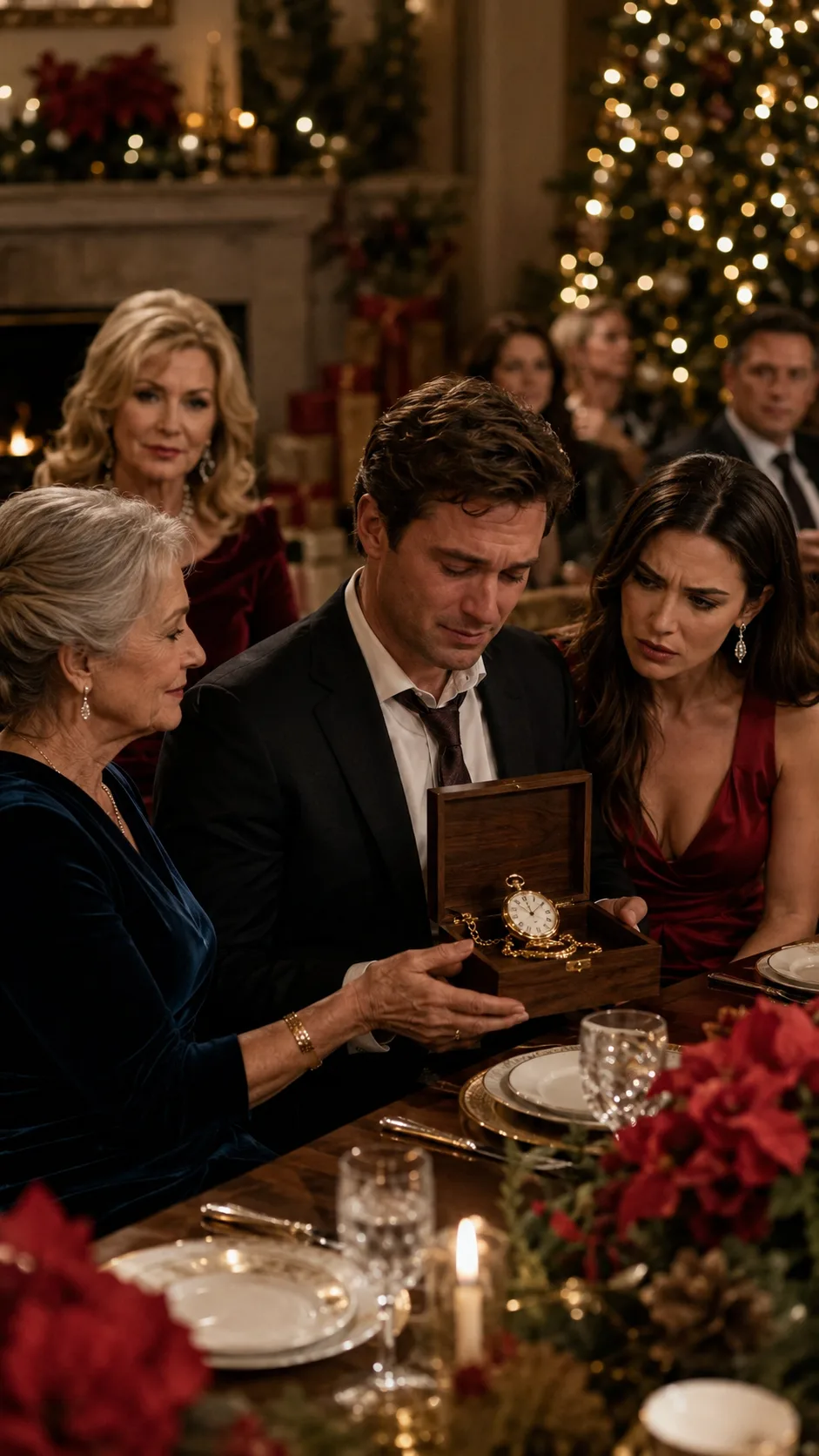
The watch.
“I had it repaired, Mom,” he said, voice trembling. “New crystal, full cleaning. They serviced the mechanism.”
I opened it. It worked perfectly. The steady tick-tock filled the silence.
“I’ve been wearing it every day,” he said, swallowing hard. “To remember. To never forget what I lost when I stopped valuing what I had.”
Tears streamed down my face.
“Can I… can I keep it?” he asked.
“It’s already yours,” I whispered. “It always was.”
We hugged, and in that embrace, years of pain softened.
One Sunday in October, Matthew and I resumed our tradition—breakfast at home. Ranch-style eggs, sweet rolls from Donjo’s bakery, hot coffee brewed the way my grandmother taught me.
“Do you know what the most ironic thing is?” he said, spreading butter on a roll.
“What?”
“That Valerie taught me something important without meaning to.”
“What’s that?”
“That true love doesn’t ask you to give up who you are,” he said. “It helps you become the best version of yourself.”
I smiled.
“That’s an expensive lesson, son.”
“$1,700,000 expensive,” he said, and laughed—a real laugh I had not heard since before the wedding.
“But it was worth every dollar,” he added, “because it brought me back home. Back to myself.”
That afternoon, while we reviewed books in my office, my phone buzzed. A message from Danielle.
Aunt, look at this.
It was a screenshot of Valerie’s profile. It was no longer a luxury influencer page.
Now it read:
Valerie in reconstruction.
Her profile picture showed her without makeup, hair tied back, a shy but real smile. Her latest post said:
A year ago, I lost everything—my credibility, my marriage, my false identity. It was the best thing that could have happened to me. Today I work retail. I earn little. I live in a small apartment. And for the first time in my life, I sleep peacefully because what I have is mine. I earned it myself, and no one can take it away from me. If you’re looking for fake glamour, this is not that space. But if you are looking for honesty and real growth, welcome. We are learning together.
It had three thousand likes. The comments surprised me—supportive, grateful, human.
I showed the phone to Matthew. He read it in silence, then nodded.
“I’m happy for her,” he said. “Truly.”
“Do you miss her?” I asked.
“I miss what I thought she was,” he admitted. “But I don’t miss the lie.”
He closed the accounting book and looked directly at me.
“Mom,” he said, voice rough, “there’s something I need to tell you.”
“Tell me.”
“Forgive me,” he said, eyes shining. “For everything. For making you feel like you weren’t enough. For letting them disrespect you. For choosing fantasy over reality.”
I took his hand.
“I already forgave you, son,” I said. “The day you picked up that watch from the floor and decided to repair it.”
He cried then—tears of liberation, of healing—and I cried with him, not out of pain this time, but out of hope.
November brought an unexpected surprise.
Rose called one Tuesday afternoon.
“Mrs. Elizabeth,” she said, “there’s someone here asking for you.”
“Who?”
“She says it’s Valerie.”
My heart skipped.
When I arrived at the Scottsdale store, Valerie waited in the reception area.
She looked different—simple clothes, jeans, a white blouse, comfortable shoes. No excessive makeup. No arrogance.
Just nervousness.
“Elizabeth,” she said, “thank you for seeing me.”
“What do you need?” I asked.
She took a breath.
“I came to apologize. I know I have no right. I know there are no words that erase what I did. But I needed to tell you in person.”
I waited.
“I was terrible to you,” she said, voice cracking. “I treated you like an ATM, like your only purpose was to fund my fantasy. And the worst part… the worst part is I convinced Matthew you were the problem when it was always me.”
A tear slid down her cheek.
“I threw your grandfather’s watch on the floor,” she whispered. “I destroyed something invaluable, and I can’t give it back.”
“Matthew fixed it,” I said. “The watch works perfectly.”
Her eyes widened, relief and shame mixing.
“I’m glad,” she whispered. “But I know some things can’t be fixed.”
“Why did you come, Valerie?” I asked. “What do you really want?”
“Nothing,” she said quickly. “I don’t want anything. I just needed to look you in the eye and tell you you were right—and if I could go back, I would do everything differently.”
We stood in the middle of the store my grandfather built with his hands.
“Do you know what I learned these months?” she asked softly. “That respect isn’t demanded. It’s earned. That dignity doesn’t come from what you have, but from who you are. And that true love isn’t what you can take—it’s what you’re willing to give without expecting anything back.”
Those words surprised me.
“I learned them from watching you,” she continued. “Even when I didn’t want to see you.”
She exhaled.
“I don’t expect you to forgive me. I just needed you to know your example saved my life, because I was dying inside pretending to be someone I wasn’t.”
For the first time, I looked at her without pain or prejudice and saw a young woman who made terrible choices but was trying, finally, to become real.
“I forgive you, Valerie,” I said.
Her eyes opened wide.
“You do?”
“I do,” I answered, steady. “Because holding a grudge only harms me, and I’ve already wasted enough energy on this situation.”
She pressed a hand to her mouth, overwhelmed.
“Thank you,” she whispered. “Thank you, Elizabeth.”
She turned to leave, then stopped.
“One last thing,” she said. “Matthew is a good man. When he finds someone who truly deserves him, he’ll be happy. I was never that person… but I’m learning to be better for myself.”
“That’s all that matters,” I said.
She walked out, lighter.
And somehow, so did I.
December arrived again—one year after the Christmas that changed everything.
This time, I hosted a small dinner: Olivia, her family, and Matthew.
When we sat down at the table, I raised my glass.
“I want to make a toast,” I said, “to second chances, to recovered dignity, and to learning that the most important love is self-love.”
“Cheers,” everyone said.
Matthew pulled something from his pocket.
The watch.
“Mom,” he said, “I want to give this back to you.”
“Why?” I asked. “It’s yours.”
“I know,” he said. “But I want you to keep it until I have children—until I can pass it on as the man my great-grandfather would have wanted me to be. I’m still learning. I’m still growing.”
My heart expanded in my chest.
“Are you sure?” I asked.
“Completely,” he said. “And when the time comes, I’ll hand it over with the same letter you wrote me, because those words… those words saved me.”
I took the watch in my hands.
Tick-tock.
Tick-tock.
Four generations.
Soon to be five.
That night, after everyone left, I sat on the porch with a cup of hot chocolate. The Christmas lights blinked softly. The city breathed with that special rhythm only December has.
I thought about everything—the pain, the betrayal, the humiliation, but also the strength I found when I thought I had nothing left.
The dignity I recovered when I set boundaries.
The peace I felt when I stopped chasing love from people who did not know how to value it.
I took the watch from my pocket and opened it. The photo of my grandparents smiled up at me from inside.
“I did it,” I whispered. “I survived. And more than that… I flourished.”
Because that is the truth I learned the hard way.
You can give everything for love.
You can sacrifice.
You can be generous until you are exhausted.
But you must never allow anyone to take your dignity.
True wealth is not in what you possess.
It is in what you do not allow them to take from you.
And I had recovered the most valuable thing of all—my self-respect.
I closed the watch.
The tick-tock echoed into the quiet night.
And I smiled, because finally, after so much time, I was at peace.
And you—who are listening wherever you are—have you ever had to set boundaries when everyone expected you to keep giving? Have you ever had to choose your dignity over the love of someone who did not value it?
Leave me your answer in the comments. Tell me your story and write what country you are listening from.
Because these stories are not just mine.
They are ours.
And by sharing them, we remind each other we are not alone, we are stronger than we think, and it is never too late to recover what belongs to us.
Give a like if this story touched your heart. Share it with someone who needs to hear it. And subscribe for more real-life stories, because as long as there are women willing to get up after falling, there will always be hope.
Until the next story.
And remember: your dignity is not negotiable.
THE END.
Chapter complete
You have reached the end of this chapter.
Continue reading
A few more worlds to get lost in after this chapter.




