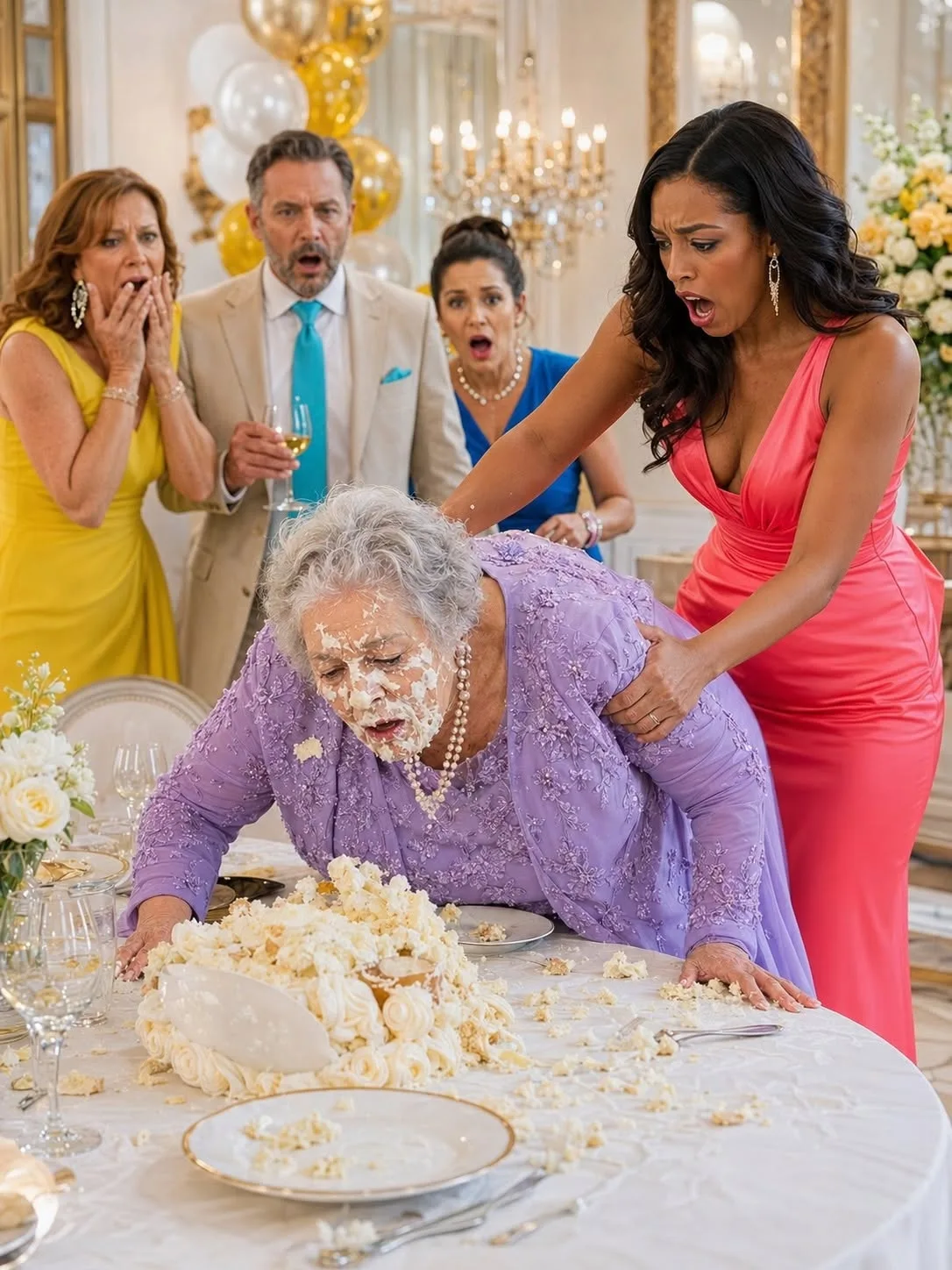
PART 2 — The Inheritance My Granddaughter Never Truly Owned
For several seconds, the only sound in my dining room was the soft crackle of candles burning beside my ruined birthday cake.
Chapter 2
For several seconds, the only sound in my dining room was the soft crackle of candles burning beside my ruined birthday cake.
Then Delilah laughed.
Not nervously.
Not apologetically.
She actually laughed.
“Someone help Grandma up,” she said, turning toward the guests. “She’s being dramatic again.”
That sentence changed something inside me.
Lucas avoided my eyes while two guests finally helped me into a chair.
My lip throbbed, but I refused the napkin someone offered.
I wanted Delilah to see exactly what she had done.
“You should leave,” I told her quietly.
Her smile disappeared.
“This is practically my house.”
“No,” I said. “It is my house.”
She leaned closer.
“Not for much longer.”
That was when I understood.
This hadn't been an impulsive outburst.
Delilah believed my life was already over.
She believed the company, the house, my investments—everything I had spent forty years building—was simply waiting for her to inherit it.
I looked around at the twenty-three silent witnesses and slowly stood.
“The party is finished.”
Delilah rolled her eyes
and walked out with Lucas without another word.
By eleven thirty, the house was empty.
I washed the blood from my face, changed my blouse, and entered the study Rebecca used to love as a child.
Inside my desk was a locked drawer containing documents I hadn't examined in years.
Corporate agreements.
Property deeds.
Trust papers.
And the original paperwork for Delilah's literary agency.
I began reading.
At 12:17 a.m., I discovered something that made me sit perfectly still.
Delilah didn't own the Potomac house.
She didn't control the investment fund.
She didn't even legally own the agency she constantly called “my company.”
I did.
Years earlier, my attorney had structured everything under entities controlled entirely by me, protecting Delilah until she became financially responsible enough to receive ownership.
I had simply forgotten how much control I still possessed.
Then I opened the Vance Publishing shareholder agreement.
My hands stopped
shaking.
Delilah could call herself the future CEO all she wanted.
I owned eighty-two percent of the voting shares.
And there was something else.
A clause concerning misconduct by senior executives.
One signature from me could remove her.
But as I reached for my phone, I noticed an unopened envelope hidden beneath Rebecca's old trust documents.
Across the front, in my daughter's handwriting, were six words:
MOM—OPEN THIS IF DELILAH TURNS CRUEL.
Rebecca had been dead for twenty-three years.
Yet somehow, she had known.
I opened the envelope—and the first sentence made my blood run cold.
For a moment, I couldn't breathe.
The room around me seemed to shrink. The old study, the shelves filled with forty years of books, the grandfather clock ticking softly in the corner—all of it disappeared beneath Samuel Price's words.
“Delilah was never supposed to inherit the company.”
I pressed the phone tighter against my
ear.
“What did you just say?”
Samuel sighed.
“Henrietta, I knew this day might come. I hoped it never would. Rebecca left very specific instructions.”
My fingers moved slowly across the leather folder on my desk. Inside were the documents I had read dozens of times after my daughter's death. I remembered signing them through tears, barely able to focus as lawyers explained trusts, shares, and protections for an eight-year-old child who had just lost her mother.
“I thought everything was set up for Delilah,” I whispered.
“Financially? Yes. She was protected. She was cared for. She was provided for.”
“Then why not the company?”
Another silence.
“Because Rebecca didn't trust that giving Delilah unlimited control would be good for her.”
I closed my eyes.
My daughter had known her child better than anyone.
Even at eight years old, Delilah had been stubborn. Brilliant, yes. Charming, yes. But she had always wanted to win. She hated losing games, hated being corrected, hated hearing the word no.
I had always called it determination.
Rebecca had called it something else.
“She was afraid Delilah would confuse inheritance with entitlement,” Samuel continued. “Those were Rebecca's exact words.”
My heart ached.
Rebecca.
Even years after she was gone, she was still trying to protect us both.
“What did she leave?”
Samuel took a breath.
“The majority of voting shares were placed into a legacy trust. The beneficiary is not Delilah.”
“Who is it?”
“I can't tell you over the phone.”
My grip tightened.
“Samuel.”
“Henrietta, after what happened tonight, I think you need to see everything in person. Tomorrow morning. My office.”
I looked toward the closed bedroom door.
Downstairs, my granddaughter was still laughing.
The same granddaughter whose first birthday I had planned.
The same granddaughter whose tiny hand I had held while she cried herself to sleep after Rebecca's funeral.
The same granddaughter who had just looked me in the eyes and told me I should have died years ago.
“I want every document prepared,” I said.
“For what?”
I looked at the reflection of myself in the dark window.
An old woman.
Seventy years old.
A grandmother with a bruised face.
But behind my tired eyes was something Delilah had forgotten.
I was not weak.
I was the woman who built an empire from nothing.
“Everything she believes belongs to her,” I said quietly. “I want it returned to its rightful place.”
Samuel understood immediately.
“Henrietta, are you certain?”
I thought about the slap.
Not the pain.
The betrayal.
“Yes.”
The next morning, Chestnut Hill woke up to rumors.
By nine o'clock, my phone had received forty-seven messages.
Guests from the dinner.
Friends who suddenly wanted to “check on me.”
People who had stood silently while I bled on my own dining room floor.
The strangest messages came from those who had witnessed everything.
Mrs. Vance, I hope you're feeling better.
I was shocked by Delilah's behavior.
Please know I support you.
Support.
A convenient word.
I stared at the messages and deleted every single one.
Words were easy.
Actions revealed people.
Margaret brought me tea while I sat at my kitchen table.
She had worked for my family for twenty-six years. She had seen Rebecca grow up. She had watched Delilah take her first steps.
“Mrs. Vance,” she said softly, “I should have stopped her.”
I looked up.
“You were not the one who failed me, Margaret.”
Her eyes filled with tears.
“I saw that little girl become someone else.”
I looked out the window at the garden Rebecca used to love.
“No,” I said. “She became exactly who she chose to become.”
At ten thirty, Samuel arrived.
He carried a black briefcase.
Not a laptop bag.
Not a folder.
A briefcase.
The kind lawyers carried when they were about to change someone's life.
We sat in my study.
Samuel opened the first document.
“Rebecca created the Vance Family Legacy Trust three months before she died.”
My throat tightened.
“She knew?”
“She knew her condition was getting worse.”
I looked away.
I hated remembering that time.
The hospital.
The machines.
The way Rebecca smiled at me even when she was terrified.
“She wrote a letter,” Samuel said.
My eyes snapped back.
“A letter?”
“To you.”
He handed me an envelope.
My name was written across the front in my daughter's handwriting.
Henrietta.
I had not seen that handwriting in fourteen years.
For several seconds, I couldn't open it.
Then I did.
Mom,
If you are reading this, it means I'm no longer there to argue with you, which I know you will hate.
I smiled despite myself.
That was Rebecca.
Always teasing.
First, I need you to promise me something. Do not let grief make decisions for you.
I stopped reading.
Because she knew.
She knew I would have given Delilah the world.
She knew I would have mistaken love for protection.
Delilah is my greatest joy. But she is also my greatest worry.
The words blurred.
She is intelligent. She is talented. She is capable of incredible things.
But she believes love means people should always give her what she wants.
I lowered the letter.
Samuel looked down.
“Keep going.”
I continued.
Mom, you built Vance Publishing because you believed stories mattered. You never chased power. You chased purpose.
If Delilah grows into someone who understands responsibility, let her lead.
But if she sees the company as a crown instead of a responsibility, do not hand her a kingdom.
My hands trembled.
The final paragraph was the one that broke me.
Please remember this: protecting my daughter does not mean protecting her from consequences.
Sometimes the greatest love we can give someone is refusing to save them from themselves.
I folded the letter carefully.
For fourteen years, I had done everything for Delilah.
I had defended her.
Excused her.
Covered her mistakes.
Maybe Rebecca had understood something I refused to see.
Maybe I had loved my granddaughter so much that I had forgotten she was responsible for the person she became.
Samuel opened another file.
“Now we need to discuss what happens next.”
Chapter complete
You have reached the end of this chapter.
Continue reading
A few more worlds to get lost in after this chapter.




