PART 2 — The Motel, The Letters, And The Penthouse Above Seattle
The only place I could afford on short notice was a run-down motel in a neglected part of Seattle, the kind of place people passed without looking directly at it.
Chapter 2
PART 2 — The Motel, The Letters, And The Penthouse Above Seattle
The only place I could afford on short notice was a run-down motel in a neglected part of Seattle, the kind of place people passed without looking directly at it.
The room smelled faintly of mildew and old carpet. The wallpaper had bubbled in one corner. The narrow window looked out over an alley strewn with trash bags, dented bins, and a chain-link fence bowed inward at the bottom. The mattress creaked whenever I turned over. The bathroom was shared with several other tenants down the hall.
At night there were arguments, slammed doors, music played too loudly, televisions left on through thin walls, sirens somewhere in the distance, and the kind of laughter that always sounded one breath away from trouble.
That was where I went after a lifetime of marriage, homemaking, and devotion.
That was what I had left.
The first few days, I could hardly eat. I lay on the bed staring at the cracked ceiling and replayed every year of Ryan’s life as if I had missed some crucial warning sign. When had he become a
man who could do this? When had I become someone he found so easy to discard?
I called. Of course I called.
Ryan’s number rang and went to voicemail.
“Son, it’s Mom,” I said. “I just wanted to hear your voice. Call me back when you can.”
He never did.
I texted Brooke once too, asking after the pregnancy because even then, after everything, I still could not stop being the kind of woman who worried more about other people than herself.
Brooke, I know this is complicated, but I’m still the baby’s grandmother. Please let me know you’re okay.
Hours later, her reply arrived.
Stop contacting us. We don’t want anything to do with you.
I read the message three times. Not because it was unclear, but because cruelty always takes a second to settle fully into the body.
After that, survival became a routine.
Each morning I got
up, washed at a sink that never quite felt clean, and walked the neighborhood looking for work. Light housekeeping. Elder care. Anything. At sixty-six, people smiled at me with a kind of polished regret that somehow hurt more than blunt refusal.
“You seem lovely, but we need someone with more energy.”
“Have you thought about something less demanding?”
“You’re probably looking for something easier.”
Easier.
My life had been orderly, yes. Predictable, yes. But easy? There is nothing easy about building a life out of constant quiet labor and then watching it be dismissed like it was nothing.
I bought the cheapest food I could find. Day-old bread in plastic sleeves marked down with bright orange stickers. Tuna. Bruised fruit. Soup in cans. Some days I stretched myself to one meal. Some days I pretended tea counted.
After two months, I had lost enough weight that my clothes hung off
me. My face in the mirror looked sharp and tired. Even my hands looked different, older somehow, as if humiliation had aged them faster than time.
The nights were worst.
The city never truly slept, but in that room I had never felt so alone. I missed the silence of my old house. I missed the steady warmth of Robert asleep beside me. I missed the way grief had once felt heavy but dignified, not raw and public and threaded with embarrassment.
I cried some nights. Quietly, into the pillow, hoping no one would hear.
Once, the woman in the room next door banged on the wall and shouted for me to keep it down because some people were trying to sleep.
I pressed my hand over my mouth and lay there in the dark feeling smaller than I had thought a person could feel.
Then one afternoon, walking past a shopping center near Northgate, I saw Brooke.
She was coming out of a baby store with glossy bags looped over her wrist. Her pregnancy showed clearly by then. She looked polished, well-fed, radiant in that expensive, curated way that comes from not having to worry about the next grocery bill. She got into a silver sedan I had never seen before, something new enough to gleam even under Seattle’s flat gray light.
I walked toward her before I could stop myself.
“Brooke!”
She turned.
I knew exactly what I looked like reflected in her eyes: old dress, worn shoes, hair I had done my best with but could no longer afford to color or properly cut, exhaustion clinging to me like another layer of clothing.
Her expression changed instantly.
Not concern. Not surprise.
Disgust.
“What are you doing here?” she asked, glancing around as though she hoped no one she knew would connect us.
“I just wanted to ask how you both are,” I said, out of breath from hurrying. “How’s the baby?”
She opened the car door.
“The baby is fine and will stay fine as long as you stay away from us.”
“Please,” I said. “Just let me—”
But she shut the door and drove off, leaving me on the sidewalk with traffic moving past and strangers pretending not to stare.
That night, sitting on the edge of the motel bed, I made a decision.
I would stop begging.
I would stop humiliating myself for scraps of affection from people who had already shown me, with terrible clarity, exactly what I meant to them. If they wanted to live as though I were gone, then I would become absent in the only way left to me. Not dead. Not broken.
Just done.
But life has strange timing.
About two weeks after that encounter, while sorting through my things in the motel room, I found something at the bottom of one of the boxes that changed everything.
A bundle of letters.
They were wrapped in old newspaper and tucked beneath a stack of cookbooks. At first I thought they were old bills or receipts Robert had forgotten. Then I saw his handwriting.
My hands started shaking before I had even opened the first envelope.
The paper inside had yellowed at the edges. The moment I saw the familiar slant of his writing, it was like hearing his voice again after two years of silence.
My beloved Lori, if you’re reading this, it means I’m no longer there to tell you what I should have told you long ago. There are things I kept quiet because I wanted to protect your peace. But if the day ever comes when you need the truth, then you need all of it.
I had to set the page down and take a breath.
Robert went on to explain that before we married, he had worked in real estate and, in his younger years, had made a few risky investments with money he had saved. He had bought parcels of land on the outskirts of Seattle back when nobody wanted them, when those areas were little more than scrub, gravel roads, and optimistic speculation. He wrote that he had always meant to tell me, but years passed, life became full, and the investments faded into the background of everyday living.
The paperwork, he wrote, was in a safe-deposit box at First Puget Bank. Box 1247.
The key is taped behind our wedding photo, he had written.
Lori, if something happens to me, those plots may be worth very little. Or they may be worth a great deal. Seattle keeps stretching farther every year. If the city ever reaches them, you will not be left unprotected.
I dropped the letter and went straight to the wedding photo I had packed among the few things I could not bear to leave behind. My fingers moved over the back of the frame, peeling away old tape until they found it: a small metal key, cold against my skin.
For a long moment, I just stood there with it in my palm.
Then I kept reading.
Robert had left more than one letter. He had recorded parcel numbers, locations, old blueprints, notes about zoning, even snapshots from the 1970s showing empty stretches of land under pale sky. There were twelve parcels in all.
Twelve.
One letter said, I didn’t tell you because I knew you were happy with our simple life. Another said, If the day comes when someone underestimates you, remember that strength doesn’t always make noise. And another ended with a line that undid me completely: The husband who has always admired you knows you are stronger than you think.
I cried harder over those letters than I had cried at the funeral. Not because the grief was fresher, but because suddenly Robert was there again in a way grief had not allowed him to be. Thoughtful. Steady. Protecting me from farther away than I had believed protection could reach.
The next morning, I went to First Puget Bank.
My hands were damp when I placed the key on the counter and told the teller the box number. The young man behind the desk asked for identification, checked the records, then looked at me with careful professionalism tinged with sympathy when I explained that the box had belonged to my late husband.
In a small private room, they opened it for me.
Inside were deeds, maps, legal documents, appraisal records, and one more sealed envelope in Robert’s handwriting.
For my warrior, when you finally discover who you are.
I opened the appraisal first.
It had been updated six months before Robert died.
The total value listed for the twelve parcels was two million four hundred thousand dollars.
I sat down hard in the plastic chair because the room tilted under me.
I had been sleeping in a motel that smelled like damp carpet. I had been stretching cans of soup. I had been treated as if I were a helpless inconvenience, a woman with no choices. All the while, a fortune had been waiting quietly behind a bank wall.
The money mattered, of course. I would be lying if I said otherwise.
But what struck me most in that moment was not wealth.
It was freedom.
Freedom to decide where I lived. Freedom to eat without counting coins. Freedom to stop asking people for mercy who had none to give. Freedom, for the first time in decades, to move through the world on my own terms.
That afternoon I went back to the motel and made a plan.
Not an emotional one. Not a reckless one.
A careful plan.
Ryan and Brooke had not acted impulsively when they turned on me. They had assessed, calculated, positioned. They had moved with the confidence of people who believed they had found someone too weak to resist.
I intended to prove them wrong with equal precision.
Over the next several days, I hired a discreet real estate attorney named James Alonzo. He was calm, sharp, and not easily surprised. I told him I wanted part of the assets sold without my name drawing attention.
“Do you want to use a corporate entity?” he asked.
“Yes,” I said. “And I want it impossible for anyone to connect it to me casually.”
We formed Future Harbor LLC, with Alonzo as legal representative. Through that entity, I sold the first four parcels over the next eight weeks. The sales brought in six hundred thousand dollars. I kept the remaining parcels as long-term investments.
Then I began what I can only describe as a quiet rebuilding of myself.
I moved first from the motel to a clean hotel downtown, one of those restrained business places with neutral carpeting, attentive staff, and lobby flowers that were changed every few days. From there I went to a salon and sat in a chair under bright lights while a woman with confident hands gave me a proper cut, softened the gray, shaped my nails, and treated me with the matter-of-fact respect I had almost forgotten how to receive.
The woman in the mirror at the end of that appointment was not younger, exactly.
She was clearer. Sharper around the edges. Awake.
I bought a few new clothes. Elegant but understated. Good shoes. Simple jewelry. Pieces that said competence instead of display. I did not want to look flashy. I wanted to look as though I belonged wherever I chose to stand.
Then I turned to the next step.
On James Alonzo’s advice, I hired a private investigator.
I asked for a complete picture of Ryan and Brooke’s situation: finances, employment, debts, mortgage obligations, routines, obvious vulnerabilities. A week later, the first report confirmed what I suspected.
Ryan had taken out a mortgage on the house. He was already behind on payments. His salary barely covered the note, utilities, and Brooke’s pregnancy expenses. Brooke had quit her job and they were living beyond their means, covering strain with appearance. The car was new, the baby shopping was expensive, and the money underneath it all was thinner than they let the world see.
They were also fighting.
Neighbors had heard arguments. The investigator noted raised voices, tension, repeated disagreements about bills. Greed had led them to push me aside. Now greed had them by the throat.
I did not rush.
I watched.
Through reports and occasional glimpses from a careful distance, I learned their habits. Which grocery store they used. When Brooke went to the clinic. What time Ryan usually came home. Where they spent when they should have saved. I sat once in a café across from my old street and watched them argue in the yard—Brooke gesturing sharply, Ryan gripping the back of his neck in frustration. I could not hear the words through the glass, but body language is often a better truth-teller than speech.
One night, after reading another report, I opened my laptop and began searching for property.
Not just any property.
A symbol.
I found it after several hours: a penthouse in one of the most sought-after luxury towers in Seattle. Forty-second floor. Four bedrooms. Three bathrooms. Floor-to-ceiling glass. A terrace with a panoramic view of the city. Italian marble. High-end finishes. Listed at 1.8 million dollars.
I paid sixty percent in cash and financed the rest through Future Harbor LLC.
The building was Summit Tower.
I did not even bother touring it first.
The broker sounded almost confused when I told him I would wire the deposit immediately and close within forty-five days.
When the keys finally landed in my hand, cool and heavy against my palm, I knew I had crossed into the next chapter of my life.
The first time I stepped inside, I paused for a full minute and looked out over Seattle from the glass wall. The city opened below me in layers—steel, water, traffic, distant neighborhoods folding into one another beneath a soft gray sky. On clear days you could see farther, all the way toward the water and the edges of Puget Sound.
It felt less like an apartment than a statement.
Still, I was not there to be sentimental.
I hired an interior design team and gave them a simple direction: composed power.
Cream and charcoal. Leather. Glass and steel. Contemporary art with clean lines and confidence. Tall green plants that softened the space without making it feel domestic in the old way. Everything needed to project control, not comfort alone. I did not want the penthouse to look like a fantasy. I wanted it to look like the natural environment of a woman no one would dare dismiss.
While the work was being finished, the investigator brought more news.
Ryan had been fired from the construction company where he worked after repeated lateness and arguments with his supervisor. Without his income, the mortgage on the house—the very house they had insisted they needed so badly—became unmanageable. Brooke, seven months pregnant by then, tried to get her old position back, but the role had already been filled. The investigator saw her leave the office building in tears.
That evening, as I sat on the unfinished penthouse balcony with the wind moving across the railing high above the city, James Alonzo called.
“The bank has initiated foreclosure proceedings,” he said. “They’ve missed three payments.”
“How long before they lose the house?”
“Roughly two months if they don’t cure the arrears.”
I did not answer right away. I watched headlights ribbon down the avenue below.
“Buy the mortgage,” I said at last.
There was a beat of silence.
“It’s unusual,” he said carefully, “but it can be done.”
“I want to be the creditor.”
Two weeks later, through Future Harbor LLC, I was.
Ryan and Brooke now owed the balance of their mortgage not to the original bank, but effectively to me through the corporate structure. They were ten thousand dollars past due.
They did not know it yet.
I still did not reveal myself. Not then.
Instead, I let pressure accumulate. Legal collection notices. Calls. Firm reminders. Enough to keep them awake. Enough to force them to face, inch by inch, the same kind of fear they had once handed me so casually.
The reports continued.
Brooke sold the silver sedan. Neighbors started noticing strain. Around the block, word spread in the natural, ordinary way neighborhood news does—through sidewalks, porches, errands, and casual conversation that isn’t casual at all.
One afternoon I saw Brooke at a bus stop in a wrinkled green maternity dress, holding grocery bags from a discount market. Another night, I had the investigator follow Ryan and learned he had taken late-night driving shifts to make ends meet. He was seen parked on a rough corner, waiting for fares with the exhausted posture of a man who had finally discovered that pride does not pay bills.
They argued constantly now.
According to one of the reports, Brooke blamed Ryan for losing his job. Ryan blamed Brooke for quitting hers. They threw each other’s failures back and forth like a hot object no one wanted to hold.
I should tell you that there is a version of this story in which I immediately softened. In which I saw hardship and forgot everything else. In which I rushed in to rescue them because that had been my role for most of my life.
But that is not what happened.
I had spent too many nights in that motel learning exactly what it feels like to be abandoned.
I was done stepping in before the lesson had been understood.
So I kept going.
I acquired commercial debt tied to the office building where Ryan’s old construction company was headquartered. Through Future Harbor LLC, I made moves that strengthened competitors and narrowed the company’s recovery options. I also signed a master lease with the building where Brooke had once worked, positioning new management in ways that did not favor someone who had walked away and hoped to stroll back in when convenient.
Everything was legal. Everything was strategic. Everything was patient.
The only thing missing was the reveal.
One evening, sitting alone at my dining table in the penthouse with the city glittering beyond the glass, I decided it was time to plant the seed that would bring them to me.
I hired an actor to play an old acquaintance of Robert’s.
His instructions were simple: run into Ryan somewhere ordinary, say he had heard Lori was living in a penthouse now, and sound mildly surprised about it.
It worked exactly as planned.
The actor encountered Ryan at a gas station and delivered the line. By that night, Ryan was asking questions. By the end of the week, he and Brooke were actively trying to find me—asking old neighbors, calling acquaintances, pulling at threads.
When they confirmed I was in fact living in one of the most expensive residential buildings in Seattle, the shock did the rest.
The woman they had written off was not drifting through some lonely senior apartment, grateful for scraps.
She was living above the skyline.
And the truly satisfying part was this: they still did not know that much of the financial pressure closing around them had been arranged by the very person they had underestimated.
I knew they would come.
Desperation brings people faster than conscience.
The call arrived on a Tuesday morning. I was having breakfast on the balcony, coffee steaming beside a small plate of fruit, watching the city wake in layers of gray and silver below me, when my phone lit up with Ryan’s number.
I let it ring four times before answering.
“Hello?”
“Mom,” he said.
His voice sounded smaller than I remembered.
“How did you get this number?” I asked.
“It wasn’t easy.”
I almost smiled.
“Mom, we need to talk.”
“Oh, now you need to talk.”
The silence that followed told me he remembered every ignored call.
“Things are bad,” he said finally. “Brooke’s eight months pregnant. I lost my job. We heard… we heard you have a penthouse.”
There it was.
Not love. Not remorse. Not some sudden return of conscience.
Need, dressed up as reconciliation.
“A penthouse?” I said mildly. “Who told you that?”
“A friend of Dad’s said he saw you.”
“People say all kinds of things.”
“Mom, please. Brooke and I are struggling. Could we come see you? Just talk?”
His audacity almost impressed me. After everything—the eviction, the silence, the cruelty, the way they had left me to figure out survival alone—he wanted a conversation now that he believed there might be money at the other end of it.
“All right,” I said at last. “Tomorrow afternoon. But if you come, you tell the truth. No pretending. No rewriting what happened.”
“Yes,” he said quickly. “I promise.”
An empty promise, maybe. But I no longer needed his sincerity. I only needed him in my orbit.
I gave him the address and told him to come up to the forty-second floor.
After I hung up, I spent the rest of the day preparing.
Not extravagantly.
Intentionally.
I had catering bring in an elegant lunch: salmon, gourmet salads, fruit, pastries, mineral water, good coffee, imported wine. Not because I intended to serve all of it, but because abundance creates its own language. Fresh flowers were placed in every room. Cushions straightened. Art lighting checked. I left several investment books on the glass table and opened my laptop to a portfolio screen before stepping away.
Then I turned to myself.
I went to an upscale salon near downtown and had my hair styled, my skin treated, my nails done. I bought a beige dress that was beautifully cut but not showy, understated designer shoes, and jewelry that looked expensive because it was.
When I looked in the mirror that evening, I no longer saw the woman who had once carried six cardboard boxes into a motel room.
I saw someone composed enough to make other people doubt their own footing.
The night before the meeting, I called James Alonzo.
“They’re coming tomorrow,” I said. “I want the mortgage file and the records of the nearby properties ready.”
“Do you plan to tell them you’re the creditor?”
“Not immediately.”
I wanted first to see exactly how low desperation had brought them.
The next afternoon, I did a final walk-through of the penthouse. Soft classical music played. The flowers were fresh. The skyline beyond the glass looked almost theatrical in the late-day light.
At precisely two o’clock, the front desk called.
“Mrs. Lori, there’s a couple here saying they’re your son and daughter-in-law.”
“Send them up.”
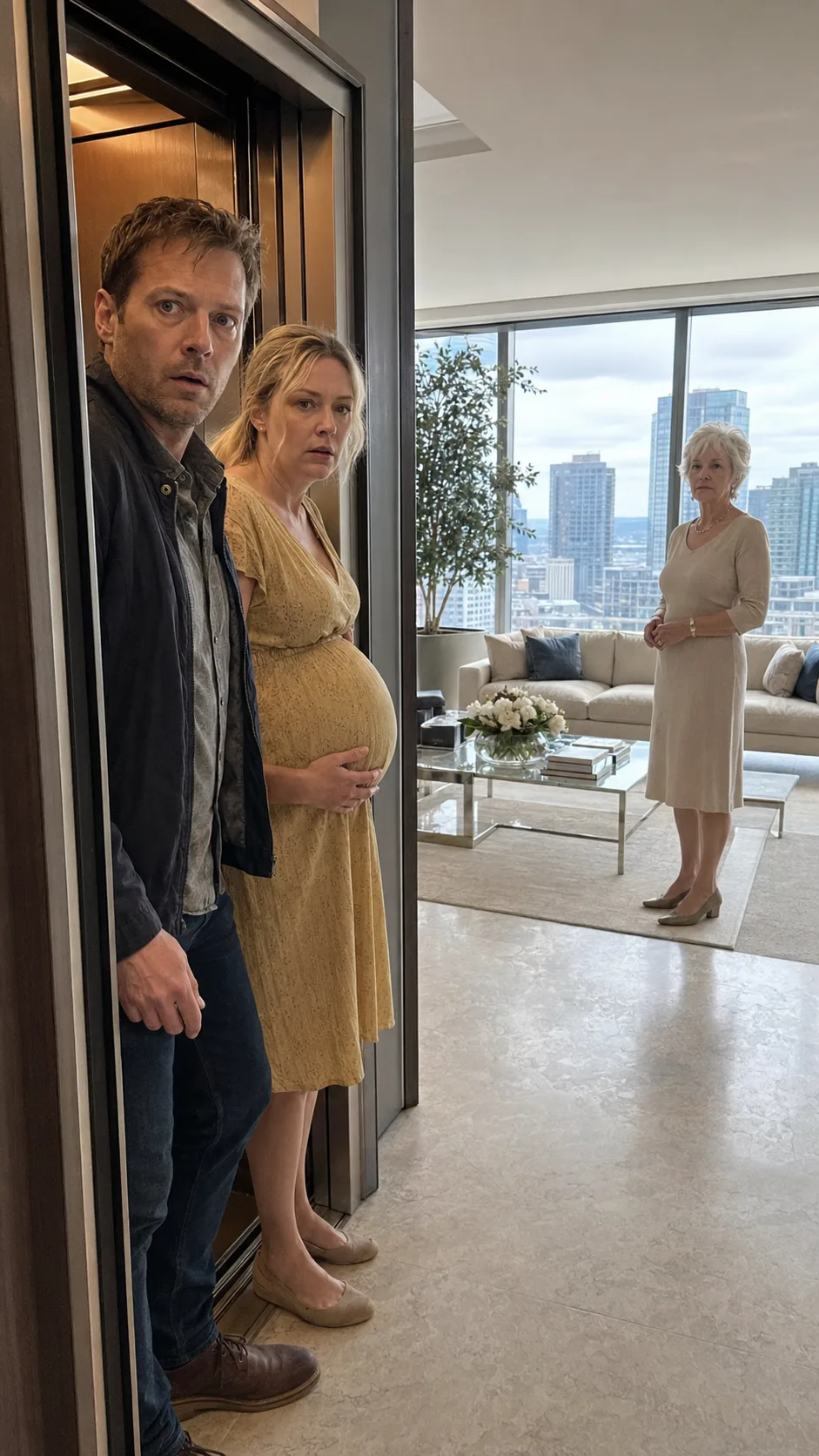
I took my place near the glass wall with my back to the door.
I wanted the first thing they saw to be not me, but the scale of the life they had failed to imagine.
The private elevator opened. I heard slow footsteps on marble. The soft tone of the door. A hesitation.
“Come in,” I said. “It’s unlocked.”
They stepped inside.
And froze.
To be continued… Click “PART 3” to read the final part: 👉 PART 3 👈
Chapter complete
You have reached the end of this chapter.
Continue reading
A few more worlds to get lost in after this chapter.




