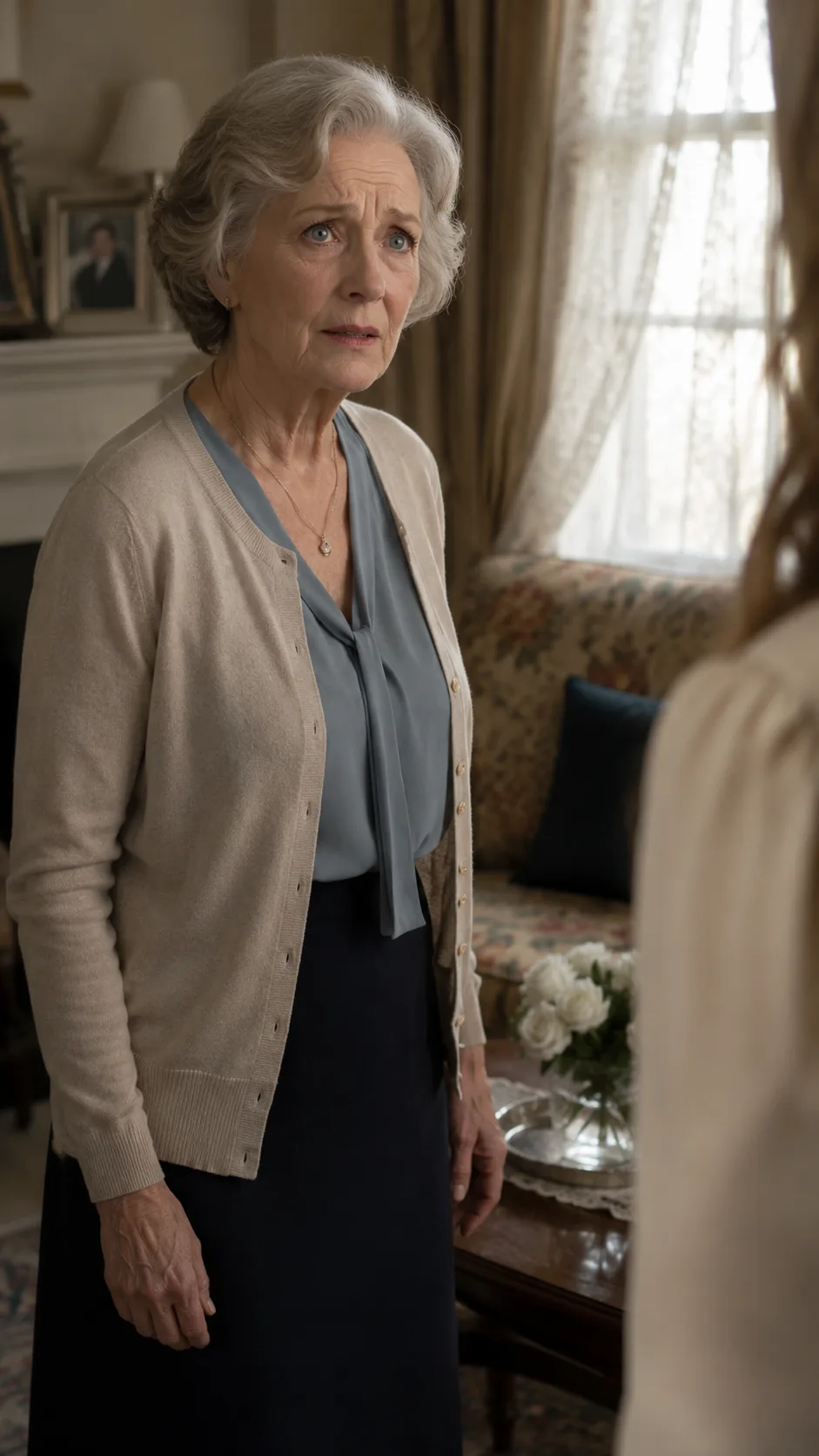
PART 3 — I’M DONE FINANCING MY OWN MISTREATMENT
I saw him through the sheer curtain before I opened the door.
Chapter 3
PART 3 — I’M DONE FINANCING MY OWN MISTREATMENT
I saw him through the sheer curtain before I opened the door.
He got out too fast, slammed the car harder than necessary, and came up the walk in the same long strides he had when he was sixteen and trying to look angrier than he felt.
He entered without waiting to be invited all the way in.
“Mom, what is going on?”
No hello. No are you all right. No I’m sorry.
Just panic.
I stepped aside, closed the door, and led him into the kitchen.
“Do you want coffee?” I asked.
He stared at me.
“Coffee? Are you serious? The mortgage didn’t go through. Marissa’s car payment didn’t go through. Toby’s card got declined in Raleigh. The bank says you revoked everything.”
“Yes,” I said. “I did.”
He pulled a hand through his hair, a gesture so familiar from his teenage years that for one irrational second I felt a rush of tenderness.
Then I remembered the text.
“You can’t
just do that,” he said.
“Of course I can.”
He laughed once, sharply.
“Mom, come on. What is this? Some kind of lesson?”
I poured coffee into two mugs. My hands did not shake.
“Sit down, Garrett.”
He didn’t want to, but he did.
I placed a mug in front of him and sat across from him at the same table where he had once done fourth-grade math homework while eating apple slices.
“You told me I wasn’t invited to dinner,” I said. “You said your wife didn’t want me there.”
He shut his eyes for a second.
“Mom, it was stupid. I know that. Marissa was upset, the house was full, the whole evening was—”
“You sent it.”
He opened his eyes.
“Yes.”
“Then don’t explain it to me as if it happened in bad weather.”
He looked down.
The silence between us stretched.
Finally he said, “I was
trying to keep the peace.”
“With your wife.”
He didn’t answer.
“And the easiest way to do that,” I went on, “was to humiliate your mother.”
“It wasn’t like that.”
I leaned back in my chair and looked at him.
“Then tell me what it was like.”
He opened his mouth, closed it, and tried again.
“We were having clients over,” he said. “Marissa was stressed. She said she wanted the night to go a certain way. She said you and she hadn’t really—”
“Hadn’t really what?”
“Been getting along.”
I gave a small nod.
“There it is.”
“Mom, please. Don’t make this bigger than it is.”
I almost smiled at that.
“The message did not make this bigger, Garrett. It made it plain.”
He frowned.
“What does that mean?”
“It means the text did not create the problem. It named it.”
He sat back, confused and irritated at once.
I looked at him steadily.
“When was the last time you came over here with no request attached?” I asked. “When was the last time you called just to see how I was, not because something needed paying for or fixing or smoothing over?”
“Mom, that’s not fair.”
“It’s accurate.”
“We’re busy.”
“Everyone is busy.”
He slapped a palm against the table, not hard but loud enough to rattle the spoon in his saucer.
“We are not using you.”
I let that sit in the air.
Then I said, very quietly, “One hundred seventy-four.”
He blinked.
“What?”
“That’s how many active payments and transfers I had tied to your family when I called the bank. One hundred seventy-four. Mortgage drafts. Insurance. tuition. rent support. club dues. reimbursements. subscriptions. service contracts. Do you know what it feels like to hear a stranger at the bank read your own foolishness back to you like an itemized confession?”
His face changed.
For the first time that night, I saw shame flicker in him.
“Mom,” he said again, softer now. “We appreciate what you’ve done. We do.”
“Appreciation that disappears the second I become inconvenient is not appreciation.”
He stared at the coffee he had not touched.
“We can’t carry all of this without your help,” he said. “Not right away. The house, the loans, Toby’s stuff, everything is connected.”
“I know it is. I connected it.”
He looked up sharply.
That landed. Good.
“I am not paying for your house anymore,” I said. “I am not paying for Marissa’s image, Toby’s bad habits, or the life you built on the assumption that I would keep absorbing the strain.”
He went pale.
“Then what are we supposed to do?”
I gave the answer I should have given years ago.
“Figure it out.”
His face hardened with anger.
“You can’t do this after everything we’ve been through as a family.”
I stood up.
“What exactly have you done for me, Garrett?”
He stared.
“No,” I said. “Really. Name one thing. One thing in the last year you did for me that was not prompted by guilt, obligation, or the hope I’d write a check.”
His mouth moved. Nothing came out.
I waited.
He looked away first.
That was the moment that broke my heart, not the text. A son failing to defend himself against a question that simple.
“You see?” I said gently. “That is the whole problem.”
He stood too fast, nearly knocking his chair back.
“So that’s it? You’re just done with us?”
“No,” I said. “I’m done financing my own mistreatment.”
“That is not the same thing.”
“It is from where I’m sitting.”
He paced once across the kitchen and back, then stopped by the sink.
“Marissa says you’re overreacting.”
“Of course she does.”
“She says this is emotional and dramatic and—”
“Garrett.”
He looked at me.
“Your wife may use whatever words help her sleep at night. But the next person who gets to tell me whether I am overreacting to being excluded from a house I paid for will be buried next to James.”
He stared at me, astonished.
I almost apologized for the sentence. Old habits die hard.
I didn’t.
After a long moment, he sagged.
“What do you want from me?” he asked.
I thought about it.
“Not money-related?” I said.
He nodded.
“I want you to leave.”
His face went blank.
“I need time,” I said. “And so do you. If you want to talk to me again, you may do it when you are ready to discuss our relationship instead of your cash flow.”
He looked like he wanted to argue. Then maybe he saw something in my face he had not seen before.
He picked up his keys.
At the door he stopped.
“I never meant to hurt you like this.”
I believed him.
That was the tragedy.
“I know,” I said. “You just meant to make your own life easier.”
He flinched.
Then he left.
I stood in the kitchen long after the headlights disappeared from the driveway. My whole body shook once he was gone. I had not enjoyed any part of that. That is another thing people misunderstand about boundaries. They imagine the person finally drawing them must feel triumphant and cold. Most of the time she feels sick.
I washed the coffee cups even though only one had been used.
The next morning, Marissa came.
Not at nine. Not at noon. At ten-thirty, the hour respectable women choose when they want a visit to look spontaneous while still allowing time for hair, makeup, and strategy.
She stood on my porch in cream slacks and a silk blouse, holding a white pastry box with a gold ribbon.
“Edith,” she said warmly, as if we had brunch once a week. “I brought croissants from that bakery off Hay Street. May I come in?”
I stepped aside.
Marissa walked into my living room the way she walked into model homes: appraising every angle while pretending not to. She set the pastry box on the coffee table and sat on the edge of the couch with perfect posture.
“I think there has been a terrible misunderstanding,” she began.
I sat across from her and folded my hands.
“No,” I said. “I think there has been a very accurate understanding.”
Her smile barely shifted.
“Garrett should never have sent that message. We were both under pressure. The evening got complicated. There were clients, work expectations, the house wasn’t settled, and emotions were high.”
“Did you want me there?”
She paused.
That was answer enough.
“I wanted the evening to go smoothly,” she said.
“Which means no.”
“It means I had people there whose impression mattered.”
I looked at her for a long moment.
“And I would have harmed the impression?”
She sighed softly, as though I were making her say something impolite.
“Edith, you know how these things are. Different personalities, different generations. Sometimes certain environments are just… delicate.”
There it was.
Not cruel in wording. Cruel in meaning.
That had always been Marissa’s gift. She could insult you in a voice appropriate for church.
“I see,” I said. “So I was unsuitable for your evening.”
“Please don’t twist my words.”
“I don’t have to.”
Her smile disappeared then.
“Fine,” she said. “You and I have never really clicked. But that is hardly a reason to throw the entire family into financial chaos.”
I leaned back.
“You aren’t here to apologize.”
“I am here to solve a problem.”
“No,” I said. “You are here because the mortgage noticed.”
That hit her harder than I expected. Her jaw set.
“Garrett told me you’re being emotional.”
“Then Garrett should stop discussing me with you as if I’m a roofing estimate.”
Her nostrils flared.
“Edith, let’s speak honestly. You have always been dramatic where Garrett is concerned. You make these large gestures and then expect gratitude forever.”
I almost laughed.
“Marissa, gratitude forever would have been excessive. Basic respect last night would have done.”
She crossed one leg over the other.
“So what now? You punish all of us? Toby can’t pay his bills. Rebecca’s tuition will be affected. Garrett is trying to refinance around a problem you created.”
“I created?”
“Yes,” she said flatly. “The support was in place. We built our obligations around it.”
There are sentences so shameless they clarify a whole life.
We built our obligations around it.
They had done exactly that. Built a household around the assumption that my money was not a blessing but a structural feature, like plumbing.
I looked at her carefully.
“You are saying the quiet part out loud, Marissa.”
“What does that mean?”
“It means you just admitted that my support ceased to be a gift in your minds and became a utility.”
She stood up.
“This is ridiculous.”
“So was excluding me from the house I helped buy.”
“You helped,” she snapped. “You did not buy it.”
“No,” I said, rising too. “And thank God. Because if my name had been on that deed, you would be speaking to me through a lawyer.”
For one second, her composure cracked completely.
“You are making a terrible mistake,” she said. “You are seventy-seven years old. Who do you think will be there for you later if not us?”
I took one step toward her.
“Marissa,” I said, “I was paying taxes, keeping a house, burying parents, and surviving surgeries before you finished college. Don’t stand in my living room and speak to me as if old age began the day you became inconvenienced.”
Color rose in her face.
“This isn’t over.”
“I didn’t expect grace from you,” I said. “But I did expect you to leave when asked.”
She grabbed her purse, left the pastry box untouched on the table, and went out the front door without another word.
I stood at the window and watched her back down the walkway in heels too high for my brick path.
Only after her SUV turned out of the driveway did I open the pastry box.
Chocolate croissants. The expensive kind.
I closed it again and carried it next door to Mrs. Delaney, whose grandsons were visiting for the weekend.
The first week after that felt strange.
Not peaceful exactly. More like the silence after a tornado warning when the sirens stop but everyone is still listening for broken glass.
Garrett called daily at first. Then every other day. Then only when some new practical crisis surfaced. Marissa switched tactics and sent long messages about family, misunderstanding, healing, legacy, and what James would have wanted. She underestimated how well I knew my own dead husband. James would have wanted civility, yes. He also would have told them to sell the SUV.
Toby called once from a parking garage because his card had been declined at a gas pump and he didn’t know what to do. I told him to go inside and use his debit card like everybody else. He hung up on me.
Rebecca kept texting.
Not intrusive. Not manipulative. Just small, human things.
Did you eat lunch?
Can I bring soup after work?
The azaleas near my building are finally blooming.
I found that pie server Grandpa used to sharpen with a butter knife.
She reminded me that not every thread in a family has to be cut just because some of them are rotten.
Two weeks in, Lorine came over with a travel catalog and a grin.
“We’re still doing the Blue Ridge trip next month,” she said. “And before you tell me no, remember you are suddenly no longer financing a small republic.”
I laughed.
We sat on the porch with coffee and flipped through pages showing mountain inns, little downtowns with antique stores, scenic drives, and half-day tours designed for women who liked decent mattresses and not too many stairs. When we were done with that catalog, she pulled out another one.
Italy.
I touched the photograph of a stone street in Florence without meaning to.
James had always wanted to take me to Italy. His grandfather had come over from there as a boy, and James used to say that one day he would stand in a piazza, drink terrible espresso because tourists always overpay, and tell me stories he half remembered from his father. We had planned to go in retirement.
Then his knees got bad.
Then his heart.
Then there was no more “one day.”
“You should go,” Lorine said.
I smiled sadly.
“At my age?”
“At your age especially.”
She took a sip of coffee.
“Edith,” she said, “you’ve spent fifteen years acting like you’re on standby for everyone else’s emergency. What exactly are you saving your good years for now?”
That question followed me for days.
So did another one.
If not now, when?
Around that time, Rebecca came over one evening and helped me make dinner. We cooked lemon chicken and green beans and ate on the screened porch while the cicadas started up in the trees.
“How are things at home?” I asked.
She gave a humorless little smile.
“Loud.”
I waited.
“Mom blames Dad for folding too easily. Dad blames Mom for pushing too far. Toby is mad at everybody but mostly because he can’t keep living the way he was living.”
“And you?”
She set down her fork.
“I’m relieved,” she said.
That surprised me even though it shouldn’t have.
“Relieved?”
She nodded.
“Grandma, our family has been orbiting your checkbook for years. Nobody said it because saying it would make it real. But it’s true. The minute you stepped back, everybody had to show who they were.”
I looked out through the screen at the darkening yard.
“That’s a hard thing for a granddaughter to say.”
“It’s a hard thing to watch too,” she said.
After a moment she added, more quietly, “I want you to know something. I support your decision.”
I turned toward her.
“You do?”
“Yes. I love my parents. I do. But loving them doesn’t mean pretending they’ve been fair to you.”
I could have cried then. Not because she approved of me. Because she saw me.
There is a difference.
Three days later Toby came over unannounced.
He looked tired in a way young people only look when they have recently discovered consequences. His shirt was wrinkled, his hair unwashed, and he had the restless, embarrassed energy of someone trying to act grown while secretly hoping to be rescued like a child.
“Grandma,” he said from the doorway. “Can I talk to you?”
I let him in.
He stood in the living room for a second, looking at the floor, then at the family photographs, then finally at me.
“I’m in trouble.”
“What kind?”
“Money kind.”
I almost smiled. At least he was direct.
We sat down. He leaned forward with both hands clasped so tightly his knuckles were white.
“I owe around seven thousand on credit cards,” he said. “And my rent is due. And the bank keeps calling.”
“What did you spend the money on?”
He looked offended by the question for half a second. Then ashamed.
“Stuff.”
“What stuff?”
He muttered so quietly I had to ask him to repeat it.
“A new phone. Two weekend trips. Some tabs at bars. Clothes. I don’t know. Just… things.”
“That is not seven thousand dollars’ worth of mystery,” I said.
He sank lower in the chair.
“You’ve always helped me,” he said. “I know I haven’t been great about calling and all that, but I really do love you.”
I believed that too, in its way. Toby loved me the way some people love the tree in their backyard. They assume it will be there, giving shade, because it always has been.
“I love you too,” I said.
Hope flashed across his face.
Then I continued.
“I’m not giving you any money.”
The hope vanished so quickly it almost angered me.
“You’re serious?”
“Yes.”
He sat back, stunned.
“Grandma, I could get evicted.”
“You could also sell the phone, stop drinking downtown every weekend, and get a second job.”
“That’s easy for you to say.”
“No,” I said. “Easy would be writing you a check. This is hard.”
He looked at me with open resentment now.
“So you’re punishing me because you’re mad at Dad and Mom.”
I shook my head.
“No. I’m refusing to keep helping you injure yourself.”
“What does that even mean?”
“It means every time I rescue you from the consequences of your own choices, I make it easier for you to keep making them.”
He gave an incredulous laugh.
“You sound like a podcast.”
“Maybe podcasts are right once in a while.”
He rubbed both hands over his face.
“So I’m just supposed to magically become responsible?”
“No,” I said. “You’re supposed to become responsible the way everybody does. Slowly. Uncomfortably. On purpose.”
He stared at the coffee table.
The room was quiet for a few seconds.
Then I said, “I’m not giving you money. But I do have something else.”
He looked up.
“Francis Whitaker needs a part-time runner and file clerk. Basic office work. Phones, copies, document runs, intake packets. It won’t solve everything, but it’s income. Real income. If you want me to call him, I will.”
Toby blinked.
“You’d still help me with that?”
“Yes.”
“Why?”
“Because I am still your grandmother,” I said. “I’m just done being your back door to consequences.”
He lowered his eyes.
For the first time in that conversation, he looked very young.
“Okay,” he said finally. “If you’ll call him… okay.”
After he left, I stood by the front window and watched him sit in his car for several minutes before driving away. I did not know whether anything I had said would take root in him. But I knew this: if he ever grew into a decent man, it would not happen because I kept paying for the delay.
Click the blue “PART 4” below to read the final part:
Chapter complete
You have reached the end of this chapter.
Continue reading
A few more worlds to get lost in after this chapter.