PART 4 — NO MORE BAILOUTS
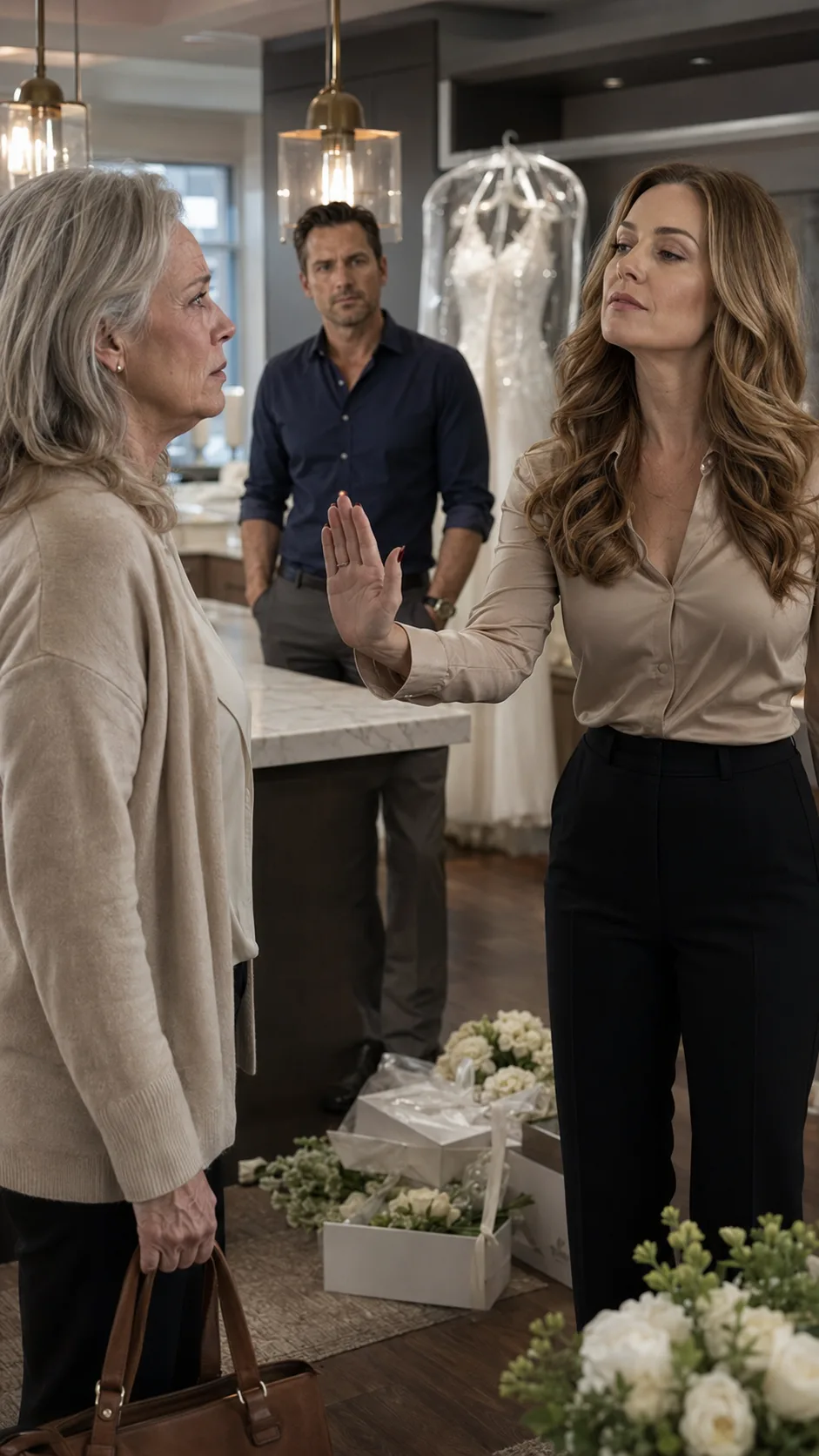
“Option two: we put the house on the market and split the proceeds according to ownership percentages.”
“We’d have to move,” Michael said quietly.
Chapter 4
PART 4 — NO MORE BAILOUTS
“Option two: we put the house on the market and split the proceeds according to ownership percentages.”
“We’d have to move,” Michael said quietly.
“Yes,” I said. “You would. To something you can actually afford.”
“What about option three?” Amanda asked desperately.
“There is no option three,” I said. “Those are your choices.”
Margaret pulled out a calculator.
“If you sold the house today,” she said, “after realtor fees and closing costs, you’d probably net around two hundred seventy thousand. Dorothy’s share would be about ninety-five thousand. You’d have one hundred seventy-five to find new housing.”
“That’s not enough for anything decent,” Amanda protested.
“It’s enough for a nice apartment or a smaller house in a different neighborhood,” I said. “You know—the kind of place people with your actual income should be living.”
Michael ran his hands through his hair.
“Mom, is there any way we can work out a payment plan?” he asked. “Maybe we could pay you monthly until we’ve bought out your share.”
I’d been waiting for this.
“At what interest
rate, and with what collateral?” I asked. “You’ve already proven you don’t honor financial agreements.”
“That’s not fair,” he said.
“Isn’t it?” I asked. “You owe me thirty-seven thousand in emergency loans you never intended to repay. Why would I trust you with another hundred thousand?”
Amanda started crying again.
“This is going to destroy our lives,” she said.
“No, Amanda,” I said. “This is going to force you to live within your means for the first time in your adult life.”
“But what about our credit?” she cried. “What about our reputation?”
I almost laughed.
“Your credit?” I said. “Honey, your credit is already terrible. You’ve been late on every bill for months. I know because I’ve been bailing you out.”
Margaret cleared her throat.
“I need to advise you that Dorothy has every legal right to force a sale,” she said. “She’s being more than generous by offering
these options.”
“How long do we have to decide?” Michael asked.
“Thirty days,” I said. “That should give you time to explore your financing options.”
As we prepared to leave, Amanda grabbed my arm.
“Dorothy, please,” she whispered. “I know I hurt you, but we’re family. Doesn’t that count for something?”
I looked at her hand on my arm, then at her face. For just a moment, I saw the scared young woman behind the entitled façade.
“Amanda,” I said, “family is supposed to count for something. That’s exactly the point.”
Two weeks into their thirty-day deadline, I got an unexpected visitor.
Barbara Hworth stood on my hotel room doorstep with a bottle of wine and a determined expression.
“I hope you don’t mind me dropping by,” she said. “I got your hotel information from Margaret Chen.”
I invited her in, curious about what had brought Amanda’s mother back to
Virginia.
“I came to check on the kids,” Barbara said, settling into the room’s only armchair. “And to talk to you. How are they doing?”
“Terribly,” I said. “Amanda’s having daily panic attacks. Michael’s working overtime, trying to find a way to get a loan. They’re fighting constantly.”
I poured us both glasses of wine, surprised to find I felt less satisfaction in their misery than I’d expected.
“Barbara,” I said, “are you here to ask me to reconsider?”
“Actually, no,” she said. “I’m here to tell you about Amanda’s father.”
That wasn’t what I’d expected.
“Richard spoiled our daughter rotten,” Barbara said. “Every tantrum was rewarded. Every consequence was cushioned. Every failure was someone else’s fault.”
She sipped her wine thoughtfully.
“When Amanda was sixteen, she totaled her car driving drunk,” Barbara said. “Instead of letting her face the legal consequences, Richard hired the best lawyer money could buy and got the charges dropped.”
“Why are you telling me this?”
“Because I’ve watched my daughter become someone I don’t recognize,” Barbara said, “and I finally understand that her problems aren’t going to be solved by more money or more rescuing.”
Barbara reached into her purse and pulled out a check.
“Amanda asked me to give you this,” she said. “It’s for twenty-five thousand, a good-faith payment toward buying out your share.”
I looked at the check, but didn’t touch it.
“And what did you tell her?”
Barbara’s mouth tightened.
“I told her I wouldn’t be her enabler anymore,” she said. “That check represents Richard’s life insurance policy—money I was saving for her inheritance. But I realized that giving it to her would just be repeating the same pattern.”
She tore the check in half.
“Barbara,” I breathed. “That’s a lot of money.”
“Money Amanda hasn’t earned and doesn’t deserve,” she said. “Dorothy, I want you to know that whatever you decide about the house, you have my support. Even if it means they lose their home.”
“Especially then,” she added. “Maybe having to start over will teach Amanda what work and gratitude actually mean.”
After Barbara left, I sat alone with my thoughts.
For three years, I’d been Amanda’s enabler just as much as her parents had been. Every time I wrote a check to cover their shortfall, I’d been teaching them that there would always be someone to catch them when they fell.
The question was: what kind of lesson did I want them to learn now?
My phone buzzed with a text from Michael.
“Mom, we’ve been approved for a home equity loan that would cover $60,000 toward buying you out. Can we meet to discuss partial payment arrangements for the rest?”
I stared at the message for a long time.
They were trying, which was more than they’d done in years, but a home equity loan meant going deeper into debt—not learning to live responsibly.
I typed back.
“We can discuss it, but I want to see a complete household budget and a realistic plan for paying off all your debts—not just mine.”
His response came immediately.
“Anything you want, Mom. We just want to make this right.”
For the first time since this whole thing started, that sounded like progress.
The budget meeting was enlightening in the worst possible way.
Michael and Amanda spread their financial documents across Margaret’s conference table like evidence of a crime, which in a way they were.
“Okay,” I said, reviewing their monthly expenses. “You spend four hundred a month on restaurants.”
“We both work long hours,” Amanda said defensively. “Sometimes we’re too tired to cook.”
“You don’t work at all, Amanda,” I said.
“I mean Michael works long hours,” she corrected quickly.
I moved down the list.
“Three hundred a month on Amanda’s clothing budget.”
“I need to look professional for social events,” she said.
“What social events?” I asked. “You don’t have a job.”
Amanda’s face flushed, but I continued.
“Two hundred on premium cable and streaming services. One-fifty on Amanda’s gym membership that you use maybe twice a month. Eight hundred a month in credit card minimums for what appears to be shopping and vacation debt.”
Michael was adding numbers on his phone calculator.
“Mom, I know it looks bad,” he said.
“It looks like you’re living a lifestyle that requires about twelve thousand a month when you bring home eight thousand,” I said.
“But with the home equity loan,” Amanda said hopefully, “we could pay off the credit cards and reduce our monthly expenses significantly.”
I looked at Margaret, who was taking notes with professional detachment.
“Amanda, you’d be borrowing against the house to pay off credit card debt,” I said. “What happens when you run up the credit cards again?”
“We won’t,” she promised. “We’ve learned our lesson.”
“Have you?” I asked. “Because I don’t see any significant changes in this budget. You’re still eating out constantly, still maintaining expensive memberships you barely use, still treating shopping like a hobby.”
Michael leaned forward.
“What would you want to see, Mom?” he asked. “What would convince you that we’re serious about changing?”
Finally, the right question.
“I want to see a budget that reflects your actual income,” I said. “I want to see you cooking at home, canceling unnecessary subscriptions, and Amanda getting a job.”
“A job?” Amanda looked horrified.
“Yes, a job,” I said. “You’re thirty-nine years old with a college degree. There’s no reason you can’t contribute to the household income.”
“But Michael makes good money,” she argued.
“Not good enough,” I said. “Apparently—since you’ve been supplementing it with my money for three years.”
Margaret cleared her throat.
“Dorothy,” she said, “what exactly are you proposing?”
I’d been thinking about this for days.
“Here’s my offer,” I said. “You can buy out my share for seventy-five thousand instead of the full market value of one hundred five, but there are conditions.”
They both perked up.
“First: Amanda gets a job within sixty days and maintains it for at least two years,” I said. “Second: you sell one of your cars and use the proceeds to pay down debt.”
“Third: you stick to a realistic budget with no restaurant meals, no unnecessary shopping, and no new debt for two years.”
“How would you monitor that?” Michael asked.
“Monthly financial check-ins with Margaret,” I said. “You provide bank statements, credit reports, and proof of income. If you violate any of the conditions, the full amount becomes due immediately.”
Amanda’s hands were trembling.
“That’s… that’s like being in financial prison,” she whispered.
“No, Amanda,” I said. “That’s called being accountable for your choices.”
They asked for time to discuss it privately.
While they huddled in the hallway, Margaret turned to me.
“This is either very generous or very cruel,” she said. “I can’t decide which.”
“Maybe it’s both,” I said.
When they came back, Michael spoke for both of them.
“We accept your terms,” he said.
“All of them?” I asked.
“All of them,” Amanda confirmed, though she looked like she was swallowing poison.
Margaret started drafting the agreement.
“I’ll need this notarized and filed with the county recorder’s office,” she said.
As we finalized the paperwork, I watched my son and daughter-in-law sign away their financial freedom for the next two years. Part of me felt victorious.
Part of me felt sad that it had come to this, but mostly I felt like I was finally teaching them a lesson their parents should have taught them decades ago.
Actions have consequences, and family isn’t a free pass to treat people badly.
Six months later, I was sitting in my new apartment—a lovely two-bedroom place in a senior community with a pool and walking trails—when Amanda called with surprising news.
“Dorothy,” she said, and her voice sounded different. “I got the promotion.”
Amanda had started working as a receptionist at a dental office, and apparently she’d been good enough at it to move up to office manager.
“That’s wonderful, honey,” I said. “How do you feel?”
“Exhausted,” she laughed.
And it was the first genuine laugh I’d heard from her in years.
“But also proud,” she added. “I never knew I was good at organizing things.”
“You always were,” I said. “You just never had to use those skills before.”
There was a pause.
“Dorothy,” she said quietly, “I owe you an apology. A real one, not the panicked one from Margaret’s office.”
“I’m listening,” I said.
“I was horrible to you for years,” she admitted. “I treated you like an ATM and then got angry when you had feelings about it. I told myself you were just being dramatic, but the truth is I was entitled and cruel.”
I set down my coffee cup, surprised by how much her words affected me.
“What changed your mind?” I asked.
“Having to work for money instead of just asking for it,” she said. “Realizing how hard it is to save even a hundred dollars when you’re paying your own bills. Understanding what you sacrificed to help us.”
“And Michael,” she added, “he’s getting there. He still thinks you were too harsh, but he admits we needed to change.”
Through my window, I could see other residents working in the community garden. I’d signed up to help with the spring planting next week.
“How are things between you two?” I asked.
“Better,” she said. “Actually, we’re talking more now that we’re not constantly stressed about money. We cook together. We take walks instead of going shopping. It’s… nice.”
“I’m glad,” I said.
“Dorothy,” she said, hesitant, “would you… would you like to come to dinner sometime? Nothing fancy. Just homemade spaghetti and maybe some conversation that isn’t about money.”
I thought about it.
The old Dorothy would have said yes immediately, desperate to restore the relationship. The new Dorothy had learned to protect her boundaries.
“I’d like that,” I said, “but let’s start with lunch in a public place. Baby steps.”
“Of course,” she said. “Whatever you’re comfortable with.”
After we hung up, I sat quietly for a while, processing how different this conversation had felt from all the others. Amanda had sounded like an adult—taking responsibility for her actions, not a child making excuses.
Maybe the lesson had finally taken.
My phone buzzed with a text from Barbara Hworth.
“Heard about Amanda’s promotion. Thank you for not giving up on her.”
I texted back:
“Thank you for not bailing her out.”
Sometimes the kindest thing you can do for someone is let them face the consequences of their choices. Sometimes love means saying no.
And sometimes the best gift you can give someone is the opportunity to discover who they really are when no one’s there to catch them.
I’d spent three years being their safety net. And in doing so, I’d robbed them of the chance to develop their own strength.
When I finally pulled that net away, they learned to fly. Not because they wanted to, but because they had to.
And maybe that was the most valuable lesson of all.
Outside my window, the sun was setting over the walking trail where I’d signed up for a seniors’ hiking group. Tomorrow, I was having lunch with a man named Frank, who’d asked me out after we’d both laughed at the same joke during last week’s book club meeting.
At sixty-eight, I was finally learning what it felt like to be valued for who I was, not what I could provide.
And that was worth more than all the money I’d ever given away.
Thanks for listening. Don’t forget to subscribe and feel free to share your story in the comments. Your voice matters.
*** THE END.***
Chapter complete
You have reached the end of this chapter.
Continue reading
A few more worlds to get lost in after this chapter.




