PART 3 — THEY REPORTED ME TO THE POLICE
“Mom, please,” Michael started.
Chapter 3
PART 3 — THEY REPORTED ME TO THE POLICE
“Mom, please,” Michael started.
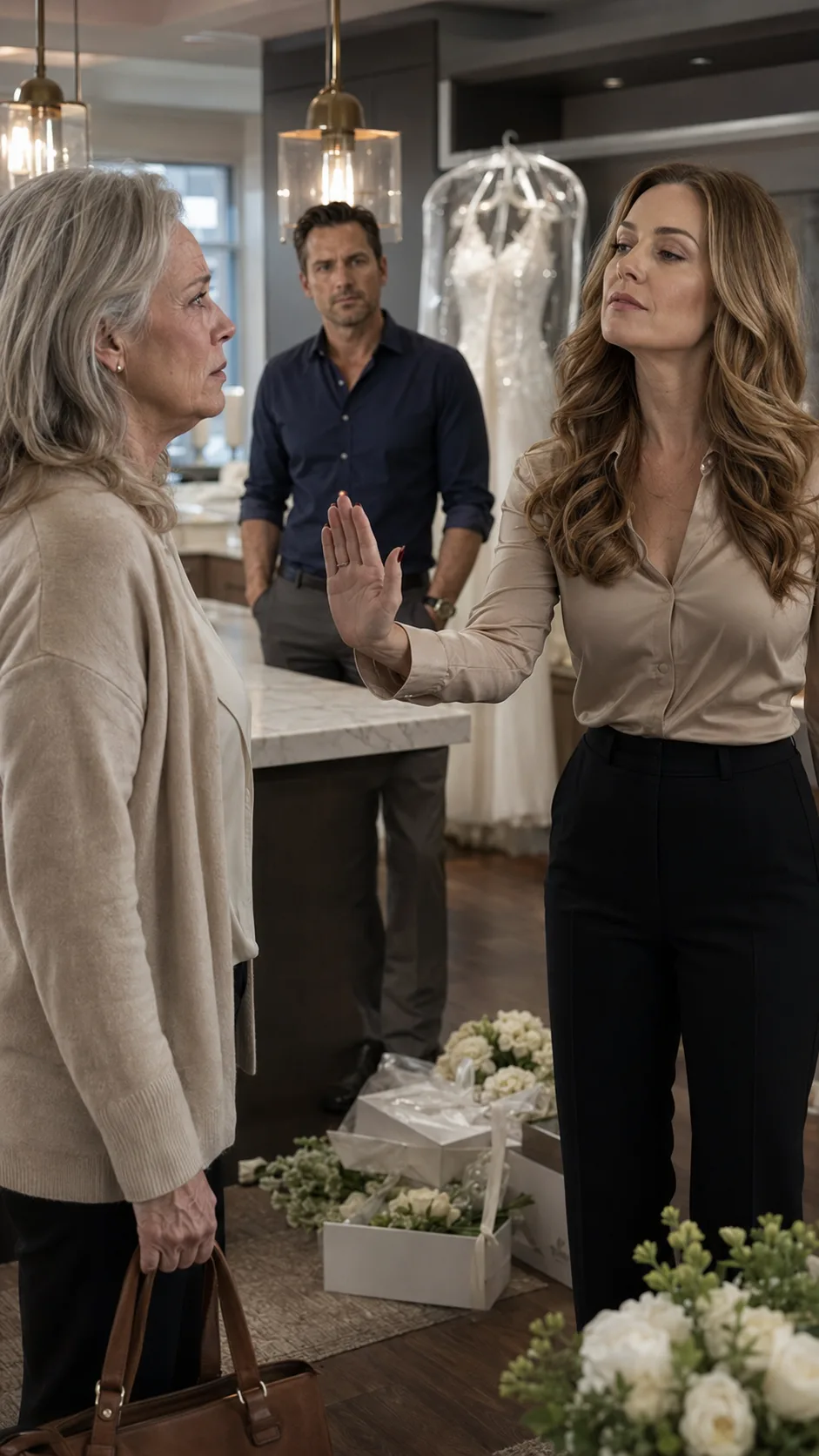
I held up a hand to silence him.
“You see, Jessica, there are some family dynamics at play here that make it inappropriate for me to accept payment from other family members for an event I chose to cancel.”
“I understand,” Jessica said quietly. “Should I tell Mrs. Hworth that the cancellation stands?”
“Yes, please. And Jessica, send my final bill to this hotel. I’ll settle up everything I owe for the inconvenience.”
After hanging up, I turned back to Michael.
“Amanda’s mother was willing to pay fourteen thousand dollars to save your reception,” I said. “She’s been planning this wedding for months. She invited half her country club.”
“How nice for her,” I added. “Too bad her daughter couldn’t manage to be civil to the person who was originally paying for everything.”
Michael pulled out his phone.
“I need to call Amanda,” he said. “We need to figure out
what to do about the house.”
“Go ahead,” I said. “But Michael, when you talk to your wife about our new arrangement, make sure she understands something.”
He looked up from dialing.
“I’m not the same woman who walked out of your house last night,” I said. “That woman was desperate to keep peace in the family at any cost. This woman is done being taken advantage of.”
“You’re really going to force us to sell our home?” he asked.
“I’m going to exercise my legal rights as a co-owner,” I said. “What you do with that information is up to you.”
He left without another word, probably to deliver the worst news of Amanda’s life on what was supposed to be the happiest day.
Twenty minutes later, my phone rang again.
“Dorothy,” Amanda said, and her voice was barely recognizable through her tears. “We need to talk.”
“No, sweetie,”
I said. “We really don’t. You made it very clear yesterday that talking to me wasn’t something you were interested in doing.”
“I was upset,” she sobbed. “I was stressed about the wedding. I didn’t mean what I said.”
“Of course you were upset,” I said. “It must be exhausting pretending to tolerate someone you obviously despise.”
“I don’t despise you,” she insisted.
“In the three years since you moved into the house I bought for you, you’ve never once thanked me,” I said. “Not once. You’ve never asked about my life, my interests, my health. You’ve never invited me to anything unless you needed me to babysit or bring food or write a check.”
“That’s not true,” she said quickly.
“When was the last time you called just to see how I was doing?”
Silence.
“I’ll save you the mental effort,” I said. “Never. You’ve never called just to
check on me.”
“But… but you’re Michael’s mother,” she said, desperate. “You’re family. Doesn’t that count for something?”
“Yesterday, you told me the best gift I could give this family was to disappear permanently,” I said. “Today you’re claiming I’m family. Which is it, Amanda?”
More crying—real, shaky, helpless.
“Dorothy, please,” she said. “I’ll do anything. I’ll apologize publicly. I’ll… I’ll pay you back.”
“Pay me back with what money?” I asked. “You don’t work, remember? You’re a full-time homemaker in a house you couldn’t afford without my money.”
“I’ll get a job,” she said.
“That’s a great idea,” I told her. “You should definitely do that. But it doesn’t change the current situation with the house.”
“What if… what if we agree to pay you back for everything?” she rushed on. “All the money you’ve given us over the years.”
I almost laughed.
“Amanda, honey, you owe me one hundred twenty-four thousand dollars. At minimum wage, it would take you about six years to earn that much—and that’s assuming you never spend money on anything else.”
The silence that followed was the sound of reality finally sinking in.
By 4:00 p.m., they’d called sixteen more times. I answered exactly none of them. Instead, I was sitting in the hotel restaurant enjoying a lovely late lunch and watching the local news coverage of a wedding disaster at Sunset Gardens.
The reporter didn’t mention names, but the footage of Amanda in her wedding dress crying on the country club steps was pretty unmistakable.
“Excuse me,” a voice said. “Aren’t you Dorothy Mitchell?”
I looked up to see a woman about my age with perfectly styled gray hair and kind eyes. She looked familiar, but I couldn’t place her.
“I’m sorry,” I said. “Do we know each other?”
“Barbara Hworth,” she said. “Amanda’s mother.” She gestured to the empty chair across from me. “May I?”
This should be interesting.
Barbara sat down with the practiced grace of someone who’d spent decades handling social crisis.
“I wanted to thank you,” she said.
That wasn’t what I’d expected.
“Thank me for showing my daughter who she really is.”
The waitress appeared and Barbara ordered coffee. I waited, curious about where this was going.
“I’ve been worried about Amanda for years,” Barbara continued. “The entitlement. The way she treats people she considers beneath her. The complete lack of gratitude for anything. I kept hoping marriage would mature her.”
“And now,” she said, voice tightening, “now I’ve seen how she treats the woman who made her lifestyle possible. And I’m horrified.”
Barbara’s coffee arrived. She sipped it thoughtfully before continuing.
“I offered to pay for the reception,” she said, “not because I support Amanda’s behavior, but because I felt responsible for the two hundred guests who’d been inconvenienced. But you were right to refuse, wasn’t I?”
“My daughter needed to face consequences for her actions,” she said. “Real consequences—the kind that can’t be fixed with daddy’s money or mommy’s connections.”
I studied Barbara carefully. There was something refreshing about her directness.
“She called me hysterical about the house situation,” Barbara said. “Demanding that I loan them money to buy out your share. And I told her absolutely not.”
“If she wanted to own a house, she should have treated the co-owner with respect.”
A woman after my own heart.
“Can I ask you something, Dorothy?” Barbara said.
“What’s your endgame here? Are you planning to force the sale?”
I’d been wondering that myself.
“Honestly, I haven’t decided,” I admitted. “Part of me wants to see if they can actually figure out how to support themselves without my money. Part of me wants to sell the house just to watch their perfect little world crumble.”
“And the other part,” I said quietly, “remembers that Michael is still my son despite everything.”
Barbara nodded.
“I understand. But may I offer some advice from someone who’s been enabling her daughter’s bad behavior for thirty-nine years?”
“Please.”
“Don’t save them from this,” she said. “Whatever you decide about the house, don’t cushion the fall. Amanda has never faced real consequences for treating people badly, and it’s turned her into someone I barely recognize as my daughter.”
She reached into her purse and pulled out a business card.
“I’m flying back to California tomorrow,” she said. “If you ever want to talk to someone who understands what it’s like to love an ungrateful child, call me.”
After Barbara left, I sat alone with my thoughts—and my phone, which was still buzzing with increasingly desperate messages.
The truth was, I hadn’t decided what I wanted my endgame to be. I’d been reacting—protecting myself, asserting boundaries—but now I needed to figure out what came next.
The nuclear option was forcing the sale. Michael and Amanda would have to find an apartment, probably in a much less desirable part of town. They’d finally understand what it meant to live within their means.
The merciful option was offering to sell them my share for less than market value, maybe what I’d actually put into the house. They’d still struggle, but they might be able to keep their home.
The spite option was holding on to my ownership stake indefinitely, collecting my share while watching them squirm every month.
As I sat there weighing my options, my phone rang again. This time it wasn’t Michael or Amanda.
“Mrs. Mitchell,” a man said, calm and official, “this is Detective Rodriguez with the Virginia Beach Police Department. I’m calling about a report we received regarding financial elder abuse.”
My blood went cold.
“I’m sorry,” I said. “What?”
“We had a call from someone claiming that family members have been financially exploiting you and that you might be experiencing cognitive decline,” he said. “They’re requesting a welfare check.”
Those manipulative little snakes.
“Detective Rodriguez,” I said, “I can assure you that I’m in full possession of my mental faculties. In fact, I’m probably thinking more clearly than I have in years.”
“That’s good to hear, ma’am,” he said. “But we do need to follow up on these reports. Would you be available to meet with me tomorrow morning?”
I looked around the hotel restaurant at the normal people living their normal lives and felt a surge of pure fury at my son and daughter-in-law’s latest manipulation.
“Absolutely,” I said. “In fact, I have quite a lot I’d like to discuss with you about financial abuse—just not the kind my family reported.”
Detective Rodriguez was younger than I’d expected, maybe forty, with intelligent eyes and the kind of patient demeanor that probably served him well in family disputes. We met at the police station Monday morning, and I’d brought my entire financial file.
“Mrs. Mitchell,” he said, “I want to start by saying that the person who called us seemed genuinely concerned about your welfare.”
“I’m sure they did,” I said. “My daughter-in-law is very good at sounding concerned when it suits her purposes.”
I spread my bank statements across his desk.
“Detective, in the past three years, I’ve given my son and his wife one hundred twenty-four thousand dollars,” I said. “Would you like to see the documentation?”
His eyebrows rose as he examined the papers—check after check, wire transfers, credit card payments made on their behalf—a pattern of financial dependency that looked exactly like what it was.
“This is substantial,” he said carefully.
“It is,” I said. “And yesterday, when I finally set some boundaries about how they treat me, they decided I must be mentally incompetent.”
I pulled out my phone and played the voicemail Amanda had left at 3:00 a.m.
“Dorothy, this is insane behavior. Normal people don’t destroy their family’s lives over hurt feelings. We’re worried about you. Maybe you need to see someone. Get some help. Michael thinks you might be having some kind of breakdown.”
Detective Rodriguez listened, taking notes.
“Has there been any history of cognitive issues, Mrs. Mitchell?”
“None whatsoever,” I said. “I manage my own finances, maintain my own household, drive myself places. The only thing that’s changed is that I stopped letting them take advantage of me.”
I showed him the house documents Margaret had sent over.
“My lawyer can verify that I’m a legal co-owner of their property,” I said. “Everything I’m doing is within my rights as an investor, protecting my assets—and the wedding cancellation. I was paying for a reception for people who told me to disappear from their family permanently. So I honored their request.”
We talked for another twenty minutes. Detective Rodriguez was thorough but fair. And by the end, he seemed satisfied that I was mentally competent and financially savvy.
“Mrs. Mitchell,” he said, “I’m going to close this case as unfounded, but I do want to give you some information about elder financial abuse resources—just in case.”
“Actually, detective,” I said, “I think I’ve got the situation well in hand now.”
As I drove away from the police station, my phone rang.
Michael again.
“Mom,” he said, voice strained, “the police called. They said they’re not pursuing the welfare check.”
“That’s because I’m not the one being financially abused in this relationship, sweetheart.”
“What’s that supposed to mean?”
“It means you and Amanda have been systematically draining my resources for years while giving me nothing but disrespect in return,” I said. “The detective was very interested in my documentation.”
A long pause.
“Are you threatening us?”
“I’m informing you that your manipulation tactics aren’t working anymore.”
“Mom, please,” he said. “Can we just sit down and talk about this like adults?”
“We can,” I said, “but not at the house I co-own. And not until Amanda apologizes for her behavior.”
“She’s sorry,” he said quickly. “She’s been crying for two days.”
“Has she?” I asked. “Because the voicemail she left me at three this morning suggested she thinks I’m mentally ill. Not that she’s sorry.”
Another pause.
“Where do you want to meet?”
“Margaret Chen’s office,” I said. “Tomorrow at 2 p.m. Bring Amanda, and bring a realistic proposal for how you’re going to handle the house situation.”
“A proposal?”
“Michael, I own 35% of an asset worth three hundred thousand dollars,” I said. “That’s my retirement security. You either buy me out or we sell. Those are your options.”
Margaret’s law office felt like neutral territory, all dark wood and leather-bound books, the kind of place where people’s intentions get translated into paperwork whether they like it or not.
Michael and Amanda arrived fifteen minutes late, looking like they’d been arguing in the car. Amanda’s eyes were puffy and red, her usual polish completely gone.
Part of me felt a twinge of sympathy. The other part remembered her words.
“The best gift would be if you disappeared from our family.”
“Dorothy,” Amanda started immediately, “I owe you an enormous apology. I was stressed and overwhelmed, and I said things I didn’t mean.”
“Thank you,” I said. “That’s a start.”
She looked surprised, like she’d expected me to immediately forgive everything.
Margaret spread the house documents across the conference table.
“Let’s review the facts,” she said crisply. “Dorothy provided eighty-seven thousand dollars for the down payment. The mortgage shows her as a co-borrower. The deed lists her ownership at 35%.”
Michael studied the papers like they might magically change.
“We had no idea about the ownership stake,” he said.
“You would have if Amanda had signed the acknowledgement forms,” Margaret replied. “I sent them three times.”
“I was busy with wedding planning,” Amanda said weakly.
“For three years,” Margaret said, beautifully skeptical.
I let them squirm for a moment before speaking.
“The question now is how we move forward,” I said. “I have a proposal.”
They both leaned forward hopefully.
“Option one: you buy out my 35% share at current market value—one hundred five thousand dollars.”
Amanda’s face went white.
“We don’t have that kind of money.”
Click the blue “PART 4” below to read the final part: 👉 PART 4 👈
Chapter complete
You have reached the end of this chapter.
Continue reading
A few more worlds to get lost in after this chapter.




