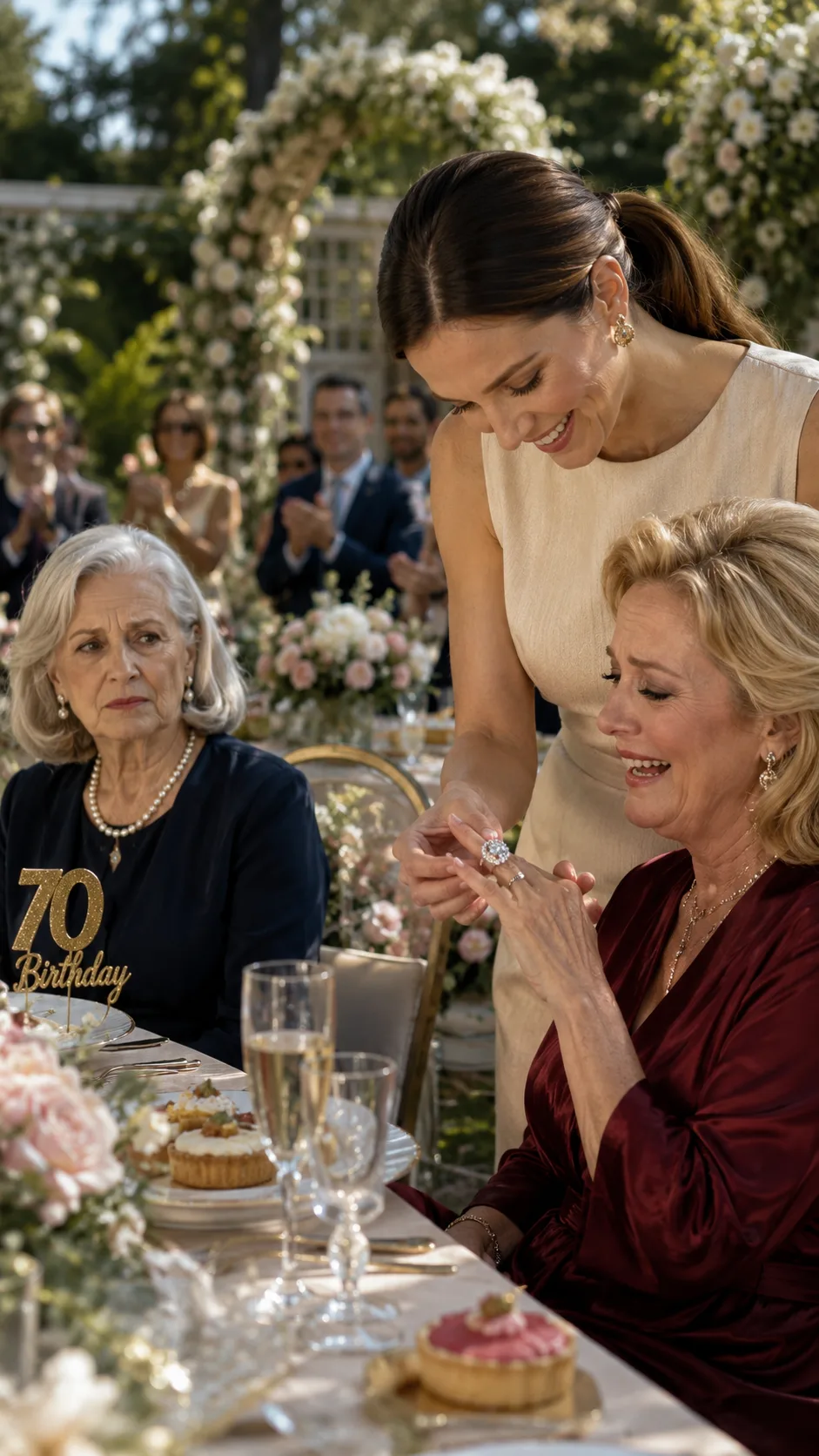
PART 3 — THE DOOR I CLOSED AND THE LIFE I FINALLY CHOSE
Tuesday morning came with a light drizzle and the kind of gray sky that made everything look softer.
Chapter 3
PART 3 — THE DOOR I CLOSED AND THE LIFE I FINALLY CHOSE
Tuesday morning came with a light drizzle and the kind of gray sky that made everything look softer.
I drove to Margaret’s office with the windows cracked just enough to feel the dampness in the air.
Downtown was still waking up and traffic was light. I parked in the same lot I used to use when I met clients years ago. Everything looked familiar, but I no longer felt like I belonged to it.
Margaret greeted me at the door with a firm handshake. She was calm, composed, and didn’t ask too many questions right away. We sat across from each other in her glass-walled office, the city behind her blurred by the rain.
She asked what I had in mind. I told her I wanted to start the process of separating my business holdings from my personal support systems. I told her I wanted to understand what it would mean legally and financially to let go of the company entirely, and more importantly, what steps I needed
to take to make that happen without warning Ellis or Fallon.
She didn’t flinch, just nodded and took notes. Margaret was efficient, but not cold. She told me it would take a few months to structure the sale quietly, that we could build in protective clauses, prepare for contingencies, that it was entirely possible to move forward without alerting anyone until everything was finalized.
I told her that was exactly what I needed.
When the meeting ended, I stepped out into the mist and stood by my car for a moment. My coat was damp by the time I slid into the driver’s seat, but I didn’t mind. There was something cleansing about the way the fog wrapped around the city.
I drove home in silence.
That afternoon, I opened the guest room closet. It had been years since anyone used that space for staying overnight. The shelves were still
stacked with things from the past: extra linens, a few boxes of Ellis’s college trophies, some framed photos I had taken down but never thrown away.
I cleared half the shelf and began gathering the documents Margaret had asked for. Financial records, business contracts, deeds, account ledgers. I created a neat labeled stack and placed them into a portable file box.
I didn’t tell anyone what I was doing. No phone calls, no explanations. I moved like someone rearranging furniture in the middle of the night, careful not to wake anyone who had long since stopped listening anyway.
By Thursday, I had rewritten my will. The new version removed Ellis entirely as a beneficiary. The trust for Ila, my granddaughter, remained, but with strict clauses ensuring the money would only be accessible when she turned 18. There would be no more middlemen, no more channels for guilt to pass through.
On Friday, I contacted a realtor who specialized in lake properties. I asked her to send me listings for modest homes near the water. Nothing grand, just enough space for myself and a small garden.
She asked if I was planning a retirement move. I told her I was planning a transition.
That weekend, I sat outside on the back porch, watching the wind move through the oak trees. The leaves had started to loosen, small movements signaling the shift in seasons.
I didn’t feel angry anymore. What had replaced the anger was something deeper, a kind of clarity, like finding yourself in a room you didn’t realize you had locked yourself into years ago, and finally remembering where you left the key.
I wasn’t making a scene. I wasn’t seeking revenge. I was untangling quietly, deliberately, leaving behind the invisible threads that had kept me tied to an idea of family that no longer fit.
Every form I signed, every folder I packed, every decision I made behind closed doors, they were not acts of spite. They were acts of reclamation.
And by the time the first leaf touched the ground, I knew I was almost ready. Not to run, not to fight, just to walk out the door and close it behind me.
The call came late in the afternoon, just as I was finishing up a list of last-minute notes for Margaret. I almost let it go to voicemail, but the number caught my eye. It was from the office line of the buyer’s due diligence team.
I picked up expecting a simple confirmation about next week’s meeting. Instead, I heard a man’s voice I didn’t recognize.
He introduced himself as James Morrison, part of the acquisition review process. Then he said something that made my heart stop.
He thanked me for the earlier phone conversation with my assistant, who had given him permission to proceed with the preliminary information request.
I don’t have an assistant.
I asked him to clarify who he spoke to. He said she answered my home phone earlier that day, said she was organizing files for me, and sounded very professional.
I told him firmly to stop all communication until further notice and direct everything through Margaret from now on. I ended the call and stood perfectly still in the kitchen.
There was only one person who had a spare key to my house.
I called the landline. It rang four times before I heard her voice. Calm, casual, as if she had every right to be there.
Fallon said she thought I was at an appointment. Claimed she had come to water the plants. I told her I didn’t have any that needed watering.
Then she said she was looking for some of Ellis’s tax documents. I asked her why she answered my phone.
She said it rang three times and she thought it might be important. Her voice changed halfway through that excuse. She knew I knew.
I told her I was on my way.
The drive felt longer than usual. My hands stayed tight on the wheel. I didn’t listen to music. I didn’t let my thoughts get ahead of me. I stayed in the moment. The kind of quiet that isn’t peaceful, just focused.
When I pulled into the driveway, Fallon’s car was still there. I stepped inside through the front door and found her in my office, sitting at my desk, papers spread out like they belonged to her.
She didn’t look up right away. When she finally did, I saw it on her face. Not guilt, just a flicker of irritation that she had been caught early.
I asked her if she found what she was looking for.
She straightened a stack of papers and said she was confused, that she thought I was getting rid of the business, and she just wanted to see what was happening. She kept her tone light, almost condescending, the way she talked when she believed she still had the upper hand.
I told her those were private documents, and that what I did with my business was not hers to know or manage.
She pushed the papers toward me and said, “This affected all of us. David relied on those contracts, she depended on my referrals, and Ellis’s income was tied to my holdings.”
Her voice shook a little, not from emotion, but from losing control.
I stood across from her and asked the question I had held back for years. Was I still her mother-in-law, or had I just become a structure she leaned on to avoid building her own?
She didn’t answer. She gathered her things in silence, avoided my eyes, and left the room without a word. The front door closed behind her with a click, so quiet it felt rehearsed.
I walked back into my office and looked at the papers she had handled. Everything was still there, still in order, but it felt like the last layer of something had been stripped away.
Fallon didn’t come back that night. She didn’t call, and neither did Ellis.
The next morning I woke up with a kind of stillness I hadn’t felt in months. Not because things were resolved. They weren’t. But because now the lines were clear.
She had crossed into something she couldn’t explain away, and I had finally closed the door she thought would always stay unlocked.
By the time Monday arrived, the final purchase agreement had landed in my inbox. Margaret sent it over with a short note outlining the last few items for review.
It was all there: the valuation, the transition timeline, the non-disclosure terms, no room for ambiguity, no space left for delay.
I printed the pages one by one and laid them out across the kitchen table. It felt right signing them in the same place where I had once written checks for college tuition, business bailouts, and emergency expenses that were never called what they really were.
Now it was different. This was no longer giving. This was ending.
When I signed the final page, I didn’t feel triumphant. There was no music in my head, no imagined applause, just the quiet, steady beat of my pulse. It wasn’t joy. It wasn’t grief either. It was something in between. A kind of sobering peace.
Later that afternoon, Margaret called to confirm the documents had been received. She said everything would move forward on schedule. The sale would close in six weeks.
I asked if I needed to do anything else. She said no. The rest would happen on its own.
That same evening, Ellis showed up at my door. He didn’t call first. He just pulled into the driveway, stepped out of the car like it was any other visit, and rang the bell with that same casual rhythm I used to find comforting.
I opened the door and waited. He didn’t smile. He stepped inside and stood in the hallway like a man unsure whether he belonged in the house he grew up in. His eyes scanned the room, then settled on me.
He asked if it was true about the business, about the contracts, about the money. I told him it was.
He let out a breath, the kind people release when they’ve run out of things to deny. He said Fallon was upset, that things were tight, that the timing couldn’t be worse.
He said it like I hadn’t already lived through every version of their emergencies. He said the business was a part of the family, that what I did would ripple out.
I didn’t argue. I didn’t explain. I only told him that it was no longer my responsibility to carry their plans on my shoulders.
He stared at me for a long time. Then he said something I hadn’t expected. He said they felt blindsided.
I nodded. I said I had felt that way too.
He left ten minutes later. No raised voices, no doors slammed. But when he walked down the porch steps, I knew something irreversible had shifted between us. Something that couldn’t be patched with explanations or softened with time.
Over the next few days, the calls came like clockwork. Fallon called once, then again, then again. Each time, her messages grew more frantic.
She said the vendors were pulling back, that the flower shop had found a new bookkeeper, that David was losing clients. She said I was being cruel. She said I was acting out of spite. But I didn’t return the calls. I had returned enough.
On Thursday, the realtor emailed with a list of available cottages along the northern edge of Lake Willoughby. I clicked through the photos. One had a small wraparound porch and a view of the water through tall pines.
It reminded me of the way Warren used to sketch lake houses on napkins back when it was still a maybe-someday dream. I replied with a simple sentence.
I’d like to see this one in person.
Then I stood in the hallway, looked around the house that had held decades of effort, and felt no panic, no hesitation, only the clarity that sometimes comes after a storm passes and you realize the roof held just fine, but you no longer want to live underneath it.
Fallon’s last voicemail arrived late that night. She didn’t yell. She didn’t cry. Her voice was small, worn thin, like someone who had finally run out of lines to play.
She said she didn’t understand how I could be so calm while tearing everything apart. But I hadn’t torn anything. I had simply stopped holding it together.
Three weeks after the sale closed, I moved into the small cottage overlooking Lake Willoughby. It sat at the edge of a narrow gravel road, tucked between two old maples and a slope of wild grass.
The house wasn’t new. The porch needed paint. The screen door creaked. But it was mine. Not inherited, not borrowed, not attached to anyone else’s decisions. Just mine.
I arrived on a Tuesday morning with two suitcases, a box of framed photos, and one file folder containing documents I might still need. Everything else had been packed away, donated, or left behind.
The movers came later with the rest, but by then I had already walked the perimeter twice and found the spots where the afternoon light settled best.
The air here was different, quieter, even in the wind. I could hear birds clearly. No traffic, no voices coming from the walls next door. Just trees and lake and air.
The first thing I did was hang a wind chime Warren had given me our last Christmas together. I found it in the back of a drawer, still wrapped in tissue. I stood on the porch, hooked it to the corner post, and listened to the soft notes when the breeze came.
He would have liked this place. He always wanted somewhere with a view, not for the beauty, but for the stillness, for the space it created inside you.
Inside, the cottage was simple. One bedroom, one bathroom, a narrow kitchen that opened into a sitting area. There was a wood stove in the corner, and the windows were old but clean.
The previous owners had left behind some furniture, worn but sturdy. I kept most of it. I didn’t need new things. I needed space to be new in.
That first night, I slept with the window cracked. The breeze carried in the smell of pine and something damp and earthy I couldn’t name. I didn’t dream. I didn’t wake in the dark, checking my phone or wondering what I had forgotten to do.
I slept the way children sleep when no one expects anything from them in the morning.
The days that followed moved slowly, the way I had always wanted time to move. I found a small bakery in town that sold fresh bread on Thursdays, and a grocery that knew the names of its customers.
I walked every morning down to the shoreline and watched the sun move across the lake. I didn’t think of Ellis. I didn’t wonder what Fallon was doing. I didn’t look at my phone unless it rang, and it rarely did.
One afternoon, I sat with a notepad and wrote out a new version of my will, not for legal purposes, just for myself.
I wrote a letter to Ila to be opened on her 18th birthday. I told her about her grandfather, about the smell of rain on old wood, about what it feels like to finally choose your own life.
I told her the trust was hers, but that she owed me nothing. Not visits, not explanations, just the promise that she would pay attention to her own voice before letting someone else rewrite it.
When I folded the letter and sealed it in an envelope, I placed it in the drawer beside my bed. Then I poured myself a glass of water, stepped out onto the porch, and listened to the lake. Not for meaning, not for clarity, just to hear it breathe.
I had spent years filling silence with responsibility. Now I let silence speak for itself.
The envelope arrived on a Thursday. No return address, just my name written in a hand I hadn’t seen in years. It was careful, not hurried, a kind of writing that came from someone who had rewritten the words many times before choosing the version they could live with.
I sat with it unopened for an hour, not because I was afraid of what it would say, but because I no longer felt rushed to hear what others needed from me.
Eventually, I opened it. The first line read, “I’ve been trying to write this for months.”
The letter was from Fallon. She wrote that David’s business had collapsed completely, that the podcast lost its sponsors, that Ellis had returned to part-time consulting. She said the house felt too big now, quiet in the wrong ways.
She admitted she had spent years chasing approval, even when she didn’t understand who she was trying to please.
She didn’t ask for money or a second chance. She didn’t try to explain everything away.
Instead, she wrote, “I finally understand why you walked away. You weren’t punishing us. You were freeing yourself.”
She said she was sorry for telling a version of the truth that left me voiceless. She said she kept the bracelet, not because it meant anything good, but because it reminded her of the moment she realized something had broken.
She ended the letter by saying she hoped I had found what she never could name. Peace. Something not borrowed or earned, just chosen.
I folded the letter and placed it in the drawer next to Ila’s envelope. I didn’t write back, not because I was angry anymore, but because some messages are complete the moment they arrive.
Outside, the lake moved gently, the surface broken only by wind and time. I stood on the porch, one hand resting on the railing, and let the silence stay with me.
I didn’t need closure. I had chosen my ending long before the letter came. I was 70 years old and I was finally living a life that didn’t require anyone else’s permission.
If you have ever reached a point in life where peace mattered more than obligation, you are not alone. Sometimes the quietest choice is the one that saves what is left of you. And if you have been carrying too much for too long, maybe today is the day you finally set something down.
THE END.
Chapter complete
You have reached the end of this chapter.
Continue reading
A few more worlds to get lost in after this chapter.




