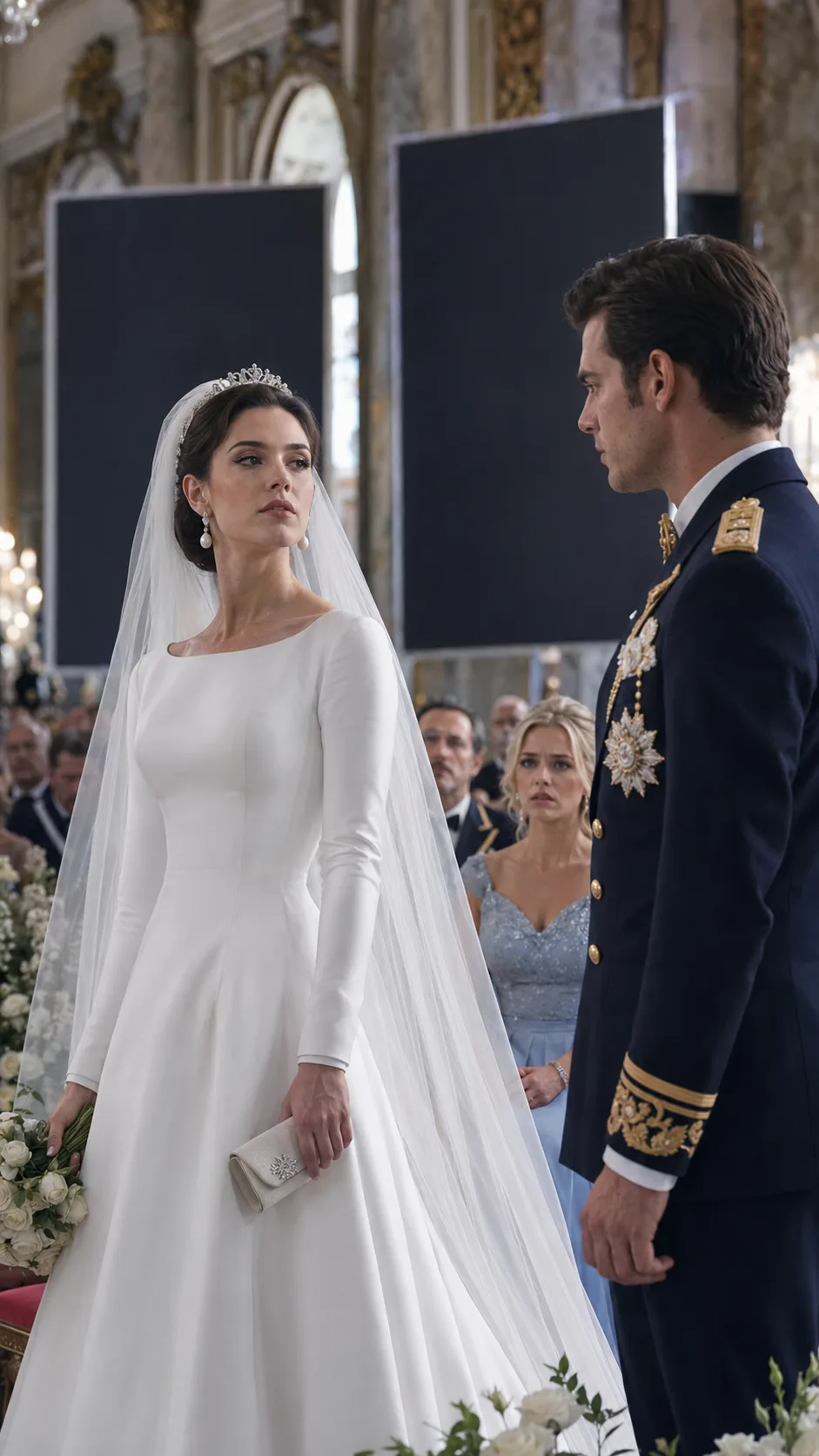
The Princess Exposed Her Fiancé’s Betrayal on Live Cameras as Her Sister Reached for the Crown Behind Her Back
Princess Amelia had been trained her entire life to smile while her heart broke.
Chapter 1
Princess Amelia had been trained her entire life to smile while her heart broke.
That was the first lesson of royalty.
Never flinch when people lied about you.
Never answer when they insulted you.
Never let the world know which words had cut deep enough to leave a scar.
By the age of twenty-six, Amelia had learned the art so well that the whole kingdom mistook her silence for weakness. She was graceful, they said. Gentle. Predictable. A princess who understood duty. A woman who would choose the crown before herself, even if the crown demanded everything.
Her younger sister, Princess Isabella, had learned a different art.
Isabella knew how to cry beautifully.
She could lower her lashes at the exact angle that made photographers soften their captions. She could touch her mother’s hand and look wounded before anyone had even accused her. She could turn any room into her stage, any mistake into another person’s cruelty, any lie into a tragedy where she
was the victim.
Their mother, Queen Helena, called Isabella sensitive.
Their father, King Edward, called Amelia responsible.
Neither parent seemed to understand that those two words had shaped both daughters into weapons.
Amelia became the shield.
Isabella became the knife.
For years, Amelia accepted it because that was what eldest daughters in royal families were taught to do. When Isabella embarrassed herself at a charity gala, Amelia apologized to the donors. When Isabella insulted an ambassador’s wife, Amelia sent flowers before sunrise. When Isabella leaked private palace photos to a fashion magazine and blamed a maid, Amelia begged the staff not to resign.
“Your sister is young,” Queen Helena would say.
“She is twenty-three,” Amelia once replied.
“And you are the future of this family,” her mother said, as if that explained why Amelia always had to bleed quietly.
The future of the family.
That phrase followed Amelia through every
corridor of the Royal Palace of Valmont.
It followed her into meetings with ministers, into hospitals where she shook hands with children, into freezing winter ceremonies where she stood beside soldiers and smiled until her cheeks ached. It followed her into interviews where reporters asked about her wedding as if marriage were not a choice but an international event.
And now, with only four days left before she married Prince Alexander of Ravaryn, that phrase had become a cage.
The wedding was more than a wedding.
That was what the advisers kept saying.
It was a treaty in white silk.
A financial alliance in diamond form.
A public relations miracle wrapped in flowers.
Valmont and Ravaryn had once been rival kingdoms. Their borders had been peaceful for a century, but old bitterness still lived in schoolbooks, political speeches, and royal memories. Amelia’s marriage to Alexander was supposed to end all
of that. Two young, elegant royals. Two nations watching. One perfect ceremony livestreamed across the world.
The palace had spent eighteen months preparing for it.
The chapel had been restored. The ballroom ceiling had been repainted with gold leaf. The gardens had been replanted with white roses imported from three countries. Every chair, every candle, every note of music had been approved by committees.
Amelia herself had been approved too.
Her gown was chosen because it looked timeless.
Her bouquet was chosen because it symbolized peace.
Her hairstyle was chosen because it made her look softer.
Her smile, apparently, was the only thing she was still allowed to choose for herself.
Prince Alexander arrived at Valmont Palace six weeks before the wedding and immediately made the entire court adore him.
He was handsome in the effortless way that made cameras forgive everything. Tall, golden-haired, blue-eyed, with the calm confidence of a man who had never had to wonder if the world would make space for him. He laughed with servants. He kissed old duchesses on the cheek. He helped children lift flags during public events. He knew exactly when to look serious and exactly when to look charming.
The public called him Europe’s favorite prince.
Amelia called him dangerous only once, and only to herself.
Because Alexander was not cruel in obvious ways.
He did not shout. He did not threaten. He did not humiliate her in front of others.
Instead, he corrected her gently.
“You looked a little stiff during the interview, Amelia.”
“You don’t need to answer political questions so directly.”
“Try not to make Isabella uncomfortable. She already feels invisible beside you.”
That last sentence had stayed with her.
Isabella did not feel invisible beside Amelia.
Isabella felt furious whenever she was not the center of the room.
At first, Amelia tried to believe Alexander was simply being kind to her sister. Isabella had always attached herself to powerful people. She admired beauty, fame, attention. Alexander had all three, so of course she hovered near him at dinners. Of course she laughed too brightly at his jokes. Of course she touched his arm when she spoke.
Amelia noticed.
She noticed the way Isabella’s voice changed around him, becoming softer, breathier, practiced. She noticed the way Alexander’s eyes followed Isabella when he thought no one was watching. She noticed the sudden private jokes, the shared glances, the excuses to be in the same room.
But noticing was not proof.
And Amelia had spent her whole life being told not to make trouble without proof.
Three nights before the wedding, proof found her.
It was nearly midnight.
The palace was quiet except for the distant footsteps of security guards and the low hum of equipment in the broadcast control room. Amelia had been unable to sleep. Tomorrow would bring another rehearsal, another press statement, another lunch with officials who wanted to discuss how happily she should look at the altar.
She left her suite wearing a pale robe over her rehearsal gown. The seamstress had insisted on one final fitting, and Amelia had been too exhausted to change afterward. The ivory fabric brushed the marble floor as she walked through the west wing toward the old chapel corridor.
That corridor was rarely used now. It had been part of the original palace, built three hundred years earlier, with high arched windows and black-and-white marble tiles. Portraits of dead queens watched from the walls. Security cameras had been added after an attempted break-in years ago, but most people forgot they existed because the corridor looked too ancient for modern technology.
Amelia went there when she needed silence.
That night, she found voices instead.
At first, she stopped because she recognized Isabella’s laugh.
Then she heard Alexander.
“Not here,” he murmured.
“Why not?” Isabella whispered. “Are you afraid of ghosts?”
“I am afraid of your sister.”
Isabella laughed again, but this time there was something sharp beneath it.
“Amelia is afraid of everything.”
Amelia froze beneath the shadow of an archway.
Twenty feet ahead, near the small door leading to the chapel sacristy, Alexander stood with one hand against the wall beside Isabella’s head. Isabella wore a silk champagne-colored dress and no shoes. Her blonde hair fell loose over one shoulder. Alexander’s jacket was gone, his tie hanging open.
Amelia’s body went cold before her mind understood what she was seeing.
Then Isabella lifted her face.
And Alexander kissed her.
It was not a mistake.
It was not confusion.
It was not the kind of brief accident desperate people later tried to explain away.
It was familiar.
That was what hurt most.
The kiss had the ease of something repeated, hidden, practiced. Isabella’s hands moved to his chest as if they belonged there. Alexander leaned into her as if he had forgotten the palace, the wedding, the woman he was supposed to marry.
Amelia did not make a sound.
A strange calm came over her, so complete it frightened her.
She should have stepped forward. She should have slapped him. She should have said Isabella’s name with enough force to crack the marble between them.
Instead, she stood still.
Because then Isabella spoke.
“After the wedding, she’ll be easy to control.”
Alexander exhaled a laugh. “You underestimate her.”
“No,” Isabella said. “Everyone overestimates her. Amelia obeys. That’s what she does. She’ll smile, she’ll wave, she’ll produce an heir, and she’ll never embarrass the family.”
Alexander’s face changed. The charming softness disappeared.
“And you?” he asked.
Isabella smiled.
“I’ll be the one you actually love.”
Amelia’s fingers tightened around the fabric of her gown.
Alexander touched Isabella’s cheek.
“You know I can’t break the engagement now.”
“I know,” Isabella said. “That’s why you’ll marry her first.”
First.
The word entered Amelia quietly, like a blade sliding between ribs.
First.
Not forever.
Not faithfully.
Not even honestly.
Just first.
She stepped backward before either of them could see her. Her heel nearly caught on the hem of her gown, but she steadied herself against the wall and kept moving. She did not run. Running would have made sound.
She returned to her suite with her heart beating so hard she could feel it in her throat.
Only when the door closed behind her did she realize she was shaking.
For one minute, Amelia allowed herself to be a woman instead of a princess.
She sank onto the edge of her bed. She pressed both hands over her mouth. She stared at the white wedding veil hanging beside the mirror.
Then she stood.
There was a small desk near the window where palace schedules were delivered each morning. Amelia opened the drawer and removed the slim silver tablet issued to senior members of the royal household. It contained access to public event plans, guest lists, security maps, and ceremonial notes.
Not security footage.
That required authorization from the chief of palace security.
Fortunately, Amelia had learned long ago that invisible people saw everything.
And in palaces, no one was more invisible than the staff.
She called Clara Whitmore at 12:17 a.m.
Clara answered on the second ring.
“Your Highness?”
Her voice was alert, not sleepy. Clara had been Amelia’s private secretary for six years. She was thirty-one, plainspoken, terrifyingly efficient, and one of the few people in the palace who had never treated Amelia like an ornament.
“I need you to find out whether the cameras in the old chapel corridor were recording tonight,” Amelia said.
There was a pause.
Then Clara asked, “Do you want this officially or quietly?”
Amelia closed her eyes.
“Quietly.”
“I’ll call Marcus.”
Marcus Vale was deputy head of palace security. He had once been a military officer, then a royal protection agent, then the only man in the security department willing to tell the truth when ministers preferred lies.
He also owed Amelia a favor.
Three years earlier, when a tabloid had accused Marcus of selling information, Amelia had found the real leak and defended him before the palace board. Since then, Marcus had never said he was grateful.
He simply answered whenever Clara called.
At 1:03 a.m., Clara came to Amelia’s suite with a black folder and a face pale enough to confirm everything.
Marcus stood behind her, jaw tight.
“It recorded,” he said.
Amelia looked at the folder.
“Show me.”
Marcus hesitated. “Your Highness, once you see it, you cannot unsee it.”
Amelia almost laughed.
“I already saw it.”
He gave a single nod and connected a secure drive to the room’s private screen.
The footage played without sound at first.
There they were.
Alexander.
Isabella.
The kiss.
The closeness.
The familiarity.
Then Marcus switched to the enhanced audio, captured by a directional microphone installed after a security threat during a chapel restoration ceremony.
Isabella’s voice filled the room.
“After the wedding, she’ll be easy to control.”
Alexander’s answer followed.
“You underestimate her.”
Then Isabella again.
“Amelia obeys. That’s what she does.”
Clara turned away.
Marcus stared at the floor.
Amelia watched until the clip ended.
“Copy it,” she said.
Marcus looked up sharply. “Your Highness—”
“Copy it.”
“There are protocols.”
“My fiancé is planning to use my marriage as a political shield while carrying on with my sister,” Amelia said quietly. “My sister is discussing how to control me after the wedding. If your protocols protect them before they protect me, then your protocols are part of the problem.”
Marcus did not argue again.
By dawn, Amelia had the footage saved in three places.
By breakfast, the palace knew something was wrong.
Not because Amelia cried.
She did not.
Not because she confronted anyone.
She did not do that either.
The palace knew because Amelia arrived at the family breakfast wearing navy blue instead of bridal white, no engagement ring, and an expression so calm that even King Edward lowered his newspaper.
Queen Helena sat at the long dining table beneath a chandelier shaped like falling leaves. Isabella was already there, dressed in pale pink, stirring tea she had not drunk. Alexander stood near the windows speaking to the king’s press secretary.
When Amelia entered, Alexander smiled.
It was perfect.
Warm. Regretless. Beautiful.
“Good morning,” he said.
Amelia looked at him for one second too long.
Then she sat down.
Isabella’s spoon clicked against porcelain.
“Couldn’t sleep?” she asked sweetly.
“No,” Amelia said. “I saw something that kept me awake.”
The silence changed.
Alexander’s smile remained, but his eyes sharpened.
Queen Helena set down her cup. “Amelia, not at breakfast.”
“I haven’t said anything yet.”
“You don’t need to,” the queen replied.
That was when Amelia understood.
Her mother knew.
Maybe not the details. Maybe not the footage. But she knew enough to fear the conversation before it began.
King Edward folded his newspaper. “What is this about?”
Amelia looked at him.
“Ask Alexander.”
Alexander gave a soft laugh. “Darling, if this is about last night—”
“Do not call me darling.”
No one moved.
The words were not loud, but they landed with the force of a door slamming shut.
Isabella’s eyes widened beautifully, right on cue.
Alexander lowered his voice. “Perhaps we should speak privately.”
“You preferred the old chapel corridor for private conversations last night.”
Color drained from Isabella’s face.
Only for a second.
Then she became wounded.
“Amelia,” she whispered. “How could you spy on me?”
It was almost impressive.
Not denial.
Not shame.
A performance.
Amelia turned to her sister. “That is the first thing you want to say?”
Isabella’s eyes filled with tears. “You’re twisting this.”
“What part?”
“It wasn’t what you think.”
“You kissed my fiancé three days before my wedding.”
Queen Helena stood abruptly. “Enough.”
King Edward stared at Alexander. “Is this true?”
Alexander looked at Amelia, then at the queen, then at the king.
In that brief hesitation, the entire palace shifted.
Because men like Alexander were not used to consequences arriving before they had prepared their speeches.
“It was a mistake,” he said finally.
Isabella made a small broken sound.
Alexander corrected himself immediately. “An emotional mistake. We were under pressure. The wedding has been intense for all of us.”
Amelia almost admired how quickly he tried to turn betrayal into stress.
Queen Helena moved toward her eldest daughter. “Amelia, listen to me carefully. Whatever happened, this cannot leave this room.”
There it was.
Not Are you hurt?
Not I am sorry.
Not Your sister betrayed you.
Only this cannot leave this room.
Amelia looked at her mother and felt something inside her go very still.
“You want me to marry him.”
“I want you to understand what is at stake.”
“What is at stake is my life.”
“What is at stake,” Queen Helena said, voice hardening, “is the stability of two kingdoms, the dignity of this family, and everything your father has worked to preserve.”
“My dignity is not included?”
Her mother’s face tightened.
“Do not be childish.”
For the first time that morning, Amelia smiled.
It was not a warm smile.
It made Isabella look away.
“Childish,” Amelia repeated. “That is what you call it when a woman refuses to be publicly sacrificed.”
King Edward rose slowly. He looked older than he had the day before.
“Amelia,” he said, “we can delay the wedding. We can handle this privately.”
“No,” Queen Helena snapped.
Everyone turned to her.
The queen took a breath, then softened her voice. “A delay will confirm rumors. The broadcast rights are signed. Foreign leaders are already here. The markets reacted positively to the alliance announcement. Ravaryn’s parliament is expecting the treaty to pass after the ceremony.”
“So I am not a daughter today,” Amelia said. “I am paperwork.”
Her father flinched.
Alexander stepped forward. “Amelia, I know you’re hurt. I made a mistake. But we can still build something respectful.”
Respectful.
That was the word that finally broke the last thread.
Not loving.
Not honest.
Respectful.
A marriage arranged like a museum display. A husband who kissed her sister. A family that told her silence was duty. A future where every betrayal would be renamed diplomacy.
Amelia stood.
“No.”
Queen Helena’s eyes flashed. “No?”
“No.”
“You will not humiliate this family.”
Amelia turned toward the door. “You did that without my help.”
The next seventy-two hours became a war fought in whispers.
The palace machine moved fast.
First came the emotional appeal.
Queen Helena came to Amelia’s suite that afternoon and spoke of sacrifice. She reminded Amelia of her grandmother, who had married a man she barely knew and served the crown for fifty years. She spoke of duty, history, public trust.
Amelia listened.
Then she said, “Did Grandmother’s husband kiss her sister too?”
The queen left.
Next came the political appeal.
Two senior advisers arrived with documents explaining the consequences of canceling the wedding. They used words like instability, breach of confidence, diplomatic fracture, reputational collapse. One of them, Lord Bennett, placed a folder on Amelia’s desk and said, “Your Highness, sometimes personal pain must be weighed against national interest.”
Amelia opened the folder.
Inside were polling charts.
She closed it.
“Come back when you have a chart measuring betrayal.”
They left.
Then came Alexander.
He arrived without warning on the second night, dressed in a black suit, holding her engagement ring in his palm.
Amelia allowed him in because Clara and Marcus were waiting in the next room.
Alexander looked tired now. Less golden. More human. Or perhaps Amelia was finally seeing the rot beneath the polish.
“I ended it,” he said.
Amelia stood by the fireplace. “Ended what?”
He swallowed. “Whatever Isabella thought was happening.”
“Do not insult me by pretending she imagined it alone.”
“I was confused.”
“You were ambitious.”
He looked wounded, but she knew better now.
“I cared for you, Amelia.”
“No. You studied me.”
His face changed.
Just slightly.
But enough.
Amelia stepped closer. “You learned exactly what everyone else learned. That I could be pressured. That I would choose duty. That I would clean up the mess because I always have.”
Alexander’s voice lowered. “You think you’re the only person trapped here?”
“No,” Amelia said. “But I may be the only one done pretending the cage is holy.”
He held out the ring.
“Marry me tomorrow. We will live separate lives if that is what you want. We will make an agreement. You can have your charities, your independence, anything. But if you expose this, you will destroy more than me.”
There it was.
The truth beneath the apology.
Not forgive me.
Not I love you.
Only protect me.
Amelia looked at the ring.
Then she looked at him.
“Did you love her?”
Alexander’s jaw tightened.
“That is not the question.”
“It is mine.”
He looked away.
And Amelia had her answer.
Alexander left with the ring still in his hand.
On the morning of the wedding, Valmont woke beneath a sky bright enough to look dishonest.
Crowds filled the capital before sunrise. Flags hung from balconies. Police blocked the main avenues. Reporters stood outside the palace gates speaking into cameras in six languages. The royal livestream was scheduled to begin at eleven.
Inside the palace, the air smelled of roses, perfume, polished wood, and panic.
Amelia sat before a mirror while two stylists adjusted her veil.
Her wedding gown was beautiful in a way that felt almost cruel. White silk, long sleeves, hand-embroidered pearls, a train that spread behind her like moonlight. Around her neck, she wore the diamond necklace Queen Helena had chosen.
On her finger, the engagement ring had been returned.
Not by Alexander.
By her mother.
Queen Helena had entered an hour earlier, placed the ring on the vanity, and said, “Do not make me choose between my daughter and my crown.”
Amelia had replied, “You already did.”
Now the queen stood behind her, watching in the mirror.
“You can still be remembered as the princess who saved this family,” Helena said.
Amelia met her mother’s eyes in the reflection.
“Or I can be remembered as the woman who told the truth.”
Helena’s lips pressed together. “Truth is not always noble.”
“No,” Amelia said. “But lies are always hungry.”
A knock sounded.
Clara entered, holding a small ivory clutch.
Inside was a secure remote linked to the palace broadcast system.
Marcus had spent the night creating a path.
Not illegal, he had said.
Technically.
The chapel screens were already installed for guests seated in the overflow halls. The livestream control room could display pre-approved video packages: childhood memories, historical footage, ceremonial angles. All Amelia needed was one command at the right moment.
Clara placed the clutch beside Amelia’s bouquet.
“Everything is ready,” she said quietly.
Queen Helena’s gaze sharpened. “What is ready?”
Amelia stood.
The room fell silent.
She picked up her bouquet with one hand and the clutch with the other.
“My wedding,” she said.
The procession began at 10:58.
The world saw perfection.
They saw the ancient doors of the royal chapel open. They saw white flowers climbing the columns. They saw European royals, presidents, prime ministers, celebrities, and aristocrats seated beneath painted saints. They saw Prince Alexander waiting at the altar in a dark ceremonial uniform, his expression solemn and handsome.
They saw Princess Isabella in the front row wearing pale blue, her face soft with sisterly emotion.
They saw Queen Helena sitting perfectly still.
They saw King Edward take Amelia’s arm.
But they did not see the king whisper as the doors opened.
“Amelia,” he said, voice breaking, “tell me what you need me to do.”
For one moment, she almost stumbled.
She looked at her father.
His face was pale. His eyes were wet. He looked not like a king but like a man who had finally understood that neutrality was also a betrayal.
Amelia tightened her hand around his arm.
“Walk me,” she whispered.
He did.
Every step down the aisle felt longer than the years before it.
The cameras followed.
The guests rose.
The music swelled.
Alexander watched her approach with relief hidden beneath romance. He thought she had chosen silence. Perhaps they all did. Perhaps that was why Isabella’s mouth curved slightly when Amelia reached the altar.
The archbishop began.
“Dearly beloved, we gather before God, before country, and before the watching world…”
The watching world.
Amelia almost smiled.
Alexander took her hand.
His fingers were warm.
His grip tightened, warning or pleading.
She did not look at him.
The ceremony moved forward like a machine.
Prayers.
Vows of duty.
A reading about loyalty that made Clara, standing near the side door, lower her eyes.
Then the archbishop turned to Amelia.
“Princess Amelia Rose Eleanor of Valmont, do you come freely to this union?”
The chapel became so quiet she could hear the faint buzz of a camera drone outside the stained-glass windows.
Alexander’s thumb pressed against her hand.
Queen Helena leaned forward.
Isabella’s eyes glittered.
Amelia lifted her head.
“No.”
The word did not echo.
It detonated.
A murmur shot through the chapel. The archbishop froze. Alexander’s hand went rigid around hers.
“Amelia,” he whispered.
She pulled her hand away.
The cameras moved closer automatically, trained to capture emotion, trained to feed the world a fairy tale. They captured something else instead.
Amelia turned from the archbishop to face Alexander fully.
Her veil framed her face. Her bouquet hung at her side. Her voice, when she spoke, was calm enough to terrify everyone who knew her.
“You wanted a royal wedding,” she said. “So let the whole world see the truth.”
Then she opened the ivory clutch and pressed the remote.
For half a second, nothing happened.
Isabella stood.
“Amelia, don’t—”
The chapel screens turned black.
Then the old chapel corridor appeared.
Alexander’s face changed first.
Not guilt.
Fear.
The footage played in silence for two seconds, projected above the altar, across the overflow screens, and into the global livestream before anyone in the control room could react.
Alexander with Isabella.
His hand beside her head.
Her face lifting.
The kiss.
Gasps erupted through the chapel.
Someone dropped a program.
A duchess whispered, “Oh my God.”
Then the audio began.
Isabella’s voice filled the royal chapel.
“After the wedding, she’ll be easy to control.”
The entire world heard it.
Alexander closed his eyes.
Isabella’s hand flew to her mouth, but it was too late.
On the screen, Alexander said, “You underestimate her.”
Then Isabella’s voice again, sweet and poisonous.
“Everyone overestimates her. Amelia obeys. That’s what she does. She’ll smile, she’ll wave, she’ll produce an heir, and she’ll never embarrass the family.”
The chapel erupted.
Reporters stood. Security moved. Guests turned toward Isabella, who had gone white beneath her makeup.
Queen Helena rose so quickly her chair struck the floor behind her.
“Stop the broadcast!” she shouted.
But the footage kept playing.
Because Marcus Vale had not only copied the clip.
He had routed it through every official wedding feed at once.
The kiss ended.
The screen froze on Alexander’s hand against Isabella’s cheek.
Then another clip began.
Amelia had not known about the second clip until Clara handed her the clutch.
Marcus had found it while reviewing palace footage.
This one came from two weeks earlier.
A private study.
Alexander, Isabella, Queen Helena, and Lord Bennett stood around a table.
Amelia’s breath caught.
Her mother was in the footage.
The audio crackled.
Lord Bennett said, “Once the marriage contract is signed, Princess Amelia’s independent foundation assets will be folded into the joint royal trust.”
Alexander nodded. “And if she resists?”
Queen Helena’s voice answered.
“She won’t. Amelia has always understood duty.”
Isabella laughed softly.
“And if she finds out about us?”
Queen Helena turned toward her younger daughter.
“Then you will cry, Alexander will apologize, and Amelia will do what she was born to do.”
The queen’s voice grew colder.
“She will protect the crown.”
For the first time that day, Amelia felt pain sharp enough to make her sway.
Alexander’s betrayal had cut deep.
Isabella’s betrayal had burned.
But her mother’s voice on that screen hollowed something out of her.
The entire chapel had gone silent now.
Even the reporters stopped moving.
On the screen, Lord Bennett slid a document across the table.
“With Amelia’s signature after the ceremony, the foundation transfer becomes irreversible.”
Amelia turned slowly toward Queen Helena.
Her mother looked trapped.
Not sorry.
Trapped.
That was worse.
“You planned to take my foundation,” Amelia said.
Queen Helena’s face hardened because queens did not know how to beg when command failed.
“It was necessary.”
Amelia’s foundation funded hospitals, scholarships, shelters, and disaster relief across three countries. It had been created from her grandmother’s private inheritance and legally protected until marriage, when certain royal trust agreements could change its management.
Amelia had believed the post-wedding documents were ceremonial.
Now she understood.
The wedding had never been just about diplomacy.
It had been a transfer.
A theft dressed in silk.
King Edward stood slowly from the front row.
He looked at his wife as if he had never seen her before.
“Helena,” he said, voice shaking. “Tell me this is false.”
Queen Helena said nothing.
That silence ended her reign more completely than any confession could have.
Alexander stepped toward Amelia. “Listen to me. This is out of context.”
Amelia laughed once.
A small sound.
Almost gentle.
“Which part? The kiss? The plan to control me? The plan to take my foundation? Or the part where everyone in this chapel was invited to watch me sign away my life?”
Isabella suddenly moved into the aisle, tears spilling now.
“Amelia, please. I love him.”
The words were so absurd that several guests audibly gasped.
Amelia turned to her sister.
For years, Isabella’s tears had ruled rooms.
Not this one.
“You love crowns,” Amelia said. “You love mirrors. You love taking whatever is handed to someone else because earning it would require becoming someone.”
Isabella recoiled as if slapped.
“Don’t talk to me like that.”
“I have talked to you gently all my life,” Amelia said. “Look what you did with it.”
Alexander grabbed Isabella’s wrist, not tenderly now, but to stop her from speaking.
That small movement told the cameras everything.
The charming prince was gone.
In his place stood a man watching power slip from his hands.
The archbishop stepped back from the altar.
Security officers moved toward the royal family, uncertain whom they were protecting from whom.
Then King Edward walked into the aisle.
He did not look at the cameras.
He looked at Amelia.
“My daughter,” he said, loud enough for the microphones to catch, “do you wish this ceremony to continue?”
Queen Helena spun toward him. “Edward, do not be ridiculous.”
He ignored her.
Amelia looked at the man who had failed her quietly for years. The father who had loved her but let her mother use her. The king who had chosen peace in the household over justice for his daughter.
Now he stood in front of the world and gave her the choice everyone else had tried to steal.
Amelia’s throat tightened.
“No,” she said. “I do not.”
King Edward nodded once.
Then he turned to the archbishop.
“This wedding is canceled.”
The chapel exploded.
Reporters shouted questions.
Guests rose from their seats.
The livestream numbers surged so quickly that several platforms crashed.
Queen Helena tried to reach Amelia, but Marcus stepped between them.
“Your Majesty,” he said, voice formal, “please remain where you are.”
The queen stared at him. “How dare you?”
Marcus did not blink.
“I serve the crown, ma’am. Not the cover-up.”
That sentence became the headline of the century.
Alexander tried one final time.
He moved close enough that only Amelia and the microphones could hear him.
“You have no idea what you’ve done.”
Amelia looked at him, this man the world had called perfect, this prince who had mistaken her discipline for surrender.
“Yes,” she said. “I do.”
Then she removed the engagement ring from her finger and placed it in his palm.
“Now you can give it to someone who wants what it costs.”
She turned away before he could answer.
Clara met her at the side of the altar.
For one second, Amelia looked toward the chapel doors, expecting fear to come.
It did not.
Instead, something lighter entered her chest.
Not happiness.
Not yet.
Freedom rarely arrived as joy.
Sometimes it arrived as the first breath after years underwater.
She walked back down the aisle alone.
Not running.
Not crying.
Not hiding.
Her train swept over the marble like a white banner of surrender transformed into war.
As she reached the doors, the crowd outside saw her through the open entrance. Thousands of people who had come to cheer a wedding fell into stunned silence.
Then one woman near the barricade began clapping.
Another joined.
Then another.
Within seconds, the sound rolled through the palace square.
Not celebration.
Recognition.
By sunset, the royal family of Valmont was in constitutional crisis.
By midnight, Queen Helena had temporarily stepped back from public duties.
By morning, Lord Bennett resigned.
Prince Alexander returned to Ravaryn under police escort after leaked documents confirmed his advisers had negotiated political benefits tied to Amelia’s foundation transfer. Ravaryn’s parliament suspended the treaty pending investigation.
Isabella disappeared from public view for six days.
When she finally released a statement, she called herself manipulated, emotional, and deeply sorry.
No one believed her.
The internet had already made its judgment.
Clips of her saying “Amelia obeys” appeared across every platform in the world. Commentators replayed the footage beside years of public appearances where Amelia had stood quietly behind her family, smiling as Isabella took attention, praise, and space.
But the most watched clip was not the kiss.
It was Amelia at the altar.
White dress.
Steady voice.
“You wanted a royal wedding. So let the whole world see the truth.”
Some called her brave.
Some called her reckless.
Some called her the princess who broke the fairy tale.
Amelia did not read most of it.
Three days after the canceled wedding, she left the palace for the first time without a royal schedule.
No convoy.
No ceremony.
No official statement.
Only Clara beside her and Marcus driving.
They went to Saint Victoria Children’s Hospital, one of the first institutions funded by Amelia’s foundation. No cameras had been invited, but by then the world was watching everything.
A little girl recovering from surgery saw Amelia in the corridor and asked, “Are you still a princess?”
Amelia knelt carefully beside her.
The child touched the edge of Amelia’s plain blue coat.
“Because you didn’t marry the prince.”
Amelia smiled.
A real smile this time.
“I was a princess before him.”
The girl considered this.
“Good,” she said. “He looked mean.”
Clara turned away to hide a laugh.
That evening, King Edward came to Amelia’s private residence.
He arrived without guards, wearing a dark coat and the expression of a man who had spent seventy years learning too late.
Amelia received him in the library.
For several minutes, neither spoke.
Then the king said, “I failed you.”
Amelia looked at him across the room.
“Yes.”
He closed his eyes.
She did not soften the word.
She had spent too many years making hard truths comfortable for people who should have protected her.
“I told myself I was keeping peace,” he said.
“You were keeping quiet.”
“Yes.”
The honesty surprised her.
He reached into his coat and removed a sealed envelope.
“I have signed an emergency decree removing your mother from all authority over your foundation, your household, and your public duties. The council has approved it.”
Amelia took the envelope but did not open it.
“And Isabella?”
“She will no longer represent the royal family.”
That should have satisfied something in Amelia.
It did not.
Punishment did not repair years.
But it did mark the first honest line drawn in the sand.
King Edward’s voice lowered.
“There is something else.”
Amelia waited.
“Your grandmother left a second letter with her will. It was to be given to you only if the family ever attempted to use your marriage to control your inheritance.”
Amelia stared at him.
“My grandmother expected this?”
“She understood this family better than I did.”
He handed her a smaller envelope, yellowed at the edges.
Amelia recognized the handwriting immediately.
My dearest Amelia.
Her hands trembled when she opened it.
The letter was brief.
Her grandmother had never wasted words.
My dearest Amelia,
If you are reading this, then someone has mistaken your kindness for permission.
Do not let them.
Crowns are heavy because they are made from other people’s expectations. But remember this: duty without dignity is just obedience in a prettier dress.
You were not born to be traded.
You were not raised to be silent.
And you do not owe loyalty to anyone who demands your disappearance as proof of love.
When the moment comes, stand where they can see you.
Let them call it scandal.
History will call it courage.
With all my love,
Grandmother Eleanor
Amelia read the letter twice.
Then a third time.
When she looked up, her father was crying.
She had seen kings cry at funerals, soldiers’ memorials, national tragedies.
She had never seen her father cry for her.
“I am sorry,” he whispered.
For once, Amelia did not tell him it was all right.
It was not.
But perhaps someday, something honest could grow in the space where silence had been removed.
Weeks passed.
Then months.
The wedding that never happened became a turning point across both kingdoms. Valmont reformed its royal financial laws. The foundation became permanently independent, protected from marriage contracts, political deals, and family interference. Queen Helena remained married to the king but never returned to public authority. Isabella moved abroad under the polite fiction of “private healing.”
Alexander attempted a comeback interview.
It went badly.
When asked whether he regretted betraying Princess Amelia, he said, “I regret that private pain became public entertainment.”
The interviewer replied, “That was not the question.”
The clip went viral for three days.
Amelia did not celebrate his downfall.
That surprised people.
They expected revenge to look loud.
But Amelia had learned that true revenge was not always destruction.
Sometimes it was becoming unreachable.
One year after the canceled wedding, Princess Amelia stood again inside the royal chapel.
There were no wedding flowers this time.
No foreign prince.
No sister in the front row.
No mother controlling the guest list.
The chapel had been opened for the anniversary of the Royal Foundation’s expansion. Doctors, teachers, shelter directors, scholarship students, and hospital families filled the pews where aristocrats had once gasped at scandal.
Above the altar, the same screens waited.
But this time, they showed children walking into new schools, families entering rebuilt homes, nurses opening medical centers, young women receiving university letters.
Amelia stood at the podium in a simple cream dress.
No veil.
No borrowed diamonds.
No ring chosen by a man who had never loved her.
She looked out at the crowd and saw Clara smiling near the side aisle. Marcus stood by the door, still watchful. King Edward sat in the front row, older, quieter, trying.
Amelia began her speech.
“A year ago, the world watched a royal wedding fall apart in this chapel.”
A soft ripple moved through the room.
She did not look away.
“At the time, many people asked whether I regretted making the truth public.”
She paused.
The cameras drew closer.
This time, she had invited them.
“This is my answer.”
Behind her, the screens changed to the foundation’s new charter.
The final line appeared in bold black letters.
No person shall gain control over another’s life, labor, inheritance, or future through marriage, coercion, title, or crown.
Amelia turned back to the room.
“I do not regret telling the truth,” she said. “I regret only the years I believed silence was noble.”
The applause began slowly.
Then rose.
Then filled the chapel with a sound nothing like scandal.
Afterward, a reporter asked her whether she still believed in fairy tales.
Amelia looked toward the palace gardens, where sunlight fell across the white roses planted for a wedding that had never happened.
For a long moment, she said nothing.
Then she smiled.
“Yes,” she said. “But not the kind where a prince saves a princess.”
The reporter leaned closer.
“What kind, then?”
Amelia glanced back at the chapel, at the screens, at the people whose futures had not been stolen because she had refused to surrender hers.
“The kind where the princess saves herself,” she said.
And for the first time in her life, no one corrected her.
THE END.
Chapter complete
You have reached the end of this chapter.
Continue reading
A few more worlds to get lost in after this chapter.