She Hired a Stranger for One Fake Wedding, Then Discovered He Owned the Empire Behind Her Lie
Emma Harper had exactly twenty-four hours to find a husband.
Chapter 1
Emma Harper had exactly twenty-four hours to find a husband.
Not a boyfriend.
Not a date.
Not a pleasant man willing to pose for one awkward family photograph.
A husband.
By tomorrow morning.
The kind with a legal signature, a ring, a believable smile, and enough acting ability to survive lunch with her family without immediately exposing the entire disaster.
Standing outside a crowded Boston coffee shop with one overpriced latte in her hand and panic crawling up her throat, Emma understood that her life had officially crossed from stressful into absurd.
Three hours earlier, she had been a normal twenty-nine-year-old freelance journalist trying to finish an article about rising rent prices and pretending her bank account did not make her nervous. Then her phone rang.
It was Nana Dorothy.
Emma answered quickly, because when a seventy-eight-year-old grandmother with heart problems called from the hospital, you did not send it to voicemail.
At first, Nana sounded tired but cheerful. She
asked if Emma had eaten. She asked if Emma was sleeping enough. She asked whether Emma had finally fixed the leaking kitchen faucet in her tiny studio apartment.
Then her voice softened.
“Sweetheart,” Nana said, “before they take me into surgery tomorrow, I want to see one thing.”
Emma’s fingers tightened around the phone.
“What thing?”
“I want to see you married.”
The room had tilted.
Emma had laughed at first, because surely Nana was joking. Nana Dorothy loved drama. She treated family dinners like court trials and hospital rooms like stages. But this time, her voice carried a fragile seriousness that made Emma’s chest ache.
“Nana, marriage is not a breakfast order. I can’t just pick one up before noon.”
“You’re almost thirty.”
“I’m twenty-nine.”
“That is almost thirty.”
“I’m not arguing math with a woman in a hospital gown.”
“I don’t care if it is fancy or simple,”
Nana said. “I just want to know you won’t be alone.”
That was the sentence that broke Emma’s resistance.
Nana had raised her after Emma’s father left and her mother disappeared into endless double shifts. Nana had shown up to school plays, paid for winter coats, taught Emma how to make soup when money was tight, and lied cheerfully through every hard year by saying, “We are not poor, darling. We are temporarily cinematic.”
Now Nana was asking for one impossible thing before risky heart surgery.
Emma had tried to explain. She told Nana she was single. She told her she was busy. She told her men did not usually come with emergency delivery options.
Nana simply said, “Then surprise me.”
And because Emma Harper loved her grandmother too much, she said the stupidest words of her life.
“I’ll handle it.”
By noon, she had called her ex-boyfriend, who informed
her he was on his honeymoon in Aruba.
She had called her college friend Daniel, who said he would pretend to marry her if she wanted, but Nana had met Daniel and knew very well he had a husband named Marcus and a small dog named Elton.
She had opened four dating apps and found one man holding a fish, one man who said his life goal was “vibes,” and one man who immediately asked whether Nana had money.
Then Maya, Emma’s best friend, delivered the suggestion that ruined and saved everything.
“Hire someone.”
Emma stared at her across a diner booth.
“That is not a normal sentence.”
“Neither is ‘I need a husband before surgery.’”
“That sounds illegal.”
“Everything sounds illegal when you say it with fear.”
“Maya.”
“Look, you don’t need forever. You need one day. City Hall, lunch, maybe a few family photos. You are not marrying for love. You are renting emotional stability.”
Emma had rejected the idea for almost eleven minutes.
Then desperation won.
That was how she ended up on a Boston sidewalk, scrolling through her phone and searching for phrases no dignified woman should ever type, such as temporary spouse Boston and actor for emergency marriage situation.
She was so focused on her screen that she did not see the man walking toward her.
Her shoulder hit something solid.
Very solid.
The latte flew out of her hand, spun through the air, and exploded across the pavement beside his shoes.
Emma gasped.
“Oh my God, I’m so sorry.”
Then she looked up.
The man in front of her was not dressed like money.
His jeans were worn at the knees. His charcoal T-shirt looked simple. One strap of a battered backpack hung over his shoulder. His dark hair was slightly messy, as if he had run a hand through it too many times. He had the kind of face that did not look polished for cameras but still made people pause.
And his eyes were blue.
Not bright and artificial.
Deep, watchful, amused blue.
For one foolish second, Emma forgot the entire universe.
Then her brain restarted.
“I’m sorry,” she repeated. “My day is insane. I need a husband by tomorrow, and apparently I’m now attacking strangers with coffee.”
The man blinked.
A woman passing behind them muttered, “Girl, same.”
The man laughed.
It was a warm, low laugh, and for reasons Emma had no time to examine, it made her embarrassment worse.
“A husband by tomorrow?” he asked. “That sounds urgent.”
Emma pressed her fingers to her forehead.
“Yes. My grandmother is going into surgery. She wants to see me married first. It’s emotional blackmail, but the grandmother version, so it works.”
His expression shifted. The amusement remained, but something gentler appeared beneath it.
“She’s sick?”
“Heart surgery. Risky. She’s scared, but she’s pretending not to be. I said I would handle it, because apparently I hate peace.”
“And you were looking for someone to marry?”
“Not permanently,” Emma said quickly. “Temporarily. Fake, but technically legal for one day. That sentence makes me sound unhinged.”
“It sounds complicated.”
“It is. But I’m desperate.”
He studied her, not in a creepy way, but with unsettling focus, as if every word mattered.
“What would the role require?”
Emma almost laughed.
“City Hall in the morning. A small ceremony. Lunch with my family. Pretend you adore me. Do not mention prison, gambling, crypto, secret children, or anything that would make Nana suspicious.”
“That’s quite a list.”
“My family asks questions like prosecutors.”
“And the pay?”
Emma hesitated.
She had taken money from her savings account that morning, money meant for rent and medical bills and the emergency fund she never let herself touch.
“Five thousand dollars,” she said.
His eyebrows rose slightly.
“For one day?”
“Yes. Half now, half after. I have a contract.”
“A contract?”
“I’m desperate, not stupid.”
That made him smile.
A dangerous, slow smile.
Emma should have walked away then. Any rational woman would have thanked him for not calling the police and continued searching. But there was something about him—calm, grounded, quietly amused—that made the impossible feel slightly less impossible.
He extended his hand.
“Carter.”
She took it.
His grip was warm.
“Emma.”
His hand lingered for a second longer than necessary, and Emma hated how much she noticed.
“Are you actually considering this?” she asked.
“I have tomorrow open.”
“You don’t know me.”
“You don’t know me either.”
“That is not comforting.”
“No,” he admitted. “But it is fair.”
Emma pulled a folded paper from her purse and smoothed it against the brick wall of the coffee shop. She asked questions. Too many questions.
Any criminal history?
No.
Any jealous exes likely to interrupt a fake wedding?
No.
Any addiction to anything dangerous?
No.
Any political scandals, secret cult memberships, or pyramid schemes?
He laughed and said no again.
“What do you do?” she asked.
A pause.
It lasted less than a second, but Emma caught it.
“Property management,” he said.
That sounded normal. Responsible. A little boring, which was perfect.
She wrote it down.
He signed the agreement with a pen that looked too expensive for someone in worn jeans. Emma noticed, then told herself she was being paranoid. Maybe property managers had nice pens. Maybe that was their thing.
She handed him an envelope with twenty-five hundred dollars.
He did not count it.
He simply folded it into his jacket pocket.
Somehow, that made him seem more trustworthy.
They exchanged numbers. Emma sent him the address and schedule. He replied within seconds.
“Tomorrow at nine,” she said.
“Tomorrow at nine,” Carter repeated.
Then he looked at her with that quiet smile again.
“See you then, temporary wife.”
Emma’s stomach did something stupid.
“See you then, temporary husband.”
They parted on the sidewalk.
Emma walked away feeling terrified, relieved, and slightly giddy.
What she did not see was Carter turning into a side street three blocks later.
She did not see the black car waiting by the curb.
She did not see the driver step out and open the rear door.
“Mr. Brennan,” the driver said. “Your seven o’clock charity dinner is still on schedule.”
Carter glanced at the envelope in his pocket.
“No,” he said, climbing into the car. “Cancel it.”
The driver looked startled in the rearview mirror.
“Sir?”
Carter smiled to himself.
“I’m getting married tomorrow.”
The driver said nothing for five full seconds.
Then, carefully, “Congratulations?”
Carter leaned back against the leather seat and laughed.
For the first time in years, Carter Alexander Brennan III, CEO of Brennan International and heir to one of the largest hotel empires in the country, had no idea what he was doing.
And that was exactly why he wanted to do it.
The next morning, Emma arrived at the address Carter had sent her and immediately suspected she had misunderstood something.
The building was too nice.
Not billionaire nice. She did not think in those categories. But definitely not normal property manager nice. It had marble floors, tall glass doors, fresh flowers in the lobby, and a doorman who looked as if he had been trained to judge handbags.
“I’m here for Carter,” Emma said.
The doorman’s expression sharpened.
“Last name?”
Emma realized she did not know Carter’s last name.
That was not ideal for a wedding.
“Carter… property management?”
The doorman did not move.
Emma smiled too brightly.
“He lives here. I think. Unless he gave me the wrong address, which would be a deeply rude thing to do before marrying me.”
The doorman reached for the phone.
Before he could dial, the elevator opened.
Carter stepped out.
Emma forgot what she had planned to say.
He was wearing a dark gray suit.
Not just any suit. A suit that fit him so well it felt intentional, almost unfair. His hair was neater than yesterday, his face freshly shaved, his posture relaxed but polished. He looked less like a man hired off a sidewalk and more like the reason people turned their heads in expensive restaurants.
Emma pointed at him.
“That suit is dangerous.”
His mouth twitched.
“Good morning to you too.”
“Where did you rent it?”
“A shop nearby.”
“That is a very convincing rental.”
“Glad you approve.”
The doorman watched them with the strained silence of a man witnessing something above his pay grade.
Carter led Emma outside. A plain Honda Civic waited at the curb.
Emma relaxed.
“Nice. Your Uber is already here.”
Carter opened the door for her.
“Something like that.”
At City Hall, Emma’s best friend Maya was waiting, arms crossed and face full of suspicion. Beside her stood a tall man in an expensive jacket and designer sunglasses, leaning against the wall like he had arrived for entertainment.
“This is Blake,” Carter said. “My witness.”
Blake removed his sunglasses and looked from Carter to Emma.
“So you are real.”
Emma narrowed her eyes.
“Were you expecting an imaginary bride?”
“With Carter? Nothing is impossible.”
Carter gave him a look sharp enough to cut glass.
Maya pulled Emma aside.
“He is too handsome,” she whispered.
“That is not a crime.”
“It is suspicious.”
“Everything about this is suspicious.”
“Do you at least know his last name?”
Emma froze.
Maya closed her eyes.
“Emma.”
“I was busy.”
“You are marrying him.”
“Temporarily.”
“Legally.”
“Don’t use facts aggressively.”
The clerk solved the mystery ten minutes later when she asked for identification.
Carter handed over his license.
Emma saw the name.
Carter Alexander Brennan.
“That is a very formal name,” she whispered.
“Family tradition.”
“Sounds like someone whose ancestors owned portraits.”
“Maybe a few.”
The ceremony itself was supposed to be quick and meaningless.
A tired officiant read the required words with the enthusiasm of someone counting minutes until lunch. Maya sniffled despite pretending she hated everything. Blake watched Carter with open disbelief.
Emma kept telling herself this was an arrangement.
A favor.
A performance.
Then the officiant asked Carter if he took Emma as his wife.
Carter looked at her.
Not casually.
Not like a man fulfilling a paid role.
He looked at her as if the question had weight.
“I do,” he said. “And I promise I won’t disappear when things get difficult.”
Emma’s throat tightened.
That was not in the script.
The officiant turned to her.
Emma had planned to say “I do” quickly, sign, and move on.
Instead, she looked into Carter’s blue eyes and felt the strangest tug in her chest.
“I do,” she said softly.
When they signed the papers, Carter’s handwriting was elegant and decisive. His full name stretched across the line as if it belonged on a building.
Emma laughed nervously.
“Your signature looks expensive.”
Carter capped the pen.
“I’ll try to make it look cheaper next time.”
By noon, they were at Nana Dorothy’s house.
The entire Harper family had gathered as if Emma had returned from war with a mysterious prince.
Her mother cried.
Her aunt asked whether Carter owned real estate.
Her cousin stared at his phone and said nothing, which Emma considered a blessing.
Nana Dorothy sat in her favorite armchair near the window, small beneath a knitted blanket but alert as ever. When Carter approached, she held out her hand.
“So,” Nana said. “You are the man my Emma married in a hurry.”
Carter bent and kissed her hand with old-fashioned politeness.
“I am.”
Nana studied him for a long moment.
Emma held her breath.
Then Nana smiled.
“You have kind eyes. Sit beside me.”
Emma nearly collapsed with relief.
Lunch was chaos.
Aunt Linda asked Carter how much he earned.
“Enough to manage,” he said.
Emma kicked him under the table, impressed.
Her mother asked if he wanted children.
Emma choked on water.
Carter calmly handed her a napkin.
Her cousin finally looked up from his phone and asked whether Carter had any games.
“No,” Carter said.
The cousin returned to silence.
Nana watched everything.
She saw Carter help clear plates without being asked. She saw him listen when Emma spoke. She saw how his eyes followed her whenever she crossed the room.
Later, when Emma went to the kitchen, Nana caught Carter by the sleeve.
“You are not what she thinks you are,” Nana said quietly.
Carter went still.
Nana’s eyes were soft but sharp.
“Old women notice things. That suit. That watch you tried to hide. The way people look at you before they remember to pretend they don’t.”
Carter said nothing.
“But you care about her,” Nana continued.
“Yes.”
The answer came too fast to be fake.
Nana nodded.
“Then hurt her as little as possible.”
The words landed hard.
Carter looked through the kitchen doorway. Emma was laughing at something Maya said, her hair falling over one shoulder, her face bright with relief.
For the first time since the sidewalk, guilt outweighed amusement.
When lunch ended, Emma hugged him outside Nana’s house.
It was meant to be grateful and brief.
It was neither.
She fit against him too naturally. His hand rested at her back too carefully. When she pulled away, they were close enough to make the world quiet.
“Thank you,” she said.
“For what?”
“For making her happy.”
Carter wanted to tell her the truth.
He wanted to say: I am not a property manager. I own half the city blocks you walk past. I should have told you yesterday, but I wanted one normal day so badly that I became a coward.
Instead, her phone rang.
Emma answered.
Her smile faded.
“What do you mean next week?”
Carter already knew.
Nana’s surgery had been postponed.
Emma hung up slowly.
“She wants to visit us,” she said.
Carter frowned.
“Visit us?”
“She wants to see where we live. Together. As married people.”
The contract in Emma’s purse suddenly felt ridiculous.
Carter should have ended it there.
He should have told her the truth before the lie expanded into another week.
Instead, when Emma looked at him with panic in her eyes, he heard himself say, “Then we’ll live together for a week.”
Emma stared.
“Carter, no. That’s too much.”
“I can do it.”
“I’ll pay you more.”
“No need.”
She folded her arms.
“This is still a job. I’m not taking advantage of you.”
Carter almost laughed at the absurdity of a woman with a tiny savings account worrying about financially exploiting a billionaire.
“Five thousand more,” she insisted. “For the week.”
“Fine.”
He accepted because refusing would raise questions.
Then Emma looked embarrassed.
“There is one problem.”
“What?”
“My apartment is the size of a storage closet. You are too tall for my couch.”
“I know a place.”
“What place?”
“A friend’s apartment.”
Emma eyed him.
“What kind of friend lends apartments?”
“A generous one.”
The apartment Carter chose was one of his smaller properties.
Small, in Carter’s world, meant three bedrooms, two bathrooms, a kitchen Emma described as “larger than my entire emotional support system,” and floor-to-ceiling windows overlooking the park.
Emma stood in the entrance and stared.
“Your friend is rich.”
“He does well.”
“He does well? Carter, this apartment has a fireplace that looks more educated than me.”
“He travels often.”
“And leaves homes lying around?”
“Something like that.”
Emma did not believe him completely. He could see that. But she was too overwhelmed and too relieved to fight.
They set rules.
Separate rooms.
No entering without knocking.
No pretending when Nana was not around.
No shirtless wandering, which Carter found oddly specific.
Emma explained that it was “a practical boundary for visual peace.”
Carter promised to respect visual peace.
The week should have been simple.
It was not.
They fell into domestic life with alarming ease.
Carter made coffee every morning. Emma edited articles at the kitchen island in oversized sweaters. They argued about grocery prices. Carter bought expensive salmon, truffle oil, imported cheese, and chocolate wrapped like jewelry. Emma nearly fainted at the checkout total.
“Eight hundred dollars?” she hissed. “For food? Carter, did we purchase groceries or adopt a vineyard?”
“I thought you liked quality.”
“I like rent.”
He apologized sincerely, and she spent the ride home teaching him how coupons worked.
He ate boxed macaroni and cheese with the solemn concentration of a man experiencing another culture. Emma stared at him.
“You have never eaten cheap food, have you?”
“Of course I have.”
“When?”
“A long time ago.”
“How long?”
He took a bite.
“Long enough that I’m impressed by the engineering.”
She laughed so hard she nearly dropped her fork.
Every day made the lie heavier.
Carter’s phone rang constantly. He ignored calls from investors, lawyers, board members, and Amanda, his executive assistant, who sent messages such as:
The Singapore call cannot be moved again.
Blake says you are insane.
Press wants confirmation about the acquisition.
Emma once saw the word board on his screen.
“What board?”
“Condo board,” Carter said.
“You are very involved in this condo.”
“It has many issues.”
Another time, a wire transfer notification flashed before he snatched the phone away.
Emma had seen enough to freeze.
“Was that two million dollars?”
Carter swallowed.
“Investment transfer.”
“For the condo?”
“For property.”
“Carter.”
“Boston is expensive.”
She stared at him for a full ten seconds.
“You live a very suspicious normal life.”
He deserved that.
The charity dinner nearly ended everything.
Emma’s mother insisted they attend. It was at the Grand Boston Hotel, a glittering ballroom with chandeliers, floral centerpieces, and people who smiled like they had practiced in mirrors.
Carter owned the hotel.
That was the first problem.
The second problem was that half the staff recognized him.
Before they arrived, Carter sent one desperate message to Amanda:
Absolute discretion tonight. No one addresses me by title.
Amanda replied:
This is becoming alarming.
Carter ignored that.
For ten minutes, the evening worked.
Emma looked beautiful in a navy dress. Carter could barely focus. She introduced him as her husband, and each time she said it, he felt both guilty and dangerously happy.
Then Patricia Wentworth appeared.
Patricia was a socialite, donor, investor’s wife, and professional gossip. She had seen Carter at enough private events to recognize him instantly.
“Carter Brennan,” she said loudly.
Emma smiled.
“Yes, this is Carter.”
Patricia’s eyes widened.
“Brennan International Carter Brennan?”
Emma laughed.
“No. Property management Carter Brennan.”
Patricia looked at Carter.
Carter smiled the calm, polished smile that had survived hostile negotiations and federal hearings.
“There are several Carter Brennans in Boston,” he said. “It causes confusion.”
Patricia frowned.
“Several?”
“More than you’d think.”
Emma shook her head, amused.
“That must be annoying. People thinking you’re some billionaire.”
“Constant burden,” Carter said.
He hated himself.
The third problem landed on the roof.
Literally.
A helicopter.
Emma looked toward the ceiling.
“Who arrives by helicopter to a charity dinner?”
Carter closed his eyes.
“Someone subtle.”
Blake entered five minutes later wearing a suit that probably cost more than Emma’s car and carrying the confidence of a man born allergic to quiet entrances.
Emma recognized him instantly.
“Your Ferrari friend also has a helicopter?”
Blake grinned.
“Only when traffic is disrespectful.”
Carter murmured, “Leave.”
Blake ignored him.
“So, Emma,” Blake said, “how is married life with our Carter?”
“Our Carter?” Emma repeated.
“He means childhood friend,” Carter said.
“Very old friend,” Blake added, enjoying himself too much.
Emma studied them.
“You two are strange.”
“You have no idea,” Blake said.
Carter stepped on his shoe.
The dinner ended without disaster, but only barely.
On the drive home, Emma was quieter than usual.
“People know you,” she said.
Carter kept his eyes on the road.
“I meet people through work.”
“Fancy people.”
“Some properties are fancy.”
“And Blake?”
“Old friend.”
“Old rich friend.”
“Yes.”
Emma leaned back against the seat.
“You are not easy to understand.”
Carter’s hands tightened on the wheel.
“No,” he said softly. “I suppose I’m not.”
They stopped in the parking area beneath the apartment building.
Neither moved.
Emma turned toward him.
“I keep reminding myself this is fake,” she said. “But sometimes, when you look at me, it doesn’t feel fake. And that scares me.”
Carter’s breath caught.
“What if it isn’t fake for me?”
Her lips parted.
“Don’t say that if you don’t mean it.”
“I mean it.”
The space between them vanished inch by inch.
For one suspended moment, all the lies went silent.
Then his phone rang through the car speaker.
Amanda’s voice filled the air.
“Mr. Brennan, I’m sorry, but the board needs your approval before the six a.m. merger call.”
Emma stiffened.
Carter grabbed the phone.
“Amanda, not now.”
But it was too late.
Emma pulled back.
“Mr. Brennan?”
“It’s—”
“The condo board again?”
He had no answer good enough.
She got out of the car before he could speak.
The next morning, the truth arrived through Emma’s editor.
Steve called before seven with the bright, merciless energy of a man who considered deadlines more important than human emotion.
“I’ve got your next piece,” he said. “Profile on Carter Brennan. Billionaire CEO. Hotel empire. New acquisition rumors. I sent a photo.”
Emma opened the image while standing in the kitchen with wet hair and no coffee.
The man on her screen was Carter.
Not someone like Carter.
Not a cousin.
Carter.
Same eyes. Same jaw. Same mouth. Same scar near his eyebrow. But in the photo, he stood in a glass office wearing a flawless suit, with a private jet visible through the window and the relaxed authority of a man who never checked price tags.
Emma’s stomach dropped so violently she reached for the counter.
Steve kept talking.
“He’s hard to get access to, but you’re good at difficult people. Find an angle.”
Emma barely heard him.
Carter walked into the kitchen then.
He stopped when he saw her face.
“Emma?”
She held up the phone.
For one second, he looked confused.
Then he saw the image.
The silence between them became unbearable.
“Tell me this isn’t you,” she said.
Carter said nothing.
Emma laughed once. It sounded broken.
“Oh my God.”
“Emma, I was going to tell you.”
“When? After I paid the rest? After Nana visited? After I embarrassed myself in front of another room full of rich people?”
“It started as a mistake.”
“No.” Her voice sharpened. “A mistake is spilling coffee. This was a choice. Every day, you chose not to tell me.”
He stepped forward.
She stepped back.
That movement hurt him more than anger would have.
“I know,” he said. “I know I handled this badly.”
“Badly?” She stared at him. “I hired you because I thought you needed the money.”
“I never wanted your money.”
“But you took it.”
“I took it because refusing would make you suspicious.”
“That is the worst explanation I’ve ever heard.”
Her phone rang again.
Steve.
She answered because shock made people do irrational things.
“Emma,” Steve said. “Forget the profile angle. I found something bigger. Public marriage record. You married him. You married Carter Brennan. This is front page material.”
Emma closed her eyes.
Her private disaster had become a headline.
She ended the call without replying.
Then she grabbed her coat.
Carter reached for her.
“Where are you going?”
“To see who my husband actually is.”
“Emma, wait.”
She did not wait.
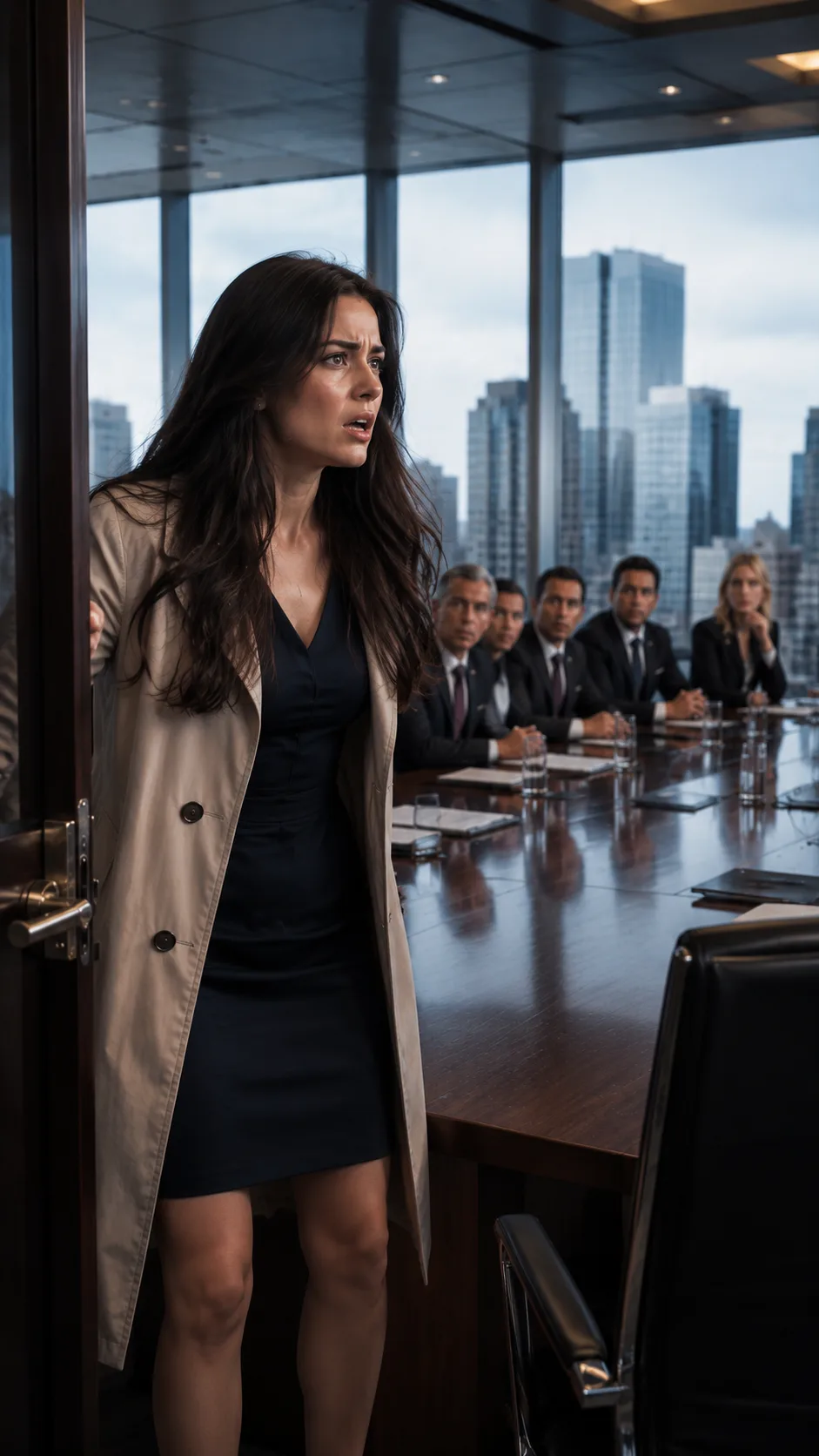
Brennan International Headquarters rose from downtown Boston like a monument to money: glass, steel, security, silence. Emma walked into the lobby feeling underdressed, underprepared, and furious enough to breathe fire.
“I need Carter Brennan,” she told the security guard.
“Do you have an appointment?”
“I have a marriage certificate.”
The guard blinked.
A phone call happened.
An elevator opened.
Emma rode to the fifteenth floor alone, watching the numbers climb while her reflection stared back at her from polished metal. She looked pale. Her hair was too wild. Her coat was wrinkled.
Good.
Let him see what his lie had done.
The elevator doors opened into a world Emma had never belonged to.
Quiet assistants. Glass offices. Expensive art. People who walked fast while speaking softly into headsets.
At the far end, beyond double doors, Carter stood in a conference room surrounded by executives.
He was not the man from the sidewalk.
He was the man from the photograph.
Dark suit. Controlled posture. Everyone around him leaned toward him as if gravity worked differently near his chair.
On the wall behind him was the company name.
Brennan International.
Carter Alexander Brennan III, Chief Executive Officer.
Something inside Emma snapped.
She pushed through the doors.
The meeting died instantly.
Twenty executives turned.
Carter looked up.
His face went white.
Emma stood in the doorway, breathing hard.
“You’re a billionaire?”
No one moved.
Carter slowly stood.
“Emma—”
“You let me pay you.” Her voice shook, but it carried through the entire room. “You stood there and let me give you five thousand dollars to marry me.”
The silence became almost painful.
An older executive blinked at Carter.
“Mr. Brennan,” he said carefully, “you got married?”
Blake, seated to Carter’s right, covered his mouth.
Emma turned on him.
“Do not laugh, helicopter man.”
Blake dropped his hand.
“Understood.”
Emma’s eyes landed on the screen behind Carter.
A presentation showed a luxury resort acquisition in the Maldives.
Two hundred and fifty million dollars.
She stared at it.
Then at Carter.
“I share streaming passwords with my mother,” she said faintly. “You’re buying islands.”
“It’s not an island,” Carter said automatically.
Emma’s expression darkened.
“That is not the point.”
A few executives looked down, trying not to react.
Emma realized then where she was. What she had done. How many people were watching her unravel.
Her face burned.
“I’m sorry,” she said to the room, voice suddenly smaller. “Please continue your billionaire island meeting. I’m leaving before I find out he also owns the moon.”
She turned too fast, bumped the chair beside her, nearly stumbled, caught herself, and walked out with what dignity she had left.
Carter followed.
He abandoned the meeting without explanation.
By the time he reached the street, Emma was already halfway down the block.
“Emma!”
She did not slow.
“Emma, please.”
He caught up but did not grab her. He knew better.
She turned, tears bright in her eyes.
“Was I funny?”
The question hit him like a blow.
“No.”
“Was that it? A bored rich man playing ordinary for a week?”
“No.”
“You watched me worry about money. You watched me count cash. You watched me panic over groceries. You let me think I was helping you.”
“I didn’t want to lose the way you looked at me.”
Emma’s anger faltered for half a second.
Carter took a breath.
“My whole life, people know the name before they know me. They want access, favors, money, investment, status. You bumped into me and complained about needing a husband. You didn’t care who I was. You treated me like a person. I wanted one more hour of that. Then one more day. Then I didn’t know how to stop.”
“That is still selfish.”
“Yes,” he said. “It was.”
Her tears spilled over.
“I don’t know which parts were real.”
“All of mine.”
She shook her head.
“You lied too well for me to trust that.”
His voice broke.
“I fell in love with you.”
Emma flinched like the words hurt.
“Don’t.”
“It’s true.”
“You don’t get to say that now because you’re scared I’ll leave.”
“I say it because it’s the truth.”
She looked at him, and for one aching second, he thought she might believe him.
Then she stepped away.
“I need time.”
“Emma—”
“No. You had days to tell me the truth. I get one day to breathe.”
She left him on the sidewalk.
Carter stood there until her car disappeared.
For the first time in his adult life, he had every resource in the world and no ability to fix the thing that mattered.
His penthouse felt unbearable that night.
It had three floors, a view of the river, designer furniture, curated art, and a kitchen used mostly by private chefs.
It also felt completely dead.
Carter sat on a couch that cost more than Emma’s car and missed the ugly little couch in her studio. He missed the way she argued with grocery receipts. He missed her laptop covered in stickers. He missed hearing her laugh from another room.
Blake arrived without knocking.
“You look terrible,” he said.
“Thank you.”
“She back at her place?”
Carter looked at him.
Blake shrugged.
“I checked. Not in a creepy way. In a concerned rich friend way.”
“That sounds worse.”
“She’s with Maya. There is ice cream involved.”
Carter closed his eyes.
“I hurt her.”
“Yes.”
“I love her.”
“Yes.”
“I don’t know how to make it right.”
Blake sat beside him.
“For once, don’t solve it like a CEO. Don’t buy something first. Don’t order people around. Show up when it costs you something other than money.”
Carter hated how correct that was.
Emma spent the night on her studio floor, eating chocolate ice cream straight from the carton while Maya sat beside her with a spoon and no judgment.
“He has a building,” Emma said.
“Many, probably.”
“I screamed in a boardroom.”
“Iconic.”
“Maya.”
“What? It was. Terrifying, but iconic.”
Emma pressed the cold spoon against her forehead.
“I feel stupid.”
“You were lied to. That does not make you stupid.”
“I paid a billionaire to marry me.”
“That part is unusual.”
Emma groaned.
Maya’s expression softened.
“Do you love him?”
Emma did not answer.
That was answer enough.
Maya sighed.
“Then the question is not whether he lied. He did. The question is whether the man underneath the lie was also real.”
Emma thought of Carter washing dishes at Nana’s house. Carter making coffee before she woke. Carter pretending to understand coupons. Carter looking at her in the car and saying it was real.
“What if I’m not enough for his world?” she whispered.
Maya frowned.
“Emma, his world sounds exhausting. Maybe the question is whether his world is enough for you.”
That stayed with her.
The next morning was Nana Dorothy’s surgery.
Emma arrived at the hospital before sunrise, carrying coffee she forgot to drink. Nana lay in the pre-op room beneath a white blanket, looking smaller than Emma wanted her to look but calmer than anyone had a right to be.
“Where is your husband?” Nana asked.
Emma sat down and took her hand.
“Nana,” she said, “I need to tell you the truth.”
Nana’s eyes sharpened.
Emma confessed everything.
The fake marriage.
The money.
The contract.
The apartment.
Carter’s identity.
The boardroom.
By the end, Emma was crying.
Nana listened without interruption.
Then she smiled.
“I knew the marriage was suspicious.”
Emma stared.
“What?”
“Darling, no woman finds a perfect husband in one afternoon unless she is lying or in a Christmas movie.”
“Nana.”
“And that boy looked far too nervous around me for a man with nothing to hide.”
“You knew?”
“I suspected. But I also saw how he looked at you. That part was not hired.”
Emma wiped her face.
“He lied.”
“Yes. People do foolish things when they are afraid.”
“I was afraid too.”
“I know.”
“What should I do?”
Nana squeezed her hand.
“After I come out of surgery, you decide whether pride is protecting you or punishing you.”
They wheeled Nana away soon after.
Emma sat in the waiting room alone.
Or she thought she was alone.
Three hours later, Carter walked in.
No entourage. No driver visible. No perfect CEO mask.
His suit was wrinkled. His hair was disordered. He looked like a man who had not slept.
Emma stood.
“What are you doing here?”
“I promised Nana I wouldn’t let you sit through this alone.”
“You came after I humiliated you in front of your company?”
“Yes.”
“Why?”
“Because promises should outlive embarrassment.”
Emma’s face crumpled.
He stopped a few feet away, careful not to crowd her.
“I’m not asking you to forgive me right now,” he said. “I just want to be here.”
That broke her.
She crossed the distance and folded into him.
He held her carefully at first, then tightly when she did not pull away.
“I’m still angry,” she whispered.
“I know.”
“You hurt me.”
“I know.”
“But I missed you.”
His eyes closed.
“I missed you too.”
When the doctor finally came out and told them Nana’s surgery had gone well, Emma cried again. Carter held her hand through all of it.
The repair was not instant.
Emma made him explain everything.
Not in one dramatic speech, but over days.
His childhood. His family. His company. The pressure. The loneliness. The reason he had been walking alone the day they met. The way he had wanted one day without being Mr. Brennan.
She told him about fear. About growing up with bills on the kitchen table. About never feeling chosen unless she was useful. About how his lie had touched the oldest bruise in her life.
They did not fix everything with one apology.
They built trust slowly.
One honest conversation at a time.
Two weeks later, after Nana returned home and began bossing everyone around from her favorite chair, Carter called Emma.
“I want to show you something,” he said.
“That sentence scares me now.”
“It is not a hidden penthouse.”
“Good.”
“And not a helicopter.”
“Better.”
He arrived in the same Honda Civic from the wedding day.
Emma stood on the sidewalk and laughed.
“You know I know this is not your car, right?”
“I’ve grown attached to the lie.”
“Carter.”
“I’m joking. Mostly.”
He drove her downtown and stopped in front of a renovated brick building with wide windows and warm lights inside. Workers were still finishing the entrance. There were desks, recording rooms, meeting spaces, a small library, and a newsroom-style open floor.
Emma stared.
“What is this?”
Carter looked nervous.
Not CEO nervous.
Man-in-love nervous.
“An independent journalism foundation,” he said. “Funding, legal support, grants, office space, training. For reporters who cannot afford to chase important stories.”
Emma turned toward him slowly.
“Carter.”
“I named it after you.”
She saw the temporary plaque being carried inside, covered so she could not read it.
Her eyes filled.
“You cannot buy forgiveness.”
“I know.”
“Then why?”
“Because you once told me journalism matters when money tries to bury the truth. I listened.”
She covered her mouth.
He reached into his coat.
Her stomach dropped when she saw the envelope.
“What is that?”
“Something we need.”
She opened it with unsteady fingers.
Divorce papers.
For one terrible second, the world went silent.
Then Carter lowered himself to one knee on the sidewalk.
Emma’s breath caught.
“I want to end the marriage we started with a lie,” he said. “And I want to ask for a real one.”
People slowed around them.
Emma stared at him, crying already.
“No payment,” Carter said. “No contract. No borrowed apartment. No fake job. No hiding. Just me. All of me. Carter Brennan, unfortunately wealthy, occasionally ridiculous, still learning grocery prices, deeply in love with you.”
Emma laughed through tears.
He opened a small ring box.
The ring inside was elegant, not enormous, not designed to announce a bank account. It was beautiful because it looked chosen for her.
“Emma Harper,” he said, voice unsteady, “you crashed into my life with spilled coffee and a contract. You treated me like a person when everyone else treated me like a name. You made me want to become worthy of the way you saw me. Will you marry me again, this time for real?”
Emma wiped her cheeks.
“You are completely insane.”
“Yes.”
“You lied terribly.”
“I did.”
“You spent eight hundred dollars at a grocery store.”
“I am improving.”
“You own too many cars.”
“Three.”
“Three is too many.”
“I can sell one.”
“Don’t be dramatic.”
He smiled, but his eyes were wet.
“Is that a yes?”
Emma looked at the man kneeling in front of her.
Not the stranger from the sidewalk.
Not the fake husband.
Not the billionaire CEO.
Carter.
The man who had made a terrible mistake, faced it, stayed, apologized, and learned how to love without hiding behind wealth.
“Yes,” she said. “But from now on, I see every receipt.”
He laughed, and the people nearby began to clap.
He slipped the ring onto her finger and stood. When he kissed her, it was gentle, public, and real.
Six months later, they married again in one of Carter’s hotels.
Emma insisted the wedding not look like a royal summit. Carter insisted Nana have the best seat in the room. Maya insisted on approving all speeches. Blake insisted on arriving by normal car, then complained about it for thirty minutes.
The flowers were lovely but not excessive.
The music was soft jazz.
The guests included executives, journalists, family members, hotel staff, and Nana Dorothy, who danced with Blake and told him he had “expensive trouble in his bones.”
The menu was elegant.
And, by Emma’s demand, included a macaroni and cheese station.
The chef looked personally wounded.
Carter looked delighted.
During the vows, Carter held Emma’s hands and spoke without notes.
“I promise never again to make you guess who I am. I promise to tell the truth even when it makes me look foolish. I promise to wash dishes, learn coupons, check prices, and remember that money is useful only when it serves something worth protecting. Most of all, I promise that the man you loved in the small apartment will never disappear inside the man who runs the company.”
Emma’s eyes shone.
Then she gave her vows.
“I promise not to hire another stranger to solve an emotional crisis.”
The room laughed.
“I promise to call you out when you forget normal people exist. I promise to remind you that love is not an acquisition, a merger, or a strategy. And I promise to choose you, not because of what you own, but because of who you are when no one important is watching.”
Nana cried.
Maya cried.
Blake pretended not to.
At the reception, Carter revealed one final surprise.
Near the entrance, inside a simple frame, was the original contract Emma had made him sign on the sidewalk. Beside it was the envelope she had given him, still unopened, with a small plaque beneath it.
The first and last time Emma Harper paid Carter Brennan to be her husband.
Emma covered her face.
“You framed my bad judgment.”
“Our origin story,” Carter said proudly.
“It is embarrassing.”
“It is historic.”
“It is evidence.”
“Of romance.”
“Of fraud.”
“Technically, of employment.”
She laughed so hard she had to lean against him.
Later, they danced beneath warm lights while the city glittered beyond the windows. Carter’s hand rested at her waist. Emma’s head leaned against his shoulder.
“Happy?” he asked.
“Absurdly,” she said.
“Even with the cars?”
“We are discussing the cars later.”
“Of course.”
“And the grocery budget.”
“I feared that.”
“And Blake’s helicopter privileges.”
“I support restrictions.”
Emma smiled.
Across the ballroom, Nana Dorothy watched them with the satisfied expression of a woman who had created chaos and called it destiny.
Maybe love was not supposed to begin with a contract.
Maybe husbands were not meant to be found on sidewalks.
Maybe no sane woman should ever pay a stranger five thousand dollars to save her from a family emergency.
But Emma Harper had never lived a perfectly sensible life.
She had spilled coffee on a billionaire, married him before she knew his last name, exposed him in front of twenty executives, broke his heart, let him repair it, and married him again with every truth finally on the table.
It had started as a lie.
It became a scandal.
Then, somehow, it became love.
And if anyone ever asked Emma what the best investment of her life had been, she would smile, look at Carter, and say:
“Five thousand dollars. Terrible plan. Excellent return.”
THE END.
Chapter complete
You have reached the end of this chapter.
Continue reading
A few more worlds to get lost in after this chapter.