Robert called seventeen times the next morning.
Chapter 3
Robert called seventeen times the next morning.
I did not answer.
Dawn called twice.
I blocked her.
At noon, Martin called to tell me the notice had been delivered.
By two o’clock, Robert was on my porch.
I watched him through the lace curtain.
He looked smaller than I remembered. Not younger. Smaller. As if the shape of him had depended on my obedience, and without it, he did not know how to stand.
He knocked.
“Mom,” he called. “Please. Open the door.”
I opened it but left the screen locked.
He looked at that thin mesh between us as if it were a prison wall.
“Mom,” he said, “I’m sorry.”
I waited.
He swallowed. “I should have checked on you.”
“Yes.”
“I should have defended you.”
“Yes.”
“Dawn was under pressure. We both were. The debts—”
I began to close the door.
“No, wait.” His voice cracked. “Please. We’re going to lose the apartment.”
“You were
going to take my house.”
His face crumpled.
“It wasn’t like that.”
“How was it?”
He looked past me, into the hallway where family photos lined the wall. There he was at seven, missing his front teeth. At twelve, holding a baseball trophy. At twenty-one, standing between Henry and me in a graduation gown we had paid for.
All those versions of him stared back.
“I thought,” he said slowly, “you wouldn’t need it.”
“My home?”
“You were living with us.”
“No, Robert. I was working in your kitchen.”
He flinched.
I did not soften.
“Your father knew,” I said. “Before he died, he knew you were borrowing more than you admitted. He knew Dawn wanted the apartment upgraded, wanted a better car, better furniture, better everything. He protected me because he was afraid one day I would be too lonely to protect myself.”
Robert wiped his face with one
hand.
“Mom, I love you.”
I believed that he did, in whatever shallow, damaged way he understood love.
But love without courage is just a feeling.
It does not shelter anyone.
“You loved me when it was easy,” I said. “When I cooked, cleaned, helped, stayed quiet. But when your wife raised her hand, you chose the remote.”
He bowed his head.
The silence between us was enormous.
Finally he whispered, “What happens now?”
I looked toward the lemon tree in the backyard.
“Now you and Dawn leave the apartment.”
“She can’t be around you again,” he said quickly. “I know that. I’ll separate from her. I’ll fix it.”
“You can do whatever you believe is right. But not with my money. Not with my property. Not by using me.”
His eyes filled again.
“Can I come home?”
I almost reached for the lock.
A mother’s hands remember before her
mind does.
They remember feeding, holding, forgiving.
But then my fingers touched the healing cut at my temple.
And I remembered the television.
“No,” I said.
The word hurt.
But it also freed me.
Robert stood there for a long time.
Then he nodded, as if some final door inside him had closed.
“I don’t know where to go.”
“Then you will learn what I learned in your apartment,” I said. “How it feels to be unsafe in a place you thought was yours.”
He left without another word.
The next months were not easy.
Dawn accepted a plea agreement after the video was reviewed. She avoided jail, but she was ordered to attend counseling, pay restitution for my medical expenses, and stay away from me. Her name appeared in a court document she could not polish with makeup or charm.
Robert and Dawn separated before the eviction deadline.
Not because he suddenly became noble.
Because blame needs somewhere to live, and their marriage had been built on wanting more than they had earned.
The Magnolia apartment was sold.
After the debts to the trust were settled, Martin asked what I wanted to do with the remaining money.
For a long time, I did not know.
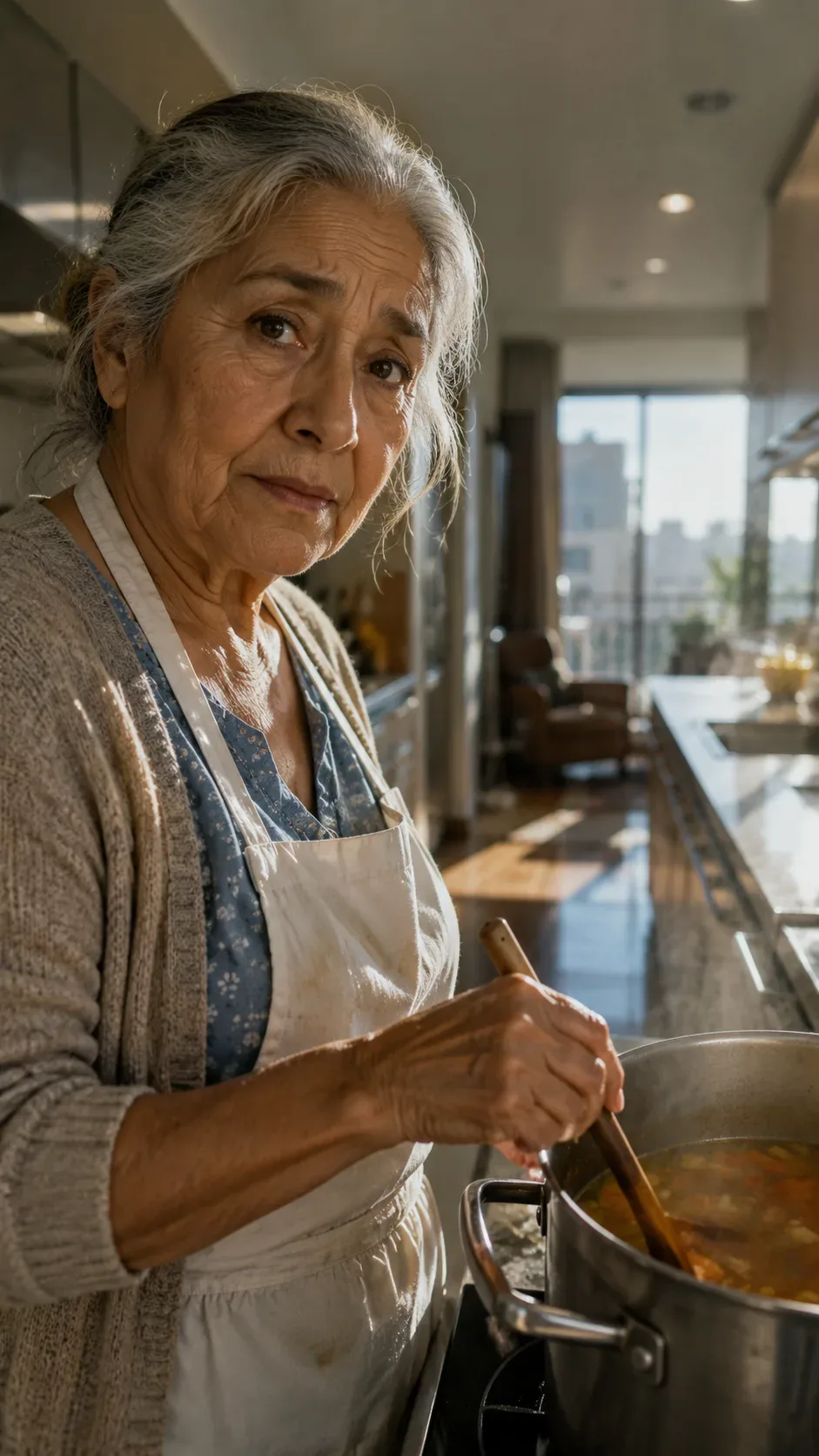
Then one morning, I stood in my kitchen making soup. The same soup. Carrots, celery, potatoes, onion, tomatoes, a little garlic, a little pepper, the way Robert used to love it when he was small.
But this time, I was not making it for him.
Across the table sat Mrs. Bell from next door, who had lost her husband two years earlier. Beside her was Ana, a retired nurse from church whose daughter had moved to Oregon and stopped calling except on holidays.
We ate with the back door open, sunlight falling through the lemon tree.
Mrs. Bell closed her eyes after the first spoonful.
“Helen,” she said, “this tastes like somebody loved it.”
I smiled.
That was when I knew.
With Martin’s help, I used part of the trust money to start a small community meal program for older women in our neighborhood. Nothing fancy. Just a warm kitchen twice a week. Soup, bread, coffee, a place to sit where no one was made to feel like a burden.
We called it Henry’s Table.
Robert heard about it from someone at church.
Three months later, he came again.
This time, he did not knock like a son demanding entry.
He knocked like a man asking permission.
I opened the door.
He looked thinner. Tired. Human.
“I’m not here for money,” he said quickly.
I waited.
“I’m in counseling,” he said. “I got a smaller apartment. I’m working overtime. I came because…” His voice broke. “Because I finally watched the whole video.”
My stomach tightened.
“I saw your face,” he said. “After she hit you. I saw you look toward the living room. I saw myself reach for the remote.”
He covered his mouth.
“I hated myself.”
For the first time, his tears felt real.
Not useful.
Not strategic.
Just real.
“I’m sorry, Mom,” he whispered. “Not because I lost the apartment. Not because Dawn left. Because you were my mother, and I left you alone while I was in the same room.”
I looked at him for a long time.
The anger in me had cooled into something heavier and cleaner.
Grief, maybe.
Or wisdom.
“I believe you,” I said.
Hope flashed across his face.
“But believing you are sorry does not mean returning to the way things were.”
He nodded quickly. “I know.”
“You may come to Henry’s Table on Saturdays,” I said. “You may help carry groceries. You may wash dishes. You may serve women who remind you of the mother you forgot to protect.”
His lips trembled.
“And after that?”
“After that, we will see.”
It was not the warm ending he wanted.
It was not the cruel ending Dawn deserved.
It was the ending I could live with.
On his first Saturday, Robert arrived early. He carried flour, onions, and two bags of carrots from my car. He washed every pot in the sink without being asked. When Mrs. Bell dropped a spoon, he bent to pick it up before she could struggle.
He did not call me fragile.
He did not call me difficult.
He did not call me a burden.
At noon, he stood beside me while I stirred soup in my own kitchen.
For a second, the smell carried me backward — to his childhood, to Henry’s laughter, to Sunday mornings when life had not yet taught me how sharp love could become.
Robert looked at the pot.
“Dad loved this soup,” he said.
“Yes,” I replied. “He did.”
His voice lowered.
“I turned up the TV because I was a coward.”
I looked at him.
“Yes,” I said.
He nodded.
No excuses.
That mattered.
When the meal ended, Robert helped stack chairs on the porch. He stood by the lemon tree before leaving, his hands in his pockets, his eyes full of the kind of regret that cannot buy anything back.
“Can I come next Saturday?” he asked.
“Yes,” I said.
He looked relieved.
“But Robert?”
He turned.
“You are not coming back into my life as the son who owns my forgiveness. You are coming back as the man who has to earn my trust.”
He swallowed and nodded.
“I understand.”
Maybe he did.
Maybe he didn’t.
Time would tell.
That evening, after everyone left, I sat alone at my kitchen table with one bowl of soup. The house was quiet, but it was no longer the cruel silence of grief.
It was peaceful.
Henry’s mug sat beside the sink. His cap still hung by the door. Outside, the lemon tree moved in the soft California wind.
I touched the small scar at my temple.
It no longer felt like shame.
It felt like proof.
Proof that I had survived the day my son chose the television.
Proof that I had not been useless.
Proof that an old woman can still hold the last card, even when everyone believes she has already folded.
I lifted my spoon and tasted the soup.
For the first time in a long time, it tasted like home.
Chapter complete
You have reached the end of this chapter.
Continue reading
A few more worlds to get lost in after this chapter.




