My Ex-Husband Flaunted His Beauty Queen Fiancée—Until I Walked In Pregnant With the Billionaire Who Sponsored Her Crown
The first thing Julian Duval noticed was not my face.
Chapter 1
The first thing Julian Duval noticed was not my face.
It was my stomach.
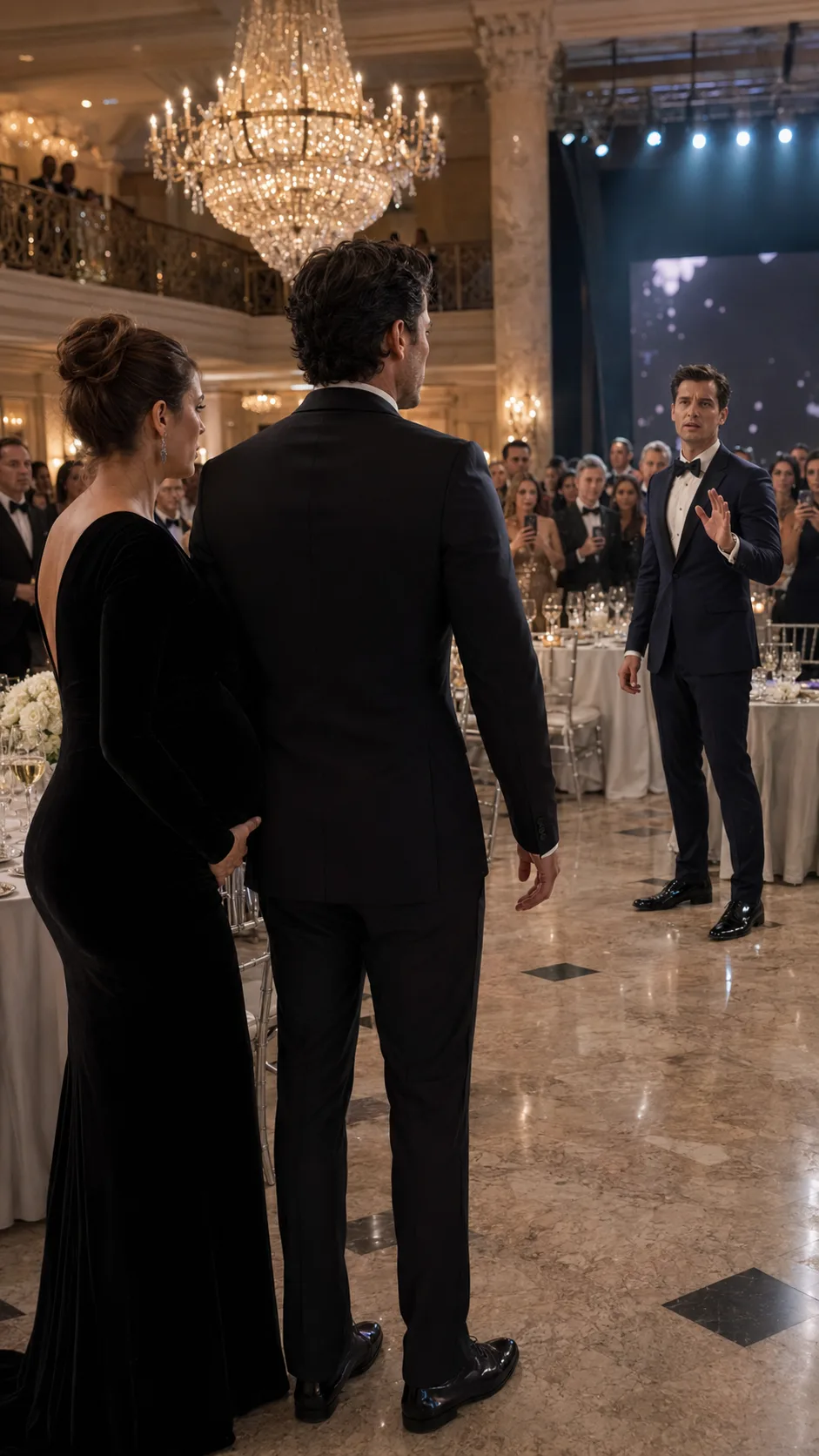
Five months pregnant, wrapped in black velvet, one hand resting over the curve of the child he never knew existed, I stepped into the Armand Grand Hall beside Gabriel Lancaster while three hundred people stopped pretending they were not watching.
Julian’s champagne glass froze halfway to his mouth.
For one clean second, the mask fell.
The man who had spent two years letting the world call me barren, broken, and replaced looked at my body like it had become evidence.
Then he saw Gabriel.
That was when his hand tightened around the glass.
Gabriel Lancaster did not need a title announced when he entered a room. Manhattan already knew him. Billionaire. Founder of Ascend Capital. Principal sponsor behind half the city’s polished charity world. The man whose private foundation had funded scholarships, hospital wings, cultural grants, and, most recently, the pageant crown resting on the head
of Julian’s new fiancée.
Dalia Fontaine.
Beauty queen. Silver gown. Diamond ring. Perfect smile.
She stood beside Julian under the chandeliers like a woman who had been told the night belonged to her.
Until I walked in.
The Armand Grand Hall had been built for people who wanted their virtue photographed. Marble staircases curved down from balconies trimmed in gold. Crystal chandeliers hung above the ballroom like frozen storms. Waiters moved between round tables with champagne flutes and small white plates no one ate from. At the far end, a stage waited beneath soft white lights, framed by floral columns and a large screen meant to display pledges, donor names, and carefully edited hope.
Everyone had dressed as if kindness required diamonds.
Senators’ wives kissed the air beside each other’s cheeks. Fashion editors measured waistlines while praising gowns. Tech founders shook hands with old-money families they secretly envied. Influencers held
phones low, filming while pretending not to. Men who had never once opened their own mail stood near charity banners discussing impact.
Julian loved rooms like that.
He had built his life around applause.
He arrived at 8:00 p.m. in a white Rolls-Royce, wearing a midnight-blue tuxedo and the polished confidence of a man who believed reputation was stronger than truth. Dalia came out beside him, silver silk clinging to her body, crown-shaped diamond earrings flashing every time she turned her head.
Reporters called their names.
“Julian! Dalia! Over here!”
“Show us the ring!”
“When’s the wedding?”
Dalia lifted her left hand just enough.
The diamond caught the light.
Julian smiled.
It was the same smile he used years ago when he told investors he had built his first company alone.
He had not.
I had written the pitch that closed his seed round. I had fixed his messaging when
early users abandoned the app. I had rewritten investor decks at three in the morning while he slept beside me, one arm thrown over his face, confident the world would call him brilliant by sunrise.
It did.
For years, I let him stand in the light because I thought marriage meant building something bigger than credit.
That was my first mistake.
The second was believing he would remember who had held the beams when the roof went up.
That night, before I entered the gala, I watched him on a small security monitor near the private entrance. The image flickered slightly, making his smile look thinner than usual.
A reporter leaned forward.
“Julian, is your ex-wife attending tonight?”
Dalia’s eyes moved toward him. She wanted the answer too.
Julian gave the camera a practiced pause.
“I doubt Khloe would show her face.”
The reporters laughed.
Dalia laughed too, leaning into his shoulder like cruelty was part of the jewelry.
I stood less than fifty feet away, behind a service corridor door, listening.
One hand over my stomach.
The baby moved faintly beneath my palm.
Gabriel stood beside me in a black tuxedo, calm as cut stone. He did not tell me to ignore it. He did not offer an empty comfort. He adjusted the cuff of his sleeve, then looked toward the monitor again.
“You can still leave.”
I kept my eyes on Julian.
“No.”
Gabriel turned toward me.
The hallway smelled of lilies, floor polish, and hot electrical wires from the lighting equipment. A catering assistant rushed past with a tray of folded napkins. One napkin slid halfway off and landed near my shoe. She did not notice.
I bent to pick it up before she could step on it.
Gabriel watched but did not help.
That was one of the first things I had trusted about him. He did not rush to turn every small difficulty into proof that I needed saving.
The assistant came back, breathless.
“Oh, thank you, ma’am.”
I handed her the napkin.
She disappeared through the service door.
Gabriel’s eyes dropped briefly to my stomach.
“Then we walk in.”
I looked at myself in the dark reflection of the monitor. Black velvet. Diamond earrings that had belonged to my grandmother. No wedding ring. No borrowed name.
Khloe Bennett.
Not Khloe Duval.
Not Julian’s ex-wife.
I placed my hand on Gabriel’s arm.
The double doors opened.
Music came first.
Violins. Piano. Laughter.
Then silence spread across the room like ink spilled over white linen.
Julian saw me.
And the night began to break.
Two years earlier, he left me with an NDA, a settlement check, and a press release that used the word amicable.
Julian and Khloe Duval have decided to part ways amicably. They remain supportive of each other’s future endeavors.
Supportive.
I read that sentence while sitting at our glass dining table in Los Angeles, wearing the same robe I had worn to the clinic the week before. My coffee had gone cold. The city outside the windows looked bright enough to insult me.
His lawyer had sent the papers before Julian called.
That detail stayed with me.
Not the money. Not the apartment. Not the headlines.
The order.
Lawyer first. Husband second.
When Julian finally called, his voice carried airport noise in the background.
“Khloe, please don’t make this harder than it needs to be.”
I stared at the divorce folder.
There was a tiny paper cut on my thumb from the envelope. It stung more than it should have.
“I lost another pregnancy,” I said.
Silence.
Not the stunned kind.
The inconvenient kind.
“I know,” he said.
“You weren’t there.”
“I meant I know it happened.”
He said it like weather. Like a delayed flight. Like something unfortunate but not central.
I set my palm flat against the glass table.
“You said you’d come home.”
“I had Davos.”
I laughed once.
No sound after.
Davos.
Our third loss, and he had Davos.
The first pregnancy had changed us quietly. We had painted a small room pale yellow before the first ultrasound. Julian bought a tiny pair of shoes from an Italian brand and joked that our child would need good taste early. I kept the box in the top drawer of my nightstand.
After the loss, he held me for one night.
One.
By morning, he was on a call with Singapore.
The second pregnancy made me careful. No announcement. No nursery. No shoes. I counted days privately and avoided mirrors.
When that one ended, Julian sent flowers to the clinic because he had a board meeting.
The third time, I stopped telling myself he did not know how to grieve.
He knew.
He simply did not like grief when it did not make him look noble.
After the divorce papers arrived, the world moved faster than I could breathe.
A week later, Julian was photographed outside a Miami hotel with Dalia Fontaine, then only twenty-four, already famous for her pageant smile and her ability to cry beautifully during interviews about empowerment.
The caption said: New beginning?
Comments gathered under the article like flies.
She looks so young and healthy.
Maybe he wanted a family.
His ex always looked cold.
Some women just can’t give men what they need.
I read that last one twice.
Then I turned off my phone.
I left Los Angeles the next morning with two suitcases and no farewell speech.
Tuscany did not heal me.
People like to make recovery sound cinematic because it is easier than admitting how boring pain can be. There was no sunrise that remade me. No morning where I woke up clean from memory. There were only small, uneven days.
I rented a villa outside Florence with a roof that leaked above the kitchen. The landlord apologized with a basket of lemons. I kept them in a blue bowl near the sink until they wrinkled and softened.
I planted lavender badly. Most of it died.
I bought groceries from a woman who never asked my last name.
I wrote economic briefs under a private consulting account and invested through holding companies Julian did not know existed. I had been investing since college, back when Julian still thought valuation was mostly confidence and a clean shirt. Money grew quietly when left away from ego.
I invested in medical technology, women-led logistics firms, rural education platforms, refugee-owned food networks, diagnostic tools designed for clinics that could not afford mistakes.
That detail would matter later.
At the time, it was just work.
Work was safer than memory.
Then one morning, I woke with nausea so sharp I had to sit on the bathroom floor.
I bought three pregnancy tests at a pharmacy where the cashier was eating crackers from a paper bag and arguing with someone on the phone. She barely looked at me.
All three tests turned positive.
I sat on the closed toilet lid and stared until the plastic blurred.
There had been no fertility schedule. No clinic plan. No calendar marked in red. Just life, impossible and stubborn, arriving after I had stopped asking it to explain itself.
For twelve weeks, I told no one but my doctor.
At thirteen weeks, I returned to New York.
Not Los Angeles.
Never Los Angeles.
I bought a narrow townhouse near the Hudson with creaking stairs, tall windows, and a small room on the second floor I refused to call a nursery. The banister had a crescent-shaped nick near the third spindle. The realtor promised to repair it before closing.
I told her to leave it.
Some flawed things should be allowed to remain without apology.
That was where Gabriel Lancaster entered my life.
Not with roses.
Not with romance.
With a badly structured foundation audit and a conference table full of men who had confused philanthropy with branding.
Ascend Capital had hired me to review several charitable programs tied to women’s health, education access, and entrepreneurship. I expected a billionaire who wanted applause without correction. I expected polite resistance. I expected to be tolerated until my findings became inconvenient.
Gabriel sat at the head of the table in a gray suit, no tie, no visible impatience. He listened while I dismantled a seven-million-dollar initiative with a pencil and a napkin because their printed documents were too vague to respect.
“This vendor is overbilling,” I said, tapping one column.
The CFO shifted.
“This one has a board overlap with your grant evaluator.”
Another executive stopped typing.
“And this pageant scholarship fund is worse.”
Gabriel’s eyes lifted.
“Worse how?”
“Money is being routed through brand consultants with family ties to contestants.”
“Which contestants?”
I slid the folder across the table.
“Dalia Fontaine.”
For the first time, the room truly quieted.
Gabriel opened the folder.
He did not look surprised. He looked interested.
“Prove it.”
So I did.
Over the next six weeks, I followed invoices, wire transfers, shell companies, consulting agreements, and vendor names that repeated with slight spelling changes. Dalia’s mother owned one agency. Her cousin signed for another. A third routed payment through a Delaware entity connected to Julian’s failing venture fund.
That was the first time I saw his name in the audit.
Julian.
Not as my ex-husband.
As a liability.
I remember staring at the screen while my tea went cold beside my laptop.
The baby kicked for the first time that night. A tiny flutter, barely real.
I pressed one hand over my stomach and the other over Julian’s company registration.
Both truths existed on the same desk.
Gabriel found out before I told him.
Not about the baby at first. About Julian.
He came to my townhouse the next evening with two paper cups of ginger tea and a folder sealed with a black clip.
“You should have security,” he said.
I stepped aside to let him in.
“You always begin conversations like a threat?”
“Only when people are underestimating one.”
“I can handle Julian.”
“I know.”
That stopped me.
Gabriel placed the tea on my hall table. His gaze moved briefly to the stairs, to the unopened boxes near the wall, to the crescent nick in the banister where my hand rested.
“I’m not here because you can’t handle him,” he said. “I’m here because men like Julian prefer women to handle things alone.”
I looked at him for a long moment.
Then I took the tea.
Two weeks later, I fainted during a morning call.
When I woke up on my office floor, one of my analysts was shouting my name through the laptop speaker. The room smelled like spilled ginger tea. My cheek pressed against the rug.
My doctor insisted someone accompany me to the appointment.
I told Gabriel because he had been the last person on the call.
He arrived in twenty minutes.
At the clinic, the ultrasound room was dim and cool. The technician spread gel across my stomach and turned the monitor slightly toward me.
Then came the sound.
A heartbeat.
Fast. Fierce. Unbothered by every story told before it.
My fingers gripped the edge of the paper sheet.
Gabriel stood beside the wall with his hands folded behind his back. He did not speak. He barely moved.
Only his jaw shifted.
Afterward, in the car, he drove ten blocks before saying anything.
“Does Julian know?”
“No.”
“Do you want him to?”
“No.”
He nodded.
No argument.
No lecture about rights or optics or blood.
Just that.
At a red light, he looked through the windshield at rain sliding across the glass.
“If you attend the gala alone, he will turn your pregnancy into scandal before dessert.”
“I wasn’t planning to attend.”
“You funded the maternal recovery wing.”
“Anonymously.”
“For now.”
I turned toward him.
He kept his eyes on the road.
“The Allesian Hearts Gala will honor Dalia. Julian will bring her like proof. Your donation will be announced whether you attend or not. If you are absent, people will speak for you.”
“And if I walk in with you?”
“Then the room will wonder why I am standing beside you.”
I looked down at my hands.
There was no romance in the offer.
That was why I heard it.
It was strategy. Protection. Respect. A door held open, not a cage disguised as shelter.
“And the audit?” I asked.
“Will be complete before the final auction.”
“You plan to expose Dalia at the gala.”
“I plan to restore stolen scholarship funds.”
“Same room. Different sentence.”
A faint curve touched his mouth.
“Yes.”
By the week of the gala, Julian and Dalia were everywhere.
Dalia on magazine covers in pale pink satin, talking about humility.
Dalia in a charity video, hugging schoolgirls whose scholarships she had helped steal.
Dalia standing beside Julian on a balcony in Monaco, her engagement ring angled toward the camera.
Julian posted one photo with the caption: Some people enter your life and remind you what the future should feel like.
I did not respond.
I had spent too many years helping him make weak sentences sound expensive.
On the afternoon of the gala, my stylist zipped me into the black velvet gown. It had long sleeves, a clean neckline, and a waist cut to frame the pregnancy instead of hiding it. The woman adjusting the hem kept glancing at my reflection and then looking away as if the mirror had become private.
My attorney called while I sat for makeup.
“We have enough to move against the foundation,” she said.
“What about Julian?”
“We have enough to make him deny carefully.”
“That’s not enough.”
“No. But men like that usually bring the rest themselves.”
I looked at my reflection.
The makeup artist paused with a brush near my cheek.
“Less,” I said.
She nodded and wiped some of it away.
At 7:35 p.m., Gabriel arrived.
He carried the final audit summary in a cream envelope.
I opened it at the hall table.
Dalia’s vendors. Her mother’s agency. Julian’s shell company. Misclassified consulting payments. Scholarship displacement. Donor fraud.
Every page was clean.
Every number was ugly.
I placed it in my clutch.
Gabriel looked at my gown once.
Only once.
Then he looked at my face.
“Ready?”
“No.”
He offered his arm.
“But I’m walking in.”
The Armand Grand Hall had two entrances: the red carpet for the people who wanted to be seen arriving, and the private entrance for the people who understood that entrances could be weapons.
Julian used the first.
I used the second.
That was why I heard him tell reporters he doubted I would show my face.
That was why I saw Dalia laugh.
That was why, when the double doors opened, I did not need to imagine what he had been saying before I arrived.
I knew.
Julian’s glass stopped halfway to his mouth.
Dalia noticed his stare and followed it.
Her smile held.
Barely.
“Khloe,” Julian said when Gabriel and I reached the center of the ballroom.
Not Mrs. Duval.
Not my ex-wife.
Not the woman he had erased.
Just my name, stripped of all the uses he had once made of it.
“Julian.”
Dalia stepped forward first.
Beauty queens are trained to recover before the room notices blood.
“What a surprise,” she said. “I didn’t know you were attending.”
“No,” I said. “I imagine you didn’t.”
Her gaze moved to my stomach.
A tiny movement.
Still enough to be polite. Sharp enough to cut.
“How far along?”
“Five months.”
Julian flinched.
Almost nothing.
But I saw it.
Gabriel saw it too.
Dalia’s fingers tightened around Julian’s sleeve.
“Congratulations,” she said.
“Thank you.”
Gabriel extended his hand.
“Ms. Fontaine. Congratulations on your crown.”
Dalia brightened automatically.
“Thank you, Mr. Lancaster. Your sponsorship changed my life.”
“I’m aware.”
Not cruel.
Not warm.
Just accurate.
Julian looked between them.
“You two know each other?”
Gabriel’s expression did not change.
“Khloe consults on several Ascend philanthropic boards.”
That was the polite version.
The truth was that I had rebuilt half his foundation’s accountability structure in four months and found fraud in the part Julian thought was decorative.
The gala chairwoman, Maribel Armand, swept toward us in emerald satin.
“Khloe, darling,” she said, kissing the air beside both my cheeks. “Everyone has been desperate to meet the woman behind tonight’s largest gift.”
Julian went still.
Dalia’s smile flickered.
“Largest gift?” she asked.
“The Bennett-Marin Maternal Recovery Wing,” Maribel said. “Five-year commitment. Emergency screening access. Neonatal grief counseling. Rural maternal support. Extraordinary.”
Julian stared at me.
“You donated that?”
“Yes.”
“With what foundation?”
Gabriel answered before I could.
“You wouldn’t know it.”
A senator’s wife near the floral column lowered her champagne glass to hide a smile.
Julian adjusted his cufflink.
A habit.
He did it when angry. When embarrassed. When recalculating.
“I didn’t realize you had that kind of liquidity.”
There it was.
Not curiosity.
Ownership trying to locate its missing inventory.
The old me would have explained. Defended. Produced numbers to prove I belonged in a room I had helped him enter for years.
I said nothing.
Gabriel looked at Julian.
“Most people don’t realize what they never bothered to value.”
The sentence landed with quiet force.
Dalia laughed too late.
“Well,” she said, “tonight is about charity.”
Gabriel turned toward her.
“Yes. That is becoming clearer.”
Her face changed.
Only around the eyes.
Dinner was announced before anyone could respond.
Guests moved toward their tables with the slow hunger of people pretending not to watch. Phones stayed low in hands. Voices leaned toward us even when bodies drifted away.
At the table, my place card read Khloe Bennett.
I touched the edge of it once.
The paper was thick, matte, cream-colored.
No title.
No borrowed name.
Across the ballroom, Julian kept looking at me.
Dalia tried to reclaim him with small touches. Her hand on his forearm. Her mouth near his ear. A laugh placed carefully after someone else’s joke.
Every time, his gaze found my stomach again.
Gabriel noticed.
“You’re gripping the knife,” he said.
I looked down.
I was.
I loosened my fingers.
“I’m fine.”
“You hate that word.”
I almost smiled.
The salad plates were cleared. The first pledge round began. Screens glowed with donor categories. Names appeared. Applause followed each one like a paid service.
Then Dalia took the stage.
The crown in her hair caught the spotlight. Her silver gown shimmered as she stepped behind the microphone. Julian stood near the front, clapping too loudly.
Dalia smiled at the room.
“Allesian Hearts changed my life,” she said. “This crown taught me service, humility, and truth.”
Gabriel set down his water glass.
The sound was small.
I heard it.
He stood.
The applause faded unevenly.
Dalia stopped mid-sentence.
Gabriel walked to the stage and accepted a spare microphone from the host, whose face had gone stiff beneath his stage makeup.
“My apologies for the interruption,” Gabriel said. “As principal sponsor of the ambassador program, Ascend Foundation has completed its internal review.”
Dalia’s fingers tightened around the podium.
“Gabriel,” she said.
The microphone caught it.
“Don’t.”
That one word changed the room.
People who had been curious became alert.
Gabriel looked at her.
“That is usually said by people who know what comes next.”
The screen behind her shifted.
Documents appeared.
Invoices.
Transfers.
Shell company registrations.
Vendor names.
Dalia Fontaine.
Her mother.
Her cousin.
Then the Delaware entity tied to Julian’s private venture fund.
The ballroom gasped in pieces. One table first. Then another. A woman near the stage put her hand over her mouth. A reporter lifted his phone higher.
Gabriel continued.
“Funds designated for scholarship finalists were redirected through unauthorized branding vendors. Several payments were then routed to entities outside the charitable structure.”
Julian stood.
“This is outrageous.”
I rose.
The chair legs made no sound on the carpet.
“No,” I said. “It’s documented.”
Julian turned toward me.
Dalia looked at me too, and all the sweetness left her face.
“This is because of you.”
“No.”
I stepped away from the table.
“You stole from women who needed those scholarships.”
Dalia’s lips parted.
Behind her, the screen still glowed with her name.
“That is not what happened.”
Gabriel turned one page in the folder.
“It is exactly what happened.”
Julian moved toward the stage, but then stopped and turned toward me instead. That was Julian. When a fire started, he looked for the woman who once knew how to put it out for him.
“Khloe,” he said. “Stop.”
“No.”
The room heard that too.
His face tightened.
Dalia grabbed the microphone.
“I didn’t know the details.”
Julian snapped his head toward her.
“Be quiet.”
That was her reward.
Public use. Public dismissal.
For one strange second, I saw myself in her.
Not the crown. Not the silver gown. Not the youth he had displayed like proof.
The moment after usefulness expires.
Dalia saw it too.
Her hand lowered from the microphone.
Then she lifted it again.
“He told me everyone did it,” she said. “He said the sponsor would never check paperwork.”
Julian moved toward her.
Security shifted.
“He said men like Gabriel Lancaster sponsor beauty, not records.”
Gabriel’s mouth barely moved.
Almost a smile.
Dalia turned toward me then.
“And he said Khloe was too broken to ever come back.”
The silence changed.
Not shocked now.
Hungry.
Julian lunged for the microphone, but security intercepted him before he reached her.
“Dalia.”
She looked at him with wet, glittering eyes.
“I was stupid when I believed you loved me.”
A camera shutter clicked.
Then another.
The gala had become exactly what Julian feared most: a room he did not control.
He turned from Dalia back to me. His eyes dropped once more to my stomach.
“That child,” he said. “You lied.”
Gabriel moved before I did.
One half-step.
Enough.
“Careful.”
Julian laughed once, low and sharp.
“You think standing beside him changes biology?”
My hand rested over my stomach.
The baby moved.
Not hard.
Enough.
“It is not yours,” I said.
Julian stared at me.
His pride fought his panic. I saw the war pass across his face. The founder, the husband, the abandoned boy he kept buried under expensive fabric, the man who needed every outcome to prove he had chosen correctly.
Then he said the sentence he could never take back.
“I know because I had the clinic records sealed.”
The ballroom died.
A spoon slipped from someone’s hand and struck a plate.
Dalia turned toward him slowly.
Gabriel lowered the microphone at his side.
My body went cold in pieces.
“What?” I said.
Gabriel stepped toward Julian.
“What clinic?”
Julian blinked as if hearing himself from across the room.
He looked at the phones.
At the reporters.
At the donors.
At the screen behind Dalia still displaying his company’s name.
“This isn’t the place.”
I took one step forward.
The marble reflected the chandeliers beneath my feet.
“You made it the place when you said it in front of three hundred witnesses.”
Julian’s throat moved.
No speech came.
No polished answer.
No investor charm.
Dalia descended the stage steps, the crown still tilted in her hair.
“What clinic?”
Julian did not look at her.
He looked at me.
“After the third miscarriage,” he said, “I asked for a review.”
My fingers pressed into the velvet of my gown.
“What review?”
“The clinic files. Specialists. They found a clotting disorder.”
The room blurred at the edges.
“Genetic,” he said. “Treatable.”
Treatable.
The word fell harder than accusation.
Harder than divorce.
Harder than every headline that had called me broken.
I gripped the back of the nearest chair.
Gabriel’s hand came to my elbow, steady but not forcing.
“No one told me,” I said.
Julian’s eyes shone now. Not with remorse. Not enough.
“I was going to.”
“When?”
His mouth closed.
I waited.
For once, no one rushed to rescue him from silence.
“When, Julian?”
Nothing.
Dalia laughed once. Not pretty. Not trained.
“You didn’t tell her because you wanted out.”
Julian turned on her.
“Stay out of this.”
But Dalia was already ruined, and ruined women do not always remain useful.
“You told me she was unstable,” Dalia said, voice rising. “You said she was obsessed with having a baby. You said if she knew it was treatable, she’d never sign the divorce papers.”
Julian’s face changed the instant she said it.
There.
The real confession.
Not the clinic.
The reason.
The room inhaled.
I looked at him.
The man who had watched me blame my own body.
The man who had let me sit in clinic rooms and funeral-quiet bedrooms and comment sections full of strangers diagnosing my worth.
The man who had known there was a medical answer and buried it because my ignorance made his exit easier.
“You let me believe my body killed our children,” I said.
His face folded.
No answer.
The answer was there.
Yes.
Gabriel stepped fully between us.
“You concealed medical information from your wife.”
“It wasn’t like that.”
“Then what was it like?” I asked.
Julian looked at me.
For a moment, the boy from Northwestern flickered there. The one who brought me caramel tea after I challenged his startup pitch. The one who once said I was the reason anything he built stood upright.
Then the man he became swallowed him again.
“I was tired,” he said. “Tired of grief. Tired of trying. Tired of rooms where people asked why we didn’t have children.”
The room did not move.
“You were disappearing into it,” he said.
I looked at him until he looked away.
I did not shout.
I did not cry.
I did not give him a scene he could later call unstable.
“You will send every medical record to my attorney tonight.”
He nodded too quickly.
“Yes. Anything.”
“And tomorrow,” I said, “you will correct every lie you allowed people to print about me.”
His face tightened.
“Khloe—”
“Every lie.”
Phones remained raised.
Reporters did not breathe loudly enough to miss a word.
Gabriel lifted the microphone.
“You heard her.”
Julian looked around the ballroom.
No one came.
Not his biggest investor. Not the magazine editor who once called him visionary. Not Maribel Armand, who stood with one hand pressed to her pearls. Not Dalia, who removed the crown from her head with both hands and stared at it as if wondering how something so bright could become so heavy.
She set it on the stage floor.
Then she walked past Julian without looking at him.
Security followed.
Julian remained beneath the chandeliers, stripped not of money, not yet, but of mythology.
That was worse for him.
Gabriel guided me toward the private exit.
At the doorway, I looked back once.
Julian stood alone in the center of the ballroom while the world he had curated watched him become small.
Near the service cart, one white rose had fallen and been stepped on.
Its petals stuck to the marble.
The next morning, New York devoured him.
TECH FOUNDER ACCUSED OF HIDING EX-WIFE’S MEDICAL DIAGNOSIS.
BEAUTY AMBASSADOR STRIPPED AFTER SCHOLARSHIP FRAUD.
KHLOE BENNETT RETURNS AS MAJOR MATERNAL HEALTH DONOR.
My phone did not stop vibrating.
Former friends. Reporters. Unknown numbers. Julian’s lawyers. His mother. A woman who had once sat beside me at a fundraiser and asked whether I had considered “freezing what was left” left a voicemail full of tears and apologies.
I deleted it halfway through.
My attorney received the clinic files at 2:17 a.m.
I did not open them alone.
Gabriel sat across from me at my kitchen table while my doctor walked me through the pages on speakerphone. The diagnosis was there. The recommended treatment was there. The note advising follow-up was there. Julian’s signature confirming receipt was there.
The baby kicked while I looked at it.
I placed my hand over the page.
Then moved it away.
Some papers should not keep skin.
“This is actionable,” my attorney said.
“I know.”
“You can sue him.”
“I know.”
Gabriel sat very still.
“You can destroy him,” she said.
I looked out the window toward the Hudson. The morning light had turned the water the color of dull pewter. A delivery truck beeped somewhere below. Life continued with offensive efficiency.
“I already did,” I said.
My attorney said nothing.
“I want the records archived. I want the public correction. I want the maternal wing protected from his name forever. But I do not want my pregnancy lived inside filings.”
Gabriel looked at me then.
Not surprised.
Not pleased.
Listening.
“I want peace,” I said.
The word sounded unfamiliar in my own mouth.
But not impossible.
Julian issued his statement three days later. It was cowardly, careful, and written by lawyers.
He admitted that medical information had not been properly disclosed during a period of marital distress.
A period of marital distress.
Such a clean phrase for theft.
My attorney released enough supporting documentation that the sentence could not hide him.
After that, other things surfaced.
Old investor decks with my edits. Strategy memos written in my voice. Emails where Julian forwarded my analysis under his name. Former employees who had stayed silent while silence paid better began remembering the truth publicly.
People started saying Khloe Bennett with weight.
Not Julian’s ex-wife.
Not poor Khloe.
Founder. Strategist. Donor. Investor.
I did not read every article.
Some days, I read none.
The nursery stayed half-unpacked until the seventh month. Boxes lined the wall. A tiny yellow blanket sat folded in a drawer I opened and closed too often.
One rainy afternoon, Gabriel found me on the floor surrounded by crib pieces, screws, instructions in three languages, and a small wooden peg that seemed to belong nowhere.
“You’re supposed to hire someone for this,” he said.
“I did.”
He looked around.
“Did they run away?”
“I fired them.”
“Why?”
“They kept calling it precious.”
Gabriel removed his jacket and sat on the floor across from me.
He picked up the instructions.
“These are terrible.”
“Yes.”
He studied them for another minute.
“This crib may become a boat.”
I laughed before I could stop myself.
The sound startled me.
He looked up.
Not victorious.
Careful.
For two hours, we built it wrong, took it apart, built it wrong again, and finally managed something that did not wobble when Gabriel pressed both hands on the rail.
The small wooden peg remained unused.
We placed it on the dresser.
Neither of us mentioned it.
At eight months, Julian’s lawyers sent a formal letter requesting discussion of paternity.
Gabriel’s attorneys answered with three words at the top of a twelve-page response: Proceed with caution.
Julian withdrew the request within a week.
He wanted access without exposure.
Ownership without accountability.
I gave him neither.
My daughter was born at dawn during a snowstorm that softened the city into silence.
She arrived furious, red-faced, and loud enough to make a nurse laugh.
When they placed her on my chest, she curled one fist against my skin and opened her mouth in complaint.
“Hi,” I said.
That was all I had.
Hi.
Gabriel stood beside the bed with one hand over his mouth. His eyes were wet, but he did not touch her until I nodded.
Then he reached out with one finger.
My daughter gripped it.
Hard.
“She’s strong,” he said.
“She’s offended.”
“She has standards.”
The nurse came with the birth certificate form hours later.
Mother’s name: Khloe Anne Bennett.
Father’s name.
The pen waited.
Julian’s biology sat somewhere in a legal folder with all the other facts he had confused with rights.
Gabriel stood near the window, Eleanor asleep in his arms, wrapped in a white hospital blanket. Snow moved beyond the glass. He looked at the form, then at me.
“Only what you want.”
No pressure.
No noble performance.
No wounded pride.
I looked at my daughter’s face. Dark hair. Small mouth. Furious little brow.
“Leave it blank,” I said.
The nurse nodded.
Gabriel looked down at Eleanor.
His expression did not fall.
It opened.
I named her Eleanor Marin Bennett.
Marin for my mother.
Bennett for the name I had carried before any man tried to turn it into a footnote.
Six months after Eleanor was born, Julian disappeared from public life.
Not dramatically.
No prison walk. No tabloid chase. No late-night confession filmed through a windshield.
Something worse happened to a man like Julian.
People stopped inviting him.
Boards accepted his resignations with regretful statements. Investors stopped returning calls. Magazines that once called him the face of modern entrepreneurship began publishing essays about founder mythology and gendered erasure. Dalia tried to rebrand herself as a manipulated young woman trapped by powerful men.
It lasted eleven days.
Then the nursing student from Queens, the one whose scholarship Dalia’s fraud had displaced, gave an interview so calm and devastating that Dalia’s final sponsor dropped her before noon.
As for me, I learned that peace was not quiet at first.
It was bottles warming at 3:00 a.m.
It was Eleanor refusing sleep unless Gabriel read quarterly reports beside her crib in a whisper. It was my mother visiting and reorganizing my kitchen so thoroughly I had to ask where spoons lived. It was my father holding Eleanor in his lap and telling every visitor she had my “don’t try me” face.
It was the crescent nick in the banister catching light while I carried my daughter downstairs each morning.
One evening, Gabriel arrived with a folder.
I raised an eyebrow.
“If this is another audit, I’m locking the door.”
“It is not an audit.”
“Investment proposal?”
“Technically.”
I groaned.
Eleanor sat in her high chair, banging a spoon against the tray like a judge demanding order.
Gabriel opened the folder on the kitchen table.
Inside were plans for a maternal recovery network across rural hospitals, beginning outside Tulsa. Emergency diagnostic screening. Legal advocacy for women whose medical information had been withheld. Counseling after pregnancy loss. Transportation grants. Training for small clinics where one missed test could alter an entire life.
The Eleanor Bennett Initiative.
No billionaire name.
No corporate branding.
No man’s legacy polished through women’s pain.
I read the first page.
Then the second.
My hand covered my mouth.
Gabriel sat across from me, still.
“You once told me survival had a sound,” he said.
I looked up.
“I thought perhaps it could also have a place.”
Eleanor threw her spoon on the floor.
Neither of us moved to pick it up.
The first center opened outside Tulsa the following summer.
The building had pale stone walls, wide windows, and lavender planted along the walkway because my mother insisted flowers helped people walk through hard doors. My father said the parking lot needed more shade. Gabriel took notes like he had been assigned a board mandate.
On opening day, my mother sat in the front row crying into a tissue. My father held Eleanor on his lap and told a local reporter that his daughter had always been the smartest person in any room.
“Say damn,” he told the reporter. “The smartest damn person.”
“Dad.”
“What? It’s true.”
Gabriel stood beside me during the ribbon cutting, Eleanor asleep against his shoulder in a white sunhat.
Julian arrived just before the ceremony began.
No cameras followed him.
No assistant carried his phone.
He wore a gray suit that did not look like armor anymore. He had lost weight. Or maybe he had lost the room around him that made him seem larger.
Security moved toward him.
I lifted one hand.
They stopped.
Julian did too, several feet away.
His eyes went first to Eleanor.
Of course they did.
“She’s beautiful,” he said.
“I know.”
Gabriel’s posture changed slightly, but he stayed silent.
Julian looked at the clinic sign. The name. My daughter’s name. Then back at me.
“Does she know about me?”
“She will know the truth when she is old enough to choose what to do with it.”
He nodded.
That sentence cost him something. I saw it land.
“I’m not here to fight.”
“Good.”
His mouth moved once before words came.
“I thought losing everything would kill me.”
I said nothing.
“It didn’t,” he said. “It just made things quiet.”
A breeze moved through the lavender near the walkway.
For once, he did not look polished.
Only unfinished.
“I’m sorry,” he said.
The apology came too late to repair anything.
But not too late to exist.
I adjusted Eleanor’s sunhat though she was not in my arms.
“I hope you become someone who understands what that means.”
Julian’s eyes reddened.
He nodded once.
Then he turned and walked away without applause.
The ceremony began.
I stood at the microphone with my parents beside me, Gabriel holding Eleanor, and a crowd of women in front of me whose stories had never become headlines.
I had written a speech.
Strategic. Elegant. Controlled.
I did not use it.
I looked at the building, at the lavender, at my daughter’s sleeping face, at my mother pressing tissue to her mouth.
“I used to think survival meant becoming untouchable,” I said.
The microphone carried my voice over the lawn.
“But I was wrong.”
I looked down at the ribbon stretched between the doors.
“Sometimes survival is letting life touch you again and not mistaking every hand for harm.”
No one moved.
I looked at Eleanor.
“Sometimes it comes back as a daughter.”
Then at Gabriel.
“Sometimes as steadiness that does not ask to be worshiped.”
His eyes softened.
“And sometimes it comes back as your own name.”
The ribbon fell.
Applause rose.
Eleanor woke and immediately began crying, outraged by the noise.
Everyone laughed.
Gabriel handed her to me.
She pressed her hot little face against my neck, furious and alive.
Later, after the donors left and the folding chairs were stacked in uneven rows, Gabriel found me behind the clinic near the lavender beds.
The Oklahoma sky had turned gold at the edges. My parents were arguing gently near the entrance about whether my father needed help getting into the car. Eleanor was asleep inside, guarded by my mother’s handbag and three nurses who had already fallen in love with her.
Gabriel held out a small brass key.
I looked at it.
“No.”
He blinked.
“You don’t know what it is.”
“It looks like a proposal object.”
“It is not.”
“Gabriel.”
“It is not a ring.”
I took the key slowly.
“The farmhouse beside the clinic,” he said. “Your parents helped choose it. Terrible plumbing. Good porch. Lavender fields behind it. A kitchen your mother called unacceptable.”
I stared at him.
“No proposal,” he said. “No pressure. Just a place. For when peace needs walls.”
The key sat warm in my palm.
I looked toward the fields behind the clinic. Lavender moved in the wind, not neat like Tuscany, not perfect, but alive.
One year later, I married Gabriel there.
Barefoot beneath a white arch my father insisted on helping build even though he mostly supervised from his wheelchair and accused everyone else of doing it wrong.
Eleanor threw fistfuls of petals at guests with alarming force. My mother cried before the music started. Gabriel forgot half his vows and then said something so honest the officiant had to wipe her eyes.
Julian sent a letter.
Not to me.
To Eleanor.
I placed it unopened in a memory box with her hospital bracelet, a lock of hair, and the unused wooden crib peg that had never belonged anywhere and somehow still stayed with us.
On the night of the wedding, after the music faded and the porch lights glowed behind the farmhouse, Gabriel found me standing among the lavender.
“Regrets?” he asked.
I looked at the house.
My daughter slept inside. My parents danced badly on the porch. The clinic stood beyond the field with my daughter’s name on the sign and lights in the windows.
I took Gabriel’s hand.
“One.”
His face tightened.
“What?”
I looked toward the lavender moving under the stars.
“That I ever believed being thrown away meant I was lost.”
He kissed my knuckles.
Inside the farmhouse, Eleanor cried once, then settled.
The wind moved through the fields.
I stayed. THE END
Chapter complete
You have reached the end of this chapter.
Continue reading
A few more worlds to get lost in after this chapter.




