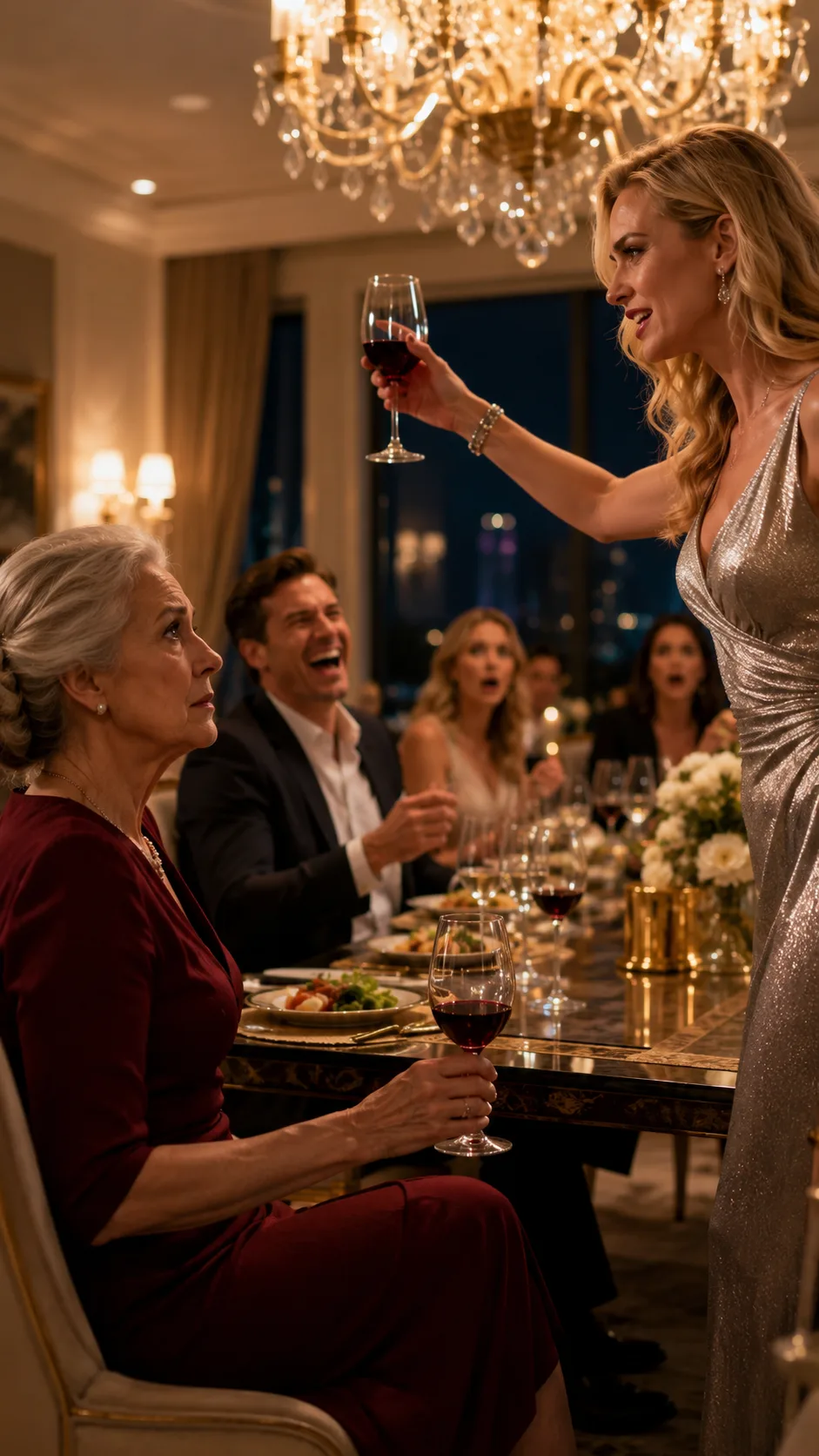
MY DAUGHTER-IN-LAW SAID I WAS TAKING UP TOO MUCH SPACE, SO I BOUGHT A HOUSE WHERE NONE OF THEM COULD REACH ME
PART 3 — THE GARDEN WHERE I FINALLY CHOSE MYSELF
Mason arrived at my gate three months after Harper left him.
Chapter 2
MY DAUGHTER-IN-LAW SAID I WAS TAKING UP TOO MUCH SPACE, SO I BOUGHT A HOUSE WHERE NONE OF THEM COULD REACH ME
PART 3 — THE GARDEN WHERE I FINALLY CHOSE MYSELF
Mason arrived at my gate three months after Harper left him.
I saw the rental car first.
Then I saw my son.
He looked thinner. Older. Not in the handsome, successful way he used to enjoy, but in the ruined way men look when life finally stops applauding their excuses.
He stood outside the iron gate with a small suitcase in one hand and no arrogance left in his face.
“Mom,” he said.
I did not open the gate.
Not immediately.
A younger version of me would have run to him. She would have cried, pulled him into the house, cooked his favorite meal, forgiven him before he even apologized, and called it love.
But that woman had nearly died at Harper’s dinner table.
The woman standing in the garden now had roses behind her, ocean air in her lungs, and peace she had paid for with thirty years of silence.
“Why are you here, Mason?” I asked.
He swallowed.
“Because
I was wrong.”
I waited.
He looked down, then back up.
“Not just about Harper. About you. About everything. I treated your love like a resource. Like something automatic. I thought because you were my mother, I could take and take and you would keep giving.”
My throat tightened.
He continued, voice breaking.
“I laughed at jokes that hurt you because I didn’t want conflict. I let Harper disrespect you because it was easier to disappoint you than to challenge her. And maybe the worst part is… I think I liked feeling above you.”
That sentence landed like a stone.
At least it was honest.
“I liked having a wife who made me feel successful and a mother who made me feel needed,” he said. “I never asked what either role cost you.”
The wind moved through the roses.
“What do you want from me?” I asked.
“Nothing,” he said
quickly. “Not money. Not a place to stay. Not for you to come back. I came because my therapist told me an apology that asks for comfort is still selfish. So I’m trying not to ask.”
My son was in therapy.
That surprised me more than his tears.
“I got a job,” he added. “Lower salary. No title worth bragging about. But honest work. I’m living in a studio. I cook badly. I do my own laundry worse. And every time I fold a shirt, I think about how many times you folded mine while I barely said thank you.”
His eyes filled.
“I am so sorry, Mom.”
For a long time, I said nothing.
Forgiveness is not a door you throw open because someone knocks with flowers and regret.
Sometimes forgiveness is a window you unlock slowly, while keeping your hand on the latch.
Finally, I opened the gate.
“You can come in for lunch,” I said. “Only lunch.”
He nodded like I had offered him a miracle.
Inside, Mason moved carefully, as if afraid the house would reject him if he breathed too loudly.
He looked at the stone fireplace, the high ceilings, the ocean-facing windows, the paintings on the walls, the blue armchair, the long dining table with fresh roses in a vase.
“This is beautiful,” he whispered.
“Yes,” I said. “It is.”
“You built all this?”
“I did.”
He turned toward me. “I’m proud of you.”
The words almost undid me.
Almost.
But I had learned not to hand my healing to anyone else, not even my son.
We ate tomato soup and bread on the terrace. He asked questions. Real ones.
When did you start investing?
How did you choose this place?
Were you scared?
Did you feel lonely when you left?
I answered each one slowly.
Then I asked my own.
“Did you know Harper was planning to ask me for money?”
His face changed.
“No.”
“Did you ever wonder why she pushed me away but kept asking what I owned?”
He closed his eyes.
“I should have.”
“Yes,” I said. “You should have.”
The old Mason would have defended himself.
This Mason only nodded.
After lunch, he stood to leave.
“I booked a motel in town,” he said. “I didn’t want to assume.”
That was the first moment I truly believed he was trying.
“You may come back tomorrow morning,” I said. “Earl needs help moving soil.”
Mason blinked.
“You want me to garden?”
“No,” I said. “Earl wants labor. I want to see if your apology has hands.”
The next morning, Mason arrived in jeans and old sneakers.
Earl looked him over and said, “You the son?”
“Yes, sir.”
“Good. Grab that shovel. We’ll see what kind.”
For four hours, Mason dug, carried, sweated, and listened while Earl explained the difference between cutting something back and destroying it.
“Pruning looks cruel if you don’t understand growth,” Earl said, trimming a rosebush. “But sometimes a plant can’t bloom until the dead weight is gone.”
Mason looked at me.
I looked away before I softened too much.
Over the next week, he returned every day.
He did not sleep in my house.
He did not ask for money.
He did not expect dinner.
Sometimes we talked. Sometimes we worked in silence. Sometimes he cried unexpectedly while washing his hands at the outdoor faucet.
On the seventh day, Margaret arrived.
Unlike Mason, she did not call first.
She stood outside the gate in pearl earrings and polished shoes, staring at my house like it had personally insulted her.
“Eleanor!” she called. “Open this gate!”
Mason was beside me on the terrace.
I sighed.
“Some habits travel far.”
We walked down together.
When Margaret saw Mason, her face softened with relief.
“Oh, thank God. I thought she had turned you against us.”
Mason stepped forward.
“No, Aunt Margaret. I came here because I finally stopped turning against her.”
Margaret looked offended.
“I was only worried. Eleanor has always been dramatic when she feels ignored.”
I laughed once.
Not because it was funny.
Because it was such an old lie wearing fresh lipstick.
“Margaret,” I said, “you inherited our mother’s house, her jewelry, her praise, and her version of history. Do not come to my gate and tell me I imagined being unloved.”
Her mouth opened.
Closed.
Then opened again.
“You were always so strong.”
“There it is,” I said. “The word people use when they benefit from your suffering.”
Mason lowered his head.
Margaret’s eyes filled with tears, but I had seen her cry before. Tears were not truth by themselves.
“Did Mom treat me differently?” I asked.
She looked away.
“Margaret.”
“Yes,” she whispered.
The word sat between us like a body finally named.
“Did you see it?”
“Yes.”
“Did you ever defend me?”
She began to cry.
“No.”
For decades, I had imagined that answer would destroy me.
Instead, it freed me.
“Thank you,” I said.
She looked startled.
“For what?”
“For finally telling the truth.”
I opened the gate, but not wide.
“You can come in for coffee,” I said. “But if you insult my life, rewrite my childhood, or call me selfish for surviving, you will leave.”
Margaret nodded.
Coffee turned into three hours.
Three hours turned into dinner.
Dinner turned into a painful, trembling conversation that should have happened forty years earlier.
Margaret admitted she had loved being the favorite.
“I knew it was unfair,” she said, staring into her cup. “But I was scared if Mom had to love us equally, I might lose something.”
“You did lose something,” I said. “You lost me.”
She covered her face.
Mason sat quietly, hearing the family sickness at its root.
That evening, Harper appeared.
I did not expect her.
None of us did.
A black car stopped outside my gate, and she stepped out wearing white linen, oversized sunglasses, and the same kind of smile she had worn at the promotion dinner.
Polished.
Cruel.
Hungry.
“Well,” she said, looking past me at the house. “So this is where the martyr ran off to.”
Mason stood.
“Harper, leave.”
She laughed.
“Oh, Mason. Still pretending to be noble? You came here for the same reason I did.”
His face tightened. “No, I didn’t.”
Harper turned to me.
“Let’s stop playing poor old victim, Eleanor. You let everyone think you were struggling while hiding all this. Do you know what that makes you?”
I smiled.
“Careful, Harper. The last time you made a speech about me, I bought a plane ticket.”
Her eyes flashed.
“You owe Mason help. He lost everything because of you.”
“No,” Mason said sharply. “I lost everything because I was weak and you were greedy.”
For the first time, Harper looked truly shaken.
Then she recovered.
Fine. Back to me.
“This house should be family property,” she said. “Mason is your only child.”
I almost admired the boldness.
Almost.
“Actually,” I said, “this house is already protected.”
Her smile faltered.
“My lawyer helped me place it into a trust. I live here for the rest of my life. After that, it becomes a women’s retreat for widows, abandoned mothers, and women rebuilding after family abuse.”
Margaret gasped softly.
Mason stared at me.
Harper went white.
“You gave away his inheritance?”
“No,” I said calmly. “I gave away your fantasy.”
Harper’s mouth trembled with rage.
“You selfish old woman.”
I stepped closer to the gate.
“No, Harper. I am a generous woman who finally learned the difference between generosity and surrender.”
She looked at Mason.
“Are you going to let her talk to me like that?”
Mason took a breath.
Then he said, “Yes.”
That single word changed more than any apology.
Harper stood there, defeated not by shouting, not by revenge, but by the sudden absence of control.
She left without another speech.
The next morning, Mason helped Earl plant a new row of roses near the east fence.
Margaret sat beside me on the terrace, quiet for once.
“What made you create the retreat?” she asked.
I watched Mason press soil around the roots.
“Because I spent my whole life wishing there had been somewhere to go,” I said. “Now there will be.”
One year later, the house was full of women laughing.
Not permanently. Not loudly. Not as an invasion.
As healing.
A retired nurse stayed for two weeks after her children sold her condo without asking.
A young mother came with bruises in her voice, though none on her skin.
A widow from Ohio planted lavender and cried because no one had touched her shoulder kindly in months.
We called it The Rose House.
Mason visited twice a month. He still went to therapy. He still asked before entering rooms. Sometimes we cooked together. Sometimes we disagreed. Sometimes the past rose between us like smoke.
But he never laughed at my pain again.
Margaret and I spoke every Sunday. Our relationship did not become perfect. Perfect is often just another costume for denial.
It became honest.
That was better.
One evening, I sat alone on the balcony with a glass of wine while the ocean turned silver under the moon.
My phone lit up.
Mason had sent a photo of his apartment. Small kitchen. Clean counters. A vase of cheap grocery-store roses on the table.
His message read:
I bought these because they reminded me of you. Not because I need anything. Just because I finally see you.
I held the phone against my chest and let myself cry.
Below me, the garden moved in the wind.
The roses from my old balcony had grown enormous. Their roots were deep now. Their blooms were wide and shameless, taking all the space they needed.
I thought of Harper’s toast.
Some mothers-in-law are useful.
Others just take up space.
For years, I had tried to prove I was useful.
Now I understood the truth.
I was never born to be useful.
I was born to be whole.
And in the house I built, in the garden I saved, in the life no one handed me, I finally stopped apologizing for the room my soul required.
I did not take up too much space.
The world they gave me had simply been too small.
So I built a bigger one.
And this time, I kept the key.
THE END.
Chapter complete
You have reached the end of this chapter.
Continue reading
A few more worlds to get lost in after this chapter.




