PART 3 — THE FAMILY MONEY COULDN’T BUY
I waited for my father to deny it.
Chapter 2
PART 3 — THE FAMILY MONEY COULDN’T BUY
I waited for my father to deny it.
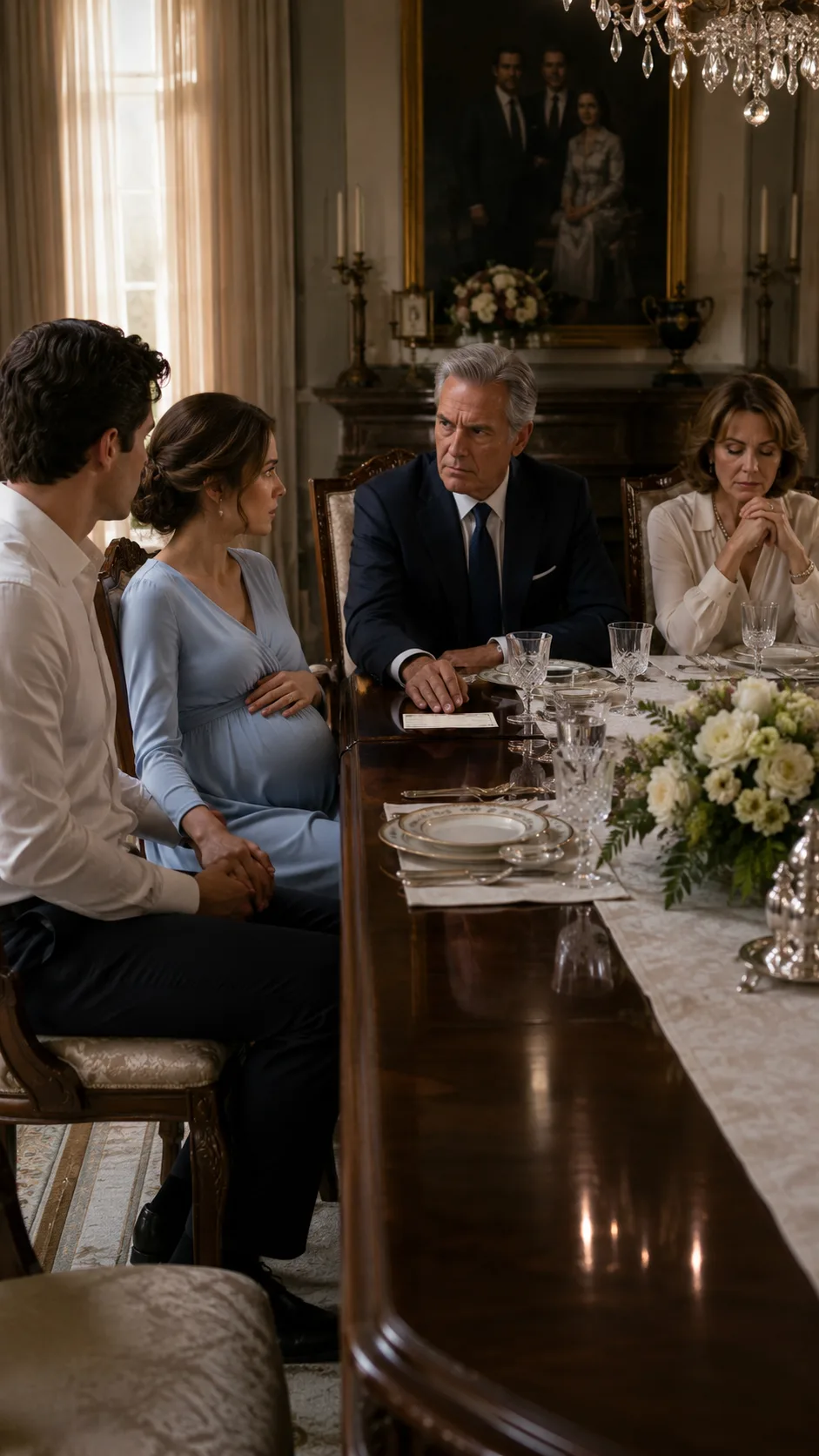
George Bennett had denied smaller truths with more confidence. He had denied mistakes in meetings, denied harsh words to my mother, denied the loneliness he created in our house. Denial was practically his second language.
But that night, standing beneath the chandelier with Rachel’s torn check lying beside his untouched wine, my father had no words strong enough to cover what we all now knew.
He had known.
Maybe not from the beginning. Maybe not the first time I said Rachel’s name. But at some point, he had learned exactly who she was. And instead of remembering the man who helped him survive, he had tried to buy off that man’s daughter like she was an inconvenience.
I looked at him and saw, for the first time, not a giant but a small man guarding a large shadow.
“Why?” I asked.
My father’s eyes flicked toward Rachel, then back to
me.
“You don’t understand what I had to become.”
“That’s your answer?”
“I built something out of nothing.”
“No,” I said. “You built something out of someone else’s kindness, then spent thirty years pretending kindness had no value.”
His face twisted.
“You think this girl is innocent? You think she came here tonight without knowing exactly what that information would do?”
Rachel inhaled sharply.
I stepped closer to him.
“Don’t.”
George pointed at her.
“She waited until the perfect moment.”
Rachel’s voice broke. “You put a check in front of me.”
“You walked into this house carrying leverage.”
“No,” she said. “I walked in carrying your grandchild.”
My mother sobbed once.
The sound cut through the room like glass cracking.
Everyone turned.
Margaret Bennett stood with one hand pressed to her chest, tears running down her face. I could not remember the last time I had seen my mother cry
openly.
“George,” she said, “stop.”
He looked irritated, as if her pain had interrupted his argument.
“Margaret, stay out of this.”
“No.”
One word. Quiet. Shaking. But it stunned him.
My mother walked to the sideboard and opened the bottom drawer. Her hands trembled as she pulled out a small wooden box.
My father went rigid.
“Margaret.”
She brought the box to the table.
“I kept them,” she said.
George’s voice hardened. “Put that away.”
But my mother opened it.
Inside were letters.
Old letters tied with faded blue ribbon.
Rachel stared at them.
My mother touched the top one gently.
“Your father wrote to us every Christmas for ten years,” she told Rachel. “He asked how the hospital was doing. He asked if George was taking care of the community clinic. He asked about Michael after he was born.”
I looked at my father.
“You never told me.”
George’s
lips thinned.
My mother lifted one letter.
“And George never answered after the hospital became profitable.”
Rachel covered her mouth.
My father slammed his palm on the table.
“Enough!”
The candles jumped.
But no one moved.
For once, his anger did not make the room smaller. It only revealed how exhausted everyone was from living inside it.
My mother looked at him through tears.
“You erased the people who helped you because they reminded you that you were once desperate.”
George’s face flushed.
“I protected this family.”
“No,” I said. “You protected your pride.”
He turned to me, breathing hard.
“If you leave tonight, you leave with nothing.”
I looked around that dining room. The silver. The art. The crystal glasses. The long table where I had spent childhood dinners learning to chew quietly and speak carefully. I thought losing it would feel like falling.
Instead, it felt like opening a window.
“I already have what matters.”
I took Rachel’s hand.
My father’s voice rose.
“Michael.”
I stopped at the doorway.
For a second, I saw something almost human in his face. Panic, maybe. Or grief. Or the shock of a man realizing that a son is not a building he can own.
“If you walk out,” he said, quieter now, “do not expect me to chase you.”
I looked back at him.
“I stopped expecting that years ago.”
Rachel and I left.
Outside, the night air was cold. She made it three steps down the front stairs before her shoulders started shaking.
I wrapped my arms around her.
“I’m sorry,” I whispered. “I’m so sorry.”
She pressed her face into my coat.
“I didn’t want to ruin your family.”
“You didn’t.”
I looked back at the glowing windows of the Bennett house.
“You revealed it.”
We moved into Rachel’s apartment the next week. It was too small. The heating clicked loudly at night. The kitchen drawer stuck unless you pulled it at an angle. I slept better there than I ever had in my father’s mansion.
I resigned from Bennett Memorial before my next shift.
The email took me twenty minutes to write and ten seconds to send.
For the first time in my career, my last name did not decide where I belonged.
I took a position at a community hospital across town. The pay was lower. The hours were brutal. The coffee was somehow worse. But nobody called me “George Bennett’s son” there. Patients learned my name because I introduced myself.
Rachel kept teaching until her doctor told her to slow down. Some evenings, I came home to find her asleep on the couch with one hand on her belly and a stack of children’s drawings on the coffee table.
One drawing showed me in a white coat, Rachel in a blue dress, and a tiny baby floating between us like a star.
At the bottom, one of her students had written, “MISS RACHEL’S BABY HAS A DOCTOR DAD.”
I kept it on the fridge.
My father did not call for three weeks.
Then he called every day for five days.
I didn’t answer.
On the sixth day, my mother came to the apartment alone.
She brought a knitted yellow blanket and a box of letters from Thomas Evans.
Rachel cried when she saw them.
My mother sat at our tiny kitchen table, holding Rachel’s hands.
“Your father was a good man,” she said. “I should have told Michael years ago.”
Rachel shook her head. “You were living with George too.”
My mother looked down.
That was the kindest accusation Rachel could have made.
Two months before the baby was due, George came.
He stood outside our apartment door in a dark overcoat, looking impossibly out of place in the narrow hallway with its peeling paint and buzzing light.
I opened the door but did not step aside.
“Michael,” he said.
“Dad.”
His eyes moved past me to Rachel, who was standing near the couch, one hand under her stomach.
For once, he did not look at her like a problem.
He looked afraid.
“I came to apologize,” he said.
Nobody spoke.
George swallowed.
“I thought money could prevent mistakes. I thought if I controlled enough, protected enough, arranged enough, nothing could touch what I built.”
I said, “You tried to pay the mother of my child to disappear.”
His face tightened, but he nodded.
“Yes.”
Rachel’s eyes shone.
George looked at her.
“Miss Evans—Rachel. I dishonored your father’s memory. He helped me when I had nothing, and I treated his daughter as if she had come to take something from me.”
His voice cracked slightly.
“She hadn’t. You hadn’t.”
I wanted to hate him. Some part of me still did.
But another part saw an old man standing in a hallway, finally discovering that power could not follow him through every door.
Rachel spoke first.
“I’m not ready to forgive you.”
George closed his eyes briefly.
“I understand.”
“But the baby deserves a grandfather who tells the truth.”
He looked at her then, stunned.
Rachel continued, “If you want to be in this child’s life, you don’t get to buy your way in. You show up. You listen. You respect boundaries. You learn our names without trying to own them.”
George nodded once.
Then again.
“I can try.”
I looked at him.
“You can do more than try.”
For the first time in my life, my father did not argue.
Three months later, our daughter was born just before dawn during a spring rainstorm.
We named her Lily Thomas Bennett.
Thomas, for Rachel’s father.
When my mother heard the name, she cried.
When my father heard it, he turned away toward the hospital window and covered his mouth with one hand.
I saw his shoulders shake once.
He never apologized perfectly. Men like George Bennett rarely know how to break cleanly. But he changed in small, visible ways.
He came to dinner and brought soup instead of advice. He asked before holding Lily. He donated quietly to Rachel’s school under Thomas Evans’s name, not his own. He removed his portrait from the hospital lobby and replaced it with a wall honoring early supporters, nurses, clinic workers, and community donors.
At the center was a photograph of Thomas Evans shaking his hand.
Under it, the plaque read:
Bennett Memorial was not built by one man. It was saved by many.
The first time I saw it, I stood in the lobby with Lily asleep against my chest.
My father stood beside me.
“I should have told the truth sooner,” he said.
“Yes,” I answered.
He nodded.
“I know.”
That was all. No speech. No grand redemption. Just the truth, finally standing in public where his pride used to hang.
Years later, people would still say George Bennett built a hospital empire.
But I knew the real story.
A good man once saved him. A daughter once reminded him. A torn check once exposed him. And a son once walked away with nothing, only to discover he had finally chosen everything.
The Bennett name survived.
But it no longer belonged to George alone.
It belonged to Rachel, who refused to be bought.
It belonged to Lily, who would grow up hearing the whole truth.
And for the first time, it belonged to me too.
THE END.
Chapter complete
You have reached the end of this chapter.
Continue reading
A few more worlds to get lost in after this chapter.




