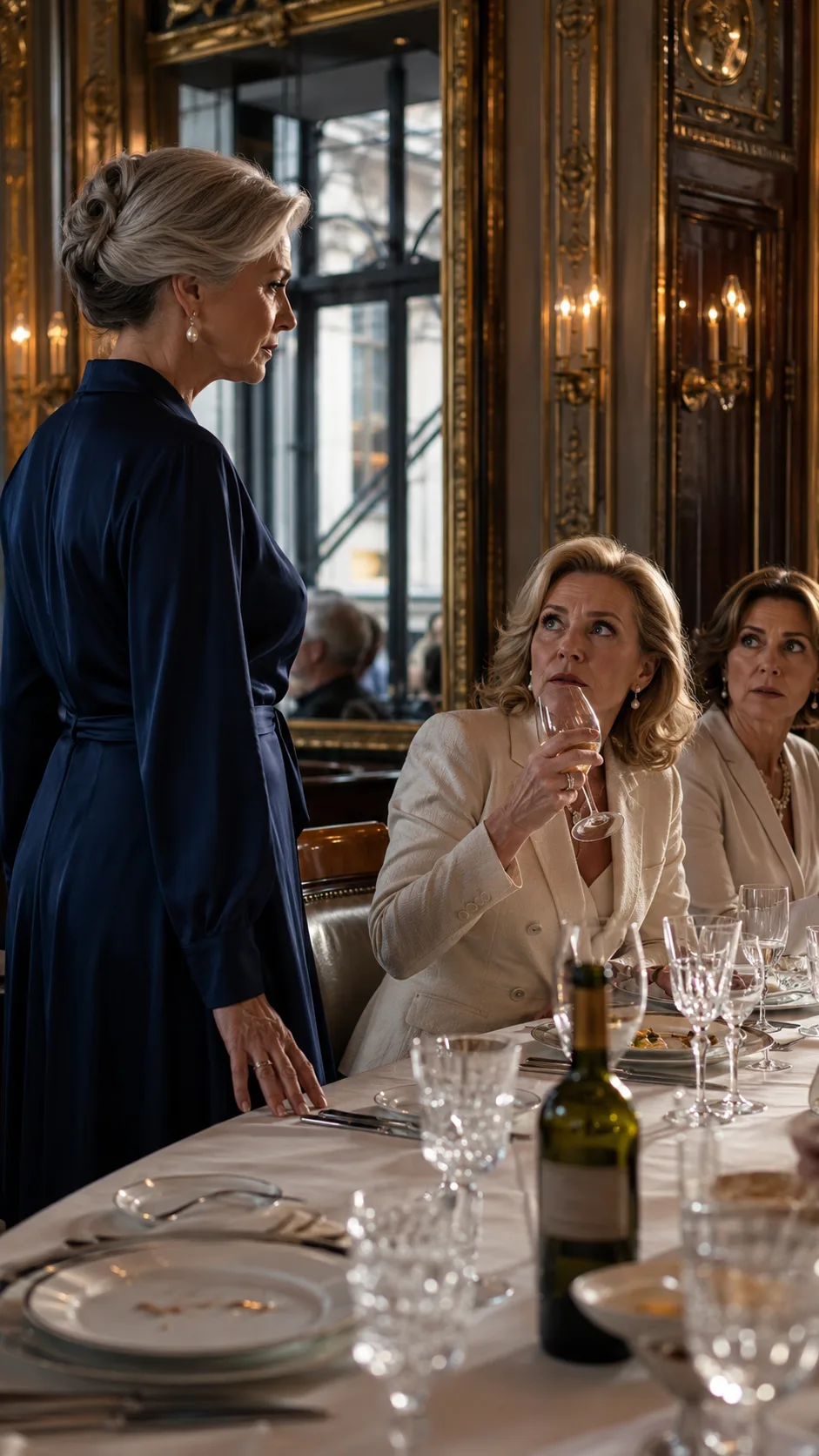
At the dinner table, my daughter-in-law’s mother switched into French because she believed I was too old, too ordinary, and too harmless to understand a single word.
Chapter 1
At the dinner table, my daughter-in-law’s mother switched into French because she believed I was too old, too ordinary, and too harmless to understand a single word.
That was the first mistake she made.
The second was assuming I would stay quiet forever.
Her name was Colette. She was the kind of woman who wore pearls like armor and smiled as if every room belonged to her before she even entered it. Ever since my son married her daughter, Colette had treated me as something decorative and inconvenient: useful in family photographs, acceptable at polite gatherings, but never important enough to be taken seriously.
So when she invited me to a business dinner at a French restaurant downtown, I knew the invitation had nothing to do with kindness.
She said there would be a few investors, some close friends, and that my presence would be “good for family optics.” She said it with that smooth, practiced tone rich people use when they are pretending a demand is a favor.
I nearly said no.
But something about the
invitation bothered me. Colette rarely included me unless she wanted something. And lately, my son had been gently pressuring me to sign several documents connected to my late husband’s company.
So I put on my navy dress, pinned my silver hair neatly, and went.
The restaurant was expensive in the quietest possible way. Warm gold light fell over white tablecloths. Mirrors lined the walls. The waiters moved silently between tables, as if noise itself had been banned from the room. Colette was already seated when I arrived, surrounded by three women who looked just like her in different jewelry.
She introduced me with a bright smile.
“This is my son-in-law’s mother,” she said, as if she were presenting an antique vase she had agreed to keep.
The others smiled politely. I smiled back.
For the first half hour, everything stayed in English. The conversation was careful, polished, meaningless. They spoke
about wine, travel, charity committees, and the exhausting burden of maintaining multiple properties. Colette kept glancing at me, measuring how much I understood, how much I noticed, how little she believed I mattered.
Then the wine came.
And with the wine came the French.
At first, it was only a phrase here, a joke there. Then the women grew more comfortable. Their shoulders relaxed. Their voices lowered. French slipped between them like a curtain being pulled across the table, shutting me out.
Or so they thought.
Colette knew I had lived in Montreal for six years with my late husband. She knew he had run North American operations for his shipping firm from there. She also knew I had sat beside him in boardrooms, negotiated contracts, corrected lawyers, and once prevented him from signing a warehouse lease that would have cost the company millions.
Apparently, she believed time had erased
all of that.
So I sat still.
I lifted my glass when appropriate. I smiled when they laughed. I let my eyes soften into the expression people expect from a quiet older woman at a table full of wealth.
And I listened.
At first, the cruelty was small. My shoes were “painfully provincial.” My accent, when I spoke English, was “sweet in a rural way.” One of the women wondered how much financial help my side of the family required now that the marriage had joined us to “real society.”
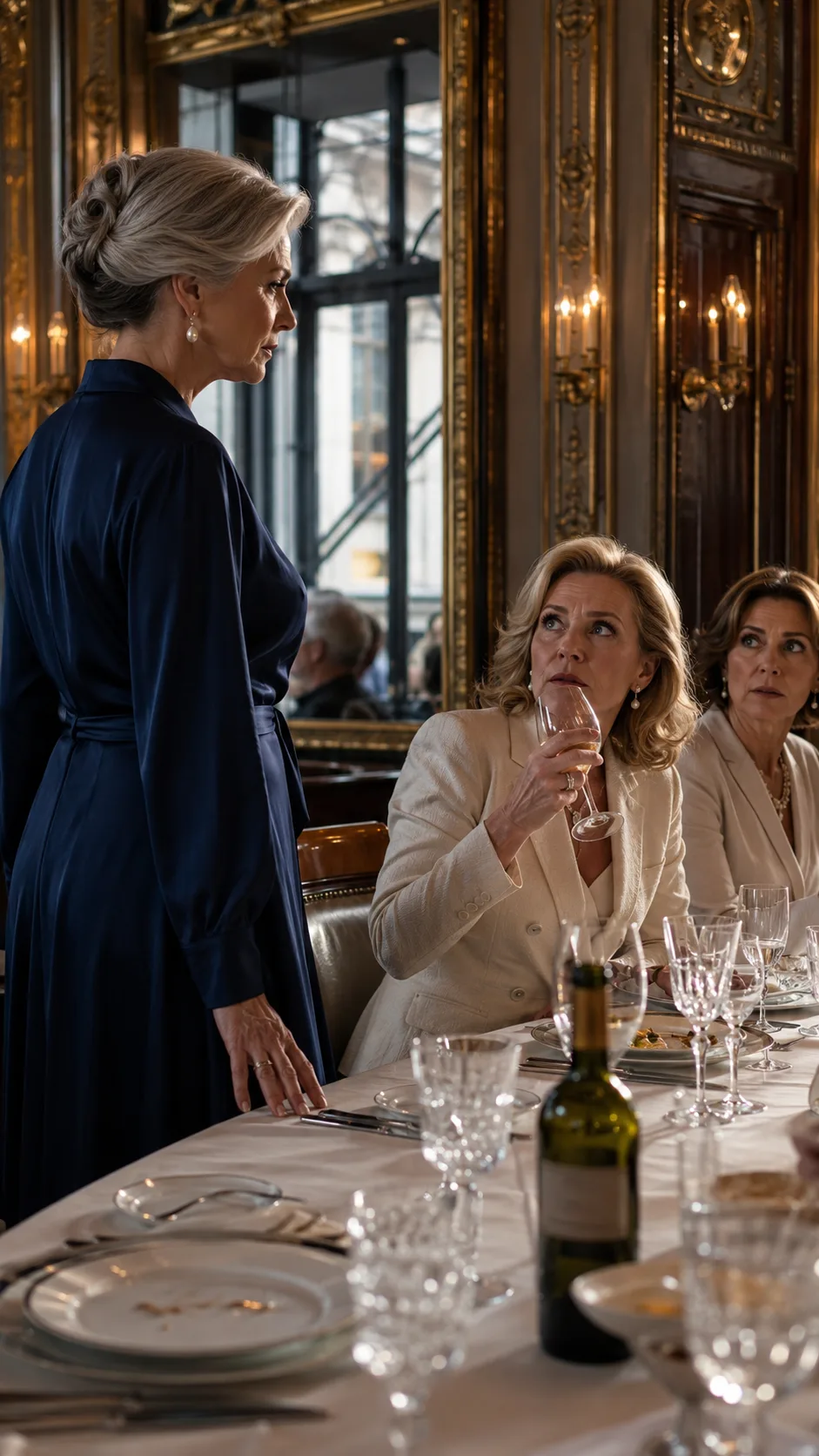
Colette laughed at that.
I kept my face calm.
Then one of her friends leaned closer and asked in French, “Has your son convinced her to release the trust position yet?”
The air changed.
Colette’s smile sharpened.
“Not yet,” she said. “But he will. She trusts him. Once she signs, the property interests can be moved before she even understands what she has given away.”
My hand tightened around the stem of my glass.
I did not move.
Another friend asked, “And the company vote?”
Colette gave a soft little laugh, the kind meant to sound harmless.
“The old woman still thinks the vote is symbolic.”
For one second, the restaurant seemed to disappear around me.
Because the vote was not symbolic.
After my husband died, his voting shares in our family logistics company had passed to me under a structured transfer arrangement. My son managed day-to-day operations, yes. But the controlling vote remained with me until the official transfer date.
I had spent months watching Colette’s circle push for aggressive expansion. Luxury real estate. Asset shifts. Investment vehicles that sounded glamorous and smelled rotten. I knew they wanted the company’s capital. I knew they were impatient.
What I had not known was that they had turned my own son into their doorway.
The waiter appeared to clear the appetizer plates. Colette ignored him completely. She was enjoying herself too much to notice anyone beneath her.
“In two weeks,” she continued in French, “the merger will be complete. The grandmother will sign the papers believing she is protecting her son’s future. In truth, she will be giving up her power. After that, she becomes irrelevant.”
One of the women covered a laugh with her fingers.
“And when she realizes?”
Colette took a slow sip of wine.
“By then, she will be settled somewhere peaceful. I found a lovely assisted living facility near the coast. Very quiet. Suitable for someone like her.”
The table laughed softly.
I looked down at my plate and let them.
Inside me, something cold and steady had settled into place. Not panic. Not grief. Something older and much more dangerous.
My husband had built that company from one warehouse and two trucks. I had watched him work until midnight, had answered calls when storms delayed shipments, had helped him decide which risks were worth taking and which men were not worth trusting. That company was not a toy for Colette to dress up and sell off.
And I was not a crate she could move into storage.
The waiter returned with the wine bottle and reached toward my glass.
That was when I finally spoke.
In French.
Perfect, crisp, controlled French.
“Actually,” I said, loud enough for every woman at the table to hear, “I think I have had enough of the Châteauneuf-du-Pape. It feels rather heavy for a dinner built on so much fiction.”
The laughter died so suddenly it was almost beautiful.
Colette’s glass stopped halfway to her mouth.
One of her friends blinked at me. Another slowly lowered her fork. The waiter froze beside the table, his eyes moving carefully from my face to Colette’s.
I turned toward her fully.
“Your idea about the peaceful coastal facility is interesting,” I continued in French. “But you forgot something important about logistics, Colette. Before moving cargo, one should always confirm who owns the warehouse.”
Her face lost its color.
Not paled.
Emptied.
For the first time since I had met her, Colette looked at me without performance. No polished smile. No social mask. Just fear, naked and immediate.
“You understood?” she whispered.
I smiled.
“Every word.”
The investors at the far end of the table had gone silent. They did not speak French well enough to follow everything, but they understood scandal when they saw it. Colette’s three friends sat frozen, suddenly much less amused by their private little language.
I stood slowly, smoothing the front of my dress.
Then I switched back to English.
“I did not sign the trust release this morning,” I said, making sure the investors heard me clearly. “In fact, I spent the afternoon with the board of directors.”
Colette’s eyes widened.
“I have requested an emergency audit of all proposed expansion funds,” I continued. “Every transfer, every shell agreement, every consulting payment connected to your real estate pivot will be reviewed.”
Her mouth opened, but no sound came out.
“And five minutes ago,” I said, lifting my phone from beside my plate, “I sent a message authorizing temporary restrictions on your daughter’s access to family company accounts until the audit is complete.”
The silence around the table thickened.
One investor slowly sat back in his chair.
Colette’s voice trembled. “You can’t do that.”
“I can,” I said. “Because despite what you told your friends, the company vote is not symbolic.”
Her hands shook around the stem of her wine glass.
I leaned one palm on the table, not close enough to threaten her, but close enough that she could not pretend I was background anymore.
“I lived in Montreal for six years, Colette. I negotiated shipping contracts in French while you were still learning how to sound important over lunch. I understood your insults. I understood your plan. And I understood exactly what kind of woman you were the moment you decided I was too old to be dangerous.”
Her friends stared down at their plates.
I looked at them, then back at her.
“The company vote is tomorrow. I still hold the majority. And my vote will be very simple: your family is no longer connected to this business.”
Colette swallowed.
“My son may remain,” I said. “If he chooses honesty over greed. If he chooses his father’s legacy over your ambition. If he chooses his mother over the woman who tried to sell me into silence.”
Her lips parted again, but she had no words left.
“As for you,” I said quietly, “you are finished.”
I picked up my purse.
No one stopped me.
The sound of my heels against the marble floor followed me through the restaurant. Behind me, the table remained silent, stripped of all its elegance. No French. No laughter. No little private jokes.
Just consequences.
By the time I reached the valet stand, Colette’s number was already blocked.
The next morning, the board voted to freeze the merger pending investigation. By the end of the week, the luxury real estate plan collapsed. Several investors withdrew. Two consultants vanished from the proposal as soon as lawyers started asking questions.
My son came to my house three days later.
He looked exhausted. Ashamed. Younger than he had in years. He admitted he had trusted the wrong people, believed the wrong promises, and ignored the uncomfortable feeling in his stomach because Colette had made the plan sound like progress.
I did not forgive him immediately.
A mother can love her child and still require him to earn back trust.
But he stayed. He cooperated with the audit. He signed new protections into place. And for the first time in a long while, he looked me in the eye when he spoke.
Colette did not recover.
Without access to our company, her influence shrank quickly. The friends who once laughed at her table became unavailable. The investors she had impressed stopped returning calls. The woman who had picked out a quiet facility for me eventually moved into a small apartment far from the restaurants where people used to recognize her.
I never gloated.
I did not need to.
She thought I was only a background figure in her story.
She forgot that in logistics, the background is what holds the entire system together.
Chapter complete
You have reached the end of this chapter.
Continue reading
A few more worlds to get lost in after this chapter.




