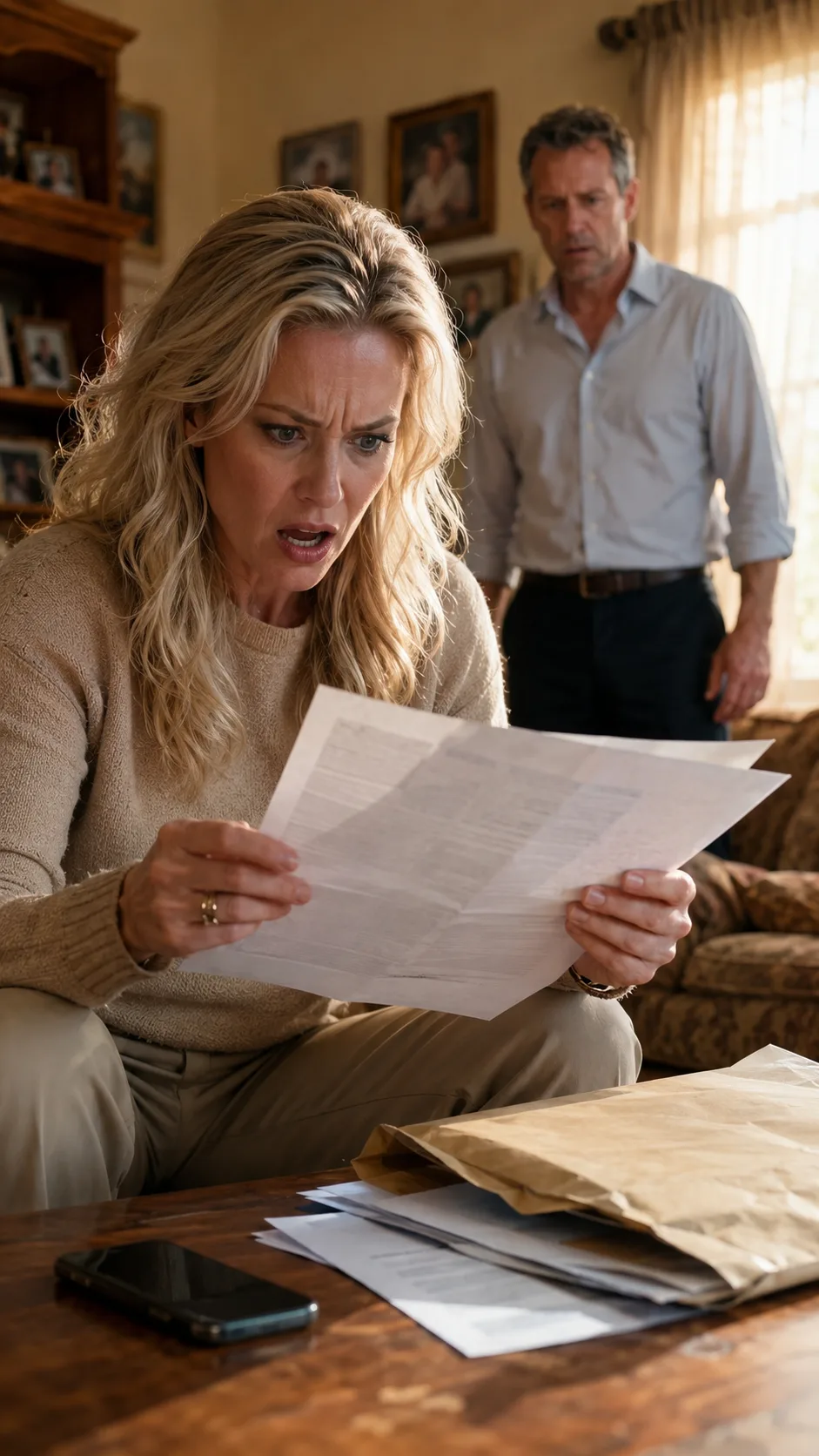
THEY SAID SHE ATE BUT DIDN’T HELP, SO SHE SOLD THE HOUSE THEY CALLED THEIRS — PART 2
The morning after Samantha called me useless, I made coffee as always.
Chapter 2
THEY SAID SHE ATE BUT DIDN’T HELP, SO SHE SOLD THE HOUSE THEY CALLED THEIRS — PART 2
The morning after Samantha called me useless, I made coffee as always.
The old routine held me upright. Filter. Grounds. Water. Spoon. Mug. I made Jason’s coffee strong, the way he liked it. I packed Oliver’s lunch. Peanut butter sandwich cut diagonally, apple slices, cheese crackers, and the little chocolate chip cookie I kept hidden in the tin behind the flour.
Oliver came into the kitchen with sleep-flattened hair and his backpack dragging behind him.
“Morning, Grandma.”
“Morning, sugar.”
He climbed onto the chair and looked at me with serious eyes.
“Mommy was mad yesterday.”
“Yes,” I said. “She was.”
“Were you bad?”
My throat tightened.
“No, sweetheart. Sometimes grown-ups say things because they are tired or unhappy. That doesn’t mean they’re right.”
He considered that.
“Daddy didn’t say anything.”
“No.”
“Why?”
I looked toward the stairs, where Jason’s footsteps were coming down.
“Maybe he didn’t know what to say.”
Oliver nodded as if this made sense. Children are generous that way.
They will give adults better reasons than we deserve.
Jason entered the kitchen, tying his tie.
“Morning, Mom.”
“Morning.”
He kissed Oliver’s head, took the coffee I had poured, and opened his phone.
No apology.
No mention of dinner.
No “Are you all right?”
Just morning.
As if nothing had happened.
That was when I understood the insult had not shocked him because it had not surprised him. Maybe he had heard Samantha say worse behind closed doors. Maybe he had agreed in small ways. Maybe he had simply grown used to the idea that my presence required tolerance, not gratitude.
I folded the kitchen towel and placed it by the sink.
Inside me, something very old and very tired finally sat down.
Two days later, Jason and Samantha left for a weekend trip.
Samantha called it a couple’s getaway.
“We just need space,” she said while standing by the
front door in a camel-colored coat I had helped pay for the winter before, when she said money was tight.
Jason stood beside her with the car keys in his hand.
“You’ll be okay, Mom?”
He looked uncomfortable asking, as if he hoped my answer would be quick and easy.
“I’ll be fine.”
That was all.
No one asked if I needed groceries.
No one asked if I wanted to visit a friend.
No one asked if I minded staying behind in the house where I had just been told I was not wanted.
They left at nine.
By ten-thirty, I had packed one suitcase.
I did not take much because at my age, you learn how little truly belongs to you when you have been living under someone else’s rules. Two dresses. Three blouses. My good cardigan. Pajamas. Slippers. My rosary. The framed photograph of Frank holding Jason at
age six on a fishing pier. The leatherbound notebook Frank gave me on our twenty-fifth anniversary.
On the first page, in his handwriting, it said:
For the things we never want to forget.
I placed the house key on the kitchen table beside a dish towel I had washed, dried, and folded that morning.
No note.
A note would have been another service.
I was done providing explanations to people who had stopped listening.
I took the bus across town.
Not a taxi. Not a neighbor’s ride. Not Jason’s help.
Just me, my aching knees, and the suitcase bumping my shin every time the bus lurched.
I got off near Brookside Care Residence, a low beige building tucked behind a pharmacy and a laundromat. The sign out front had peeling paint around the edges. Someone had planted mums by the entrance, but half of them had browned in the cold. The lobby smelled faintly of bleach, coffee, and boiled vegetables.
It was not lovely.
But it was quiet.
A woman at the front desk gave me forms to fill out. Her name tag said Marla. She had tired eyes and kind hands.
“Are you here for respite care?” she asked.
“For now,” I said.
She did not ask why.
Women my age do not arrive with one suitcase on a Saturday afternoon because life has been kind.
My room had a narrow bed, a dresser, and a chair by a window overlooking the parking lot. The sheets were clean. The radiator hissed. A maple tree outside had lost most of its leaves, but one stubborn yellow leaf still clung to the end of a branch.
That night, I sat on the edge of the bed and let the silence settle around me.
No slammed cabinets.
No sighs.
No television too loud.
No one waiting for me to earn my keep.
And still, Samantha’s words followed me.
You eat, but you don’t help.
A cruel thought crept in.
What if she was right?
What if I had become only need?
Only cost?
Only another mouth?
That is the danger of being treated like a burden. Eventually, a part of you begins to ask whether the label fits.
I sat with that thought until dawn touched the parking lot.
Then a smaller voice, quieter but steadier, answered.
What if they are wrong?
The next morning, I made tea in the little electric kettle I had packed and opened my purse.
Inside was an old business card.
James Callahan, Attorney at Law.
Frank’s oldest friend.
The man who handled our wills, insurance papers, and legal documents when the cancer diagnosis turned our lives into a stack of forms.
His office was still downtown, in the same brick building near the courthouse. Three days after leaving Jason’s house, I stood outside those brass letters and wondered whether I looked like the kind of woman who had come to reclaim her life.
James looked older when he opened the door.
So did I.
His hair had thinned to silver, and his shoulders were more rounded, but he still wore a dark sweater under his suit jacket, still smelled faintly of pipe tobacco though he had quit smoking twenty years earlier, still looked at me as if my presence required no explanation.
“Ruth,” he said softly.
“James.”
He did not ask questions in the hallway. He led me to the same leather chair I remembered from decades before and poured tea.
Two sugars. No milk.
Just as always.
For a few minutes, we spoke about nothing. The weather. The construction near the courthouse. His bad knee. My arthritis. The little harmless topics people use to circle the thing that hurts.
Finally, I placed my hands on my purse and said, “Do you remember the house deed?”
James became very still.
“Yes,” he said. “I remember everything about that day.”
“Can you pull it?”
He stood without another question.
From a locked drawer, he removed a thick manila folder. He placed it on the desk between us and opened it with a care that felt almost ceremonial.
There it was.
The property address.
The legal description.
The county filing stamp.
My name.
Ruth Elaine Coleman.
Sole owner.
Date: June 12, 1994.
Frank’s signature.
Trembling, yes, because the cancer had already started taking strength from his hand. But clear.
Final.
Protective.
I stared at the document until the words blurred.
“I didn’t know he followed through.”
James sat across from me.
“He came in the week after the terminal diagnosis. He said he did not want you ever ending up homeless. His exact words were, ‘She built this family. She should never have to ask to stay in her own home.’”
I pressed my hand over my mouth.
Frank.
Even dying, he had known something I had not.
Love, real love, does not merely hold your hand.
It makes sure your name is on the paper.
“I never told Jason,” I whispered.
James folded his hands.
“Did you think you would never need to?”
I gave a small laugh that hurt.
“I thought they would always remember who I was.”
James did not answer.
He had spent too many decades as a lawyer to be surprised by what families conveniently forget.
He showed me everything. Frank’s transfer. County records. Tax documentation. Annual filings. Instructions that James keep copies updated. Insurance paperwork. Everything clean. Everything legal. Everything mine.
The house I had been told to leave had belonged to me fully for nearly thirty years.
Not Jason.
Not Samantha.
Me.
I sat back in the chair.
Something inside me did not leap or burn.
It settled.
“I want to sell it,” I said.
James looked at me carefully.
“All right.”
“Quietly.”
He nodded.
“I want them to learn from the letter. Not from me.”
“There will be legal notices. Proper timelines. The sale can be handled privately, but they will have rights as occupants to receive notice.”
“I want everything done correctly.”
“Frank would expect nothing less.”
I looked at the deed again.
The house I had kept for Jason.
The house where I had become an inconvenience.
“I am not doing this to hurt them,” I said, though perhaps I was partly saying it to myself.
James’s expression remained gentle.
“Sometimes stopping someone from using you feels like hurting them. That does not make it wrong.”
I left his office with the folder pressed to my chest like armor.
Outside, the air smelled of rain-soaked leaves and diesel from a bus sighing at the curb. People walked past carrying coffee, briefcases, groceries, lives. The world had not changed.
But I had.
For years, I had been living in what I thought was my son’s house.
The truth was simpler.
They had been living in mine.
I did not sell the house immediately.
A woman does not undo half her life in an afternoon, no matter how sharply she has been insulted.
First, I sat with the truth.
At Brookside, days found their shape. Breakfast at eight. Tea at ten. Lunch at noon, usually too soft and underseasoned. Afternoon activities posted on a corkboard near the nurse’s station. Bingo. Chair yoga. Bible study. Movie night. Things designed to pass time, not restore meaning.
I began helping where I could.
Not because anyone demanded it.
Because usefulness by choice feels different from usefulness extracted.
I folded towels in the common room. I read letters aloud for Mrs. Alvarez, whose eyesight had faded to shadows. I helped Marion arrange her pills by day because the labels confused her. On Sundays, I started a knitting circle, though my own hands were slow.
That was where I met Helen.
She was eighty-one, small and wiry, with sharp gray eyes and a walker wrapped in pink ribbon. She had been a florist once, and she still judged every arrangement in the lobby like a retired general inspecting troops.
“Carnations again,” she muttered the first day we sat together. “Lazy flowers.”
I liked her immediately.
Helen had two sons. One in Harrisburg, one in Pittsburgh. She had sold her house after a fall and moved in with the oldest. It lasted four months.
“My daughter-in-law said I made the living room smell like ointment,” Helen told me one evening while we sorted yarn. “As if she didn’t burn lavender candles strong enough to knock the Pope sideways.”
I laughed.
Then Helen’s face changed.
“She made me eat supper in the laundry room once.”
My hands stilled.
“She said it would be easier because I spilled soup. My son handed me crackers and told me not to take it personally.”
I looked at her.
“I’m sorry.”
She shrugged, but her fingers trembled.
“After a while, you stop feeling like a mother. You feel like an old dog nobody wants to be seen feeding.”
That sentence followed me back to my room.
At night, I opened Frank’s notebook.
For the things we never want to forget.
At first, it had been grocery lists. Recipes. Church reminders. Notes from doctors. Birthday ideas. But as years passed, it had become something else without my realizing it.
A record.
Not of resentment.
Of love given so routinely that nobody thought to call it love anymore.
Jason’s tuition after he dropped out. $2,300.
Co-signed car loan. Paid first five months. $1,800.
Emergency room bill. Jason did not want Samantha’s family to know. $740.
Wedding gift so they could have a real honeymoon. $5,000.
Covered rent during unemployment. Three months. $3,600.
Crib and stroller for Oliver’s older sister who died before birth. I had almost forgotten writing that. $1,200.
Down payment for second car. $4,000.
Replaced water heater. $950.
Helped with IVF costs. $7,000.
Samantha’s dental surgery. $2,100.
Pandemic groceries. Five months. $4,500.
And on and on.
Thirty years of quiet rescue.
More than $120,000.
I had never added it before.
Love does not start with a calculator.
But disrespect forces accounting.
I copied every page.
Not to sue them.
Not to mail it in anger.
But because if they ever asked why, I wanted the numbers to speak when my heart was too tired.
I brought the copies to James.
He read quietly.
When he finished, he removed his glasses and rubbed his eyes.
“Ruth,” he said, “you carried them longer than they admit.”
“I never wanted repayment.”
“I know.”
“I wanted them to remember.”
James tapped the notebook gently.
“Then let this remember for you.”
That was when I told him to begin the sale.
Privately.
Properly.
No sign in the yard.
No public listing.
The house was in a desirable neighborhood, and James knew a couple from a nonprofit housing group who had been looking for a family property that could be renovated for foster families aging out of temporary placement. They wanted an older home with bedrooms, a yard, and a community nearby. They were willing to buy as-is, handle legal notice properly, and give the occupants time required by law.
They toured while Jason and Samantha were away visiting Samantha’s sister. James arranged it through the old spare key I still had legal right to use. He called afterward.
“They love the house,” he said.
“Do they know people live there?”
“Yes. They will follow proper notice.”
“Good.”
“Are you prepared for what happens when Jason finds out?”
“No,” I said. “But I am prepared to stop avoiding it.”
When I signed the final sale documents, my hand shook only once.
Not from doubt.
From memory.
I remembered Frank carrying me through that front door. Jason’s first steps across the living room carpet. The time a pipe burst on Christmas Eve and we ate ham in winter coats while Frank cursed under the sink. I remembered grief too. Frank’s hospital bed by the window. The first night after his funeral. The sound of Jason’s car pulling into the driveway when he came home crying after his first job loss.
A house holds everything.
Selling it does not erase the life lived there.
It only refuses to let one chapter own all the others.
I signed.
Six months after I left Jason’s house, escrow closed.
James called me at Brookside.
“It’s done,” he said.
“Funds cleared?”
“Yes. The new owners have title. Notices will be delivered tomorrow.”
“Thank you.”
I hung up and sat by the window.
Outside, the maple tree had begun to drop yellow leaves across the parking lot. One landed on the hood of a nurse’s car and stayed there, bright against the gray.
I waited.
The first call came Sunday evening.
Jason.
I let it ring.
Then again Monday morning.
Then Samantha.
Then Jason again.
Finally, I sent a message:
The transfer was legal. The home was mine. I simply took back the meal I once paid for.
There was silence for one day.
Then Samantha called.
I answered.
“You evil old woman,” she said. Her voice cracked with fury and disbelief. “You sold our house.”
I sat in the chair by the window, the crocheted blanket over my knees.
“No,” I said. “It was my house. You lived there.”
“This was our home.”
“It was Frank’s gift to me. You made it clear I was not welcome in it.”
“You are punishing your own family.”
“I am ending your tenancy on my dignity.”
“You’ll regret this.”
“No, Samantha. I regretted staying silent. This feels different.”
She hung up.
No apology.
No gratitude.
No shame.
Only rage.
That was fine.
Entitlement always sounds wounded when the door closes.
The next morning, Jason called.
This time, I answered.
“Mom,” he said.
One word.
Small.
For a second, he sounded eight years old again.
“We’re going to lose everything.”
I said nothing.
“The house. Samantha is crying every day. Oliver is scared. We have thirty days. I don’t know what to do.”
A mother’s body remembers before her mind permits it. Some part of me wanted to reach through the phone, pack boxes, call James, undo everything, rescue my son from consequence one more time.
But another part of me, the part that had been growing in silence since that dinner table, stayed seated.
“I’m sorry Oliver is scared,” I said.
Jason breathed shakily.
“I messed up. I should have stopped her. I should have said something.”
“Yes.”
“I was shocked.”
“You were silent.”
He cried then.
“I don’t know how to fix this.”
“That is something you will need to learn.”
“Can you undo it?”
There it was.
Not, Are you safe?
Not, Did we hurt you?
Not, How could I have forgotten what you gave?
Can you undo it?
“No,” I said.
“Mom, please.”
“Jason, I gave everything to raise you, and I never kept score. But the moment your wife opened her mouth and you said nothing, something changed. I am not taking anything from you. I am reclaiming what you thought I had forgotten.”
He whispered, “I’m sorry.”
“I believe you feel sorry now.”
“That’s not fair.”
“Fair would have been remembering who I was before I had to sell the house to remind you.”
The line went quiet.
I softened only where I could.
“Find somewhere safe for Oliver. He deserves steadiness.”
“And me?”
“You are a grown man. You will learn what steadiness costs.”
I ended the call and wept for the first time since leaving.
Not because I regretted it.
Because strength still hurts when it has to pass through motherhood.
To be continued… Click “PART 3” to read the final part: 👉 PART 3 👈
Chapter complete
You have reached the end of this chapter.
Continue reading
A few more worlds to get lost in after this chapter.




