PART 4 — THE BILL WITH WREN’S NAME
THE BILL WITH WREN’S NAME
The phrase Minor Image Restoration Consulting looked absurd.
Chapter 4
PART 4 — THE BILL WITH WREN’S NAME
THE BILL WITH WREN’S NAME
The phrase Minor Image Restoration Consulting looked absurd.
Then expensive. Then like a trap.
The unsupported reimbursement was for $4,800. The description claimed services had been provided to “assist a minor family dependent with social integration, confidence presentation, and public behavior refinement during family events.”
Beneficiary: Wren Mae Hart.
Vendor: Vale Social Arts Consulting.
Contact email: Bexley’s.
I read the page twice at our kitchen table. “She billed the trust for fixing my child?”
Vivian Ross, our attorney, was on video. “That appears to be the representation.”
Calder stood behind Wren’s chair. “Wren never received anything like that.”
Wren stared at the words. “Public behavior refinement?”
Vivian explained it carefully. The trust allowed support for eligible minors, but only with parent approval and proof of service. Bexley had submitted the request before the adoption was final, listing Wren as a dependent child in transition.
“She couldn’t say I wasn’t family and also bill for me,” Wren said.
“Exactly,”
Vivian answered.
The invoice listed three session dates. All were evenings when Wren had been home baking test layers for Talia’s cake. We had time-stamped photos to prove it.
Wren gave a small, humorless laugh. “So while I practiced for her, Grandma pretended I needed manners lessons.”
Calder sat beside her. “Yes.”
She pushed the paper away. “I want it to stop being about me.”
The room went quiet.
Vivian said our photos and statements were enough, but Wren shook her head.
“I don’t want another meeting. But I want to write something.”
She took notebook paper and wrote for ten minutes. Then she handed it to Calder.
To Hartwell Trust Services,
I did not receive image restoration consulting. I did not ask for it. My parents did not know about it. On the listed dates, I was home baking. I do not need money spent to make me easier
for adults to accept.
Please do not let anyone use my name that way again.
Wren Mae Hart
By the last line, I could not speak.
Calder scanned it and sent it with the photos.
Three hours later, Marion called.
“Bexley’s access is permanently revoked pending board approval. Hartwell is demanding repayment and referring the false vendor submissions to outside counsel.”
“Will Wren have to testify?” Calder asked.
“Not at this stage. The documents are sufficient.”
Wren released the breath she had been holding.
At 8:09 that night, Talia came to our door.
The porch camera showed her in jeans and a plain sweatshirt. Calder opened the door but left the chain on.
“I’m not here to ask for money,” Talia said.
“Why are you here?”
She held up her phone. “I found voice memos. Mom sent them to herself. I think she forgot iCloud syncs to my old iPad.”
I stepped into the hallway. Wren stood at the top of the stairs.
Talia saw her and looked down. “I won’t come in. I already sent them to Vivian. A legal aid clinic told me to stop talking, but the memos mention Wren, the trust, and making Calder choose before Laurel ‘turns the girl into a permanent claim.’”
Wren flinched. Talia did too.
“I’m sorry,” Talia said. “Not because I need you. I’m sorry because I heard the recordings and realized I sounded like her.”
Wren held the banister. “Did you send them because you’re sorry or because you’re scared?”
Talia answered after a long pause. “Both.”
It was the most honest thing she had said.
Vivian called ten minutes after Talia left.
“One memo is especially important.”
She played it.
Bexley’s voice filled our kitchen.
“Calder only understands consequences after he has paid for them. If the cake embarrasses Wren enough, perhaps Laurel will keep that child out of adult family matters. Then we finish Talia’s reimbursement before Hartwell adds her to the formula.”
No one moved.
Then the memo continued.
“And if Calder resists, remind him what Sean signed.”
Sean.
Wren’s biological father.
A man we had not spoken of in years.
Calder reached for my hand.
Because Bexley had just opened a door we had kept closed for a reason.
WHAT SEAN SIGNED
Wren knew Sean’s name.
She knew he was her biological father, unstable before Calder came into our lives. She knew Sean signed papers allowing Calder to make school decisions because he moved away and stopped showing up.
She did not know everything.
Some truths need enough ground beneath a child’s feet before they arrive.
Bexley wanted to use the sealed part as a weapon.
Vivian reviewed the old order before we said anything. Sean had signed consent to stepparent adoption after years of noncontact, but the court had sealed an attachment explaining why contact had been limited. No dramatic secret. Just addiction, missed visits, and one incident when he arrived intoxicated at daycare demanding to take Wren.
I had not told Bexley.
Calder had not either.
But Bram had once forwarded Bexley an email chain from Calder’s old account. He claimed he meant to print it. Metadata showed Bexley opened the sealed attachment four times, most recently the morning after the cake went into the trash.
We decided to tell Wren ourselves before anyone else could.
That evening, we sat at the kitchen table. No folders. No legal language at first. Just the truth, slowly.
When I reached the daycare part, Wren looked at Calder.
“Were you there?”
“I got there after your mom called,” he said. “You were already safe.”
“Did Sean hurt me?”
“No,” I said. “He scared people. That was enough.”
She looked down. “Is that why you adopted me?”
Calder leaned forward. “I adopted you because you are my daughter. The papers only caught up.”
Her eyes filled.
“Did Grandma know?”
“She knew Sean signed consent,” Calder said. “She should not have known sealed details.”
“So when she called me unstable background…”
“She reached for something she had no right to touch,” I said.
Then she asked the question I feared.
“Am I like him?”
Calder answered before I could.
“No. You are like yourself. Sharing a face or a laugh with him would never make his choices yours.”
Wren pressed her palms against her eyes.
“I hate this family,” she whispered.
Calder did not correct her.
“I hate what they did too.”
Hartwell added Bexley’s attempted use of Wren’s private history and Talia’s voice memos to the board report. By then, Talia had retained counsel and agreed to cooperate, repay her unsupported reimbursements, and submit an apology only if Wren wished to receive it.
Wren said she did not want the letter yet. Talia respected that. Bexley did not.
She sent Calder a certified envelope calling Wren “weaponized.” At the end, she wrote:
If Wren is mature enough to benefit from the trust, she is mature enough to understand consequences.
Calder scanned it for Vivian and filed the original under DO NOT ENGAGE. Then he deleted Bexley’s contact.
Wren watched him. “Why not just block?”
“Because I don’t need her name in my phone like she has a seat at our table.”
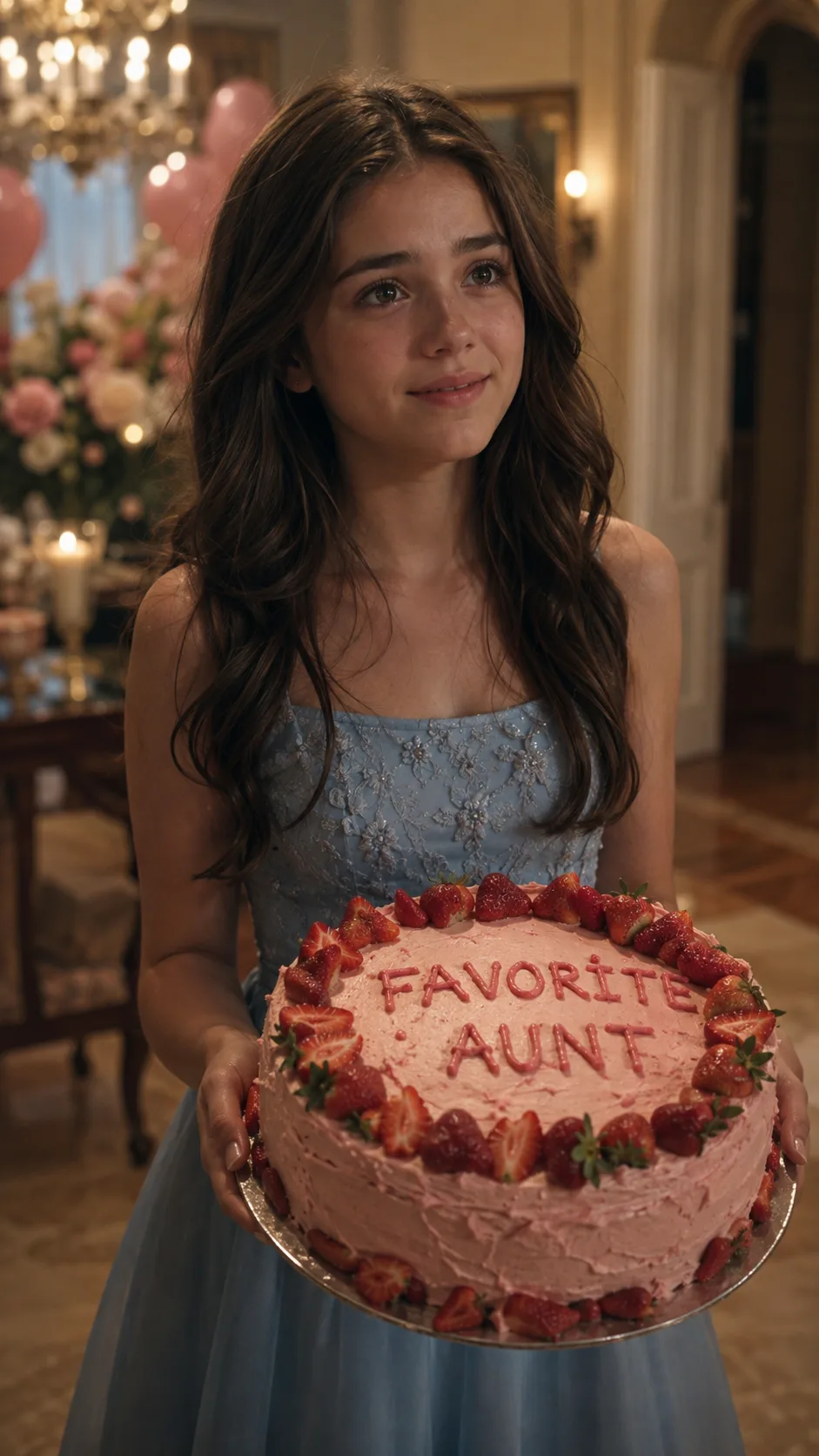
The next day, Wren changed Talia’s contact from Favorite Aunt to Talia Vale. A small edit. A huge funeral.
Two weeks later, Hartwell held the final review. Wren chose not to go. She stayed with my sister Mara at the bakery, rolling pie dough and pretending not to watch the clock.
Calder and I attended with Vivian.
Marion’s decision was precise. Bexley was permanently removed as liaison. Unsupported reimbursements would be repaid. Talia’s future access would require direct school billing and independent documentation. No trust representative could contact Wren without our consent until she turned eighteen.
Then Marion read the final paragraph.
“Given the adopted minor beneficiary’s demonstrated interest in culinary education, Hartwell will reserve a separate development fund for Wren Mae Hart, administered independently and insulated from prior family liaison influence.”
Calder closed his eyes.
Bexley stood so fast her chair struck the wall.
“That girl gets rewarded?”
The room went still.
Marion looked over her glasses.
“No, Mrs. Vale. That girl gets protected.”
Bexley’s attorney touched her arm.
Too late.
Because the court reporter had captured every word.
FOR THE PEOPLE WHO STAYED
Justice did not arrive with sirens.
It arrived as emails, repayment schedules, revised trust procedures, and a Hartwell letter louder than shouting.
Bexley repaid the fake dessert invoice first. Then the “image restoration” reimbursement. Then smaller unsupported expenses hidden under prettier labels. Bram signed half the checks because pretending not to know can still become expensive when your name appears on approvals.
Talia kept her conservatory place, but only through direct-billed tuition support, strict documentation, and a part-time job. No housing supplement. No lifestyle reimbursements. Maybe that was growth. Maybe exhaustion. We did not make Wren decide.
Bexley tried once to send a holiday card through a cousin. Calder mailed it back unopened with a note from Vivian: Please respect the no-contact boundary regarding a minor child.
The hardest part was watching Wren review old memories for hidden prices. Sometimes she asked, “Was that real?” Sometimes she did not want an answer.
Calder never rushed her.
“I kept thinking love meant waiting for them to become better,” he told me one night. “But waiting cost her.”
“Yes,” I said.
He looked at me, expecting comfort.
I did not give the easy kind.
“But you stopped.”
His eyes filled. “Late.”
“Late matters less than never.”
Spring came. Wren took a pastry class through the independent account Marion created. Calder drove her himself. She came home with six éclairs, two slanting under too much chocolate glaze. He picked the ugliest one and said it had character. Wren laughed for the first time without testing the room.
On her fifteenth birthday, she made one small cake just for us.
Chocolate. Raspberry filling. White letters.
STILL HERE.
Calder turned toward the sink when he saw it.
“Dad,” she said gently.
He cleared his throat. “That’s a strong cake.”
“It knows,” she said.
Months later, Talia’s apology arrived through her attorney. No hearts. No nickname. No request. Talia admitted she mocked the cake, asked Wren to help restore funding, and let Bexley influence her without blaming Bexley for her choices.
At the end, she wrote:
I do not expect forgiveness. I am sorry I made you feel like your heart was a prop in my life.
Wren folded the letter.
“Do I have to answer?”
“No,” Calder said.
“Do you want me to?”
“No.”
She placed it in a drawer. “That’s where I put things I’m not ready to decide about.”
Years moved forward because they always do.
At eighteen, Wren earned a scholarship to a culinary program two states away. Her portfolio included a photo series called Things People Tried to Throw Away: cracked tart shells, collapsed sponge cake in jars, broken sugar flowers arranged like a garden after rain.
The final photo showed a vanilla bean cake with strawberry filling and pink stars.
No caption.
It needed none.
The night before she left, she baked in our kitchen one last time as a child under our roof.
On top, in careful letters, she had written:
FOR THE PEOPLE WHO STAYED.
We ate it on the back porch with paper plates on our knees. Calder took one bite and said it was the best cake he had ever tasted.
This time, Wren believed him.
Before bed, Talia texted, Good luck. You’ll be amazing.
No nickname. No pressure.
Wren smiled faintly and did not reply.
Maybe someday she will. Maybe she won’t. Either way, she no longer confuses being admired with being loved.
We call it the day Calder stood up.
Not because standing fixed everything. Wren still remembers the trash can, Talia looking away, and adults staring at plates while her face burned.
But she also remembers what happened next.
The chair scrape. The sealed folder. The court order.
The sentence Calder said in front of everyone who tried to make her temporary.
My daughter.
And in our house, no one throws away what Wren makes.
Not cake. Not effort. Not her place. Not her heart.
THE END.
Chapter complete
You have reached the end of this chapter.
Continue reading
A few more worlds to get lost in after this chapter.




