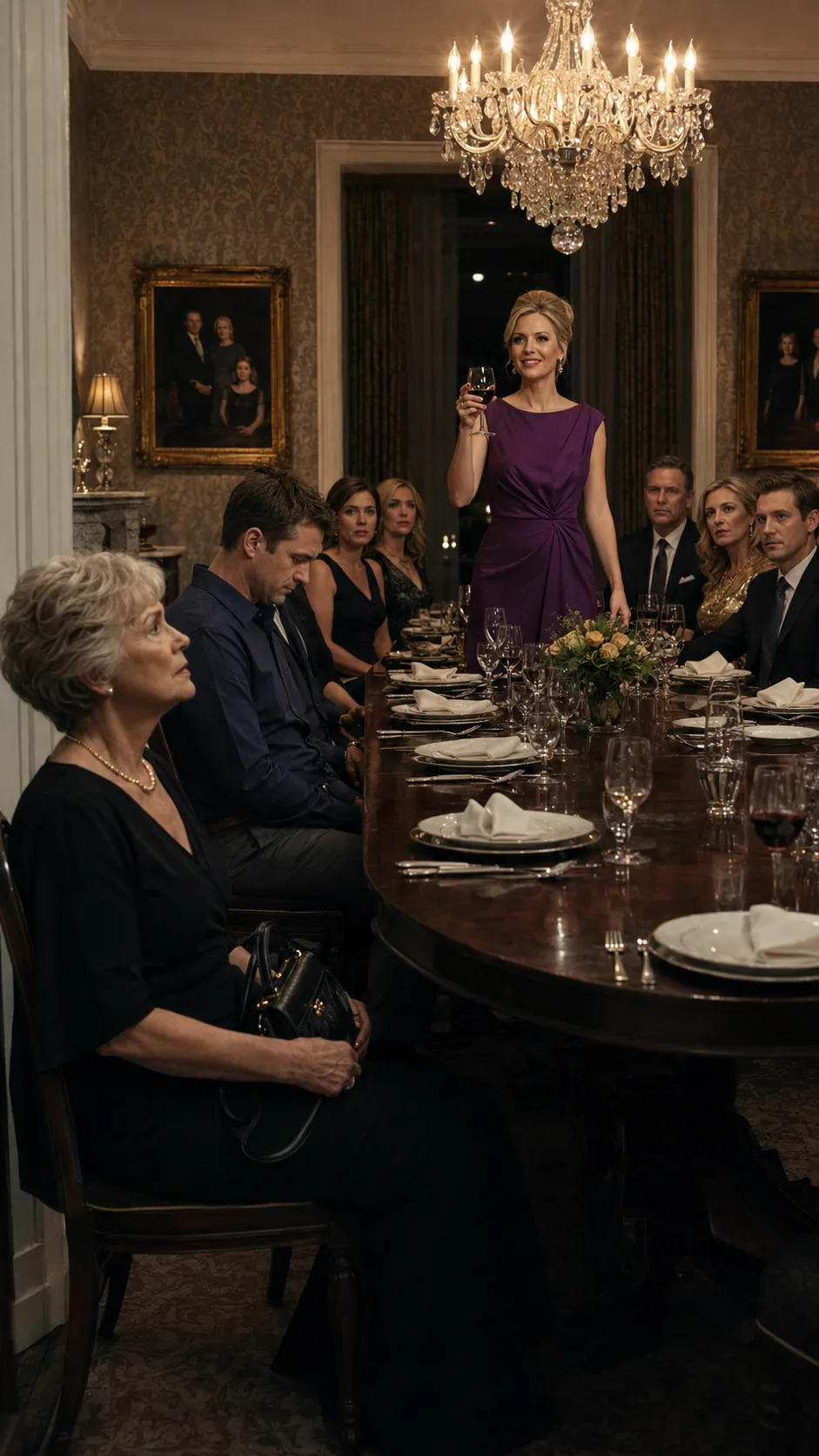
PART 3: THE HOUSE THAT FINALLY BELIEVED ME
Sunday morning in Riverside had a way of pretending the world was gentle.
Chapter 3
PART 3: THE HOUSE THAT FINALLY BELIEVED ME
Sunday morning in Riverside had a way of pretending the world was gentle.
Sprinklers clicked like metronomes. Lawns glistened. A dog barked once and stopped, as if even the animals here had manners. The neighborhood women jogged in matching sets, waving like they were auditioning for a commercial.
And behind my curtains, I watched it all like a new resident of a country I’d never been allowed to enter.
This house looked different when it was quiet.
No music drifting from Lisa’s speaker. No sharp heels tapping across hardwood like punctuation. No laughter that sounded like it had teeth. Just sunlight on my floor, and the faint smell of lemon cleaner and fresh paint—because I’d had the walls redone the week after she left. Not to erase her, exactly. More like to remind the rooms they belonged to me again.
I stood at the kitchen island with a mug of coffee warming my palms, listening to the hum of the refrigerator, and it
hit me—how long I’d lived on pause. How many years I’d been “careful,” “reasonable,” “low-maintenance,” like those were virtues instead of survival strategies.
The phone buzzed once against the counter.
A text from Timothy.
Can we talk today? I’m coming by at 2. Please.
Please.
That word looked strange coming from my son. It should have been familiar. He used to say it when he wanted extra pancakes. When he needed a ride. When he was asking, with wide eyes, if I was mad about something he’d broken.
But grown men don’t say please unless they’re scared.
Or sorry.
Or both.
I didn’t answer right away. I wasn’t being cruel. I was being cautious. Lisa had taught me, in the ugliest way possible, that if you rush to soften things, people don’t learn. They just repeat.
I set the phone down and walked through the living room, my steps slow,
letting myself feel what it meant to take up space. I ran my fingers along the mantel. I adjusted a framed photo I’d brought from my apartment—Frank in his work jacket, smiling like he knew a secret. He always did.
By the time the doorbell rang at two, my coffee was cold and my spine was straight.
Timothy stood on my porch like he didn’t know whether to knock again or apologize with his body. He’d lost weight. His hair looked uncombed, like he’d been running his hands through it every time he remembered something he’d tried not to remember.
He held a small paper bag from my favorite coffee shop—the one downtown with the flaky pastries and the barista who calls everyone “hon.”
An offering.
He used to bring me things when he was little, too. Dandelions. Smooth rocks. A broken toy he wanted me to fix.
Now it
was coffee and guilt.
“Ma,” he said, voice low.
I opened the door wider but didn’t step back.
He glanced past me into the house. You could see it in his eyes—the shock of seeing the place without Lisa’s stamp on it. Without her candle scents, her curated throw pillows, her staged life.
Like he was realizing he’d never actually lived here. He’d just existed in her version of it.
“I brought you—” he started.
“I see,” I said, nodding at the bag. “Thank you.”
He hesitated. “Can I come in?”
I held his gaze for one full beat longer than he wanted.
Then I stepped aside.
He walked in slowly, like someone entering a church after years away. His shoes were quiet on the floor. He kept looking around, as if expecting Lisa to appear and tell him he was standing wrong.
He sat on the edge of the couch instead of sinking in.
“I didn’t know where to start,” he said. “I still don’t.”
“That’s honest,” I replied. “Keep going.”
His throat moved like he swallowed a rock. “I’ve been replaying the dinner. The first one… the one where she sent you to the back. I can’t stop hearing it.”
I said nothing. Silence was my new skill.
“I should’ve stopped her,” he whispered. “I should’ve stood up and said, ‘That’s my mother.’ I should’ve—”
“But you didn’t,” I said, not harsh. Just true.
His eyes filled, quick and frustrated. He blinked hard.
“I didn’t,” he admitted.
He reached into his jacket and pulled out an envelope. White. Crisp. Too formal for Sunday.
“What is that?” I asked.
He set it on the coffee table like it weighed a hundred pounds. “A letter from Harold. About the mortgage and the transfer and… everything.”
I stared at the envelope, then back at him.
“And?”
“And I read it,” he said, voice cracking. “I read it three times. I drove by the county clerk’s office and looked it up myself because I kept thinking it had to be a mistake. That maybe you didn’t mean it. That maybe Lisa—”
He stopped, jaw tight.
“That maybe Lisa what?” I prompted.
“That maybe she’d find a way to undo it,” he finished. “Like she always does.”
There it was. The truth hiding under everything else.
Lisa always got her way.
Until she didn’t.
Timothy rubbed his palms on his jeans like he couldn’t get clean. “Ma… I don’t even know how to ask this without sounding awful.”
“Try,” I said. “If it’s awful, we’ll deal with it.”
He looked up at me, eyes raw. “Did you do all this because you hate her?”
I didn’t answer immediately. Because hate would have been easy. Hate would have been dramatic. Hate would have been simple, and my life had never been simple.
“No,” I said finally. “I did it because I hated who I became around her.”
His face shifted. Confused, then pained.
“I became a woman who accepted humiliation,” I continued. “A woman who stayed quiet to keep peace. A woman who let people treat her like she was lucky to be tolerated.”
Timothy lowered his head.
“And you,” I added, softer but sharper, “became a man who watched it happen.”
He flinched like the words slapped him.
“I know,” he whispered.
We sat in silence. The house around us felt like it was listening.
Outside, a lawn mower started up somewhere down the street—normal life continuing, like it always does, even when your family falls apart.
Timothy finally looked up. “Lisa moved in with her parents,” he said. “She took her clothes, her bags, her… everything. And before she left, she said something.”
I leaned back slightly. “What did she say?”
He swallowed. “She said… ‘If you choose your mother over me, you’re choosing money. And if you’re the kind of man who can be bought, you’re pathetic.’”
He laughed once, bitter and broken. “Like I was some prize she was returning for store credit.”
My chest tightened—not because I felt sorry for Lisa, but because I saw how deep her poison had sunk into him. How she’d trained him to believe love was a transaction, loyalty a bargain.
“And what did you say?” I asked.
Timothy’s eyes met mine. “I said… ‘I’m not choosing money. I’m choosing my mother.’”
The room went still again.
My throat burned. I didn’t let it show.
“That’s a good sentence,” I said carefully. “Now prove it.”
He nodded, wiping his face quickly like a man ashamed of tears. “I will. I want to. I don’t want to be… that guy anymore.”
“You mean the guy who looks away,” I said.
He nodded again. “Yes.”
I stood and walked into the kitchen. Not because I needed space—because I wanted to see what he’d do when I moved and didn’t ask him to follow.
He followed anyway.
I poured fresh coffee. I set two mugs down. Simple. Ordinary. The way real reconciliation starts—without speeches, without drama, without an audience.
He stared at the mugs like they were a miracle.
“I forgot what this feels like,” he said quietly.
“What?” I asked.
“Being in a room with you,” he said. “Without tension. Without trying to manage someone else’s reaction.”
I kept my voice neutral. “That’s what happens when you live under someone’s rules.”
He nodded, shame heavy on his face.
“Ma,” he said, “why did you keep paying? Why didn’t you stop when she started treating you badly? Why didn’t you tell me?”
I took a slow sip of coffee. I could’ve given him the easy answer. I could’ve said I didn’t want conflict. I didn’t want to make him choose. I didn’t want to lose him.
But easy answers are how you end up back in the back room.
“I kept paying because I thought I was protecting you,” I said. “I thought if you stayed comfortable, you’d be happy. And if you were happy, you’d be kind.”
He winced.
“And I didn’t tell you because I wanted to believe you’d defend me without needing to know I was useful to you financially,” I continued. “I wanted to know if your love was real.”
Timothy’s eyes filled again, slower this time. “It was real,” he whispered. “It is real. I just… I let her bury it under her nonsense.”
I stared at him for a long moment.
“Do you know what hurts the most?” I asked.
He shook his head slightly.
“It’s not the dinner,” I said. “It’s not the back room. It’s not even Lisa.”
He held his breath.
“It’s that you watched me shrink,” I said softly, “and you got used to it.”
That sentence landed hard. I saw it in his face—like a flash of memory, a dozen moments strung together. Lisa’s comments. My forced smile. His silence. His relief when I didn’t make a scene.
He pressed his hands to his eyes. “God… Ma.”
I let him sit in it. Because growth requires discomfort. It’s like a muscle. If you don’t feel the burn, you’re not changing.
After a while, he lowered his hands. “What do you want from me?” he asked, voice small.
The question sounded so much like the little boy again that my heart twisted.
But I didn’t answer like the old me would have. The old me would’ve said, “Nothing, honey. Just be happy.”
Now I told the truth.
“I want you to rebuild,” I said. “Not with promises. With choices. I want you to learn how to be a man who doesn’t outsource his spine to his wife.”
His jaw tightened. He nodded.
“And I want you to understand something,” I added, leaning in slightly. “You don’t get access to me just because you share my blood. You get access to me if you treat me like I’m human.”
Timothy swallowed hard. “Okay.”
“And if Lisa comes back?” I asked.
His eyes flickered. “I… I don’t know.”
“There it is,” I said calmly. “You don’t know.”
He looked ashamed. “I’m not saying I’ll take her back. I’m saying I’m confused. I’m grieving. I didn’t think my marriage would… explode.”
I nodded. “Grieve. But don’t confuse grief with weakness.”
He stared at his coffee.
“You know what she said about you choosing money,” I continued. “That’s who she is. She thinks everything is for sale. And she treated me the way she did because she believed I couldn’t do anything about it.”
Timothy’s voice broke. “I hate that I let her.”
“Good,” I said. “Hate that part of yourself. Then outgrow it.”
A soft knock interrupted us. Not the doorbell—actual knuckles on wood.
We both turned.
Jessica stood at the front door, holding a pie like it was a peace offering and a social weapon at the same time. She wore sunglasses and a smile that said she knew everything.
“Well,” she said, stepping in without waiting, “I see I didn’t miss the post-drama meeting.”
Timothy’s face went red. “Jessica.”
“Timothy,” she replied, polite as icing. Then she looked at me. “Margaret, I brought peach. Because if you’re going to reclaim a house, you should do it with dessert.”
I laughed—one quick, surprised sound. It felt good. Like a window opening.
Jessica glanced between Timothy and me. “So,” she said lightly, “are we rebuilding or burning?”
“Rebuilding,” I said.
Timothy nodded. “Rebuilding.”
Jessica’s smile softened, just a little. “Good. Because Riverside is already talking, and I’d rather they talk about your comeback than your heartbreak.”
Timothy looked like he wanted the floor to swallow him.
Jessica set the pie on the counter and leaned in, lowering her voice as if she was sharing the town’s secret.
“Lisa’s telling people you had a ‘senior moment,’” she said, eyes sharp. “That you got confused and angry and did something ‘impulsive.’”
My stomach tightened, but my face stayed calm.
“That’s cute,” I said. “Tell her I’m clearer than I’ve ever been.”
Jessica smiled like a cat. “Oh, I will.”
Timothy’s hands clenched. “She’s doing that?”
“She’s doing what she always does,” I said. “Controlling the story.”
I turned to him. “And this is where you decide who you are.”
He looked up. “What do you mean?”
“If you stay silent while she paints me as unstable,” I said, “then nothing changed. Not really.”
His face went pale.
Jessica watched him carefully, like a referee.
Timothy swallowed. “I’ll handle it.”
“How?” I asked.
He hesitated.
I gave him a look—no anger, just expectation.
“I’ll… I’ll tell the truth,” he said. “To whoever asks. To my family. To her friends. I’ll say she humiliated you and I didn’t stop her. I’ll say you didn’t snap. You stood up.”
Jessica gave a small approving nod.
“And to Lisa?” I asked.
Timothy’s throat worked. “I’ll tell her she doesn’t get to use my mother as a villain to make herself a victim.”
I nodded. “Better.”
Jessica clapped her hands softly once. “Look at that. A spine growing in real time. Love to see it.”
Timothy exhaled like he’d been holding his breath for years.
That afternoon, he didn’t ask me for anything. Not money. Not forgiveness. Not a place to stay.
Instead, he did something that told me more than any apology could.
He offered to help me hang the curtains in the living room.
Not because he wanted credit. Because he wanted to contribute.
We worked side by side in silence, the way we used to when he was little and I was painting a bedroom wall. He held the ladder steady. I measured twice. He handed me the drill.
At one point, he glanced at me and said quietly, “You look… different.”
I kept my eyes on the bracket. “Do I?”
“You look like you’re not afraid,” he said.
I paused. I set the drill down. I looked at him.
“I’m not,” I said.
He swallowed hard. “I’m glad.”
That night, after he left, I stood alone in the dining room.
The table was bare now. No linen runner Lisa picked. No place settings arranged like a magazine photo shoot. Just wood and air and the faint echo of voices that used to fill it.
I walked to the head of the table and placed my hand on the chair.
I remembered Lisa standing here, smiling, sending me away like I was disposable.
I remembered the silence of the room.
Then I remembered my own voice, calm and clear, changing everything with one envelope.
I didn’t feel triumph.
I felt peace.
Because revenge is loud and messy and hungry. It never fills you up.
But boundaries? Boundaries feel like quiet strength. Like breathing without permission.
My phone buzzed again.
A new message.
Unknown number.
I opened it.
Margaret, this is Lisa. We need to talk.
I stared at the screen. The audacity was almost impressive.
A second message followed immediately.
You embarrassed me in front of everyone. This has gone too far.
I laughed under my breath.
Too far.
As if she hadn’t been sending me to the back room. As if she hadn’t been plotting my exile like I was an eyesore.
I didn’t respond.
I turned the phone over on the table.
Because the truth was simple:
Lisa wanted a conversation where she still held power.
And I had learned, finally, that I don’t attend meetings where my dignity is on the agenda.
I went upstairs to my bedroom—my bedroom—and opened the window. Cold air drifted in, smelling like distant fireplaces and cut grass.
Somewhere down the street, a couple laughed on their porch.
Somewhere else, someone argued behind closed doors.
Life.
I slid the gold necklace off my neck and laid it on the dresser beside Frank’s photo.
“Look at me,” I whispered, not to the picture, but to the woman I had been for too long. “Look what we did.”
And for the first time since Frank died, I didn’t feel like I was surviving.
I felt like I was living.
The next morning, Riverside woke up to a new kind of rumor.
Not about a “senior moment.”
Not about a “difficult mother-in-law.”
About a woman who refused to be sent to the back room ever again.
And that rumor—whether they meant it kindly or not—was finally mine to own.
***THE END.***
Chapter complete
You have reached the end of this chapter.
Continue reading
A few more worlds to get lost in after this chapter.




