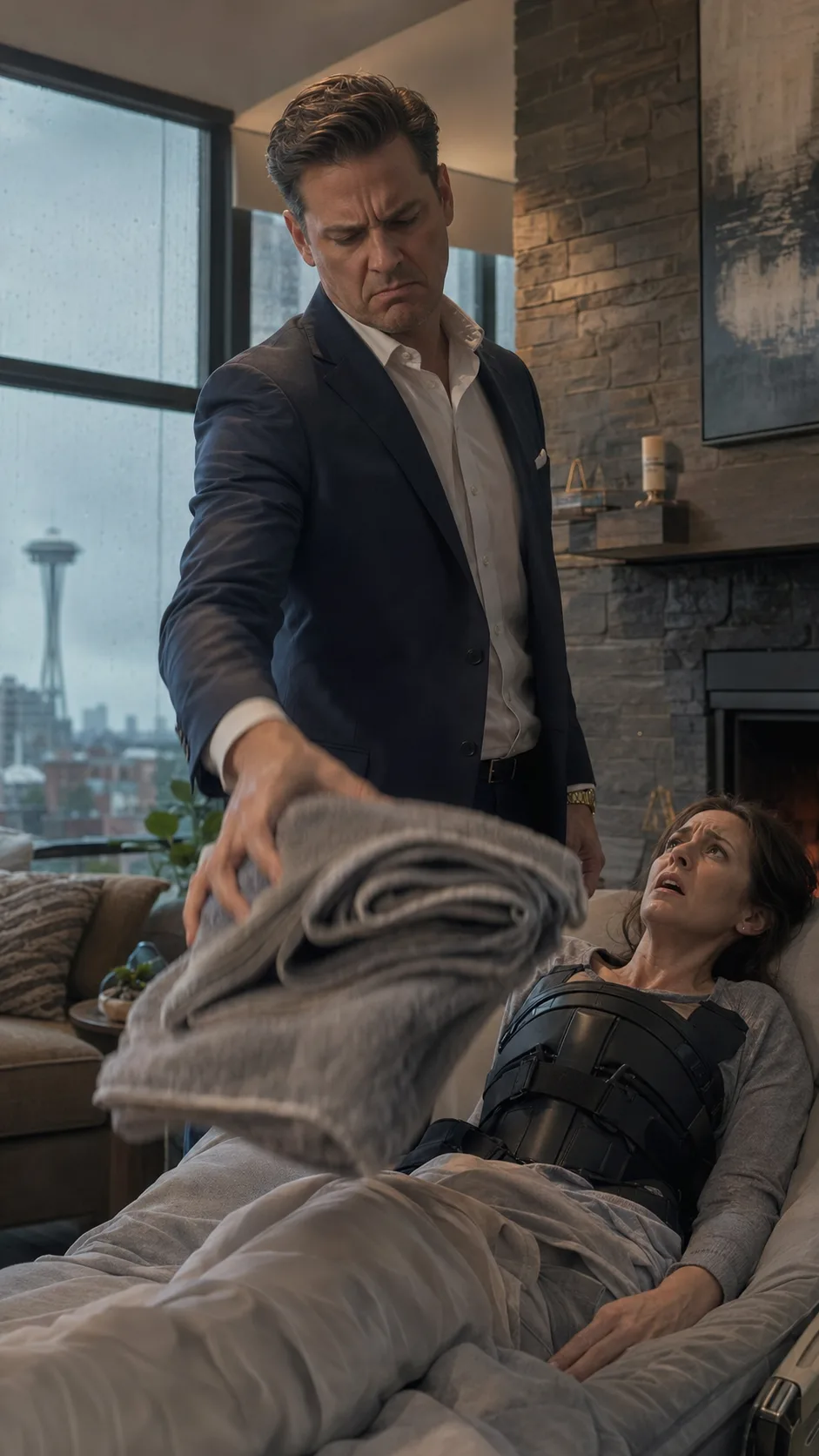
PART 2 — The Ambush Backfires
My first call went to Mason Lock & Security, the emergency commercial locksmith my firm used for office breaches.
Chapter 2
PART 2 — The Ambush Backfires
My first call went to Mason Lock & Security, the emergency commercial locksmith my firm used for office breaches.
“I need every exterior lock changed immediately,” I told the dispatcher. “Triple rate. No delays.”
My second call went to Evergreen Surgical Recovery, a private post-operative facility in downtown Seattle.
“I need medical transport within forty minutes,” I said. “Spinal precautions. Discreet entrance.”
My third call went to Arthur Harrison, the attorney who managed my grandfather’s trust.
Arthur listened without interrupting.
Then his voice changed.
“Do not sign anything,” he said.
“I won’t.”
“Do not confront Grant alone.”
“I won’t.”
“Can you forward me the messages?”
“I’m photographing them now.”
I used my phone to capture every notification, every name, and every visible line in the group chat. Then I emailed the images to Arthur and uploaded them to an encrypted cloud folder.
The locksmith arrived in twenty-two minutes.
He did not ask why a woman in a spinal brace needed commercial deadbolts installed on a Tuesday afternoon.
He simply
worked.
Front door.
Garage entry.
Patio doors.
Side gate.
He replaced every cylinder and erased every smart-access code.
When he finished, he placed two keys in my palm.
“No duplicates,” he said.
“Perfect.”
The medical transport team arrived six minutes later.
Two paramedics transferred me from the bed to a stabilized stretcher. Every movement hurt, but it was controlled pain, clean pain, pain with purpose.
Before they wheeled me out, I looked around the living room.
Grant’s shoes were by the stairs.
His golf clubs leaned against the hallway wall.
A framed wedding photo sat on the mantel, both of us smiling beneath white roses.
I felt nothing when I looked at it.
That frightened me less than it should have.
As the transport van pulled away, I opened the security app on my phone.
The house cameras showed the empty driveway, the wet front steps, and the dark windows.
At exactly 5:07 p.m., a white passenger van turned onto the property.
Grant climbed out first.
Diane followed in a champagne-colored coat, carrying a blue leather folder.
Brooke stepped out behind her, filming herself on her phone.
Seven relatives unloaded suitcases and garment bags as if they were arriving at a resort.
Grant marched to the front door with a smile.
He entered his old access code.
The keypad flashed red.
He tried again.
Red.
He pulled out his key.
It did not fit.
His smile disappeared.
From the back of the medical van, I watched my husband realize that the woman he thought was trapped in bed had already moved the battlefield.
He called me.
I answered on the fourth ring.
“Natalie,” he hissed, “what did you do?”
I looked through the rear windows at the Seattle skyline growing closer.
“I took your advice,” I said.
“What advice?”
“I
stopped being difficult.”
Then I ended the call.
Grant called back eleven times.
I declined every call.
On the security feed, Diane paced across the porch while Brooke complained about the rain and the other relatives dragged luggage under the overhang.
Grant pounded on the front door.
“Natalie!” he shouted. “Open the door!”
The camera microphone captured every word.
He still believed I was inside.
That belief made him furious.
Diane turned toward my next-door neighbor, Mrs. Alvarez, who had stepped onto her porch to investigate the noise.
“My son owns this house,” Diane announced loudly. “His wife is drugged and unstable. She locked us out during a medical episode.”
Mrs. Alvarez looked at the broken expressions around the driveway.
Then she looked directly into my camera.
She knew the truth about the property. She had attended the neighborhood association meeting when the trust documents were verified.
“I suggest you call whoever actually owns the house,” she said.
Then she went inside and locked her door.
Diane’s face tightened.
Grant moved around the side of the house.
I changed the feed to the rear patio.
He yanked the sliding door handle. The new deadbolt held.
He pulled again, harder.
Brooke followed him, still filming.
“Just break it,” she said. “It’s your house.”
Grant looked at the cast-iron planter beside the steps.
My grandfather had given it to me when I bought the property. In spring, it held white climbing roses.
Now the vines were bare, wrapped tightly around a cedar support.
Grant grabbed both handles and lifted.
Even through the phone, I could hear Diane cheering.
He swung the planter into the glass.
The first impact cracked the outer pane.
The second shattered it.
Glass spilled across the kitchen floor.
The family shouted in triumph.
Grant reached through the opening for the interior lock.
He did not know the security system had sent a silent home-invasion alert the second the glass broke.
He did not know the county records linked the property to my trust.
He did not know I had already emailed the responding precinct a copy of the deed through Arthur’s office.
He only knew the door was finally open.
Then red and blue lights washed across the backyard.
Two patrol cars stopped at the curb.
A third blocked the driveway.
Grant froze with one arm through the broken glass.
“Step away from the door!” an officer shouted.
The relatives went silent.
Grant pulled his arm back and raised his hands.
For three seconds, he looked terrified.
Then he rearranged his face into the smooth, superior expression he used with restaurant servers and junior employees.
“Officers, thank God,” he called. “This is a misunderstanding. I live here.”
The lead officer stepped closer.
“Did you break that door?”
“It’s my property.”
“That wasn’t my question.”
Grant glanced at his mother.
Diane stepped forward immediately.
“My son is the homeowner,” she said. “His wife is inside, heavily medicated and mentally confused. We flew in to help, and she locked us out.”
The officer looked through the broken doorway into the dark kitchen.
“Is anyone inside?”
“Yes,” Grant said.
“No,” I said through the exterior speaker.
Every head snapped toward the camera.
I had activated the two-way audio from my private recovery suite.
Grant’s face drained of color.
The officer turned toward the lens.
“Ma’am, are you the property owner?”
“I am the sole beneficiary and authorized resident of the trust that owns the property. My attorney has already sent documentation to dispatch. I am not inside. I secured the house before leaving for medical care.”
Grant stepped toward the camera.
“Natalie, stop this right now.”
The officer put out one arm, blocking him.
I continued.
“The man in the navy jacket broke the patio door after being denied access. The woman holding the blue folder participated in a plan to obtain my signature on a fraudulent deed while I was under narcotic medication. I have preserved the messages.”
Diane dropped the folder.
It hit the wet patio and burst open.
White pages slid across the boards.
One page stopped near the officer’s boot.
He bent down and picked it up.
Even through the grainy camera angle, I saw the bold heading at the top.
QUITCLAIM DEED.
Grant moved quickly.
“It’s estate planning,” he said. “My wife agreed to put the house into both our names.”
“I did not,” I replied.
“Ma’am, do you want these individuals removed from the property?” the officer asked.
“Yes.”
Grant’s head jerked toward the camera.
“Natalie.”
“Yes,” I repeated. “Immediately.”
The officer ordered everyone to collect their luggage and leave.
Diane began shouting about marital rights.
Brooke claimed they had nowhere to go.
Grant argued that his driver’s license listed the address.
The officer checked the property records on his cruiser computer.
When he returned, his tone was flat.
“Mr. Mercer, you are not an owner, trustee, or authorized security contact. At most, you are an occupant whose access has been revoked by the lawful property representative.”
Grant stared at him.
“That’s my wife.”
“That does not make the deed yours.”
“I pay bills there.”
“Which bills?”
Grant said nothing.
The officer looked at the shattered door.
“You also caused significant property damage. The owner may pursue charges.”
Diane grabbed Grant’s sleeve.
“Fix this,” she whispered.
He could not.
For the next fifteen minutes, the people who had arrived expecting wine, guest rooms, and a home-cooked dinner dragged their luggage back through the rain.
Brooke kept her phone down.
Uncle Wes complained that his knee hurt.
Two cousins argued over who would pay for a hotel.
Diane refused to look at anyone.
Grant loaded every suitcase while three police officers watched.
When the van finally left, my recovery-room nurse adjusted my IV and asked whether I needed something for anxiety.
“No,” I said.
My pulse was steady.
My hands were steady.
For the first time in years, my life felt steady.
A text appeared from Grant.
You humiliated me. I’m draining the joint account and putting everyone in the best hotel in Seattle. You’ll pay for this.
I smiled.
The joint account had once held one hundred twenty-three thousand dollars.
Most of it came from a performance bonus I had earned after uncovering procurement fraud at a manufacturing company.
Grant had contributed eight hundred dollars over three years.
The morning before my surgery, I had noticed two unusual login attempts on the account.
My instincts had not allowed me to ignore them.
I transferred my documented contribution into a private account and left his share, plus interest.
The remaining balance was nine hundred forty-six dollars.
Grant did not know that yet.
But he was about to.
Through our shared location service, I watched the passenger van drive toward downtown Seattle.
It stopped outside a luxury rental agency near the waterfront.
Twenty minutes later, my phone received an automated alert.
CARD DECLINED.
Then another.
WIRE TRANSFER FAILED: INSUFFICIENT FUNDS.
A third alert showed the account balance request.
I pictured Grant standing beneath the soft lights of a marble lobby, his mother and sister watching as he discovered the money was gone.
At 7:13 p.m., Brooke posted a video online.
Her mascara was smudged. Rain streaked the windows behind her. Diane sat in the background with one hand pressed dramatically to her chest.
“We came to Seattle to care for my sick sister-in-law,” Brooke said through practiced tears. “But Natalie had a mental breakdown. She locked my elderly mother outside, drained the family savings, and abandoned her husband.”
The video spread quickly through our shared social circle.
Messages began arriving.
Some asked whether I was safe.
Others called me cruel.
One woman from our country club wrote that no decent wife would leave her husband stranded.
My aunt left a voicemail saying marriage required submission.
I answered none of them.
I took screenshots.
I downloaded the video.
I preserved comments, timestamps, and names.
Corporate auditing had taught me something most people never learn.
Noise is not evidence.
Anger is not evidence.
A confident lie is not evidence.
Documents are evidence.
Patterns are evidence.
Recorded actions are evidence.
By eight o’clock, Arthur had enough material for a restraining-order petition, a defamation warning, and a property-damage claim.
By nine, Grant and his relatives had checked into a failing motel near an industrial exit south of downtown.
By ten, I had eaten soup, completed a short assisted walk, and signed the first draft of my divorce filing electronically.
Click the blue “PART 3” below to read the next part: 👉 PART 3 👈
Chapter complete
You have reached the end of this chapter.
Continue reading
A few more worlds to get lost in after this chapter.




