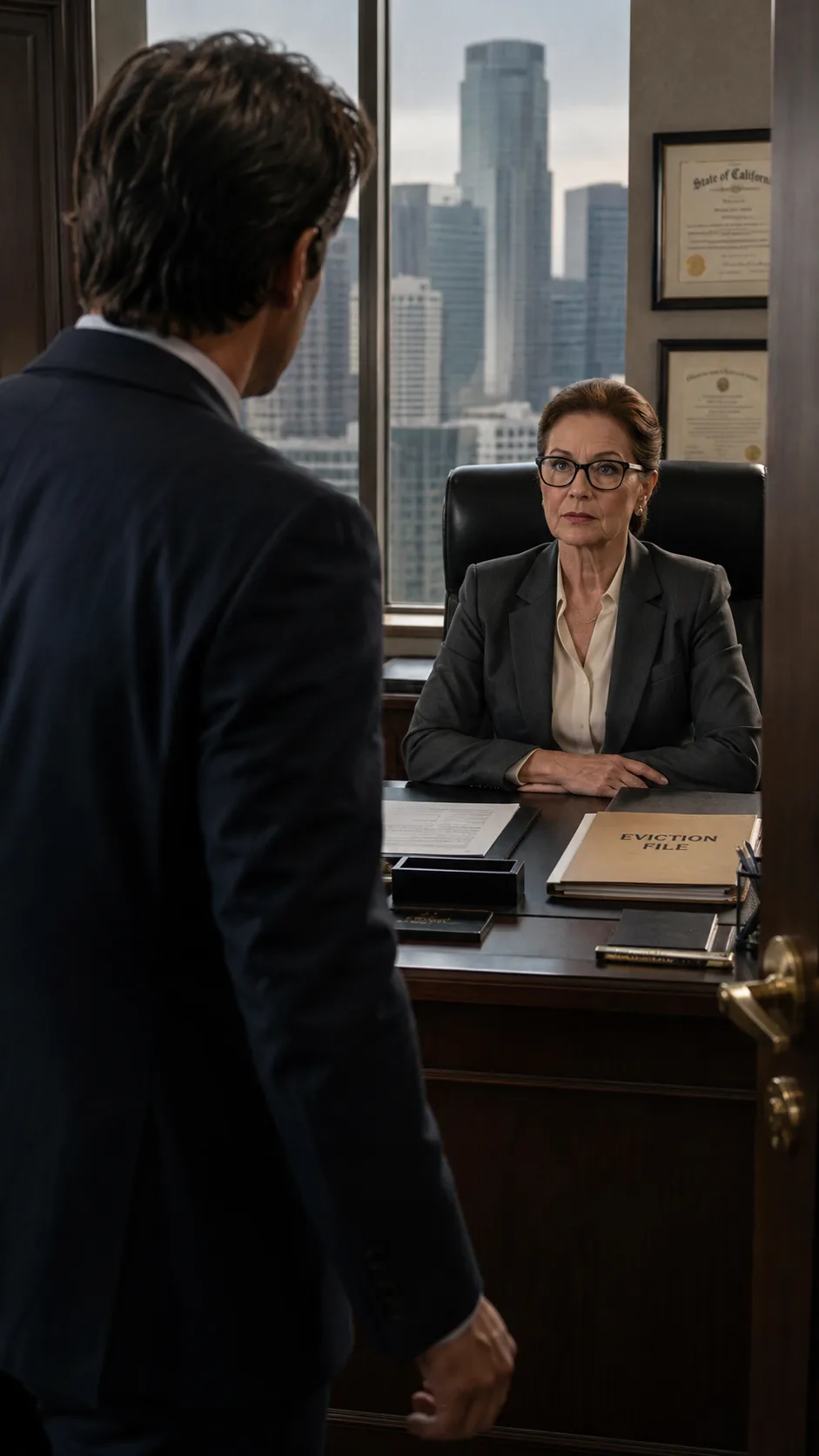
Robert’s face lost its color.
Chapter 3
Robert’s face lost its color.
“What?”
“The building where you live belongs to me,” Helen said. “So do twelve other properties in this city.”
He gripped the back of the chair.
“That’s impossible.”
“Your father built the estate over thirty years. He left everything to me.”
Robert collapsed into the chair.
“Dad never told me.”
“He didn’t tell me either.”
Confusion twisted into panic.
“Why didn’t you say something?”
Helen leaned forward.
“Why would I have told you? So Dawn could treat me like your landlord instead of your servant?”
“That’s not fair.”
“Fair?”
Her voice sharpened.
“Your wife struck me with a boiling ladle. You heard me cry out, and you turned up the television.”
Robert looked away.
Helen continued.
“You watched me bleed and asked what I had done. Then you threw me out with two hundred dollars.”
“I was under pressure.”
“You were a coward.”
He flinched.
The office fell silent.
Finally,
Robert whispered, “If we had known you owned the building—”
Helen’s palm struck the desk.
“That is exactly the problem.”
Robert stared at her.
“You should not need to know a woman is wealthy before deciding she deserves respect. I was your mother. That should have been enough.”
His eyes filled with tears.
“I’m sorry.”
“Are you sorry because I suffered, or because I can evict you?”
He opened his mouth but could not answer.
Helen felt no triumph.
Only exhaustion.
Robert covered his face.
“I don’t know,” he admitted. “And that terrifies me.”
His shoulders began to shake.
“I don’t know what kind of man I became. I let Dawn decide everything because confronting her was difficult. I sacrificed you because you were the safer person to disappoint.”
At least it was honest.
Helen sat back.
“Where is Dawn?”
“She left.”
Robert wiped his face.
“She said she refused
to stay with a loser who couldn’t pay the rent.”
“And your job?”
“I lost it two weeks ago. I was late too many times. I couldn’t concentrate.”
He laughed bitterly.
“I have forty thousand dollars in debt. My credit is destroyed. In two days, I will be homeless.”
He looked at Helen.
“Just like you were.”
Helen’s expression remained still.
“No, Robert. Not just like me.”
He frowned.
“You still have choices. You are healthy. You can work. You understand what is happening.”
Her voice softened without becoming gentle.
“I was grieving your father. I had been assaulted. I believed my only child no longer cared whether I lived or died.”
Robert began crying openly.
“Where did you go after I made you leave?”
Helen told him about the motel, the money running out, and the receptionist ordering her to leave.
She told him about dragging four suitcases through
the heat.
She described sleeping upright on a park bench because she feared someone would steal her purse.
She told him about the homeless man who shared stale bread with her.
She told him about searching through garbage behind restaurants.
Robert’s face crumpled with every sentence.
“I sent you messages,” she finished. “You read them. You never answered.”
“Dawn told me to give you space.”
“And you obeyed because silence was convenient.”
Robert bowed his head.
“Dad would hate me.”
“Your father loved you,” Helen said. “But love does not erase consequences.”
He looked at the eviction file.
“Is this revenge?”
Helen considered the question.
For weeks, she had called it justice. Yet she knew there had been anger in every decision.
“I wanted you to understand what it feels like to be discarded,” she said. “I wanted you to lose the comfort that allowed you to ignore everyone else’s pain.”
“Did it work?”
“You tell me.”
Robert stared at his trembling hands.
“I lost my wife, my job, my home, and my dignity.”
His voice broke.
“And I lost you.”
For the first time, Helen felt the wall around her heart shift.
Not collapse.
Shift.
“The eviction will continue,” she said.
Robert nodded slowly.
“I understand.”
“You must leave the apartment. You must find work. You must face your debts without asking me to rescue you.”
“I won’t ask for money.”
“Good.”
He stood, then stopped at the door.
“Will you ever forgive me?”
Helen looked at the son she remembered and the man he had become. Both stood before her.
“I don’t know.”
He nodded as if the answer hurt but did not surprise him.
“Can I call you someday?”
“You can try. Whether I answer will depend on what you do between now and then.”
Robert left the office alone.
He vacated apartment 301 one day before the deadline. The doorman reported that he handed over the keys without argument and left with three suitcases.
Helen renovated the apartment and rented it to a young accountant for three thousand dollars a month.
Then she moved out of the hotel and into a small house she owned in a quiet neighborhood.
It had a garden, a wooden deck, and a bright kitchen facing south.
Helen planted roses and tomatoes. She enrolled in painting classes. She started writing in a leather notebook every evening.
She also volunteered at the homeless shelter that had once turned her away because every bed was full.
Twice a week, she served soup.
One afternoon, she recognized the man who had given her bread in the park.
“Grandma,” he said. “You look different.”
Helen smiled.
“I found myself.”
Three months passed without hearing from Robert.
She wondered where he slept, whether he was eating, whether he blamed her.
She did not investigate.
For once, she allowed her adult son to carry his own life.
Then, on a Saturday morning, her phone rang.
“Hello, Mom.”
Robert sounded tired but steady.
“I have a job at a warehouse. Night shift. I rented a small studio. I’m paying my debts.”
Helen sat on the garden steps.
“I’m glad.”
“I started therapy.”
She closed her eyes.
“I’m trying to understand why I allowed Dawn to control me and why I confused avoiding conflict with being kind.”
“That is important.”
“I’m not asking you for anything,” he said quickly. “I only wanted you to know I’m trying.”
Helen looked at the roses moving in the morning breeze.
“Good.”
“Maybe someday we could have coffee.”
She remained silent for several seconds.
“Maybe.”
Robert exhaled.
“I love you, Mom.”
Helen did not answer immediately.
She had spent most of her life believing love required endless sacrifice. Now she understood that love without boundaries could become permission for cruelty.
“I know,” she finally whispered.
After the call, Helen opened her notebook and wrote:
I may forgive my son one day, but first I forgive myself for waiting so long to defend the woman I was.
She looked around the garden she had created.
She was seventy-one years old.
She owned thirteen properties.
But her greatest inheritance was not the money Henry had left behind.
It was the courage to understand that dignity could not be borrowed, gifted, or taken away.
It had always belonged to her.
THE END
Chapter complete
You have reached the end of this chapter.
Continue reading
A few more worlds to get lost in after this chapter.




