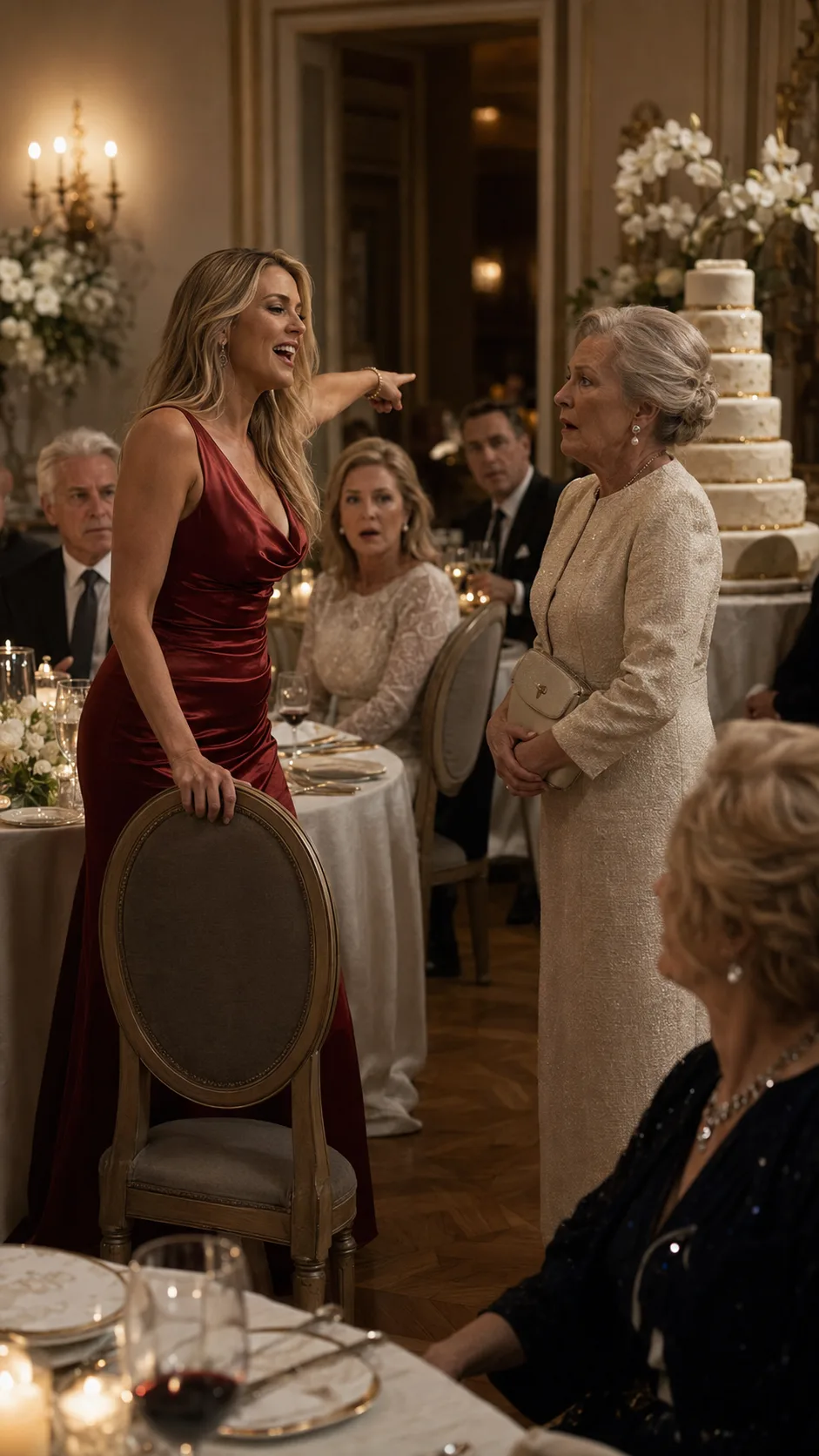
PART 2 — THE CHECK THAT EXPOSED THEIR BORROWED LIFE
Neither of them knew that Margaret Herrera owned the largest Latin textile distribution network in the country.
Chapter 2
PART 2 — THE CHECK THAT EXPOSED THEIR BORROWED LIFE
Neither of them knew that Margaret Herrera owned the largest Latin textile distribution network in the country.
Neither of them knew that my warehouses had supplied hotel groups, hospital systems, school districts, and restaurant chains in nine states.
Neither of them knew that I had spent forty-five years learning how to stay underestimated because underestimation is a kind of camouflage when everyone around you is greedy.
I drove home to my apartment.
Not to the condo Steven lived in with its imported lighting and stone waterfall island and curated shelves full of books nobody had read. To my own place. A quiet two-bedroom apartment in an older building on a tree-lined street where nobody cared what car I drove and nobody asked me why I lived beneath my means.
Steven hated my apartment.
He called it depressing.
Amber called it “a little tragic.”
They could not understand that after growing up poor, after raising a child alone, after building a business from almost nothing, I had lost
all taste for performance. I did not need high ceilings and Italian tile to convince myself I had value. I needed peace, working plumbing, a good chair by the window, and no one spending my money while insulting my face.
I kicked off my shoes, set my purse on the coffee table, and stood in the dark living room for a while.
The apartment smelled faintly of lavender and old books.
I had lived there long enough for every piece of furniture to feel earned.
My knees ached from standing too long at the restaurant. They always did these days. Steven did not know that. I had never told him much about my body. Never told him about the arthritis, the sleepless nights, the stiffness in my fingers some mornings after decades of factory work and bookkeeping and hauling bolts of fabric before I could afford people to help me
do it.
I never wanted to become another need in his life.
That irony wasn’t lost on me.
I had hidden my pain so carefully that eventually they decided I didn’t feel anything at all.
I poured myself a glass of water and sat on the sofa.
It was the same sofa where I had nursed Steven as a baby when his father was already halfway gone in spirit, if not yet in body. The same sofa where I had cried when he finally left us for good. The same sofa where I had made payroll calculations on scrap paper at two in the morning, trying to figure out whether I could afford thread, rent, and milk all in the same week.
People love stories about women “building empires” because it sounds glamorous if you say it quickly.
What they mean is this:
You learn how to mend machines because
you cannot afford new ones.
You teach yourself import regulations by reading photocopied manuals at the public library.
You raise a child beside a cutting table.
You skip meals.
You stay single because you do not have time for tenderness that can’t survive exhaustion.
You call yourself practical so no one sees the loneliness.
My phone started ringing almost immediately.
Steven.
I let it ring.
Then again.
Then again.
By the fifth call, I turned the sound off and watched the screen light up and go dark and light up again like a tiny frantic animal trying to get in.
Messages followed.
Mom what did you do?
The card was declined.
Answer me.
This is humiliating.
People are still here.
Fix this now.
Amber’s came next.
Margaret, I don’t know what game you’re playing but this is not funny.
You need to transfer funds immediately.
Do not embarrass us like this.
There will be consequences.
Consequences.
That word almost made me laugh.
As if consequences had not already begun.
One message came from my granddaughter, Clare.
Grandma, I saw you leave. Dad says you felt sick, but I know that’s not true. Are you okay?
I stared at her text the longest.
Clare was twenty-two. Nursing student. Weekend shifts at a city hospital. Tired eyes, honest heart, the only person in that family who ever asked how I was and meant it. She never came to me for money. When I offered help, she said she wanted to stand on her own feet first.
She was the only one who had inherited discipline instead of entitlement.
I wrote back: I’m fine, sweetheart. I just needed fresh air. Go home when you’re ready. We’ll talk soon. I love you.
I did not tell her what I had done. Not yet.
She deserved one more night without becoming a witness.
Exactly thirty minutes after my call, Mr. Santos called back.
“The transfer documents are drafted,” he said. “The Japanese buyers accepted the terms without revisions. The wire hits at nine in the morning.”
“And the card?”
“Closed.”
“The monthly transfers?”
“Cancelled effective immediately.”
“The condo?”
“It remains titled through the corporate holding structure. Once the company sale is completed, occupancy reclassification can proceed. Legally, they’ll have thirty days.”
I closed my eyes and leaned back against the sofa.
Forty-five years.
That is what sat behind that one phone call.
Forty-five years of getting up before sunrise.
Forty-five years of payroll and inventory and shipments stuck at customs and retailers trying to squeeze margins and factory managers begging for one more week and clients promising wire transfers on Friday and not meaning Friday at all.
Forty-five years of hearing men explain my own business to me.
Forty-five years of building what I had once imagined Steven would one day inherit with pride.
Now I was selling it for two hundred million dollars and feeling—of all things—relief.
Not joy.
Not triumph.
Relief.
Relief that the thing I had built would not become another stage where my son and his wife performed success using my labor as scenery.
I looked at the clock.
Nine forty.
By then dessert would be out.
Someone would have presented the check.
Someone would have swiped the card.
And the machine would have answered with the only honest thing in the room.
Declined.
I pictured Amber’s face. Steven’s. The guests pretending not to listen while listening harder than ever.
It was not revenge, though I will not insult either of us by pretending I felt nothing at the thought.
It was justice.
Or maybe, more accurately, it was the end of distortion.
For fifteen years they had mistaken my willingness for weakness.
That confusion was over.
The restaurant manager called a little after ten-thirty.
His voice was cautious, too polished to sound rude and too irritated to sound neutral.
“Mrs. Herrera, I apologize for calling so late, but there seems to have been an issue with the payment authorization for tonight’s event.”
“Yes,” I said.
“Your son indicated the corporate account would cover the remaining balance. The authorization was declined.”
“I see.”
“There is currently an unpaid balance of forty-two thousand dollars.”
“That is unfortunate.”
He cleared his throat. “Your son signed a promissory acknowledgment, but he assured us this was a mistake on your end.”
“No,” I said. “It was not a mistake on my end.”
Silence.
I could picture him standing in some back office in his tailored suit, caught between hospitality and exposure.
“There is no authorization to charge any account in my name for that event,” I said. “If my son signed something, the responsibility is his.”
“But Mrs. Herrera—”
“In the future, verify who is actually paying before assuming a woman at the edge of the room is only decorative.”
He had enough intelligence not to continue.
I hung up.
Then I turned my phone fully off and went to the bedroom.
At the top of the closet sat an old shoebox I had kept for years. Inside were photographs.
Steven as a baby wrapped in the yellow blanket I knitted during my pregnancy.
Steven at seven, grinning through missing front teeth.
Steven on the first day of high school in a blazer I bought on layaway.
Steven at college graduation wearing a cap and gown I paid for in six installments while pretending to him that installment plans were ordinary and not an act of financial choreography.
Then Steven at his wedding.
That one I held longest.
He was handsome. Happy. Unscarred by reality in ways I had once found charming and later found dangerous. I stood next to him in a pearl dress from a department store clearance rack. Amber stood on his other side in a gown that cost more than the car I drove back then.
I remembered overhearing her tell her mother, while I pinned up a hem in the next room, that at least I had the good sense not to wear anything flashy enough to ruin the photos.
As if I were an accidental stain on the event instead of the person financing most of it.
I put the photograph away.
Tomorrow, I decided, I would buy a new album and keep only the years before greed calcified him.
I turned my phone back on a little before eleven.
Thirty-seven missed calls.
Fifty-three messages.
The first wave was panic.
The second was outrage.
The third was blame.
And threaded through all of them, not once, did I find:
Mom, are you okay?
That omission told me more than everything else combined.
Then came Steven’s final text of the night.
I’m coming over. We are talking face-to-face. You can’t ignore me like this. I’m your son.
I looked at my reflection in the hallway mirror.
Margaret Herrera. Seventy-two. Widow. Founder. Mother. Survivor. The woman who had spent half a lifetime confusing sacrifice with love and had finally stopped.
By the time he rang the bell fifteen minutes later, I was ready.
He looked terrible when I opened the door.
His tie hung loose. His face was flushed. His eyes were bright with alcohol and humiliation. The polished man from the restaurant had dissolved into the frightened boy underneath, except boys cry before they turn cruel and this one had already had his turn at cruelty.
“What the hell did you do?” he demanded.
Not hello.
Not are you all right.
I stepped aside. “Good evening, Steven. Come in.”
He stormed into the living room and began pacing.
“Do you have any idea what you did to us? Do you know how humiliating that was? I had to borrow money from guests. From people we know. Forty-two thousand dollars, Mom. Forty-two.”
I sat down on the sofa and crossed one ankle over the other.
“Speak more slowly,” I said. “I’m having trouble seeing how any of that is my emergency.”
He stopped pacing and stared at me.
“You blocked the card.”
“I closed an account in my own name.”
“You left us hanging.”
“I stopped paying for a celebration where I had been told to eat in the bathroom.”
He dragged both hands through his hair.
“For God’s sake, Mom, Amber was joking. She has a sarcastic sense of humor. You know that. You always take things so personally.”
That old script.
Not she was cruel.
You are sensitive.
I felt my anger rise and harden, but my voice stayed level.
“Jokes require laughter, Steven. What she did required my humiliation.”
He scoffed and started pacing again.
“Here we go. It’s always the same with you. The money, the sacrifice, the guilt. I’m tired of being made to feel like I owe you for every little thing.”
“Every little thing,” I repeated. “Like college. Your first car. Your restaurant lease. The equipment. The emergency supplier payments. The condo. Fifteen years of monthly transfers. Those little things?”
His face tightened.
“You offered.”
“Yes,” I said. “And you accepted as if it were your birthright.”
He looked away then, only for a second.
That was the closest he came to shame.
I kept going because there are moments when truth has to be said all the way through or it will simply curl up inside you and poison you later.
“Do you know the last time you visited me without needing something?” I asked.
He said nothing.
“Do you know the last time you asked about my health? My life? My work?”
Still nothing.
“I thought if I gave you everything I never had, your life would be easier and you would love me for it. Instead, I gave you so much you forgot the value of everything.”
He sat down then, hard, in the armchair across from me.
“It’s twenty-five thousand a month,” he said, as if the amount itself explained him. “Do you know what disappeared from my account today? Do you know what I have to cover?”
“Steven, if your restaurant has been open for ten years and collapses without my transfer, it is not a business. It is an expensive illusion I’ve been financing.”
He flinched.
Good.
I wanted him to.
“It’s a rough patch.”
“It has been a rough patch for ten years.”
He rubbed his face and then looked up at me with something that finally resembled fear.
“Mom, I can fix this. I swear I can. Just give me one more chance.”
I almost laughed.
“How many final chances are there, Steven? You are forty-five years old. If I died tonight, what would happen to your life tomorrow?”
He had no answer.
So I gave him one.
“Chaos.”
To be continued… Click “PART 3” to read the final part: 👉 PART 3 👈
Chapter complete
You have reached the end of this chapter.
Continue reading
A few more worlds to get lost in after this chapter.




