PART 3 — I LEFT ONE LETTER AND TOOK BACK MY LIFE
The next morning, a note sat on the counter.
Chapter 3
PART 3 — I LEFT ONE LETTER AND TOOK BACK MY LIFE
The next morning, a note sat on the counter.
Joel had gone to stay at a friend’s house for a while. He did not say how long, just that he needed space.
Vanessa did not mention it once. She continued filming, cooking, curating, but I noticed her posting less.
Her energy dimmed even under ring lights.
And me?
I began sorting through the boxes I had put off for years: the things Robert and I kept, the letters from colleagues, the journals I had started and never finished.
Each object had weight, but none of it felt heavy anymore.
There was nothing to mourn now, only things to release.
I did not rush, but every hour, every drawer cleared felt like a quiet declaration.
I was not just leaving.
I was choosing what not to carry forward.
And that somehow felt more powerful than anything I could say out loud.
Two days before my official move-out date, Vanessa knocked
on my bedroom door. It was the first time she had done that since they returned from the trip.
Her voice was soft, calculated.
She asked if I had a minute.
I did not answer right away, but I opened the door.
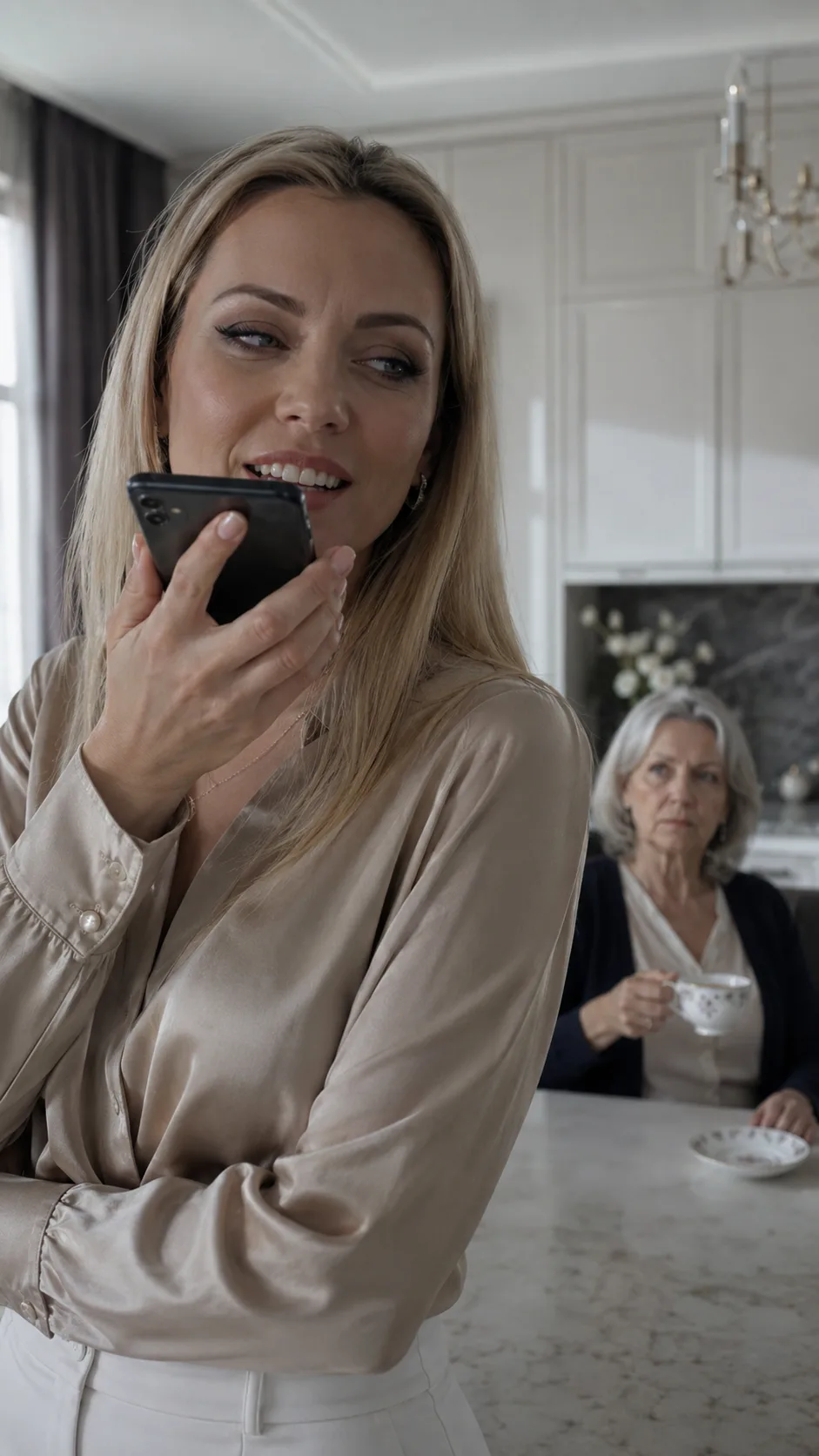
She stood there in her pale robe, barefoot, one hand holding her phone, the other clutching the edge of the sleeve like it might anchor her to something real. Her face was different, less polished, like she had run out of filters, both digital and emotional.
She stepped into the room without waiting for an invitation, looked around as if she was seeing it for the first time.
Then, with a tight breath, she said she knew about the folder.
She said Joel had told her everything.
She paused, then added, “Not everything, but enough.”
I sat on the edge of the bed and waited.
Vanessa looked at
me for a long time before speaking again. She said she did not know the details of what Joel had done and that she did not want to, but she admitted she had noticed the way money flowed, how things always got covered without questions.
She said she had let herself believe it was because Joel came from someone responsible, that I had simply offered support without boundaries.
I listened, and for the first time, I believed she was not acting.
Not fully.
Then she told me something I had not expected.
She said they had pitched a brand partnership using the Maldives trip. It had been approved with a large advance. The entire vacation had doubled as content creation, and the payment had been sent directly to their joint account two days ago.
She said it as if it were a gift, as if offering me that information might
soften what had already been done.
I looked at her and said I did not want the money.
Not a cent.
She blinked like I had spoken in another language.
Then she asked if I would reconsider staying.
That was when I finally stood.
I told her gently that this was not about real estate or reimbursement.
It was not about forgiveness either.
It was about peace, and I was reclaiming mine.
She left without arguing, but her eyes lingered on the walls, the desk, the suitcase by the closet, as if realizing too late what had slipped through her hands.
That night, I boxed up the last of my things: notebooks, old maps, one worn photo of Robert and me at Glacier Bay.
I labeled everything clearly and taped each box with care.
Then I sat in the empty room and listened to the sound of nothing.
Not silence from tension. Not distance from anger.
Just the quiet of something finished.
In the morning, I left a small envelope on the kitchen counter. Inside it, I placed the key, a list of forwarded addresses, and a note that read only one line.
No passwords. No access. No return.
Then I closed the door behind me, locked it one last time, and walked away with both hands empty and my head held still.
It did not feel triumphant.
But it felt honest.
And in that honesty, I could finally breathe without permission.
The lake apartment welcomed me with the soft hum of stillness. No voices behind walls, no footsteps outside my door, just the sound of water moving somewhere beyond the window and the low creak of wood as the place settled around me.
I unpacked slowly, one drawer at a time.
I placed the tea kettle where I could reach it easily, lined the bookshelf with the few volumes I had chosen to keep, and set the framed photo of Robert near the window where the morning light could find him.
There was no rush now, only rhythm.
After months of being tangled in someone else’s current, that alone felt like freedom.
The first weekend passed quietly. I took short walks near the shoreline, watched children chase each other near the benches, and sat with a notebook I barely wrote in.
I was not searching for new plans.
I was learning how to live without bracing for the next breach.
On Sunday evening, Monica visited. She brought warm cornbread in a cloth-lined basket and a bottle of elderberry syrup she made herself. She did not ask questions, just sat across from me, spooned jam onto a slice of bread, and told me she had been following up with her contact in compliance.
Then, without preamble, she handed me a sealed envelope.
Inside was a full report: every transaction, every flagged signature, a timeline of access breaches, and supporting documents.
At the bottom was a note prepared for legal submission, pending my direction.
I placed it gently in the drawer beside the tea.
Not as a threat.
As a safeguard.
Monica reached for her bag, then hesitated.
She said the report had one unexpected detail.
Joel had attempted to reverse two of the transfers last week quietly. He did not succeed. The system blocked him due to fraud protection triggers, but the attempt had been logged.
That information landed heavier than I expected.
Not because it changed anything, but because it confirmed what I had already begun to sense.
Joel was unraveling, not loudly, not destructively, but in the quiet, shameful way that happens when consequences arrive with no audience.
After Monica left, I sat on the porch as the sun dipped low. Birds wheeled across the lake, and the wind moved through the trees without resistance.
For the first time in a long while, I allowed myself to feel the weight of what had been lost.
Not just the money.
Not just the trust.
But the version of motherhood I had clung to for far too long. The one where love meant endless forgiveness. The one where sacrifice meant safety. The one where my absence of boundaries was mistaken for strength.
That night, I wrote a letter.
Not to send, but to write.
I told Joel I loved the boy he used to be, the one who built model planes with his father, the one who brought me pressed flowers when I was too tired to cook.
But I also told him I did not know the man he had chosen to become, and that until he chose to face himself, I could no longer meet him halfway.
I signed it with my full name.
Not Mom. Not Mother.
Just me.
Then I folded the letter and placed it in the same drawer as the report.
There was nothing vengeful in my heart.
Only clarity.
And that, I realized, was the rarest form of peace.
Three weeks passed without a single message. No calls, no emails, no sudden knocks on my door. It was as if the world I had left behind quietly agreed to stay behind.
I spent my mornings reading and watering the small rosemary plant on the windowsill. I cooked simple meals. I started journaling again, not for anyone else, just to hear my thoughts in my own words.
And then, on a gray Tuesday afternoon, a letter arrived.
The envelope was plain, no return address, just my name written in Joel’s familiar hand.
I sat with it for several minutes before opening it, not because I was afraid of what it might say, but because I wanted to open it with a clear head, not a wounded heart.
The letter was brief.
Joel wrote that he had been thinking a lot. He said he did not know how to make up for what he did, or if that was even possible. He admitted to forging my name, moving the money, and justifying it to himself in small ways until it no longer felt like taking.
He confessed that Vanessa did not know the full extent, that he kept her at arm’s length even when she asked questions.
Then he said something that landed sharper than anything else.
He wrote that he was not asking for forgiveness.
He just wanted me to know he finally understood why I walked away.
I folded the letter and placed it in the drawer next to my own.
Two stories. Two voices. Both true. Both incomplete.
Later that evening, I received a call from Monica. She had spoken with her contact at the firm Joel used to work for, quietly and off the record.
Joel had stepped away from several freelance accounts. No announcement. No drama. Just slowly untangling himself from the structures he used to control.
Monica said something that stayed with me long after the call ended.
“Some people learn from loss only when there’s nothing left to explain it away.”
That night, I did not feel proud or vindicated.
I felt quiet.
And in that quiet, I finally saw what this had all become.
Not a fall from grace.
A shedding.
The roles I had clung to for decades, mother, provider, protector, had cracked under pressure. What remained was not weakness. It was something clearer.
The version of me who could look in the mirror and no longer feel guilty for choosing peace.
Two days later, I packed a small tote and drove north.
Not far, just a short coastal stretch where the trees open to sea cliffs and walking paths curve like soft questions, waiting for answers.
I stayed in a modest guest house, spent the mornings watching seabirds dive into gray-blue water, and spent afternoons writing short entries in my journal, reflections more than memories.
There was no rush to return.
Nothing pulling me back with urgency.
For the first time in years, I felt no tension in my chest, no need to explain myself, no silent hope for someone to see my pain and name it worthy.
I was simply where I was.
Whole. Weathered. Still here.
And that somehow felt like the beginning of something, not a new story, but a deeper chapter I had been waiting to live all along.
It was late autumn when I returned to the lake apartment. The trees had already shed most of their leaves, leaving behind bare branches that stretched into the gray sky like quiet reminders of everything that must fall away before spring.
I let myself in, dropped my bag by the door, and stood in the stillness.
The place had a scent I had grown to associate with peace: cedar, faint coffee grounds, and the gentle echo of my own breathing.
The folder was still in the drawer. So was the letter I had written, and Joel’s response.
I did not take them out.
I did not need to.
That chapter no longer required rereading.
Instead, I opened the window just enough to let the cool air drift in. I wrapped myself in a blanket, sat at the small table by the window, and watched the water ripple under the soft wind.
It was a quiet kind of contentment.
No crescendo.
Just presence.
The next morning, I walked to the co-op grocery store a few blocks away. The cashier remembered me. She smiled and asked if I had been out of town.
I said yes, but now I was back for a while. Maybe longer.
She handed me a flyer for a local skills-sharing group, seniors teaching each other the basics of budgeting, tech literacy, and navigating insurance.
I tucked it into my pocket without thinking much.
That night, I found it again while unpacking. I stared at the paper for a long time. Then I picked up the phone and called the number at the bottom.
The woman who answered sounded around my age. She said they met twice a month in the library annex.
I told her I used to work in compliance.
She paused, then laughed softly.
She said that made me a rare gem.
Two weeks later, I was sitting at a round table with five other women and one quiet man named Will.
They were kind, not nosy. They spoke openly about their frustrations with Medicare, confusing digital forms, even children who pushed too hard for power of attorney.
I did not tell them everything, but I told them enough.
I talked about what it meant to love someone who crossed a line, about setting boundaries too late, about learning to say no without explaining the whole story.
No one interrupted. No one minimized.
When I finished, one woman nodded and said softly, “You kept your dignity. That’s no small thing.”
After the session, I stayed back to help stack chairs.
Will offered to carry the box of leftover forms to my car. As we walked, he asked if I was planning to come back next time.
I said I was.
And I meant it.
That night, as I stood brushing my teeth, I caught my reflection in the bathroom mirror. My hair had silvered more in the last year. My eyes somehow looked clearer.
I did not see a woman who had lost something.
I saw a woman who had finally stopped giving herself away.
And in that quiet truth, I turned off the light and went to bed.
No ghosts followed. No voices lingered.
Just breath and rest, and the still rhythm of a life no longer shared with betrayal.
The winter that followed was the quietest season I had known in years.
Snow came late, soft and thin, brushing rooftops without burden. I spent most mornings watching it melt along the edge of the lake, forming silent pathways down the rocks, like time slipping away without fuss.
I did not hear from Joel again.
There were no follow-up letters, no calls, no surprises.
And I did not wait for any.
It was not about cutting him off.
It was about no longer anchoring my peace to his learning curve.
I had done what I could with what I had.
And now I chose to move forward, but without reopening wounds to prove they mattered.
The group at the library invited me to speak at a public meeting one Saturday in February. The topic was financial boundaries between parents and adult children.
I prepared my notes and kept them simple. Practical, not emotional.
But when I stood at that podium, looking at the dozen or so faces, some worn by life, others tight with unspoken grief, I let the pages fall to the side.
I spoke from memory.
About trust. About self-worth. About how generosity, when unguarded, can blur into permission for others to take what was never theirs.
When I finished, a woman in the second row wiped her eyes and whispered, “Thank you.”
And that alone was enough.
That night, I walked home under a sky full of stars. No noise. No weight. Only the soft sound of snow under my boots and the quiet certainty that I had come through something.
Not broken. Not bitter.
Just awake.
The apartment glowed warm when I returned. I made tea, curled up in the chair by the window, and looked out across the lake, where the water had begun to thaw at the edges.
Not spring yet.
But close.
And that, I thought, was enough for now.
If this story spoke to something quiet in your heart, you are not alone. Sometimes healing does not come with a loud ending or dramatic change. Sometimes it comes in the stillness of choosing yourself after years of being overlooked.
If you have ever had to walk away to find peace, I hope this story reminded you that dignity is not about pride. It is about remembering your worth.
If you are still carrying the weight of silence, maybe today is the day you set it down.
Thank you for listening, and take gentle care of yourself.
If you came here from Facebook because this story stayed with you, please go back to the Facebook post, tap like, and leave exactly this short comment: “Respect.” That small action means more than it may seem, and it helps give the writer real encouragement to keep bringing more stories like this to readers.
*** THE END.***
Chapter complete
You have reached the end of this chapter.
Continue reading
A few more worlds to get lost in after this chapter.




