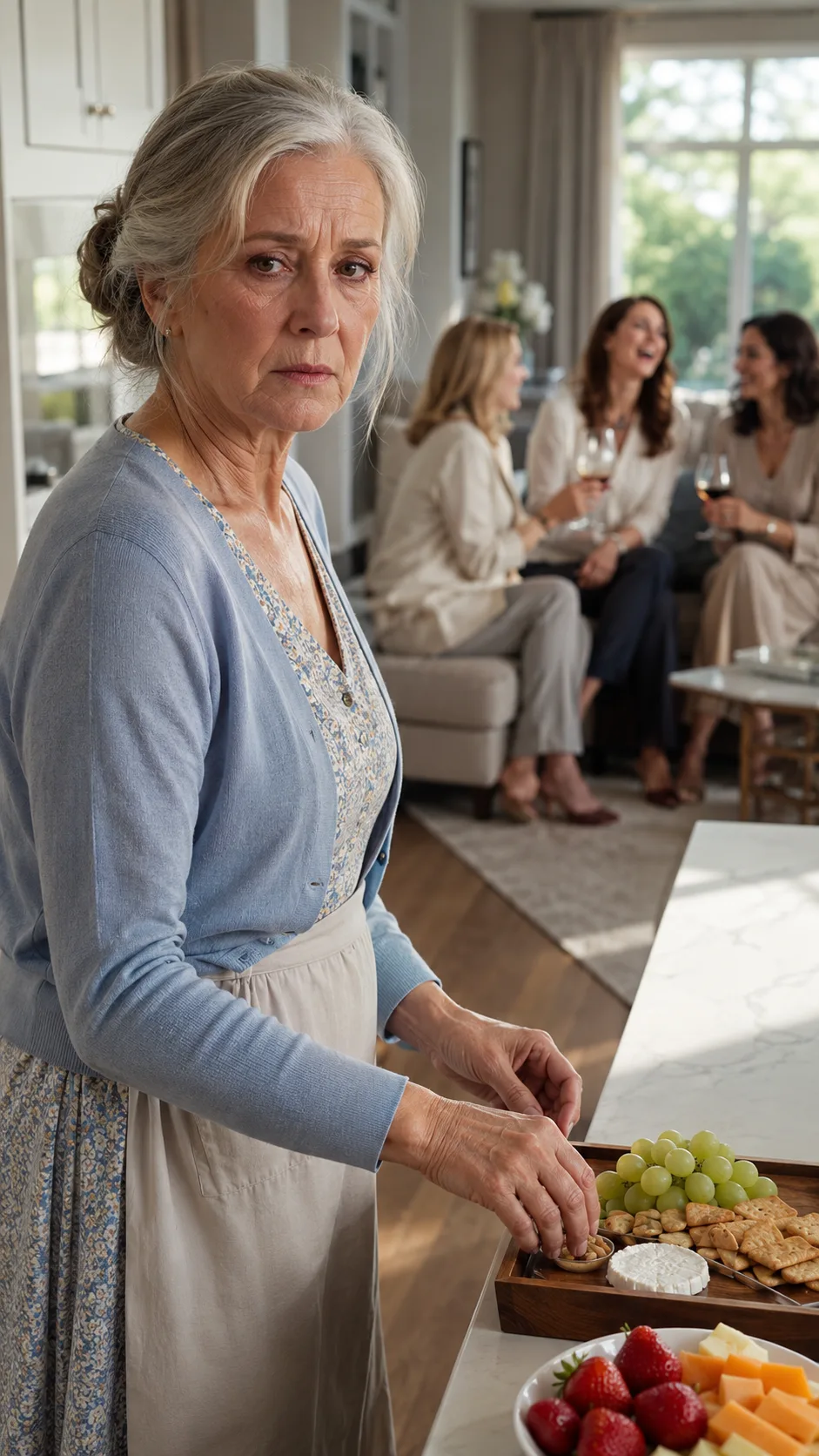
MOTHER-IN-LAW WAS LEFT WITH LEFTOVERS—THEN THEY LEARNED THE HOUSE WAS HERS
PART 3
On April 1, the moving truck pulled up to 847 Jurist Circle.
Chapter 3
MOTHER-IN-LAW WAS LEFT WITH LEFTOVERS—THEN THEY LEARNED THE HOUSE WAS HERS
PART 3
On April 1, the moving truck pulled up to 847 Jurist Circle.
Emily opened the door. A dozen expressions crossed her face. Then she managed a smile.
“Mother-in-law, come in.”
“Beatrice,” I said. “Call me Beatrice.”
She swallowed.
“Beatrice.”
That first night, Teresa made green chicken enchiladas. The smell filled every room. Emily came downstairs and stopped in the kitchen doorway, clearly containing the impulse to assert ownership over the stove.
“Dinner,” Teresa said warmly. “I made extra if you’d like some.”
Emily said, carefully and with visible effort, “Thank you.”
They all sat down together.
Daniel and Emily and the children and Teresa and her kids around one table. Full. Noisy. Alive.
The children adapted first, as children always do. Michael and Miguel became friends over video games. Sarah and Andrea became inseparable.
There is something merciful about the way children step over wreckage adults create without needing to understand it.
Daniel and I started therapy. The first session, we both
cried almost the entire hour.
“I let her get lost,” he told the therapist. “I let our bond break because it was easier to keep the peace at home.”
“And I let it happen,” I said, “because I was afraid if I pushed back, they would send me away and I would have nowhere to go.”
The therapist nodded.
“Fear makes people tolerate the intolerable. But you’re both here, which means the bond is not dead.”
It rebuilt slowly, the way things rebuild when the repair is genuine rather than performed.
Daniel started calling just to ask how I was, what I had eaten, whether my back hurt. Simple questions he had not asked in years.
One day, he arrived at Linda’s house with a bunch of wildflowers.
“Just because,” he said. “Because you’re my mom.”
I cried over those flowers half the afternoon.
Meanwhile, cohabitation was doing what I
had intended. Teresa called me weekly.
“Emily got irritated because Miguel used too much hot water. I reminded her that we pay rent on time and are entitled to showers.”
“How did she take it?”
“Quietly. She’s learning.”
There were softer moments too.
Andrea was struggling in math. Emily, an engineer by training, sat with her one evening and went through the problems without being asked. When Andrea said thank you afterward, Teresa told me Emily went into the pantry and cried.
It was the first time in a long while someone had thanked her for something that had nothing to do with her career.
A month after the move-in, Daniel invited me to lunch at the house.
Walking back through that door made my heart pound. But there was more life in the rooms now. Andrea’s drawings on the fridge. Miguel’s bike on the porch. Different voices in the
halls.
Sarah came running. Michael hugged me, and he was already taller than I remembered.
Emily stood in the kitchen with an apron on, hands nervous.
“Thank you for coming,” she said.
“Thank you for inviting me,” I answered.
Not friendship yet.
But a cease-fire with truth inside it.
We sat down to eat, eleven people around one table. Jokes and school stories and noise and the ordinary mess of shared life.
Sarah gave me a drawing at the end: me wearing a small crown, with the words underneath in crooked letters that said my grandma Beatrice is the bravest woman I know because she knew when to leave and when to come back.
I framed it that evening.
Six months later, Emily asked to speak with me alone in the backyard.
“I want you to know I’m in therapy too,” she said. “Individual therapy. I’m dealing with my control, my insecurity. Teresa is teaching me a lot about gratitude. She lost so much and still smiles. I had everything and I complained constantly.”
She wiped her eyes.
“I’m not asking for forgiveness. I’m asking you to let me try to become someone better.”
“Forgiveness is not requested,” I said. “It is earned with time and consistency and action.”
“I understand.”
Six months after that, she slid a packet of papers across a café table and told me she wanted to buy my sixty percent, a five-year payment plan with fair interest, bank-approved. She had worked it out already.
“Why?” I asked.
“Because it’s right. Because we’ve lived off your sacrifice long enough. Because I want to sleep without guilt. And because Teresa’s family wants to stay as official tenants. The children are attached. So am I.”
I believed her.
I said yes.
A year and three months after the night I left with my suitcase, I was living in my own apartment in downtown San Antonio with a window that caught the morning light and a kitchen that was entirely, uncomplicatedly mine.
I taught knitting classes twice a week at the community center, where the women drank weak coffee and argued cheerfully about yarn weights and reminded me what it felt like to be known without being managed.
I walked with Linda in the mornings. I saw my therapist once a month, but now it was for growth rather than survival, which is a different and considerably more pleasant kind of appointment.
Daniel came every Sunday, sometimes with the children, sometimes alone. Emily sent photos and recipes and small thoughtful messages that had nothing to do with leftovers or directives.
Teresa became one of my closest friends.
The rent and the payment plan from Emily gave me something I had not felt in three years: the quiet freedom of a life I was choosing rather than one I was merely permitted to occupy.
One Saturday afternoon in the park, Michael and Sarah and I were eating corn ice cream under a shade tree.
Michael had grown serious in the way of boys approaching eleven, the age when they start storing things they will carry for a long time.
He asked me if I regretted leaving that night.
“Never,” I said. “Not even a little.”
Sarah climbed into my lap, sticky-handed from the ice cream.
“Are you happy now, Grandma?”
I thought about the apartment with the morning light I had chosen. About Linda’s friendship and Teresa’s green enchiladas and the knitting circle women and the first real sleep I had gotten in years, that night at Linda’s house wrapped in a clean blanket, drinking chamomile tea.
I thought about Daniel’s wildflowers and the framed drawing with the crooked crown and the six months of honest therapy with my son, building something real from materials that had been honest to start with.
“Yes,” I told her. “Because now I live where I choose to be. Not where I am merely tolerated.”
Sarah settled more comfortably against my ribs.
The afternoon light came warm and level through the leaves.
Everything I had left behind was still there, in some form.
But for the first time in a very long time, so was I.
THE END.
Chapter complete
You have reached the end of this chapter.
Continue reading
A few more worlds to get lost in after this chapter.




