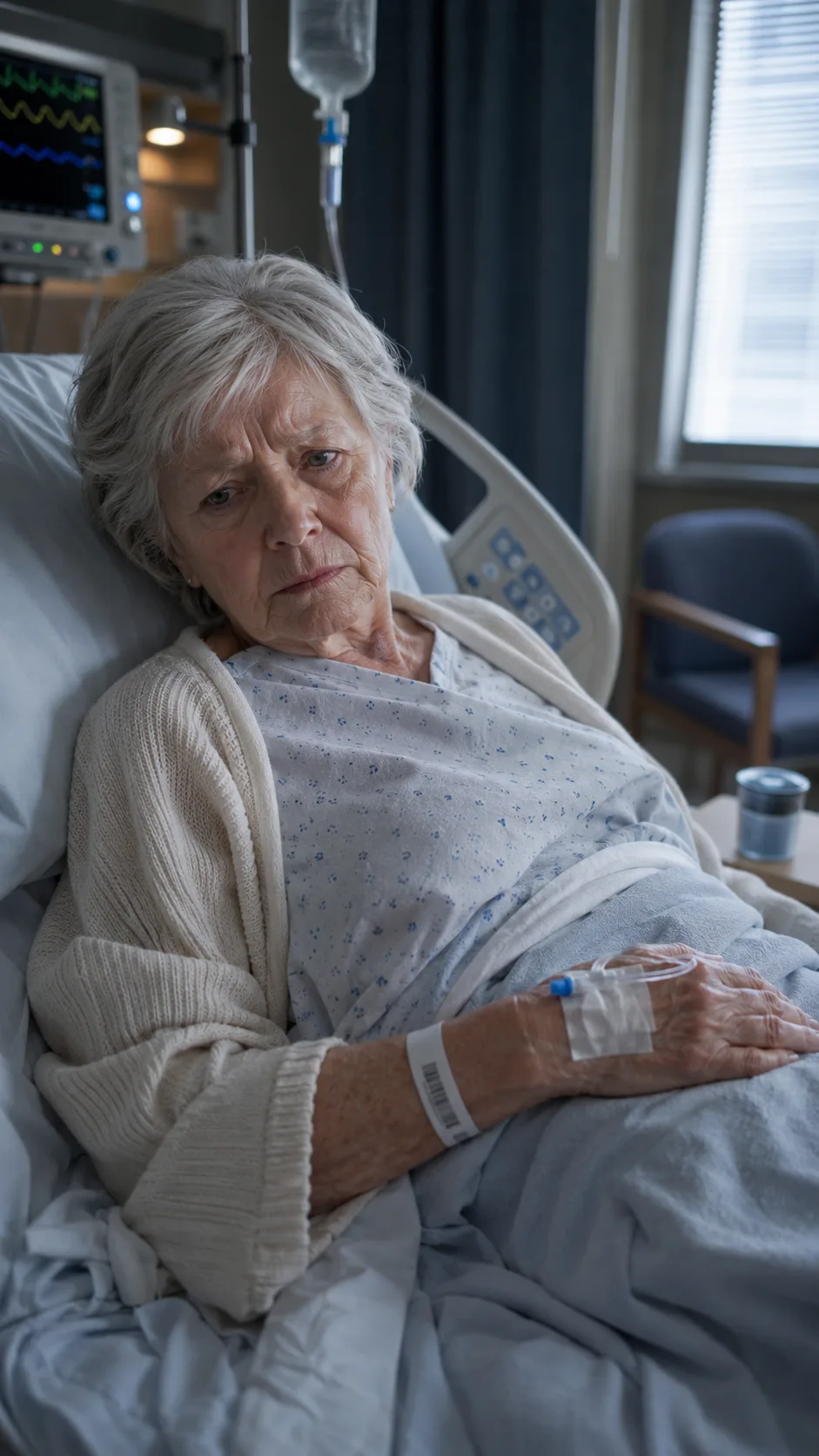
HER SON TOOK HER EMERGENCY CARD TO DISNEY WHILE SHE WAS IN SURGERY
— PART 3: THE LOCKS HE COULD NO LONGER OPEN
Monday morning, I hired a locksmith.
Chapter 3
HER SON TOOK HER EMERGENCY CARD TO DISNEY WHILE SHE WAS IN SURGERY
— PART 3: THE LOCKS HE COULD NO LONGER OPEN
Monday morning, I hired a locksmith.
He was a nice young man with sandy hair who reminded me painfully of Michael when he was younger, before entitlement had hardened around him.
“Just the front and back doors?” he asked.
“Yes,” I said. “New locks. Two keys.”
While he worked, I called my doctor’s office and scheduled my follow-up appointment. Then I called Helen next door, who had been worried sick and scolded me for not telling her sooner.
“Barbara Patterson,” she said, “you should have called me from the hospital.”
“I know,” I said. “I’m sorry.”
“You don’t have to be sorry. You have to let people who actually care help you.”
That sentence stayed with me.
By noon, I had new locks.
One key went on my ring.
One went to Helen.
That was it.
At 2:30 that afternoon, someone knocked on my door.
I looked through the peephole.
Michael, Tiffany, Jake, and Emma stood
on my porch.
They looked exhausted, sunburned, wrinkled from travel, and angry in the way people become when consequences surprise them.
I did not open the door.
“Mom!” Michael called. “Open the door.”
I stayed still.
“Barbara, we know you’re in there,” Tiffany snapped. “Your car is in the driveway.”
Jake shifted from one foot to the other. Emma held a stuffed toy against her chest.
“Grandma?” she called softly. “Are you mad at us?”
That almost broke me.
Almost.
But I remembered waking up alone. I remembered the empty waiting room. I remembered Michael saying, “Don’t be dramatic.”
I walked to my bedroom and closed the door. Their voices became muffled, but I could still hear the knocking.
They stayed nearly forty minutes.
Tiffany was angry that they had driven straight to my house for nothing. Michael kept saying I would come around. He said I was just upset.
He said I needed time.
Then, ten minutes after they left the porch, I heard metal scrape at the front door.
Michael was trying his old key.
It did not work.
“She changed the locks,” I heard him say. His voice was stunned. “She actually changed the locks.”
Tiffany said something about calling someone, about how I was not thinking clearly after surgery.
Michael sounded defeated.
“Let’s just go home,” he said. “I’ll call her tomorrow.”
But he could not call me.
He was blocked.
Over the next week, they tried other ways.
Emails.
Certified letters.
Messages through people I knew.
Tiffany wrote that I was keeping the children from their grandmother and that I would regret it. Michael’s old friend Tom called and tried to mediate.
“Barbara,” he said, uncomfortable, “I understand you’re upset, but Michael is beside himself. Maybe you could just talk to him.”
“Tom,” I said,
“if your mother were in emergency surgery, would you leave her alone in the hospital and go to Orlando using her credit card?”
He went quiet.
“No,” he said finally.
“Then there’s nothing to mediate.”
Three weeks after surgery, I felt strong enough to begin rebuilding my life instead of simply defending it.
First, I joined a senior fitness group at the community center. Water aerobics, twice a week. The women there were funny, kind, and blunt in the way women become when they have lived long enough to stop performing politeness for people who do not deserve it.
They did not know me as Michael’s mother.
They knew me as Barbara, the woman recovering from surgery who laughed too hard when Marlene dropped her foam noodle in the pool.
Second, I volunteered at the local library’s children’s reading program.
I had always loved children. Losing regular contact with Jake and Emma hurt more than I wanted to admit, but I refused to let that pain turn me bitter. Every Tuesday afternoon, I read picture books to preschoolers who sat cross-legged on a bright rug and looked at me like every page was a door.
Third, I met with a financial adviser.
Her name was Patricia. She was in her fifties, sharp, practical, and kind in a way that did not waste words.
She reviewed my accounts, my pension, my Social Security, my home value, and the history of money I had given Michael.
“Mrs. Patterson,” she said, “you’ve given approximately ninety-seven thousand dollars to your son and his family over the last fifteen years.”
Even though I had gathered the records myself, hearing the number aloud made me feel sick.
“If that money had been invested conservatively,” she continued, “it could have been worth significantly more today.”
I looked down at my hands.
“However,” Patricia said, softening, “you are not in bad shape. Your house is paid off. Your income is stable. Once the credit card dispute is resolved, you may recover a portion of the charges. Even if some remain your responsibility, it is manageable.”
Manageable.
That word felt like a rope.
Something to hold.
Over the next month, Michael’s emails changed.
Mom, Emma asks about you every day.
Jake’s birthday is next week. He wants you there.
Please don’t punish the kids for our mistake.
Tiffany is pregnant. You’re going to have another grandchild.
Each message was designed to reach into the softest part of me and pull.
Some nights, it worked.
I would sit in bed with my reading glasses on, imagining Emma asking where Grandma was. I imagined Jake’s birthday candles. I imagined a new baby I might never hold.
Then I remembered the hospital.
The empty chair beside my bed.
The unanswered calls.
The word magical.
I did not respond.
Helen came over one evening with tea and lemon cookies.
“Do you miss them?” she asked.
I looked toward the window, where the porch light had just flickered on.
“I miss who I thought they were,” I said. “I miss the son I raised. I miss the family I believed I had. But the man who used my card while I was in surgery and then acted annoyed when I stopped him—that man is not someone I know how to miss.”
“What about the children?”
That hurt.
“I love Jake and Emma,” I said. “But their parents are teaching them that Grandma exists to provide money, childcare, gifts, and forgiveness on demand. That is not love. That is use. I won’t help raise another generation to see people that way.”
Four months after the surgery, on a Tuesday afternoon in July, the doorbell rang.
I looked through the peephole and saw Michael standing alone.
No Tiffany.
No children.
He looked terrible. He had lost weight. There were dark circles beneath his eyes.
Against my better judgment, I opened the door but left the security chain in place.
“What do you want, Michael?”
“Mom,” he said, voice rough. “Please. I need five minutes.”
“You can talk from there.”
He swallowed.
“Tiffany left me.”
I said nothing.
“She’s filing for divorce. She took the kids to her parents’ house. I haven’t seen them in three weeks.”
“I’m sorry you’re going through that.”
His face twisted.
“Are you? Because you started all of this.”
There it was.
Not remorse.
Need.
Blame wearing a sad face.
“I started this?” I asked.
“You cut us off. You turned my wife against me. You made everything impossible.”
“No, Michael. You left me alone during emergency surgery and used my money without permission. You did that.”
“You’re my mother,” he said. “You’ve always helped me.”
“Helping is giving freely. Taking without permission is something else.”
He looked away.
“I made a mistake.”
“You made many.”
“How long are you going to punish me?”
I looked at my son, the boy I had once carried, the man I barely recognized, and felt a sadness so deep it was almost calm.
“Michael,” I said, “you have not apologized once.”
His mouth opened, then closed.
“You have been angry that I caught you. You have been upset about the consequences. You have been worried about your marriage, your children, your comfort, and your future. But you have never said, ‘Mom, I’m sorry I hurt you.’”
He stared at the porch floor.
“Even now,” I said, “you came because Tiffany left and you need me to fix your life again.”
“That’s not fair.”
“Do you even know how my recovery went?”
He looked up.
“What?”
“Did you ask if I healed? If I needed help? If I could drive? If I was scared?”
His face went pale.
“You called once from Orlando to tell me how magical it was,” I said. “That was it.”
He whispered, “How are you?”
The question came four months late.
“I’m better than I’ve been in years.”
His eyes filled, but I did not open the door.
“I have friends,” I continued. “I have plans. I have a life that no longer revolves around waiting for you to need something from me.”
“So that’s it?” he asked. “You’re done with me?”
“I changed my will.”
He froze.
“Everything goes to charity now. The house, savings, all of it. You are not in it anymore.”
His face went white.
“You can’t do that.”
“I can. I did.”
“Mom—”
“There is nothing left for you to take from me, Michael. You already took enough.”
Then I closed the door.
Behind me, I heard him start to cry.
I did not go back.
Six months after my surgery, I was having lunch with Helen and two women from water aerobics when I saw them.
Michael, Tiffany, Jake, and Emma were seated across the restaurant.
For a moment, my fork paused over my salad. My breath caught.
They saw me too.
Tiffany leaned toward Michael and whispered urgently. He shook his head. Then Michael stood and walked toward my table.
“Mom,” he said.
“Michael.”
“Can I talk to you privately?”
I almost said no.
Then I saw something different in his face.
Not panic.
Not entitlement.
Humility, maybe.
“You have two minutes,” I said.
We stepped outside.
Michael’s hands were shaking.
“I’m in therapy,” he said. “Twice a week.”
I waited.
“My therapist has helped me see things I didn’t want to see. How I treated you. How I let Tiffany treat you. How I took advantage of you for years and called it family.”
I said nothing.
“I’m not here to ask for money,” he continued. “I’m not here to ask you to change your will. I’m here to say I’m sorry.”
The words hung between us.
“I am really sorry, Mom. I was a terrible son. I abandoned you when you needed me. I used your card without asking. I let my wife and kids treat you like you were there to provide things, not like you were a person. And I justified it by telling myself you liked helping.”
His voice cracked.
“But that was not love. That was me abusing your generosity. I’m sorry.”
For the first time in six months, I saw a glimpse of the boy I had raised.
Not enough to erase anything.
But enough to make me breathe differently.
“I don’t know if I can trust you again,” I said.
“I understand.”
“You broke something, Michael.”
“I know.”
“Do you?”
He nodded, and this time he did not defend himself.
That was eight months ago.
Since then, Michael and I have had coffee four times. Short visits. Neutral places. Public tables. Clear boundaries.
He has paid me back three thousand dollars so far, not because I demanded it, but because he said he needed to begin making things right. He still goes to therapy. He asks about my health now and listens to the answer. He does not ask for money. He does not ask me to babysit.
Tiffany and I are not close.
Maybe we never will be.
Jake and Emma have sent cards. I have answered gently but carefully. Love does not require handing someone the keys to your life again.
I have not changed my will back.
I probably never will.
That money will do more good for the children’s hospital, the women’s shelter, and the animal rescue than it ever would if I handed it to Michael as one more cushion between him and consequences.
But I have learned something I wish I had understood earlier.
Forgiveness does not mean reopening the door to the same harm.
Love does not mean unlimited access.
Kindness does not require becoming someone else’s emergency fund, servant, or backup plan.
The scar on my abdomen healed first.
The scar on my heart is healing more slowly.
But it is healing.
And for the first time in seventy-three years, I am not living as someone’s mother first, someone’s grandmother first, someone’s safety net first.
I am living as Barbara.
And that has become its own kind of magic.
THE END.
Chapter complete
You have reached the end of this chapter.
Continue reading
A few more worlds to get lost in after this chapter.




