The private elevator climbed toward us one floor at a time.
Chapter 4
The private elevator climbed toward us one floor at a time.
Seven.
Eight.
Nine.
I watched the glowing numbers above the maternity corridor while federal agents moved patients away from the entrance.
Mara stood beside me.
Taylor was behind two locked doors with Grace against her chest.
Nicholas Vance had been taken into an interview room.
Ernest was in federal custody.
And Charles Hale, the man who had spent half my life calling himself my brother, was coming upstairs with an access card that should not exist.
“Mrs. Hale,” an agent said, “we need you inside the secured room.”
“No.”
“Ma’am—”
“He came here for me.”
“We don’t know that.”
“Yes, we do.”
The elevator reached ten.
The agent stepped in front of me.
“You are not bait.”
I looked at him.
“I have been bait since Zurich.”
That ended the argument.
They moved me behind the nurses’ station instead, protected but visible.
Mara refused to leave.
The elevator stopped at
twelve.
Our floor.
The doors opened.
Charles stood alone.
For a moment, nobody moved.
He was seventy-one now.
Thinner than Theodore had been.
Silver hair carefully combed.
Expensive coat buttoned to the throat.
The face of a man who had attended every birthday, every funeral, every Thanksgiving.
He looked at me and smiled sadly.
“Margaret.”
Federal agents raised their weapons.
Charles lifted both hands.
“I’m not armed.”
“Put the folder down,” one agent ordered.
He did.
“Step away from it.”
He obeyed.
Then he looked at Mara.
The sadness disappeared.
“So Arthur finally found you.”
Mara’s voice was cold.
“Arthur died fourteen years ago.”
Charles blinked.
That was the first thing all day he had not known.
Good.
Ignorance was finally entering the room.
I stepped out from behind the desk.
“Why did you tell me she killed Theodore?”
Charles looked back at me.
“Because she is connected to what
happened.”
“That is not what I asked.”
He sighed.
“Margaret, you’re exhausted. Taylor is injured. You’ve been manipulated by a recording from a dead man and a woman who appeared out of nowhere claiming to be your daughter.”
“She has DNA.”
“DNA proves biology. It doesn’t prove loyalty.”
Mara’s jaw tightened.
I almost admired the technique.
Charles had always been good at making suspicion sound like wisdom.
That was how men like him survived.
They rarely ordered people.
They simply made everyone doubt the person standing beside them.
“You tried to move my money,” I said.
“To protect it.”
“From whom?”
“From her.”
“You did it forty-one minutes after Theodore’s reserve activated.”
“I was notified automatically.”
“Why?”
He hesitated.
Only half a second.
But I saw it.
“Because I’m still an emergency officer of the family trust.”
“No,” I said. “You’re not.”
His expression changed.
“I removed you six years
ago.”
Silence.
The federal agent beside me turned his head.
Charles recovered quickly.
“There must be an old authorization.”
“There isn’t.”
That was a lie.
I didn’t know yet whether there was.
But Charles did not know that I didn’t know.
People who live by deception become terrified when someone else stops giving them facts.
His eyes narrowed.
“Margaret.”
“What access card did you use to enter this floor?”
He looked down at the card in his hand.
“Gerald gave it to me years ago.”
“Gerald Pike?”
“Yes.”
“Why would the chairman of Saint Luke give Theodore Hale’s brother permanent access to a private medical wing?”
Charles said nothing.
Mara stepped forward.
“Because you were part of the network.”
He looked at her.
“You have no idea what that word means.”
“I have fifteen years of ledgers restoring to federal servers.”
“No. You have whatever Ernest wanted restored.”
That made me pause.
Charles saw it.
So did Mara.
He continued.
“You think Ernest built a trap for you and somehow every document appearing today is suddenly trustworthy?”
It was a good argument.
Which was why it was dangerous.
I looked at the federal agent.
“Have the restored records been independently verified?”
“Some. Not all.”
Charles nodded as though helping us.
“Exactly.”
Then Mara said, “The Zurich file has a paper copy.”
Charles went still.
She reached into the pocket of her scrub jacket.
The agents reacted, but she slowly removed a folded photocopy.
“I found it in my adoptive mother’s safe after she died.”
Charles stared.
Mara unfolded it.
“Patient Margaret Hale. Live female birth. Infant transferred under emergency protective order.”
His face emptied.
Mara continued.
“Signed by Dr. Samuel Waldron.”
Charles looked at me.
“That proves Samuel took her.”
Mara turned the page.
“And countersigned by Charles Hale.”
The corridor became very quiet.
I felt nothing at first.
That frightened me.
Thirty-nine years of grief should have produced rage.
Instead there was only clarity.
The kind that arrives after a storm has already destroyed the house.
“Why?” I asked.
Charles did not answer.
“Why did you sign it?”
He looked at the agents.
“I want counsel.”
I laughed.
I could not help it.
Not because anything was funny.
Because after thirty-nine years of secrets, Charles had finally reached a sentence too ordinary for the scale of what he had done.
I want counsel.
The federal agent stepped forward.
“You may invoke your right to counsel. You are not currently under arrest on the basis of this document alone.”
Charles looked relieved.
Then the agent continued.
“But you are detained while we verify your access credentials and the attempted transfer from Mrs. Hale’s accounts.”
The relief vanished.
He turned toward me.
“Margaret, listen to me.”
“I have listened to you for forty years.”
“I saved Theodore more times than you know.”
“From Samuel?”
“Yes.”
“You worked with Samuel.”
“Sometimes.”
Mara stared at him.
Charles’s composure cracked.
“You were not there. None of you were. Theodore thought morality was a switch he could turn on after building half the machine. Samuel built the dirty side, yes. But Theodore used it when it suited him.”
I did not defend my husband.
That seemed to anger Charles.
“He moved money through the same foundations. He used the same political relationships. He wanted clean hospitals built with dirty leverage and then pretended he was shocked when Samuel wanted his share.”
“Did Theodore know Mara was alive?”
“Yes.”
The word came out harshly.
Mara flinched.
Charles saw it and kept going.
“He knew. He chose not to tell you.”
“I know.”
That stopped him.
He had expected the truth to wound me into silence.
It did wound me.
But I was already bleeding from it.
“You knew he knew?” he asked.
“Yes.”
“And you still trust his recording?”
“No.”
Charles blinked.
I stepped closer.
“I don’t trust Theodore. I don’t trust Nicholas. I don’t trust you. I don’t need to.”
I pointed toward the agents.
“I trust records that can be authenticated.”
Then toward Mara.
“I trust DNA.”
Then toward the locked doors behind us.
“And I trust what I saw on my daughter’s body.”
Charles’s mouth tightened.
“Ernest is a separate matter.”
“No.”
“He is.”
“No. He is what happens when a family spends decades teaching powerful men that everything can be hidden if the institution is expensive enough.”
For the first time, Charles looked old.
Mara folded the Zurich record.
“Tell her about Theodore’s death.”
Charles looked away.
“Tell her.”
“I wasn’t there.”
Nicholas’s voice came from the far end of the corridor.
Federal agents were escorting him back.
Charles turned.
His face changed completely.
“You.”
Nicholas smiled without humor.
“Me.”
The agent beside him held a small digital recorder.
“Nicholas Vance has agreed to provide a statement.”
Charles looked at me.
“He’s a criminal.”
Nicholas nodded.
“Yes.”
The admission robbed Charles of the attack.
Nicholas continued.
“I carried money for Samuel. I moved documents. I helped Arthur hide Mara. I also helped Charles Hale meet Samuel Waldron the week Theodore died.”
Charles lunged one step forward.
Agents blocked him.
“Liar.”
Nicholas did not move.
“Tuesday, March seventeenth. The old Halcyon Hotel. Room 804.”
Charles’s face lost color.
I remembered the date.
Theodore died March twenty-third.
Nicholas continued.
“Charles told Samuel that Theodore had changed the beneficiary structure.”
Mara’s hand tightened around the Zurich file.
“Did he know it was me?”
“Yes.”
I looked at Charles.
He said nothing.
Nicholas went on.
“Theodore planned to expose the medical network, remove Charles from the family companies, and tell Margaret about Mara.”
My chest hurt.
Three decisions.
All made too late.
All enough to get him killed.
“What did Charles do?” I asked.
Nicholas’s eyes moved to him.
“He gave Samuel Theodore’s schedule.”
Charles shook his head.
“No.”
“He gave him the private dining room code.”
“No.”
“He gave him the name of Theodore’s physician.”
“Stop.”
“And he gave Ernest Waldron access to Theodore the night before he died.”
The corridor froze.
I stared at Nicholas.
“Ernest was there.”
“Yes.”
Part 2 had told me that much.
But now Nicholas added the piece I had not understood.
“Ernest was a surgical fellow then. Ambitious. Brilliant. Desperate for Samuel’s approval. He was the one person Theodore would allow to discuss the hospital files without security present because Ernest was dating a board member’s daughter and still looked harmless.”
“Did Ernest kill him?”
Nicholas took a breath.
“No.”
I almost hated him for the relief that produced.
Then he continued.
“He helped falsify what happened afterward.”
Charles closed his eyes.
Nicholas’s voice became flat.
“Theodore collapsed the next morning. The hospital treated it as a spontaneous aneurysm. But the emergency medication record was altered after his death. Imaging timestamps were changed. Samuel paid the attending physician. Ernest changed the digital audit trail.”
Mara whispered, “And Charles?”
Nicholas looked at me.
“Charles authorized the transfer that paid everyone.”
My brother-in-law began crying.
Not loudly.
Two tears.
Perfectly human.
Perfectly useless.
“I never wanted Theodore dead.”
I stared at him.
“What did you think Samuel would do with his schedule?”
“I thought he would scare him.”
Nicholas laughed once.
Charles snapped toward him.
“You said Samuel only wanted the trust codes.”
“I said whatever you needed to hear.”
Charles looked back at me.
“I was in debt.”
There it was.
Not ideology.
Not loyalty.
Not some grand philosophical war between brothers.
Debt.
He had lost money in private investments.
Samuel covered it.
Then asked for favors.
A schedule.
A signature.
A vote.
Another signature.
Access to a file.
The first betrayal had been small enough to explain.
The next had been easier.
By the time Theodore discovered it, Charles owed Samuel more than money.
He owed him silence.
“You sold my daughter before she had a name,” I said.
Charles shook his head violently.
“No. Zurich was different. Samuel said the baby would be safer away from you.”
“You signed the transfer.”
“I was twenty-seven.”
“So was I.”
He stopped.
I had been twenty-seven when I woke in that clinic asking where my baby was.
Twenty-seven when Theodore held my hand and let me believe there was a tiny grave somewhere I would never see.
Twenty-seven when Charles stood at the foot of my hospital bed and told me God had a plan.
I remembered that.
The cruelty of memory is not that it disappears.
It is that sometimes it returns perfectly preserved.
“You were there,” I whispered.
Charles began sobbing.
“I’m sorry.”
Mara turned away.
I did not.
“No. You’re caught.”
His face collapsed.
There is a difference.
I learned it from Taylor.
Sorry comes before exposure.
Caught comes after.
The federal agent stepped toward Charles.
“Charles Hale, you are under arrest on suspicion of conspiracy, financial fraud, obstruction, unlawful access to protected medical systems, and offenses connected to an active homicide investigation.”
Charles looked at me while they handcuffed him.
“Margaret.”
I said nothing.
“I loved Theodore.”
I believed him.
That was the worst part.
People imagine betrayal requires the absence of love.
It does not.
Sometimes people love you and still choose themselves.
The agents led him away.
Nicholas watched him go.
Then he looked at me.
“What happens to me?”
“I don’t care.”
He nodded.
Fair.
Before they took him away, he stopped beside Mara.
“Arthur was proud of you.”
She looked at him.
“You didn’t know me.”
“Arthur did.”
“He watched me?”
“Only enough to know you became a doctor.”
Mara’s face tightened.
“He should have come to me.”
“Yes.”
Nicholas looked at both of us.
“Everyone in this story should have done something sooner.”
Then he left.
The corridor became quiet.
Mara and I stood together without speaking.
Finally she said, “Do you want to know everything?”
I looked at her.
“Eventually.”
She nodded.
“Not today?”
“Today I found out my husband lied to me, my brother-in-law sold us out, my daughter was abused, my other daughter is alive, my granddaughter was born, and a dead man turned two billion dollars into bait.”
Mara almost smiled.
“That is a full day.”
“Yes.”
She looked toward Taylor’s room.
“What do you want to do now?”
“See my girls.”
The words came naturally.
My girls.
Mara heard them.
Her face changed.
I did not ask whether I had the right to call her that.
Not yet.
Some rights are biological.
Others are earned.
I intended to earn this one.
Inside the room, Taylor was asleep.
Grace lay in a bassinet beside her.
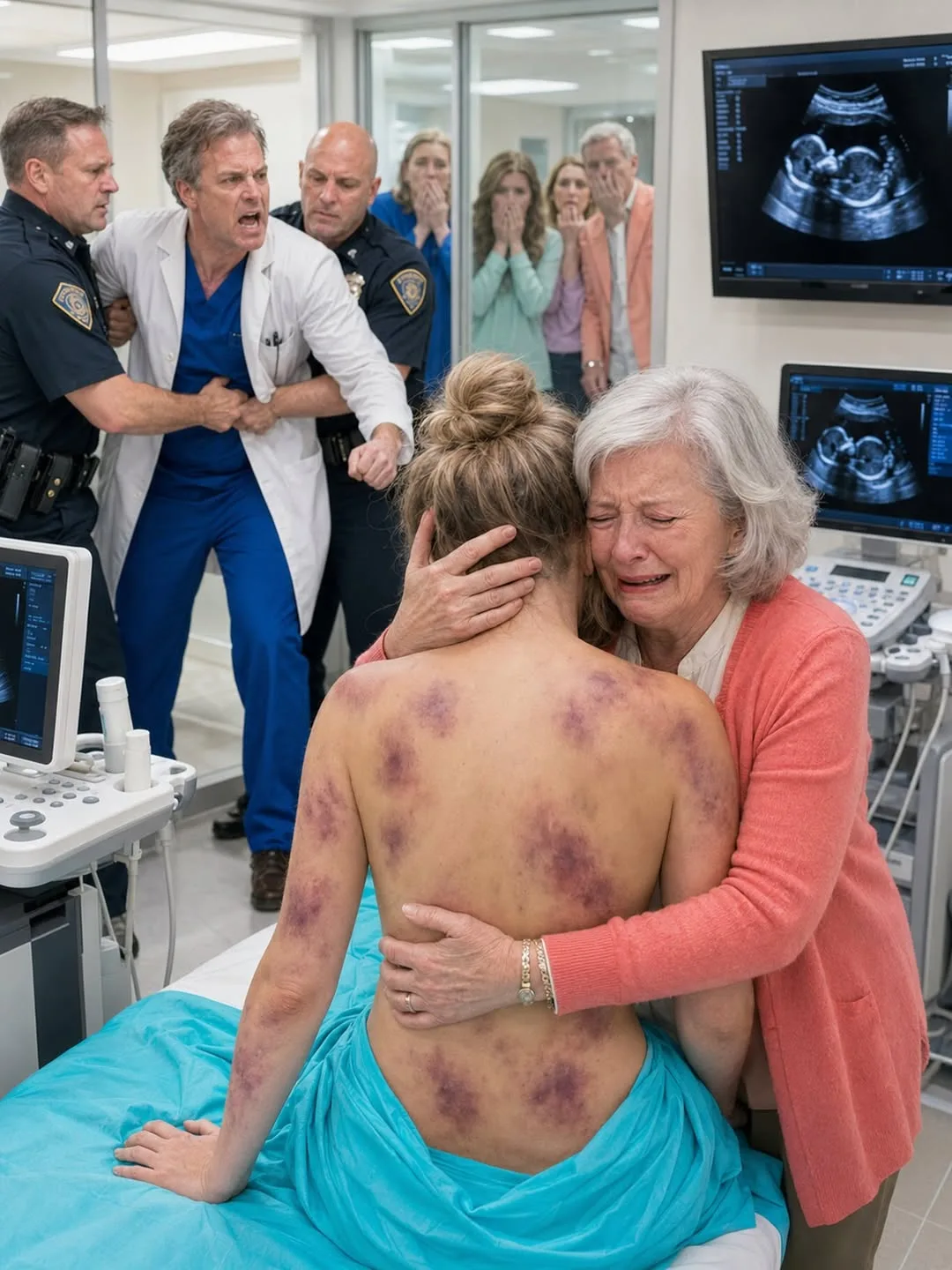
The bruises on Taylor’s back were still visible above the blanket.
They looked darker now.
For one moment, anger returned so strongly I had to grip the bedrail.
Mara stood on the other side.
“He will never control her chart again.”
“No.”
“Or the hospital.”
“No.”
“Or the trust.”
“No.”
She looked at me.
“You already liquidated the Waldron companies this morning.”
“I started the process.”
“What exactly did you do?”
At last, I told her.
I had not emptied bank accounts with a magic phone call.
Real empires do not collapse that neatly.
I had done something worse.
Theodore’s real-estate trusts owned the land beneath six major Waldron facilities.
My family office held callable debt on three surgical-equipment companies.
A charitable foundation I chaired controlled licensing rights Ernest’s network depended on.
When Taylor told me what he had done, I activated every contractual protection Theodore had buried in those agreements.
Debt review.
Lease suspension.
Independent audit.
Board replacement.
Escrow holds.
The financial equivalent of removing oxygen from a room.
By lunchtime, Ernest still had buildings.
He still had titles.
He still had photographs of himself shaking hands with governors and donors.
What he no longer had was control.
Then he activated his own trap and exposed everyone connected to the decoy reserve.
Mara listened quietly.
“So you didn’t destroy the hospitals.”
“Of course not.”
“Why not?”
“Patients didn’t hurt Taylor.”
That answer seemed to matter to her.
“I want the hospitals separated from the Waldron name,” she said.
“Done.”
“I want the surveillance victims notified.”
“Done.”
“You can’t just say done.”
“I can when I agree with you.”
She laughed softly.
Then grew serious.
“I want the reserve used for restitution.”
“Yes.”
“Independent patient advocates in every facility.”
“Yes.”
“No executive can change a clinical chart without an immutable audit notice.”
“Yes.”
“Domestic violence screening that cannot be accessed by a patient’s spouse, even if the spouse works in the hospital.”
I looked at Taylor.
“Yes.”
Mara swallowed.
“And a fund for women who need to leave powerful men.”
That one stayed in the room.
I looked at the child I had lost.
Then at the child I had almost lost.
“Yes.”
Mara sat down.
For the first time, she looked tired.
“I spent twelve years thinking if I found you, I would know exactly what to say.”
“What were you going to say?”
“I had speeches.”
“Good ones?”
“Excellent.”
“What happened?”
She looked at me.
“I saw you slap Nicholas and forgot all of them.”
I laughed.
A real laugh.
It startled both of us.
Taylor woke.
She blinked at us.
“Are we laughing?”
“No,” I said.
Mara said, “Absolutely.”
Taylor frowned.
“Without me?”
Grace began crying.
Taylor smiled before her eyes were fully open.
“There she is.”
I lifted the baby carefully and placed her in Taylor’s arms.
The three of us stood around the bed.
Not healed.
Not finished.
Not a perfect family assembled by a twist of fate.
Something more difficult.
A family telling the truth for the first time.
Ernest was indicted three weeks later.
The charges expanded as investigators recovered hidden recordings, falsified patient files, bribery ledgers, and evidence that he had used medical access to threaten more than one person.
Taylor gave a recorded statement.
Then another.
Then testified before a grand jury.
The first time she entered the courthouse, she vomited in a trash can from fear.
The second time, she made it to the elevators.
The third time, she looked directly at Ernest across the courtroom and did not lower her eyes.
Gerald Pike took a plea agreement.
Nicholas Vance received reduced charges for cooperation but did not walk away clean.
Charles was charged in the conspiracy surrounding Theodore’s death and the Zurich abduction cover-up.
The old attending physician who had signed Theodore’s false medical record was found living in Arizona.
He talked for six hours.
By then, the story was too large for any hospital public-relations department to contain.
Saint Luke General removed Ernest’s name from the surgical institute.
Then removed Waldron from everything else.
The private wing where Taylor had once been afraid to whisper was closed for four months.
When it reopened, it no longer had hidden cameras.
It no longer had special administrative overrides.
It no longer had a director’s private access route.
Mara chaired the independent patient-safety board.
She refused the salary.
I told her that was foolish.
She told me that was rich coming from a woman who had nearly spent billions ruining people before an ultrasound.
We argued.
It felt strangely wonderful.
Taylor did not return to Ernest.
That sentence sounds simple.
It was not.
Leaving did not happen once.
She left him every morning she woke and wanted to answer his old messages.
She left him every time she heard a man raise his voice in public and froze.
She left him when a lawyer asked why she had stayed after the first injury.
She left him again when she answered, “Because he trained me to believe leaving was more dangerous.”
The biological father of Grace was a man named Adam Cole.
Taylor had known him before Ernest.
During a brief separation the previous year, before Ernest forced his way back into her life with threats, Taylor and Adam had spent one night together.
When she learned she was pregnant, she believed Ernest was the father because of the timing.
Ernest knew better.
He had discovered years earlier that he could not father children.
He never told Taylor.
Instead, when he realized the pregnancy might give him access to Theodore’s heir protocol, he built his plan around a child he knew was not his.
Adam asked for a paternity test.
Then asked Taylor what she wanted.
Not what he was owed.
Not what the law might give him.
What she wanted.
She cried for almost an hour after that question.
Eventually they began with supervised visits, lawyers, and no promises.
It was the healthiest beginning I had seen in years.
As for Mara and me, there was no miracle reunion.
I did not become her mother because a laboratory said I was.
She did not become my daughter because Theodore wrote six words on the back of a photograph.
We started with coffee.
The first time, we lasted forty minutes before she asked why I had never gone back to Zurich.
I told her the truth.
Because I believed my husband.
She cried.
So did I.
The second time, I asked about Ruth Ellison.
Mara told me her adoptive mother made terrible pie and extraordinary soup.
The third time, Mara brought a box of photographs.
Birthday cakes.
School plays.
Graduation.
Medical school.
A wedding that had ended in divorce years before.
Thirty-nine years of a life I had not witnessed.
I looked at every photograph.
I did not say, I should have been there.
That sentence would have made her childhood about my grief.
Instead I asked questions.
Who was that?
Where was this?
Why were you wearing a pirate costume at sixteen?
She laughed.
Then she told me.
Slowly, her memories stopped feeling like evidence of what I had lost.
They became gifts she was choosing to give me.
Six months after Grace was born, the new medical trust opened its first independent family-safety center on the ground floor of the former Waldron Surgical Institute.
No donor plaques.
No VIP entrance.
No private elevator.
Women could walk in without their spouse being notified.
Patients could request an advocate who did not report to the hospital administration.
Emergency housing grants were available within hours.
Legal help was down the hall.
Taylor came to the opening.
She wore a cream dress with a low back.
For months she had covered herself completely.
That morning she stood in front of the mirror, saw the faint remaining marks along her ribs, and did not change clothes.
Grace slept against Adam’s chest nearby.
Mara stood at the podium.
I stayed in the back.
I had no interest in a ribbon.
Reporters wanted photographs of the billionaire widow who had “destroyed a medical empire.”
They liked that phrase.
It was clean.
Dramatic.
Wrong.
I had not destroyed an empire.
Ernest had done that slowly, every time he mistook fear for loyalty.
Charles had done it every time he signed something he knew was wrong.
Samuel Waldron had done it when he decided hospitals were useful places to hide power.
Theodore had helped build the conditions for it when he chose secrecy over truth.
All I had done was stop protecting the structure from its consequences.
After the ceremony, Taylor found me near the elevators.
“Mom.”
“Yes?”
“You’re hiding.”
“I’m observing.”
“You’re hiding.”
Mara joined us.
“She’s hiding.”
I looked at both of them.
“I liked you better when you didn’t know each other.”
Taylor smiled.
Grace woke and reached one tiny hand toward me.
I took her.
Across the lobby, the old brass sign bearing ERNEST WALDRON SURGICAL PAVILION had been removed.
In its place was a simple line etched into glass.
PATIENT SAFETY CENTER.
No family name.
No man’s legacy.
Just the purpose.
Mara touched my arm.
“Do you ever think about the morning in the ultrasound room?”
“Every day.”
“What part?”
I looked at Taylor.
At the woman who had once begged me not to fight because she believed powerful men were unbeatable.
She was laughing now while arguing with a lawyer about stroller safety.
“The moment I saw the bruises,” I said.
Mara nodded.
“I thought that was the moment everything began.”
“No.”
“When did it begin?”
“Long before that.”
With Zurich.
With Samuel.
With Theodore’s first compromise.
With Charles’s first signature.
With every person who decided one secret was easier than one truth.
I looked down at Grace.
“But that morning was the moment it stopped.”
Taylor heard me.
Her expression softened.
I walked to her and handed her daughter back.
For years, Ernest had convinced Taylor that survival meant staying quiet.
For decades, powerful men had convinced my family that protection meant secrecy.
They were both wrong.
Survival was not silence.
Protection was not control.
And love that required fear was not love at all.
Taylor kissed Grace’s forehead.
Mara slipped her hand into mine.
I looked at my two daughters.
One I had nearly lost.
One I had spent thirty-nine years believing was dead.
Then I looked at the hospital around us.
Still standing.
Still healing people.
No longer belonging to Ernest.
That was the part he had never understood.
When I said I would liquidate his medical empire, I did not mean I would burn everything he built.
I meant I would separate what was valuable from what was poisonous.
The hospitals stayed.
The patients stayed.
The nurses stayed.
The truth stayed.
Only his power disappeared.
And in the end, that was the one thing Ernest Waldron had never learned how to live without.
THE END.
Chapter complete
You have reached the end of this chapter.
Continue reading
A few more worlds to get lost in after this chapter.




