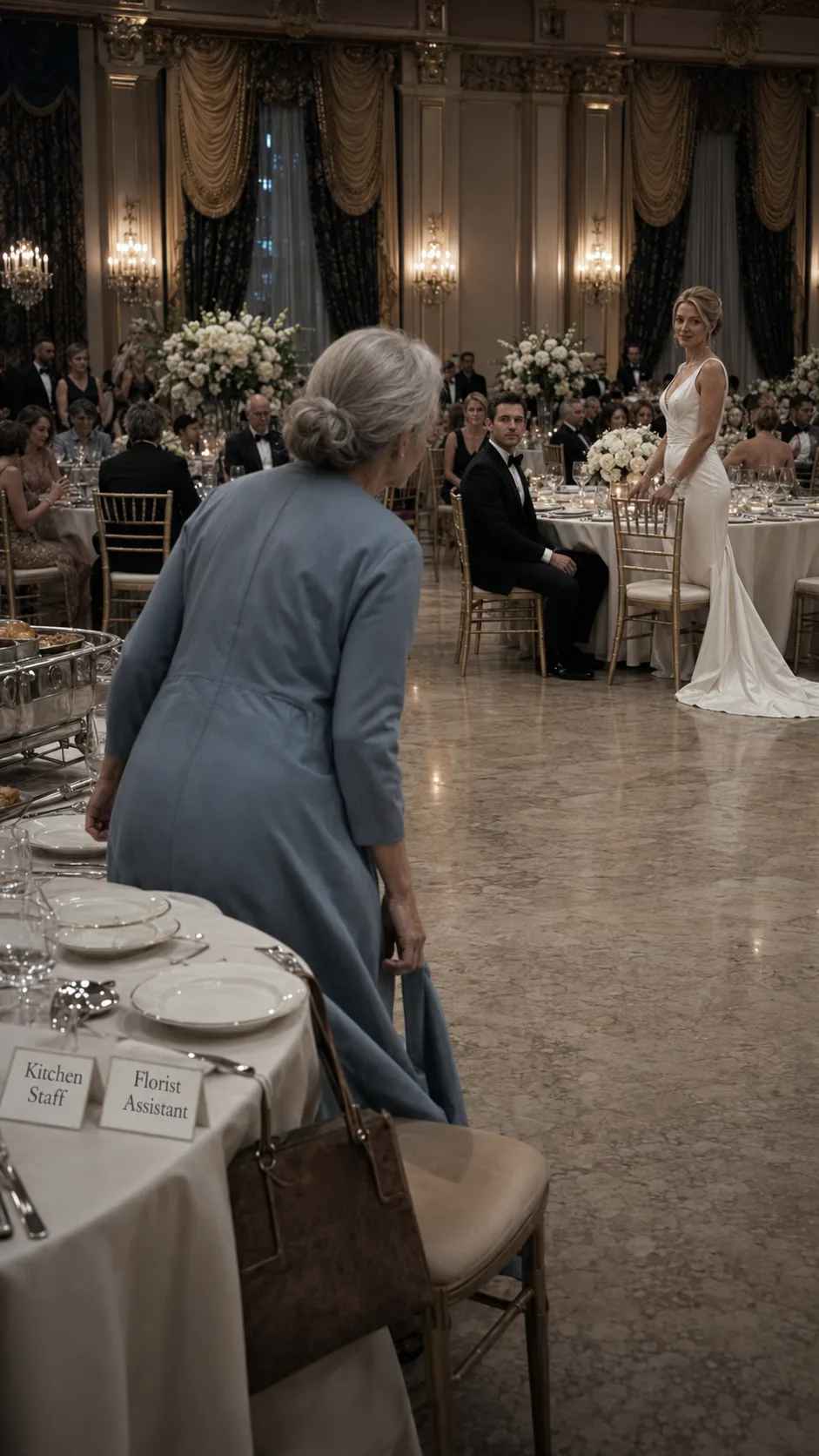
Andrew opened the envelope with hands that did not look like his own.
Chapter 3
Andrew opened the envelope with hands that did not look like his own.
The ballroom stayed silent.
Even the waiters stopped moving.
Inside the envelope was a document printed on thick cream paper, and beneath it, a photograph of a building I recognized immediately.
A small brick community center on the east side of the city.
The Harper House.
My heart stopped.
I had seen sketches of it years ago, tucked under Andrew’s arm when he came home from college with ink smudged on his fingers and dreams too big for our kitchen table.
“It was my first design,” Andrew whispered.
Harrison nodded.
“And the first project my foundation funded through your firm.”
Andrew looked up sharply. “That was an anonymous nonprofit grant.”
“It was,” Harrison said. “Because Evelyn asked me never to attach her name to anything that might make you feel bought.”
I closed my eyes.
“Mr. Mitchell, please.”
But Harrison shook his head.
“No more hiding, Evelyn. Not tonight.”
He
turned to the guests.
“Years after she saved my life, I found out her son had become an architect. Talented. Hungry. Still unknown. My advisers wanted me to hire a famous firm for the Harper House project. But when I saw Andrew’s proposal, I knew exactly where his heart came from.”
Andrew’s voice broke.
“Harper House?”
Harrison looked at me with quiet respect.
“I named it after your mother.”
Lydia gripped the edge of the table.
“That project launched Andrew’s company,” she said quickly, as if trying to take control of the room again. “It benefited everyone. Why are we acting like this is some holy sacrifice?”
Harrison turned to her.
“Because you knew.”
Lydia went still.
Andrew stared at her.
“What does that mean?”
Harrison held up another page from the envelope.
“This morning, Lydia’s attorney sent my office a revised postnuptial agreement. It would give Mitchell Holdings authority
over Andrew’s architecture firm after the marriage, including rights over all projects funded by Mitchell grants.”
Andrew’s mouth opened, but no sound came out.
Lydia’s eyes flashed.
“That is standard asset protection.”
“No,” Harrison said. “That is control.”
The crowd began whispering again.
Lydia looked around, panic rising beneath her perfect makeup.
“Andrew, don’t listen to this. My father is emotional. He gets sentimental about charity cases.”
The words landed like a slap.
Charity cases.
That was what she thought of us.
Not people.
Not family.
Cases.
Andrew stepped back from her.
“My mother sat by the buffet,” he said quietly.
Lydia blinked. “What?”
“You told the staff to seat my mother beside the buffet.”
“I was trying to keep the event elegant.”
“You pulled her chair out from under her.”
“She was making a scene.”
“My mother was asking to sit beside her son.”
Lydia’s lips trembled, but not
from remorse. From fear.
“She doesn’t understand our world, Andrew.”
Andrew looked down at the old photograph still in Harrison’s hand.
Little Andrew.
Crooked smile.
Missing teeth.
A boy who thought a paper drawing of a house could become real if his mother believed in him hard enough.
Then he looked at me.
For the first time that night, my son’s eyes filled with tears.
“Mom,” he whispered. “Why didn’t you ever tell me?”
I wanted to say something noble.
Something strong.
But all that came out was the truth.
“Because I wanted you to feel free.”
He covered his mouth with one hand.
I continued, my voice barely steady.
“When that scholarship letter came, you were so proud. You thought someone had finally seen your talent. And they had. But I didn’t want you wondering if every achievement was because your mother had once pulled a rich man out of a hallway. I wanted you to believe the doors opened because you deserved to walk through them.”
Andrew shook his head, tears spilling now.
“I let you sit alone tonight.”
I smiled sadly.
“You were afraid.”
“No,” he said. “I was weak.”
That hurt more, because it was honest.
Lydia stepped forward, her voice sharp.
“This is insane. Andrew, don’t humiliate me in front of everyone.”
He turned to her.
“You humiliated my mother in front of everyone.”
“She embarrassed herself.”
“No,” he said. “You exposed yourself.”
The room went dead quiet.
Harrison folded the papers and placed them back into the envelope.
Then he faced his daughter.
“As of tonight, you are removed from the Mitchell Foundation board.”
Lydia gasped.
“Dad!”
“You will no longer represent our charitable partnerships. You will no longer approve grants. You will no longer use this family’s name to punish people you think are beneath you.”
Lydia’s mother stood.
“You cannot do this at her wedding.”
Harrison’s face hardened.
“I can do this because it is her wedding.”
Lydia looked at Andrew, desperate now.
“Say something.”
Andrew did.
He removed the folded postnuptial papers from the envelope and tore them once.
Then again.
Then again.
The sound echoed louder than the orchestra had.
“I built my company with my mother’s sacrifice,” he said. “Not with your family’s permission.”
Lydia’s face twisted.
“So what now? You’re choosing her over your wife?”
Andrew looked at me.
Then he looked back at Lydia.
“I am choosing the woman who taught me how to be decent over the woman who punished her for it.”
A few guests began to clap.
Not loudly at first.
One person.
Then another.
Then the staff table.
The servers.
The florists.
The young woman with the clipboard, Cassie, wiping tears from her cheeks.
The applause grew until it filled the ballroom, rolling over the chandeliers and marble and white roses like a storm.
I did not want revenge.
Not really.
I only wanted my purse, my photograph, and enough dignity to leave without shaking.
But Harrison offered me his arm.
“Evelyn,” he said, loud enough for everyone to hear, “your seat is at the front.”
I looked toward the groom’s family table.
The empty chair was still there.
Only now, it did not look like a place I had begged for.
It looked like a truth waiting to be restored.
Andrew came to me before I could take a step. He bent down, gathered every coin, every tissue, every small embarrassing piece of my spilled purse. Then he picked up the old photograph and pressed it to his chest.
“I remember that day,” he whispered.
I touched his cheek.
“You were so proud of that drawing.”
“You told me houses were not just walls,” he said, voice breaking. “You said they were promises.”
I nodded.
“And I forgot mine.”
That was when I cried.
Not when Lydia seated me with staff.
Not when I fell.
Not even when two hundred people watched me struggle to stand.
I cried when my son finally sounded like the boy I raised.
Andrew took my hand and walked me to the front table himself.
Every guest watched.
Lydia stood alone beside the chair she had yanked away, surrounded by flowers that suddenly looked cold.
When we reached the empty seat, Andrew pulled it out carefully.
“Mom,” he said, “please sit beside me.”
I sat.
Not because Lydia had been defeated.
Not because Harrison had defended me.
But because my son finally understood that love without courage is just silence wearing a nice suit.
The reception ended early.
No one danced.
No one cut the cake.
By midnight, Lydia had left through a side entrance with her mother, still insisting she had only tried to “protect the family image.”
But images are fragile things.
Truth is heavier.
Six months later, Andrew moved his company out of Mitchell Tower and opened a small studio across from Harper House. On the glass door, in simple black letters, it said:
Harper Design Group.
He asked me to come to the opening.
This time, there were no chandeliers. No marble floors. No guests pretending not to stare.
Just folding chairs, coffee in paper cups, community kids running between adults, and a wall covered in drawings of houses.
One little boy held up a crooked sketch and asked Andrew if it was good enough to become real.
Andrew looked at me before answering.
“Yes,” he said. “If someone believes in it enough.”
A year after the wedding, the Mitchell Foundation held a dinner for scholarship students whose parents worked in service jobs. Harrison invited me as guest of honor.
I almost said no.
Then Andrew showed up at my door in a navy suit, holding the same old photograph in a new silver frame.
“You’re not sitting in the back this time,” he said.
So I went.
And when I entered the ballroom, the staff did not point me toward the service hallway.
They opened the front doors.
At the head table, my name card waited in gold letters.
Evelyn Harper.
Not staff.
Not charity.
Not an embarrassment.
A mother.
And this time, no one had to tell me where I belonged.
THE END.
Chapter complete
You have reached the end of this chapter.
Continue reading
A few more worlds to get lost in after this chapter.




