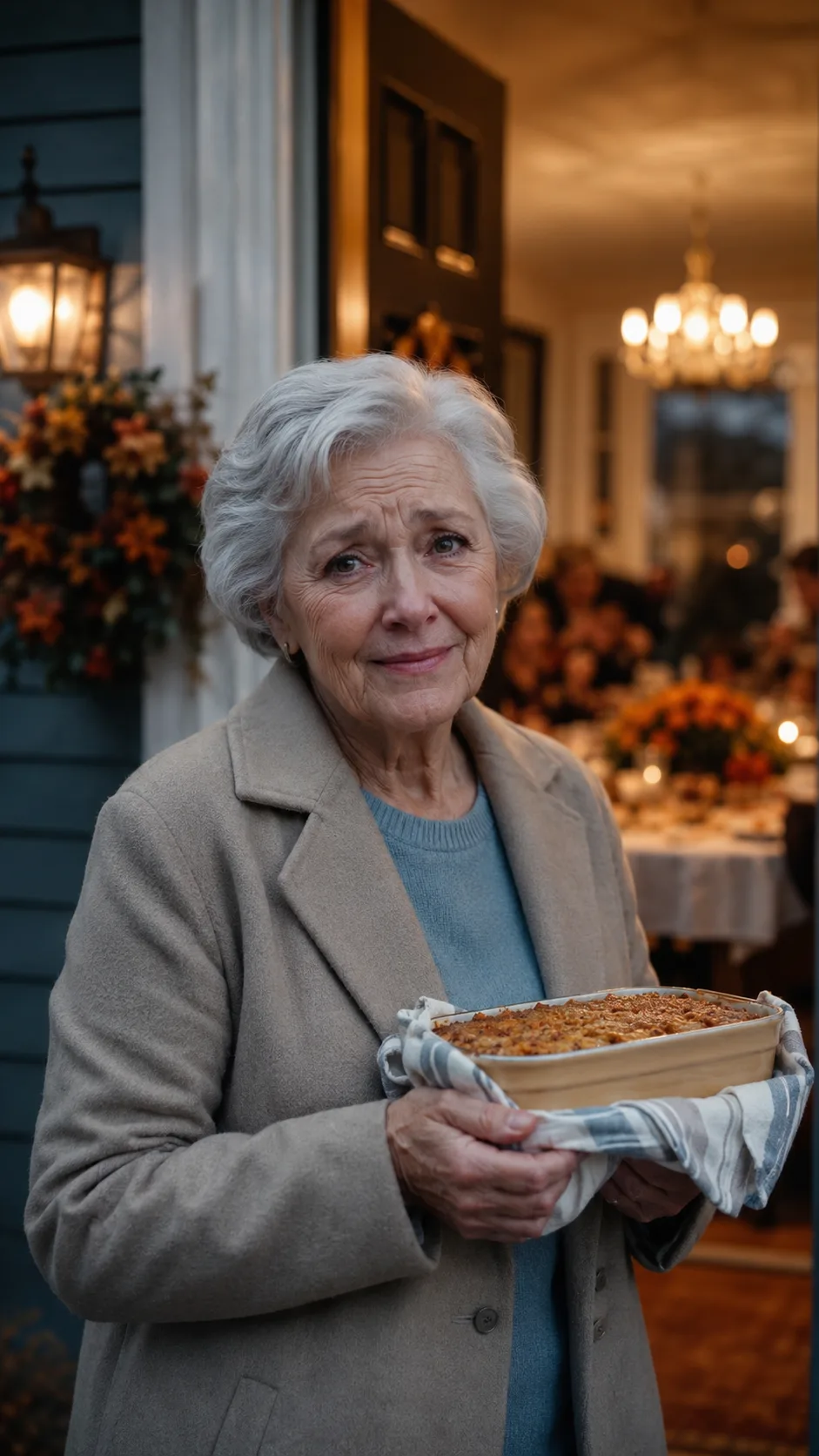
PART 2 — THE MIDNIGHT CALL THAT COST ME EVERYTHING
Let me show you how a single midnight phone call six months earlier led me to this kitchen, this coffee, and this moment of perfect, quiet clarity.
Chapter 2
PART 2 — THE MIDNIGHT CALL THAT COST ME EVERYTHING
Let me show you how a single midnight phone call six months earlier led me to this kitchen, this coffee, and this moment of perfect, quiet clarity.
Because the truth is, that Thanksgiving text wasn’t the beginning.
It was just the moment I finally stopped pretending everything was okay.
My name is Helen Parker, and I am seventy-one years old.
I know what you’re probably thinking. Seventy-one sounds like someone who should be slowing down, taking things easy, maybe spending days watching game shows, knitting blankets for grandchildren who visit twice a year.
But that’s never been who I am.
I lost my husband, David, eleven years ago. Heart attack. Quick and cruel, the kind that doesn’t give you time to say goodbye or finish the argument you started that morning about whose turn it was to take out the trash.
One moment he was complaining about the coffee being too weak, and the next moment he was gone.
The grief came in waves that first year. Some days I functioned perfectly. Other days I sat in
his favorite recliner, the big brown one we bought from a furniture outlet off I-25, and cried until my throat hurt.
Somewhere between the funeral flowers wilting and the sympathy cards piling up in a drawer I never opened again, I learned something important.
Silence can be a companion.
It can sit with you at breakfast. It can follow you through King Soopers or Safeway while you push a half-empty cart.
It can tuck you in at night when the bed feels too big and the house feels too empty.
But silence can also be a warning.
And on the night Jenna sent that message, the silence in my home felt different. It wasn’t the usual quiet that comes with watering plants or folding laundry.
It was the kind of silence that arrives right before a truth you’ve been avoiding finally shows its face.
I’ve always been the type of
person people underestimate.
I’m small, just over five feet tall, with white hair I keep short because long hair at my age feels like I’m trying too hard.
I wear comfortable shoes from the sale rack at Kohl’s. I buy groceries on Tuesdays when the store is less crowded.
I pay my bills on time and keep my house tidy without being obsessive about it.
People see a quiet older woman and assume I’m fragile, that I need protecting, that I don’t notice things.
They’re wrong.
I notice everything.
I notice when someone’s smile doesn’t reach their eyes. I notice when conversations go silent the moment I walk into a room.
I notice when invitations stop coming and excuses start piling up like dirty dishes no one wants to wash.
And I especially notice when my son starts avoiding eye contact.
Michael was always a gentle child, soft-hearted in ways
that made him easy to love and easy to hurt.
He cried when we ran over a squirrel on the highway. He brought home stray cats and argued passionately about why we needed to keep them.
He was the kid who gave his lunch money to classmates who forgot theirs, even if it meant he went hungry.
That kindness never left him, even as he grew into a man who stood six feet tall and developed his father’s broad shoulders.
But kindness without boundaries becomes a weakness.
And Michael never learned how to say no to the wrong people.
Enter Jenna.
They met at a company event seven years ago, a corporate mixer downtown at a hotel ballroom with bad wine and cold appetizers.
She worked in marketing. He worked in sales. It was one of those big American tech companies that talks a lot about “culture” and “team-building.”
Within three months, they were engaged.
I remember the first time he brought her to my house for dinner. She arrived with flowers from Trader Joe’s, complimented my cooking, and laughed at all the right moments.
I wanted to like her. I tried to like her.
But there was something about the way she looked at my home that bothered me.
Not with admiration or comfort, but with assessment. Like she was cataloging everything, measuring its worth, deciding what could be useful later.
Still, I told myself I was being paranoid. Maybe it was just the protective instinct of a mother who didn’t want to share her son.
Maybe I was reading too much into a glance or a tone. Maybe I was just lonely and jealous that someone else would become the most important person in his life.
So, I pushed those feelings down and welcomed her into our family.
The wedding was beautiful. Expensive, but beautiful. It was held at a vineyard just outside Boulder, all string lights and mason jars and curated playlists.
They honeymooned in Europe for three weeks, posting photos that made their life look like a magazine spread.
When they bought their first house, a two-story in a newly built subdivision with an HOA and a community pool, I helped with the down payment.
Not much, just enough to make the numbers work.
Michael was grateful. Jenna sent a thank-you card with a generic message that could have been copied from the internet.
That should have been my first real warning.
But mothers have a terrible habit of making excuses for the people their children love. We convince ourselves that things will get better, that time will smooth out the rough edges, that love will teach people how to be kinder.
We’re usually wrong.
Over the years, I watched Jenna slowly take control of every decision in their marriage. Where they lived, what they bought, who they spent time with, even when they visited me.
At first, Michael would call on his own. We’d talk for an hour about nothing important, work stress, funny things he saw, memories of his father.
But slowly, those calls became shorter, then less frequent.
Then they stopped altogether unless Jenna was on the line too, steering the conversation like a captain navigating through rocks.
I started hearing phrases I knew didn’t come from my son.
“We think it’s better if…”
“We’ve decided that…”
“We feel like you should…”
“We…”
Always “we.” As if Michael’s thoughts had been absorbed into hers, leaving no room for his own voice.
And whenever I suggested something, anything, that didn’t align with what Jenna wanted, the answer was always the same.
“Mom, you’re overthinking it.”
“Mom, you’re being sensitive.”
“Mom, we don’t want to upset you, so maybe it’s better if…”
Sensitive. Fragile. Easily upset.
Those were the words she planted in his head.
And eventually, he started repeating them without even realizing it.
But I wasn’t fragile.
I was observant.
And what I observed was a pattern of distance that only broke when they needed something.
Money for a car repair. Help with a home project. Babysitting their dog when they went on trips I wasn’t invited to join.
I gave freely because that’s what mothers do. We give even when it hurts, even when we know we’re being used, even when every instinct tells us to pull back and protect ourselves.
But there’s a limit to how much a person can give before they realize they’re pouring into a bottomless well.
I just didn’t know I’d reached that limit until the night Jenna sent me that message about Thanksgiving.
And now, sitting in my quiet kitchen with eighty-seven missed calls lighting up my phone screen, I understood something I should have seen years ago.
They didn’t value me.
They valued what I could provide.
And the moment I stopped providing, I stopped mattering.
But that was about to change.
Because the woman they dismissed, the mother they underestimated, the person they thought would always bend and forgive and give “one more chance,” had finally run out of mercy.
And mercy, I was learning, is only beautiful when it’s deserved.
It happened six months before that Thanksgiving text.
I was already in bed, reading a mystery novel I’d been trying to finish for weeks, the kind where you think you know who did it, but the author keeps throwing in twists that make you second-guess everything.
I remember thinking how funny it was that I loved these kinds of stories where nothing is what it seems and everyone has secrets.
I should have recognized the irony.
My phone rang at 11:43 p.m.
Nobody calls that late unless something is very wrong or very drunk.
I grabbed it off my nightstand, squinting at the screen. Michael’s name glowed in the darkness.
My stomach dropped before I even answered.
“Mom.” His voice cracked on that single word. Not the normal crack of a bad connection, but the kind that comes when you’ve been crying and trying to hold it together and failing miserably at both.
“Michael, what’s wrong?”
There was a pause, then a sound I hadn’t heard since he was twelve years old and broke his arm falling off his bike.
A sob, raw and desperate and completely unguarded.
“We’re going to lose the house.”
Five words.
That was all it took to shatter my peaceful evening and pull me into a nightmare I didn’t even know they were living.
“What do you mean, lose the house? What happened?”
“We…” He stopped, took a breath, started again. “We refinanced two years ago. We thought we could handle it, but then we needed work done on the roof, and the AC unit died, and Jenna’s car needed replacing, and we just kept…”
“We kept thinking we’d catch up, but we didn’t.”
In the background, I could hear Jenna crying. Loud, theatrical sobs that sounded less like genuine distress and more like a performance.
The kind of crying that demands attention and sympathy and immediate action.
“How much are we talking about?” I asked, even though part of me didn’t want to know.
“Six hundred and twenty thousand.”
I sat up straighter in bed.
“Six hundred and twenty thousand dollars?”
“The original mortgage was three hundred, but we refinanced for more to consolidate some debt. And then we took out a home equity line, and then a personal loan to cover some investments that didn’t work out.”
“And now everything’s coming due at once, and we can’t…”
His voice broke again.
“We can’t make the payments, Mom. They’re going to foreclose. We’ve got maybe sixty days before we lose everything.”
My mind raced through the math. Six hundred and twenty thousand dollars.
That wasn’t credit card debt or a car payment they’d missed. That was years of decisions piling up like garbage no one wanted to take out.
That was living beyond their means and hoping the future would somehow fix the present.
“Michael, how did this happen? You both have good jobs. You’ve been working steadily. Where did the money go?”
Jenna’s voice cut through the background noise, sharp despite the tears.
“Tell her about the business opportunity. Tell her we were trying to invest in our future.”
Business opportunity.
That phrase made my chest tighten.
“What business opportunity?” I asked.
Michael hesitated.
“Jenna’s cousin had this startup idea. He needed investors. It seemed solid at the time.”
“How much did you give him?”
“Eighty thousand.”
I closed my eyes.
Eighty thousand dollars to a cousin with a startup idea. The kind of decision made by people who watch too many success stories and ignore all the failure statistics.
“And the rest?” I asked.
“We wanted to upgrade the kitchen, and the trip to Italy for our anniversary, and Jenna needed a new car because hers was getting old, and we thought if we just invested a little more, the returns would cover everything.”
“But they didn’t. And now…”
His voice dissolved into something I couldn’t bear to hear.
My son, my gentle, trusting, too-kind-for-his-own-good son, was falling apart on the other end of the phone.
And in the background, Jenna’s sobs grew louder.
Perfectly timed. Perfectly desperate.
“Please, Mom,” Michael said. “I know it’s a lot to ask. I know we messed up, but we don’t know what else to do. If we lose this house, we lose everything.”
“Our credit will be destroyed. We’ll have nowhere to go. Please.”
Every instinct I had screamed at me to say no.
To tell him this was a problem they created and a lesson they needed to learn. To explain that bailing them out would only teach them that someone would always catch them when they fell.
But mothers don’t operate on logic alone.
We operate on love, even when love is the worst possible adviser.
I thought about Michael as a little boy, showing up at my door with scraped knees and broken toys, trusting that I could fix anything.
I thought about the years after David died when Michael called every single day to make sure I was okay.
I thought about the man he could be if he just learned to stand up for himself and make better choices.
And I thought about the woman crying in the background, the one who seemed to cry loudest whenever money was involved.
“Mom, are you still there?”
“I’m here,” I said quietly.
“I wouldn’t ask if we had any other option. I swear we’ve tried everything. We talked to the bank. We looked into loan modifications. We even tried selling some things.”
“But it’s not enough. It’s never enough.”
Silence stretched between us. The kind that feels like standing at the edge of a cliff, knowing you’re about to jump but not sure if there’s water below or just rocks.
“Let me think about it,” I finally said.
“Thank you. Thank you so much. I know this is huge. I know we don’t deserve this, but thank you for even considering it.”
Jenna’s voice came closer to the phone.
“We’ll pay you back,” she promised. “As soon as we get back on our feet. Every penny.”
Promises.
The currency of people who have nothing else to offer.
We hung up shortly after.
I sat in the darkness of my bedroom, staring at the wall, feeling the weight of what they were asking settle onto my shoulders like a coat made of stones.
Six hundred and twenty thousand dollars.
That was almost everything David and I had built together.
The emergency fund we saved for thirty years. The investments we carefully chose. The rental property we bought as insurance against an uncertain future.
If I gave them that money, I’d be left with almost nothing. No safety net, no backup plan, no cushion for my own emergencies.
But if I didn’t, Michael would lose his home.
And despite every red flag waving in my mind, despite every warning bell ringing in my gut, I couldn’t stand the thought of my son standing in the rubble of his own mistakes with nowhere to go.
So I made the decision that would change everything.
I decided to help them.
And in doing so, I handed them the weapon they’d eventually use to cut me out of their lives completely.
I didn’t sleep that night.
Instead, I sat at my kitchen table with a calculator, a yellow legal pad, and every financial statement I could find.
Outside, the streetlights glowed over parked pickup trucks and SUVs. Somewhere in the distance, a freight train rumbled past, the sound echoing across the flat Colorado night.
Numbers that represented thirty years of careful planning stared back at me. Numbers that David and I had built together, penny by penny, sacrifice by sacrifice.
The emergency fund: sixty thousand dollars we’d saved by skipping vacations, driving old cars, and eating leftovers until we were sick of them.
The investment portfolio: two hundred forty thousand dollars carefully grown over decades. Money we’d planned to use for our retirement travels, the road trips we never took, the national parks we never visited because David died before we could pack our first suitcase.
The rental property: three hundred twenty thousand dollars in equity from a little house two towns over that we’d bought as insurance.
David always said you needed a backup plan, something solid you could fall back on if everything else collapsed.
Together, it added up to exactly six hundred and twenty thousand dollars.
Everything we had.
I stared at those numbers until my eyes burned. Each one represented a piece of our life together.
The fund was our safety. The portfolio was our dreams. The property was our legacy.
And now I was about to hand all of it over to save my son from consequences he’d created himself.
But what choice did I have?
I called my financial adviser the next morning, a man named Gerald who’d worked with David and me for over twenty years.
He knew every dollar we had and where it came from.
“Helen, are you absolutely sure about this?” he asked after I explained what I needed.
“No,” I said honestly. “But I’m doing it anyway.”
“This is your entire safety net. If something happens to you, if you need medical care, assisted living, even just major home repairs, you’ll have nothing left.”
“I know.”
“And you’re giving this to your son, not loaning it?”
I paused. That word felt important.
Loan.
It implied repayment. Terms. Expectations. Accountability.
“I’m helping my son save his home,” I said carefully.
Gerald sighed, the kind of sigh financial advisers give when they know you’re about to make a terrible decision but can’t legally stop you.
“At least let me draft an agreement,” he said. “Something that protects you if things go wrong. Just basic documentation that clarifies this is a loan, not a gift.”
“Okay,” I agreed. Mostly because it seemed to make him feel better.
“And Helen,” he added, “get a lawyer to review it before they sign. Not theirs, yours.”
“I will.”
Two weeks later, I sat in my attorney’s office with documents spread across his big oak desk.
Jonathan Hayes had handled David’s estate after he died, and I trusted him more than most people I knew.
He read through the agreement Gerald had drafted, making notes in the margins with a pen that probably cost more than my monthly grocery bill.
“This is good,” he said finally. “But I want to add a transparency clause.”
“What’s that?”
“It allows you to release copies of this agreement to third parties if anyone accuses you of wrongdoing related to these funds. It’s protection against slander or defamation.”
“If someone tries to twist the narrative later, you’ll have legal standing to show exactly what happened.”
“Do you think that’s necessary?” I asked.
He looked at me over his reading glasses.
“Helen, you’re about to give away your entire life savings to family members. In my experience, money changes people. And when it does, they rarely remember things the way they actually happened.”
“Michael wouldn’t do that.”
“Maybe not,” Jonathan said. “But you’re not just helping Michael.”
He was right.
Of course Jenna would have equal access to that money.
And Jenna, I was beginning to understand, saw the world very differently than my son did.
“Add the clause,” I said.
Three days later, I met Michael and Jenna at a coffee shop downtown, one of those chain places with pumpkin spice lattes and free Wi-Fi, full of people on laptops pretending to work.
I brought the paperwork in a manila folder that suddenly felt heavier than it should.
Michael looked exhausted. Dark circles under his eyes. His shirt wrinkled like he’d slept in it.
Jenna looked anxious but put together. Her makeup was perfect. Her smile was nervous.
“Mom, I still can’t believe you’re doing this,” Michael said as soon as I sat down.
“Let’s just go over the agreement first,” I replied, sliding the folder across the table.
Jenna reached for it immediately, but I noticed she barely glanced at the first page before flipping through the rest.
Her eyes skimmed the words without really reading them.
Michael did the same, nodding along like he was agreeing to terms and conditions on a website.
“This just says you’re lending us the money to save the house, and if we can, we’ll pay you back,” Jenna summarized.
“Right. There’s more detail than that,” I said. “You should read it carefully.”
“We trust you, Mom,” Michael said. “If you and your attorney think this is fair, then it’s fair.”
Jenna was already signing her name at the bottom. Quick, confident strokes that betrayed no hesitation whatsoever.
Michael signed next.
Neither of them read past the first paragraph.
I should have insisted. I should have made them sit there and go through every line, every clause, every word that might matter later.
But I didn’t, because part of me still wanted to believe this was simple, that I was helping family, and family would honor that help with gratitude and respect.
How naïve I was.
The money transferred within forty-eight hours.
I watched my accounts drain in real time. Numbers disappearing from one place and appearing in another.
Sixty thousand. Two hundred forty thousand. Three hundred twenty thousand.
Gone.
All of it.
When the final transfer completed, I sat at my computer staring at the nearly empty balance.
Twelve thousand dollars.
That was all I had left from a lifetime of saving.
My phone rang almost immediately.
“Mom, it went through,” Michael said, his voice shaking with relief. “The bank confirmed everything. We’re going to keep the house. I don’t know how to thank you. I don’t know what we would have done if you hadn’t helped us.”
“You’re my son,” I said simply. “That’s what mothers do.”
Jenna took the phone from him.
“Helen, you saved us,” she said. “You literally saved our entire lives. I promise we’ll never forget this. We’re going to make you so proud. We’re going to turn everything around and show you this wasn’t a mistake.”
Promises again.
So many promises.
That weekend, they invited me over for dinner. A “thank-you celebration,” they called it.
Jenna cooked, which was rare. She made roast chicken and vegetables and even attempted a pie that came out slightly burned but tasted fine.
Michael hugged me three times before we even sat down to eat.
Jenna gave a toast.
“To Helen,” she said, raising her wine glass. “Who gave us a second chance when we didn’t deserve one. We love you so much.”
It felt genuine.
It felt warm.
It felt like maybe, just maybe, this sacrifice would bring us closer together instead of pulling us apart.
For exactly three weeks, everything seemed fine.
They called regularly. They invited me to lunch. They even brought over flowers one Tuesday afternoon for no reason at all.
But then, slowly, things started to shift.
The calls became shorter. The invitations less frequent. The flowers stopped coming.
And Jenna started using a phrase that made my chest tighten every time I heard it.
“We don’t want to bother you.”
As if my presence was a bother. As if spending time with me was an obligation instead of a choice.
I told myself I was imagining things, that they were just busy getting their lives back on track, that the distance was temporary.
But deep down, in that quiet place where truth lives even when you don’t want to acknowledge it, I knew something had changed.
Saving them hadn’t brought us closer.
It had given them permission to pull away.
Because people rarely value what comes too easily.
And I had made saving them far too easy.
The first missed Sunday dinner should have told me everything I needed to know.
For years, we’d had a standing arrangement. Every other Sunday, Michael and Jenna would come over for dinner.
Nothing fancy, just pot roast or chicken, mashed potatoes, whatever vegetables I had on hand. Sometimes we watched football, sometimes a movie, sometimes we just talked.
It was our time to catch up. To stay connected. To feel like family.
The Sunday after I transferred the money, they came as usual. Michael ate three helpings and praised everything.
Jenna complimented my table setting and took pictures of her plate like she was documenting evidence of a perfect American home-cooked meal.
Two weeks later, they canceled last minute.
“Something came up at work,” they said.
The Sunday after that, they didn’t call at all. Just sent a text an hour before they were supposed to arrive.
So sorry, not feeling well. Rain check.
“Rain check.” As if family dinners were appointments you could reschedule like dentist visits.
I told myself it was fine. People get busy. Life happens.
They were probably still adjusting to their new financial stability. Probably working extra hours to make sure they never ended up in that situation again.
I reheated the pot roast I’d made and ate it alone at a table set for three.
The pattern continued.
Canceled plans. Last-minute excuses. Text messages instead of phone calls.
And slowly, painfully, I started to notice something that made my stomach turn.
They weren’t too busy for everyone.
Just too busy for me.
I found out about the backyard barbecue from a photo Jenna posted online.
There was Michael at the grill, wearing an apron I’d given him for Christmas. There was Jenna laughing with a group of people I vaguely recognized from their wedding.
There were tables full of food, string lights hung between trees, and at least twenty people enjoying themselves in the home I’d saved.
I wasn’t invited.
I stared at that photo for longer than I should have, zooming in on their faces, happy and carefree.
I looked at the date stamp.
It was last Saturday.
The same Saturday Jenna had texted me saying they were having a “quiet weekend” at home and needed to rest.
Quiet weekend, right.
I could have said something. I could have called Michael and asked why I wasn’t included.
But I already knew the answer, or worse, I knew I’d get an excuse wrapped in concern.
We didn’t think you’d enjoy it, Mom. It was loud and went late. We know you like your peace and quiet.
As if I was too old and fragile to handle a barbecue.
The next blow came three weeks later.
Click the blue “PART 3” below to read the next part:
Chapter complete
You have reached the end of this chapter.
Continue reading
A few more worlds to get lost in after this chapter.




