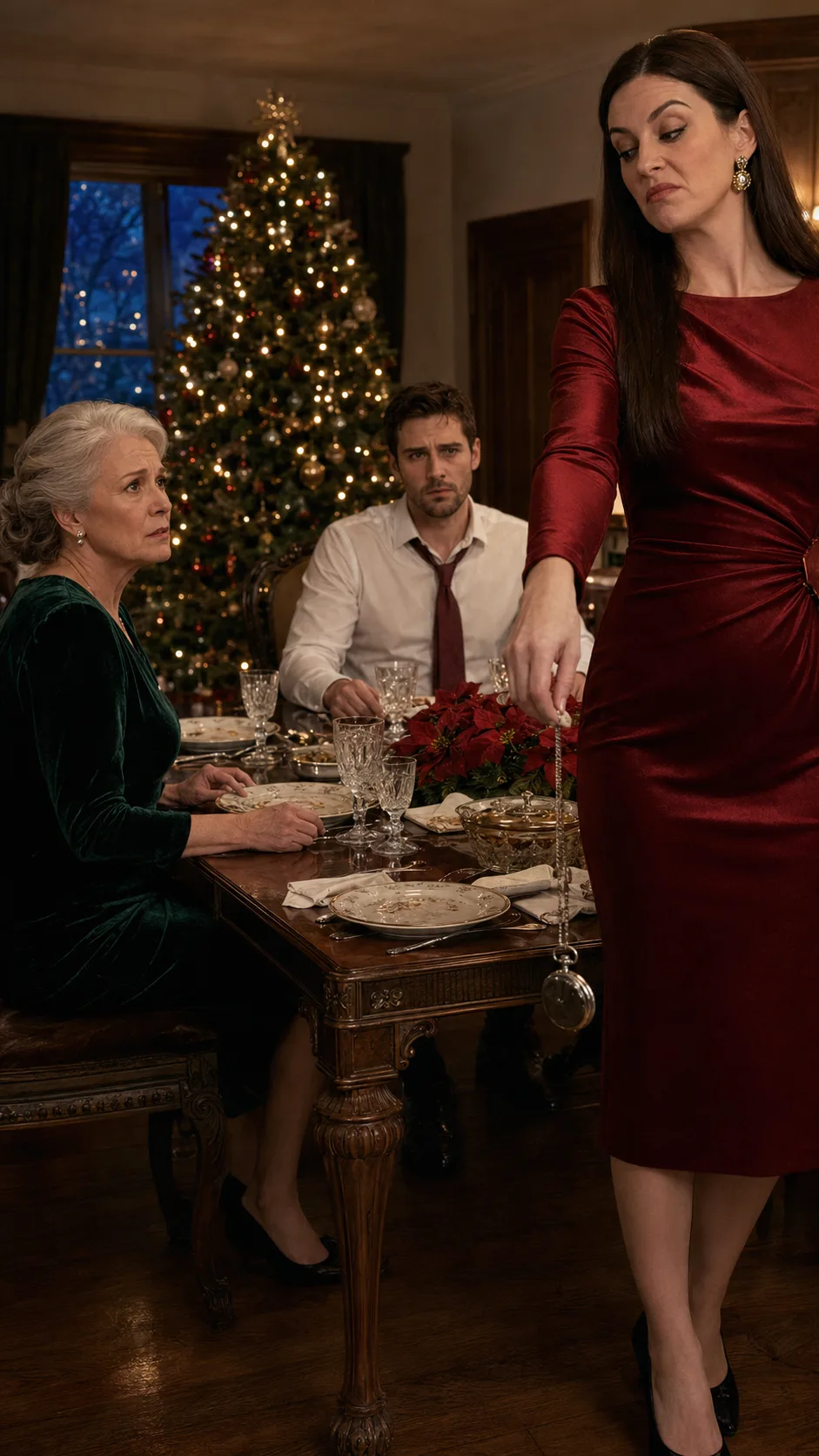
January arrived with a dry cold that made the house feel even quieter.
Chapter 3
January arrived with a dry cold that made the house feel even quieter.
Valerie and Grace remained upstairs most days, not because they had chosen peace, but because they had nowhere else to go. The people who had filled their social lives with compliments disappeared the moment the money did.
Matthew began waking before sunrise.
On his first Monday back at work, he came into the kitchen wearing old jeans, steel-toed boots, and one of his father’s faded work jackets.
“I want to start at the Mesa store,” he said.
“That is our smallest location,” I reminded him.
“It is where great-grandpa started. I need to learn from the beginning.”
I assigned him to receive deliveries, stock shelves, serve customers, and sweep the warehouse. His hands blistered, his back ached, and employees who once ignored him slowly began asking for his help.
Each evening, Valerie watched him walk through the door covered in dust.
“I cannot believe your mother has reduced you to
this,” she said.
Matthew removed his boots and looked at her calmly.
“She didn’t reduce me. She gave me the chance to become useful.”
Valerie had no answer.
In the middle of January, she approached me in the living room.
“I think we should make a reasonable arrangement,” she said.
“What arrangement?”
“You give me a monthly allowance. Nothing excessive. Thirty thousand dollars would let me maintain basic expenses while everything settles.”
I stared at her, waiting for the punch line.
“In return, I will be respectful and help around the house.”
“You are offering to behave decently if I pay you?”
Her cheeks reddened. “That is not what I meant.”
“It is exactly what you meant.”
She folded her arms. “Then what am I supposed to do?”
“Work.”
The word seemed to offend her more than any insult.
“At what?”
“Anything honest. Retail. Reception. Customer service.”
“My online work
is my career.”
“Your online career was financed by my cards.”
She looked away.
“You may remain here temporarily,” I said, “but you will buy your own personal items and contribute to the household once you are earning.”
“That is humiliating.”
“No. Humiliating is mocking the woman who paid for your life.”
A week later, Valerie accepted a sales position at a clothing store in the mall.
Her first shift lasted eight hours.
She returned with swollen feet, a wrinkled blouse, and fury in her eyes.
“The manager corrected me in front of customers,” she complained. “A woman threw six dresses on the floor and left without buying anything. People are horrible.”
Matthew served himself dinner.
“Mom dealt with difficult customers for thirty years.”
Valerie looked at me, expecting sympathy.
I gave her the truth.
“Tomorrow will be easier because today taught you what not to expect.”
She went upstairs
without speaking.
But she returned to work the next morning.
Grace spent two weeks blaming everyone. When her pension arrived, she found a room in Houston.
At the front door, she lifted her suitcase and said, “You ruined my daughter’s marriage.”
“I stopped financing it,” I replied. “If that ruined it, there was not much marriage to save.”
Grace left without saying goodbye.
Without her mother reinforcing every grievance, Valerie changed. She washed dishes, made coffee, and stopped dressing for an audience. One evening, I found her staring at overcooked pasta.
“I ruined it,” she said.
“It is not ruined. Add sauce.”
She glanced at me. “That simple?”
“Most mistakes are easier to repair when you admit them early.”
She understood I was not talking only about pasta.
By February, the house felt less like a battlefield.
Matthew earned more responsibility at the store, not because he was my son, but because he arrived first and left last. Valerie received her first paycheck and stared at the amount for a long time.
“How does anyone live on this?” she asked.
“By choosing what matters,” I said.
She bought groceries with her own money that week. At dinner, she watched us eat the food she had paid for, and something in her expression softened.
She began keeping every receipt in a small envelope. It was an ordinary habit, but for Valerie it marked a revolution: she was finally learning the difference between having access to money and earning it.
In March, she and Matthew asked me to sit with them.
They had spent hours talking behind a closed door. Both looked exhausted.
“We have decided to separate,” Matthew said.
I felt no victory.
Valerie twisted her hands in her lap. “I married him for the wrong reasons. Maybe part of me loved him, but I loved the life around him more. That is not enough.”
Matthew looked down.
“I ignored what she was because I liked what being with her made other people think about me,” he admitted. “That was not love either.”
Valerie had arranged to share a small apartment with a coworker.
When she left two weeks later, she carried two suitcases instead of three. There was no photographer, no dramatic speech, and no luxury car waiting outside.
At the driveway, she turned to me.
“I am sorry about the watch.”
I nodded. “I hope one day you understand why it mattered.”
“I am beginning to.”
She entered the rideshare and disappeared down the street.
Six months passed.
Matthew became assistant manager at Mesa. On Sundays, he returned for eggs, sweet rolls, and coffee.
One September afternoon, he arrived holding a navy velvet box.
Inside was the pocket watch.
The crystal had been replaced. The silver case had been cleaned without removing its scratches. The movement ticked steadily.
“I found a specialist,” he said. “He said the mechanism survived because it was built to last.”
I ran my thumb across the engraving.
Courage is in continuing when everyone else gives up.
“I wear it every day,” Matthew said. “Not because I deserve it yet, but because it reminds me what happens when I stop valuing what is real.”
“You picked it up,” I told him. “You repaired it. That matters.”
His eyes filled.
“Can you forgive me?”
“I forgave you when you stopped asking me to rescue you and started repairing what you had broken.”
He hugged me, and this time there was no audience.
In October, my niece Danielle showed me Valerie’s new social media page.
The luxury photographs were gone. Her plain, unfiltered page was called Valerie in Reconstruction.
Her newest post read:
A year ago, I thought losing money meant losing everything. I was wrong. I lost an illusion. Today I work retail, share a small apartment, and pay my own bills. What I have is not impressive, but it is mine. I am learning that dignity begins where pretending ends.
The post had only a few thousand likes, but the comments were real.
Matthew read it quietly.
“I am happy for her,” he said.
“Do you miss her?”
“I miss the person I believed she was. I do not miss the lie.”
In November, Rose called from the Scottsdale store.
“There is someone here asking for you.”
Valerie waited near the service counter in jeans, comfortable shoes, and a white blouse.
“I came to apologize properly,” she said.
She admitted treating me like an obstacle, my son like a path to wealth, and honest work like something beneath her. Her voice broke when she mentioned the watch.
“I cannot undo what I did.”
“No,” I said. “But you can decide what kind of person does the next thing.”
“I do not expect forgiveness.”
“I forgive you.”
Her eyes widened.
“I am not forgiving you because the past was acceptable,” I explained. “I am forgiving you because I refuse to carry it forever.”
She covered her mouth and cried.
For once, the tears asked for nothing.
The following Christmas, I invited only Olivia’s family and Matthew.
After dinner, Matthew placed the repaired watch in my hand.
“I want you to keep it until I have children,” he said. “When I pass it on, I want to be the man great-grandpa believed our family could produce.”
“You are becoming that man.”
Later, after everyone left, I sat alone beneath the porch lights and listened to the watch ticking.
I thought about the money I had lost, the humiliation I had survived, and the boundary I should have set years earlier.
Generosity without limits is not always love. Sometimes it is fear wearing a kinder face.
I had been afraid that saying no would cost me my son.
In the end, never saying no nearly did.
The watch rested warmly in my palm, scarred but working.
So was my family.
So was I.
True wealth was never the BMW, the cards, the stores, or the amount written in my will.
True wealth was knowing my dignity belonged to me—and understanding that no one could spend it unless I handed it over.
This time, I held on.
THE END
Chapter complete
You have reached the end of this chapter.
Continue reading
A few more worlds to get lost in after this chapter.




