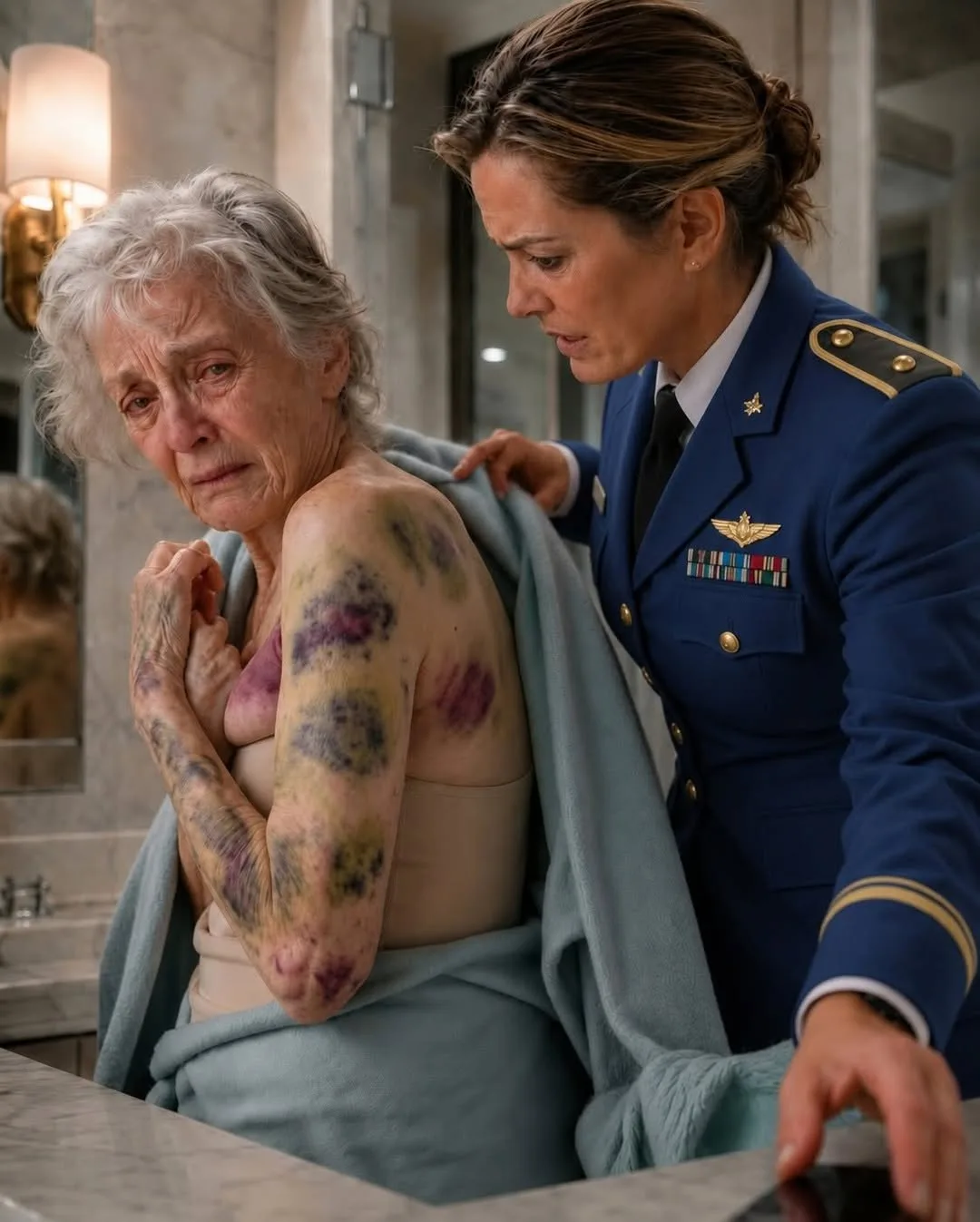
By seven the next morning, Julian had retained one of the most aggressive probate attorneys in the county.
Chapter 3
By seven the next morning, Julian had retained one of the most aggressive probate attorneys in the county.
By eight, that attorney had filed an emergency motion accusing me of manipulating our mother, abusing my government title, interfering with lawful financial arrangements, and attempting to seize control of an elderly woman's estate.
Marcus warned me before the hearing.
“From this point forward, you do not touch the investigation.”
“I know.”
“You do not contact witnesses.”
“I know.”
“You do not access any database, subpoena, or agency resource.”
“I looked at him.
“I know.”
He softened.
“I also know you're her daughter.”
That was the harder part.
At ten thirty, I sat in the back row of Judge Thorne's courtroom while another assistant attorney general handled the state’s emergency petition. I had deliberately removed myself from every official decision.
Julian arrived in a navy suit.
Chloe wore cream.
They looked like grieving caregivers who had been unfairly accused.
Mom did not attend. Her doctors said she was too weak.
Julian's attorney began exactly as expected.
He described my mother as increasingly confused, paranoid, and emotionally unstable. He presented a doctor's letter from six months earlier mentioning mild memory complaints. He displayed photographs of groceries, home improvements, wheelchair ramps, and medication organizers.
Then he turned toward me.
“Her daughter,” he said, “had visited only twice in the previous year.”
Judge Thorne listened without expression.
Then the state called Renee, the forensic nurse.
She described the bruising patterns.
The wrist injuries.
The fractures.
The sedative levels.
Julian's attorney suggested an elderly woman could bruise easily.
Renee agreed.
Then she added, “Elderly skin bruises easily. It does not spontaneously produce symmetrical restraint marks.”
The courtroom went quiet.
Next came the physician who reviewed Mom's medication.
He testified that the sedative concentration in her blood was inconsistent with her prescribed dose and could cause confusion, weakness, memory loss, and impaired judgment.
Chloe's face
changed.
Only slightly.
But I saw it.
So did Marcus.
Then the state introduced the hidden bathroom camera.
Julian's attorney objected.
Judge Thorne allowed it for the limited purpose of evaluating the emergency order.
The investigator explained where the device had been found and that a preliminary digital review showed remote access from an account registered to Julian.
Julian leaned toward his lawyer.
His whisper was frantic now.
Still, the mysterious document remained.
The message he had sent me haunted the hearing.
You have no idea what Mom signed.
At noon, court recessed.
I went to the hospital.
Mom was awake, sitting beneath a pale blue blanket with sunlight finally coming through an open window.
When I told her about Julian's message, she closed her eyes.
“There was a folder,” she whispered.
“What folder?”
“Black leather. He kept it in your father's old desk.”
“Did you sign something inside it?”
“I don't know.”
Her face twisted with shame.
“They gave me pills. Sometimes I woke up and papers were already on the table. Chloe would hold my hand around the pen.”
I swallowed my anger.
“Mom, listen to me. None of that is shameful for you.”
She looked toward the window.
“I was ashamed because I raised him.”
I pulled my chair closer.
“You raised two children. One of us made choices that belong to him.”
Her eyes filled with tears.
“And the other stayed away.”
There it was.
The truth I had been avoiding.
“Yes,” I said.
She looked at me.
I did not defend myself.
“I should have come sooner. I believed what was convenient to believe. I thought calls were enough. They weren't.”
Mom squeezed my hand.
“Then don't waste time punishing yourself. Use it to stop him.”
At 2:06 that afternoon, Marcus called the hospital room.
A search warrant had been approved.
Not because of me.
Because of the camera, financial transfers, medical evidence, and Julian's own message.
Investigators entered the house while Julian and Chloe were still at court.
They found the black leather folder in my father's desk.
Inside were six documents.
The first was a new will.
The second transferred the house to Julian upon Mom's death.
The third gave him broad medical authority.
The fourth was a deed granting him ownership interest in a commercial property Mom had inherited from my grandfather.
The fifth authorized liquidation of a trust I had not even known existed.
The sixth document was the one Julian believed would defeat us all.
It was a handwritten letter.
Mom's handwriting.
Dated eleven months earlier.
It said she wanted Julian to manage her finances because I was “too busy and too distant.”
When Julian's attorney introduced it after the recess, he held it like a weapon.
“This,” he said, “is Evelyn Vance speaking in her own words before any alleged coercion.”
Judge Thorne studied the letter.
My chest tightened.
The handwriting was unmistakably Mom's.
The signature was hers.
Julian's lawyer objected again.
Overruled.
The examiner had reviewed the letter during the recess after investigators found the folder.
She did not say the handwriting was fake.
That would have been easier.
She said something stranger.
“The page itself is authentic. The ink is authentic. Mrs. Vance appears to have written the words.”
Julian smiled.
Then she continued.
“But the lower portion of the page was chemically treated.”
His smile vanished.
The examiner displayed an enlarged photograph.
Under alternate light, faint impressions appeared beneath the visible writing.
There had once been different words on the page.
Words erased using a solvent before Mom was instructed to write over them.
The examiner had recovered enough of the underlying text to reconstruct one sentence.
I authorize Julian to pay household bills only and do not authorize the sale or transfer of any property.
The courtroom erupted.
Judge Thorne struck his gavel.
Julian turned toward Chloe.
Chloe did not look at him.
The letter he believed would save them had become evidence that someone had altered my mother's written instructions.
But the worst blow came five minutes later.
Marcus entered the courtroom and handed the prosecutor a newly obtained digital extraction from the bathroom camera system.
There were cloud recordings.
Dozens of them.
Julian had not merely watched Mom.
He had stored the footage.
One clip showed Chloe placing documents in front of her while Julian stood behind the chair.
Another captured Mom asking why her wrists hurt.
Another recorded Julian saying, “If you keep fighting us, we'll tell the judge you don't know what day it is.”
The prosecutor stopped the video.
No one needed to see more.
Julian's attorney requested a private conference.
Judge Thorne denied it.
Then Chloe suddenly stood.
“I want my own lawyer.”
Julian stared at her.
“What?”
She stepped away from him.
“I said I want my own lawyer.”
That was the moment their alliance broke.
Not when officers arrived.
Not when the bank records appeared.
Not when the bruises were documented.
It broke when Chloe realized Julian could no longer protect her.
Within an hour, her new attorney contacted investigators with an offer.
Chloe would cooperate.
She would identify accounts.
She would explain the property sale.
She would provide passwords.
And she would describe who had decided to restrain Mom.
Julian's face went gray when he learned.
He leaned across the defense table and hissed something at her.
Judge Thorne saw it.
“So the record is clear,” he said, “Mr. Vance will have no direct or indirect contact with Mrs. Vance, his sister, or his wife during the pendency of these proceedings.”
Then he extended Mom's protective order.
Suspended every financial authority Julian claimed to possess.
Froze the disputed assets.
And appointed an independent fiduciary to take control of the estate.
For the first time in months, nothing Mom owned could be moved without court approval.
I should have felt victorious.
Instead, when I returned to the hospital, I found Mom staring at an old family photograph.
Julian was twelve in it.
I was nine.
Dad stood behind us with his hands on our shoulders.
Mom touched Julian's face in the picture.
“Will he go to prison?”
“I don't know.”
“Yes, you do.”
I sat beside her.
“There is enough evidence for serious charges.”
Her fingers trembled.
“He's my son.”
“I know.”
She looked at me with tears running down her face.
“And I'm afraid that part of me still wants someone to save him.”
I took her hand.
“That doesn't mean you have to save him from what he chose.”
She leaned her head against my shoulder.
That night, Marcus called again.
Chloe had given them access to the shell companies.
But inside one account, investigators found a payment no one could explain.
Fifty thousand dollars.
Sent to a private memory-care facility three months earlier.
Mom had never lived there.
Yet the payment description contained her name.
Marcus paused before speaking.
“Elena, I think the facility wasn't for after they took the house.”
My hand tightened around the phone.
“What was it for?”
“We found an admission date.”
“When?”
He told me.
Tomorrow.
Click the blue “PART 4” below to read the final part: 👉 PART 4 👈
Chapter complete
You have reached the end of this chapter.
Continue reading
A few more worlds to get lost in after this chapter.




