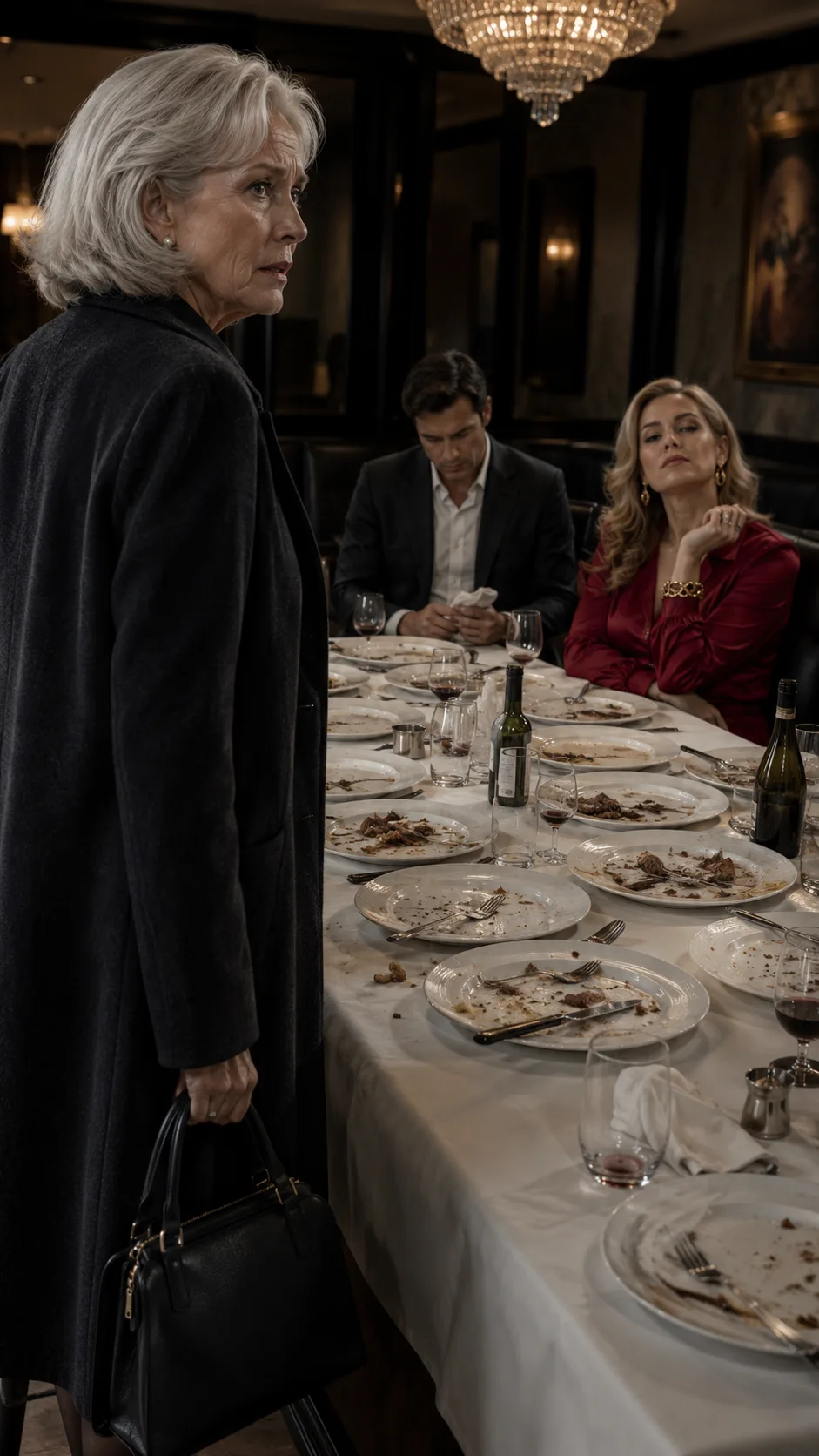
PART 3 — THE PEACE I REFUSED TO SACRIFICE AGAIN
I made a cup of tea before I opened it.
Chapter 3
PART 3 — THE PEACE I REFUSED TO SACRIFICE AGAIN
I made a cup of tea before I opened it.
That was another thing I had learned: never open a strange envelope standing up.
Inside was a printed letter from Brenda.
It was three pages long.
She began with the words, “As one mother to another.”
By the second paragraph, she was accusing me of turning Logan against his wife. By the third, she was calling my boundaries “financial punishment.” By the end of the first page, she was insisting that family elders had a duty to preserve marriages no matter how difficult young couples became.
I read the whole thing once.
Then I read it again, not because I cared what Brenda thought, but because I wanted to understand the strategy.
Buried near the bottom of the second page was the real reason for the letter.
Brenda wanted me to co-sign a consolidation loan for Logan and Chloe “for the sake of the grandchildren.”
I laughed once, very softly,
in my kitchen.
There it was.
Different envelope. Same bill.
I placed the letter in my gray binder, behind the restaurant receipt ledger and the bank authorization affidavit.
Then I emailed a scanned copy to Daniel.
He responded twenty minutes later.
“Do not answer this. I’ll handle it.”
So I did not answer.
The next Sunday, Logan asked if he could come by alone.
I agreed, but only for coffee in the garden, not inside the house. That may sound cold to some people, but I had learned that where you meet someone matters. My kitchen had too many memories of giving in. The garden was mine.
He arrived in an old navy sweater I recognized from college and jeans that actually looked like he had paid for them himself. He had lost weight, but not in a worrying way. He looked like a man who had finally run out
of excuses and started carrying his own life.
He sat across from me at the patio table and placed a folder between us.
“I found something,” he said.
I did not touch the folder.
“What is it?”
“Statements. Credit cards. Store accounts. A personal loan I didn’t know was in my name until the separation paperwork started.”
His voice cracked, but he steadied it.
“She wasn’t just spending too much, Mom. She was hiding it from me. And when I asked her about it, she said it didn’t matter because you would eventually help.”
I looked at my son for a long moment.
“Logan, I need you to understand something. What Chloe did to you does not erase what you did to me.”
He lowered his head.
“I know.”
“And I will not pay these debts.”
He nodded quickly.
“I’m not asking you to. I swear I’m not. I already
met with a credit counselor. I’m working on a repayment plan. I just wanted you to know the truth.”
That was the first time in a long while that I believed him.
Not completely. Trust does not return just because someone says the right words once. But I believed that, in that moment, he was not trying to use me.
“Why show me?” I asked.
He swallowed.
“Because I need to say this out loud. I blamed you because it was easier than admitting I had let my own marriage turn into something I didn’t recognize. Chloe didn’t make me treat you badly. I chose that. She pushed, but I chose.”
I sat still.
The words landed differently because they had no decoration around them.
No “but.”
No “you have to understand.”
No “I was stressed.”
Just responsibility.
“Thank you for saying that,” I said.
His eyes watered, but he didn’t reach for my hand. I respected that. The old Logan would have tried to turn his guilt into my comfort. This Logan let the discomfort sit where it belonged.
“There’s one more thing,” he said.
I lifted an eyebrow.
He pulled his phone from his pocket, tapped the screen a few times, and slid it across the table.
It was a screenshot from a group chat.
The date was the day of the anniversary dinner.
Chloe had written, “Move dinner to five. Don’t tell Evelyn until later. She’ll still pay if we make her feel guilty.”
Rachel had responded with laughing emojis.
Brenda had written, “Make sure the bill is all together.”
There it was in black and white.
The restaurant humiliation had not been a misunderstanding. It had been planned.
I stared at the screen, and something inside me went quiet.
Not because I was shocked. At that point, Chloe’s behavior no longer surprised me.
What stunned me was how calm I felt.
Months earlier, that screenshot would have sent me into shaking anger. Now it simply became another page in the binder.
“Send that to me,” I said.
Logan nodded.
“Already did.”
“Good.”
He waited, maybe expecting me to ask why he hadn’t stopped it. Maybe expecting me to cry. Maybe expecting me to say I forgave him because he had finally brought proof.
I did none of those things.
Instead, I poured more tea into my cup and said, “What are you going to do with the information you have now?”
He looked toward the roses.
“I’m meeting with my lawyer Wednesday.”
“Good.”
“And I’m going to ask for a custody schedule that keeps the kids stable.”
I nodded.
“Also good.”
“I don’t want them growing up thinking this is normal.”
That sentence was the first one that made my throat tighten.
Because that was the beginning of real change.
Not an apology. Not a payment. Not a dramatic promise.
A grown man deciding the pattern ended with him.
Two weeks later, Chloe made her final big move.
She posted a long message online about “older relatives who use money to control their children.” She did not use my name, but everyone knew who she meant. She wrote about being forced out of a family home, about a grandmother who didn’t care where her grandchildren slept, about being “financially abandoned” after years of loyalty.
By noon, three relatives had texted me from unknown numbers.
By two, Rachel had shared the post with a dramatic comment about “truth finally coming out.”
By four, Brenda had called Clara’s upstairs landline, which she must have found through an old directory listing, and told my tenant she should be ashamed to live in a home taken from a young family.
Clara called me immediately.
“Do you want me to respond?” she asked.
“No,” I said. “Block the number.”
Then I opened my laptop.
For ten minutes, I stared at the blank screen.
I could have written a beautiful response. I could have explained the restaurant bill, the bank form, the rent-free years, the spreadsheet, the group chat. I could have laid every ugly little receipt on the digital table and let the whole family feast on the truth.
But that would have given Chloe exactly what she wanted.
A public argument.
A stage.
So instead, I sent one email to Daniel.
He sent Chloe and Brenda a formal cease-and-desist letter the following morning, with copies of the relevant documentation attached. Not everything. Just enough.
The group chat screenshot.
The unauthorized bank form affidavit.
The lease agreement showing the upstairs unit was legally rented.
The ledger of three years of support.
The letter made one thing clear: if they continued making false claims that interfered with my tenant, my reputation, or my property, we would pursue every available civil remedy.
Chloe deleted the post within twenty-four hours.
Rachel sent me a text from a new number the next day.
“I didn’t know about the bank thing. Chloe told us you were exaggerating. I’m sorry.”
I read it once and deleted it.
There are apologies that deserve a response.
That one did not.
Brenda never apologized, but Martha stopped by the garden fence again about a week later.
This time, she did not look at me with pity.
She looked embarrassed.
“Evelyn,” she said, “I owe you an apology. I repeated something I shouldn’t have.”
I clipped a faded rose from the bush and dropped it into my basket.
“Thank you for saying that.”
“I should have known better.”
“Yes,” I said gently. “You should have.”
She flinched, but she nodded.
I did not soften it for her. That was another old habit I had retired. I no longer made other people feel comfortable after they helped make my life harder.
Fall arrived slowly.
The maple tree near the driveway turned gold around the edges, then deepened into orange. Clara decorated the upstairs windows with small white pumpkins. Julian helped me repair the back fence and refused to let me pay him, so I baked him an apple cake and left it on his porch.
My days found a rhythm.
Coffee in the morning.
Garden work before lunch.
Books in the afternoon.
Occasional phone calls with Logan, always polite, sometimes warm, never demanding.
He had moved into a smaller apartment after the separation and started taking the children to the library on Saturdays. He sent me a photo once of Emma holding a stack of picture books almost as tall as she was. Noah sat beside her with chocolate on his face from a bakery muffin.
I stared at that photo longer than I expected.
I missed my grandchildren.
That was the part nobody talks about when boundaries become necessary. You don’t just cut off the person who hurt you. Sometimes you lose easy access to innocent people standing nearby.
One evening, Logan called and asked if I would be open to seeing Emma and Noah at the park.
Not at my house.
Not with Chloe.
Just the park, for one hour, with Logan present.
I said yes.
I arrived fifteen minutes early and sat on a bench near the playground, hands folded around a paper cup of coffee.
When Logan pulled up, Emma ran toward me first.
“Grandma Evelyn!”
She hit me around the waist with both arms, and for one sharp second, I had to close my eyes.
Noah followed more shyly, holding a toy truck in one hand.
“Hi,” he said.
“Hi, sweetheart,” I replied.
We fed ducks with oats Logan had brought from home. We watched Emma climb the little rock wall. Noah showed me how his truck could roll down the slide if you placed it just right.
No one asked me for money.
No one made a scene.
No one treated my love like a service they could bill against.
When the hour ended, Emma hugged me again and asked if I could come next Saturday.
I looked at Logan.
He did not answer for me.
That mattered.
“We’ll see,” I told her. “But I would like that.”
On the drive home, I cried for the first time since the restaurant.
Not because I regretted anything.
Because I finally understood that protecting myself had not made me hard. It had made room for love that did not come with a bill attached.
Winter came early that year.
One cold December morning, Clara knocked on my door holding a plate of ginger cookies and wearing a red scarf.
“There’s a woman outside asking for you,” she said. “Not Chloe. Older. Looks nervous.”
I stepped to the window.
Brenda stood near the front walkway, arms wrapped around herself, staring at the porch like she wasn’t sure she had the right to climb the steps.
I considered not opening the door.
I would have been justified.
But curiosity is not the same as weakness, so I opened it halfway and kept the chain in place.
“Brenda.”
She looked smaller than I remembered.
“Evelyn. I won’t stay long.”
“All right.”
She swallowed.
“Chloe moved in with Rachel last week. She and Logan are finalizing the separation. I know you probably already know that.”
I said nothing.
“She told me a lot of things,” Brenda continued. “And I believed her because she’s my daughter. Maybe because I wanted to believe her.”
A car passed slowly on the street behind her.
“I’m not here to ask for money,” she said quickly. “I know what you must think.”
“Brenda, I don’t think about you nearly as much as you imagine.”
Her face tightened, but she accepted it.
“Fair.”
Then she reached into her purse and pulled out a small envelope.
“This is the bracelet Logan bought Chloe for the anniversary dinner. She put it on my dresser and told me to sell it if I was so worried about bills. I don’t want it. Logan paid for it, but I know where the money really came from in that family.”
I looked at the envelope but did not take it.
“Give it to Logan.”
“He won’t take my calls.”
“Then mail it.”
Her eyes dropped.
For a moment, I saw not an enemy, not an accomplice, but another mother who had mistaken loyalty for blindness and was beginning to pay the price.
Still, her lesson was not mine to soften.
“I’m sorry,” she said.
It was not dramatic. It was not polished. It did not fix anything.
But it sounded real.
“I hear you,” I replied.
She nodded, turned, and walked back to her car.
I closed the door.
Clara, still standing in the hall with the plate of cookies, raised her eyebrows.
“Well?”
I took one cookie from the plate.
“Some people learn late.”
Clara smiled.
“Late is still better than never.”
Maybe she was right.
By spring, Logan’s divorce process was underway. He did not tell me every detail, and I did not ask. That was part of our new relationship too. I was his mother, not his emergency banker, not his marriage counselor, not the person responsible for cleaning up every hard corner of his life.
But he did tell me one thing that stayed with me.
“I’m teaching Emma and Noah about money,” he said during one of our park visits. “Allowance, saving, giving, waiting before buying. All of it.”
I watched Noah carefully place three pebbles in a row near the sandbox.
“Good.”
Logan gave a small, tired laugh.
“Emma asked me if Grandma Evelyn is rich.”
I looked at him.
“And what did you say?”
“I told her you’re careful. And that being careful is one reason you’re safe.”
I felt something warm move through my chest.
“That was a good answer.”
He nodded.
“I’m trying to give better ones now.”
That summer, I did something I had wanted to do since I retired.
I turned the small unused room off my kitchen into a reading room.
For years, that room had been where I kept extra boxes, old paperwork, holiday decorations, and things I meant to sort through but never did. One Saturday, Julian came over with shelves he had built in his garage. Clara helped me choose curtains. Logan came by with the kids and assembled a small table under the window.
Noah placed his toy truck on the bottom shelf and declared it the room’s first decoration.
Emma made a sign in purple marker that said, “Grandma’s Quiet Room.”
I taped it inside the door.
When everyone left that evening, I sat in the new chair by the window and looked around at the shelves, the soft lamp, the clean floor, the little sign, and the silence.
For most of my adult life, I had confused being needed with being loved.
Needed felt urgent. Needed called late at night. Needed had emergencies, bills, explanations, and guilt. Needed made me feel important while quietly draining me dry.
Loved felt different.
Loved watered the plants while I traveled.
Loved paid back utilities without being chased.
Loved brought pastries to the porch.
Loved asked before entering.
Loved accepted no as an answer.
That was the difference I had spent years paying not to see.
The following Thanksgiving, Logan asked if he and the kids could come over for dinner.
I said yes, with one condition.
Everyone contributed something.
He brought mashed potatoes. Emma brought handmade place cards. Noah brought dinner rolls that were slightly crushed on one side because he insisted on carrying them himself.
Clara came downstairs with green bean casserole. Julian brought a pie.
My table was smaller than the restaurant table had been. There were no chandeliers, no $2,243.50 bill waiting at the end, no relatives watching to see what I would cover.
Just people who had brought something with their own hands.
Before we ate, Emma pointed to the empty chair near the window.
“Is someone else coming?”
I followed her gaze.
For a second, I thought of Chloe. I thought of Brenda. I thought of Rachel laughing over that restaurant bill.
Then I thought of the woman I had been that night, standing at the head of the table with her purse clutched tight, realizing she had been invited only as a payment method.
“No,” I said gently. “That chair is just there in case someone needs room.”
Julian looked at me from across the table and smiled like he understood more than I had said.
Logan bowed his head for a second.
Then Emma placed a handmade card beside my plate.
It was folded crookedly, covered in stickers, and written in purple marker.
Inside, it said, “Thank you for making the house peaceful.”
I had to look away for a moment.
Not because I was sad.
Because for once, someone had noticed the right thing.
They had not thanked me for paying.
They had not thanked me for rescuing.
They had not thanked me for swallowing disrespect so everyone else could stay comfortable.
They thanked me for peace.
And that, I realized, was what I had been buying all along without knowing it.
Only this time, I had not bought it with another check.
I had built it with a locked door, a canceled card, a spreadsheet, a hard conversation, and the courage to let grown people live with the cost of their own choices.
After dinner, Logan stayed behind to help with the dishes.
He washed while I dried, and for a while we worked in silence, the kind of silence that no longer felt like punishment.
“Mom,” he said eventually.
“Yes?”
“I used to think you saying no meant you stopped loving me.”
I folded a dish towel over the counter.
“And now?”
He looked down into the sink.
“Now I think it might be the first honest thing anyone did for me in years.”
I did not answer right away.
The old me would have rushed in with comfort, smoothing the sentence down until it no longer hurt him.
The new me let it stand.
Finally, I said, “I never stopped loving you, Logan. But I did stop paying for the version of you that was hurting both of us.”
He nodded slowly.
“I know.”
Outside, the porch light glowed over the front steps. Clara’s footsteps moved softly upstairs. Emma and Noah were laughing in the reading room, and Julian was in the living room explaining to Noah why toy trucks should not be parked inside a pie box.
My house was alive, but not chaotic.
Full, but not invaded.
Warm, but not expensive.
That night, after everyone left and the dishwasher hummed quietly in the kitchen, I took the old gray binder from my office shelf.
For years, that binder had been a record of everything I gave away and everything people expected me to keep giving.
I opened it one last time.
The restaurant bill ledger. The bank affidavit. The expense spreadsheet. The attorney letters. The screenshots. The proof.
Page after page of the life I had finally stepped out of.
I did not throw it away. I was not foolish. Documentation matters.
But I moved it from the top drawer of my desk to a labeled storage box in the closet.
Not gone.
Just no longer within reach every day.
Then I sat in my reading room, turned on the soft lamp, and opened a book.
The house settled around me.
For the first time in a very long time, I did not feel like the family ATM.
I did not feel like the backup plan.
I did not feel like the woman everyone called only when the bill arrived.
I felt like Evelyn Beckett.
A mother.
A grandmother.
A homeowner.
A woman who had finally learned that generosity without boundaries is not love.
It is a slow leak.
And I had finally stopped letting my life drain out through people who never intended to refill it.
So no, I did not regret tearing up that restaurant bill.
Not for one second.
Because the moment those little white pieces fell across the table was the moment I stopped paying for my own disrespect.
And everything good that came after began right there.
THE END.
Chapter complete
You have reached the end of this chapter.
Continue reading
A few more worlds to get lost in after this chapter.




