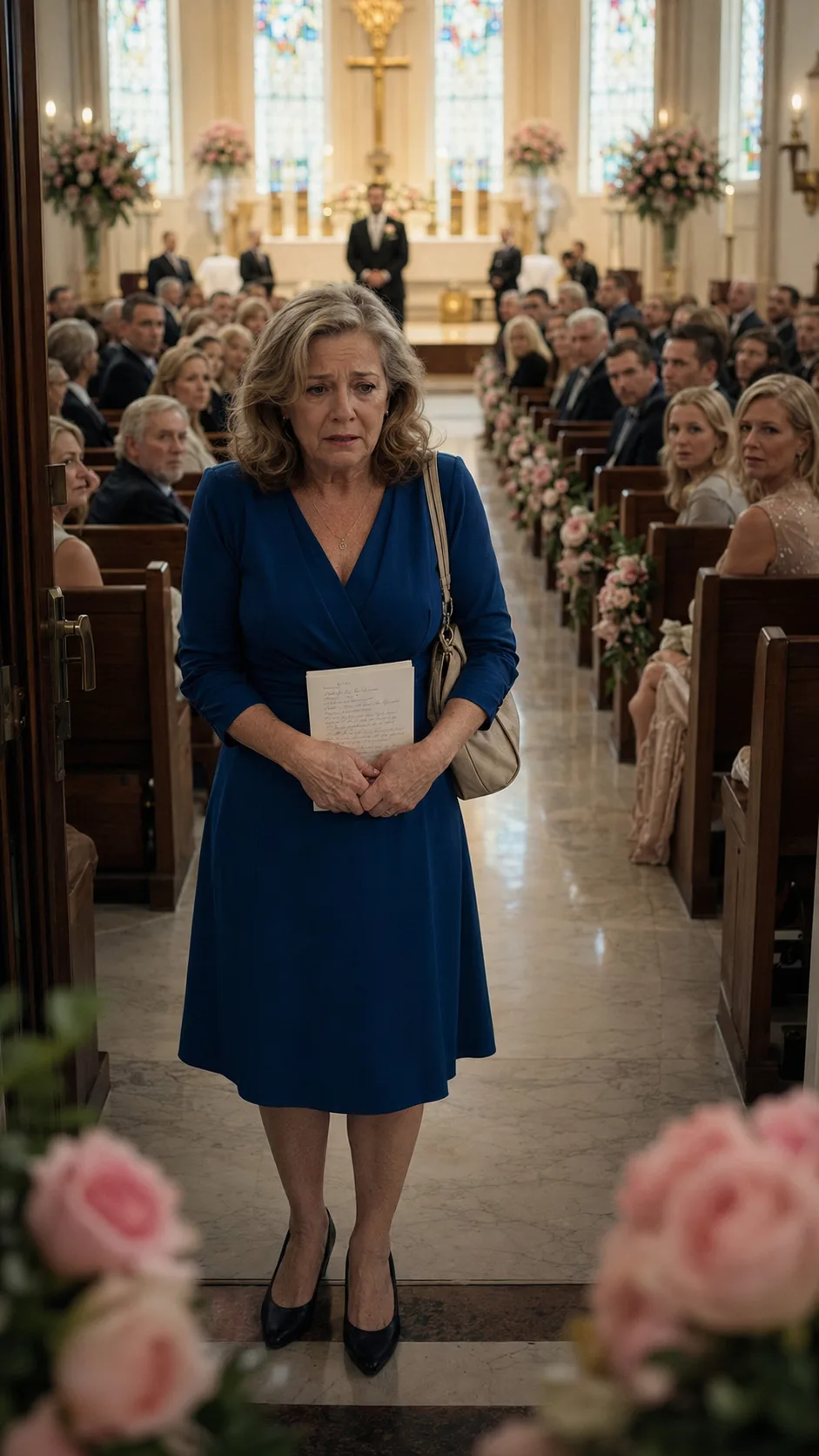
PART 2 — THE WEDDING BEGAN LOSING EVERYTHING I HAD PAID FOR
“Ma’am, these are very large amounts.
Chapter 2
PART 2 — THE WEDDING BEGAN LOSING EVERYTHING I HAD PAID FOR
“Ma’am, these are very large amounts.
Are you sure about stopping all payments?”
“Completely sure. Things have changed.”
I heard typing on her computer.
“I’ll need special codes for payments over five thousand dollars.”
I said the codes from memory.
Twenty-five years of managing my small cleaning business had taught me to remember every important number, every contract, every payment code.
“Stop payments are now active,” Jennifer said. “Confirmation numbers are being created. Do you need anything else?”
“That covers the bank part. Thank you, Jennifer.”
My next call went to Riverside Catering, the fancy company Sarah had insisted on despite their crazy high prices.
“Riverside Catering. This is Marcus speaking.”
“Marcus, this is Margaret Peterson. I’m calling about the Peterson-Williams wedding happening right now.”
“Oh, yes, Mrs. Peterson. Everything looks beautiful. The guests love the appetizers.”
“I’m afraid there’s been a money problem. Payment has been stopped. You’ll want to protect your food and equipment.”
“I’m sorry. What exactly are you saying?”
“The bank stopped payment on your contract starting right now. I suggest you get your things quickly.”
“But we’re in the middle of serving food. The main course hasn’t even come out yet.”
“That’s unfortunate timing,” I said, keeping my voice calm and professional. “You might want to talk to the wedding party about other payment options.”
Marcus hung up without saying goodbye.
Smart man.
The flower lady answered on the first ring.
“Bella’s Blooms. Susan speaking.”
“Susan, this is Margaret Peterson about the Peterson-Williams wedding flowers.”
“Mrs. Peterson, the arrangements look gorgeous. The bride was so happy with the pink roses.”
“There’s been a payment problem. Bank payment has been canceled. You’ll need to come get your flowers if you want to save any money.”
“Take them back? But they’re built into the whole church design.”
“Business is business, Susan. I suggest
you move fast.”
Four more calls followed.
Photography. Music. Even the chair rental company.
Each conversation was the same.
Professional politeness, then growing worry, then quick hang-ups as vendors rushed to protect themselves.
My phone showed 3:15 p.m. when the last call ended.
Through my windshield, I watched a white catering truck pull up to the church’s side door.
Marcus was probably coming to save what he could.
Inside that church, David was probably still greeting guests, not knowing that his perfect wedding was about to become a very expensive lesson.
Sarah was likely talking to her father’s rich friends, feeling superior to simple cleaning ladies.
Neither of them understood what they had really cost themselves today.
I started my car and drove slowly past the church entrance.
Through the tall stained-glass windows, I could see the reception starting. People holding glasses up for toasts. Fancy figures moving across polished
floors.
All of it was about to change.
My phone buzzed with an incoming call.
David’s number showed up on the screen.
I let it ring.
The dashboard clock read 3:20 p.m. when the first truck arrived.
Bella’s Blooms was painted in pretty letters across a white truck. Susan was driving with two helpers beside her. They parked near the church side door and took out empty boxes with businesslike speed.
Through the church windows, I could see the party in full swing.
Crystal glasses caught light from chandeliers as guests walked around David’s pink roses. James was talking big to a group of men in expensive suits, probably bragging about his latest business deal.
Neither bride nor groom noticed the flower team entering through the side doors.
Sarah stood near the main entrance, glowing in four thousand dollars of silk and pearls, accepting congratulations from a steady stream of relatives. Her laugh carried across the church, bright and carefree.
The sound would change soon enough.
Susan appeared in the church doorway with two large plastic boxes. She walked straight toward the altar flower arrangement. Her assistants went to the smaller displays.
Guests began turning around, confusion replacing celebration as the team started taking apart the centerpiece.
“Excuse me.”
Sarah approached Susan with the fake smile of someone used to bossing people around.
“We’re in the middle of our reception. Whatever you need can wait until later.”
Susan stood up straight, holding a bunch of pink roses.
“Ma’am, I’m Susan from Bella’s Blooms. Payment for these flowers was canceled fifty minutes ago. I need to take back our property.”
Sarah’s smile flickered but stayed.
“That’s impossible. Everything was paid for weeks ago.”
“The account holder, Margaret Peterson, called us directly. All payments have been stopped.”
Susan kept removing flowers like it was just another job.
“I have written permission to collect our arrangements.”
Color drained from Sarah’s face.
Around them, guests had stopped talking completely.
James crossed the church in quick steps, his face changing from confusion to anger.
“What exactly is happening here?”
His voice carried the authority of someone used to getting his way.
“Payment problems, sir,” Susan said. “We’re taking back unpaid merchandise.”
Susan’s helper began wrapping the altar arrangement in plastic.
“This is completely unacceptable,” James snapped, his face turning red. “Get your manager on the phone immediately.”
“I am the manager, and our contract clearly says that canceled payments end our service.”
Susan nodded to her assistants, who began collecting table flowers while guests watched in shocked silence.
The Riverside Catering truck pulled up outside as Susan’s team continued their systematic removal.
Marcus got out with three staff members.
Their faces were serious with purpose.
They entered through the main church doors this time, making no attempt to hide.
Sarah watched the roses disappear into boxes, her perfect composure cracking like a broken plate.
“There has to be some mistake,” she whispered. “My mother-in-law wouldn’t. She couldn’t.”
“Ma’am, we need to stop food service immediately.”
Marcus approached with a clipboard in his hand.
“Payment was stopped at 3:15. We have to protect our equipment and leftover food.”
James stepped between Marcus and Sarah, his voice getting louder.
“This is my daughter’s wedding reception. You can’t just stop service in the middle of an event.”
“Sir, we can and we must. When payment gets canceled, we have to protect our assets immediately.”
Marcus signaled his team, who began covering food stations with white sheets.
Guests moved nervously, champagne glasses untouched in their hands. Conversations had become worried whispers. Someone’s phone rang, sharp and annoying in the tense air.
The string quartet stopped playing when their sound coordinator arrived.
Microphones went silent.
Speakers powered down.
Even the lights seemed to change as the sound man disconnected his equipment.
Sarah stood frozen in the center of her collapsing reception, her wedding dress perfect amid the chaos of disappearing services.
“This can’t be happening,” she said. “Not today. Not like this.”
“Sarah, what kind of arrangement did your family make?”
James’s voice carried new suspicion, his anger turning from vendors toward his new daughter-in-law.
“I don’t know. Everything was supposed to be handled.”
Her voice cracked with the first hint of real panic.
The church coordinator appeared, phone pressed to her ear, speaking in urgent whispers. She approached Sarah with obvious reluctance.
“Mrs. Peterson-Williams, I just spoke with our finance office. All payments for today’s event came from one account belonging to Margaret Peterson. That account holder has canceled everything.”
Sarah’s composure shattered completely.
The little girl who had dismissed her mother-in-law from her own celebration was finally understanding how much her mother-in-law’s generosity had meant.
She pulled out her phone with shaking fingers, scrolling to a familiar contact.
Outside in the parking lot, my phone began to ring again.
David’s name lit up the screen.
Through my windshield, I could see his outline in the church doorway, phone pressed to his ear with desperate urgency.
I did not answer.
Not yet.
Twenty-eight years of loving that boy had led to this moment.
Twenty-eight years of believing that sacrifice would build character instead of destroying it.
He was four when his father left us.
Richard walked out on Christmas morning, saying he couldn’t handle being poor anymore. He left me with a little boy who asked for Daddy every day for months.
I could have found another man quickly, someone to help raise him.
Instead, I chose to be everything David needed myself.
“Mommy, will you read me another story?” he had asked at age six, curled against me in his superhero pajamas.
I had already read four books and had an early morning shift at the office building, but his brown eyes held such trust.
“Of course, sweetie. Mommy always has time for you.”
That became my promise.
Margaret Peterson always had time for David.
And money.
And whatever he needed to be happy.
Private tutoring ate up half my monthly earnings when he turned nine.
“The best education money can buy,” I told myself, writing checks that meant fewer groceries and older clothes for me.
David hugged me when I told him about Westfield Academy.
“Thank you, Mommy. I’ll study really hard and make you proud.”
He did study hard.
Straight A’s through elementary school. School plays where I sat in the front row, my cleaning-lady hands clapping louder than any other parent.
David would find me afterward, beaming with joy.
“Did you see me remember all my lines, Mommy? I was thinking about you the whole time.”
High school changed things.
Westfield Academy meant wealthy classmates with trust funds and vacation homes. David started noticing differences.
His sixteenth birthday party cost more than some people’s cars.
A used Mustang in the driveway. Catered food. Professional decorations.
“Everyone else has new cars, Mom. This used one is kind of embarrassing.”
That was 2018.
The first time money became expected rather than appreciated.
I should have seen the warning signs.
College expenses nearly broke my small cleaning business.
State University, David’s choice school, required sacrifice that went beyond tuition.
Fraternity dues. Spring break trips to Florida. Summer programs in Europe.
Each semester brought new financial demands.
“Mom, I need two thousand for the business club trip. It’s essential for networking.”
Phone calls became money requests.
Visits home decreased to holidays only.
When David did call, conversations lasted exactly long enough to explain why he needed money and how quickly he needed it transferred.
Graduate school brought Sarah into his life.
Rich family. Social connections. Everything I couldn’t provide despite decades of hard work.
David started making comments about my appearance at family gatherings.
“Could you maybe wear something nicer when you visit? Sarah’s friends will be there.”
The boy who once thanked me for bedtime stories was now embarrassed by the woman who had provided everything he had ever wanted.
Success in cleaning offices meant nothing to his new social circle.
Building the business that funded his lifestyle made me unsuitable for his lifestyle.
Last Thanksgiving, he had introduced me to Sarah’s parents as David’s mother who runs a small cleaning service.
Small cleaning service.
Twenty-eight years of building Peterson Cleaning from nothing.
Employing twelve people.
Earning enough to support his expensive lifestyle.
Reduced to small cleaning service.
“Mom, we need to talk about wedding funding. Sarah’s family has certain expectations for the ceremony.”
Not thank you for offering to pay.
Not we’d be grateful for your help.
Just expectations, as if my life’s work existed solely to meet his social requirements.
The wedding planning meetings felt like business deals.
Sarah brought spreadsheets.
James offered opinions about cost efficiency.
Neither acknowledged that every line item represented months of my labor.
Flowers imported from California.
Food that cost more per plate than my workers earned per day.
A dress worth more than most people’s rent.
“This isn’t about money, Mom. It’s about quality. Sarah’s family knows quality.”
Quality that my money bought, but my presence diminished.
The very success that made their dream wedding possible made me too common to attend it.
My phone buzzed again.
David’s fourth attempt in ten minutes.
Through the church windows, I could see him pacing, his tuxedo wrinkled from stress like a flag of surrender.
Twenty-eight years of sacrifice had created this moment.
Not a grateful son celebrating his mother’s generosity, but a desperate man finally understanding what he had lost.
The irony was perfect.
The love that had spoiled him would now teach him its true value.
I reached for the phone.
Time to answer.
My engine hummed quietly as I pulled out of the church parking lot, David’s frantic silhouette shrinking in my rearview mirror.
His phone glowed like a lighthouse in the gathering dusk, calling me for the eighth time in fifteen minutes.
Each ring felt deliberate and controlled.
My timing.
Not his.
The drive home took thirty minutes through Saturday evening traffic. Thirty minutes of watching my phone light up with David’s name, each call more desperate than the last.
By the time I reached my driveway, he had left five voicemails.
I listened to them while sitting in my garage, engine off, garage door closing behind me like a curtain falling on the day’s first act.
Voicemail one.
“Mom, something’s wrong with the payments. There’s been a mistake. Call me back right now.”
Voicemail two.
“This isn’t funny anymore. The vendors are taking everything away. People are staring. Just call me back.”
Voicemail three.
“Please, Mom. I don’t understand what’s happening. Sarah’s family is asking questions. I can’t answer.”
Voicemail four.
“I’m scared. Please pick up. Please.”
The phone rang again as I finished the fourth message.
David’s name appeared on the screen next to a photo from his college graduation.
The last time he had hugged me without needing money first.
I answered on the sixth ring.
“Hello, David.”
“Mom, finally. What have you done? How could you ruin my wedding?”
His voice carried pure panic now.
None of the controlled dismissal from that afternoon.
But panic meant awareness.
Awareness was the first step toward understanding.
“I didn’t ruin anything,” I said, keeping my voice level. “I simply stopped paying for things.”
“You can’t just stop. This is my wedding day. There are eighty people here asking why the flowers are gone and why food service stopped.”
“Where are you calling from?”
“The hotel across the street. We had to leave. The church coordinator said we needed to pay the bills before we could stay.”
So they had been asked to leave.
That explained the echo in his voice.
The absence of wedding music in the background.
“David, I need you to listen carefully. When was the last time you thanked me for anything?”
“What? Mom, this isn’t the time for lectures. I need you to call these vendors and fix this mess.”
“Answer the question. When was the last time you expressed real gratitude for my financial support?”
Silence stretched between us.
In the background, I could hear Sarah’s voice, sharp with frustration.
“I… I don’t remember specific times, but I’ve always been grateful. You know that.”
“Actually, I don’t know that. What I know is that four hours ago, you told me I didn’t belong at your wedding. A wedding I paid for entirely.”
“I didn’t mean it like that. I was stressed. Wedding day nerves.”
His voice shifted, taking on the whining tone he had perfected in college when asking for spring break money.
“Mom, please. I’ll make this up to you. We can talk about everything later, but right now I need you to okay the payments so we can save what’s left of the reception.”
“What’s left?”
“The cake is still here. Some guests are still here. The photographer is waiting to see if we can work something out.”
“And what exactly do you plan to use for payment?”
Another pause.
Longer this time.
“I… I thought you would handle it. You always handle it.”
“I always have. That’s true. Do you know how much I’ve spent on you over the past twenty-eight years?”
“Mom, please don’t make me guess numbers right now. I’m in crisis mode.”
“Take a guess. Rough estimate.”
“I don’t know. Maybe thirty thousand.”
I almost laughed.
Thirty thousand would not have covered his sophomore year at State University.
“David, I’ve spent over two hundred thousand dollars on your education, housing, transportation, and lifestyle since your father left us. That doesn’t include what I spent today.”
The line went quiet except for the sound of his breathing.
“Two hundred… That can’t be right.”
“It’s conservative. I have records for every dollar spent.”
“Why are you telling me this now?”
“Because you’ve never asked. In twenty-eight years, you’ve never once asked about the cost of your lifestyle or shown concern about the burden it placed on me.”
“Burden? I’m your son.”
“Yes, you are. And I loved you enough to sacrifice everything for your happiness. The question is, what have you sacrificed for mine?”
Sarah’s voice grew louder in the background.
He covered the phone for a moment. Their muffled argument was barely audible.
“Mom, Sarah’s family is really upset. They’re asking questions about our finances. They want to know how we’re going to pay for this.”
“That’s between you and your wife.”
“But I don’t have that kind of money. You know I don’t.”
“Then perhaps it’s time you learn to earn it.”
The silence that followed lasted nearly forty seconds.
“What do you want from me?” he finally asked.
“I want you to understand what you threw away this afternoon when you dismissed the woman who made your entire lifestyle possible.”
“I understand now. I was wrong. Can we fix this?”
“We’ll see. I’m reviewing our entire financial relationship. There will be documentation. We’ll discuss this properly when I’m ready.”
I ended the call and turned off my phone.
Through my kitchen window, I could see the lights of the city beginning to twinkle in the distance.
David was somewhere out there, facing his first night of financial independence.
The education was just beginning.
Warm light from my desk lamp cast familiar shadows across twenty-eight years of careful recordkeeping.
Filing cabinets lined one wall of my home office like soldiers, guarding secrets David had never bothered to ask about. Tonight, those secrets would finally serve their purpose.
Tea steamed beside my computer as I opened the first drawer labeled David Education, 2016 to 2020.
Behind me, the house settled into evening quiet, but my mind buzzed with a systematic energy that had built Peterson Cleaning from nothing into a twelve-employee operation.
This was not revenge.
This was an audit.
First folder: Westfield Academy.
Eight years of private school tuition. Each payment documented with bank transfers and report cards.
Six thousand dollars per year in 2016, climbing to nine thousand by graduation.
The math was sobering.
Sixty-four thousand dollars for elementary and high school education alone.
I created a new spreadsheet, fingers moving automatically across the keyboard.
Column headers.
Date.
Description.
Amount.
Category.
Running total.
Twenty-eight years of motherhood reduced to data points and formulas.
The State University folder came next, thicker than the others, bulging with dormitory contracts, meal plan agreements, study abroad program fees.
Tuition alone had been eighteen thousand dollars per year for four years.
Room and board another twelve thousand annually.
Spring break in Cancun senior year: twenty-eight hundred dollars.
Summer in London during his history phase: sixty-two hundred.
“Essential for my education, Mom,” he had said about London. “This is how people in my program network.”
Page by page, receipt by receipt, the numbers climbed.
State University total: one hundred thirty-six thousand dollars.
Four years of college cost more than most people earned in three years of work.
The transportation folder revealed its own patterns.
First car at seventeen.
A reliable Toyota for twelve thousand.
“Everyone else drives sports cars,” he had complained within three months.
Second car at twenty-one.
A Mustang for eighteen thousand.
Third car at twenty-six.
A BMW because Sarah’s friends drive luxury cars.
Each car came with insurance premiums, maintenance costs, and registration fees that David never saw.
Hidden expenses that good mothers absorbed without comment.
My phone buzzed.
David’s name appeared on the screen again.
I let it ring, adding another entry to my spreadsheet.
Phone. iPhone 13 Pro. Eight hundred dollars.
The living expenses folder contained the darkest surprises.
Postgraduation apartment downtown.
Nineteen hundred dollars monthly rent for two years.
Credit card payments when his spending exceeded the generous allowance I provided.
Averaging eight hundred dollars monthly for eighteen months.
Designer clothing purchases.
Gym memberships.
Vacation trips with friends whose parents funded similar lifestyles.
The totals grew like compound interest.
Education: two hundred thousand.
Transportation: forty-five thousand.
Housing support: sixty thousand.
Personal expenses: ninety thousand.
Wedding: seventy-eight thousand.
My calculator showed four hundred seventy-three thousand dollars.
Nearly half a million spent gradually over twenty-eight years.
Each expense seemed reasonable in isolation.
Private school was an investment in his future.
College opened doors.
A reliable car ensured safety.
Nice clothes built confidence.
The wedding celebrated love.
But the pattern told a different story.
David had never contributed a single dollar to his own support.
Never held a job longer than four months.
Never expressed concern about costs or gratitude for sacrifices.
I opened the photo albums I had maintained through his childhood.
David at nine, gap-toothed and glowing after his first spelling bee.
“Thank you for coming, Mommy. Did you see how everyone cheered?”
David at thirteen, triumphant after winning the science fair.
“I thought about you when I was nervous, and it helped me remember the facts.”
When had he stopped seeing me as a person worth thanking?
When had I become merely a source of funding for his ambitions?
My phone rang again.
David’s fifteenth call since our conversation ended.
This time, he left a voicemail.
“Mom, please answer. I’ve been thinking about what you said. I know I haven’t been grateful enough. I know I’ve taken you for granted. Sarah’s family is threatening to leave if we can’t explain the financial situation. I need to know what you want from me.”
What I wanted was twenty-eight years of appreciation that would never come.
What I needed was assurance that David understood the value of what he had casually dismissed.
I printed the spreadsheet summary and organized the supporting documents into manila folders.
Education.
Transportation.
Housing.
Personal expenses.
Wedding costs.
Each folder was thick with evidence of love translated into dollars.
Sacrifice measured in bank transfers.
Tomorrow would bring conversations David was not prepared for.
Questions about responsibility, accountability, and the true cost of entitlement.
Tonight was for preparation.
The documentation spread across my desk like evidence in a courtroom case.
Nearly half a million dollars of support provided without question, appreciation, or acknowledgment.
David had lived like royalty while treating his benefactor like hired help.
That arrangement was about to change.
My phone buzzed once more with David’s name.
I reached for it, then stopped.
Not yet.
Let him understand what helplessness felt like.
Let him taste the panic of financial dependence without guarantees.
The education would continue in the morning.
Monday morning brought crisp April air and the kind of clarity that comes from thorough preparation.
My briefcase sat by the front door, loaded with twenty-eight years of documented evidence.
Williams and Associates had agreed to an emergency consultation at 9:00 a.m., professional courtesy between businesswomen who understood that some situations could not wait.
The law office felt appropriately serious.
Oak panels. Legal books lining the walls. Certificates documenting decades of successful practice.
Jennifer Williams herself met me in the conference room. Her gray hair and sharp suit projected the competence I needed.
“Mrs. Peterson, I’ve reviewed your preliminary documentation. This level of recordkeeping is exceptional.”
She spread my folders across the polished table, scanning financial summaries with practiced efficiency.
Each page represented months of David’s lifestyle funded by my sacrifice.
“The total amount involved is nearly half a million dollars over twenty-eight years,” she said. “That’s substantial even by our standards.”
“I want this handled professionally,” I said, settling into the leather chair across from her. “No emotion. Just business. David needs to understand the financial reality of what he’s taken for granted.”
Jennifer nodded, making notes on a yellow legal pad.
“The documentation supports either gift reclassification or promissory note establishment. Given the pattern of escalating demands without reciprocal responsibility, we have multiple recovery options.”
She outlined the strategy with surgical precision.
Formal demand letter requesting full repayment within thirty days.
Detailed accounting of all expenditures with supporting evidence.
Clear timeline for response and negotiation.
Professional consequences for noncompliance.
“This approach transforms a family dispute into a business transaction,” Jennifer said. “Much cleaner for everyone involved.”
By 11:00 a.m., the documents were prepared.
Official letterhead.
Formal language.
Serious implications.
The demand was simple.
Four hundred seventy-three thousand dollars in repayment within thirty days, or legal proceedings would commence.
To be continued… Click “PART 3” to read the final part: 👉 PART 3 👈
Chapter complete
You have reached the end of this chapter.
Continue reading
A few more worlds to get lost in after this chapter.




