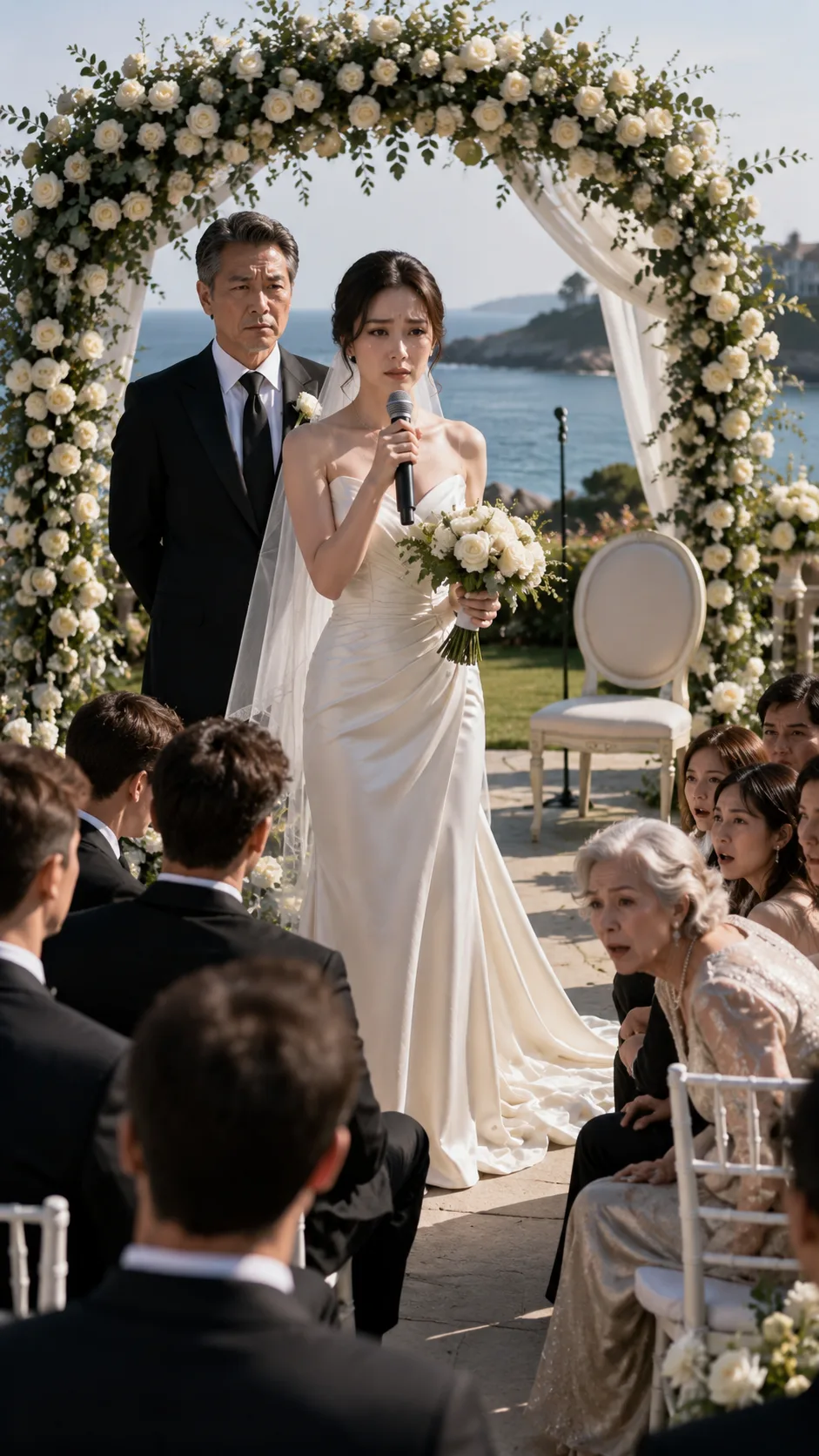
Three Hours Before My Wedding, I Learned My Fiancé Had Been Living Another Love Story
Three hours before my wedding, I found out that the man I was about to marry had not only betrayed me.
Chapter 1
Three Hours Before My Wedding, I Learned My Fiancé Had Been Living Another Love Story
Three hours before my wedding, I found out that the man I was about to marry had not only betrayed me.
He had built an entire second life beside mine.
Not a brief mistake.
Not one foolish night.
Not some drunken confession he could bury under flowers, apologies, and trembling hands.
No.
It was a love story.
His love story.
With another woman.
And the worst part was not even that he had lied. The worst part was how carefully he had done it. How beautifully he had kept both lives polished. How easily he had smiled at me while making promises to someone else. How naturally he had stood beside me through cake tastings, venue tours, family dinners, and engagement photos while sending another woman the kind of messages I had once believed belonged only to me.
My name is Evelyn Han.
That morning, I was twenty-seven years old, standing inside the bridal suite of the Marlowe House, an old coastal estate in Rhode Island with white columns, antique mirrors,
sea-facing windows, and gardens so perfect they looked unreal.
Outside, the sky was bright but cold. Early spring sunlight poured across the lawn, touching rows of white chairs, ivory roses, and a floral arch my mother had spent three weeks approving. The ocean moved quietly beyond the cliffs, calm and indifferent, as if it had watched women survive worse things than ruined weddings.
Inside the bridal suite, everything was soft and expensive.
My wedding dress hung near the window. Satin. Clean lines. Long train. No glitter, no heavy lace, nothing dramatic. I had chosen it because I wanted to look like myself, not like a woman pretending to be royalty for one day.
My mother said it made me look timeless.
My fiancé, Adrian Whitmore, had said it made me look “like the rest of my life.”
I remembered that sentence while staring at the dress.
The rest of my
life.
At eight in the morning, I still believed that was what the day meant.
By eight forty-seven, I knew it was a performance.
The morning began the way wedding mornings are supposed to begin: too many voices, too much steam from hair tools, too many people touching things that did not need touching. My mother was arranging pearl pins on the vanity. My cousin Mina was arguing with a florist on the phone because the roses near the entrance were apparently “ivory but not emotionally ivory.” My bridesmaids were drinking coffee from paper cups while trying not to stain their dresses.
I sat in front of the mirror while a makeup artist brushed color onto my cheeks.
“You have amazing skin,” she said.
I smiled politely, though my skin looked like it belonged to someone who had not slept properly in weeks.
Everyone thought brides looked tired because of
wedding planning.
I knew better.
I had been tired because something in me had been suspicious for months.
Not enough to accuse him.
Not enough to stop anything.
Just enough to feel like I was always standing near a door that someone had quietly locked from the other side.
Adrian had changed slowly.
That was the cruel thing. He had not become distant all at once. He had not suddenly started coming home at midnight or hiding his phone under pillows like men in cheap dramas.
He was smarter than that.
He remained attentive in public. He kissed my temple in front of our parents. He remembered my coffee order. He still called me “Evie” when people were listening.
But in private, something had thinned.
His eyes no longer stayed on me when I spoke. His laughter arrived half a second too late. His phone was always facedown. His trips to Boston became more frequent. He said work was expanding. He said investors were demanding. He said marriage would calm everything down.
I believed him because belief was easier than admitting I was afraid.
That morning, I was almost finished with makeup when my maid of honor, Clara, stepped into the room.
Clara had known me since college. She was not dramatic. She did not gasp for attention. She did not cry unless something truly deserved tears.
So when I saw her face, my stomach turned cold.
She stood near the door with her phone in one hand, her other hand pressed against her ribs as though holding herself together.
“Evelyn,” she said.
The makeup artist paused.
My mother glanced through the mirror. “What is it?”
Clara did not look at her.
“Can I speak to you alone?”
The room went quiet in that careful way people become quiet when they sense disaster but still hope it is only inconvenience.
My mother frowned. “Is something wrong with the seating?”
“No,” Clara said.
Her voice was too flat.
I lifted one hand, stopping the makeup artist.
“Everyone give us a minute.”
My mother immediately resisted. “Evelyn, we’re on a schedule.”
“Mom.”
She opened her mouth, then closed it.
Maybe she saw my face. Maybe she saw Clara’s.
One by one, they left: my mother, my cousin, the bridesmaids, the makeup artist carrying her brushes like surgical tools.
The door clicked shut.
For two seconds, neither of us moved.
Then Clara came toward me and held out her phone.
“I’m sorry,” she whispered.
Those two words did more damage than whatever was on the screen.
I took the phone.
There was a message from a woman named Celeste Rowan.
I read the first line.
I know this is cruel timing, but I can’t let you marry him without knowing the truth.
My hands went numb.
Below the message were screenshots. Photos. Dates. Voice notes. Receipts. A picture of Adrian standing outside a brownstone in Boston, holding two coffees. A dinner reservation under his name. A hotel confirmation. A photo Celeste had taken in a mirror where Adrian stood behind her with his hand on her waist.
His face was turned slightly away from the camera.
But I knew his posture.
I knew his watch.
I knew the way his thumb rested against a woman’s waist when he thought he owned the moment.
I scrolled.
Clara sat beside me, but she did not touch me.
Maybe she knew one hand on my shoulder would break me.
The screenshots were worse than the photographs.
I miss you already.
I hate leaving your place.
After the wedding, everything gets easier.
She doesn’t understand the pressure I’m under.
I need to get through this cleanly.
My vision blurred for one second.
Then it became painfully clear.
She.
That was me.
Not Evelyn.
Not my fiancée.
Not the woman I am about to marry.
She.
I was an obstacle in his private love story.
A problem to manage.
A ceremony to survive.
A useful connection to complete.
I scrolled further.
Celeste had written back months ago:
Then why are you marrying her?
Adrian’s answer:
Because walking away now would destroy too much. Her family is tied to everything I’ve built.
I read that sentence once.
Then again.
Then a third time, slower.
Her family is tied to everything I’ve built.
The room seemed to tilt, but I did not fall.
I placed the phone carefully on the vanity, as if it were something sharp.
Clara’s voice cracked. “Evie.”
I looked at myself in the mirror.
Half-made-up bride.
Soft curls pinned behind one ear.
Pearl earrings waiting in a velvet box.
A white robe embroidered with my soon-to-be initials.
Evelyn Whitmore.
I stared at the letters stitched into the sleeve.
E.W.
They suddenly looked like someone else’s name.
“How long?” I asked.
Clara swallowed. “Fourteen months.”
Fourteen months.
Adrian and I had been engaged for eleven.
I laughed once.
Not because anything was funny.
Because my body did not know what sound to make.
“Fourteen months,” I repeated.
Clara nodded, crying silently now.
“She said she didn’t know at first. She said he told her you two were basically over. That the wedding was complicated. That families were involved. That he needed time.”
I closed my eyes.
Of course he did.
Men like Adrian never tell one clean lie when ten useful ones will do.
“Does he know she sent this?”
“No.”
“Does anyone else know?”
“Only me. I didn’t show your mom. I didn’t know what you’d want.”
What I wanted.
That was such a strange phrase.
Ten minutes earlier, what I wanted was simple. I wanted the ceremony to start on time. I wanted my father not to cry before we reached the aisle. I wanted Adrian to look at me like he had looked at me the night he proposed.
Now I wanted impossible things.
I wanted time to reverse.
I wanted my instincts to have been wrong.
I wanted the woman in the screenshots to vanish.
I wanted Adrian to become the man I had defended inside my own head.
Instead, I had proof.
“Play the voice note,” I said.
Clara hesitated. “You don’t have to.”
“Yes,” I said. “I do.”
She pressed play.
Celeste’s voice filled the room, low and tired.
She apologized first. That almost hurt more. She sounded ashamed, but not cruel. She said she had met Adrian at a charity finance event in Boston. He had told her I was part of a life his family expected from him. He had said he cared for me but did not love me “in the way a man should love his wife.” He had said ending things before the wedding would cause a financial and social mess. He had said after the ceremony, after contracts were stable, after the new investment group closed, he would find a way to leave.
Then she said, “I believed him because I loved him. I’m not proud of that. But yesterday he told me he still planned to go through with the wedding and that I needed to be patient. That’s when I realized he wasn’t trapped. He was choosing this. He was choosing both.”
The voice note ended.
The silence after it was enormous.
Clara whispered, “What do you want to do?”
I stood.
The room swayed slightly, but I stayed upright.
I walked to the window and looked out at the garden. Staff moved between rows of chairs. A man adjusted the microphone near the arch. Guests had not arrived yet, but the place was ready for them.
Ready for a vow.
Ready for a lie.
My dress hung beside me, luminous in the morning light.
For one violent second, I wanted to tear it down.
I imagined ripping the satin from the hanger, stepping out of the robe, throwing every pearl pin into the sink, walking barefoot through the hotel service hallway and disappearing before anyone could say my name.
I could leave.
People would understand eventually.
They would whisper at first, of course. They would invent reasons. They would blame nerves, illness, family drama. Someone would say I panicked. Someone would say Adrian dodged a bullet. Someone would say maybe I had always been too intense, too proud, too difficult.
And Adrian?
Adrian would control the story.
He would look wounded. He would say he loved me but I had become unstable. He would say there had been misunderstandings. He would survive because men like him always knew how to bleed politely in public.
I turned back to Clara.
“Where is he?”
“In the groom’s suite, I think.”
“With his groomsmen?”
“Yes.”
“Good.”
Clara looked frightened. “Evelyn, don’t go there alone.”
“I’m not going there.”
Relief flashed across her face.
Then I said, “Not yet.”
At nine fifteen, I called my father.
My father, Daniel Han, was a calm man. Too calm sometimes. He had built his business from nothing, survived rooms full of people who underestimated him, and taught me that anger was useful only after it had been sharpened into decision.
He answered on the second ring.
“There’s my girl.”
That almost broke me.
I pressed my fingers against my mouth.
“Dad,” I said, “I need you to listen and not interrupt.”
The warmth left his voice immediately.
“I’m listening.”
I told him.
Not everything. Not the photos. Not every sentence. Not the humiliating details about hotel rooms and mornings after. I told him enough: another woman, fourteen months, proof, business connections, the plan to marry me anyway.
For a while, he said nothing.
Then he asked, “Are you safe?”
The question was so simple I nearly cried.
“Yes.”
“Where is Adrian?”
“His suite.”
“Does he know you know?”
“No.”
“Good.”
One word.
Cold as steel.
“Dad,” I said.
“Yes?”
“I don’t want to cancel quietly.”
He understood before I finished.
“Tell me what you need.”
Not “are you sure.”
Not “think of the guests.”
Not “this will embarrass us.”
Tell me what you need.
That was love.
“I need him kept away from me until I decide.”
“I’ll handle it.”
“I need Mom not to turn this into a reputation problem.”
A faint, humorless breath came through the phone.
“I’ll handle that too.”
“And Dad?”
“Yes?”
“I think I still want to walk down the aisle.”
This time he was quiet longer.
When he spoke, his voice was gentle.
“Evelyn, you owe no one a ceremony.”
“I know.”
“You owe no one grace today.”
“I know.”
“You do not have to be strong in a room full of people just because they expected a wedding.”
“I’m not doing it for them.”
“Then why?”
I looked at the empty dress.
“Because I refuse to be the woman who disappeared from her own story.”
At nine forty, my mother found out.
No one prepares you for watching your mother’s face change when she realizes the wedding she has spent months perfecting is not merely delayed but dead.
At first, she did what mothers raised in polite circles sometimes do. She tried to make the crisis smaller by giving it a schedule.
“We can postpone,” she said. “We can tell people you’re ill. We can say there was a private family matter. We don’t need to make an announcement today.”
I looked at her.
“She gets to be private?” I asked.
My mother froze. “What?”
“His betrayal gets privacy? His lies get softness? But I’m supposed to hide in a room so the guests don’t feel uncomfortable?”
Her face tightened. “That is not what I meant.”
“It is exactly what you meant.”
She flinched.
I had never spoken to my mother like that.
But I had also never stood in a wedding dress while my life collapsed.
My father entered then, closing the door behind him. His face was composed, but his eyes were not.
“Mei,” he said to my mother, “this is not about appearances.”
My mother turned on him. “Our daughter is about to be humiliated in front of two hundred people.”
“No,” I said.
They both looked at me.
I picked up Clara’s phone and held it in my hand.
“I was humiliated when he wrote those messages. I was humiliated when he made me stand beside him at engagement parties while he was going home to someone else. I was humiliated when he used our family name like a ladder. What happens now is not humiliation.”
My voice dropped.
“It is correction.”
My mother’s eyes filled.
For a moment, she looked not like the woman who knew exactly which fork belonged beside which plate, but like a mother watching her child bleed without a visible wound.
“What do you want me to do?” she asked.
I breathed out.
“Stand with me. Even if you hate how I do it.”
She came forward and took my hands.
“I don’t hate you,” she whispered.
“I know.”
“I hate that he made you need this kind of courage.”
That was when I cried for the first time.
Not loudly. Not dramatically.
Just one tear that slipped before I could stop it.
My mother wiped it away carefully, avoiding the makeup.
“There,” she said softly. “That one is all he gets.”
By ten thirty, the wedding had become a quiet operation.
My brother Lucas arrived still in his tuxedo shirt, sleeves rolled up, hair damp from the shower. Clara had sent him one message: Come to Evelyn’s suite now. Do not ask questions.
He came.
He read three screenshots.
Then he looked up and said, “I’m going to ruin his face.”
My father said, “No.”
Lucas laughed once. “That wasn’t a request.”
“Lucas,” I said.
He turned to me, furious and heartbroken.
“He doesn’t get your hands,” I said.
“What?”
“He doesn’t get anything else from this family. Not money. Not reputation. Not violence. Not a headline. Not a reason to act like a victim.”
Lucas stared at me.
Then he lowered the phone slowly.
“Fine,” he said. “But if he comes near you—”
“He won’t,” my father said.
And somehow I knew that was true.
The venue coordinator, Mrs. Vale—not related to Adrian, though the irony nearly made Clara laugh—entered with a clipboard and the expression of a woman who had handled collapsed tents, fainting bridesmaids, drunk uncles, missing rings, and at least three disasters involving birds.
My mother explained only that the ceremony format had changed.
Mrs. Vale listened without blinking.
Then she turned to me.
“Do you want the guests dismissed?”
“No.”
“Do you want the officiant present?”
“Yes.”
“Do you want the groom present?”
“No.”
Her pen paused.
“No groom.”
“No groom.”
“Do you want music?”
“Yes. The processional stays.”
My mother inhaled sharply.
I did not look at her.
Mrs. Vale nodded slowly. “Do you want the wedding party to walk?”
“No.”
“Do you want your father to escort you?”
“Yes.”
“Do you want a microphone?”
“Yes.”
That was the first time she looked genuinely affected.
Not shocked. Not pitying.
Respectful.
“I’ll arrange it.”
After she left, Clara came to stand beside me.
“You know people will record it,” she said softly.
“I know.”
“It may go everywhere.”
“I know.”
“That could be awful.”
I looked at her.
“Or it could be the only version of the truth that survives.”
At eleven fifteen, my father went to Adrian.
I was not there.
That was intentional.
I did not trust myself to see him yet. I did not want his face to soften me. I did not want his hands reaching for mine. I did not want his voice saying Evie in that low, practiced way. I did not want to discover that some weak, grieving part of me still wanted him to deny it convincingly enough.
So my father went.
Lucas went with him, against everyone’s advice.
They were gone for twenty minutes.
Those twenty minutes felt longer than the entire engagement.
When they came back, my father’s tie was crooked and Lucas’s knuckles were white but unbruised.
That was something.
“What did he say?” I asked.
My father removed his cufflinks slowly, as though his hands needed something to do.
“At first, he denied knowing what I meant.”
I almost smiled.
Of course.
“Then?”
“Then I showed him one screenshot.”
“And?”
“Then he said Celeste was unstable.”
Clara made a disgusted sound.
“Then he said you and he had been having problems.”
I laughed softly.
There it was.
The preparation.
The story he would have told if I had run.
“And then?” I asked.
My father’s jaw shifted.
“Then he said he loved you.”
For the first time all morning, I felt something hot rise in me.
Not grief.
Not shock.
Rage.
“Did he?”
“Yes.”
“How convenient.”
Lucas stepped forward. “He asked to see you.”
“No.”
“I told him that.”
“And?”
Lucas’s smile was sharp. “He didn’t like it.”
My father said, “He is leaving the estate.”
I turned quickly. “Leaving?”
“Yes.”
“No. He should be there.”
“Why?”
“So people see—”
“No,” my father said gently but firmly. “If he stands there, he becomes part of the image. He will perform remorse. He will look shattered. Some people will pity him because pity is easier than judgment. Today cannot be about his face.”
I hated that he was right.
The empty space would say more than Adrian ever could.
At noon, the guests began arriving.
From the bridal suite window, I watched them step out of cars and onto the gravel drive. Women in pale dresses. Men adjusting jackets. Cousins carrying wrapped gifts. Adrian’s relatives smiling tightly at mine. Friends waving to one another. People who had booked flights, bought clothes, canceled meetings, and chosen expensive shoes for a day that no longer existed.
I wondered how many of them had suspected.
There are always people who know something.
Not everything. But something.
A strange glance at a dinner. A weekend trip that made no sense. A woman’s name appearing too often. A phone turned over too quickly.
People collect fragments, then pretend they are dust.
At twelve thirty, Celeste called.
Clara looked at the screen first.
“It’s her.”
My mother stiffened.
I held out my hand.
Clara gave me the phone.
For a second, I only listened to it ring.
Then I answered.
“Hello.”
There was silence on the other end.
Then a woman’s voice.
“Evelyn?”
“Yes.”
“It’s Celeste.”
“I know.”
Her breath trembled. “I’m sorry.”
The words were small, but they sounded real.
I sat on the edge of the sofa.
“Did you know he was still marrying me?”
“Not at first.”
“But eventually?”
A pause.
“Yes.”
The honesty hurt, but I preferred it to pleading.
“Why tell me today?” I asked.
“Because last night he came to my apartment after the rehearsal dinner.”
I closed my eyes.
My mother turned away, one hand over her mouth.
Celeste continued.
“He said he needed me to be patient. That after today he would have more control. That marrying you didn’t mean what people thought it meant.”
My grip tightened around the phone.
“And what did you think?”
“I thought I had become someone I didn’t recognize.”
Neither of us spoke.
Then she said, “I know I don’t deserve your kindness.”
“You’re right,” I said.
She inhaled sharply.
“But you gave me the truth before I gave him my life. So I won’t waste time hating you today.”
Her voice broke. “I’m sorry.”
“I believe that.”
“I loved him.”
I looked at my wedding dress hanging in the light.
“So did I.”
The sentence sat between us, not as forgiveness, but as a fact.
After the call ended, I felt older.
Not stronger.
Older.
As if something childish had been taken from me and replaced with a bone-deep knowledge I had never asked for.
At one o’clock, I ate half a piece of toast because my father threatened to carry me down the aisle if I fainted.
At one fifteen, my mother helped me into the dress.
No one spoke for a while.
The satin slid over my body, cool and heavy. Clara fastened the buttons along my spine. My mother adjusted the waist. Mina knelt to straighten the hem, crying quietly even though she kept pretending she had allergies.
When I turned toward the mirror, the room became silent.
I looked like a bride.
That was the cruelest part.
I looked like a woman about to be chosen.
My mother placed the veil carefully into my hair.
“Do you still want this?” she asked.
“The veil?”
“The walk.”
I looked at myself.
My face was pale. My eyes were bright but dry. My mouth looked too calm.
“Yes,” I said.
“Then walk slowly.”
I turned to her.
She touched my cheek.
“Make them see you.”
At two o’clock, the music began.
The bridal suite emptied around me.
Clara hugged me first.
“I’ll be right behind you,” she whispered.
“No,” I said.
She pulled back.
“I want to walk alone with my father.”
She nodded, understanding.
My brother stood by the door. He looked like he had aged five years since morning.
“You look terrifying,” he said.
I almost laughed.
“Thank you.”
“I mean it as a compliment.”
“I know.”
My father waited in the hallway.
When he saw me, his face changed.
He did not cry, but something in his eyes folded.
“My beautiful girl,” he said.
For one moment, I was six years old again, standing on his shoes while he taught me to dance in our kitchen.
Then I was twenty-seven, about to walk into the ruins of a wedding and make them mine.
He offered his arm.
I took it.
The doors to the garden were closed.
Beyond them, I could hear the guests shifting, the ocean wind moving through hedges, the soft tremble of strings.
My father leaned close.
“You can still stop.”
I looked at the doors.
“No.”
“Are you afraid?”
“Yes.”
“Good,” he said.
I looked at him.
“Courage without fear is just performance.”
The doors opened.
Two hundred people turned.
The music rose.
For one breath, the world narrowed to light.
Then I saw everything.
The white aisle runner.
The flowers.
The rows of guests.
The empty place beneath the arch where Adrian should have stood.
That empty space hit the crowd before my words ever could.
I heard the first whisper before I took my third step.
Where is he?
My father’s arm was steady beneath my hand.
We walked slowly.
Not because I wanted drama.
Because my legs needed time to remember they belonged to me.
I saw Adrian’s mother in the front row. Margaret Whitmore, elegant as carved stone, pearls at her throat, confusion tightening her mouth. Beside her, Adrian’s father stared at the empty arch as though discipline alone could summon his son into place.
I saw my grandmother sitting upright, both hands folded over her cane. Her eyes did not leave me.
I saw friends. College roommates. Business partners. Distant relatives. People who had come to witness me become a wife.
Instead, they were about to witness me become something else.
At the end of the aisle, my father kissed my cheek.
“I’m here,” he whispered.
“I know.”
He stepped aside.
Mrs. Vale handed me the microphone.
It felt heavier than it looked.
The officiant stood near the arch, pale and uncertain. I gave him the smallest nod.
Then I turned toward the guests.
The garden was silent.
Even the ocean seemed far away.
I lifted the microphone.
“Thank you all for coming.”
My voice carried clearly.
That surprised people. I saw it in their faces. They had expected trembling. Tears. Confusion. A bride unraveling.
I gave them none of that.
“I know many of you traveled a long way to be here today. You came expecting a wedding. So did I.”
A small movement passed through the crowd.
I continued.
“This morning, three hours before this ceremony, I learned that the man I was supposed to marry has been in another relationship for more than a year.”
A sharp gasp came from the left side.
Someone whispered, “Oh my God.”
Margaret Whitmore went rigid.
I kept my eyes forward.
“I learned that while I was planning this wedding, he was making promises elsewhere. While our families were preparing to join, he was using that future for his own benefit. While I was standing beside him honestly, he was building a life that required me to remain blind.”
My hand shook once.
I tightened it around the microphone.
“I will not explain every detail. I will not turn another woman’s pain into entertainment. And I will not stand here pretending this is a misunderstanding so everyone can be more comfortable.”
The silence changed.
It became attention.
Deep, total attention.
“The marriage will not happen.”
There it was.
The death of the day.
Spoken plainly.
Permanent.
My mother closed her eyes.
My brother stared at the ground, jaw clenched.
My father stood behind me like a wall.
I looked toward the empty place beside me.
“For a long time, I thought love meant being patient. Being graceful. Being understanding. I thought it meant waiting for someone to become the man he promised he was.”
I turned back to the guests.
“But love does not ask a woman to walk into a lie with a smile on her face.”
Someone in the back began crying softly.
“So today, there will be no vows. No first kiss. No introduction of husband and wife.”
My voice lowered.
“But there will be a reception.”
A ripple of confusion moved through the rows.
“Yes,” I said. “Dinner has been prepared. Music has been arranged. Flowers have already bloomed for a day they did not choose.”
A few people gave shocked, nervous laughs.
I almost smiled.
“You are welcome to stay. Not to celebrate a marriage, but to witness a woman step out of the wrong future before it becomes her life.”
For a moment, no one moved.
Then my grandmother stood.
She was eighty-two, small, elegant, and proud enough to frighten doctors.
She placed one hand on her cane.
Then she clapped.
Once.
Firm.
Again.
Again.
My father stood next.
Then my mother.
Then Lucas.
Then Clara.
And then, one row at a time, the garden rose.
The applause did not sound like celebration.
It sounded like release.
I lowered the microphone.
For the first time all day, I let myself breathe.
The reception was strange.
There is no other word for it.
Strange and painful and beautiful in a way I still struggle to explain.
The staff removed the sign with our names. Someone took away the framed engagement photos near the entrance. The cake stayed because, as Mina pointed out through tears, “That cake did nothing wrong.”
So we ate it.
The band did not play love songs at first. They played quiet jazz, then old classics, then eventually something light enough that people began moving again.
Guests approached me carefully, as if I were a glass object that might break if touched too quickly.
Some apologized though they had done nothing.
Some hugged me too long.
Some said foolish things because pain makes people clumsy.
“You’re better off.”
“At least you found out now.”
“Everything happens for a reason.”
I accepted the kindness and ignored the phrases.
Adrian’s parents left early.
His mother came to me before she went.
For a moment, I thought she might defend him. I prepared myself for it.
Instead, she looked at me with a face emptied of pride.
“I did not know,” she said.
“I believe you.”
Her lips trembled. “I am sorry my son brought this to your door.”
That sentence almost did what Adrian had failed to do.
It almost broke me.
I nodded because I could not speak.
She touched my hand once, then left with her husband following behind her, smaller than he had looked when he arrived.
At some point, my father asked if I wanted to change out of the dress.
I looked down at the satin.
“No.”
He did not question me.
I wore it through dinner.
I wore it while eating cake from a small plate.
I wore it while dancing with my father under the string lights because the bandleader, gently and without announcement, began playing the song that was supposed to have been my first dance.
My father held out his hand.
I stared at it.
Then I took it.
We danced slowly in the middle of a floor meant for me and Adrian.
Halfway through, my father said, “I’m proud of you.”
I closed my eyes.
“Don’t. I’ll cry.”
“Then cry.”
“I don’t want to.”
“Then don’t.”
I laughed once into his shoulder.
It hurt, but it was real.
Across the room, my mother watched us with both hands pressed to her mouth.
At eleven that night, I returned to the bridal suite alone.
The room was dim now. The makeup brushes were gone. The coffee cups had been cleared. Someone had placed my bouquet in a vase by the window.
My phone was full.
Missed calls.
Messages.
News from people who had heard.
Videos already spreading.
Family checking on me.
Friends telling me I was brave.
Strangers beginning to form opinions about a life they did not know.
And Adrian.
Fifteen missed calls.
Four texts.
Evie, please call me.
You don’t understand everything.
What you did today was cruel.
I still love you.
I stared at that last sentence for a long time.
Then I deleted the thread.
Not because it did not hurt.
Because it did.
It hurt so badly that for a moment I sat on the floor in my wedding dress and pressed both hands against my chest as if I could hold myself together manually.
But pain is not proof of love.
Sometimes pain is only proof that something was removed without anesthesia.
Clara came in near midnight.
She found me sitting beneath the window, veil on the floor beside me.
“Do you want me to stay?” she asked.
“Yes.”
She sat beside me without asking more.
For a while, we listened to the ocean.
Then she said, “Do you regret doing it publicly?”
I thought about the aisle.
The microphone.
The gasp in the crowd.
My grandmother standing.
The empty place beneath the arch.
“No,” I said.
“Do you regret loving him?”
That question took longer.
Finally, I said, “I regret not loving myself sooner.”
The weeks after the wedding were worse than the wedding.
People do not understand that.
They think the dramatic day is the hardest part. The ruined ceremony. The public announcement. The whispers.
But the hardest part is afterward.
The quiet.
The administrative grief.
Canceling the honeymoon.
Returning gifts.
Reading vendor emails.
Explaining to distant relatives.
Removing his name from accounts.
Finding his cufflink in a drawer.
Seeing his favorite wine at the grocery store.
Waking up and forgetting for three seconds before remembering everything.
Grief is cruelest in small objects.
Adrian tried to reach me for two months.
At first, he apologized.
Then he defended himself.
Then he blamed stress.
Then he blamed me.
Then he returned to apology again, as if emotional circles could become progress if repeated enough times.
In one email, he wrote:
You made me look like a monster.
I replied only once.
You did that privately. I only refused to hide it publicly.
After that, I blocked him.
Celeste contacted me once more.
She sent a letter.
Not a message. A real letter.
She said she had ended everything with Adrian the day she sent me the proof. She said she was starting therapy. She said she knew apology could not erase harm, but she wanted me to know that telling the truth had changed her too.
I read the letter twice.
Then I placed it in a drawer.
I did not forgive her that day.
But I stopped carrying her.
There is a difference.
Six months later, I moved out of the apartment Adrian and I had chosen together.
It was ridiculous how much that apartment had become a museum of almost.
The dining table we bought for dinner parties.
The guest towels my mother insisted every married couple needed.
The empty wall where wedding photos were supposed to hang.
On the last day, I stood in the living room with the keys in my hand and looked around.
I expected to feel defeated.
Instead, I felt clean.
Not happy yet.
But clean.
A year after the wedding, Clara convinced me to attend a charity dinner at the same hotel group that owned the Marlowe House.
I almost said no.
Then I realized I was tired of giving places power over me.
So I went.
I wore a black dress. Simple. Sharp. No pearls.
Halfway through the evening, an older woman approached me. I recognized her vaguely from the wedding. She had been a friend of Adrian’s family.
She took my hand.
“You probably don’t remember me.”
“I do,” I said politely.
“I was there that day.”
Most people said it like a confession.
She said it like a blessing.
“I want you to know something,” she continued. “My granddaughter watched the video. She had been engaged to a man who made her feel small. She left him two weeks later.”
I did not know what to say.
The woman squeezed my hand.
“You thought you were saving yourself,” she said. “You did. But not only yourself.”
That night, I went home and cried.
Not from sadness.
From the strange, aching realization that survival sometimes travels farther than the person who survives.
Two years passed.
The dress remained in a garment bag at the back of my closet until one rainy Saturday when I finally took it out.
It was still beautiful.
That bothered me.
Part of me wanted it to look ruined. Yellowed. Cursed. Changed by what had happened.
But it was only fabric.
Innocent.
I ran my hand over the satin.
Then I called a charity that helped women rebuilding their lives after leaving difficult relationships, financial control, family pressure, or unsafe homes.
The volunteer who came to collect the dress was young, maybe twenty-two. She held the garment bag carefully.
“This is a stunning gown,” she said.
“Yes,” I replied.
“Are you sure you want to donate it?”
I looked at the dress one last time.
For a second, I saw myself beneath the arch.
Then I saw the applause.
Then I saw the empty place beside me and realized it no longer frightened me.
“Yes,” I said. “It deserves a better memory.”
After she left, I stood in my doorway and felt something loosen.
Not dramatically.
No music.
No sudden transformation.
No perfect healing.
Just space.
The kind of space a lie leaves behind when it finally moves out.
People still ask about that day sometimes.
Not as often now.
But sometimes.
They ask if I was embarrassed.
I tell them yes.
Of course I was.
Anyone who says dignity removes pain is lying. I was devastated. I was humiliated. I was furious. I was heartbroken in a dress that cost more than my first car.
But embarrassment did not kill me.
Silence would have done worse.
They ask if I hated Adrian.
For a while, yes.
Then hatred became boring.
Then it became heavy.
Then it became unnecessary.
Now, when I think of him, I feel something closer to distance than anger. He is a person I once loved because I did not yet know all of him. That is not my shame.
They ask if I would do it again.
Walk down the aisle.
Take the microphone.
Tell everyone.
Yes.
A thousand times, yes.
Because that day was not the day I lost a husband.
It was the day I refused to become a wife to a lie.
It was the day my father walked me not toward marriage, but back toward myself.
It was the day my mother stopped asking how things looked and started asking how I felt.
It was the day my brother learned that protecting me did not mean breaking someone else.
It was the day my grandmother stood first.
And sometimes, when I remember the sound of that single clap beginning in a silent garden, I think that was the real vow of the day.
Not his.
Mine.
A vow to never again confuse endurance with love.
A vow to never mistake public peace for private truth.
A vow to never abandon myself just because leaving would make other people uncomfortable.
Three hours before my wedding, I learned the man I loved had given his heart to someone else while keeping my future in his pocket.
For three hours, I had to decide whether to disappear or stand.
I stood.
Not because I was unbroken.
Because I finally understood that broken things can still choose where they fall.
And I chose not to fall at his feet.
I chose the aisle.
I chose the microphone.
I chose the truth.
And by sunset, the wedding everyone came to witness was gone.
But I was still there.
That was the beginning of my life.
THE END.
Chapter complete
You have reached the end of this chapter.
Continue reading
A few more worlds to get lost in after this chapter.




