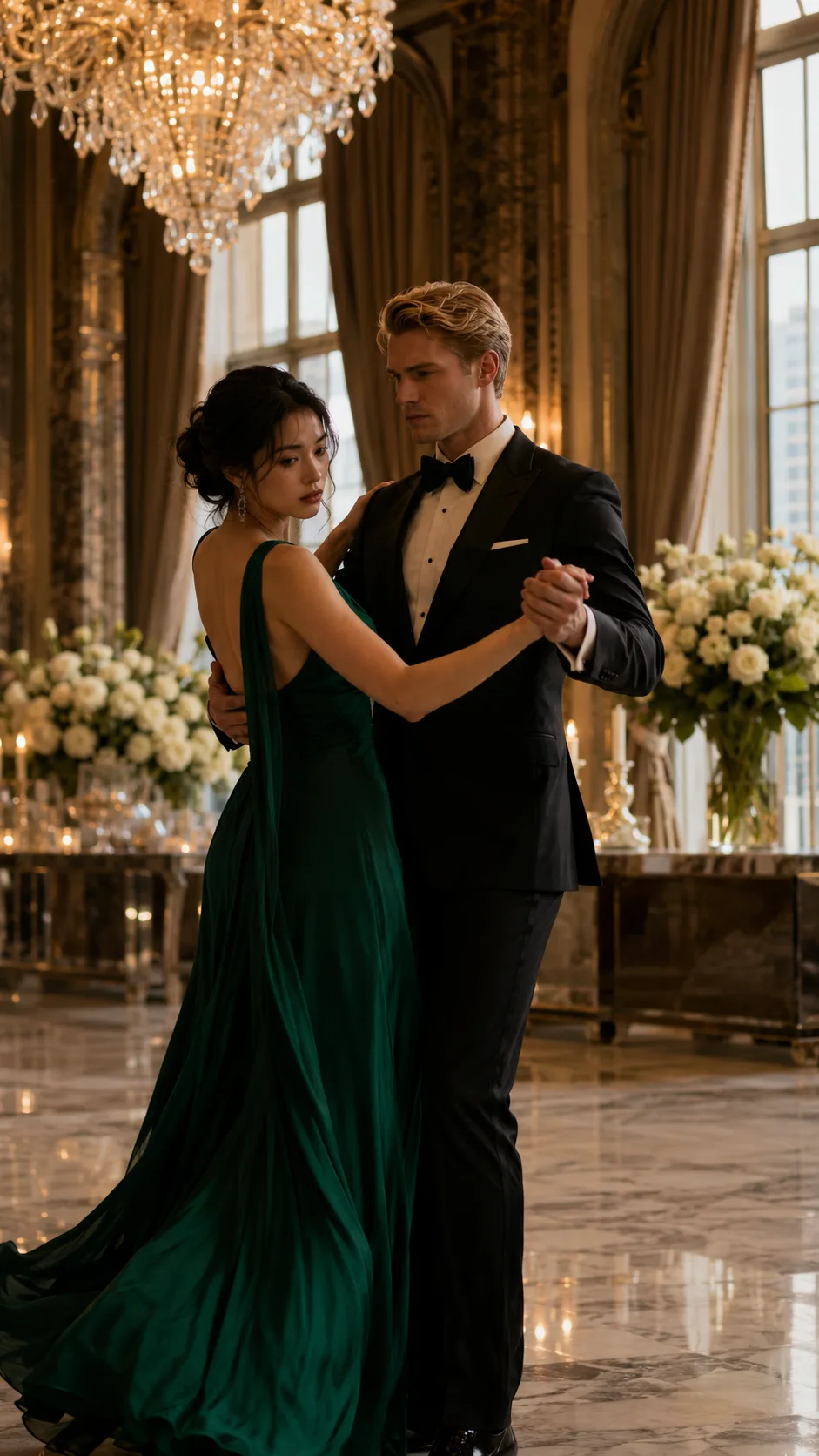
He Brought a Fake Girlfriend to His Ex’s Engagement, Then She Stole the Night
Nathan Rhodes knew Rachel Whitmore had sent the invitation for one reason.
Chapter 1
He Brought a Fake Girlfriend to His Ex’s Engagement, Then She Stole the Night
Nathan Rhodes knew Rachel Whitmore had sent the invitation for one reason.
Not kindness.
Not nostalgia.
Not even courtesy.
She wanted an audience.
The cream-colored envelope sat on the edge of his desk like a small, elegant threat. His name had been written across the front in dark ink, every letter curved with the kind of practiced grace Rachel had always used when she wanted people to admire the surface and miss the blade underneath.
Nathan did not touch it at first.
He stood in front of the glass wall of his office, looking down over Chicago, where traffic moved in long glittering lines between towers of steel and light. Rhodes Global Holdings occupied the top floors of one of the tallest buildings in the city. From up here, everything looked organized. Controlled. Distant.
That was how Nathan liked it.
Control had built his company. Control had protected his name. Control had saved him from every room that had once looked at
him like he did not belong there.
But Rachel had always known where to press.
His assistant, Marissa, stood quietly near the door.
“It came by private courier,” she said.
Nathan did not turn around. “I can see that.”
“I can have it thrown away.”
For a moment, he considered it.
Then he walked back to the desk and picked up the envelope.
The paper was expensive. Rachel never wasted money unless someone would notice.
Inside was an engagement invitation.
Rachel Whitmore and Jonathan Pierce requested the pleasure of his company at their engagement celebration at The Peninsula Chicago.
Nathan read it once.
Then again.
Jonathan Pierce.
Of course.
Rachel had chosen exactly the type of man her family had always wanted for her. Old money. Old name. Old power. A man who did not need to build anything because generations before him had already built walls high enough to
keep everyone else outside.
Nathan leaned back in his chair.
At the bottom of the invitation was a handwritten note.
I do hope you will come. It would be lovely to see how life has treated you.
Nathan gave a quiet laugh.
It had treated him well. Too well for Rachel’s comfort. After the divorce, half of Chicago had waited for him to collapse. Investors had whispered. Society wives had smiled with pity. Rachel’s friends had assumed that without her family name beside his, Nathan would become impressive but lonely, successful but incomplete.
Instead, his company had doubled in value.
His name had grown heavier.
His face had appeared on magazine covers.
But none of that mattered in Rachel’s world if he arrived alone.
A divorced man alone was a headline waiting to be rewritten.
Rachel knew it.
Nathan knew it.
Marissa watched him carefully.
“Do you want me to
send a polite decline?”
“No.”
Her eyebrows rose.
“You’re going?”
Nathan placed the invitation flat on the desk.
“I’m going.”
Marissa hesitated. “Alone?”
The question should not have bothered him.
It did.
He had spent two years avoiding anyone who might mistake access for affection. After Rachel, every smile felt like strategy. Every dinner invitation had a hidden cost. He had no patience for polished women who laughed at the correct volume and pretended not to recognize the value of his watch.
So yes.
He was alone.
And Rachel had counted on it.
“I’ll handle it,” he said.
But by six that evening, he had not handled anything.
He canceled his final meeting, dismissed his driver, and left the building through a side exit. He walked without direction, his coat collar turned up against the cold wind coming off the lake.
Chicago in late autumn had a way of making even wealth look temporary. Leaves dragged across wet sidewalks. Taxi lights blurred in puddles. People hurried past one another with their heads down, carrying flowers, briefcases, takeout bags, private disappointments.
Nathan walked until the towers thinned and the park opened ahead of him.
That was when he heard her voice.
It was not polished.
That was the first thing he noticed.
Most singers in expensive lounges sounded perfect in the same forgettable way. Smooth. Safe. Trained until pain had been removed from every note.
This voice was different.
It came from beneath a bare-branched tree near a walkway, where a young woman sat on a bench with a guitar across her lap and an open case at her feet. A small crowd had stopped nearby, not large, not dramatic, just a few strangers caught by the sound of someone singing as if she had no choice.
Her voice carried through the cold air, low and raw, with a crack in the middle that made the song feel painfully alive.
Nathan stopped.
He told himself he would listen for only a moment.
He stayed until the song ended.
The small group clapped. Someone dropped bills into the guitar case. A woman wiped her eyes before walking away. The singer lowered her head, accepted the attention with a faint smile, then looked directly at Nathan.
“You’re either very moved,” she said, “or you’re trying to remember where you parked your emotional damage.”
Nathan blinked.
Then, unexpectedly, he laughed.
It startled him.
The woman lifted one brow. “Good. So you’re alive.”
Nathan stepped closer and placed a fifty-dollar bill into the case.
She looked at it, then at him.
“That is too much for one song.”
“Maybe it was a very good song.”
“Or maybe you’re rich and sad.”
“Both can be true.”
She studied him without the eager recognition he usually saw in strangers’ eyes. If she knew who he was, she did not care enough to perform surprise.
Her hair had escaped its loose knot in dark strands around her face. Her coat was too thin for the weather. One of her boots had a scuffed toe. Her fingers were red from playing in the cold.
Still, there was nothing small about her.
She looked at the world as if she had already survived worse than its opinion.
“What’s your name?” Nathan asked.
“Sophie Martinez.”
“Nathan.”
“Just Nathan?”
“For tonight.”
Sophie leaned back against the bench. “Dangerous answer.”
“Is it?”
“Men who hide their last names are usually either married, famous, or involved in something illegal.”
“I’m divorced.”
“That explains the face.”
“What face?”
“The one that says someone mailed you a beautiful envelope full of poison.”
Nathan stared at her.
Sophie pointed at the bench beside her. “Sit down, Just Nathan. You clearly need to tell a stranger your problems before you go home and stare at expensive furniture.”
He should have left.
He sat.
At first, he told her very little. An invitation. An ex-wife. A public event designed to humiliate him.
Sophie listened with her guitar resting against her knee. She did not interrupt, did not gasp, did not offer soft useless sympathy. When he finished, she looked across the park, where the skyline glittered behind black branches.
“So she wants to parade her happiness in front of you,” Sophie said.
“Yes.”
“And she wants everyone to see you alone.”
“Yes.”
“And you care because some part of you still hates the idea that her world can judge you.”
Nathan’s jaw tightened.
Sophie nodded. “That one hit.”
“You speak very freely.”
“I’m not on your payroll.”
The words entered his mind before he could stop them.
“What if you were?”
Sophie slowly turned her head.
“Excuse me?”
Nathan knew how absurd it sounded. He also knew, with sudden clarity, that Rachel would never know what to do with someone like Sophie.
Not polished.
Not predictable.
Not afraid of saying the wrong thing.
“I need someone to attend the engagement party with me.”
Sophie stared.
Then she laughed once. “No.”
“You haven’t heard the offer.”
“I heard enough when a stranger in a thousand-dollar coat asked a park musician to become a social weapon.”
“I wouldn’t put it that way.”
“I would.”
Nathan looked at the invitation in his memory, at Rachel’s handwritten line, at the room waiting to dissect him.
“One night,” he said. “Dinner, dancing, conversation. You pretend to be my girlfriend. After that, we never have to see each other again.”
Sophie’s expression changed, not softened exactly, but sharpened with caution.
“How much?”
Nathan named a number.
For the first time, her composure slipped.
“That’s ridiculous.”
“It’s fair.”
“No. It’s ridiculous. Fair would be paying for my time. That sounds like paying for my silence after something illegal.”
“There’s nothing illegal.”
“Just emotionally questionable.”
“Probably.”
She looked at him for a long moment. “You do realize I don’t belong in whatever room you’re talking about.”
“That’s the point.”
Her eyes narrowed.
Nathan regretted the words instantly.
“That came out wrong,” he said.
“It came out honest.”
“I mean Rachel will expect someone from her world. Someone she can categorize. Someone she can dismiss before dessert. You would make that difficult.”
“And what makes you think I want to be inspected by wealthy strangers for your benefit?”
Nathan had no good answer.
So he gave the honest one.
“I don’t.”
That surprised her.
“I don’t know why you would say yes,” he continued. “Except maybe because you understand what it is to be underestimated. And because you might enjoy making people who consider themselves untouchable uncomfortable.”
Sophie looked down at the guitar case.
The money inside would not cover much. He could see that. She saw him seeing it, and pride flashed across her face like a warning.
“No pity,” she said.
“None.”
“No makeover scene where you turn me into a decoration.”
“No.”
“I wear what I want. I speak how I speak. If someone insults me, I answer.”
“I would expect nothing less.”
“And if your ex-wife tries to make me feel small, I may ruin her evening.”
Nathan’s mouth curved slightly.
“That is the hope.”
Sophie held out her hand.
“One night,” she said.
He took it.
Her hand was cold from the guitar strings. His was warm from leather gloves and heated buildings. The difference should have embarrassed him.
Instead, it stayed with him.
Two days later, Nathan sent a stylist to Sophie’s apartment.
Sophie almost slammed the door in the woman’s face.
Then she called Nathan.
“I said no transformation.”
“I remember.”
“Then why is there a woman here holding garment bags like she’s preparing me for a royal hostage exchange?”
Nathan closed his eyes. “Sophie.”
“I can dress myself.”
“I know.”
“Do you?”
“Yes. The gowns are options, not instructions. Choose one, reject all, wear jeans if you want. I only thought you might prefer not to spend money for an event you didn’t choose.”
There was silence.
Then Sophie said, less sharply, “That was almost thoughtful.”
“I’ll try to make it more obvious next time.”
“There won’t be a next time.”
“Of course.”
She hung up.
But when Saturday arrived, Sophie chose the emerald gown.
Not because Nathan chose it.
Because when she tried it on, she looked in the mirror and saw not a woman being borrowed, but a woman entering enemy territory fully awake.
The dress was simple, elegant, and dangerous in its restraint. It followed the lines of her body without begging for attention. Against her dark hair and warm skin, the color made her look like something alive in a room of glass.
She refused the diamond necklace.
The stylist looked startled.
“It completes the look.”
Sophie touched the small silver pendant at her throat.
“My grandmother gave me this. It completes me.”
When Nathan arrived, he stood in the doorway of her apartment and forgot every polished compliment he had ever learned.
Sophie noticed.
“Well?” she asked.
Nathan swallowed. “Rachel is going to hate you.”
Sophie smiled.
“Perfect.”
The car ride to The Peninsula was quieter than either expected.
Nathan briefed her on names. Rachel Whitmore. Jonathan Pierce. Rachel’s parents, Diane and Charles. Investors. Board members. Charity people. Old friends who were not friends. Women who smiled with teeth and men who spoke like everything was already theirs.
Sophie listened, then said, “So a ballroom full of people who think manners are the same as morality.”
Nathan looked at her.
“That is painfully accurate.”
“Good. Then I’m ready.”
The engagement party was already glowing when they arrived.
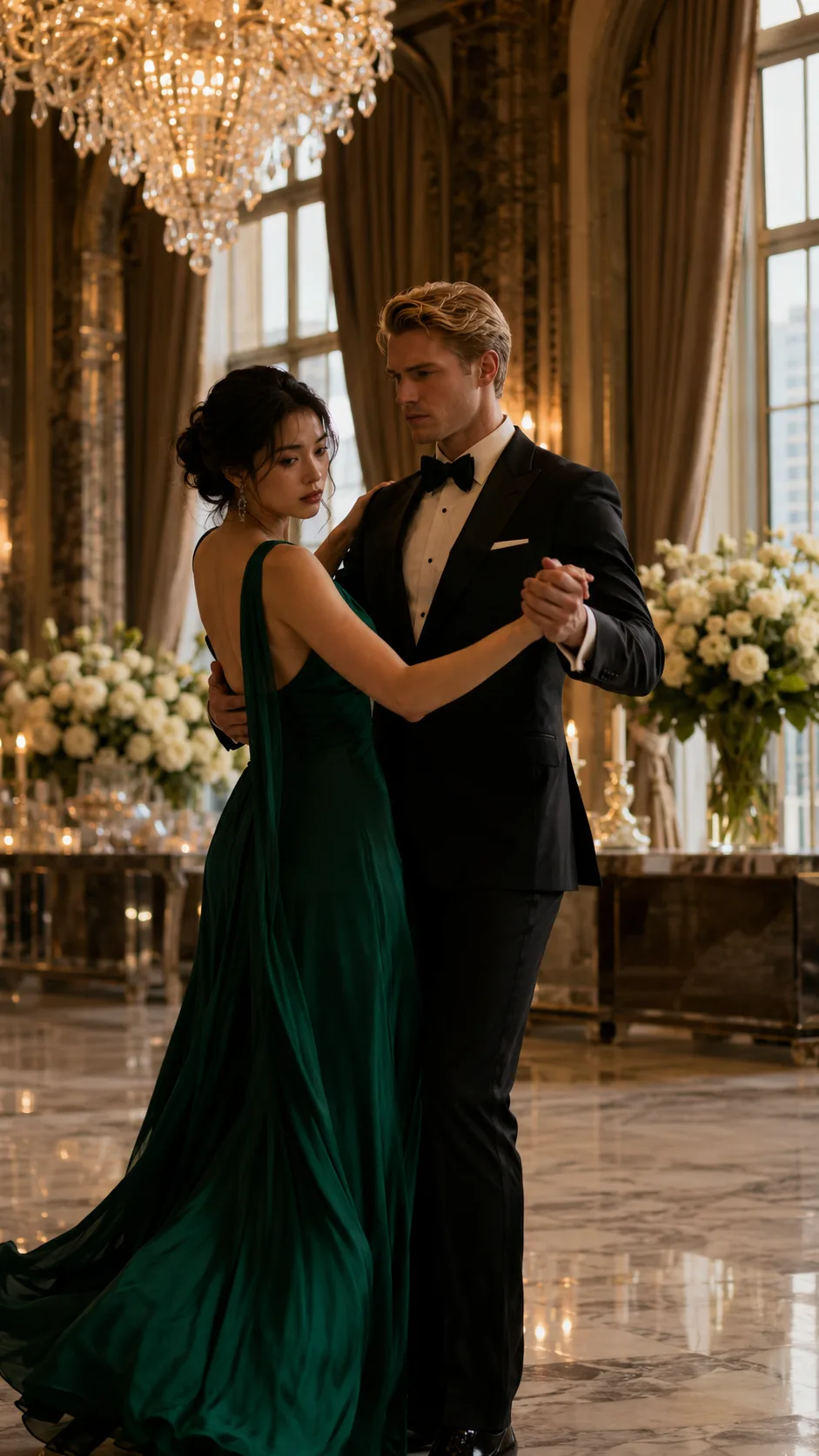
The ballroom had been designed to make wealth look soft. White roses spilled from tall crystal vases. Gold light poured from chandeliers. Champagne moved through the room on silver trays. A string quartet played near the windows, their music graceful enough to hide cruelty under elegance.
Dozens of faces turned when Nathan entered.
Then they turned more sharply when they saw Sophie.
Nathan felt it happen.
The pause.
The assessment.
The quiet hunger of people realizing they had been given something unexpected.
Sophie’s hand rested lightly on his arm. Her posture never changed, but he felt her fingers tense once.
“You’re fine,” he murmured.
“I know.”
He almost smiled.
Rachel appeared near the center of the room as if the light had been arranged around her.
She wore silver.
Of course she did.
Rachel had always understood the language of rooms. Silver made her look untouchable beside the white roses and champagne. Her blond hair fell in smooth waves. Her diamond earrings flashed each time she turned her head. Beside her stood Jonathan Pierce, tall, fair, immaculate, with the lazy confidence of a man who had inherited admiration.
“Nathan,” Rachel said.
Her voice was warm enough for witnesses.
“Rachel.”
She leaned in for the briefest social kiss, her cheek barely touching his. Then her eyes moved to Sophie.
There it was.
The flicker.
Not jealousy yet.
Calculation.
“You brought someone,” Rachel said.
Nathan placed his hand at Sophie’s back, careful, not possessive.
“This is Sophie Martinez.”
Sophie extended her hand. “Congratulations.”
Rachel took it.
“How kind. And how do you and Nathan know each other?”
Sophie smiled. “He heard me sing.”
“How artistic.”
The insult was wrapped so neatly that several people nearby pretended not to notice it.
Sophie noticed.
“Yes,” she said. “It can be uncomfortable for people who only know how to perform sincerity.”
Nathan coughed into his drink.
Jonathan laughed. “I like her.”
Sophie looked at him. “That usually means I should worry.”
Rachel’s smile became thinner.
For the next hour, Nathan watched something he had not expected.
Sophie did not simply manage the room.
She changed it.
She spoke to a retired judge about blues music and somehow made him admit he used to play trumpet in college. She asked a museum chairwoman a question about immigrant artists that turned a shallow conversation into a real one. When a banker’s wife asked whether Sophie performed “on actual stages or just charming little street corners,” Sophie replied that some corners had more honest audiences than gala halls.
The woman laughed because she was unsure whether she had been insulted.
Nathan was sure.
Rachel watched it all.
At first, she looked amused.
Then annoyed.
Then cold.
Because Sophie was doing the one thing Rachel had not prepared for.
She was not begging to be accepted.
People accepted her anyway.
Nathan found himself watching Sophie more than anyone else. The tilt of her head when she listened. The way she answered cruelty with precision instead of volume. The way she moved through the glittering room without letting it swallow her.
This had been supposed to be a performance.
That was becoming difficult to remember.
Rachel eventually drifted toward Nathan near the champagne table.
“She’s interesting,” Rachel said.
“She is.”
“Where did you find her?”
Nathan’s eyes stayed on Sophie. “That is a strange way to phrase it.”
“Is it?”
“Yes.”
Rachel took a sip of champagne. “Forgive me. I only mean she seems rather… unexpected.”
“She usually is.”
Rachel’s gaze sharpened. “You always were drawn to projects.”
Nathan turned to her then.
“She is not a project.”
“No?” Rachel smiled. “Then what is she?”
Before Nathan could answer, applause filled the ballroom.
Jonathan had taken the small stage near the quartet. Rachel moved toward him, smiling again, instantly transformed into the perfect bride-to-be.
Jonathan lifted his glass.
He spoke beautifully. Of course he did. He thanked their families. He praised Rachel’s grace. He said love was not finding someone who completed you, but someone whose world made sense beside yours.
The room sighed approvingly.
Sophie stood beside Nathan, listening.
“Does anyone in this room ever say something without polishing it first?” she whispered.
Nathan leaned slightly toward her. “Rarely.”
Jonathan ended the toast by calling Rachel the woman he had been raised to recognize.
That line drew applause.
Sophie did not clap.
Rachel saw.
A small shadow crossed her face.
Dinner followed.
Sophie was seated beside Nathan at one of the central tables, which meant everyone could observe her without admitting they were doing it. Rachel had arranged the seating. Nathan knew it the moment he saw Sophie placed between a social columnist and an investor known for turning conversation into interrogation.
It should have been a trap.
It became a stage.
The columnist asked how long Sophie and Nathan had been together.
Sophie took a sip of water.
“Long enough for people to ask that question with different motives.”
The investor laughed. “You’re direct.”
“I find it saves everyone time.”
“And what attracted you to Nathan?”
Sophie glanced at him.
Nathan expected the scripted answer they had vaguely discussed. Something safe. Something vague.
Instead, Sophie said, “He looked lonely in a way money couldn’t fix.”
The table went silent.
Nathan slowly turned toward her.
Sophie continued, calm as if she had not just stripped him bare in front of enemies.
“And he listened when I sang. Most people only hear music if it decorates their evening. He listened like it cost him something.”
No one knew what to do with that.
Nathan least of all.
Across the room, Rachel stared.
The dinner ended with polite conversation and hidden wounds.
Then the dancing began.
Couples moved onto the marble floor beneath the chandeliers. The string quartet gave way to a small band. Lights dimmed. Champagne loosened tongues. The room became prettier and more dangerous.
Nathan found Sophie near the edge of the dance floor.
“You surprised me at dinner,” he said.
“I said the truth.”
“That was not in our agreement.”
“No. Your agreement was boring.”
He held out his hand. “May I?”
She looked at it.
Then at him.
Then she placed her hand in his.
The moment his hand settled at her waist, the room softened around them.
That was the problem.
It should have felt fake.
It should have felt like strategy.
Instead, Sophie moved with cautious grace, and Nathan found himself aware of small things he had no business noticing: her breath catching when the music shifted, the warmth of her hand, the way she kept a careful distance as if reminding them both not to believe too much.
“You dance well,” he said.
“My grandmother taught me in her kitchen.”
“Mine taught me never to step on a woman’s foot.”
“A practical woman.”
“She had to be.”
For a few seconds, they smiled like people who had met under ordinary circumstances.
Then Rachel’s voice cut through the moment.
“Nathan.”
She stood beside them, one hand resting lightly on Jonathan’s arm.
“Charles wants to speak with you about the Singapore acquisition.”
Nathan did not move.
Rachel’s eyes flicked to Sophie.
Jonathan smiled.
“I’ll keep Miss Martinez company.”
Sophie’s hand tightened once in Nathan’s.
It was so slight that no one else would have noticed.
Nathan did.
“No,” he said.
Rachel’s expression barely shifted. “No?”
“I’m dancing.”
The word landed harder than it should have.
For the first time that evening, Rachel looked genuinely displeased.
Jonathan’s smile remained. “Surely you can spare her for one dance.”
Sophie lifted her chin. “I can decide that myself.”
The air changed.
Several guests nearby slowed their steps.
Rachel laughed softly. “Of course. We are all only being friendly.”
Sophie looked at Jonathan.
“One dance,” she said.
Nathan turned to her. “You don’t have to.”
“I know.”
But he saw something in her expression. Pride. Defiance. The refusal to appear afraid.
So he let go.
That was his mistake.
Jonathan took Sophie’s hand and guided her into the next measure of music. From a distance, he looked charming. Respectful. Almost gentle.
Up close, his smile had no warmth at all.
“You’ve made quite an impression,” he said.
“I get the sense that bothers several people.”
“It fascinates me.”
“That’s worse.”
Jonathan laughed quietly. “Rachel said you were clever.”
Sophie stiffened.
“Rachel doesn’t know me.”
“She knows enough.”
His hand at her back remained proper, but it guided too firmly. Sophie tried to create more distance. He adjusted with polished ease.
“You should be careful,” he said.
“Is that advice or a threat?”
“Advice. Threats are so vulgar.”
“Then why does this feel vulgar?”
Jonathan’s eyes brightened with amusement. “Because you are not used to this world.”
“No. Because I recognize cruelty even when it has cufflinks.”
His smile hardened.
There he was.
The man beneath the manners.
“Do you imagine Nathan respects you?” he asked.
Sophie’s face did not change, but her fingers chilled.
Jonathan leaned closer, still moving in rhythm so the room would see only elegance.
“He brought you here because Rachel wounded his pride. You are not his lover. You are a response.”
Sophie forced herself to breathe evenly.
“You don’t know anything.”
“I know Rachel had you looked into.”
The words struck harder than she expected.
Jonathan watched the effect and enjoyed it.
“Grant Park. Small venues. Unpaid invoices. A landlord threatening notice. A mother who left debts behind. A grandmother who raised you and died with hospital bills your family never fully settled.”
Sophie missed half a step.
Jonathan corrected it so smoothly the room would think he had saved her from clumsiness.
Her eyes burned.
“You are disgusting.”
“I am honest.”
“No. Honest people don’t dig through someone’s pain to win a ballroom game.”
Jonathan’s voice lowered.
“Do you want to know what Nathan paid the investigator for you?”
Sophie went still.
The music continued.
Guests laughed in the background.
The chandeliers glowed.
Everything beautiful became unbearable.
Jonathan slid a business card between their hands.
“If you are going to sell your dignity for a night,” he said, “you should at least learn your market value.”
Sophie stopped dancing.
This time, everyone saw.
The motion broke the rhythm of the floor. Couples turned. The band faltered for half a beat.
Jonathan still smiled.
Sophie looked at the card in her palm.
Then she let it fall.
It landed on the marble floor between them.
The small sound seemed louder than applause.
Nathan was already moving toward her.
Rachel was watching from beside the stage, her face bright with satisfaction she did not hide quickly enough.
Sophie looked at Nathan, and in that instant he understood something was terribly wrong.
“What did he say?” Nathan asked.
Sophie’s voice was controlled. That made it worse.
“Did you have me investigated?”
Nathan froze.
That was all the answer she needed.
The room went quiet around them.
Rachel stepped forward with perfect timing.
“Oh dear,” she said softly. “Was that meant to be private?”
Nathan’s face went cold. “Rachel.”
She ignored him.
“I only thought Sophie deserved to understand the arrangement she had entered. After all, people in desperate positions can be so easily confused by attention.”
The insult spread through the ballroom like smoke.
Sophie’s cheeks lost color, but she did not lower her head.
Nathan turned on Rachel. “Enough.”
Rachel smiled. “Is it? Then tell her. Did you or did you not pay someone to learn who she was before bringing her here?”
Nathan looked at Sophie.
“I wanted to make sure you were safe.”
The words sounded weak even before they finished leaving his mouth.
Sophie laughed once, quietly, without humor.
“Safe for who?”
“Sophie—”
“For your reputation?” she asked. “For your evening? For the little role I was hired to play?”
Nathan stepped closer. “That isn’t what this became.”
“But it is what it started as.”
He could not deny it.
The silence answered for him.
Rachel looked almost triumphant.
Jonathan bent, picked up his fallen card, and slipped it into his jacket.
“What a shame,” he said. “She was doing beautifully.”
Nathan turned so sharply that Jonathan stopped smiling.
“Do not speak about her.”
Jonathan lifted both hands. “Careful. This is a celebration.”
Sophie looked around the room.
At the faces pretending not to stare.
At Rachel, who had dressed cruelty in silver.
At Jonathan, who had tried to purchase the last pieces of her pride.
At Nathan, who looked more shaken than she had ever imagined a man like him could look.
Then Sophie did something none of them expected.
She walked to the stage.
The band had stopped now. The microphone stood abandoned from Jonathan’s toast.
Rachel’s smile faltered.
“Sophie,” Nathan said quietly.
Sophie did not look back.
She stepped up, took the microphone, and faced the ballroom.
Her hand trembled.
Only slightly.
“My name is Sophie Martinez,” she said.
Her voice carried clearly through the room.
“I was invited here tonight to pretend.”
No one moved.
Rachel’s eyes widened.
Nathan stood frozen below the stage.
Sophie continued.
“I was paid to come as Nathan Rhodes’s girlfriend, because apparently in rooms like this, arriving alone is treated like a public failure.”
A few guests looked away.
“But since everyone here is so interested in truth, let’s have some.”
Rachel took one step forward. “This is inappropriate.”
Sophie looked at her.
“So was having my private life investigated.”
The room sharpened.
Sophie’s voice steadied.
“Yes, I sing in parks. Yes, I owe money. Yes, I have played in bars where the microphone cuts out and the owner forgets to pay. Yes, my grandmother raised me. Yes, I have known what it feels like to choose which bill can wait and which one cannot.”
Her fingers tightened around the microphone.
“But none of that makes me cheap.”
The words struck the room harder than shouting.
Jonathan’s jaw flexed.
Rachel’s expression thinned to ice.
Sophie looked toward Jonathan now.
“And a man who thinks money gives him the right to humiliate people has not inherited class. He has inherited permission.”
A murmur moved through the guests.
Sophie turned to Rachel.
“And a woman who builds her happiness by dragging someone else into the light only proves she is terrified of standing in it alone.”
Rachel’s lips parted.
For once, she had no prepared answer.
Sophie set the microphone down.
Then she walked off the stage, past Nathan, past the stunned guests, past the white roses and crystal glasses and polished cruelty.
Nathan followed her into the hallway.
“Sophie, wait.”
She stopped near the elevator but did not turn around.
“I am sorry,” he said.
She laughed softly. “Everyone in that room is sorry after they get caught.”
“That’s not fair.”
She turned then.
Her eyes were bright, but she refused to cry.
“Fair?” she repeated. “You brought me into a room full of people who already knew how to turn shame into entertainment. You knew who Rachel was. You knew what this night meant. And you still thought you could control it.”
Nathan had no defense.
“I should have told you about the background check.”
“You should have trusted me enough not to need one.”
The elevator doors opened.
He stepped forward. “Please let me drive you home.”
“No.”
“Sophie—”
“No,” she said again, softer but final. “Tonight I was paid to stand beside you. That part is over.”
The doors closed between them.
For the first time in years, Nathan Rhodes stood in a luxury hotel hallway with no plan, no control, and no way to buy back what he had broken.
The gossip exploded by morning.
Videos of Sophie’s speech spread through private group chats before breakfast. By noon, entertainment blogs had picked it up. By evening, half of Chicago had watched the unknown singer in the emerald dress dismantle a ballroom full of privilege with a shaking hand and a steady voice.
The headlines were merciless.
Not toward Sophie.
Toward Rachel.
Toward Jonathan.
Toward Nathan.
Rachel’s family issued no comment. Jonathan’s office claimed the evening had been “misunderstood.” Nathan ignored every call except one.
Marissa entered his office Monday morning with a folder.
“I found something,” she said.
Nathan looked up from where he had been staring at Sophie’s unopened payment envelope.
“What?”
“The investigator you hired on Sophie.”
His expression hardened. “I told him only to confirm basic identity and legal risks.”
“I know. But someone requested a deeper file after that.”
Nathan stood.
“Who?”
Marissa placed the folder on his desk.
“Rachel’s assistant. But the payment came from a Pierce family account.”
Jonathan.
Nathan opened the folder.
Inside were copies of messages. Requests. Private financial details. Notes about Sophie’s landlord. Her grandmother’s medical bills. Her performance schedule. Places she could be found alone.
His hands went still.
Jonathan had not merely used information Rachel found.
He had ordered it.
And Rachel had known.
Nathan looked toward the city.
For years, he had told himself power was valuable because it kept people from hurting him.
Now power had finally become useful for something else.
Protecting someone he had failed.
He did not call Sophie.
He wanted to.
He nearly did a dozen times.
But apology was not enough, and he knew it.
Instead, he called his legal team.
Then he called three journalists who owed him favors.
Then he made one final call to the charity board Rachel and Jonathan had been using as the centerpiece of their wedding season publicity.
Within forty-eight hours, the story changed.
Documents leaked proving Jonathan had used private investigators to dig into Sophie’s finances and personal history for the purpose of humiliating her publicly. More women came forward quietly with stories of Jonathan using money and influence to silence embarrassment. An assistant admitted Rachel had coordinated the timing at the party.
Suddenly, the engagement no longer looked like a fairy tale.
It looked like a performance with rot underneath.
Sponsors withdrew from the charity gala. Jonathan stepped down from two boards. Rachel vanished from public view.
Nathan should have felt satisfied.
He did not.
Because Sophie still had not answered him.
She returned to her life, though life had changed without asking permission.
People came to hear her sing now.
Some came because they had seen the video and wanted spectacle. Some came because they had actually heard her voice in the clip and wanted more. Sophie hated the first group and needed the second.
One night, at a small venue in Logan Square, she stepped onto the stage and saw Nathan sitting alone at the back table.
She almost stopped.
Then she sang anyway.
Not for him.
Not against him.
For herself.
Her set lasted forty minutes. By the end, the room had gone quiet in the way rooms do when strangers realize they are hearing something honest.
After the applause, Nathan did not approach immediately. He waited until people left, until the bartender wiped down glasses, until Sophie was packing her guitar.
“You’re still here,” she said.
“Yes.”
“That seems unwise.”
“I’ve made worse decisions.”
She zipped the guitar case. “Is this where you explain that destroying Jonathan was your apology?”
“No.”
“Good. Because it wasn’t.”
“I know.”
Sophie finally looked at him.
He looked tired. Not performatively tired. Truly tired. The immaculate control around him had cracked.
“I came to say you were right,” he said.
“That’s all?”
“No. But it’s where I need to start.”
She waited.
“I treated information like protection,” Nathan said. “I told myself the background check was practical. Safe. Responsible. But underneath that, I was afraid. Afraid of being used. Afraid of being laughed at. Afraid Rachel would find the weakness before I did. So I made you part of a strategy without giving you the dignity of knowing all of it.”
Sophie said nothing.
“You were never fake,” he continued. “The only fake thing that night was the version of myself that thought control could replace trust.”
Her expression shifted, but only slightly.
“You hurt me,” she said.
“I know.”
“Not because I expected romance. Not because I forgot the agreement. You hurt me because for one night, I thought you saw me clearly. Then I found out I had been researched like a liability.”
Nathan’s face tightened.
“I am sorry.”
This time, he said it without trying to soften it, justify it, or attach anything to it.
Just the words.
Sophie looked away.
Outside, rain tapped against the windows.
Nathan reached into his coat and placed an envelope on a nearby table.
Sophie’s eyes hardened. “If that’s money—”
“It is not payment.”
“I don’t want it.”
“You don’t have to take it.”
“What is it?”
“A contract offer. For your music. Not from Rhodes Global. From an independent label I invested in years ago but do not control. I sent them your recordings after the show became public. They want to meet you. The decision is yours. If you hate that I touched this at all, tear it up.”
Sophie stared at the envelope.
“You sent them my music?”
“Yes.”
“Without asking?”
Nathan closed his eyes briefly. “I am apparently still learning.”
A reluctant laugh escaped her before she could stop it.
He looked at her, surprised by the sound.
She shook her head. “You are terrible at normal human behavior.”
“Yes.”
“But they really want to meet me?”
“Yes. Not because of the scandal. Because of your voice.”
She picked up the envelope but did not open it.
“And what do you want?”
Nathan held her gaze.
“To earn the right to be known by you without buying the answer.”
That was the first thing he had said that frightened her.
Because it sounded true.
Weeks passed.
Sophie met with the label.
She almost walked out twice.
Not because the offer was bad, but because she had spent so long surviving disappointment that opportunity felt like a trap with better lighting.
The label did not ask her to become softer. They did not ask her to change her name, hide her past, or turn the ballroom scandal into a marketing gimmick. They wanted an album. Her songs. Her voice. Her grief and humor and rage, exactly as they were.
She signed.
Nathan was not there.
He did not ask to be.
That mattered.
When Sophie’s first single released three months later, it carried no mention of Rachel, Jonathan, or the night at The Peninsula. It was a song about being seen only after refusing to disappear.
It went viral anyway.
Nathan listened to it alone in his office after midnight.
Then he bought it legally like everyone else.
Marissa found that hilarious.
“You could have asked for a copy,” she said.
Nathan did not look up. “That would be rude.”
“You are growing.”
“Painfully.”
Sophie and Nathan began again slowly.
Not with grand gestures.
With coffee.
With long walks.
With arguments.
With Nathan learning not to send solutions before asking what the problem felt like. With Sophie learning that refusing help was not the same as protecting pride. With both of them discovering that honesty was less dramatic than desire, but much harder to sustain.
Rachel tried once to return to society as if nothing had happened.
It did not go well.
The Whitmore name still opened doors, but rooms remembered humiliation when it had been public enough. People smiled at her differently now. Not with fear. With curiosity. The kind she used to direct at others.
Jonathan’s engagement to Rachel ended quietly.
Neither admitted why.
But everyone knew.
Months later, Rachel appeared at a benefit concert where Sophie was performing.
Sophie saw her from backstage.
For one breath, the old pain returned. The ballroom. The microphone. The card falling to the floor. The feeling of being turned into a lesson for strangers.
Nathan stood beside her, not touching her, not pushing.
“Do you want to leave?” he asked.
Sophie looked at Rachel across the curtain gap.
Rachel wore black this time. No silver. No diamonds bright enough to command the room.
“No,” Sophie said. “I’m working.”
She walked onto the stage.
The crowd applauded.
Rachel stayed until the third song, then left before anyone could ask why there were tears in her eyes.
Sophie never asked.
She had stopped needing Rachel to become small in order for herself to feel whole.
One year after the engagement party, Nathan took Sophie back to the park where they met.
She complained immediately.
“You know bringing a woman back to a bench in cold weather is not automatically romantic.”
“I brought coffee.”
“That improves the situation.”
They sat beneath the same bare-branched tree. The city moved around them. A young man played violin near the walkway, slightly out of tune but with great confidence.
Sophie sipped her coffee.
“You looked miserable here,” she said.
“I was.”
“You still look miserable sometimes.”
“I’m told it gives me character.”
“It gives you wrinkles.”
Nathan smiled.
For a moment, they listened to the violin.
Then he said, “I brought you here because this is where I made the first selfish decision that led me to you.”
Sophie glanced at him.
“That is not how proposals usually begin.”
He froze.
She stared.
“Oh my God,” she said. “Are you proposing?”
“I was trying to build toward it.”
“You started with selfish decision.”
“I see now that was a mistake.”
Sophie laughed, and the sound broke something open in him.
Nathan stood, then knelt in front of the bench. Not dramatically. Not for attention. There were no cameras, no string quartet, no white roses, no room full of enemies.
Only wet pavement, cold wind, bad violin, and the woman who had changed the shape of his life.
He opened the small box.
The ring inside was beautiful, but not enormous. Sophie noticed that first.
He had listened.
“I don’t want to rescue you,” Nathan said. “I don’t want to own your story. I don’t want to turn what we survived into something pretty so it hurts less. I only know that when I am with you, I am more honest than I ever was alone.”
Sophie’s eyes filled.
He continued, voice roughening.
“I brought you into Rachel’s world to help me survive a night. You walked out of it with your dignity and somehow dragged mine back with you. So I am asking, not as a man with a plan, and not as a man trying to fix anything. I am asking as myself.”
He looked up at her.
“Sophie Martinez, will you marry me?”
The violinist hit a terrible note.
Sophie laughed through tears.
“That note almost ruined the moment.”
“I can pay him to stop.”
“Do not.”
Nathan smiled nervously.
She looked at the ring, then at him.
“Yes,” she said.
His breath left him.
“Yes?”
“Yes, Nathan. Before you make another speech and insult yourself again.”
He laughed then, truly, and she leaned down to kiss him lightly before pulling him back onto the bench.
Their wedding was not held at The Peninsula.
Sophie refused immediately.
Nathan did not ask twice.
They married in a restored neighborhood theater with old velvet seats, warm wooden walls, and lights that made everyone look human instead of perfect. Sophie wore ivory silk and her grandmother’s pendant. Nathan wore a black suit and the stunned expression of a man who had finally reached a place no amount of ambition could have built for him.
Marissa cried.
Sophie pretended not to notice and handed her a tissue.
There were no society photographers. No staged exclusives. No guest list built to impress anyone who had not earned a place in the room.
But there was music.
Sophie sang at her own reception because she said no one else was allowed to ruin the emotional pacing.
The song began softly.
It told of a man in a park pretending not to be broken, a woman with cold hands and a guitar, a ballroom full of polished wolves, a microphone, a fallen card, and the strange mercy of being hurt badly enough to finally tell the truth.
When she finished, the room stood.
Nathan could not speak.
Sophie stepped down from the stage and looked at him with a smile that was still sharp, still warm, still entirely her own.
“You know,” he said, “the first night, everyone said you stole the spotlight.”
Sophie tilted her head.
“I didn’t steal anything.”
“No?”
“No,” she said. “I just walked into a room where everyone was pretending, and I was the only one who stopped.”
Nathan looked at her for a long moment.
Then he took her hand.
Years later, people would still tell the story incorrectly.
They would say a billionaire hired a fake girlfriend and fell in love.
They would say a singer embarrassed his ex-wife and became famous.
They would say it was a scandal, a romance, a revenge story, a fairy tale.
But Sophie knew better.
Nathan did too.
It was not the story of a fake girlfriend.
It was the story of a woman who entered a room as part of a lie and left it as the only person brave enough to tell the truth.
And it was the story of a man who thought he needed someone to help him survive his past, only to discover that the real danger had never been Rachel, or Jonathan, or the watching crowd.
The real danger had been living so long behind walls that he could no longer recognize a door.
Sophie had opened one.
Then she made him walk through it himself.
Chapter complete
You have reached the end of this chapter.
Continue reading
A few more worlds to get lost in after this chapter.




