PART 3 — THE PEACE I HAD TO TAKE BACK
The first morning after they left, I woke before sunrise.
Chapter 3
PART 3 — THE PEACE I HAD TO TAKE BACK
The first morning after they left, I woke before sunrise.
For a few seconds, I forgot the house was empty. I listened for children running down the hallway, for Megan’s sharp voice in the kitchen, for Robert’s keys on the table.
There was nothing.
Only quiet.
But this quiet was different. It did not press on my chest like before. It did not tell me to hide in my room or move softly so no one would be annoyed. This silence was clean, like the air after a storm.
I went downstairs slowly, still careful with my healing body, and made coffee the way I had for decades—with cinnamon and brown sugar. As the smell filled the kitchen, I stood by the stove and cried.
Not because I was sad.
Because I had returned to myself.
Robert kept his promise. Every Saturday, he brought Sebastian and Valerie to visit. He worked extra hours, sometimes double shifts, to pay the debt
Megan had created. I saw the guilt eating him alive.
One afternoon, he sat in my living room with his face in his hands.
“Mom, it will take me years to pay this off.”
I sat beside him.
“You are doing your best.”
“I let her hurt you,” he whispered.
“You were blind because you loved her.”
“That doesn’t excuse it.”
“No,” I said. “But you opened your eyes.”
A month after they moved out, I received a call from the bank. It concerned an old loan Michael had taken years before to repair the roof. After his death, the paperwork had been complicated and forgotten. Now the bank was offering a settlement discount if I paid it in full.
The amount was almost exactly the same as Robert’s debt.
I sat with the papers for hours.
I had the money. It was my emergency savings, built slowly over years.
If I used it, I would have little left. But I kept thinking of Sebastian and Valerie. I kept thinking of Robert working until his body broke. I kept thinking of Michael and what he would have done.
The next morning, I went downtown and paid the debt.
All of it.
Two hundred thousand dollars.
I asked the manager not to tell Robert. I told him to say the account had been resolved through a bank program.
When I left the building, I sat on a bench across the street and stared at the receipt in my hands. I expected fear. Regret. Panic.
Instead, I felt light.
That evening, Robert arrived at my house almost running.
“Mom, you won’t believe it,” he said, crying. “The bank forgave the debt. They said I qualified for assistance. I don’t owe anything anymore.”
I hugged him.
“What a blessing,” I whispered.
I never
told him the truth. I still haven’t.
True love does not always need witnesses. Sometimes it works quietly beneath the surface, like water feeding roots no one can see.
My life found a rhythm again.
Mrs. Charlotte started coming over for afternoon coffee. Then Mrs. Lopez from the corner. Then Mrs. Miller from two houses down. My living room filled with women my age, with stories, laughter, recipes, and advice no one asked for but everyone needed.
“You look younger,” Mrs. Charlotte told me one day.
“I feel like I can breathe,” I said.
Megan stayed away for three months.
Then one afternoon, she appeared at my door holding a grocery bag. She looked thinner. Tired. There were shadows under her eyes.
“Ellena,” she said, “may I come in?”
I hesitated, then stepped aside.
We sat in the kitchen. She placed fruit and donuts on the table like an offering.
“You didn’t have to bring anything.”
“I know.”
Her hands trembled around the glass of water I gave her.
“I came to tell you I’m sorry,” she said. “Not because I’m afraid anymore. Not because Robert told me to. Because I finally understand what I did.”
I waited.
“I started therapy,” she continued. “And I realized something ugly about myself. I grew up watching my mother become smaller and smaller in her marriage. My father controlled everything. I swore I would never be powerless like her.”
Her eyes filled.
“But I became the person who made someone else powerless. I became what I hated.”
I looked at the woman across from me and saw something I had not seen before: shame without performance.
“I made you invisible,” Megan said. “I humiliated you. When you were sick and vulnerable, I tried to throw you away. I don’t expect forgiveness. I just needed you to know I see it now.”
For a long time, I said nothing.
Then I asked, “Do you know the difference between a bad person and a person who has done bad things?”
She shook her head.
“A bad person hurts others and does not care. A person who has done wrong can still choose to change.”
Her tears fell harder.
“Do you think I can?”
“I think you must,” I said. “For your children. For Robert. For yourself.”
Before she left, she stopped by the door.
“There is one more thing.”
My heart tightened.
“I know the bank did not forgive that debt on its own.”
I kept my face still.
“Megan—”
“I know it was you,” she said. “Robert doesn’t. But I know. After everything I did to you, you saved us.”
“I did it for my son and my grandchildren.”
“I know,” she whispered. “That is why it broke me.”
She left crying.
Six months passed.
Then one Friday night, Sebastian called me.
“Grandma,” he whispered, “can you come over? Mom is very sick.”
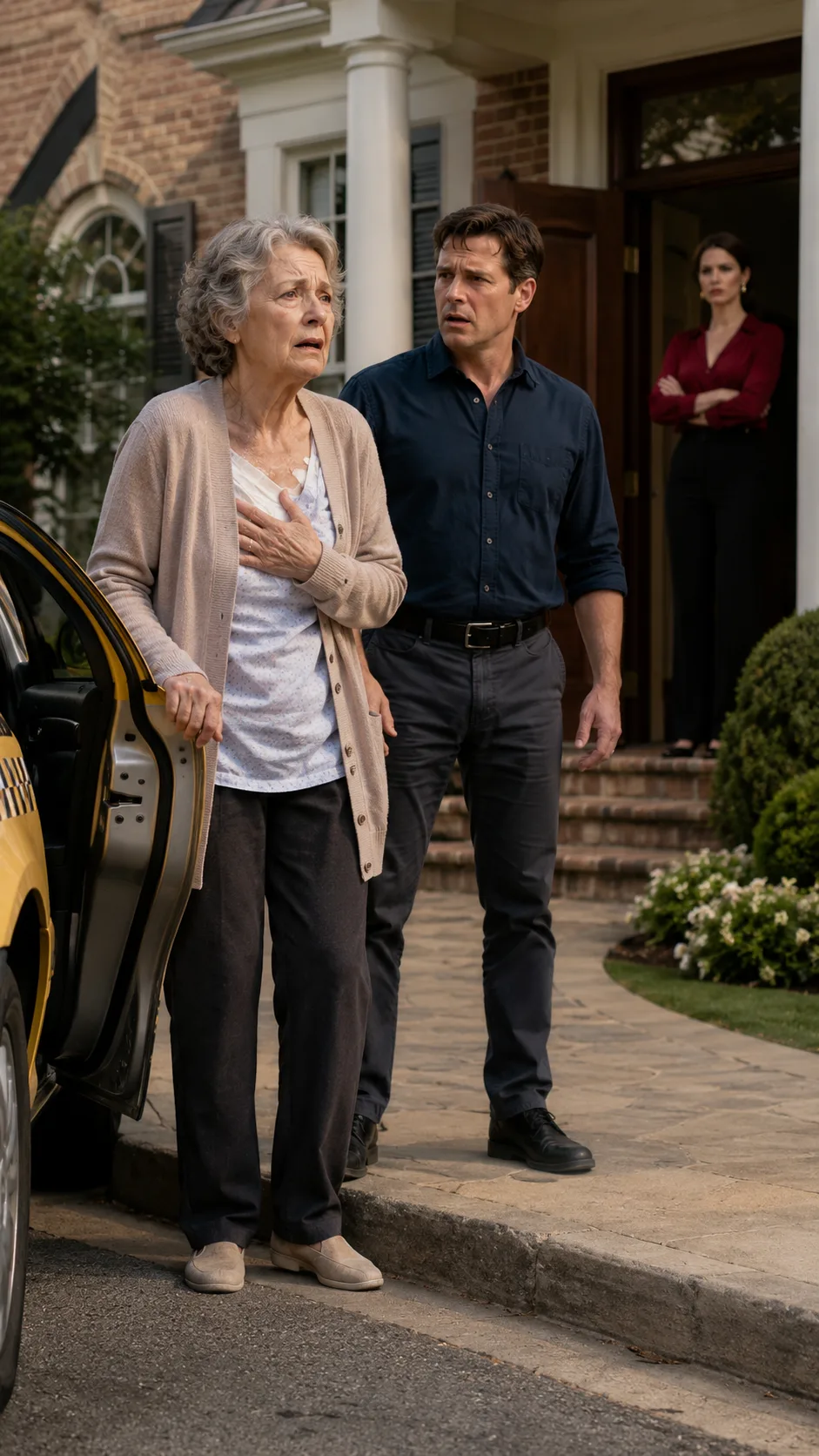
I took a taxi immediately.
Their apartment was small, crowded, and heavy with fear. Valerie sat on the couch clutching a pillow. Sebastian opened the door with red eyes.
“She hasn’t come out of her room in two days.”
I knocked softly.
“Megan, it’s Ellena.”
No answer.
“The children are scared.”
After a long silence, the door opened.
Megan was sitting on the floor, her back against the wall. Her hair was greasy. Her clothes were wrinkled. Her eyes looked empty.
“Oh, honey,” I whispered.
“Don’t call me honey,” she said. “I’m the woman who tried to destroy you.”
I sat on the floor beside her.
“That is not all you are.”
She began to sob.
“My mother won’t talk to me. My sisters blocked me. I quit my job. I can’t sleep. I can’t breathe. Robert looks at me like he doesn’t know who I am. Sebastian asked me if I’m mean.”
She covered her face.
“I called you a burden. Now I am the burden. I made you feel invisible, and now I feel invisible. Life collected its debt.”
I took her hand.
“Life does collect what is owed,” I said. “But not only to punish. Sometimes to teach.”
“I don’t know how to live with what I did.”
“By becoming someone better than the person who did it.”
“I don’t know if I can.”
“You need help. Real help. A doctor. Medication if needed. Therapy. And you need to stop punishing your children for your guilt.”
She looked at me like a drowning woman looking at shore.
“Why are you helping me?”
“Because your children need their mother. And because someone once helped me when I was broken.”
I helped her stand. I gave her clean clothes. While she showered, I made soup for the children. When she came out, she looked exhausted, but human again.
She ate slowly at the kitchen table.
“Two weeks ago,” she said, “I had a panic attack and went to the hospital alone. I sat there for hours and no one looked at me. I felt weak, abandoned, invisible.”
Her voice cracked.
“And then I remembered you. Coming home from the hospital. Bandaged. In pain. And I blocked you from your own house.”
She stared into her soup.
“I finally felt what I made you feel.”
The next day, Robert took her to a psychiatrist.
Healing did not happen quickly. It never does. Megan started medication for anxiety. She went to therapy twice a week. She joined a support group. Some days were good. Some days she fell apart. But slowly, she fought her way back.
Eight months later, on a November morning, I stood in my kitchen making coffee while Sebastian and Valerie played in the garden.
Megan was there too.
She sat on the bench beneath the bougainvillea, watching her children run through the sunlight. She looked different. Not the perfect, polished woman who once blocked my doorway. Not the broken woman I had found on the floor.
Someone softer.
Someone real.
I poured two cups of coffee and sat beside her.
“Do you mind?”
She smiled faintly.
“It’s your house.”
I corrected her gently.
“As long as you are here with respect, it is a home for all of us.”
Tears filled her eyes.
“Thank you,” she said.
We watched the children chase butterflies.
“I learned something,” Megan said. “Control is not power. Cruelty is not strength. You can win every argument and still lose everything that matters.”
I nodded.
“I learned something too.”
She looked at me.
“I learned that making myself small does not make people love me better. It only teaches them I can be erased.”
Megan wiped her eyes.
“I erased you.”
“For a while,” I said. “But I came back.”
Robert came out carrying donuts. The children screamed and ran toward him. Megan stood to help, then paused.
“Ellena,” she said quietly, “I will spend my life trying to be worthy of the second chance you gave me.”
“Do not spend your life proving it to me,” I said. “Spend it becoming someone your children can trust.”
She nodded.
Later, after they left, I sat in the living room in the blue armchair Michael used to love.
Yes, the same chair.
Megan had helped me find it. The person who bought it was selling it online. Megan, Mrs. Charlotte, and I brought it home together. When it returned to the corner of the room, I ran my hand over the worn fabric and felt as if one piece of my life had come back.
That night, before bed, I opened my diary.
I wrote:
Dear diary,
Today I understood that pain can steal your voice, but it can also teach you to use it. I stayed silent when I should have spoken. I made myself small when I should have stood tall. But I also loved deeply. I built a home. I raised children. I forgave what once felt unforgivable. And I learned that forgiveness does not mean letting people hurt you again. It means refusing to let their cruelty become the shape of your heart.
I closed the diary and looked at Michael’s photograph.
“We did it,” I whispered. “Not perfectly. But we did it.”
I turned off the light with peace in my chest.
Tomorrow, I will wake up and make coffee. I will water my flowers. I will wait for my grandchildren. I will sit in my chair, in my living room, in my house.
And I will never again ask permission to belong in the life I built.
THE END.
Chapter complete
You have reached the end of this chapter.
Continue reading
A few more worlds to get lost in after this chapter.




