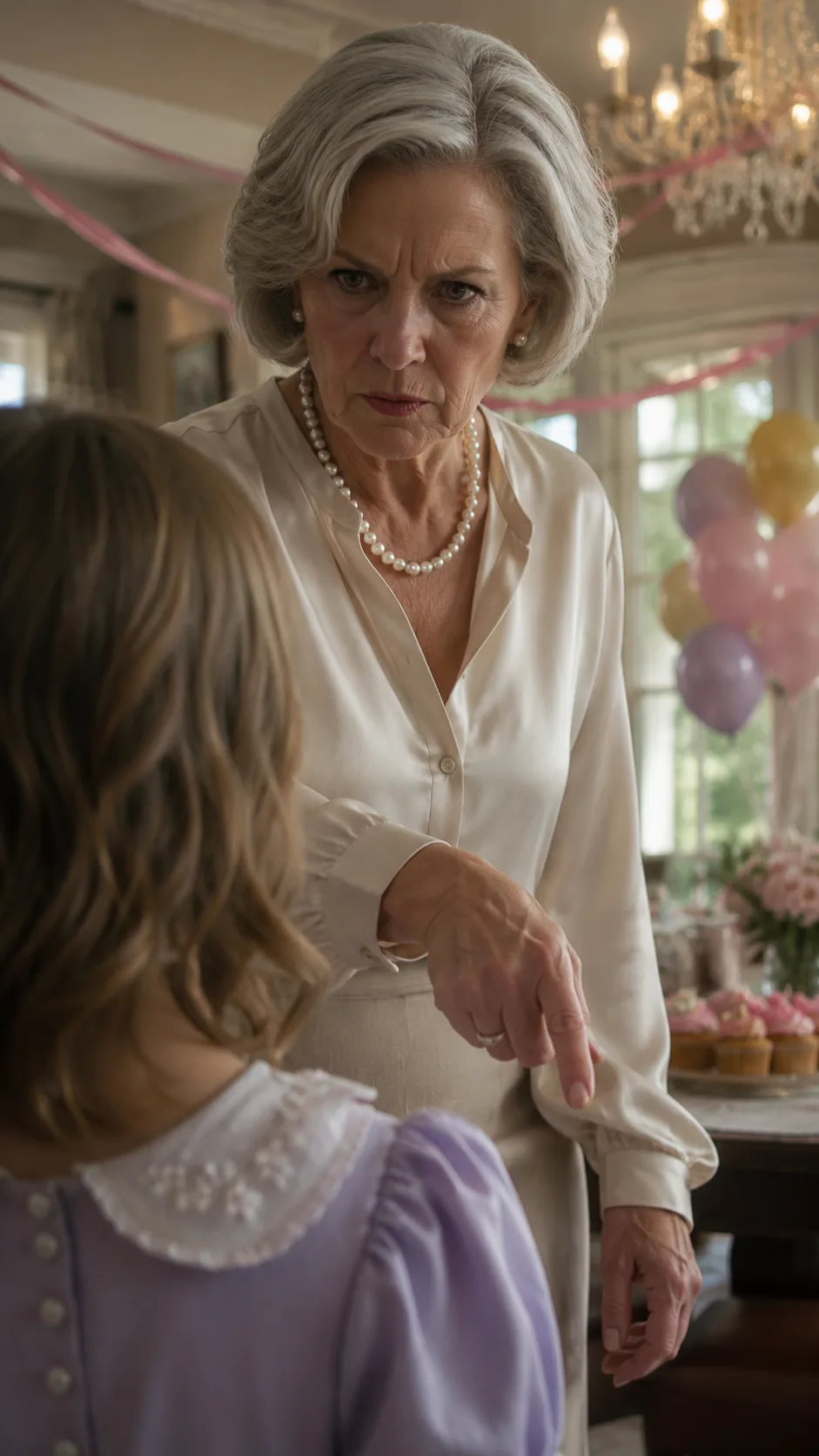
PART 4 — THE CARTER FAMILY FINALLY LOST EVERYTHING
David accepted a plea agreement after prosecutors connected his digital records to Susan’s case and my damaged brake line.
Chapter 4
PART 4 — THE CARTER FAMILY FINALLY LOST EVERYTHING
David accepted a plea agreement after prosecutors connected his digital records to Susan’s case and my damaged brake line.
He admitted forging the insurance documents.
He admitted directing Beth to prepare guardianship papers.
He admitted hiring the investigator.
He denied intending to kill me.
The prosecutor asked why he loosened the brake line.
“To frighten her,” he said.
That answer destroyed him at sentencing.
The judge looked at him for a long time.
“You endangered the mother of your child to make her easier to control.”
David lowered his head.
He received twelve years in state prison, followed by probation and a permanent no-contact order protecting Rose.
Beth faced charges for embezzlement, forgery, attempted custodial interference, assault, and conspiracy.
Her boyfriend was charged in connection with the vehicle tampering and the reopened investigation into Susan’s death.
Evelyn was convicted of assaulting Rose and participating in the fraudulent guardianship scheme.
She avoided prison because of her age and lack of prior convictions.
The judge ordered home confinement, restitution, and no
contact with any child involved in the investigation.
Her church removed her from every committee.
The school fundraising board publicly disclosed the theft.
Families who once praised the Carters began pretending they had never trusted them.
Reputation disappeared faster than truth had arrived.
At the final custody hearing, David appeared by video from jail.
Rose did not attend.
Dr. Park submitted her evaluation.
The court granted me sole legal and physical custody.
David’s parental contact was suspended indefinitely.
The judge stated that any future request would require extensive treatment, proof of rehabilitation, and Rose’s therapist’s approval.
Outside the courtroom, Margaret handed me the signed order.
“It’s over.”
“No,” I said.
She looked at me.
“The case is over.”
“Recovery isn’t.”
She nodded.
“You’re right.”
Rose improved slowly.
She stopped asking whether Grandma was coming.
She began wearing the lavender dress again after refusing to look at it for months.
The
first time she put it on, she stood in front of the mirror.
“Is it still mine?”
“Yes.”
“Even if Madison wants it?”
“Yes.”
“Even if grown-ups get mad?”
“Yes.”
She touched the embroidered collar.
Then she smiled.
I sold the marital house.
Too many rooms contained arguments.
Too many walls had watched me excuse behavior I should have named earlier.
Rose and I moved into a smaller home near Rachel.
A blue front door.
A fenced yard.
A bedroom with yellow walls.
She drew the house during therapy.
This time, the fence surrounded a garden.
No angry figures stood outside.
Rachel and I repaired our relationship carefully.
Trust did not return because she apologized.
It returned because she answered every question.
She testified.
She helped investigators locate Michael.
She accepted my anger without demanding immediate forgiveness.
That mattered.
Karen promoted me to senior litigation coordinator after I helped strengthen
the firm’s evidence-preservation policies.
I began volunteering with a legal clinic serving women facing financial coercion.
Many believed abuse meant bruises.
I showed them altered insurance policies.
Hidden accounts.
Forged signatures.
Custody threats.
Damaged credit.
Control could wear a suit and speak calmly.
It could nod while someone else delivered the slap.
Three years later, Rose stood on a school stage wearing the lavender dress.
Her class was performing a play about courage.
She had one line.
“I found my voice when someone finally listened.”
She delivered it clearly.
Then she looked toward me.
I cried quietly in the second row.
Rachel sat beside me.
Margaret sat on the aisle.
Dr. Park attended because Rose had personally invited her.
Afterward, Rose ran into my arms.
“Was I loud enough?”
“Yes.”
“Did everyone hear?”
“Yes.”
“That was the point.”
We celebrated with pizza and chocolate cake.
No formal dining room.
No forced sharing.
No adult deciding a child’s belongings mattered less than another person’s entitlement.
Rose cut the first slice herself.
She offered one to her cousin Madison, who now lived primarily with her father after Beth’s conviction.
Madison looked uncertain.
“You don’t have to give me the biggest one.”
“I know.”
Rose selected two equal pieces.
“This is sharing,” she said. “Not taking.”
Madison nodded.
The children ate cake.
Adults sometimes create wars that children would rather end with fairness.
Later that evening, I received a forwarded letter from prison.
David had written to Rose.
The court order prohibited direct contact, so the letter went through counsel.
Margaret asked whether I wanted to read it.
I did.
David apologized.
He said he had been weak.
He said his mother controlled him.
He said he loved Rose.
He asked for a chance to prove he had changed.
I showed the letter to Dr. Park first.
Then, months later, Rose asked whether her father had written.
I told her yes.
“Do I have to read it?”
“No.”
“Did he say Grandma was wrong?”
“Yes.”
“Did he say he was wrong?”
“Yes.”
She thought for a moment.
“Can you keep it?”
“For how long?”
“Until I’m old enough to know if I want it.”
I placed the letter inside a sealed box.
Forgiveness could not be demanded on an offender’s schedule.
Neither could contact.
The legal clinic grew into a small nonprofit.
We called it The Blue Fence Project because of Rose’s early drawings.
We helped parents secure emergency orders.
We arranged forensic reviews of insurance and banking records.
We taught teachers how to identify custodial interference.
We trained paralegals to preserve digital evidence before abusers realized their files had been found.
Anna, the teenager who recorded the birthday party, became our youngest volunteer after turning eighteen.
She studied social work.
Her brother began therapy.
Several cousins spoke publicly about what the Carter family had normalized.
The final revelation in the investigation was less dramatic than a hidden account or damaged brake line.
It was a box of old family photographs recovered from Evelyn’s attic.
Picture after picture showed children crying while adults laughed.
Punishment had been entertainment.
Humiliation had been called tradition.
Silence had been called loyalty.
For decades, each generation had learned that powerful relatives could hurt weaker ones as long as everyone agreed not to name it.
Rose broke that inheritance when she cried.
I broke it when I believed her.
On her tenth birthday, she chose a purple dress.
Not the lavender heirloom.
A new one.
She twirled in front of the mirror.
“What do you think?”
“I think it looks like you.”
“What does that mean?”
“Strong. Bright. Completely yours.”
At the party, Madison admired it.
Rose smiled.
“You can borrow it next weekend if you ask.”
Madison asked.
Rose said yes.
No one demanded.
No one struck anyone.
No one confused fear with respect.
That night, after Rose fell asleep, I stood beside her bed.
The faintest trace of the old handprint had vanished years earlier.
But the moment remained part of us.
Not as the day Evelyn won.
As the day she revealed too much.
She revealed David’s loyalty.
She revealed Beth’s cruelty.
She revealed the custody plan already waiting inside his office.
They believed the slap would teach my daughter obedience.
Instead, it taught me to stop negotiating with abuse.
They believed spitting in my face would humiliate me.
Instead, it gave police another witness and another charge.
They believed David’s calm agreement would make me doubt myself.
Instead, it removed the last reason to stay.
The choice I made that night changed everything because it was the first decision I made without asking whether the Carter family would approve.
I gathered the documents.
I took my child.
I drove away.
And I never returned to the life that required my daughter’s pain as the price of belonging.
THE END.
Chapter complete
You have reached the end of this chapter.
Continue reading
A few more worlds to get lost in after this chapter.




