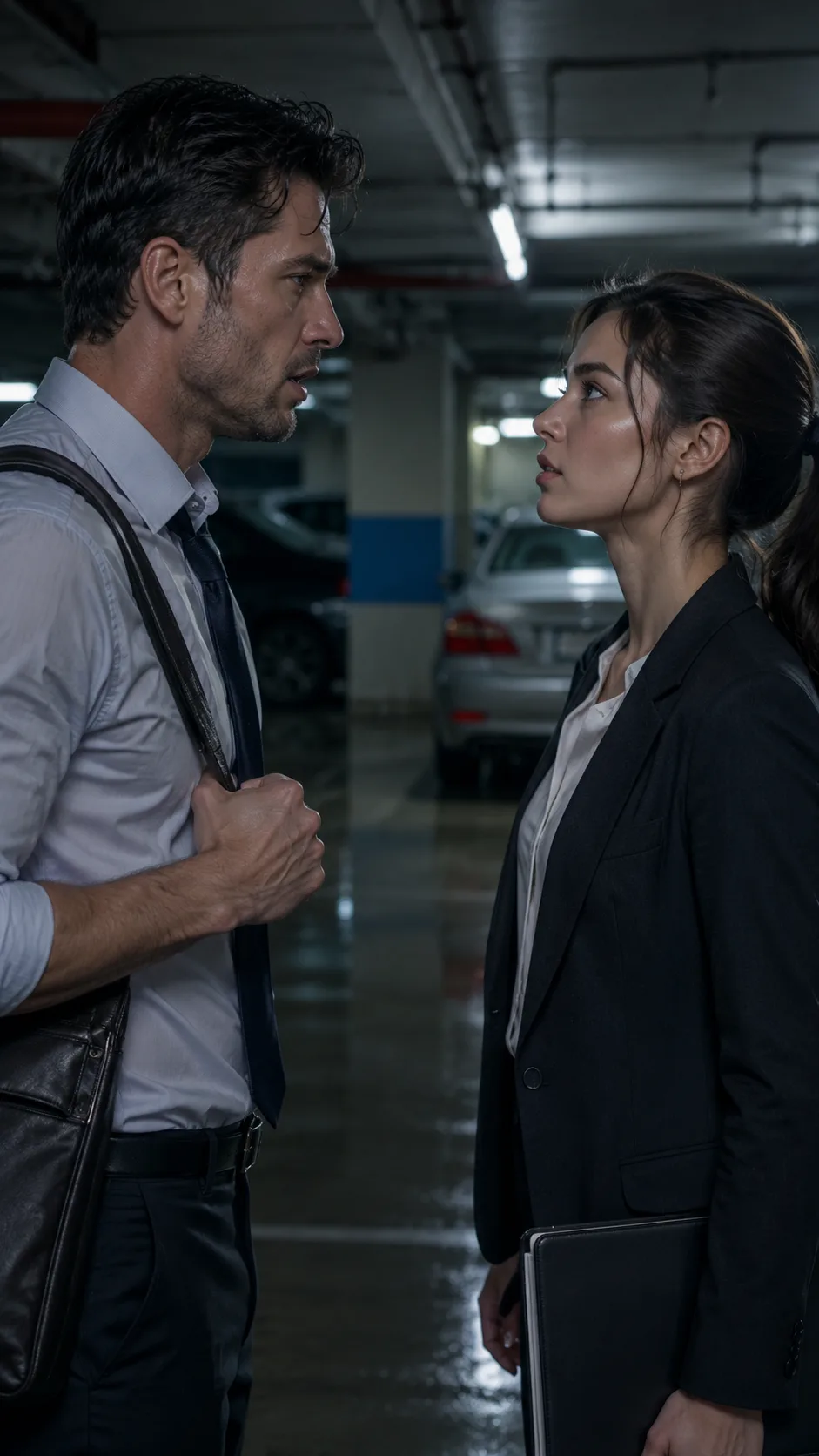
David saw Daniel in his doorway, exhausted but grinning.
Chapter 3
David saw Daniel in his doorway, exhausted but grinning.
I’ve got this, boss. Three more weeks and we’re golden. I can sleep when we ship. “No,” David admitted. “He wanted to finish.”
“Of course he did.” Rachel’s voice thickened. “That was Daniel. When he was twelve, he broke his ankle in a soccer game and kept playing until halftime. In college, he worked two jobs because he refused to let our parents pay his rent. When he loved something, he gave it everything.”
“Even when it killed him.”
Rachel flinched.
David immediately regretted it. “I’m sorry.”
“No.” She shook her head. “You’re right.”
Silence opened between them.
Then Rachel said something David never expected.
“I told him to push through.”
David looked at her.
Her face crumpled, just a little. “A week before the accident, Daniel called me. He said he was tired. He said maybe after the project launched, he’d take a real break. And I told him
he was almost there. I told him exhaustion was temporary, but achievement lasted forever.”
“Rachel—”
“He listened to me.” Her voice cracked. “He always listened to me. I was his big sister. I was supposed to protect him, and I told him to keep going.”
David’s throat closed.
For the first time, he saw it.
Not the CEO. Not Daniel’s sister coming to judge him.
A woman carrying the same impossible weight.
“We both saw the warning signs,” Rachel said. “We both told ourselves he was strong enough. We both thought a little longer wouldn’t hurt him.”
David whispered, “I had the power to stop it.”
“Did you?” Rachel asked. “Or would Henderson have fired you and put someone worse in charge?”
He had no answer.
Rachel reached into her pocket and pulled out her phone. “Two days before he died, Daniel texted me this.”
She handed it to him.
David stared at the screen.
I’m going to fix this place, Rae. Once Apex ships, I’m going to make sure nobody else has to choose between their health and their career. Promise.
The words blurred.
“I never saw this,” David said.
“He hid how bad it was,” Rachel said. “From me. From you. Maybe even from himself.”
David gave the phone back with shaking hands.
“That’s why I came back,” Rachel said. “Not to destroy you. Not to punish you. To finish what Daniel wanted to start.”
“What does that mean?”
“It means a real workload safety initiative. Overtime caps. Mental health resources. Anonymous reporting. Mandatory check-ins that aren’t just project updates. Consequences for executives who ignore burnout warnings.” Rachel held his gaze. “And I need you to help me build it.”
David almost laughed. “Me?”
“You saw exactly where the system failed.”
“I am the failure.”
“No,” Rachel said
firmly. “You’re the witness.”
That word broke something open in him.
Witness.
Not murderer. Not coward. Not the man who killed Daniel Whitmore.
A witness.
Someone who had seen the damage and could tell the truth.
Rachel held out her hand.
“Help me finish what my brother started.”
David looked at her hand.
Then at the woman who had every reason to hate him and was offering him a chance to turn grief into something useful.
“I’m terrified of letting you down,” he said.
“Good,” Rachel replied. “So am I. We’ll be terrified together.”
Slowly, David reached out and took her hand.
The handshake lasted too long to be business and not long enough to be comfort.
But it was a beginning.
Part 2
David did not sleep that night.
He went home to his quiet apartment on the North Side, took off his tie, poured a glass of water, and stood in the kitchen until the ice melted. Mia’s room was empty because she was still at Emma’s sleepover, which meant there was no twelve-year-old voice asking whether leftovers counted as dinner or why he looked like he had swallowed a thundercloud.
The silence gave him no mercy.
He pulled out his phone and opened an old photo he had avoided for months.
Daniel’s last team dinner.
They were packed into a booth at a noisy burger place near the office. Half the team looked exhausted. Daniel had ketchup on his sleeve and his arm thrown around Marcus like he had just won the Super Bowl. David stood behind him with one hand on Daniel’s shoulder.
Proud.
That was what David remembered feeling.
Proud of the team. Proud of Daniel. Proud that they had survived the impossible.
Now the photo looked like evidence.
His phone buzzed.
Unknown number.
It’s Rachel. Got your number from HR. Yes, CEO privileges. Thank you for tonight. For being honest. For not running.
David stared at the message for a full minute.
Then typed: Thank you for not hating me.
Her reply came quickly.
I did hate you. For a while. Then I read the emails. Hard to hate someone who tried everything. Easier to hate a system that didn’t listen.
David sat down at the kitchen table.
He typed: I still should have done more.
Rachel replied: We both should have. That’s why we’re going to make sure nobody else has to carry this guilt.
He read that sentence until the screen dimmed.
Nobody else has to carry this guilt.
The next morning, Mia burst through the apartment door thirteen minutes early, hauling her overnight bag and talking so fast David understood only fragments.
“Emma’s brother got a new gaming chair—Mrs. Rodriguez let us make pancakes at midnight—Dad, why do you look weird?”
David blinked. “Good morning to you too.”
Mia dropped her bag and climbed into the chair across from him. She had her mother’s brown eyes and David’s inability to leave uncomfortable truths alone.
“You have the Daniel face,” she said.
David stiffened.
Mia had been six when Daniel died. Old enough to remember Uncle Daniel bringing her a stuffed penguin from a conference in Seattle. Old enough to notice that after the funeral, her father stopped playing music in the car.
“I talked to his sister,” David said carefully. “Rachel. She’s the new CEO.”
Mia’s eyes widened. “The Rachel? The one you’ve been avoiding like she has rabies?”
“I have not—”
“Dad.”
He sighed. “Fine. Yes. That Rachel.”
“Is she mean?”
“No.”
“Then why were you scared of her?”
David looked at his daughter and felt the old instinct to protect her rise up. He wanted to say it was complicated. Adult stuff. Work stuff. Anything but the truth.
But Mia was watching him too closely.
“Because I thought she would blame me for Daniel,” he said. “And I already blamed myself enough for both of us.”
Mia frowned. “But it wasn’t your fault.”
“You don’t know that.”
“You told me you tried to stop the project. You told me the bosses wouldn’t listen.”
“I could have tried harder.”
“Dad.” She reached across the table and put her hand over his. “Even grown-ups can’t control everything.”
The simple wisdom of it nearly undid him.
“When did you get so smart?” he asked.
“I’ve always been smart. You were just too busy feeling guilty to notice.”
That was Mia. Twelve years old and lethal.
On Monday morning, David arrived at Rachel’s office carrying two coffees.
One black for him.
One with cream and sugar for her because he had texted Sunday night to ask how she took it, and she had replied: Enough cream to make the coffee look scandalized.
He stood outside her office at 8:58, trying to breathe.
Tom appeared beside him like an accountant-shaped haunting.
“You going to knock,” Tom asked, “or are you waiting for the door to develop abandonment issues?”
“I’m gathering my thoughts.”
“You’re spiraling.”
“I’m not spiraling.”
“You’re doing the jaw thing. Also, you’re holding both coffees like they contain explosives.”
David looked down.
Tom lowered his voice. “For what it’s worth, Rachel mentioned you in Friday’s leadership meeting.”
David’s head snapped up. “What did she say?”
“That your documentation practices were excellent and other managers should follow your example.”
David stared at him.
Tom grinned. “Linda from HR looked like someone had replaced her blood with iced coffee. I think she thought Rachel was going to fire you.”
“I thought Rachel was going to fire me.”
“Yeah, well, plot twist. Knock on the door.”
David did.
Rachel was standing by the window when he entered. The city stretched behind her in silver and gray. She wore a navy suit today, less intimidating than the charcoal one from the garage but no less precise.
“You brought coffee,” she said. “Maybe you are reliable.”
“Jury’s still out.” He handed her the cup. “Scandalized, as requested.”
Rachel took a sip and smiled.
It was small, but real.
“Perfect.”
They sat not across her desk, but at a small round table near the window. It felt intentional, like she had removed the battlefield before he arrived.
Rachel opened her leather notebook.
“Before we start,” she said, “I need to ask you something directly.”
David braced himself.
“Do you actually want to help build this initiative,” she asked, “or did you agree because you felt guilty?”
He almost lied.
Then he remembered the garage.
“I’m terrified,” he said. “I’m not sure I’m the right person. I’m not sure I can spend weeks talking about Daniel without falling apart.” He met her eyes. “But yes. I want to do it. Because he deserved better.”
Rachel nodded once. “Then let’s start with what went wrong.”
For three hours, David walked her through Apex.
The original six-month plan. The client’s sudden scope expansion. Henderson’s refusal to move the deadline because, as he had written in one email, “elite companies do not blink.” The leadership meetings where David asked for more staff and was told great managers “figure it out.” Daniel volunteering for the final technical push. The team cheering because Daniel made impossible things feel possible.
“And you believed he could handle it?” Rachel asked.
David stared at his coffee. “I wanted to.”
Rachel stopped writing.
“That’s the truth I hate most,” David said. “I knew he was burning out. But if I admitted he couldn’t keep going, then I had to make a choice I didn’t want to make. Pull him and risk the launch. Let him stay and risk him.” His voice dropped. “I chose wrong.”
Rachel did not rush to comfort him.
That was one thing David began to respect about her.
She did not cover pain with corporate language.
“You made a choice inside a system designed to make every option dangerous,” she said. “That matters.”
“It doesn’t absolve me.”
“No,” she agreed. “But it tells us where to build guardrails.”
By noon, they had listed failure points across six pages.
Impossible deadlines.
Executives rewarded for revenue without accountability for human cost.
No overtime tracking that triggered intervention.
No independent reporting path.
No manager protection for escalating burnout concerns.
No mandatory rest after critical launches.
No consequences for leaders who ignored warnings.
Rachel stared at the list. “It’s worse seeing it like this.”
“It was worse living it.”
She looked up.
David regretted the sharpness, but Rachel only nodded.
“Then make sure I never forget that.”
They kept going.
By Wednesday, they had a framework. By Friday, Rachel had pulled legal, HR, and operations into a closed-door meeting where she made three vice presidents sweat through their shirts.
By the third week, people were talking.
David Bennett, the man who used to vanish when Rachel Whitmore entered a room, now spent hours in her office with a legal pad, a laptop, and a coffee cup.
Tom noticed, of course.
“You and the CEO are spending a lot of time together,” he said one afternoon, leaning into David’s cubicle.
“We’re working.”
“You smiled at an email from her.”
“It was about policy.”
“Nothing says romance like compliance procedures.”
David glared. “Tom.”
“I’m just saying. Shared grief, mutual respect, late nights, caffeine. That is basically a Hallmark movie for people with 401(k)s.”
“She is my CEO.”
“She is also a human woman who laughs at your terrible jokes.”
“My jokes are fine.”
“They are government-issued dad humor, and somehow she likes them.”
David wanted to dismiss it.
He tried.
But that evening, when Rachel appeared at his cubicle holding two folders and wearing a tired smile, he noticed the way she tucked a loose strand of hair behind her ear. He noticed that she had started bringing him black coffee without asking. He noticed how his chest eased when she walked into a room.
That was dangerous.
So dangerous he nearly took the stairs away from his own feelings.
“Dinner?” Rachel asked.
He blinked. “What?”
She lifted a paper bag. “Chinese takeout. We need to review mental health vendors, and I refuse to make life-changing decisions while hungry.”
They worked in a conference room until the office emptied around them.
Rachel favored a vendor offering confidential counseling, anonymous usage reports, and on-site availability without company access to employee names. David pushed on privacy concerns. Rachel listened. They revised. Debated. Rebuilt.
Sometime after eight, the conversation drifted.
“How’s Mia?” Rachel asked.
David smiled before he could stop himself. “Currently grounded.”
Rachel’s eyebrows rose. “That sounds promising.”
“She pushed a boy at school for insulting me.”
Rachel coughed back a laugh. “She defended your honor?”
“In a way that violated school policy and possibly several Geneva Conventions.”
“Should I be concerned that I already like her?”
“Most people do. Then she roasts them.”
Rachel laughed.
The sound warmed the room.
Then she grew thoughtful. “Does she know the details about Daniel?”
“Some. Not all.”
“Maybe she should,” Rachel said gently. “Children learn from what we hide as much as from what we tell them.”
David looked away.
Rachel leaned forward. “You’ve turned down three promotions since Daniel died.”
He stiffened. “That’s not relevant.”
“It is. You’re punishing yourself by staying small.”
Anger flashed through him. “You don’t get to judge my parenting.”
“I’m not judging. I’m telling you Mia is watching. She’s learning that one tragedy can erase a person’s right to succeed.”
David stood. “That’s enough.”
Rachel stood too, not backing down. “Daniel would hate what you’ve done to yourself.”
The room went silent.
David’s breath came hard.
Rachel’s eyes filled, but her voice stayed steady. “He was not just how he died. He was also how he lived. He loved the work. He loved people. He took risks. He sang terrible karaoke after launches. He helped junior developers debug code at midnight because he believed nobody should struggle alone.”
David closed his eyes.
He had forgotten the karaoke.
No, not forgotten.
Buried.
Because remembering Daniel laughing made remembering the accident unbearable.
“I don’t know how to separate the good from the ending,” David said.
Rachel’s expression softened. “Then let me help.”
Her hand rested on the table between them, not quite reaching for him.
After a moment, David took it.
Her fingers curled around his.
Neither of them spoke.
Outside, Chicago glittered against the dark windows. Inside, two people sat with grief between them and did not let go.
Part 3
The board approved the Daniel Whitmore Workload Safety Initiative on a rainy Tuesday afternoon.
Not easily.
Not politely.
Harold Henderson, the retired executive who had once told David that burnout was “a weak word for poor planning,” still held a board seat and fought like a man defending a throne.
According to Rachel, he called the initiative emotional, expensive, unnecessary, and “a dangerous overcorrection based on one unfortunate incident.”
Rachel had been ready.
She showed the board the ignored emails. The refused resource requests. The legal settlements paid to former employees who had warned about burnout before Daniel died. The financial cost of silence. The moral cost of negligence.
By the end of the meeting, Henderson had resigned.
Or, as Rachel put it when she walked into the conference room where David was waiting, “He was invited to pursue opportunities outside our governance structure.”
David stared at her. “You got Henderson removed?”
Rachel set a bottle of champagne on the table. “The board got nervous when evidence started having dates on it.”
He laughed, but his hands shook when she poured two glasses.
Rachel raised hers.
“To Daniel,” she said, “who deserved better.”
David lifted his glass. “And to everyone after him getting better.”
They drank.
The champagne tasted like relief and fear.
Because approval was not victory.
It was permission to fight.
Within days, resistance spread.
Managers complained about overtime caps. Executives complained about bonus cuts. One VP said anonymous reporting would “encourage whining.” Rachel asked him, in a room full of people, whether he preferred employees suffer silently for the convenience of his calendar.
He stopped talking.
David was promoted to Senior Director of Employee Sustainability and Product Operations, a title Mia declared “too long for a business card and too boring for a superhero.”
He nearly declined.
Rachel saw it coming.
They were in her office when she slid the offer letter across the table.
David read it twice. “This is too much.”
“No, it’s accurate.”
“I don’t need a promotion to do the work.”
“No,” Rachel said. “But the work needs authority. And you need to stop mistaking self-punishment for humility.”
He almost argued.
Then he thought of Mia.
Mia, watching him turn away from every open door because one closed door in the past still haunted him.
He signed.
That night, he told his daughter over pizza.
Mia screamed so loudly the downstairs neighbor banged on the ceiling.
“Dad! That’s huge!”
“It’s a lot of responsibility.”
“It’s a promotion.”
“Yes.”
“So you said yes?”
“I said yes.”
Mia launched herself across the table and hugged him so hard he almost knocked over the parmesan.
“I’m proud of you,” she whispered.
David closed his eyes.
There were moments when fatherhood felt like holding a mirror he was not ready to look into.
“Rachel helped,” he admitted.
Mia pulled back with a suspicious squint. “Rachel helped, huh?”
“Yes.”
“Are you dating her?”
David choked on air. “No.”
“But do you want to?”
“Mia.”
“That is not an answer.”
“She is my CEO.”
“That is also not an answer.”
He rubbed his forehead. “It’s complicated.”
“Adults say complicated when they mean yes but scary.”
David stared at her. “You are twelve.”
“And yet I’m right.”
A week later, Rachel invited him to dinner.
Not a working dinner. She made that clear in the doorway of his office, where she stood with both hands wrapped around her coffee like the cup might give her courage.
“We should celebrate your promotion,” she said.
“We already had champagne.”
“That was for Daniel. This would be for you.”
David should have said no.
He said yes.
They went to a small Italian restaurant in Lincoln Park with low lights and red brick walls. For the first twenty minutes, they talked about implementation barriers because neither of them knew how to be normal anymore.
Then Rachel set down her fork and said, “We are very bad at not working.”
David smiled. “I warned you I was boring.”
“You’re not boring.” She looked at him across the table. “You’re careful.”
“That sounds worse.”
“It isn’t. It makes sense.” Her voice lowered. “You lost someone. You’re raising a daughter. You’ve spent years believing one wrong choice can destroy everything.”
David looked at her.
Rachel looked nervous now, and that startled him more than anything. He had seen her face down board members and dismantle executives with one question. But here, under soft restaurant lights, she looked human in a way that made his heart ache.
“I like being with you,” she said. “And I know that is complicated.”
He exhaled slowly.
“I like being with you too.”
The words felt both terrifying and clean.
Rachel’s smile was careful. “Then we go slow. The work comes first. Daniel’s initiative comes first. Mia comes first.”
“Mia would probably argue she should be first, second, and third.”
“I look forward to negotiating with her.”
David laughed.
After dinner, Rachel drove him home because he had taken the train. In front of his building, neither of them moved.
“So,” she said.
“So.”
“This was good.”
“It was.”
“Could we do it again sometime?” Rachel asked. “Somewhere not connected to Daniel. Somewhere we can just be ourselves.”
David smiled. “I’d like that.”
Rachel reached across the center console and took his hand.
“And David,” she said, “if this ever interferes with the work, we stop.”
“Deal.”
She leaned over and kissed his cheek.
Soft. Brief. Full of promise.
David stood on the sidewalk after she drove away, one hand against his cheek, feeling like a man who had just stepped out of prison and was not sure what to do with open sky.
Mia was waiting inside, pretending to read.
“So,” she said immediately, “how was dinner with Rachel?”
David hung up his coat. “It was nice.”
“Did she kiss you?”
He nearly dropped his keys. “Why would you ask that?”
Mia grinned. “Because you’re touching your cheek like a Disney princess.”
David pointed down the hall. “Bed.”
“Invite her to my orchestra concert next month.”
“Mia.”
“Mom can’t come. She has a work trip. You always look sad sitting alone.” Mia’s grin faded. “Maybe if Rachel comes, you’ll look happy.”
David’s throat tightened.
His ex-wife, Karen, loved Mia but had always loved movement more: new cities, new jobs, new reasons she could not quite make it back in time. David had learned not to resent her out loud.
Mia had learned anyway.
“Sweetheart,” he said, “Rachel and I are still figuring things out.”
“Then figure out that I want her there.”
He sat beside her on the couch. “You liked Daniel, didn’t you?”
Mia grew quiet. “Yeah.”
“He would have liked Rachel being there?”
Mia nodded. “He’d like you being happy.”
David looked at her.
She swallowed. “Before he died, Uncle Daniel told me something. I didn’t understand then.”
“What?”
“He said if anything ever happened to him, I had to make sure you didn’t blame yourself.” Her eyes filled. “He said you were one of the best people he knew.”
David broke.
Not loudly.
Not dramatically.
Just one hand over his mouth and tears that came from somewhere old and exhausted.
Mia wrapped her arms around him.
“I’ve been waiting for you to believe it,” she whispered. “Please, Dad. For me. For him. For Rachel. Be happy.”
For the first time since Daniel’s funeral, David let himself cry without trying to stop.
The companywide presentation took place four weeks later in Hawthorne’s main auditorium.
Five hundred employees filled the seats. Some curious. Some skeptical. Some hopeful in the guarded way people become hopeful after years of disappointment.
David stood backstage, sweating through his shirt.
“I’m going to throw up,” he told Rachel.
“No, you’re not.”
“I might.”
“If you throw up, I’ll call it an immersive demonstration of workplace stress.”
Despite himself, he laughed.
Rachel adjusted his tie. Her hands lingered for half a second.
“Mia believes in you,” she said. “Tom believes in you. Your team believes in you. Borrow our belief until yours shows up.”
David looked past the curtain.
For four years, he had hidden behind documentation, behind cautious decisions, behind the idea that staying small kept everyone safe.
But safety without courage was just another kind of cage.
Rachel walked onstage first.
She spoke about Daniel not as a scandal, not as a liability, but as a person.
A brother who sang off-key. An engineer who helped everyone. A man who wanted to change a broken culture and never got the chance.
Then she introduced David.
The applause was polite.
David stepped to the podium and saw his team in the third row. Tom beside them. Linda from HR wiping her glasses. In the back, near Mrs. Rodriguez, Mia sat in her orchestra hoodie with both hands clasped under her chin.
David gripped the podium.
“My name is David Bennett,” he began. “Four years ago, I managed a project that should have never been allowed to continue the way it did.”
The room went still.
He told the truth.
Not all of it. Not the private parts that belonged to grief.
But enough.
He talked about warning signs missed because the culture rewarded endurance over honesty. He talked about managers afraid to escalate because their own jobs were threatened. He talked about employees who said “I’m fine” because they believed needing rest meant weakness.
And then he said Daniel’s name.
“Daniel Whitmore was not weak. He was brilliant. He was stubborn. He cared about his work and his team. And he died in a system that made exhaustion look like dedication.”
Rachel’s eyes filled beside him.
David kept going.
“This initiative will not bring Daniel back. No policy can do that. But policy can change what we tolerate. Leadership can change what we reward. Culture can change who gets protected.”
He looked at the employees in front of him.
“And from this day forward, no one at Hawthorne Technologies will be asked to prove their value by destroying themselves.”
The applause started slowly.
Then grew.
Not everyone clapped. David saw a few executives sitting stiff and stone-faced.
But hundreds did.
And in the back, Mia stood.
Afterward, David found Rachel in her office, standing by the window where she always seemed to go when the world became too much.
“We started it,” she said without turning.
“We did.”
“Implementation will be harder.”
“I know.”
She turned then, tears bright in her eyes. “Thank you for being brave enough to tell the truth.”
David crossed the room and pulled her into a hug.
It was not professional.
It crossed lines.
He did not care.
“Thank you for not giving up on me,” he whispered.
Rachel held him tighter. “Thank you for finally showing up.”
His phone buzzed.
A text from Mia.
Mrs. Rodriguez showed me the video. You were amazing, Dad. Uncle Daniel would be proud. I’m proud too. Also Rachel looked pretty. Don’t mess this up.
David laughed through tears and showed Rachel.
“She’s terrifying,” Rachel said.
“She gets that from me.”
“She absolutely does not.”
David looked at her then.
Really looked.
At the woman who had cornered him in a parking garage, dragged him out of hiding, and helped him turn the worst thing he had ever carried into something that might save someone else.
“Rachel,” he said, “I’m falling in love with you.”
Her breath caught.
“I know it’s complicated,” he continued. “I know there are policies and optics and grief and Daniel and Mia and a hundred reasons to be careful. But I’m done lying to survive. I’m done hiding from things that matter.”
Rachel smiled, slow and trembling.
“That’s convenient,” she said. “Because I’m falling in love with you too.”
David laughed once, stunned by joy.
“What do we do now?”
“We keep doing the work,” Rachel said. “We build the initiative. We protect people. We go slow. We tell HR before Tom tells HR for us. And maybe, if Mia approves, I come to an orchestra concert.”
“She already invited you.”
“Smart girl.”
“The smartest.”
Six months later, Hawthorne’s turnover dropped. Anonymous reports were investigated by an outside ethics board. Overtime alerts triggered mandatory reviews. Managers were trained to recognize burnout before it became collapse. Senior leaders lost bonuses when their departments ignored workload safeguards.
It was not perfect.
No system was.
But people went home earlier. People asked for help sooner. People stopped whispering about burnout like it was a personal failure.
In the lobby, Rachel installed a simple plaque near the elevators.
In memory of Daniel Whitmore, who believed no one should have to choose between their health and their future.
The day it went up, David brought Mia after school.
She stood in front of it quietly, her backpack hanging from one shoulder.
“He would like this,” she said.
David nodded. “I think so.”
Rachel stood beside him, her hand brushing his.
Mia noticed, because of course she did.
“You can hold hands,” she said without looking at them. “I’m emotionally mature.”
Rachel laughed.
David took Rachel’s hand.
For once, he did not look over his shoulder. He did not search for exits. He did not count the ways happiness could go wrong.
He stood with his daughter on one side and Rachel on the other, in a building that had once taught him grief and was now learning mercy.
Daniel was still gone.
That would never stop hurting.
But for the first time in four years, David understood that healing did not mean forgetting. It meant remembering with enough courage to build something better.
And when Mia slipped her small hand into his, David squeezed back.
He was not running anymore.
THE END
Chapter complete
You have reached the end of this chapter.
Continue reading
A few more worlds to get lost in after this chapter.




