Maya cried when he kissed her.
Chapter 2
She’s Lying—Those Aren’t My Son’s Babies!” The Billionaire’s Mom Said… 4 Years Later, He Saw
3,959 words
He cried too, though he tried to hide it.
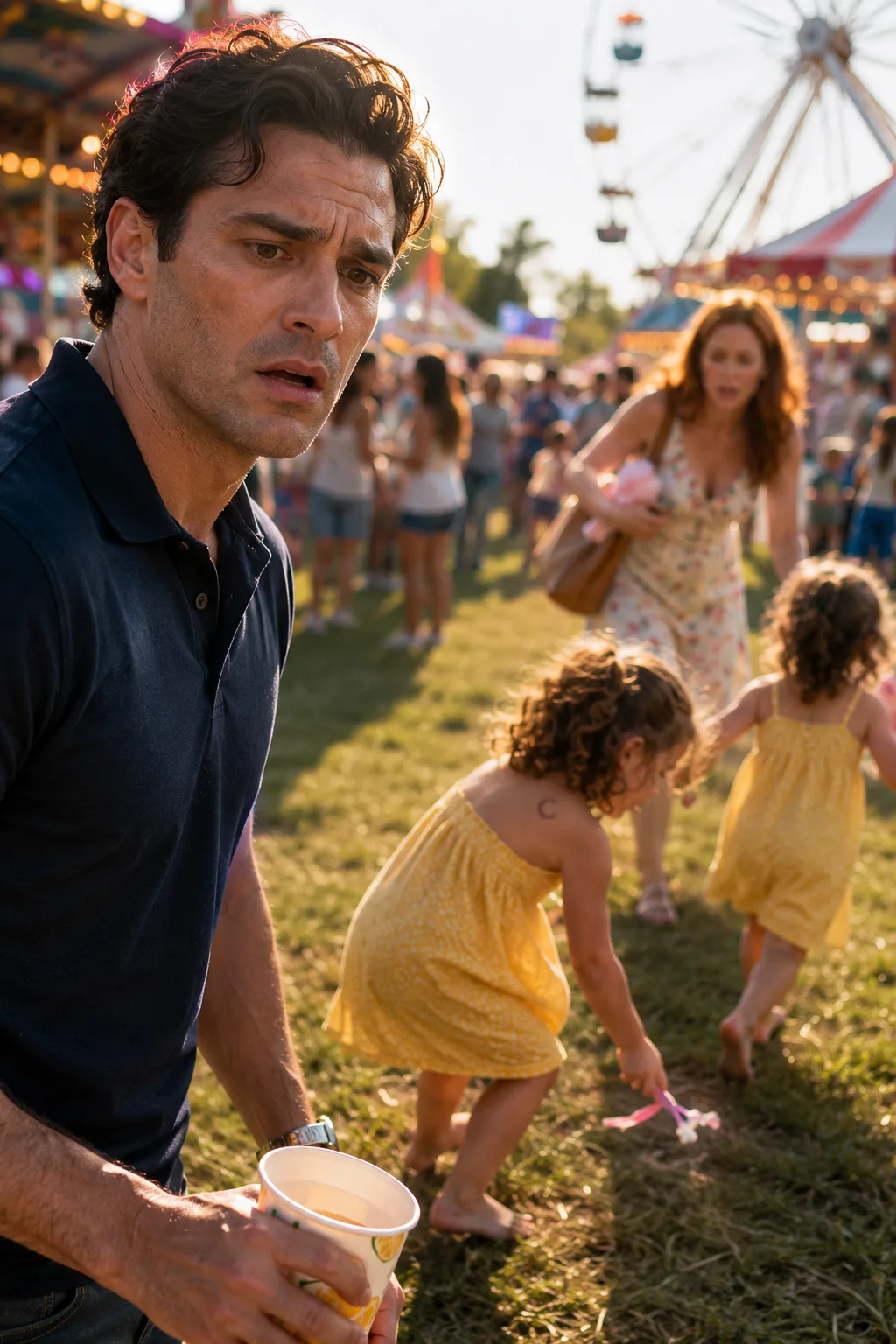
For the first time in his life, Graham wanted a future that did not need his mother’s approval.
Eleanor found out one week later.
She summoned them to the Greenwich estate at nine in the morning, a time chosen to remind them she controlled the day before it had begun. She sat behind her desk wearing pearls and a cream suit, her silver hair pinned perfectly, her expression colder than the marble floor.
“So,” Eleanor said, looking at Maya as if she were a stain on silk. “You claim to be carrying my son’s children.”
Maya’s spine straightened. “I am carrying his children.”
Eleanor smiled without warmth. “She’s lying—those aren’t my son’s babies.”
Graham rose from his chair. “Mother.”
Eleanor did not even glance at him. “Women have tried worse for less. A pregnancy, a tragic background, a touching love story.
It is all very convenient.”
Maya’s face went white, but she did not break.
“I don’t want your money,” she said. “I love your son.”
“Love,” Eleanor repeated, as if the word smelled bad. “Love is what people say when they have no pedigree, no discipline, and no plan.”
Graham stepped between them. “Enough.”
For the first time, Eleanor seemed surprised. Her son had never spoken to her that way.
But Maya reached for his hand, not because she needed protection, but because she was offering him strength.
“We’ll do the test,” Maya said. “When it’s safe for the babies. And when it proves what we already know, you will never speak about them like this again.”
The paternity test confirmed the truth.
Graham was the father.
He thought that would end the war.
He did not understand that Eleanor Whitmore did not lose wars. She simply changed the battlefield.
Part 3: Seventeen Minutes
The twins came seven weeks early on a stormy Tuesday in May.
Graham got the call at 3:42 a.m.
“Mr. Whitmore, this is Mercy General. Maya Bennett has been admitted. She’s asking for you.”
He drove through rain so hard the windshield looked like fractured glass. By the time he reached the hospital, his shirt was soaked, his shoes squeaked on the tile, and his heart was pounding like he had been running for miles.
Maya was in room 318, pale and terrified but smiling when she saw him.
“They’re impatient,” she whispered.
“So am I,” he said, though his voice shook.
For six hours, he held her hand. She cursed, laughed, cried, and squeezed his fingers until he thought she might break them. He would have let her. He would have let her break every bone in his body if it made the pain easier.
At 9:18 a.m., Emma Grace Whitmore entered the world furious and loud.
At 9:27 a.m., Rose Hope Whitmore followed, quieter but no less determined.
The nurse placed Emma in Graham’s arms first. She was tiny, impossibly tiny, wrapped in a pink blanket, her face wrinkled with outrage. Graham looked down and felt the walls inside him collapse.
Then he saw it.
A crescent mark on her shoulder blade.
The Whitmore mark.
He laughed and sobbed at the same time.
Maya held Rose against her chest, tears slipping into her hair. “They’re perfect,” she whispered.
“They are,” Graham said. “You are.”
Maya smiled at him.
Those were the last peaceful seconds of his life.
The machines changed tone. A nurse frowned. Another called for a doctor. Maya’s eyes fluttered.
“Graham?” she said.
He moved toward her, still holding Emma.
“What’s happening?” he demanded.
No one answered him.
The room exploded into motion. They took Emma from his arms. They lifted Rose from Maya’s chest. Someone said hemorrhage. Someone else said surgery. Graham followed until a nurse blocked him with both hands and a face full of pity.
“You need to wait here.”
“Wait?” he said. “That’s my family.”
But the doors closed.
Seventeen minutes later, a doctor came out.
Graham knew before she spoke.
Maya Bennett was gone.
Grief did not arrive as sadness. It arrived as silence. A total, crushing silence that made the hospital lights too bright and the voices around him too far away. He stood in the hallway while rain lashed the windows and understood that his daughters would never know the woman who had loved them before they had names.
When they brought the babies back, he held them both.
“I’ll tell you about her,” he whispered. “Every day. I’ll tell you how brave she was. I’ll tell you how she laughed. I’ll tell you that she loved you more than anything.”
Then Eleanor arrived.
She came dressed in black, her umbrella carried by a driver, her face arranged in perfect mourning. She touched Graham’s shoulder. He did not have the strength to move away.
“My son,” she said softly. “Let me help.”
That was how she began.
Help.
She spoke to doctors. She spoke to administrators. She spoke to lawyers. Graham was drowning in funeral arrangements, medical decisions, grief, and newborn daughters so small they needed monitoring. Eleanor stood beside him, calm and competent, saying what papers needed signatures, what specialists needed approval, what temporary care would be best.
“You are not abandoning them,” she told him. “You are making sure they survive until you can stand again.”
He wanted to believe her.
He was so tired.
The first delay was medical. The twins needed observation.
The second was legal. Maya had died unmarried, and the hospital required documentation.
The third was psychiatric. Eleanor’s lawyer claimed Graham’s grief had made him unstable. A doctor Graham did not remember meeting signed a report saying he was not prepared for immediate custody.
By the time Graham understood something was wrong, the twins had been moved.
The records said a private neonatal facility.
The facility denied receiving them.
Then the records disappeared.
Eleanor stood in her office two weeks after Maya’s funeral while Graham shouted himself hoarse.
“Where are my daughters?”
Her face never changed.
“You need to let this go.”
“Where are they?”
Her eyes hardened. “Those children would have destroyed you. They would have destroyed this family. Maya Bennett was unsuitable, and whatever affection you felt for her clouded your judgment.”
Graham stared at his mother as if seeing her for the first time.
“What did you do?”
“I protected the Whitmore legacy.”
He lunged toward the desk, but two security men caught him before he reached her.
Eleanor’s voice remained calm.
“One day, you will thank me.”
He never did.
Part 4: The Mother Who Raised Them
The woman from the fair agreed to meet Graham the next morning at a public park near the Cedar Falls library.
Her name was Clara Ellis.
She arrived with Emma and Rose, who believed Graham was a business client interested in hiring their mother for an event. Clara wore jeans, a navy sweater, and the expression of someone prepared to run if danger breathed too close.
The twins played on the swings while Graham and Clara sat on opposite ends of a green bench.
“They have always known they were adopted,” Clara said before Graham asked. “I told them their birth parents loved them but couldn’t take care of them.”
Graham watched Emma pump her legs hard, trying to swing higher than Rose. “How did you get them?”
Clara closed her eyes.
“I was twenty-seven. Divorced. I had wanted children for years, but adoption agencies kept putting me at the bottom of every list. Single woman, freelance event planner, not rich enough, not traditional enough.” She swallowed. “Then a lawyer called. He said there were twin girls. Their mother had died. Their father was unable to care for them. A wealthy family wanted a quiet private placement.”
Graham’s hands curled into fists.
“Who was the lawyer?”
“Daniel Price.”
He knew the name. Eleanor’s fixer. The man who made scandals disappear before newspapers learned they existed.
Clara continued, her voice shaking. “Everything looked real. There were home studies, court documents, medical papers. I met with a judge in a private hearing. I thought I was saving two babies who needed me.”
Graham looked at her then.
She was crying silently.
“I started noticing problems when they were six months old,” she said. “The medical history was incomplete. The agency listed on the paperwork barely existed. Daniel Price got angry when I asked questions. Then someone broke into my office and took copies of the adoption file.”
“Why didn’t you go to the police?”
“With what?” Clara asked. “A bad feeling? A missing folder? Legal papers saying I was their mother?” She looked at the girls. “And I was afraid. I loved them. I love them. Every breath I take has their names in it. I thought if I asked the wrong person the wrong question, someone powerful would take them.”
Graham believed her.
Not because he was naive. He had not been naive in four years. He believed her because he knew what Eleanor’s manipulation looked like. It always left people blaming themselves for damage she had caused.
“You didn’t steal my children,” he said. “You kept them alive.”
Clara covered her mouth with one hand.
“I helped her.”
“No. You were used.”
Rose ran toward them then, holding a dandelion crushed in her fist.
“Mr. Graham,” she said. “Do you like wishes?”
He knelt, because standing over his own daughter felt wrong.
“I do.”
She handed him the flower. “You blow the white ones, but this one is yellow, so maybe it’s not ready yet.”
Graham accepted it like a sacred thing. “Maybe some wishes take longer.”
Rose studied him. “You have sad eyes.”
Clara inhaled sharply. “Rose.”
“It’s okay,” Graham said.
Rose touched his sleeve. “Mama says sad doesn’t mean broken.”
Graham had faced enemies who wanted his company, his money, his name. None of them had ever struck him like that.
“You have a very smart mama,” he said.
Rose smiled and ran back to Emma.
Clara watched him with new fear. “What happens now?”
Graham looked at his daughters. His instinct screamed: take them, claim them, never let them out of his sight again. But love, real love, was not ownership. Eleanor had taught him what ownership did.
“They need stability,” he said. “They need you. And they need the truth. Slowly. Carefully. Together.”
Clara’s shoulders shook with relief.
“I want to know them,” Graham continued. “I want to be their father. But I won’t rip their world apart to satisfy my grief.”
Clara nodded. “I kept records. After I got suspicious, I kept everything. Emails, voicemails, receipts, names, dates. I even have a copy of the original file hidden in a safe deposit box.”
For the first time in four years, Graham felt something stronger than anger.
He felt a path opening.
“Then we fight,” he said.
Clara looked toward the playground, where Emma and Rose were laughing in the sun.
“No,” she said softly. “We tell the truth.”
Part 5: Eleanor Whitmore’s Last Lie
Graham did not confront his mother immediately.
The man he had been at twenty-nine would have stormed into her office with rage in his mouth and pain in his hands. The man he had become knew better.
He hired a family law attorney named Rebecca Sloan, a former prosecutor with a reputation for making powerful people regret underestimating her. Clara gave them the safe deposit box. Inside were adoption papers, agency records, emails from Daniel Price, payment receipts from shell companies connected to Whitmore Holdings, and one voicemail that changed everything.
Clara had saved it from three years earlier.
Daniel Price’s voice was clear.
“Mrs. Ellis, stop asking questions about the biological father. The arrangement was approved by the Whitmore family. You have the children. Be grateful and move on.”
Rebecca listened twice.
Then she smiled without humor.
“That,” she said, “is the sound of a man choosing prison.”
The investigation moved fast after that. Money had power, but paperwork had memory. A retired nurse from Mercy General admitted the twins had been moved under Eleanor’s orders. A clerk found a sealed guardianship petition with Graham’s signature forged at the bottom. The doctor who had declared him emotionally unfit confessed he had never examined him.
Daniel Price folded first.
He gave prosecutors everything.
Eleanor had paid him to remove the twins from Graham’s custody, fabricate a private adoption, and bury the records behind charitable foundations and sealed family court filings. Her motive was written in an email Rebecca read aloud in her office.
“The Bennett bloodline must not become part of this family.”
Graham walked to the window and pressed his hand against the glass.
Maya had been dead when Eleanor wrote that.
Dead, and still not safe from her cruelty.
The confrontation finally happened in the same Greenwich office where Eleanor had once accused Maya of lying.
Graham entered with Rebecca, Clara, and two detectives from the state attorney’s office. Eleanor sat behind her desk, silver hair perfect, pearls at her throat, empire arranged around her like armor.
Her eyes moved from Graham to Clara.
“So this is the woman.”
Clara lifted her chin. “I’m the woman who raised the girls you stole.”
Eleanor’s mouth tightened. “I saved them.”
Graham laughed once. It was a terrible sound.
“You saved them from what? Love? A father? Their mother’s memory?”
“I saved them from scandal,” Eleanor snapped. “From being dragged through life as the children of a dead event planner who trapped my son with a pregnancy.”
Graham stepped forward.
“Say her name.”
Eleanor looked at him.
“Say Maya’s name.”
For the first time, uncertainty flickered across his mother’s face.
Graham’s voice dropped. “You took my daughters while I was burying the woman I loved. You forged my signature. You told courts I was unstable. You paid people to lie. And for four years, you let me wonder if my children were dead.”
Eleanor rose slowly. “You were weak.”
“No,” Graham said. “I was grieving.”
“You would have thrown away everything.”
“I would have chosen them.”
“That is exactly why I had to act.”
The room went silent.
It was the closest Eleanor would ever come to confession.
One detective stepped forward. “Eleanor Whitmore, you need to come with us.”
Her face hardened again. She looked at Graham as though he were the disappointment.
“You think this makes you free?” she said. “You have no idea what it takes to protect a dynasty.”
Graham looked at Clara, who had tears in her eyes but did not look away. He thought of Emma and Rose learning to ride bikes in a driveway, of Maya laughing in a hospital fundraiser, of seventeen minutes that had carried him through four years of darkness.
“I don’t want a dynasty,” he said. “I want my family.”
Eleanor was arrested before sunset.
The story broke nationally the next morning.
Billionaire matriarch accused in illegal adoption scheme.
Reporters camped outside Whitmore properties. Commentators argued over privilege, power, motherhood, and corruption. Stock prices dipped. Board members panicked. Old family friends disappeared.
Graham barely noticed.
He was at Clara’s kitchen table, helping Emma glue paper stars onto a cardboard castle while Rose explained that princesses could also be firefighters.
Part 6: The Truth Told Gently
The court did not fix everything with one decision.
Real life was not clean enough for that.
The adoption was ruled fraudulent and void, but the judge refused to treat Clara as a criminal. She had passed every background check, cooperated fully, and provided the evidence that exposed the crime. More importantly, the twins knew her as their mother.
Graham’s legal paternity was restored.
Clara remained their mother in every way that mattered.
They agreed to shared custody, slowly introduced. Graham bought a house three blocks from Clara’s, not a mansion, not a tower, just a white house with a porch, a yard, and two bedrooms painted in colors the girls chose themselves. Emma picked purple. Rose picked green because, she said, dragons needed somewhere to sleep.
The first months were awkward and beautiful.
The girls called him Mr. Graham until Emma asked, “Are you our real dad?”
Clara froze.
Graham set down the storybook in his lap.
He and Clara had prepared for this moment with therapists, attorneys, and more fear than either admitted. But when it came, it came in pajamas, with popcorn on the rug and rain tapping the windows.
“Yes,” Graham said. “I’m your birth dad.”
Rose frowned. “Like the dad from when we were babies?”
“Yes.”
Emma looked at Clara. “Did you know?”
Clara sat beside them on the floor. “I found out for sure recently. I always knew your birth parents loved you. I didn’t know your dad had been looking for you.”
Rose’s lower lip trembled. “Why didn’t he find us?”
Graham felt the question cut through him.
“Because some grown-ups made very wrong choices,” he said. “But I never stopped looking. Not one day.”
Emma crawled into his lap first.
Rose followed.
Clara turned away to wipe her eyes.
Later, when the girls were asleep, Graham stood in the hallway outside their rooms and cried for the years he had missed. Clara found him there. She did not tell him to be strong. She simply stood beside him.
“They love you,” she said.
“They love everyone,” he whispered. “That’s what makes them brave.”
Eleanor’s trial ended eleven months later.
She accepted a plea to avoid a public courtroom battle that would have dragged the twins’ names through headlines. She lost her position in Whitmore Holdings, her charitable foundations were investigated, and she was sentenced to prison followed by house arrest. Daniel Price lost his license and went to prison too.
Eleanor wrote Graham one letter.
He read only the first line.
I did what I believed was necessary.
He placed it back in the envelope and burned it in the fireplace.
Some doors did not need reopening.
Part 7: Four Years Lost, A Lifetime Found
On Thanksgiving, five years after Maya’s death, Graham hosted dinner in the white house near Clara’s.
Not at the Greenwich estate. Never there.
The table was too crowded, which made it perfect. Clara made sweet potatoes. Graham burned the first turkey and ordered a second one from a diner, which the girls declared “more American anyway.” Rebecca Sloan came with pie. The retired nurse who had testified sent flowers. Maya’s parents, who had spent years believing the twins were lost to them too, sat at the table holding Emma and Rose as if they were miracles that might vanish if released.
Before dinner, Graham took the girls upstairs.
In the hallway hung a framed photograph of Maya Bennett. She was laughing in the picture, caught mid-motion at the Boston fundraiser, dark hair loose around her face.
“That’s your birth mom,” Graham said.
“We know,” Emma said. “Mama Clara says she was brave.”
“She was,” Graham said.
Rose touched the frame. “Do we look like her?”
Graham smiled through the ache in his chest. “Every day.”
They stood there quietly.
Then Emma asked, “Was Grandma Eleanor bad?”
Graham chose his words carefully. “She made choices that hurt people. Very badly.”
“Does she love us?” Rose asked.
“I don’t know,” Graham said honestly. “Some people confuse love with control. Real love doesn’t steal. Real love doesn’t lie. Real love lets people be safe and free.”
Emma considered that.
“Mama Clara is real love.”
“Yes,” Graham said.
“And you?”
He knelt in front of them. “I’m trying to be.”
Rose threw her arms around his neck. “You are.”
Downstairs, Clara called everyone to dinner.
The girls ran ahead, their footsteps thunderous and joyful. Graham stayed for one moment beside Maya’s picture.
“I found them,” he whispered. “They’re safe. They’re loved. I wish you were here.”
The house answered with laughter from below.
At dinner, Emma insisted everyone say what they were thankful for. Rose was thankful for mashed potatoes, dragons, and “having two bedrooms.” Clara was thankful for truth, even when it arrived late. Maya’s mother was thankful for second chances.
When it was Graham’s turn, he looked around the table.
Four years of his daughters’ lives had been stolen. No verdict could return their first steps, first words, first birthdays, or the nights they had cried for someone who did not know where they were.
But Eleanor had failed in the one way that mattered most.
She had tried to erase love, and love had survived without her permission.
“I’m thankful,” Graham said, “that family is not built by blood alone, or money, or a name on a building. It’s built by the people who stay, the people who tell the truth, and the people who choose love when power would be easier.”
Clara reached for his hand under the table.
Emma saw and grinned. “Are you two going to get married?”
Clara choked on her water.
Graham laughed, truly laughed, for the first time in years.
“Finish your peas,” Clara said, blushing.
Rose leaned toward Emma and whispered loudly, “That means maybe.”
Two years later, it did mean yes.
They married in the backyard beneath strings of warm lights, with Emma and Rose scattering flower petals in crooked lines. Maya’s photograph rested on the front chair with a small bouquet beside it. Graham wore no family crest. Clara wore a simple dress and cried before she reached the aisle.
When the officiant asked who gave the bridesmaid flowers, Rose shouted, “We do, because we planned everything.”
Everyone laughed.
Graham looked at Clara and understood that happiness after grief did not erase the grief. It grew around it. It made room for memory, for pain, for love old and new.
At the reception, Emma climbed onto a chair and tapped a spoon against her glass.
“I want to say something,” she announced.
Clara reached for her. “Sweetheart, maybe later.”
“No, now.” Emma looked at the guests with solemn importance. “Families can get lost. But they can get found. And lies are bad. And cake is good.”
The applause was immediate.
Graham picked her up and kissed her cheek.
Rose tugged his sleeve. “Daddy, dance with us.”
Daddy.
The word had come slowly over time. First by accident, then shyly, then with confidence. Each time, it rebuilt a piece of him.
He danced with both daughters under the lights while Clara watched, smiling through tears. Beyond the yard, the summer night stretched wide and dark and full of stars.
Graham knew the truth now.
His mother had believed power could decide who belonged to whom. She had believed money could rewrite blood, bury love, and turn children into secrets.
But four years later, at a small-town fair, he had seen a crescent mark on his daughter’s shoulder and understood what Eleanor never had.
The truth does not die because someone rich commands it to disappear.
Love does not vanish because a powerful woman calls it inconvenient.
And children are not legacies to be managed.
They are hearts to be protected.
Emma and Rose grew up knowing everything in pieces gentle enough for their age. They knew Maya had loved them. They knew Clara had saved them. They knew Graham had searched for them. They knew Eleanor had lied.
Most of all, they knew they had never been unwanted.
Years later, when reporters still tried to turn their story into scandal, Graham would close the gate, shut off his phone, and go inside to help with homework, pancakes, science projects, and ordinary life.
Because ordinary life was the miracle.
A scraped knee.
A bedtime story.
A dandelion in a small hand.
A daughter calling him Daddy from the porch.
That was the fortune Eleanor Whitmore had never understood.
And it was the only one Graham cared to keep.
Chapter complete
You have reached the end of this chapter.
Continue reading
Find your next story
A few more worlds to get lost in after this chapter.




