The plate slipped from my fingers before I could catch it.
Chapter 1
The plate slipped from my fingers before I could catch it.
It hit the polished marble floor with a sharp crash that sliced through the elegant murmur of Bellissimo like a gunshot. White porcelain exploded across the black tiles. Rich red sauce splattered near my shoes. For one terrible second, the whole restaurant went silent.
Every head turned.
Dozens of wealthy strangers stared at me as if I had personally ruined their evening.
“Cazzo, che merda,” I muttered under my breath.
The Italian curse slipped out before I could stop it.
My grandmother used to say it when she burned bread or dropped a pot lid in her tiny kitchen on the South Side. I had grown up hearing Italian before I could even spell my own name. But inside Bellissimo, a place where fake Tuscan paintings hung beside fake Roman columns and fake Italian music played from hidden speakers, no one expected the exhausted waitress to understand a word beyond
menu names.
Unfortunately, Mr. Donati heard enough.
“Sophia Parker.”
His voice boomed across the dining room.
I closed my eyes for half a second before looking up.
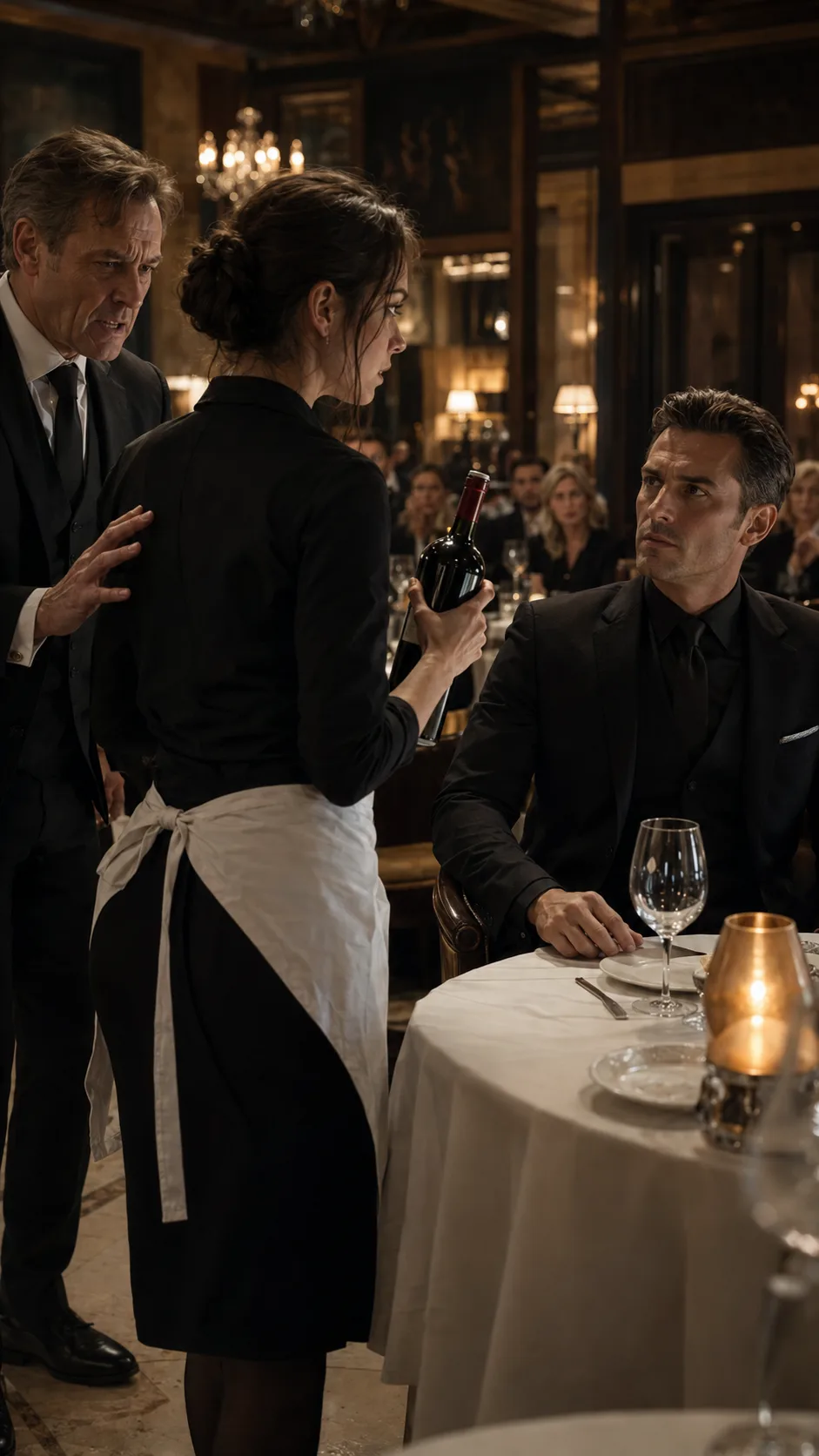
Mr. Donati stood near the bar with his arms crossed over his wide chest, his face flushed with anger. His suit was too tight, his smile too polished, and his temper always ready to fall on whichever employee looked weakest that day.
“That is the third plate this week,” he said.
“I’m sorry, Mr. Donati,” I whispered. “It won’t happen again.”
He stepped closer, lowering his voice just enough for the guests not to hear every word.
“It better not. That plate is coming out of your paycheck. Again.”
My throat tightened.
Again.
The last broken glass had cost me twenty dollars. The wine bottle I had not even dropped had cost me sixty. Every mistake in that restaurant had a price, and
somehow the price always came out of my pocket.
I wanted to argue. I wanted to say I was working double shifts six days a week because he refused to hire enough staff. I wanted to say my hands shook because I had slept four hours in two days. I wanted to say he knew exactly why I needed this job.
But I said none of that.
“I understand,” I said.
“Clean it up,” he snapped. “And be quick.”
Then he turned to the dining room with a smile so smooth it looked painted on.
“Please continue enjoying your meals, everyone. My sincerest apologies for the disturbance.”
The guests looked away. Forks lifted. Conversations restarted.
Just like that, I became invisible again.
I knelt on the floor and began picking up the larger pieces of porcelain, trying not to cut my fingers. My black uniform dress pulled tight at my
knees. My apron was already stained from the lunch shift. My hair, which had been neatly tied back at four in the afternoon, now had loose strands sticking to my temples.
At twenty-six, this was not the life I had imagined.
I had once been in nursing school. I had once believed I would wear scrubs, help patients, earn enough to breathe. Then my mother got sick. Cancer did not ask whether we were ready. It came into our house, took her strength, took our savings, took my future semester by semester.
I dropped out to work.
Then she died anyway.
Now I lived in a tiny apartment with a roommate who labeled her milk and locked her bedroom door. I sent half my tips to debt collectors. I still kept my mother’s old voicemail because some nights I needed to hear her say, “Sophia, tesoro, eat something.”
I reached for another shard.
That was when the atmosphere shifted.
Not loudly. Not suddenly.
It was more like the entire restaurant inhaled and forgot to breathe out.
The maître d’ hurried toward the entrance, his usual arrogance melting into nervous respect.
“Mr. Moretti,” he said, bowing slightly. “What an honor. Your usual table is ready, of course.”
My hand froze above the broken plate.
Moretti.
Everyone in Chicago knew that name, even if they pretended they did not.
The Moretti family owned restaurants, hotels, shipping companies, private clubs, construction firms, and half the businesses that never put their real owners on paper. Newspapers called them “controversial investors.” People in whispers called them something else.
I looked up before I could stop myself.
Alessio Moretti entered with three men in dark suits.
He was younger than I expected. Early thirties, maybe. Tall, broad-shouldered, dressed in a custom black suit that looked too expensive to belong under restaurant lighting. His dark hair was neatly styled, his expression unreadable. He did not rush. He did not need to. The room adjusted itself around him.
His men scanned everything.
Exits. Staff. Guests. Corners.
Then Alessio’s eyes found me.
I was still kneeling beside a puddle of sauce and broken porcelain.
For one awful moment, I could not move.
His gaze flicked to the shattered plate, then back to my face. He did not smirk. He did not look disgusted. He simply looked, with an intensity that made me feel as if he had heard the curse, seen the exhaustion, and understood more than I wanted any stranger to know.
I looked down quickly.
Invisible, I reminded myself.
Be invisible.
I swept up the mess and escaped into the kitchen, where chaos had erupted.
“The Morettis are here,” one cook whispered.
“Table seven,” another said. “Saints protect whoever serves them.”
Mr. Donati grabbed my arm before I could pass.
“Sophia.”
My stomach dropped.
“No,” I said before I could stop myself.
His eyes narrowed. “Excuse me?”
I swallowed. “I mean—Monica usually handles table seven.”
“Monica called in sick. You’re the only one free.”
“Mr. Donati, I just dropped—”
“I know exactly what you just did.” His fingers tightened around my arm. “Which means you cannot afford another mistake.”
I stared at him.
He leaned closer.
“One mistake with the Morettis, and you are done. Understand?”
My mouth went dry.
“Yes.”
“Good. Smile. Speak only when spoken to. Don’t act nervous. Don’t act stupid. And for God’s sake, don’t embarrass me.”
He released my arm.
I rubbed the spot where his fingers had pressed into my skin and took a slow breath.
Just take their order.
Bring the food.
Don’t make eye contact.
Survive the shift.
I straightened my apron, picked up my notepad, and walked to table seven.
Alessio Moretti sat with his back to the wall, giving him a perfect view of the restaurant. His men had positioned themselves like shadows around him. One had silver at his temples. One had a scar near his jaw. The youngest barely blinked.
“Good evening, gentlemen,” I said, forcing my voice to stay steady. “Welcome to Bellissimo. May I start you with drinks?”
Two ordered whiskey. One ordered sparkling water.
Then I turned to Alessio.
He watched me for a beat too long.
“Water,” he said. “No ice.”
His voice was calm. Low. Controlled.
“Of course.”
I wrote it down even though I did not need to.
As I turned to leave, one of his men spoke in Italian.
“È quella che ha rotto il piatto?”
Is that the one who broke the plate?
The younger man answered with a faint laugh.
“Sì. Donati assume chiunque adesso.”
Yes. Donati hires anyone now.
Heat rose to my face.
I kept walking.
I had learned a long time ago that understanding an insult did not mean you had to react to it.
At the bar, I poured the drinks with careful hands. Mr. Donati hovered nearby, watching me like I was a candle about to set the building on fire.
“Do not spill,” he hissed.
“I won’t.”
“And don’t stand too close. Men like that don’t like desperate people breathing near them.”
I looked at him.
Something in me hardened.
Maybe it was exhaustion. Maybe it was grief. Maybe it was the memory of my grandmother teaching me Italian at her kitchen table while stirring tomato sauce and saying, “Never let anyone make you feel small in a language they think you don’t understand.”
I carried the tray back.
The drinks landed perfectly.
Not a drop spilled.
Alessio’s eyes moved from the tray to my hands.
“They shake,” he said.
I stiffened. “Long shift.”
“How long?”
I should not have answered honestly.
“Fourteen hours.”
His expression did not change, but the silver-haired man glanced up.
“That is legal?” he asked.
I gave the polite smile all servers learn when customers ask questions they do not actually want answered.
“At Bellissimo, many things are flexible.”
One corner of Alessio’s mouth moved slightly.
Not quite a smile.
Mr. Donati appeared at my shoulder before the silence could deepen.
“Mr. Moretti,” he said warmly. “Everything satisfactory?”
“For now,” Alessio said.
Donati laughed too loudly.
“Excellent, excellent. Sophia here will take very good care of you. She is one of our most… enthusiastic employees.”
His hand landed on my shoulder.
I nearly flinched.
Alessio noticed.
His gaze sharpened.
Donati removed his hand.
“Would you like the chef’s private tasting menu tonight?” Donati continued. “Imported truffles, aged balsamic, our finest Barolo.”
Alessio leaned back.
“I came for the veal.”
“Of course. Of course. The veal.”
Then Donati turned toward me, his smile gone the second his face was hidden from the table.
“Go.”
I went.
The night became a blur of polished plates, forced smiles, and controlled panic. Table seven was demanding but not rude. Alessio barely spoke, yet somehow his silence carried more weight than other men’s shouting.
Halfway through their meal, a man arrived.
He was older, heavyset, wrapped in a camel-colored coat despite the warm restaurant. His cheeks were red from wine or cold or both. Donati rushed to greet him personally.
“Signor Bellandi,” Donati said. “You made it.”
The man kissed the air beside Donati’s cheeks.
“Per te, sempre.”
For you, always.
They moved toward a private alcove near the back hallway, partly hidden by a decorative wine rack. I would not have paid attention if I had not been carrying a tray of espresso cups to table six.
Then I heard my name.
Not Sophia.
“Quella cameriera.”
That waitress.
I slowed.
Bellandi spoke in Italian, low and amused.
“She understands nothing, yes?”
Donati laughed.
“Not a word. She curses like a child repeating her grandmother, but she’s American. Empty head, empty pockets.”
My fingers tightened around the tray.
Bellandi continued, “Good. Because the Moretti table must receive the 1982 Barolo label. But not the bottle.”
My heartbeat changed.
Donati lowered his voice.
“The cheap one?”
“Not cheap. Just not what he paid for.”
“And if he notices?”
Bellandi laughed softly.
“No one notices if you pour with confidence.”
Donati exhaled.
“And the invoice?”
“Already adjusted. Three bottles billed as imported reserve. One opened, two sent to his club later. You pocket the difference, I get my share.”
I stood very still.
Fake wine.
Fraud.
Against Alessio Moretti.
Inside his own regular restaurant.
Donati said, “Fine. But after tonight, I want more. I’m tired of scraping money from plates and wages.”
My stomach turned.
Wages.
So I had not imagined it.
The broken plates. The missing tips. The “fees.” The deductions.
Bellandi snorted.
“Then sell the restaurant.”
“I am trying,” Donati muttered. “Moretti is reviewing the books next month.”
“That is why you smile tonight.”
I moved before they could see me.
My hands were cold when I set the espressos down at table six.
For the next ten minutes, I tried to convince myself it was none of my business.
I needed this job.
I needed rent.
I needed to eat.
Powerful men cheating other powerful men was not a storm I wanted to step into.
But then I returned to the kitchen and saw Maria, the dishwasher, crying silently beside the sink.
“What happened?” I whispered.
She wiped her face quickly. “Nothing.”
“Maria.”
She shook her head. “Donati says I broke the glass rack. He takes it from my pay.”
“You didn’t break it.”
“I know.”
She looked at me with tired eyes.
“But what can I do?”
That question followed me back into the dining room.
What can I do?
The fake Barolo appeared on the service counter fifteen minutes later.
Mr. Donati personally placed it in my hands.
“Table seven,” he said. “Pour for Mr. Moretti first.”
The bottle looked old. The label looked expensive. But my grandmother’s brother had owned a small wine shop, and I had grown up around bottles, corks, dust, and stories. Even before I checked closely, something felt wrong.
The paper was too clean near the edges.
The capsule had been disturbed.
The cork did not match the age.
Donati saw my hesitation.
“What?” he snapped.
“Nothing.”
“Then move.”
I carried the bottle to table seven.
The entire room seemed to narrow around me.
Alessio looked up as I approached.
“Your Barolo, sir,” I said.
My voice sounded normal.
That surprised me.
He studied the bottle, then me.
“Do you recommend it?”
A simple question.
A dangerous one.
Mr. Donati was watching from near the bar.
Bellandi watched from the alcove.
The younger Moretti man watched my hands.
I could pour the wine.
I could stay invisible.
I could finish the shift, lose another piece of my paycheck, go home, and pretend I had not heard anything.
Instead, I heard my grandmother.
Never let anyone make you feel small in a language they think you don’t understand.
I placed the bottle on the table without opening it.
“No,” I said.
The silence was instant.
Alessio’s eyes sharpened.
“No?” he repeated.
I felt Mr. Donati moving behind me.
I kept my gaze on the table, not because I was weak, but because I needed one more second to steady my voice.
“No, Mr. Moretti. I do not recommend this bottle.”
Donati reached us with a laugh that sounded like breaking glass.
“Sophia is joking. She has a strange sense of humor. Open the bottle.”
I did not move.
Alessio looked from Donati to me.
“Why?”
Donati’s smile froze.
“Because she is exhausted and confused,” he said quickly.
I lifted my eyes.
“Because it is not the bottle you are being charged for.”
The restaurant went quiet again.
But this silence was different.
This one had teeth.
Donati’s face drained of color.
“Sophia,” he said softly.
It sounded like a warning.
I turned to him.
“You told Signor Bellandi to use the 1982 Barolo label on a different bottle. You said Mr. Moretti would not notice if it was poured with confidence.”
Bellandi stood so abruptly his chair scraped the floor.
Donati’s mouth opened.
No sound came out.
Alessio did not move.
His men did.
The silver-haired one stood and blocked Bellandi’s path to the door. The youngest stepped aside just enough to watch the kitchen entrance. No one touched anyone. No one shouted. But the room understood exactly what had happened.
Alessio looked at me.
“You speak Italian.”
I swallowed.
“Yes.”
“How well?”
I answered in Italian before I could lose courage.
“Meglio di quanto lui pensasse.”
Better than he thought.
For the first time that night, Alessio Moretti smiled.
It was small.
Cold.
Dangerous.
Then he looked at Donati.
“Sit down.”
Donati tried to laugh again. Failed.
“Mr. Moretti, surely we can discuss—”
“Sit.”
One word.
Donati sat.
I remained standing beside the table, the fake bottle between us like evidence in a courtroom.
Alessio pointed toward the chair opposite him.
“You too, Sophia.”
My eyes widened.
“I’m working.”
“Not for him anymore.”
Donati’s head snapped up.
“You cannot—”
Alessio did not even look at him.
“I can.”
The maître d’ appeared pale near the hostess stand. Guests whispered behind raised menus. The chef peeked through the kitchen doors and quickly vanished.
I sat.
My knees felt weak.
Alessio folded his hands on the table.
“Tell me everything you heard.”
Donati leaned forward. “She is lying. She is angry because I disciplined her. She breaks plates, she insults guests, she is unstable—”
I looked at him.
Something broke open inside me.
Not rage.
Not fear.
Something cleaner.
Truth.
“You take money from our checks for things we do not break,” I said. “You take tips from cash tables before splitting them. You charge staff for uniforms we already paid for. You make Maria work off the clock before opening. You threaten people who ask questions.”
Donati stared at me with pure hatred.
I kept going.
“And tonight, you planned to serve Mr. Moretti a fake reserve wine and bill him for the real one. Bellandi made the invoice. You said you wanted more money because you were tired of scraping it from plates and wages.”
The words landed one by one.
Donati whispered, “You stupid girl.”
Alessio’s gaze turned to him.
“What did you call her?”
Donati realized his mistake too late.
“I meant—”
Alessio leaned forward.
“No. Say it again.”
Donati looked down.
He did not say it again.
Bellandi tried to speak from near the exit.
“This is a misunderstanding.”
The silver-haired man took the bottle from the table, examined it, then looked at Alessio.
“She’s right,” he said. “Capsule was resealed.”
Alessio nodded once.
Then he took out his phone and made a call.
“Send Luca in,” he said. “And bring the accountant.”
Donati’s face went gray.
“Accountant?” he whispered.
Alessio finally looked at him fully.
“I was not reviewing the books next month, Enzo. I reviewed them this afternoon.”
The air left Donati’s body.
Alessio continued, calm and merciless.
“You have been stealing from the restaurant, from your workers, from suppliers, and apparently from me. I wanted to see how bold you would be tonight.”
He looked at the fake bottle.
“Very bold.”
Donati gripped the table edge.
“Mr. Moretti, please. I can explain.”
“You will.”
Hope flashed across Donati’s face.
“To my legal team.”
The hope died.
No one spoke.
Then Maria appeared at the kitchen door, still holding a wet towel.
Behind her stood two cooks, the bartender, and three servers.
They had heard.
For the first time since I started working at Bellissimo, Mr. Donati looked smaller than everyone else in the room.
Alessio turned to me.
“Why did you say something?”
The question hit harder than I expected.
I looked toward Maria.
Then at the staff who had spent months lowering their eyes.
“Because I’m tired,” I said. “And because he counted on all of us being too scared to tell the truth.”
Alessio held my gaze.
For a moment, the restaurant noise disappeared.
Then he nodded.
“That is usually how men like him survive.”
Within twenty minutes, everything changed.
Two men in suits arrived with briefcases. Not bodyguards. Lawyers. An accountant followed, carrying a laptop and looking like he had been waiting for this exact disaster all week.
Donati tried to stand.
The silver-haired man gently placed a hand on the back of his chair.
Donati sat back down.
No violence.
No shouting.
Just the terrifying calm of a trap closing.
The guests were offered complimentary meals and politely encouraged to leave through the side entrance. Some did. Others pretended not to watch while watching everything.
The staff gathered near the bar.
Alessio’s lawyer began asking questions.
At first, no one spoke.
Then Maria raised her hand.
“He makes us clock out before closing,” she said quietly. “But we still clean for one hour.”
A cook stepped forward.
“He charges us for missing inventory when food spoils because the freezer breaks.”
The bartender said, “He takes cash tips from private events.”
One by one, the truth came out.
Small thefts.
Old threats.
Quiet humiliations.
Every story was a plate cracking against the floor.
Donati kept saying, “Lies.”
But the accountant had records.
The lawyer had invoices.
Bellandi had messages on his phone.
And I had understood the conversation that neither man thought mattered.
Near midnight, Bellissimo was almost empty.
Donati sat at the bar, sweating through his shirt while Alessio’s lawyer explained the consequences in a voice too soft for me to hear.
I stood near the kitchen, unsure whether to leave or stay.
My whole body trembled now that the adrenaline had faded.
I had probably lost my job.
Maybe worse.
People like Donati always found ways to punish people beneath them.
Alessio approached quietly.
“You look ready to run,” he said.
“I’m deciding whether that would be smart.”
“It would not.”
I gave a tired laugh. “That sounds like a threat.”
“It is advice.”
He stood beside me, not too close.
“You were brave tonight.”
“I was exhausted.”
“Sometimes that is the same thing.”
I looked at him.
For the first time, I noticed he looked tired too. Not physically, maybe. But there was a weight around his eyes, the kind carried by people who had inherited rooms full of enemies.
“What happens to him?” I asked.
“Donati?”
“Yes.”
“He will no longer manage Bellissimo. He will face charges where charges apply. And every employee will be repaid what was stolen.”
I stared at him.
“All of it?”
“All of it.”
“You can do that?”
“It is my restaurant.”
My mouth fell open.
He almost smiled again.
“You didn’t know?”
“Everyone said Donati owned it.”
“Donati liked people believing that. He managed it. Badly.”
I looked across the dining room at the fake columns, the gold-framed mirrors, the empty tables.
“You own Bellissimo?”
“For my sins, yes.”
Despite myself, I laughed.
It slipped out before I could stop it.
Alessio watched me like the sound surprised him.
Then he said, “I need a new general manager.”
My laugh died.
“I’m sorry?”
“Someone honest. Someone who understands service. Someone who knows what happens when management abuses staff.”
I stared at him, waiting for the joke.
There wasn’t one.
“Mr. Moretti, I dropped a plate tonight.”
“Yes.”
“I dropped three this week.”
“So you are not applying for dishwasher.”
“I don’t have a degree.”
“Neither did my grandfather when he opened his first bakery.”
“I was a waitress this morning.”
“And tonight you saved my restaurant from a thief.”
I looked away.
The offer was too large.
Too sudden.
Too impossible.
“I can’t manage a restaurant like this.”
“No,” he said. “Not tomorrow.”
I looked back.
“You would train. My operations director would teach you. You would start as assistant manager with proper pay, proper hours, and authority to protect the staff from people like Donati.”
My throat tightened.
Proper pay.
Proper hours.
Authority.
I thought of my mother. Of hospital bills. Of all the nights I had worked until my feet burned, then gone home and eaten toast because groceries had to wait.
“Why?” I asked.
Alessio’s expression changed.
Not much.
But enough.
“My grandmother was from Naples,” he said in Italian. “She believed language reveals character. People show who they are when they think no one understands them.”
I answered softly, also in Italian.
“My grandmother believed the same.”
His gaze held mine.
“What was her name?”
“Lucia Romano.”
The silver-haired man, who had been standing a few feet away, suddenly turned.
“Romano?” he asked.
I looked at him. “Yes.”
“From Taylor Street?”
My chest tightened.
“Yes.”
He looked at Alessio.
“Lucia Romano fed your father for six months when he first came to Chicago.”
Alessio went still.
I blinked. “What?”
The silver-haired man smiled faintly.
“Your grandmother had a kitchen behind a grocery store. Half the Italians in that neighborhood ate there when they had no money. Your grandmother never let a hungry person leave hungry.”
My eyes burned.
I had not heard someone talk about Nonna Lucia in years.
Alessio’s voice softened.
“My father mentioned a woman named Lucia. He said she made him soup when he was seventeen and too proud to admit he was starving.”
“That sounds like her,” I whispered.
For a moment, the restaurant around us blurred.
My grandmother had died before my mother got sick. I had thought all her kindness had vanished into old stories and unpaid bills. But here, in the middle of the worst night of my job, her name had opened a door I did not know existed.
Alessio said, “Then perhaps tonight is not a favor. Perhaps it is a debt finally remembered.”
I wiped my cheek quickly, embarrassed by the tear that had escaped.
“I don’t want charity.”
“Good. I don’t offer charity.”
He reached into his jacket and handed me a business card.
“Come tomorrow at ten. Not in uniform. We will discuss employment properly, with a contract you can have reviewed before signing.”
I took the card with shaking fingers.
“And if I say no?”
“Then you still receive back pay. So does everyone else. And Donati still leaves.”
I looked toward the staff.
Maria was hugging one of the other servers. The cooks were speaking in low, stunned voices. The bartender looked like he might cry.
For the first time in months, the air in Bellissimo felt breathable.
The next morning, I almost did not go.
I stood in front of my cracked bathroom mirror wearing the only blazer I owned, one I had bought years ago for nursing school interviews. It was slightly too tight in the shoulders. My shoes were polished but old. My hair was tied back neatly.
My roommate looked up from the kitchen table as I passed.
“Big interview?”
“Something like that.”
“Good luck.”
I paused.
It was the first kind thing she had said to me in weeks.
“Thanks.”
Bellissimo looked different in daylight.
Less intimidating.
More exposed.
Without candlelight and music, the fake columns looked chipped. The velvet chairs looked worn. The marble floor still had a faint mark where the plate had broken.
Alessio was already there, seated at a table with a woman in a navy suit.
“This is Clara Voss,” he said. “Operations director.”
Clara shook my hand firmly.
“I hear you caused a spectacular amount of trouble last night.”
My stomach dropped.
Then she smiled.
“I like that.”
For three hours, we talked.
Not about favors. Not about secrets.
About schedules, payroll systems, vendor contracts, workplace policies, harassment reporting, inventory, guest experience, staff retention, and training.
Clara was sharp, direct, and impossible to impress.
By noon, my head hurt.
By one, she offered me the assistant manager position.
The salary was more than double what I made on tips. The hours were real. The benefits made my chest ache.
I read the contract twice.
Then I signed.
The first thing I did was ask whether Maria could be paid for every off-the-clock hour she had worked.
Clara pushed a folder toward me.
“Already calculated.”
The second thing I asked was whether broken plates would still come out of wages.
Alessio looked almost offended.
“No.”
The third thing I asked was whether staff meals could be restored.
Clara tilted her head.
“Restored?”
I nodded. “Donati canceled them. Said food costs were too high.”
Alessio’s face darkened.
Clara wrote something down.
“Staff meals return today.”
That was how Bellissimo began changing.
Not overnight.
Restaurants do not heal quickly.
Neither do people.
Some employees quit anyway, too tired to trust another manager. Some stayed because they needed the work. Some stayed because for the first time, someone asked them what was wrong and actually wrote down the answer.
I learned everything.
Ordering systems. Wine lists. Vendor negotiations. Health inspections. Private events. Payroll audits. Conflict resolution. How to say no to rude customers without apologizing for existing.
Clara trained me hard.
Alessio appeared only occasionally, usually without warning. He watched more than he spoke. Staff still straightened when he entered, but slowly, the fear changed into respect.
Three weeks after Donati was removed, the first back pay checks arrived.
Maria opened hers in the staff room and covered her mouth.
“This is too much,” she whispered.
“No,” I said. “It’s yours.”
She hugged me so tightly I could barely breathe.
That night, after closing, I sat alone at table seven.
The restaurant was quiet.
The lights were dim.
In front of me sat a small staff meal: pasta with tomato sauce, basil, and a piece of bread.
Simple food.
Real food.
I took one bite and suddenly thought of my grandmother’s kitchen.
I cried then.
Not loudly.
Not dramatically.
Just enough to let grief pass through me instead of living permanently behind my ribs.
I did not hear Alessio enter until he spoke.
“Bad pasta?”
I laughed through the tears.
“No. Good pasta.”
He sat across from me, leaving respectful space.
For a while, neither of us spoke.
Then he placed something on the table.
An envelope.
“What is that?” I asked.
“Something found in Donati’s office.”
I opened it carefully.
Inside were old employee complaint forms.
Most unsigned.
Some written in shaky handwriting.
One was mine.
I had filed it six months earlier after Donati took eighty dollars from my pay for a broken wine decanter I had never touched. I had been told the form was “lost.”
At the bottom, Donati had written one sentence in red pen.
Ignore. She needs the job too much to leave.
My hands went still.
There it was.
The whole system.
Not just cruelty.
Calculation.
He had known exactly how trapped we were.
Alessio watched my face.
“I thought you should see it.”
“Why?”
“Because people like him want you to believe what happened was your fault. Your weakness. Your mistakes. Your desperation.”
I folded the paper slowly.
“It wasn’t.”
“No.”
I looked around the restaurant.
“No,” I said again, stronger.
A month later, Bellissimo reopened under new management.
We closed for ten days to repair the kitchen, repaint the walls, replace the fake decorations, and rebuild the staff structure. The old gold-framed mirrors came down. The cheap tourist posters disappeared. Clara brought in a designer who understood that Italian did not have to mean theatrical.
The new Bellissimo was warmer.
Simpler.
Wood tables. Soft light. Open shelves with real wine. A menu that actually respected the food it claimed to serve.
On reopening night, I wore a dark green suit and stood near the entrance with a reservation tablet in my hand.
Not an apron.
Not a trembling notepad.
A tablet.
Maria supervised the floor staff. The bartender created a new cocktail list. The chef, freed from Donati’s penny-pinching, introduced dishes he was proud to serve.
At seven-thirty, Alessio arrived.
No entourage this time.
Only the silver-haired man, whose name I had learned was Carlo.
Alessio looked around the dining room.
“You changed the lighting,” he said.
“Too much?”
“No. Better.”
Carlo smiled at me.
“Your grandmother would approve.”
My throat tightened.
“I hope so.”
The night went beautifully.
Not perfectly.
No restaurant night ever does.
A guest complained that his table was too close to the window. A server spilled water. One order went to the wrong table. A child dropped a spoon four times and laughed every time.
But no one screamed.
No one threatened wages.
No one made anyone feel disposable.
Near the end of the night, a man at table nine snapped his fingers at one of the younger servers, Lily.
“Hey. Girl. Come here.”
I saw Lily freeze.
I walked over before she had to answer.
“Good evening,” I said. “Is there something you need?”
The man glanced at me. “I was calling her.”
“I know.”
He frowned. “Then why are you here?”
“Because we do not snap at staff in this restaurant.”
His wife looked down at her plate.
The man gave a short laugh. “Do you know who I am?”
I smiled politely.
“No. But I know where the door is.”
The nearby tables went quiet.
For half a second, I saw Donati in my memory. His red face. His pointing finger. His certainty that people with money could make people without it shrink.
The man stared at me.
Then he looked past me.
Alessio Moretti was watching from table seven.
The man cleared his throat.
“We’ll take the check.”
“Of course.”
Lily found me later in the kitchen.
“Thank you,” she whispered.
I nodded.
“Next time, you can say it too.”
She looked terrified.
Then thoughtful.
“Okay.”
That was the real victory.
Not Donati losing power.
Not Alessio offering me a job.
Not the back pay or the new title.
The real victory was watching frightened people slowly remember they had voices.
Two months after reopening, a letter arrived.
It was addressed to me in neat handwriting.
Inside was a notice from my old nursing school.
My outstanding balance had been cleared.
I stormed into Alessio’s office holding the paper.
“You paid my school debt?”
He looked up calmly.
“No.”
“Don’t lie.”
“I didn’t.”
I placed the letter on his desk.
“Then who did?”
He read it, then leaned back.
“Ah.”
“Ah?”
“It appears the Bellissimo employee restoration fund included educational reimbursement for workers financially harmed during Donati’s management.”
I stared at him.
“That sounds like you paid it.”
“It sounds like the company corrected harm caused under its roof.”
“Alessio.”
He looked at me then.
Not as a powerful man.
Not as an owner.
Just as someone who understood debt, pride, and the delicate difference between help and humiliation.
“You wanted to be a nurse,” he said.
My throat closed.
“I don’t know if I still can.”
“Maybe not now. Maybe later. But the choice should be yours, not Donati’s. Not a collector’s. Not grief’s.”
I looked down at the letter.
For so long, my life had felt like a hallway with every door locked.
Now one had opened.
I did not know whether I would walk through it.
But I could.
That mattered.
A year later, Bellissimo earned its first real review that did not mention fake Italian charm or celebrity sightings.
It mentioned warmth.
It mentioned the staff.
It mentioned a young manager named Sophia Parker who moved through the dining room like she knew every table mattered.
I printed that review and taped it inside the staff room.
Below it, Maria taped a photo from our first holiday dinner together. All of us crowded around the long table after closing, plates full, faces tired and happy.
In the photo, I stood near the center.
Not invisible.
Not trembling.
Not small.
One evening, after a busy Saturday service, I walked through the dining room alone. The last guests had left. The chairs were pushed in. The floor had been swept.
Near table seven, I stopped.
That was where everything had changed.
A fake bottle.
A stolen wage.
A sentence spoken in the wrong language in front of the wrong waitress.
I thought about the plate I had dropped that first night. At the time, I had been so ashamed. I thought it proved I was failing.
But maybe some things needed to break loudly enough for everyone to look.
Behind me, Carlo’s voice came from the entrance.
“Miss Parker?”
I turned.
He stood there holding a small paper bag.
“From Mr. Moretti,” he said.
I raised an eyebrow.
“Should I be worried?”
Carlo smiled. “No.”
Inside the bag was a small jar of tomato sauce.
Homemade.
A note was tied around the lid.
My father remembered Lucia Romano’s soup. I asked our cook in Sicily to recreate the closest thing he could. It will not be the same. But some debts deserve flavor.
No signature.
None needed.
I held the jar carefully.
For a moment, I could smell my grandmother’s kitchen again. Garlic in olive oil. Basil torn by hand. Bread warming in the oven. Her voice telling me that dignity was not something rich people gave you.
It was something you protected.
The next day, I brought the sauce to the restaurant.
The chef tasted it and closed his eyes.
“Madonna,” he whispered. “This is real.”
We served it that night as a staff meal over pasta.
No charge.
No deduction.
No one went hungry.
And when Lily dropped a plate near the end of the shift, the entire dining room went silent for one sharp second.
She froze, horrified.
I walked over, looked at the broken porcelain, then at her pale face.
“Are you hurt?” I asked.
She blinked. “No.”
“Good. Plates break.”
The staff helped her clean it up.
No shouting.
No paycheck threat.
No humiliation.
Just a broom, a dustpan, and people moving together.
As I bent to pick up one of the larger pieces, Lily whispered, “I’m so sorry.”
I smiled.
“Don’t be.”
She looked confused.
I glanced across the restaurant, toward table seven, toward the place where fear had once sat dressed in a suit and called itself power.
“Sometimes,” I said, “the sound of something breaking is the beginning of everything getting fixed.”
Chapter complete
You have reached the end of this chapter.
Continue reading
A few more worlds to get lost in after this chapter.




