When I asked why I had not been invited to my parents’ anniversary party, my brother laughed as if I had told the funniest joke in the room.
Chapter 1
When I asked why I had not been invited to my parents’ anniversary party, my brother laughed as if I had told the funniest joke in the room.
The party was already in full swing when I arrived.
I had not planned to go. I only found out because my cousin posted a video online: my parents standing beneath silver balloons, my brother Nolan holding a microphone, everyone cheering inside the banquet room of the Lakeside Hotel in Chicago.
The same Lakeside Hotel whose deposit I had paid.
For months, my mother had called me crying about how she and my father could not afford anything special for their fortieth anniversary.
“Simple people like us never get celebrated,” she had said.
So I sent money.
I paid the venue deposit. I covered the catering. I paid for the photographer. I even upgraded the floral arrangements because my mother loved white orchids and once told me she had never felt “elegant” a day in her life.
And somehow, I was the only child not invited.
I walked into the
banquet room wearing my charcoal work slacks, cream blouse, and navy coat still damp from the late October rain. My laptop bag hung from one shoulder. I had come straight from the office after a twelve-hour day negotiating contracts for a company that valued my signature more than my family valued my heart.
Conversation thinned as people noticed me.
My mother’s smile froze.
My father looked away.
My brother, Nolan, stood near the cake in a navy suit I had also paid for three weeks earlier because he had told me he needed to “look respectable for Mom and Dad’s big night.”
The suit fit him beautifully.
That annoyed me more than it should have.
“Savannah,” my mother said, her voice tight. “What are you doing here?”
I looked around the room.
Long tables covered in white linen. Crystal glasses. A champagne tower. A live band. A photographer moving between
relatives with a professional camera. A three-tier cake decorated with silver leaves and orchids.
My orchids.
My money.
My family.
“I could ask the same thing,” I said. “Since apparently I paid for a party I wasn’t invited to.”
A few relatives exchanged glances.
My aunt Linda looked down at her plate.
My cousin Marcus, the one who had posted the video, quietly slipped his phone into his jacket pocket.
Nolan rolled his eyes. “Don’t start drama.”
“I’m asking a fair question.”
He walked toward me with that lazy confidence he had carried since childhood, the confidence of a man who had never paid rent on time because someone else always rescued him.
“You want the truth?” he said loudly.
“Yes.”
He smiled.
“You’re just an ATM for the family.”
The room went silent for half a second.
Then my parents laughed.
Not nervously.
Not accidentally.
They laughed like he
had said something everyone already knew.
My mother even touched Nolan’s arm and said, “Oh, stop,” while still smiling.
Something inside me did not break.
It settled.
For years, I had mistaken exhaustion for love.
I had paid my parents’ rent after my father retired early, even though he was healthy enough to golf three times a week. I paid my mother’s credit card bills when she claimed groceries had become too expensive, only to find out she had bought designer handbags and hidden the receipts.
I had let Nolan drive my Mercedes-Benz because he said clients respected him more when he looked successful.
I paid insurance. Repairs. Phone bills. Medical bills. Birthday dinners. Emergency loans that were never loans.
And there, beneath the flowers I bought, beside the cake I funded, they finally named my position in the family.
I nodded slowly.
“Thank you,” I said.
Nolan frowned. “For what?”
“For being honest.”
Then I turned and left.
No screaming.
No crying.
No dramatic speech.
Just the clean sound of my heels crossing the marble floor and the heavy door closing behind me.
By 8:30 the next morning, I had reported the Mercedes as no longer authorized for Nolan’s use.
By noon, the landlord had been informed I would not renew my parents’ lease payments after the current month.
By 3:00, every automatic transfer connected to my family was canceled.
That evening, Nolan called twenty-six times.
I did not answer.
Because the best party had just started.
The first text came from my mother at 7:12 p.m.
Savannah, your brother says there’s some misunderstanding with the car. Call me now.
The second came four minutes later.
This is not funny. Nolan has an important meeting tomorrow.
The third came from Nolan.
You need to fix whatever you did. The dealership called me like I’m some criminal.
I stared at the messages from my sofa, wearing sweatpants, my hair in a loose knot, a glass of sparkling water in my hand.
For the first time in years, my apartment was quiet in a way that did not feel lonely.
It felt expensive.
Peace always costs something.
Mine had cost thirty-two years of obedience.
I did not respond.
The next morning, Nolan appeared at my office building.
I saw him through the glass doors before he saw me. He stood in the lobby wearing yesterday’s confidence over a wrinkled shirt, pacing beside the security desk. His hair was messy, his jaw tight. Without the Mercedes keys in his hand, he looked smaller.
The receptionist called upstairs.
“Ms. Ellis? There’s a Nolan Ellis here demanding to see you.”
“Tell security he doesn’t have an appointment.”
There was a pause.
“He says he’s your brother.”
“He still doesn’t have an appointment.”
Through the glass, I watched his face change when security asked him to leave.
That was the thing about Nolan. He was brave only in rooms where someone else had already paid the bill.
At lunch, my father called.
I almost did not answer.
Then I did.
“Savannah,” he said, using the serious voice he once used when I got a B in chemistry. “This has gone far enough.”
“What has?”
“This punishment.”
I looked out my office window at the gray Chicago skyline. “Punishment implies I’m doing something to you. I’m not. I’m just no longer doing things for you.”
“You’re twisting this.”
“No. I’m clarifying it.”
He inhaled sharply.
“Your mother is crying.”
“She laughed pretty hard Saturday night.”
“She was embarrassed. People were watching.”
“So was I.”
Silence.
Then he said the sentence that explained my entire childhood.
“You always make things about yourself.”
I closed my eyes.
There it was.
When Nolan crashed my father’s truck at seventeen, I was told not to mention college applications because Nolan was “going through something.”
When my mother forgot my birthday dinner at twenty-two because Nolan needed help moving apartments, I was told to be understanding.
When I bought my first condo at twenty-eight, my father said I was “showing off” and asked whether I could lend Nolan the down payment for a business idea involving imported watches.
When I said no, my mother cried.
When I eventually said yes, Nolan lost the money in six months and called it “market research.”
Nothing was ever about me until they needed me.
Then suddenly, I mattered very much.
“Dad,” I said quietly, “you have until the end of the month to arrange your own rent.”
“You can’t do that.”
“I can.”
“You promised.”
“I promised to help my parents. Not to finance people who think I’m a machine.”
His voice hardened.
“You owe us respect.”
“I gave you my rent money, my weekends, my car, my savings, my patience, and my silence. If respect was in that pile, you spent it.”
Then I hung up.
My hands were shaking.
But I did not regret it.
On Friday, my mother came to my condo.
I knew it was her before I opened the door because she knocked like a judge delivering a sentence.
Three hard knocks.
A pause.
Two more.
When I opened the door, she stood in the hallway wearing her camel wool coat, pearl earrings, and the wounded expression she reserved for public places.
“Are you going to invite your mother in?” she asked.
“No.”
Her mouth opened.
I had never said no that quickly before.
She glanced toward the elevator, perhaps worried a neighbor might hear.
“Savannah, don’t be cruel.”
“That’s interesting coming from you.”
Her eyes filled with tears on command.
“I don’t know what happened to you. You used to be such a sweet girl.”
“I used to be a tired girl.”
She folded her hands over her purse.
“Nolan made a stupid joke.”
“You laughed.”
“I was uncomfortable.”
“You enjoyed it.”
Her face tightened.
For a second, the softness dropped, and I saw the woman underneath. Not helpless. Not fragile. Calculating.
“Family forgives,” she said.
“Family invites.”
She flinched.
I stepped into the hallway and closed the door behind me, not because I wanted to comfort her, but because I did not want her inside my home.
My home had no unpaid invoices hiding under couch cushions. No silent expectations. No mother walking through rooms deciding what she deserved to take.
She looked me up and down.
“You think money makes you better than us?”
“No,” I said. “I think money made you honest.”
She sucked in a breath.
“I raised you.”
“And I paid you back with interest.”
Her tears vanished.
“You ungrateful girl.”
There she was.
The real guest at every family dinner.
“You’re thirty-four years old,” I said. “You and Dad are both healthy. Nolan is thirty-one. You can all work, budget, downsize, sell things, make choices. You know, the things I’ve been doing since I was eighteen.”
“We are your parents.”
“Yes. That’s why it took me so long to admit you were using me.”
She slapped me.
Not hard enough to injure me.
Hard enough to remind me who she thought I was.
For one stunned second, the hallway went silent.
Then the elevator doors opened.
My neighbor, Mrs. Park, stepped out holding a grocery bag. She saw my mother’s raised hand. She saw my face.
My mother lowered her arm.
Mrs. Park’s expression changed from surprise to steel.
“Savannah,” she said calmly, “do you need me to call someone?”
My mother’s face went pale.
“No,” I said, keeping my eyes on my mother. “She’s leaving.”
My mother whispered, “You wouldn’t dare embarrass me.”
I smiled without warmth.
“You did that yourself.”
She left.
That night, I changed the locks even though she did not have a key.
It felt symbolic.
Sometimes survival needs symbols.
Two weeks later, the family group chat exploded.
Nolan had apparently told everyone I was “trying to make our parents homeless.”
My aunt Linda sent a message filled with prayer emojis.
My cousin Marcus asked if “both sides could come together.”
My father wrote, Your mother’s blood pressure is high because of you.
I typed one sentence.
Since everyone has opinions, I’m attaching the monthly payments I’ve made for the last seven years. Anyone who wants to continue them is welcome to volunteer.
Then I sent screenshots.
Rent: $2,400 per month.
Utilities: $380 average.
Car insurance for Nolan: $260.
Phone plan: $310.
Medical co-pays.
Credit card rescues.
Personal loans.
Venue deposit.
Catering invoice.
Suit receipt.
Floral upgrade.
The chat went silent.
For once, numbers did what my pain never could.
They made people uncomfortable.
Aunt Linda left the group.
Marcus texted me privately.
I’m sorry. I didn’t know it was that much.
I believed him.
That was the problem with quiet sacrifices. People called them kindness when they benefited, then called them drama when you stopped.
The next call came from Nolan.
This time, I answered.
“What?”
“Wow,” he said. “So you’re publicly humiliating us now?”
“You humiliated me in public. I provided context.”
“You made Mom cry.”
“She cries when coupons expire.”
“You’re sick, Savannah.”
“No. I’m awake.”
He laughed bitterly.
“You think you’re powerful because you can cancel payments?”
“I think I’m free because I finally did.”
“You’ll come around.”
“No.”
“You always do.”
That sentence landed harder than the insult at the party.
Because he was right.
I had always come around.
When my parents forgot me, I came around.
When Nolan borrowed and lied, I came around.
When birthdays became invoices and holidays became guilt traps, I came around.
The family had trained me like a doorbell.
Press guilt.
Savannah arrives.
Not anymore.
“I won’t this time,” I said.
Nolan’s voice dropped.
“Then don’t expect us to be there when you need family.”
I looked around my quiet living room.
At my plants. My books. My framed diploma. The photograph of myself at twenty-six standing in front of my first office, smiling like I had no idea how expensive love would become.
“I’ve needed family for years,” I said. “You never came.”
Then I ended the call.
The landlord called me on the twenty-ninth.
He was polite but cautious.
“Ms. Ellis, your parents are asking whether there’s been an error. They said you usually cover the transfer.”
“There’s no error.”
“I understand. I just wanted to confirm.”
“I won’t be making future payments.”
There was a brief silence.
“Understood.”
I almost apologized.
The old Savannah lived in my throat, desperate to smooth things over.
I swallowed her down.
“Thank you,” I said.
That evening, my father came to my building.
Unlike my mother, he did not knock with authority.
He knocked once.
Softly.
When I opened the door, he looked older than he had two weeks before. His hair was mostly gray now, his shoulders rounded under a brown jacket. For a moment, guilt moved inside me like an old reflex.
Then I remembered him laughing.
“Savannah,” he said. “Can we talk?”
I stepped into the hallway and closed the door behind me.
He noticed.
His face tightened.
“You won’t even let me inside?”
“No.”
He nodded as if I had confirmed something disappointing.
“Your mother and I found a smaller place.”
“That’s good.”
“It’s not good. It’s humiliating.”
“Humiliating is standing under flowers your daughter paid for while laughing when your son calls her an ATM.”
He looked away.
For the first time, he did not argue.
“I didn’t laugh like that.”
“Yes, you did.”
“I was shocked.”
“You were relieved someone else finally said it.”
His jaw worked.
Then he said quietly, “Maybe we depended on you too much.”
Maybe.
The most cowardly word in the English language.
Maybe they hurt me.
Maybe they used me.
Maybe they knew.
Maybe they cared.
I looked at him and saw every version of myself waiting for him to choose me. Six-year-old Savannah holding up a drawing while he watched Nolan play baseball. Thirteen-year-old Savannah making dinner because Mom had a headache. Nineteen-year-old Savannah sending money home from a campus job while Nolan spent his allowance.
“Dad,” I said, “did you come here to apologize or negotiate?”
His eyes lifted.
There was my answer.
He sighed.
“We need help with the deposit.”
I laughed.
It surprised both of us.
Not because it was funny.
Because it was perfect.
Even his apology had an invoice attached.
“No.”
“Savannah—”
“No.”
“We’re your parents.”
“And I’m your daughter. Not your bank.”
His face hardened.
“You’ve changed.”
“I hope so.”
He stared at me for a long moment, then nodded.
“You’ll regret this when we’re gone.”
That sentence used to terrify me.
Now it only made me sad.
“Maybe,” I said. “But I’d regret losing myself more.”
He left without hugging me.
I did not chase him.
December came cold and sharp.
For the first time in my adult life, I did not pay for anyone else’s Christmas.
No emergency grocery transfers. No “small loan” for Nolan’s gifts. No credit card rescue disguised as holiday stress.
I bought myself a cashmere scarf.
I donated to a women’s housing nonprofit.
I took a weekend trip to Lake Geneva with my friend Priya, who had been telling me for years that my family treated me like a subscription service.
“You look different,” she said over brunch.
“Better?”
“Less haunted.”
I looked at my reflection in the restaurant window.
She was right.
I still looked tired. Healing did not erase years in a month. But my face had changed. My jaw no longer looked clenched even when I was resting. My shoulders had dropped. My eyes seemed present.
I was no longer waiting for the next demand.
On Christmas Eve, Nolan sent a photo.
It showed the Mercedes parked outside a towing office.
Under it, he wrote:
Hope you’re proud. I lost two clients because of you.
I typed back:
You lost them because you built your image on a car you didn’t own.
He responded immediately.
You’re heartless.
I stared at the word.
Heartless.
Funny how people call you heartless when they can no longer harvest your heart.
I blocked him.
Not because I hated him.
Because I loved myself enough to stop bleeding in his direction.
In January, I received a certified letter.
For one irrational moment, I thought my parents had sued me.
They had not.
It was from the Lakeside Hotel.
Apparently, there had been an additional charge from the anniversary party. Nolan had ordered premium whiskey for the head table and signed my name to the authorization form.
My name.
My signature badly forged.
I sat at my kitchen table for a long time staring at the paper.
Then I laughed.
Not because it was funny.
Because some people cannot recognize a locked door until they break their hand on it.
I called the hotel, requested copies of everything, and filed a fraud report.
By afternoon, Nolan was unblocked only long enough for one message.
You forged my signature at the Lakeside Hotel. I have the paperwork. Handle it with them by Friday, or I’ll let the fraud report proceed. Do not call me. Email only.
He called anyway.
I did not answer.
Then my mother called.
Then my father.
Then Aunt Linda.
Then Marcus.
The emails started at 6 p.m.
Nolan’s first email was all rage.
You’re destroying my life over a hotel bill?
I replied:
You used my name without permission. That is fraud.
His second email arrived an hour later.
I was stressed. Mom wanted the night to be perfect. You have no idea what it’s like trying to keep this family together.
That one almost impressed me.
Nolan had turned theft into sacrifice in less than two paragraphs.
I replied:
Pay the bill.
His third email came the next morning.
I don’t have that kind of money.
Of course he didn’t.
The amount was $4,870.
I had once spent more than that repairing the Mercedes after he “lightly scraped” it against a concrete column and forgot to tell me.
This time, I forwarded the hotel documentation to my attorney.
Not because I wanted revenge.
Because boundaries without consequences are just wishes.
The real confrontation happened three days later.
At the Lakeside Hotel.
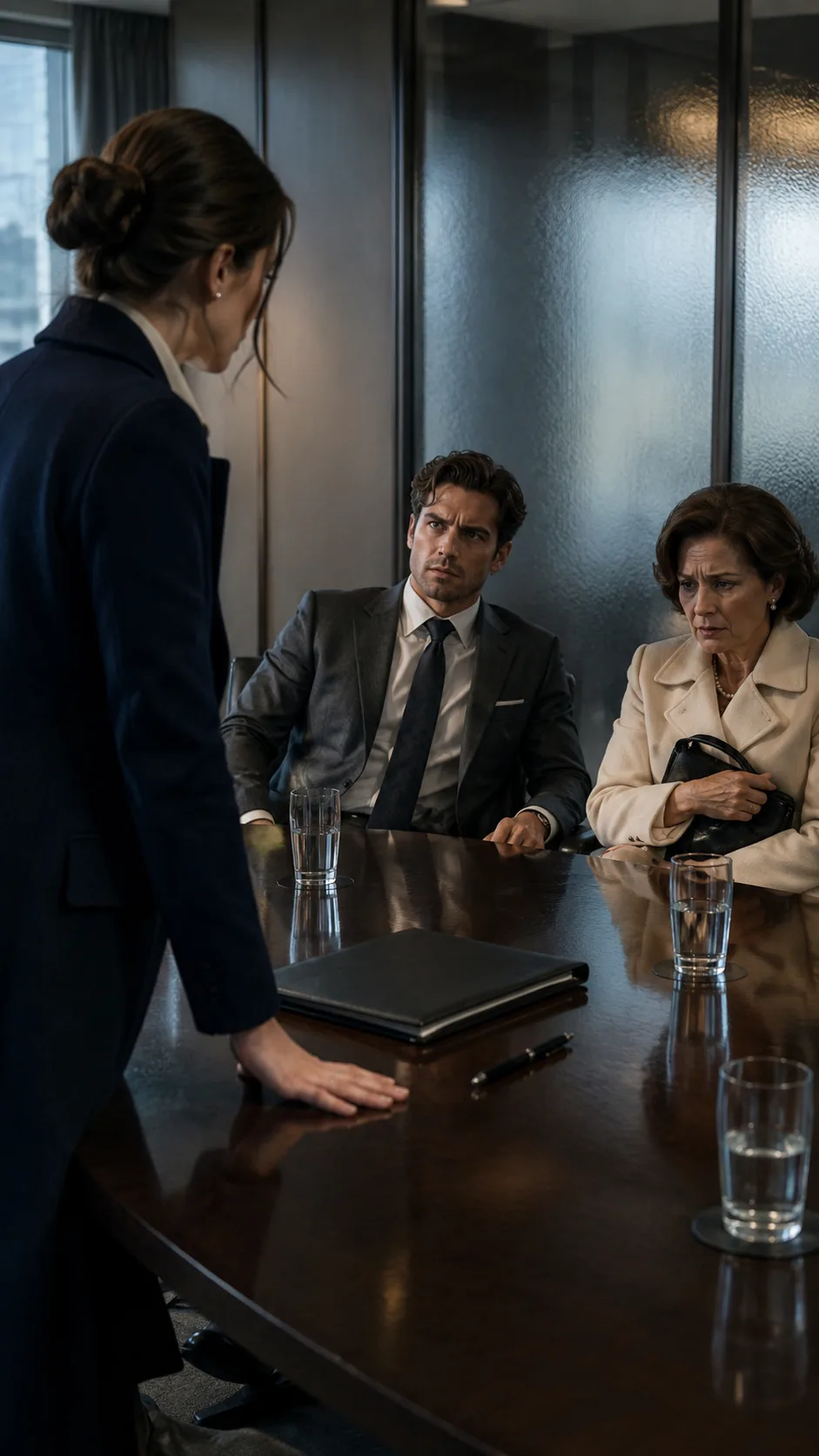
My attorney, Denise, arranged the meeting with the hotel manager present. Nolan arrived with our parents, which did not surprise me. He had never walked into consequences without bringing emotional bodyguards.
I arrived alone.
That surprised them.
My mother looked at me as if I had shown up armed.
Maybe I had.
I had a folder.
Inside were copies of every payment, every forged document, every text where Nolan admitted using things that did not belong to him because “family shares.”
We sat at a polished conference table in a small room off the hotel lobby.
Outside, through frosted glass, I could hear faint piano music from the lounge.
Inside, nobody touched the water glasses.
The hotel manager explained the situation professionally.
The signature was disputed. The charge remained unpaid. If Nolan admitted responsibility and arranged payment, the hotel preferred not to escalate.
My mother folded her hands.
“This is unnecessary,” she said. “We’re family.”
Denise looked at her. “The hotel is not family.”
My father rubbed his forehead.
Nolan leaned back in his chair, trying to look relaxed. But his knee bounced under the table.
I saw it.
He hated that I saw it.
“Savannah,” he said, “come on. You know I wasn’t trying to hurt you.”
“You signed my name.”
“I panicked.”
“You ordered premium whiskey.”
“Dad’s friends were there.”
“You weren’t panicking. You were performing.”
His mouth tightened.
My mother whispered, “Please don’t do this in front of strangers.”
That was when I finally looked at her.
Really looked.
She was still beautiful in the polished way she valued: perfect hair, pearl earrings, cream coat, lipstick carefully applied. My father sat beside her with his wedding ring flashing under the fluorescent light. Nolan wore a gray suit this time.
Nobody looked poor.
Nobody looked helpless.
They looked exposed.
“You weren’t embarrassed when I was humiliated in front of the whole family,” I said. “You’re only embarrassed now because there are documents.”
My mother’s lips parted.
Nolan snapped, “Oh my God, are we still talking about the ATM joke?”
“No,” I said. “We’re talking about the fact that it wasn’t a joke.”
The room went still.
I opened the folder and slid three papers across the table.
“Here are the car records. Here are the rent payments. Here are the anniversary invoices. Here is the forged authorization.”
Nolan looked at the papers but did not touch them.
“You kept records?” he asked, disgusted.
“Yes.”
“Wow. That’s cold.”
“No,” I said. “That’s what people do when warmth keeps getting used against them.”
My father finally spoke.
“What do you want?”
The question was so simple.
So late.
I wanted my childhood back.
I wanted my mother to remember my birthdays without needing me to pay for dinner.
I wanted my father to look proud of me without calculating what I could afford.
I wanted my brother to become a man before I had to become a wall.
But those things were not on the table.
Only paper was.
“I want Nolan to take responsibility for the charge,” I said. “I want written acknowledgment that nobody in this family is authorized to use my name, my accounts, my property, or my credit. I want no calls asking for money. And I want an apology.”
My mother looked relieved at the last part, as if apology were the easiest currency.
“I’m sorry,” she said quickly.
I shook my head.
“Not like that.”
Her face tightened.
“I said I’m sorry.”
“You said words. I want truth.”
My father shifted.
Nolan scoffed.
“Truth? Fine. You want truth? You liked being needed. Don’t act like we forced you.”
There it was.
The sharpest knife always came dressed as honesty.
For a second, pain rose in me so fast I thought I might lose my voice.
Then Denise touched the edge of her notebook, a quiet reminder.
I breathed.
“You’re right,” I said.
Everyone froze.
“I did like being needed. Because I confused it with being loved.”
Nolan’s expression flickered.
I kept going.
“And you all knew that. You knew exactly where to press. Mom cried. Dad guilted. You failed. And I paid. Again and again.”
My mother looked down.
My father swallowed.
Nolan looked away first.
That was the closest thing to confession I had ever seen on his face.
The hotel manager cleared his throat gently.
“Nolan Ellis, are you accepting responsibility for the additional charges?”
Nolan’s jaw flexed.
My mother whispered, “Just sign it.”
He stared at me.
For once, there was no smirk.
Only resentment.
And fear.
He signed.
Watching him write his own name instead of mine felt better than I expected.
Not joyful.
Clean.
After the paperwork was done, my parents stood.
My father avoided my eyes.
My mother lingered.
“Savannah,” she said softly, “is this really who you want to be?”
I picked up my folder.
“No,” I said. “This is who I had to become to survive who you were.”
Then I walked out of the Lakeside Hotel for the second time.
The first time, I had left as the family ATM.
The second time, I left as myself.
Spring arrived slowly.
Not everything became easy.
Some nights I still reached for my phone when guilt came crawling back. Some mornings I remembered my mother’s face in the hallway and wondered if I had been too harsh. Sometimes I dreamed of the anniversary party: silver balloons, white orchids, laughter breaking over me like glass.
Healing was not a door.
It was a hallway.
But each month, I walked farther.
I started therapy.
I learned words like enmeshment, financial abuse, parentification.
They sounded clinical at first.
Then they sounded like keys.
I sold the Mercedes.
Not because I needed the money.
Because I never wanted to see that car and think of Nolan pretending my labor was his status.
I bought a smaller car in cash.
Something quiet. Reliable. Mine.
I changed my emergency contacts.
I updated my will.
I hosted my birthday dinner at my condo and invited only people who had never made love feel like debt.
Priya brought a cake. Marcus came too, awkward but sincere, carrying tulips and an apology.
“I should have said something that night,” he told me.
“Yes,” I said.
He nodded.
“I’m sorry.”
That apology, at least, had weight.
I accepted it.
Not all bridges needed burning.
Some just needed a toll booth.
In June, my mother emailed me.
The subject line was: Your father’s health.
My stomach dropped before I opened it.
The email was short.
Your father had a minor heart scare. He is stable. We are not asking for money. I thought you should know.
I read the last sentence three times.
We are not asking for money.
It was the first family message in years that did not come with a hook.
I replied:
I’m glad he is stable. Please send the hospital name and visiting hours.
No money.
No apology.
No old pattern.
Just information.
I visited two days later.
My father looked smaller in the hospital bed. Not helpless. Just human.
My mother sat beside him, knitting badly. She had never knitted before.
When I walked in, both of them looked nervous.
Good.
Nervous meant they understood something had changed.
“Hi,” I said.
My father’s eyes filled with tears.
Not dramatic tears.
Quiet ones.
“I’m glad you came,” he said.
“I’m glad you’re okay.”
The room was silent except for the monitor beeping steadily.
Then he said, “I’m sorry.”
I waited.
He looked at my mother, then back at me.
“I’m sorry we made you responsible for us. I’m sorry I laughed. I’m sorry I let your brother talk to you that way. I don’t know how to fix what we did.”
My throat tightened.
For once, there was no invoice attached.
No request.
No negotiation.
Only the awkward, insufficient beginning of truth.
“You can’t fix it all at once,” I said.
“I know.”
“You can stop doing it.”
He nodded.
My mother’s knitting needles trembled.
“I’m sorry too,” she whispered. “I was cruel because I was ashamed. You were doing better than us, and instead of being proud, I made you pay for making me feel small.”
That sentence hurt more than her slap.
Because it was honest.
I did not hug her.
Not yet.
But I sat down.
For twenty minutes, we talked about weather, hospital food, and the nurse who kept calling my father “young man.”
It was not a reunion.
It was not forgiveness wrapped in music.
It was a small, cautious thing.
A seed.
Maybe it would grow.
Maybe it would not.
But this time, I would not water it with my bank account.
Nolan did not change quickly.
People like him rarely do.
He sent one email in July.
I’m in a debt repayment program. I sold some stuff. I’m not asking you for anything. Just thought you’d want to know.
I did not know whether I wanted to know.
But I replied:
Good. Keep going.
That was all.
Not warm.
Not cruel.
A boundary with a porch light.
A year after the anniversary party, I received an invitation in the mail.
My parents were hosting a small dinner for my father’s sixty-fifth birthday at a neighborhood restaurant.
Not a hotel.
Not a banquet room.
Not an event wrapped in someone else’s money.
At the bottom of the invitation, in my mother’s careful handwriting, were three lines:
No gifts expected.
Everyone pays for themselves.
We would like you there, not your money.
I stood in my kitchen holding the card for a long time.
Then I laughed.
Softly this time.
Not from bitterness.
From disbelief at how simple love should have been all along.
I went.
Nolan was there.
He arrived in an older sedan with a dent near the rear wheel. He wore a plain black shirt and looked uncomfortable in his own skin.
Good.
Growth often looks like discomfort before it looks like grace.
When he saw me, he stood.
“Savannah.”
“Nolan.”
He swallowed.
“I’m sorry for what I said.”
I waited.
“And for what I did,” he added. “The car. The hotel. The money. All of it.”
My mother looked down at her napkin.
My father watched carefully.
Nolan continued, voice lower.
“You were never an ATM. We treated you like one because it was easier than becoming decent.”
I did not forgive him in that moment.
But I believed that sentence had cost him something.
“Thank you,” I said.
Dinner was awkward.
And peaceful.
No one asked me to cover the bill.
When the check came, my father reached for it with exaggerated seriousness.
“We split this,” he announced.
My mother nodded quickly.
Nolan pulled out his own card.
I nearly cried into my water.
Not because paying for dinner mattered.
But because not paying for everyone else’s life felt like proof that I existed outside usefulness.
After dinner, we stood outside under the soft orange glow of the restaurant lights. Chicago air moved cool against my face. Cars passed. Somewhere down the street, people laughed.
My mother touched my arm gently.
This time, I did not pull away.
“Thank you for coming,” she said.
“I came because I wanted to,” I said. “Not because I had to.”
She nodded.
“I know.”
And I think she did.
As I walked to my car, my phone buzzed.
A message from Priya.
How was the family dinner?
I looked back once.
My parents stood near the door. Nolan was helping my father with his coat. My mother was watching me with an expression I could not fully name.
Regret, maybe.
Love, maybe.
Fear, maybe.
Something human, at least.
I typed back:
Nobody called me an ATM. Nobody asked for money. Honestly? Best party yet.
Then I got into my car and drove home.
Not rescued.
Not needed.
Not used.
Just free.
Chapter complete
You have reached the end of this chapter.
Continue reading
A few more worlds to get lost in after this chapter.




