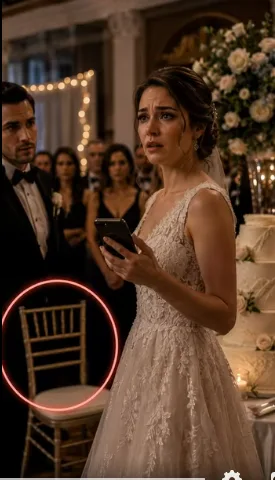
Julie had always known where she stood in her family.
Chapter 1
Julie had always known where she stood in her family.
Not officially.
No one ever sat her down at the kitchen table and said, You matter less. No one wrote it on a birthday card or whispered it into a phone while she was pretending not to listen from the hallway.
It happened in smaller ways.
Her sister cried, and the house stopped breathing.
Julie cried, and someone told her she was strong enough to handle it.
Her sister fell apart, and everyone rearranged themselves around the wreckage.
Julie stayed standing, and somehow that became permission to leave her alone.
So when her wedding was one week away, Julie tried not to ask for too much.
She did not ask her father to fix the years he had missed. She did not ask him to apologize for every birthday where her sister’s mood became the real event. She did not ask him to explain why grief had turned one daughter
into a permanent emergency and the other into unpaid emotional furniture.
She asked one thing.
“Dad,” she said, standing barefoot in her apartment kitchen, one hand pressed against the edge of the counter, “will you walk me down the aisle?”
The apartment looked like a wedding had exploded quietly inside it.
A seating chart covered in sticky notes lay across the table. A shoebox full of invitation scraps sat open near the sink. Her dress receipt was folded under a magnet on the fridge. A half-empty coffee mug sat beside a list of last-minute errands written in her own tight handwriting.
Her fiancé, Daniel, was out picking up dinner. For once, the apartment was quiet enough for hope to sound reasonable.
Then her father went silent.
Not a happy silence.
Not the kind where a man gets choked up because his daughter is getting married.
It was the careful silence
of someone trying to step around a truth without touching it.
Finally, he said, “Julie, your sister already planned something important that day.”
Julie blinked.
“Important like what?”
Before he could answer, her sister’s voice came through the phone.
“It’s Muffin’s memorial birthday,” Emma said. “You know I do it every year.”
For a few seconds, Julie genuinely thought she had misheard.
Muffin was the cat.
The living cat.
The very much alive, very round, extremely spoiled cat that had once belonged to their mother and had somehow become the emotional center of the entire family after she passed.
Julie let out a laugh because the alternative was screaming.
No one laughed with her.
That was when she understood.
Her father was actually considering missing her wedding entrance because her sister had planned a birthday gathering for a cat.
A cat.
On the wedding date Julie had chosen more than
a year ago.
“You’re not seriously doing this,” Julie said.
Emma gave a soft little wounded laugh, the kind she used when she wanted to sound fragile instead of responsible.
“Wow,” Emma said. “Sorry my mental health is inconvenient again.”
And just like that, the room changed.
Even through the phone, Julie could feel her father shift toward her sister. He started using the language he always used when he wanted Julie to accept something unfair without calling it unfair.
He said emotions were high.
He said everyone had reasons.
He said Emma had been struggling.
Julie gripped the counter until the edge pressed a red line into her palm.
“I didn’t call to compare reasons,” she said. “I called to ask if you’d walk me down the aisle.”
Her father sighed.
Then he said the sentence that had followed Julie her entire life.
“You know you’re the stronger one.”
There it was.
The family rule, spoken gently enough to sound like praise.
Julie was the stronger one when their mother got sick. Julie was the stronger one when bills had to be remembered, dishes had to be done, and adults needed help pretending the house was still functioning. Julie was the stronger one when Emma stopped working, stopped showing up, stopped being accountable for anything that made her uncomfortable.
In that family, being strong had never meant being protected.
It meant being easier to sacrifice.
So this time, Julie said something small and honest.
“I need you, too.”
There was another silence.
Then Emma started crying in the background.
Fast.
Convenient.
Almost practiced.
She said she did not know what state she would be in if their father abandoned her that day.
And Julie heard it.
That tiny shift through the phone.
Her father turning toward Emma.
It was not loud. It did not have to be. Julie had spent a lifetime learning the sound of being chosen second.
When Daniel came home with takeout, he found Julie still in the kitchen, pale and shaking, the phone pressed against her ear though no one was speaking anymore.
She ended the call without saying goodbye.
Her father called back twice.
Emma called once.
Julie ignored them all.
Then she told Daniel everything.
The cat. The birthday. The memorial language. The way her father had somehow turned her wedding day into another test of how much she could swallow.
Daniel listened until she ran out of words.
Then he set the takeout bag on the counter and said, “For what it’s worth, this is insane.”
Julie almost cried from relief.
Not because he fixed anything.
Because he did not ask her to make it smaller.
For once, someone looked at the situation exactly as it was.
The next morning, her father left a voicemail from an unknown number.
He said he wanted to talk when everybody was calmer.
Everybody.
That was the word that made Julie stare at her phone for a long time.
Everybody, as if both daughters had done the same thing.
Everybody, as if asking for a father at your wedding and scheduling a cat celebration over that wedding were equal acts of emotion.
Julie did not call back.
Instead, she went to work.
She answered emails. She nodded through a meeting. She nearly cried when a coworker asked if her dad was excited.
She lied because there are some humiliations you do not know how to explain without making yourself sound small.
That night, she admitted the truth to Daniel.
Asking her father to walk her down the aisle had not really been about tradition.
It had been a test.
A quiet little test she had been afraid to name.
She needed to know whether there was one day, just one, when her father would choose her first.
Not because she was falling apart.
Not because she made the most noise.
Not because someone pressured him.
Just because she was his daughter.
Daniel looked at her and said, “And now you know.”
Julie hated how much that hurt.
Then she made a decision that came from the ugliest, most honest part of her pain.
She called her father’s twin brother.
Uncle Ray was not gentle. He was loud, blunt, and had spent most family holidays turning old sibling rivalry into a sport. But he had always liked Julie.
When he answered, she almost lost her nerve.
Instead, she said, “Do you want to do something petty and unforgettable?”
He laughed immediately.
“Now that’s an opening.”
Julie told him the whole story.
When she finished, he whistled low and said, “Your father really has committed to the dumbest possible lane.”
For the first time in days, Julie laughed for real.
Then she asked him.
“Will you walk me down the aisle?”
There was a pause.
Then Uncle Ray said, “You want me to walk you down the aisle while your father is at a cat birthday party?”
“Yes.”
“Absolutely.”
The next day, they met for coffee at a little diner with chrome stools, chipped mugs, and waitresses who called everyone honey.
Afterward, they took a photo outside under a gray afternoon sky.
Uncle Ray’s arm was around Julie’s shoulders. Julie smiled in a way that was half brave and half furious.
The caption was simple.
Grateful for family who show up.
Her father called within an hour.
This time, Julie answered.
He did not say hello.
“What are you doing?” he demanded.
“Solving the problem,” Julie said.
“You’re trying to embarrass me.”
“No,” Julie said. “You did that yourself.”
“Private family matters don’t belong online.”
“Maybe you should have thought of that before choosing a cat birthday event over your daughter’s wedding.”
Her father inhaled sharply.
Then he said the thing that changed everything.
“Maybe I can still convince Emma to reschedule if you cancel this stunt immediately.”
Julie went very still.
Because there it was.
The truth in its plainest form.
He could push back.
He could ask Emma to change her plans.
He could make an effort.
He just had not been willing to do it when the only person hurting was Julie.
“So when I was in pain, there was nothing you could do,” Julie said. “But when your brother might stand beside me in a suit, suddenly there are options.”
Her father tried to explain.
Emma was fragile.
He was scared.
He did not know what would happen if he upset her.
Julie listened until the words stopped sounding like reasons and started sounding like a confession.
Then she said, “You keep calling honesty cruel because it’s easier than admitting you’re scared of her.”
The line landed.
She could feel it.
Her father went quiet.
Then he said, “She needs me more.”
Julie cried then.
Not because she was surprised.
Because she was not.
Sometimes the sentence that breaks you is not new information. It is old pain finally spoken out loud.
Her father said he loved her.
And Julie believed him.
That was the cruelest part.
He did love her.
Just not in a way that chose her.
Not in a way that protected her.
Not in a way that showed up when it mattered.
For one day, Julie thought revenge might feel like dignity. She imagined Uncle Ray beside her. She imagined her father hearing about it. She imagined the family finally seeing what had been happening in plain sight for years.
But as the wedding got closer, something inside her shifted.
She looked at the dress hanging in the closet.
The seating chart on the table.
The flowers, the vows, the life she was walking toward.
And she realized she did not want the center of her wedding to be a message to the man who had already chosen not to come.
She wanted to walk in without borrowing anyone else’s presence.
She wanted the truth to stand by itself.
So she called Uncle Ray and told him she had changed her mind.
He surprised her by understanding.
“Maybe that’s better,” he said. “If you walk in alone, nobody can mistake it for anything but truth.”
That night, Julie unblocked her father long enough to send one final message.
She told him she would walk herself down the aisle.
She told him he was welcome to attend as a guest.
She told him the choice was entirely his.
If he did not come, she would understand.
No argument.
No bargaining.
No more discussions about Emma’s emotional state.
Just a choice.
He did not answer.
On the morning of the wedding, Julie woke up exhausted.
The hotel suite smelled like hairspray, coffee, perfume, and nervous laughter. Bridesmaids moved around her with curling irons and garment bags. Someone was looking for an earring. Someone else kept saying, “You look beautiful.”
Julie kept her phone face down.
Then checked it anyway.
Again.
And again.
No message.
No call.
No “I’m on my way.”
Right before the ceremony, the coordinator asked if she was ready for her escort cue.
Julie looked at the closed doors.
Then she said, “I’m walking alone.”
The coordinator simply nodded.
No pity.
No questions.
Just respect.
When the music changed, the doors opened.
Julie stood there in her wedding dress, carrying every swallowed hurt, every year of being reasonable, every moment she had been told she was strong enough to take one more loss.
For one second, she felt completely exposed.
Then she saw Daniel at the end of the aisle.
He looked at her like she was not a problem to manage.
Not a sacrifice.
Not the strong one.
Just the woman he loved.
So Julie walked.
She did not look for her father at first.
She kept her eyes forward until she reached the front.
Daniel took her hands and squeezed once.
Only then did she glance toward the family rows.
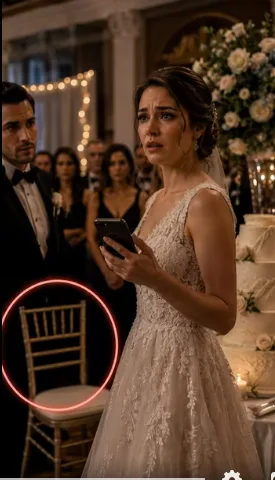
Her father’s chair was empty.
The pain was sharp.
Clean.
Immediate.
But the music kept going.
The room kept breathing.
And Julie stayed standing.
She got married.
She laughed during the vows. People cried. The food was good. Her shoes hurt. Her veil got caught on a chair during cocktail hour and Daniel had to untangle it with both hands while whispering, “I’m trying not to ruin the most expensive fabric I’ve ever touched.”
For a while, she almost forgot the empty chair existed.
Then, during the reception, her phone lit up beside the cake table.
Her father’s name was on the screen.
Julie stepped away from the music and opened the message.
It was calm.
Almost polite.
I’m sorry I couldn’t be there today. Emma needed me more. She became extremely distressed this morning. I hope one day you can understand that. I’m also disappointed in how vindictive you were with Ray. But I love you, and I wish you happiness.
Julie read the message three times.
Not because she did not understand it.
Because sometimes the deepest betrayal arrives dressed like a reasonable explanation.
Daniel found her outside the reception hall with the phone in her hand.
“What happened?” he asked.
She handed it to him.
He read it.
His jaw tightened.
Then he said, “You don’t have to answer that tonight.”
Julie looked back through the doors.
At the guests dancing.
At the cake under soft lights.
At the empty chair that had already told the truth before her father ever texted.
And for the first time, she understood something that made her feel cold all over.
Maybe the most painful part was not that he missed the wedding.
Maybe the most painful part was that he still expected her to understand why.
A cousin walked over and asked, “Is everything okay?”
Julie held the phone in her hand.
For years, she had protected her family from the truth.
For years, she had softened the story so no one had to look too closely.
But that night, standing outside her own wedding reception, with the proof glowing on her screen, Julie finally stopped making it easier for everyone else.
She took a breath.
Then she said the sentence that made the whole family turn.
“My father skipped my wedding today because my sister needed him at her cat’s birthday party.”
The words did not sound real once they entered the air.
They sounded too ridiculous.
Too cruel.
Too small to have caused something this large.
Music continued for half a second before someone near the speakers lowered the volume.
Aunt Linda’s champagne glass stopped halfway to her mouth.
Uncle Ray, standing near the bar with one hand around a bottle of beer, turned slowly.
Daniel stayed beside Julie, close enough that his sleeve brushed her arm but not touching her, giving her room to stand on her own.
Her cousin blinked.
“Wait,” she said. “What?”
Julie looked at her phone.
Then at the family table.
Then at the empty chair.
“He texted me,” Julie said. “During my reception. He said Emma needed him more.”
Nobody spoke.
That silence was different from the silences Julie had grown up with.
Those had been silences built to protect Emma.
This one had nowhere to hide.
Aunt Linda set her glass down.
“Julie,” she said carefully, “are you saying your father didn’t come at all?”
Julie nodded.
“He was invited. I told him he could come as a guest. I told him he didn’t have to walk me down the aisle. I told him the choice was his.”
“And Emma?” someone asked.
Julie looked at the phone again.
“At home. With Muffin.”
There was a sound from the back of the group.
Not a laugh exactly.
More like a short, shocked breath that escaped before anyone could stop it.
Julie almost felt sorry for them. Almost.
Because everyone had known pieces of it. They had known Emma was difficult. They had known Julie was expected to be patient. They had known her father gave in to Emma more often than he should.
But knowing something in pieces allowed people to pretend it was not a pattern.
Tonight, Julie had laid the pattern on the table whole.
Her father’s twin brother stepped forward.
Uncle Ray’s face had changed. The usual sharp amusement was gone.
“Show me the message,” he said quietly.
Julie handed him the phone.
He read it.
His mouth flattened.
Then he looked up at the room.
“He wrote this today?”
Julie nodded.
“Beside the cake,” Daniel said, and there was something hard in his voice now.
Uncle Ray looked toward the empty chair.
Then he laughed once, humorless.
“My brother is a coward.”
Aunt Linda snapped, “Ray.”
“No,” he said, not looking at her. “I’m done translating cowardice into concern.”
The room went still again.
Julie felt something loosen in her chest, but it hurt as it loosened.
Aunt Linda looked at Julie.
“Why didn’t you tell us before?”
Julie almost smiled.
Because that was the question, wasn’t it?
Why did the injured person not file the paperwork correctly?
Why did the daughter who had spent her life swallowing things not produce evidence sooner?
Why had she protected people who mistook her silence for consent?
“I was embarrassed,” Julie said.
The honesty made her throat ache.
“I was embarrassed that I had to beg my father to choose me for one day. I was embarrassed that he still didn’t. And I was embarrassed because I knew someone would find a way to ask what I had done to make it difficult.”
No one moved.
A young server carrying a tray of champagne had stopped near the doorway. She looked barely twenty, with a loose strand of blond hair stuck to her cheek. She lowered the tray slowly, as if she had wandered into something private and did not know how to escape.
Julie noticed because the girl’s eyes were wet.
Not dramatically.
Not enough for anyone else to see.
Just enough to remind Julie that some wounds were common, even when the details sounded absurd.
Then Emma called.
Her name appeared on Julie’s screen like bad timing had learned to spell.
Aunt Linda whispered, “Don’t answer.”
Uncle Ray said, “Answer it.”
Daniel looked at Julie and said nothing.
Julie answered.
But she did not lift the phone to her ear.
She put it on speaker.
Emma’s voice came through bright and shaking.
“Julie? Dad told me what you said. Are you seriously telling people? At your wedding?”
Julie closed her eyes for one second.
Then opened them.
“Yes.”
Emma inhaled sharply.
“You are unbelievable. You know today was hard for me.”
Julie’s hand tightened around the phone.
Across the room, the server still stood frozen with the champagne tray.
“Emma,” Julie said, “today was my wedding.”
“You think I don’t know that?” Emma snapped. “That’s the point. You always make everything about yourself when you know grief is complicated for me.”
A sound moved through the family, small and uncomfortable.
Julie could feel everyone listening now.
Really listening.
For once, she did not have to explain the tone. She did not have to describe the manipulation. Emma was offering it fresh, with witnesses.
“Muffin is alive,” Julie said.
Emma went quiet for a beat.
Then she said, “That is such a cruel thing to say.”
“No,” Julie said. “It’s a factual thing to say.”
Uncle Ray lowered his head.
Someone behind him covered their mouth.
Emma’s voice sharpened.
“You’re doing this because Dad chose to support me.”
Julie stared at the empty chair.
“No,” she said. “I’m doing this because he chose to abandon me and then asked me to understand it politely.”
Emma scoffed.
“You walked yourself down the aisle. You looked fine.”
There it was.
The entire family rule in five words.
You looked fine.
Julie was not sure what broke inside her then. It was not loud. It was not theatrical. Something simply stopped trying.
She pressed the phone closer to her mouth.
“I looked fine because nobody gave me another option.”
The room was so quiet she could hear ice settling in a glass.
Emma said, “You’re twisting everything.”
Then another voice came through the phone.
Their father.
“Julie, stop this.”
His voice was low, urgent, angry in a way he rarely allowed himself to sound with Emma nearby.
Julie looked around the reception hall.
At the flowers she had chosen herself.
At the cake Daniel had insisted needed lemon filling because “vanilla is just cake giving up.”
At the people standing in their formal clothes, caught between celebration and exposure.
At the empty chair.
“No,” Julie said.
“Do not do this at your wedding,” her father said.
Julie almost laughed.
He had missed the ceremony. He had missed the vows. He had missed the pictures. He had missed the father-daughter dance they had already quietly removed from the schedule.
But now that the consequences had arrived, suddenly it was her wedding again.
“Dad,” she said, “you had all day to care that it was my wedding.”
He did not answer immediately.
When he spoke again, his voice softened.
That old voice.
The one that had taught her to doubt herself.
“You know your sister struggles.”
Julie looked at Daniel.
He held her gaze.
She looked at Uncle Ray.
He gave one small nod.
Then Julie said, “I struggle too.”
The words were not loud.
But they moved through the room like a door closing.
Her father sighed.
“Julie—”
“No,” she said. “You don’t get to sigh at me like I’m exhausting. Not today.”
Emma started crying again on the other end.
This time, nobody in the room moved toward the sound.
Julie noticed that.
So did Emma.
“You’re all listening?” Emma asked.
No one answered.
Julie said, “Yes.”
Her father’s voice turned cold.
“You put us on speaker?”
“You sent me that message during my reception,” Julie said. “You chose the timing. I chose the volume.”
For the first time in Julie’s entire life, her father had no immediate answer.
The silence stretched.
Then Emma whispered, “I can’t believe you’re doing this to me.”
Julie’s hands began to shake.
Not from fear.
From years of restraint finally reaching the end of its usefulness.
Daniel noticed. He moved closer, but still did not touch her.
Julie appreciated that more than she could explain.
“I’m not doing anything to you,” Julie said. “I’m telling the truth out loud.”
Her father said, “This family doesn’t need more damage.”
Julie looked at the server near the doorway, still holding the tray. The girl’s fingers had gone white around the metal edge.
Then Julie said, “This family was damaged when you taught one daughter that panic could control every room and the other that pain only counted if it was convenient.”
Aunt Linda covered her mouth.
Uncle Ray’s eyes shone.
Her father said nothing.
Julie continued, quieter now.
“I asked you to walk me down the aisle. You said Emma needed you more. I told you I needed you too. You heard me. You chose anyway.”
On the phone, Emma was crying harder.
But something had changed.
The crying no longer rearranged the room.
It just existed.
A sound.
Not a command.
Julie looked at her father’s empty chair one last time.
Then she said, “I’m done auditioning for basic love.”
Her father breathed her name.
“Julie.”
She ended the call.
No goodbye.
No apology.
No final explanation.
Just silence.
For several seconds, no one moved.
Then the young server stepped forward. Her tray trembled slightly. She set it carefully on the nearest table and picked up one glass of champagne.
She walked to Julie and held it out.
Her voice was soft.
“I’m sorry,” she said. “I know I’m not supposed to say anything. But that was… that was brave.”
Julie took the glass.
Their fingers touched for half a second.
The girl returned to her work quickly, cheeks flushed, as if afraid she had broken some rule.
Julie looked down at the champagne.
Tiny bubbles climbed the glass like they had somewhere to be.
Then Uncle Ray lifted his beer.
“To Julie,” he said.
A few people repeated it immediately.
Then more.
Then the whole room.
“To Julie.”
Julie did not smile right away.
She was too tired.
Too raw.
Too aware that being witnessed did not erase being abandoned.
But Daniel reached for her hand.
This time, she let him take it.
The music started again, softly at first.
Aunt Linda came over twenty minutes later.
She looked older than she had at the ceremony.
“I should have said something years ago,” she said.
Julie did not rush to comfort her.
That was new.
Aunt Linda waited, twisting her napkin in her hands.
“I knew your father leaned on you too much after your mother died,” she continued. “I told myself you were handling it. You always seemed so…”
“Strong?” Julie asked.
Aunt Linda flinched.
“Yes.”
Julie looked across the room at the empty chair.
“I was a child.”
Aunt Linda’s face crumpled a little.
“I know.”
Julie nodded.
It was not forgiveness.
Not yet.
Maybe not ever in the way Aunt Linda wanted.
But it was something honest, and for that night, honest was enough.
Uncle Ray asked for the microphone during the last hour of the reception.
Julie panicked for three full seconds.
“No speeches,” she warned him.
He raised both hands.
“No speeches. Promise.”
She did not trust him at all.
But Daniel laughed and said, “Let him have one sentence.”
Uncle Ray took the microphone from the DJ, cleared his throat, and looked around the room.
“I was told I only get one sentence,” he said, “so here it is: some people inherit family, and some people build it better.”
The room applauded.
Julie looked down because her eyes were burning.
Daniel leaned toward her.
“That was definitely a speech disguised as a sentence.”
Julie laughed.
It came out messy.
Real.
The photographer caught that picture.
Not the posed one by the arch. Not the one with the bouquet. Not the one where Julie had carefully angled her face to hide how tired she was.
That one.
Her laughing with wet eyes while Daniel held her hand and Uncle Ray pretended he had not just emotionally attacked half the family with a microphone.
Later, after the last dance, after the cake was boxed, after her shoes were finally off and her feet ached against the hotel carpet, Julie sat on the edge of the bed in the bridal suite and looked at her phone.
There were messages.
A lot of them.
Some from cousins.
Some from friends.
One from Aunt Linda.
Three from her father.
Seven from Emma.
Julie did not open Emma’s.
She opened her father’s first message.
I’m sorry tonight became so public.
Julie stared at it for a long time.
Not I’m sorry I missed your wedding.
Not I’m sorry I hurt you.
Not I’m sorry I chose wrong.
I’m sorry tonight became so public.
Daniel came out of the bathroom with his tie undone and his hair damp at the edges.
“You okay?” he asked.
Julie looked up at him.
“No.”
He nodded, like that answer was allowed.
Then he sat beside her.
She handed him the phone.
He read the message and exhaled through his nose.
“Do you want to reply?”
Julie thought about it.
She thought about the kitchen counter digging into her palm. She thought about the empty chair. She thought about Emma saying, You looked fine. She thought about the young server handing her champagne with shaking fingers.
Then she typed one sentence.
I’m sorry it took being public for you to hear me.
She did not send it.
Not yet.
Instead, she set the phone face down on the nightstand.
Beside it was the folded dress receipt from her apartment fridge. She had tucked it into her emergency bag for no reason she could explain. The paper was wrinkled now, softened at the corners from being handled too many times.
Julie picked it up.
The receipt was just proof of a dress.
A purchase.
A date.
Something chosen.
Something kept.
Daniel looked at it and smiled faintly.
“You saving that?”
Julie folded it once more and slipped it into the drawer of the nightstand.
“For now,” she said.
Outside, the city hummed beyond the hotel windows.
Somewhere across town, her father was probably trying to convince himself he had done the best he could.
Somewhere else, Emma was probably turning the story into something she could survive hearing.
Julie could not control either of them anymore.
Her phone buzzed again.
She did not reach for it.
Daniel held out his hand.
Julie took it.
And for the first time that day, she let the room be quiet without waiting for someone else’s pain to fill it.
Chapter complete
You have reached the end of this chapter.
Continue reading
A few more worlds to get lost in after this chapter.




