That night, I felt something small and cold settle behind my ribs.
Chapter 1
That night, I felt something small and cold settle behind my ribs.
Not anger.
Anger was too warm, too generous. Anger made people loud. It made them careless.
This was something quieter.
A note taken.
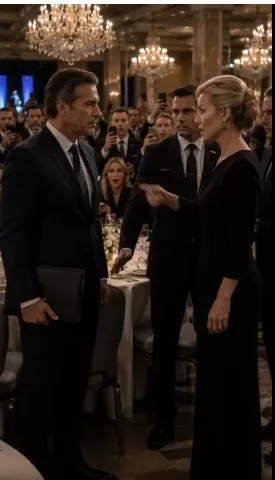
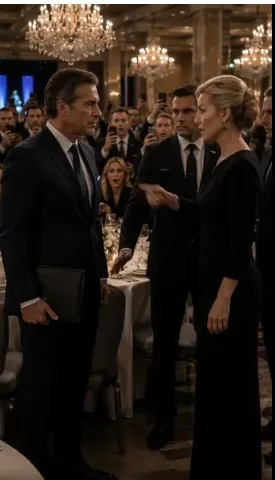
Lydia Callahan said something to the board member beside her, a narrow man with silver hair and a smile that never reached his eyes. He glanced at me, then looked away too quickly. That was the first confirmation.
The second came when she touched the arm of a staff coordinator and tilted her chin toward my table.
The coordinator looked confused at first. Then embarrassed. Then scared.
I knew that sequence too.
It meant someone important was asking for something wrong.
I took one sip of water and opened the black leather folder on my lap. Inside were three documents, all printed on heavy ivory paper because lawyers liked weight. A memorandum of understanding. A draft capital commitment letter. And a slim, stapled internal risk summary that
only six people outside Aldercroft had seen.
Across the top of the summary, in small black letters, was the line Celeste had underlined twice.
FINAL APPROVAL SUBJECT TO PUBLIC GOVERNANCE REVIEW.
That was why I was there.
Not to be praised. Not to be recognized. Not to shake Reed Callahan’s hand under flattering lights while a photographer captured institutional confidence for next quarter’s investor deck.
I was there to watch who people became when they believed nothing could touch them.
The program was eight minutes from beginning when Reed Callahan finally entered.
He came through the main doors with the smooth exhaustion of a man used to applause. Tall, broad-shouldered, silver at the temples, navy tuxedo cut a little too perfectly. He smiled as people stood to greet him, but his eyes moved faster than his mouth. Stage. Cameras. Board members. Donors. Investors. His wife.
Then me.
For half a
second, something tightened in his expression.
Recognition.
Not surprise exactly. More like a man seeing a weather warning he had hoped would miss his house.
He recovered fast.
“Wade,” he said, crossing toward me with both hands out. “You made it.”
His voice carried just enough for the nearby tables to hear the warmth, but not enough to invite them into the meaning.
I stood.
“Reed.”
We shook hands. His palm was dry. His grip was controlled. Men like Reed practiced handshakes the way actors practiced death scenes.
“So glad you could join us tonight,” he said.
“I told Celeste I’d observe.”
“Yes, of course.” His smile flickered at the name. “And we’re honored. Truly.”
Lydia appeared beside him before he could say more.
“Honey,” she said, touching his sleeve without looking at him, “there seems to be some confusion with the seating.”
Reed’s jaw moved once.
“Does there?”
“Yes.”
She smiled at me then, the kind of smile people use when they have already decided you are a problem and are waiting for you to understand it. “This is a closed VIP table.”
“I was checked in,” I said.
“I’m sure there was a mix-up.”
“There wasn’t.”
Her eyes sharpened.
Reed gave a small laugh. “Lydia, Wade is—”
“Reed.” She did look at him then. The look was quick, polished, and private. A wife’s warning disguised as affection. “The board is asking about the optics. We have founders, owners, major stakeholders seated here. If guests start placing themselves wherever they like, it creates an issue.”
Guests.
I looked down at my cream place card.
WS.
Reed saw me look. His throat shifted.
A waiter passed behind Lydia carrying champagne flutes. One glass trembled just slightly on the tray when Lydia raised her hand to stop him.
“Could you find Nina?” she asked.
The waiter’s face went blank in that trained hospitality way. “Of course, Mrs. Callahan.”
He left.
Reed lowered his voice. “Lydia, not now.”
That was when I understood something important.
He knew.
Not everything, maybe. Not the extent of what Aldercroft had already found. But he knew enough to be afraid of a public mistake.
Lydia did not.
And people who are not afraid are dangerous in a different way.
I sat back down.
Lydia’s eyebrows lifted.
“Excuse me?”
“I said I was checked in,” I replied. “I’ll stay where I was placed.”
A small silence opened around the table. Not the whole ballroom yet. Just the immediate radius. People continued laughing three tables away. Glasses kept chiming. But near us, forks stopped moving.
Lydia’s hand tightened on her clutch.
“You may not understand how these events work,” she said softly.
I turned my water glass another inch to the left.
“Maybe not.”
Something about that bothered her more than defiance would have.
Defiance gives people something to attack. Calm makes them hear themselves.
Reed leaned closer to her. “Let it go.”
She smiled at him, but her cheeks had gone pale beneath the makeup.
Then she looked past me.
I followed her gaze and saw two security men approaching from the double doors.
Both wore dark suits. Both had earpieces. One was broad and shaved-headed. The other was younger, maybe late twenties, with a careful walk and a nervous mouth.
The younger one recognized me first.
Not by name. By uncertainty.
He had been near the check-in area when I arrived. He had seen the tablet. The coordinator’s reaction. The cream card.
He slowed half a step.
The older guard did not.
“Sir,” he said, stopping beside my chair. “We need you to come with us.”
The words landed harder than his tone. Nearby heads turned. A woman at table four lifted her phone, not high, just enough. Another person pretended to check a message and angled the camera toward us.
There it was.
The room documenting itself.
I did not move.
“For what reason?”
The older guard glanced at Lydia.
She stepped closer, chin up, voice clear enough now to travel.
“This table is for owners. Security, remove him.”
That was the sentence.
Not loud enough to be called shouting. Not crude enough to embarrass the class of people who preferred cruelty wrapped in etiquette. But clear. Perfectly clear.
The room heard it.
Phones rose.
A camera at the back wall pivoted slightly.
Reed’s face changed.
Not much. But enough.
He knew the microphone near table three was live for ambient reception sound. He knew the investor livestream had started ten minutes before the program, because their communications team wanted “pre-event energy.” He knew, because I had asked about the feed three weeks earlier and he had assured Celeste that Vantage was a transparent organization.
The younger security guard looked at me.
His lips parted like he wanted to apologize but did not know if he was allowed.
I stood slowly.
Not because they told me to.
Because the room needed to see me choose it.
I buttoned my jacket with one hand and picked up the black leather folder with the other.
Then I looked at Lydia Callahan.
“You just made this very easy for me.”
No one laughed.
That mattered.
In rooms like that, people laugh when they think power has chosen a side. They laugh too early, too eagerly, offering themselves as witnesses for whoever they believe will still be standing tomorrow.
No one laughed because, suddenly, no one was sure.
Lydia’s mouth tightened.
“I don’t know who you think you are.”
That sentence has followed me most of my adult life.
It was said by a loan officer in Milwaukee when I was twenty-eight and trying to finance my first warehouse conversion.
It was said by a partner at a firm in Boston when I asked why the junior analysts with my numbers kept getting invited into rooms I wasn’t.
It was said by a man in a golf vest at O’Hare when he assumed the first-class seat beside him belonged to someone else.
I used to answer it.
These days, I let paperwork do that.
I opened the folder.
Reed took half a step forward. “Wade—”
I raised one hand.
He stopped.
That was the first time the room noticed Reed Callahan obey me.
Small thing.
Huge thing.
Lydia noticed too.
Her eyes moved from me to her husband.
“Reed?”
I took out the memorandum first.
Not the risk summary. Not yet.
“This event,” I said, keeping my voice even, “is part of Vantage Aerospace’s final presentation to institutional investors regarding a proposed capital infusion and governance restructuring.”
The words changed the air.
People who had been recording for gossip suddenly held their phones steadier.
Reed whispered, “This doesn’t need to happen here.”
“It does now.”
Aldercroft had rules about public disclosure. We did not humiliate companies for sport. We did not announce material concerns without process. We did not use private leverage to create theater.
But we also did not ignore conduct that happened in public, on camera, at an investor event, by a person representing company leadership.
Lydia gave a short laugh.
“Is this supposed to impress someone?”
“No,” I said. “It’s supposed to protect them.”
I turned slightly, enough for the nearest camera to catch my profile.
“My name is Wade Sutton. I am the special governance advisor to Aldercroft Capital for this transaction.”
A murmur crossed the ballroom.
Lydia blinked once.
Reed shut his eyes.
Only for a second.
But I saw it.
So did the young guard.
I continued. “I was invited here by the managing partner overseeing the proposed investment. Table three was assigned to me by Vantage’s investor relations team. My presence tonight was disclosed to your executive office two weeks ago.”
Lydia looked at Reed.
He did not look back.
I removed the next document.
“And as of 6:15 p.m. this evening, Aldercroft’s preliminary capital commitment to Vantage remained subject to review.”
Reed’s voice came out thin. “Wade, please.”
That was not an argument.
That was a confession wearing a suit.
I felt my phone buzz in my pocket.
Once.
Then again.
Celeste.
I ignored it.
Lydia recovered faster than I expected. I will give her that. Her face rearranged itself into injured dignity.
“So you’re threatening a company because I asked security to correct a seating mistake?”
“No,” I said. “I’m documenting a leadership culture problem in real time.”
Her nostrils flared.
“That’s absurd.”
“Maybe.”
I turned to the older security guard.
“What instruction were you given?”
He glanced at Lydia.
“Sir, I was told there was an unauthorized person at the owners’ table.”
“By whom?”
He swallowed.
The younger guard looked at the carpet.
Lydia cut in. “By me. I told them.”
“Thank you.”
She looked almost pleased for half a heartbeat, as if she thought I had trapped myself.
Then I asked, “Did you verify the seating assignment with registration?”
The older guard hesitated.
“No, sir.”
“Did you ask for my name?”
“No, sir.”
“Did you ask to see my place card?”
“No.”
The younger guard said quietly, “I saw it.”
Everyone turned to him.
His face went red.
Lydia’s eyes narrowed. “Excuse me?”
He cleared his throat. “At check-in. He was assigned table three.”
The room went very still.
There are moments when truth is not dramatic. It does not enter with a thunderclap. It arrives in the voice of someone who earns less than everyone in the room and has more to lose by speaking.
The young guard kept his eyes down.
“I’m sorry,” he said, not to Lydia.
To me.
That almost broke something in me.
Not because I needed the apology. Because he looked like he expected punishment for telling the truth.
I had been that young once.
Standing in expensive rooms. Knowing exactly what happened. Waiting to see if honesty would cost more than silence.
I nodded to him.
“Thank you.”
His shoulders dropped a fraction.
Lydia looked around and realized the story had moved without her permission.
So she did what people like her do when facts fail them.
She attacked the person.
“This is ridiculous,” she said, louder now. “My husband built this company from nothing. We have actual owners here, people who sacrificed, people who belong at this table. And you walk in with a folder and expect everyone to bow because some New York fund sent you?”
Her voice shook only at the edges.
Good control.
Bad judgment.
Reed whispered her name.
She ignored him.
“You don’t get to come into our event and threaten our future because your ego was bruised.”
I looked at her for a long second.
Then I put the papers back in the folder.
That confused her.
It confused everyone.
I closed the folder gently.
The sound was small, but every phone caught it.
“I need five minutes,” I said.
Reed stared at me.
“What?”
“Five minutes. Off stage. You, Lydia, your general counsel, and your CFO.”
Relief flashed across his face so quickly it was almost painful.
He thought I was offering a private exit.
I was not.
I was offering him one last chance to tell the truth before the truth walked in without him.
Lydia folded her arms.
“I’m not going anywhere.”
“Then stay.”
I turned and started toward the side corridor.
The ballroom parted for me in small, embarrassed movements.
Behind me, Reed hissed something at Lydia. I could not hear the words, but I heard the shape of panic in them.
I made it ten steps before my hands started to shake.
Not visibly. Not much.
But enough that I moved the folder under my arm so no one would see my fingers.
The side corridor was cooler than the ballroom and smelled faintly of wet wool from coats stored nearby. A framed photograph of the Chicago skyline hung crooked beside the service entrance. I stopped in front of it, facing the wall, and let my breath out through my nose.
For fifteen seconds, I was not Wade Sutton, governance advisor.
I was a boy in a church basement in Gary, Indiana, wearing a suit too short in the sleeves, listening to a deacon tell my mother that certain donor tables were reserved.
I was twenty-eight, holding a financing packet while a banker asked if my “employer” would be joining us.
I was forty-one, standing outside a private dining room while a CEO told his assistant to bring “the consultant” in after dessert.
I pressed my thumb hard into the folder’s spine until the leather creaked.
Get yourself together.
Not because they deserved composure.
Because I did.
My phone buzzed again.
I took it out.
Celeste: Livestream is already clipping.
Celeste: Do not continue alone if you are emotionally compromised.
Celeste had known me for fourteen years and trusted me with billion-dollar decisions. She also knew exactly where my wounds were.
I typed back: I’m steady.
Then I deleted it.
I wrote: I need legal on standby.
Her reply came fast.
Already there.
When I returned, Reed was waiting near the service door with Martin Vale, Vantage’s general counsel, and Priya Desai, the CFO.
Lydia stood behind them, arms still crossed, but the certainty had begun to drain from her face.
Martin Vale looked like a man who had aged five years between cocktails.
“Mr. Sutton,” he said. “We sincerely apologize for any misunderstanding.”
“Don’t start with that.”
His mouth closed.
Priya Desai looked at me differently than the others.
Not warmly. Not defensively.
Carefully.
I had liked her during diligence. She answered questions directly. She admitted when she did not know something. She had once corrected Reed in a meeting about revenue recognition and then stared at him until he stopped smiling.
Tonight, she looked tired.
That concerned me more than Reed’s panic.
I said, “Is there anything you want to disclose before the program begins?”
Reed answered too quickly. “No.”
Priya looked at him.
There it was.
A small scratch.
I turned to her.
“Priya?”
Reed’s voice sharpened. “She said no.”
“She didn’t say anything.”
The corridor hummed with HVAC. From the ballroom, applause rose and faded as someone tested the opening music.
Priya’s lips pressed together.
Martin said, “Any transaction questions should go through counsel.”
“Agreed,” I said. “So I’m asking counsel whether there is anything material to disclose.”
Martin adjusted his glasses.
“No material undisclosed matters at this time.”
“Careful.”
His face hardened.
“Excuse me?”
I opened the folder again and took out the risk summary.
I flipped to the second page.
“Three weeks ago, Aldercroft received an anonymous packet regarding Vantage’s vendor payment acceleration program.”
Reed went pale.
Not metaphorically. Not poetically.
The blood left his face.
Lydia looked at him.
“What is he talking about?”
No one answered her.
I continued. “The packet alleged that short-term revenue targets were being met through improperly classified receivables, side-letter concessions, and vendor pressure tied to executive bonus thresholds.”
Priya closed her eyes.
Just once.
Martin said, “Those allegations are unsubstantiated.”
“Some are,” I said. “Some aren’t.”
Reed stepped closer. “Wade. Listen to me. This is exactly why we should discuss this Monday, with all teams present. Not in a hotel corridor because my wife made a seating error.”
I looked at him.
“Your wife did not create the accounting issue.”
He swallowed.
“But she did give me a public reason to reopen conduct review before commitment.”
Lydia’s voice was smaller now.
“Reed?”
He still would not look at her.
That was the moment she understood she had not been defending a clean room. She had been standing in front of a locked door with no idea what was behind it.
Priya spoke.
“Wade.”
Everyone turned to her.
She looked at Reed first. There was no hatred in her expression. That made it worse. Hatred would have been easier. This was grief sharpened into duty.
“I sent the packet.”
Reed made a sound under his breath.
Martin said, “Priya.”
“No.” Her voice trembled, then steadied. “No, I’m done.”
The hallway seemed to shrink around us.
Lydia stepped back until her shoulder touched the wall.
Priya looked at me.
“I sent it after Reed told me to sign the Q3 certification with the vendor concessions excluded. I refused. Martin told me we could document it later. Then payroll flagged the executive bonus trigger and suddenly everyone wanted the quarter closed before Aldercroft’s final review.”
Martin’s face had gone rigid.
“That is a privileged internal matter.”
Priya laughed once.
It was not happy.
“You keep using privilege like bleach.”
Reed pointed at her.
“Do not do this.”
She flinched.
Not much.
Enough.
And there it was, the second truth of the night. The one not in any packet.
Fear lived inside the company.
Not just ambition. Not just pressure.
Fear.
My phone buzzed again.
Celeste: We have board chair on line. Do you need us to pull?
I looked through the open ballroom doors.
The stage lights had come up. A woman from communications stood by the podium, staring toward the corridor with a headset pressed to her ear. Guests were whispering openly now. The livestream camera had stopped pretending not to watch us.
I thought of leaving.
For one clean second, I considered walking out, letting Celeste handle it from New York, letting lawyers send letters by morning. That would have been simpler. Quieter. Professional.
Then the young security guard caught my eye from near the ballroom entrance.
He stood stiffly, hands clasped, pretending not to listen.
Waiting to see what truth cost.
I typed one word to Celeste.
Pull.
Then I walked back into the ballroom.
Reed followed me.
“Wade, don’t.”
Lydia came after him, her heels striking the marble too fast.
Priya and Martin trailed behind.
By the time I reached table three, the room had stopped pretending.
Every face was turned toward us.
The communications woman hurried to the microphone.
“Ladies and gentlemen, we’ll begin in just—”
I said, “No.”
She froze.
I did not raise my voice.
I did not need to.
I walked to the stage steps, climbed them, and stood behind the podium.
The microphone was already live.
A low feedback hum passed through the speakers.
My own face appeared on the two large screens on either side of the stage. Older than I felt some mornings. Calm enough. Eyes too tired.
I set the black leather folder on the podium.
The same folder Lydia had mistaken for nothing.
Reed stopped at the foot of the stage.
“Wade.”
I looked down at him.
“Is there anything you want to say before I do?”
His lips parted.
Behind him, Lydia stood with one hand at her throat. Not elegant now. Just scared.
Martin was whispering into his phone.
Priya stood alone near table three, arms wrapped around herself like she was cold.
The room waited.
Reed looked at the board chair seated near the front. Then at the cameras. Then at me.
“I think,” he said slowly, “there has been a misunderstanding.”
That word again.
Misunderstanding.
The softest word for a hard thing.
I nodded once.
Then I faced the room.
“My name is Wade Sutton. I am here tonight on behalf of Aldercroft Capital, which has been evaluating a major investment in Vantage Aerospace.”
The murmur came back, then died.
“Earlier this evening, Mrs. Lydia Callahan ordered security to remove me from a table assigned by Vantage’s own investor relations team. She stated, clearly, that the table was for owners.”
I paused.
Lydia’s face tightened as dozens of phones shifted toward her.
“She was correct about one thing.”
Reed’s head lifted.
“That table was for owners.”
I opened the folder and removed the capital commitment letter.
“Aldercroft’s proposed investment would have made us Vantage’s largest outside institutional stakeholder, with conditional governance rights effective upon execution.”
I let that settle.
“Those rights are now suspended.”
A sound moved through the ballroom. Not a gasp. Not exactly. More like a room full of people losing money in their heads.
Reed gripped the back of an empty chair.
I continued.
“Further, based on information received during diligence and confirmed tonight by company leadership conduct, Aldercroft is withdrawing from the transaction pending independent review of revenue recognition practices, vendor concession treatment, executive bonus triggers, and internal reporting controls.”
Now people gasped.
That was the word that did it.
Withdrawing.
Zeros were quiet until they disappeared.
Then they screamed.
Reed climbed one step toward the stage.
“Wade, this is irresponsible.”
I looked at him.
“No. What was irresponsible was asking your CFO to certify numbers she had challenged internally.”
The room turned toward Priya.
Her face went white.
I regretted that instantly.
Not the truth. The exposure.
She had already risked enough.
So I added, “Aldercroft has received supporting materials through appropriate channels. No employee should be approached, blamed, threatened, or retaliated against for cooperating with review.”
Martin stopped whispering.
The board chair stood.
He was an older man named Ellison Grant, retired from some defense conglomerate, the kind of man who wore moral concern like a tie he could loosen after dinner.
“Mr. Sutton,” he said, voice carrying, “are you making a formal allegation?”
“I’m making a formal withdrawal.”
That shut him up.
Then I took out the last page.
The internal memorandum Celeste had signed at 6:47 p.m.
I had not known it existed until her text.
Legal on standby meant legal had already moved.
“Aldercroft will transmit written notice to Vantage’s board within the hour. We are recommending immediate preservation of communications, transaction files, side letters, and compensation committee materials.”
Lydia whispered, “Oh my God.”
Not loudly.
But the microphone caught it from Reed’s lapel because he was still wearing the event mic clipped to his jacket.
The ballroom heard her.
So did the livestream.
Reed looked down at the mic as if it had betrayed him.
That was the closest I came to smiling.
Not because it was funny.
Because expensive rooms do tell on people.
A woman near the front stood up. “Are investors supposed to stay for the dinner?”
No one answered.
Another man said, “Is the stock exposure affected?”
Someone else said, “What about the Dallas facility?”
The room began to fracture into panic.
Reed turned to them, hands up.
“Everyone, please. Please. Vantage is stable. This is a procedural matter.”
Priya looked at him then.
Really looked.
And something in her face changed.
She walked forward.
Not fast. Not dramatic.
Just enough to stand beneath the stage lights.
“This is not procedural,” she said.
Her voice did not go through the microphone, but the room was quiet enough.
Reed turned on her.
“Priya, stop.”
She shook her head.
“I should have stopped it earlier.”
The young security guard stood near the doors, staring at her like he had never seen someone step off a ledge and land on their feet.
Priya looked at the board chair.
“I will cooperate with an independent investigation. And I am requesting whistleblower protection in writing before I answer questions from anyone employed by this company.”
Martin said, “Priya, you need counsel.”
She looked at him.
“I know.”
Then, after a pause, “Not you.”
That was the line that broke the room.
Not loudly. Not theatrically.
But something loosened. A few people stood. A board member pushed back from his chair. A woman from communications took off her headset and pressed it to her chest like she no longer knew who to serve.
Lydia turned to Reed.
“You told me the Aldercroft deal was done.”
He stared at her.
She repeated it, lower.
“You told me it was done.”
Reed’s face hardened in that old, ugly way powerful men get when private conversations escape into public air.
“Not now.”
Her eyes changed.
For the first time all night, I saw the outline of the person beneath the polish. Not innocent. Not kind. But blindsided.
She had humiliated me because she thought proximity to power was the same thing as having it.
Now the power was moving, and it was not taking her with it.
I stepped away from the microphone.
The formal part was over.
The human damage would continue without me.
I gathered my papers and came down from the stage.
The young security guard moved as if to clear a path, then stopped.
“Mr. Sutton,” he said quietly.
“Yes?”
“I’m sorry again.”
I looked at him.
“What’s your name?”
“Evan.”
“Evan,” I said. “You did your job when it mattered.”
His face did something he tried to hide.
A tightening around the eyes.
He nodded once.
Behind me, Reed was surrounded by board members. Lydia stood alone three feet away from him, close enough to be his wife and far enough to be outside the circle. Priya was speaking with someone on her phone near the wall, her free hand shaking.
I wanted to leave then.
I had done what I came to do and more than I wanted to.
But as I reached table three, I saw my water glass still exactly where I had left it, two inches left of center. The centerpiece still blocked most of the table. The cream place card still sat beside the empty plate.
WS.
Two letters.
No title.
No explanation.
I picked it up.
For some reason, that was when the adrenaline dropped out of me.
My knees felt loose. My mouth tasted metallic. The ballroom blurred at the edges, not from tears, but from the body finally collecting its debt.
I sat down.
Just for a second.
The same waiter who had poured my water earlier appeared beside me.
He looked younger up close. Maybe twenty-two. Dark hair, tired eyes, name tag slightly crooked.
“Sir,” he said, “do you want me to bring anything?”
I almost said no.
Then I looked at the untouched water.
“Coffee,” I said.
He nodded.
“Cream?”
“Black.”
He left, and I sat there while the most expensive room in Chicago unraveled around me.
People think the moment after a confrontation feels victorious.
Sometimes it does.
Mostly it feels like standing in a kitchen after a plate breaks. Everyone heard it. Everyone saw it. But someone still has to sweep.
My phone buzzed.
Celeste.
I answered.
“You okay?” she asked.
Not “What happened?”
Not “Are you aware this is everywhere?”
Just: You okay?
I looked at Lydia across the room.
She was speaking to Reed now. Quietly. Fiercely. He was not listening. He was watching the board chair.
“No,” I said. “But I’m functional.”
“Good enough for tonight.”
“Priya needs protection.”
“Already moving.”
“The young guard too. Evan. Last name unknown.”
A pause.
“You’re collecting witnesses now?”
“I’m collecting people Reed might punish.”
Celeste exhaled.
“That’s why I sent you.”
I rubbed the edge of the place card between my fingers.
“No. You sent me because I notice scratches.”
“And?”
I looked at the stage, the microphone still standing there, catching fragments no one wanted preserved.
“The wall’s full of them.”
Celeste was quiet for a second.
“Car is outside when you’re ready. Don’t talk to press.”
“I wasn’t planning to.”
“Wade.”
“What?”
“Don’t stand in the cold alone tonight.”
That one landed where she aimed it.
I closed my eyes briefly.
“I’ll call you from the car.”
“You better.”
She hung up.
The waiter returned with coffee in a white porcelain cup. His hand shook when he set it down, and a little spilled into the saucer.
“Sorry,” he said quickly.
“It’s fine.”
He glanced toward the stage.
“My dad works at the Dallas facility,” he said.
That stopped me.
He looked embarrassed, like he had said too much.
“Sorry. I just—does this mean people lose jobs?”
The question cut through all the legal language, all the governance memos, all the rich panic.
Does this mean people lose jobs?
I wished I could tell him no.
I wished I could lie as cleanly as Reed.
“I don’t know,” I said. “But hiding it would make it worse.”
He nodded slowly.
Not comforted.
Just answered.
That was all I could give him.
I took the coffee. It was terrible. Burnt and too hot and exactly what I needed.
Across the ballroom, Lydia looked at me.
For a moment, I thought she might come over and apologize.
She did come over.
She stopped on the other side of table three, hands clasped in front of her, emerald earrings catching light with every small movement of her jaw.
“Mr. Sutton,” she said.
“Mrs. Callahan.”
Her eyes flicked to the place card in my hand.
“I didn’t know who you were.”
“No.”
She swallowed.
“I was trying to protect my husband.”
I looked at Reed, who was now talking over Priya while Ellison Grant avoided both of their eyes.
“You were protecting an image.”
Her face tightened.
Maybe that was cruel.
Maybe it was necessary.
Both can be true.
She looked down at the tablecloth.
“When I married Reed, he had six employees and a rented office over a dental clinic. People laughed at him. My parents told me he was a dreamer with debt. I hosted dinners in our apartment because he couldn’t get meetings unless someone softened the room first.”
Her voice lowered.
“I know what it is to be looked through.”
I believed her.
That did not excuse her.
“I’m sure you do.”
She looked up.
“Then why did you let me say all that?”
I stared at her for a moment.
“Because stopping you would have protected you from yourself.”
Her mouth opened, then closed.
For the first time all night, she had no polished answer ready.
I stood, sliding the place card into my folder.
“You should get your own counsel.”
Her eyes widened slightly.
“Do I need it?”
I looked at Reed.
He had finally turned toward us.
His expression was not apologetic.
It was calculating.
“Yes,” I said. “You do.”
She followed my gaze.
Something in her shoulders changed then. A small collapse, quickly corrected.
Not grief exactly.
Recognition.
I left before she could say anything else.
Evan opened the ballroom door for me.
Outside, the hotel lobby smelled like rain, marble, and expensive flowers. The noise from the event dulled behind me as the door closed, turning scandal into a low, contained hum.
My car waited under the awning.
Chicago rain came down in thin, crooked lines, just like it had against office windows in a hundred cities where men like Reed promised numbers they could not defend.
The driver stepped out.
“Mr. Sutton?”
I nodded.
Before I got in, I looked back through the glass doors.
From that distance, the ballroom looked beautiful again.
Gold light. White flowers. People in dark suits moving around one another like nothing permanent had happened.
But inside my folder, the cream place card pressed against the withdrawal notice.
WS.
No full name.
No title.
Just two initials that had meant nothing to Lydia Callahan until they meant everything.
My phone buzzed again as I slid into the back seat.
Unknown number.
For a second, I thought it would be Reed.
It wasn’t.
The message was from Priya.
Thank you. I’m scared.
I stared at it longer than I should have.
Then I typed back:
So am I. Keep records. Don’t be alone tonight.
I almost added something comforting.
Something clean.
Something people say when they want fear to behave.
Instead, I put the phone face down on the seat beside me and watched the Four Seasons shrink in the rain-smeared window.
The coffee taste was still bitter in my mouth.
And my hands, finally hidden in the dark of the car, would not stop shaking.
Chapter complete
You have reached the end of this chapter.
Continue reading
A few more worlds to get lost in after this chapter.




